Friday, September 26, 2025

U.S. Navy to Christen Future USS Louis H. Wilson Jr.


SEPT. 26, 2025 The U.S. Navy will christen the future USS Louis H. Wilson Jr. (DDG 126), during a ceremony at General Dynamics Bath Iron Works (BIW) on Saturday, September 27, at 10:30 a.m. (EST).

The principal address will be delivered by Commandant of the Marine Corps, Gen. Eric Smith; Additional speakers include Governor of Maine, Janet Mills; U.S. Senator of Maine Angus King; Assistant Secretary of the Navy for Research, Development, and Acquisition, Jason Potter; Deputy Chief of Naval Operations for Integration of Capabilities and Resources, Vice Adm. Brad Skillman; Medal of Honor Recipient, Col. Harvey C. Barnum, Jr.; and President of General Dynamics Bath Iron Works, Chuck Krugh.

In a time-honored tradition, ship sponsors Janet Wilson Taylor, daughter of the namesake and Susan J. Rabern, former Assistant Secretary of the Navy for Financial Management and Comptroller, will christen the ship by breaking a bottle of sparkling wine across the bow.

The ship is named after Gen. Louis Hugh Wilson Jr., a World War II and Vietnam War veteran who was awarded the Medal of Honor for his heroism during the Battle of Guam. Following his service in Vietnam, he served as the 26th Commandant of the Marine Corps from 1975 to 1979.

The christening of DDG 126 symbolizes the Navy's 250-year commitment to innovation and maritime dominance. From seabed to space, the Navy delivers power for peace – always ready to fight and win. This milestone marks the Navy's enduring legacy and commitment to shaping the future of maritime power.

Arleigh Burke-class Flight III destroyers feature the AN/SPY-6(V)1 Air and Missile Defense Radar and incorporate upgrades to the electrical power and cooling capacity plus additional associated changes to provide enhanced warfighting capability to the fleet. Future destroyers Harvey C. Barnum Jr. (DDG 124), Patrick Gallagher (DDG 127), William Charette (DDG 130), Quentin Walsh (DDG 132), John E. Kilmer (DDG 134), Richard G. Lugar (DDG 136), and J. William Middendorf (DDG 138) are also in production at BIW.

Media may direct queries to the Navy Office of Information at (703) 697-5342.


Wednesday, September 24, 2025

VA Awards $84 Million in Grants to Aid Homeless and At-Risk Veterans

 September 24, 2025

WASHINGTON — In a major push to address veteran homelessness, the U.S. Department of Veterans Affairs (VA) is allocating $84 million in grants to 176 nonprofit and community organizations nationwide. 

The funding is evenly split: $42 million is earmarked for legal services, while another $42 million is dedicated to case management.


Legal Services: Preventing Evictions, Resolving Disputes

The legal services grants will be channeled through the VA’s Legal Services for Homeless Veterans and Veterans At-Risk for Homelessness Grants program.  Veterans will receive support in areas such as:

  • Landlord-tenant disputes to prevent eviction

  • Family law matters (child support, custody proceedings) and estate planning

  • Securing state and federal benefits

  • Legal defense in criminal proceedings (e.g. warrants, fines, driver’s license issues)


Case Management: Supporting Housing Stability

The case management portion of the grants is administered via the VA’s Grant and Per Diem (GPD) program, which focuses on helping formerly homeless or at-risk veterans maintain stable housing. 

Approximately 100 new case manager roles will be funded. These professionals will:

  • Assist veterans in identifying and securing suitable housing

  • Conduct home visits to monitor housing stability and service needs

  • Support veterans’ access to education and empowerment resources 


Context and Reaction

VA Secretary Doug Collins emphasized the urgency of the initiative:

“No one who served our nation in uniform should go without shelter. These grants will provide crucial support and services to help thousands of Veterans on their journey back to self-sufficiency.” 

The announcement arrives amid signs of progress: a 2024 VA point-in-time count reported 32,882 veterans experiencing homelessness — a record low and a 7.5 percent decline from 2023 levels. ) The decline is part of a long-term trend: since 2010, veteran homelessness has dropped by more than half, according to analysis cited by Newsweek.

Advocacy groups such as the National Coalition for Homeless Veterans (NCHV) have long pushed for stronger legal aid and wraparound support for veterans, noting that legal troubles and unstable housing often go hand in hand.


What Veterans Can Do

Veterans experiencing homelessness or at risk of losing housing can:

  • Call the National Call Center for Homeless Veterans at 1-877-4AID-VET (1-877-424-3838) 

  • Visit the VA Homeless Programs website for eligibility information, grant awardee lists, and other support resources


This funding round joins a broader VA effort: recently the department awarded $818 million to support veteran homelessness through similar programs in fiscal year 2026.

Department of War Approves $90 Million in Grants Under the Defense Community Infrastructure Program

Today, the Department of War awarded ten Defense Community Infrastructure Program (DCIP) grants from the Office of Local Defense Community Cooperation, totaling approximately $90 million. DCIP is a competitive program for states, territories, and communities to undertake infrastructure enhancements to support military value, the training of cadets at independent "covered educational institutions," installation resiliency, and/or family quality of life that benefits their local installations.

On August 15, the Assistant Secretary of War for Energy, Installations, and Environment instructed the Office of Local Defense Community Cooperation to invite grant applications for ten projects based on a competitive ranking of all proposed projects in response to a May 27, 2025, DCIP Notice of Funding Opportunity.  

These awards derive from Fiscal Year 2025 appropriated funding and leverage an additional $59.9 million in non-federal funding, for a total investment of approximately $150 million. 

"Enhanced partnerships with state and local communities are critical to the success of our installations and their missions," said Mr. Dale Marks, Assistant Secretary of War for Energy, Installations, and Environment. "The Defense Community Infrastructure Program continues to play a vital role in building and maintain these successful partnerships. This year's program continues to build on the Department's efforts to invest in critical infrastructure with our defense communities to enable the readiness and lethality of our installations." 

The Fiscal Year 2025 grant awards are as follows: 

$14 million federal grant to North Slope Borough, Alaska, to undertake a $23.5 million project to install high-speed fiber optic telecommunications infrastructure to Point Barrow Long Range Radar Site. The project supports the readiness and lethality of Joint Base Elmendorf-Richardson.

$2.6 million federal grant to Golden Valley Electric Association, Inc., Alaska, to undertake a $2.7 million project to install critical electrical infrastructure to the Murphy Dome Long Range Radar Site. The project supports the readiness and lethality of Joint Base Elmendorf-Richardson.

$13 million federal grant to Golden Valley Electric Association, Inc., Alaska, to undertake a $13.3 million project to construct a new switching substation, upgrade an existing substation, and improve communication systems. This project supports the readiness and lethality of Eielson Air Force Base. 

$7 million federal grant to North County Fire Protection District, California, to undertake a $13.9 million project to construct a fire station that will enhance emergency response resources and mitigate impacts of wildfires on training and mission readiness. The project supports the readiness and lethality of Marine Corps Camp Pendleton and Naval Weapons Station Seal Beach, Detachment Fallbrook.

$5.7 million federal grant to the Southeastern Connecticut Council of Governments, Connecticut, to undertake a project to replace 11,700 linear feet of a water main to enhance water supply infrastructure. This project supports the readiness and lethality of Submarine Base New London.

$4.8 million federal grant to the Port Authority of Guam to undertake a $6.9 million project to execute near-term structural and safety upgrades to stabilize the pier, extend its operational life, and maintain critical functionality. The project supports the readiness and lethality of Joint Region Marianas.

$10 million federal grant to the Oklahoma Department of Transportation, Oklahoma, to undertake a $35.8 million project to reconstruct a segment of US-69 and replace the Peaceable Creek bridge. The project supports the readiness and lethality of McAlester Army Ammunition Plant.

$11.9 million federal grant to the City of Chesapeake, Virginia, to undertake a $29.9 million project to construct a waterline. The project supports the readiness and lethality of Naval Support Activity Hampton Roads.

$20 million to Kitsap County Public Works, Washington, to undertake a $40 million project to construct a 1.4 million gallon per day anaerobic digester, yard piping, and a digester control building. The project supports the readiness and lethality of Naval Base Kitsap.

$300,000 federal grant to the City of Everett, Washington, to undertake a $800,000 project to construct a police boathouse facility. The project supports the readiness and lethality of Naval Station Everett.

Groundbreaking on these projects may commence once all environmental requirements have been met.  

The Defense Community Infrastructure Program is authorized under 10 U.S. Code § 2391.

National Guard Exceeds 2025 Recruiting Goals

Amid a historic surge in military recruiting, the National Guard exceeded its fiscal year 2025 goals, reflecting a broader trend of robust enlistment across the U.S. military. 

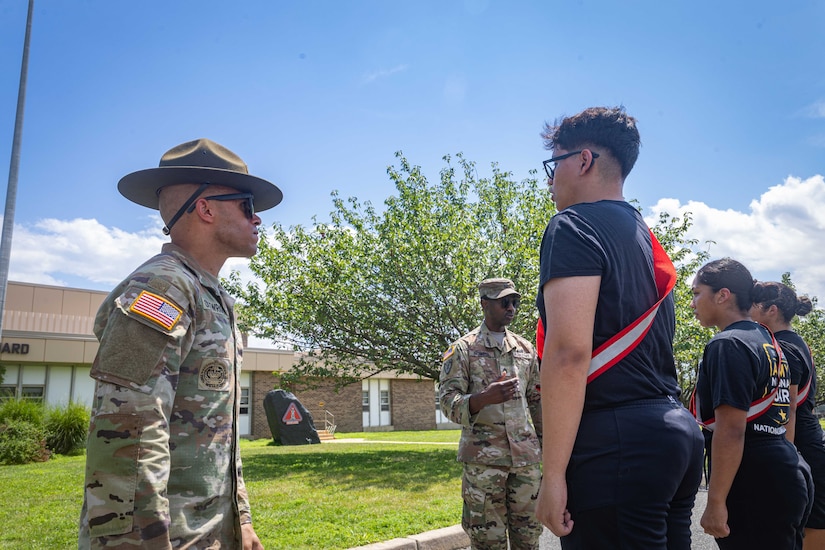
A man wearing a camouflage military uniform and sunglasses stares at a man dressed in civilian attire while standing in formation. In the background, another man, wearing a camouflage military uniform, gestures to two women in civilian attire who are also standing in formation.

Since November 2024, the War Department has achieved its strongest recruiting performance in 30 years, with fiscal year-to-date accessions as of the end of August reaching 106% of active-duty targets.  

The Army National Guard and the Air National Guard have combined to enlist almost 50,000 new members this fiscal year as of this month, bringing total National Guard end strength to over 433,000, surpassing each component's goals and marking one of the most successful recruiting years in over a decade. 

"Young Americans are eager to serve," said Air Force Gen. Steve Nordhaus, National Guard Bureau chief. "Today's recruits are seeking long-term value, and the National Guard delivers through career training and hands-on, practical experience in more than 200 career specialties. 

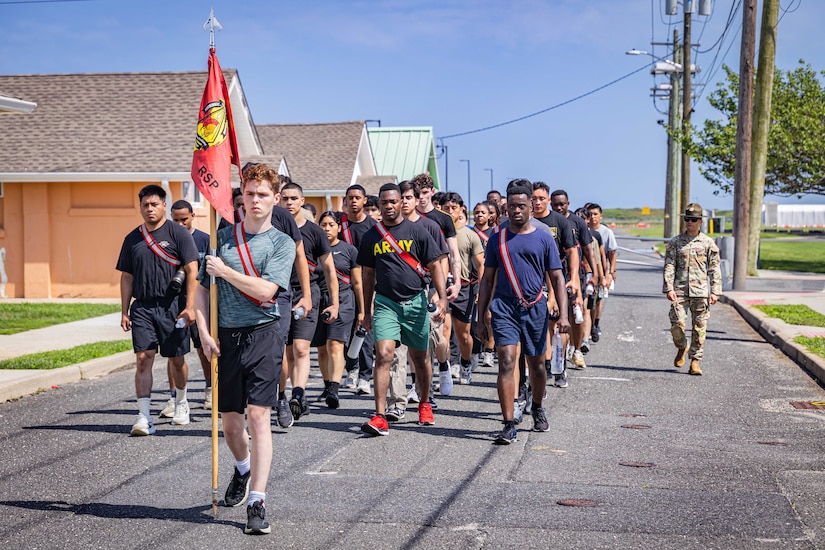
A group of men and women, all dressed in civilian attire, march in formation as a man in civilian attire leads the group, carrying a flag attached to a pole. A man wearing a camouflage military uniform marches to the right of the formation.

"The guard provides a path to service that offers balance with civilian careers and allows our soldiers and airmen to live locally and serve globally," he said. "We're not just preparing new recruits to serve; we're preparing them to lead and succeed." 

Nordhaus emphasized the guard's value, providing 20% of the joint force at 4% of the DOW budget, and its core missions — defending the homeland, supporting the fight, building partnerships and supporting warfighters and their families — which demand wide-ranging skill sets. He noted that the National Guard aligns with the Interim National Defense Strategy Guidance, which prioritizes homeland defense, deterrence in the Indo-Pacific region and burden sharing with allies and partners. 

"The guard is central to President [Donald J.] Trump's vision of peace through strength and Secretary [Pete] Hegseth's focus on restoring the warrior ethos, rebuilding the military and reestablishing deterrence," Nordhaus said. "Recruits are proving they're energized to contribute to that." 

In March, the Army National Guard launched a new marketing campaign to attract young people to part-time service. The campaign, "Uncommon is Calling," highlights the dual lives of guardsmen, who balance civilian careers with essential roles during emergencies and national crises. It emphasizes the unique opportunities for personal and professional growth available within the guard. 

Striking the civilian-military balance is exactly what attracted Army Spc. Bruno DaSilva, who is assigned to the 1060th Transportation Company of the Massachusetts National Guard. 

"Outside of the National Guard, I have my own company … I'm in the insurance business," DaSilva said. "In the National Guard, I can serve my country and run my business at the same time." 

The Army National Guard has focused most of these marketing ads online and on digital streaming services, with some spots airing on traditional television. 

Army Col. Timothy Smith, chief of the Army National Guard's Strength Maintenance Division, said the campaign has helped deliver new awareness of the opportunities of serving in the Army National Guard. 

"The branding refresh of 'Uncommon is Calling' brings a fresh perspective to the unique dual mission of the Army National Guard," he said. "The campaign highlights the most uncommon, exciting and meaningful part-time job out there: serving in the Army National Guard." 

Army Pvt. Ethan Walling enlisted in the Virginia National Guard this summer to serve as a motor transport operator. He said serving in the guard fulfills a lifelong dream. 

"It has always been my dream to be in the military," Walling said. "Since I was 7 years old, I would play with my miniature Army men, and I would always tell my mom that I was going to join one day. After talking with a National Guard recruiter and hearing that I could receive federal and state benefits, I knew that the guard was my calling." 

Walling said the guard has given him "purpose, pride and opportunity," and he is excited to see how the journey shapes his future. 

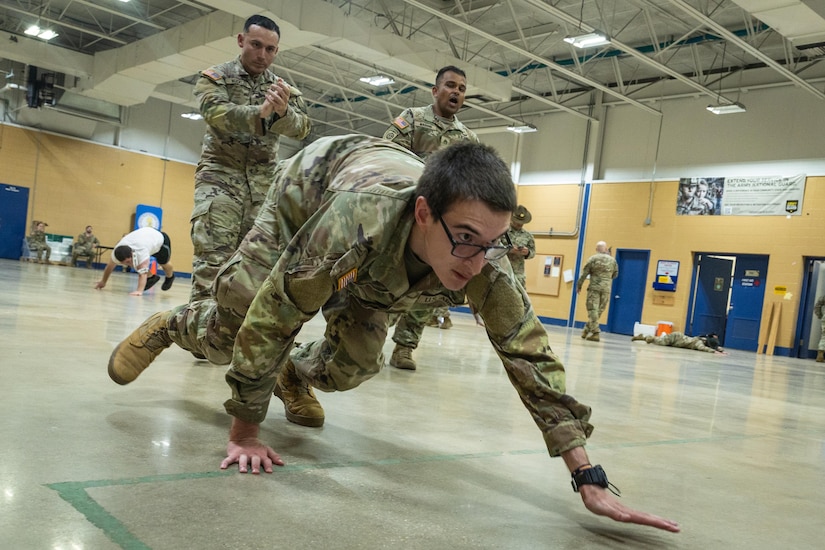
A man wearing glasses and a camouflage military uniform crawls across a gym floor as two other men, also dressed in camouflage military uniforms, yell at him.

"The National Guard has been nothing short of a family since the beginning, and I believe I have finally found the perfect balance between serving my country, supporting my community and pursuing my personal goals," he said. 

In addition to the marketing campaign, Smith also credits the recruiters in every state, three territories and Washington — collectively known as "the 54." 

"Our recruiters' dedication across the 54 drives this success," he said. "Their hard work is the bedrock of our readiness. The organization has made recruiting and end strength priorities because if you can't fill your end strength, you can't be ready; they're tied together. Our readiness starts with our recruiters." 

The Army National Guard has surpassed 328,000 soldiers in end strength — the total number of authorized service members needed to meet mission requirements. Smith highlighted the Army's Future Soldier Preparatory Course as another initiative that has also helped the Army National Guard attract potential soldiers. 

Through the course, the Army provides focused academic and fitness instruction for those who have the desire to work hard to achieve Army standards. The program is a bridge to basic training and, ultimately, assignment to a unit. To date, nearly 7,000 Army National Guard recruits have successfully entered basic training through the future soldier course. 

In March, Nordhaus and Senior Enlisted Advisor John Raines visited the future soldier course at Fort Jackson, South Carolina, to meet with National Guard cadres and trainees. 

"We're a team of teams," Raines told a group of trainees who had completed the program. "And we need every committed American who wants to serve, even if they aren't meeting the standards when they make that decision. This program helps them reach their potential and ensures we have high-quality soldiers in our formations, because the standards won't change." 

Raines also praised the Army National Guard's Recruit Sustainment Program, established in the mid-2000s to reduce attrition and prepare recruits for basic combat training and follow-on advanced individual training. Army National Guard recruiting and retention battalions operate sustainment program sites in every state, territory and Washington. 

"Everybody has a place in the National Guard," he said. "We will find you a place where you can serve your community, your state, your territory or district and our nation." 

The Air National Guard also beat its fiscal year recruiting goals and is on track to surpass 105,000 airmen by the end of the fiscal year. Air Force Col. Daniel Curtin, Air National Guard Recruiting and Retention director, said recent Air National Guard recruiting success is driven by numerous indicators. 

"It's a lot of things," Curtin said. "We've had 19 consecutive months of year-over-year increases in new accessions. The recruiting environment is strong … and we have worked diligently to establish a culture of excellence and opportunity that appeals to potential recruits. The results are evident." 

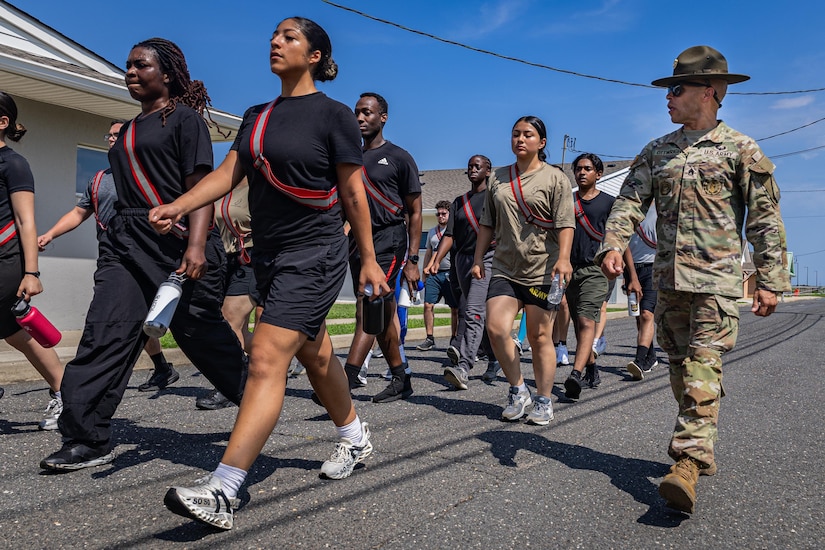
A group of men and women dressed in civilian attire marches in formation, with a man wearing a camouflage military uniform and sunglasses marching alongside the formation.

Curtin explained that the Air National Guard is working to centralize recruiting efforts within each state, territory and Washington. Previously, Air National Guard recruiting operational alignment varied. Some operated under a wing, or a force support squadron, while others worked under a state's joint forces headquarters. Now, Air National Guard recruiting headquarters will operate as separate flights or squadrons, dedicated solely to recruiting and retention. 

"The biggest thing we are trying to do is create a structure where you have a single officer that is responsible for the recruiting force in that state or territory," Curtin said. "It is a formally appointed commander responsible for recruiting. That's probably the most important thing that we're driving out of this, because that allows us to do a lot of other things." 

Curtin added that he believes that the most important initiative in FY25 was the strategic investment in personnel and infrastructure, specifically the funding of 150 temporary recruiting support positions and 210 temporary unit manning document positions.  

"These roles have been critical in enhancing recruiting operations, including production activities, marketing, medical support, training, and administrative efficiency. By bolstering the recruiting command structure and providing targeted resources, the [Air National Guard] has created a robust framework that directly supports its historic accession achievements." 

Nordhaus said he is excited about this year's recruiting numbers and emphasized that the National Guard needs to maintain this momentum. 

"The source of our strength is the fearsome deterrence of our warfighter talent — the men and women of the National Guard," he said. "While we exceeded our goals with historic levels of recruiting this year, we cannot take our foot off the accelerator. We must continue recruiting the next generation of elite warfighters while retaining our most skilled and talented soldiers and airmen." 

Tuesday, September 23, 2025

From Combat Veteran to TV Star

Actor Larry Wilcox, best known for his leading role as a California Highway Patrol motorcycle officer and later as a captain in the TV series CHiPs, which aired from 1977 to 1983, was also a Marine Corps combat veteran.

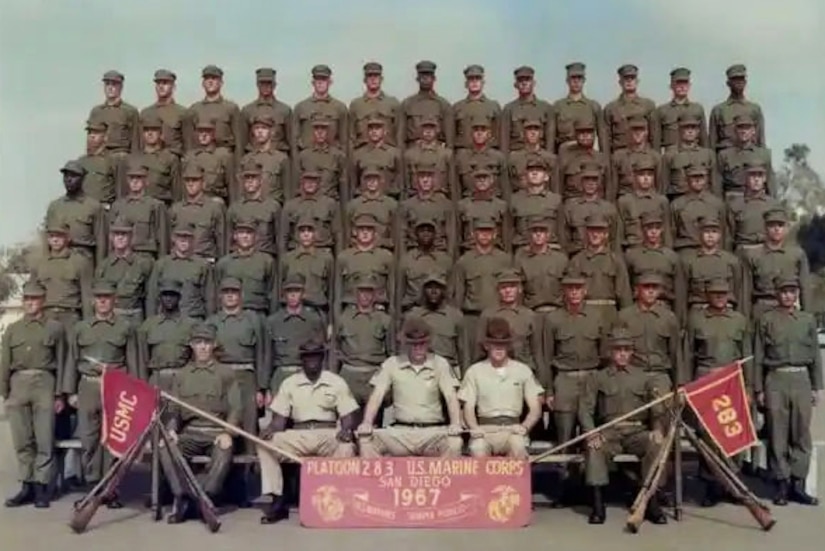
In May 1967, Wilcox went to boot camp at Marine Corps Recruit Depot San Diego. 

He served as a field artilleryman assigned to 2nd Battalion, 12th Marine Regiment, from 1967 to 1970. 

A Marine in a military dress uniform poses for a photo.
A Marine is pictured in a military uniform and helmet.
A man poses for a photo in sunglasses and a police uniform costume.
Those years included a 13-month deployment to South Vietnam, where he served in the northernmost region of the country, in places such as Dong Ha, Con Thien and the demilitarized zone bordering North Vietnam.  

Also, he fought in the Tet Offensive, which started Jan. 30, 1968, and lasted until September 1968.

Like many Vietnam War veterans, Wilcox's homecoming was not joyous. 

"My memories of my returning home to San Francisco were ugly, and I did not understand why people spat on you for risking your life," he said, referring to people at the airport. 

 During his final year of military service, he was stationed at Marine Corps Air Ground Combat Center in Twentynine Palms, California, where he was honorably discharged as a staff sergeant in 1973. 

Wilcox, born Aug. 8, 1947, in San Diego, still lives there. 

His older brother, Randy, also served in the Marine Corps, including during the 1962 Cuban missile crisis.

A platoon of Marines wearing military uniforms sitting and standing on bleachers.

Monday, September 22, 2025

Hegseth Hosts Canadian Counterpart at Pentagon for Bilateral Discussion

 Sept. 22, 2025 | By C. Todd Lopez, Pentagon News

Secretary of War Pete Hegseth today hosted the Canadian Minister of National Defense David McGuinty for a bilateral discussion at the Pentagon. 

Canada is one of the United States' closest defense partners as both nations share responsibility for defense of North America through the North American Aerospace Defense Command. 

"Our great nations have served together in many wars. ... And today our warfighters continue that, serving together through joint exercises, defending the homeland and really the only binational command of its kind, which is NORAD," Hegseth said. 

The secretary said the work at North American Aerospace Defense Command is important for the defense of North America, but also that there's much that can be done between the U.S. and Canada to modernize its operations. 

"The threats to North America require a strong U.S.-Canada defense relationship — there's no doubt," Hegseth said. "And I know Canada has committed at the [NATO] summit to increasing defense spending to 5% of [gross domestic product] by 2035, which is incredible to see. A very strong step." 

The Canadian Prime Minister Mark Carney announced in June an additional $9.3 billion in defense investments, McGuinty said. These investments bring Canada's commitment to defense to 2% of its GDP "a full five years ahead of schedule." 

McGuinty said the increase in spending is not just about budgets. 

"It's a game changer," he said. "These investments are building combat-ready forces, recruiting and retaining the best, modernizing critical infrastructure on 33 bases, upgrading our cyber [and] our digital defense, [and] sharpening our ability to fight shoulder-to-shoulder with folks like you." 

Canada, like the U.S., is also working to strengthen its defense industrial base, McGuinty said. 

"We're launching a major defense industrial strategy for the country; cutting through red tape to deliver faster, improving resilience, securing access to vital resources, like critical minerals — turns out, we have lots of those," he said. "These hard power capabilities are going to ensure we're ready to strike back and defend whenever and wherever we need." 

While Canada is stepping up its defense involvement in both the Euro-Atlantic and Indo-Pacific regions, McGuinty said homeland defense in North America, in partnership with the U.S., remains the top priority. 

"Defending North America remains our top priority," McGuinty said. "That starts in the Arctic — our shared front line. Canada is locked in to protect the north, its people, its environment and its strategic advantage. It's where our sovereignty, our national security and our partnership with the U.S. comes together strongest. So, from NORAD modernization to Arctic surveillance and infrastructure, we're taking major and fast, bold, decisive action to shore up our collective defense." 

Senior Air Force Leader Recounts Recent Successes, Underscores Need to Outpace Adversaries

 Sept. 22, 2025 | By Matthew Olay, Pentagon News

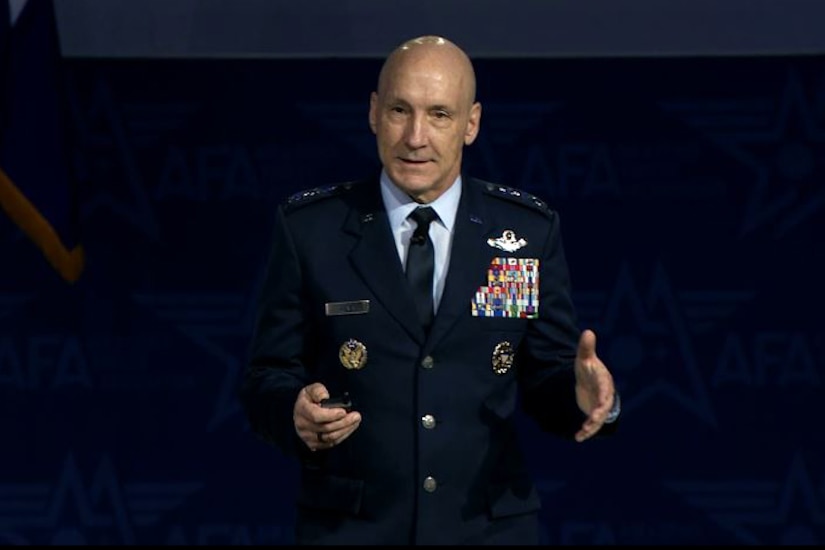
During a keynote address at the Air and Space Forces Association's Air, Space and Cyber Conference at National Harbor, Maryland, today, Air Force Chief of Staff Gen. David W. Allvin spoke of the service's recent successes — both real-world and exercise-based — while also underscoring the importance of keeping a winning pace when facing our nation's adversaries. 

A person in a dress military uniform speaks and gestures with his hands indoors.

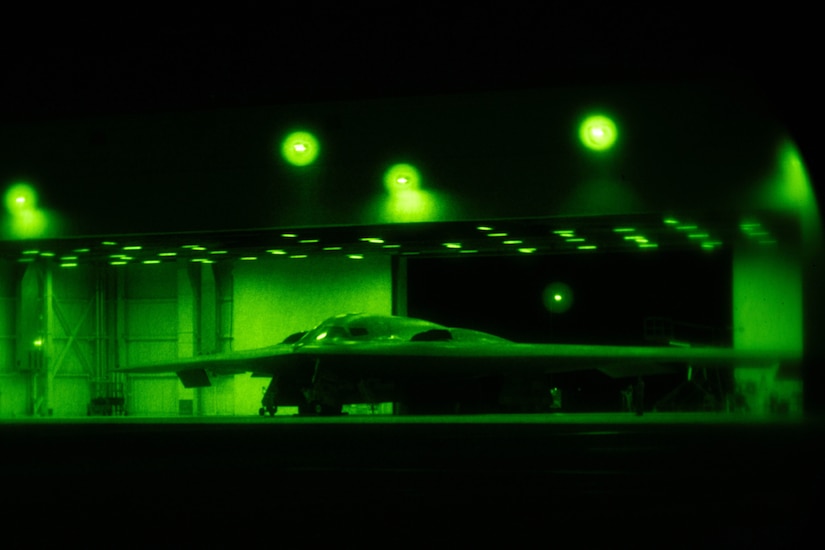
Allvin led off his remarks discussing the complexity of the Air Force's successful execution of Operation Midnight Hammer, the June 21 mission during which numerous Air Force assets inflicted significant damage on Iran's nuclear program at three separate sites. 

Regarding that mission, Allvin said it wasn't just the precision of the weapons and capabilities that stood out, but it was also the airmen who handled the complexity of the operation with great skill and professionalism. 

"It was a complex and imaginative mission that was designed, but with that complexity came unforeseen issues that came up in front of our airmen — over and over and over again," Allvin said. 

"And, in a story that will never really, truly be told in public, our airmen were unbelievable," he continued, adding that Air Force personnel properly assessed risk, understood what their roles were and knew what it would take to execute the mission successfully.  

A view through night vision of a flat, triangular-looking military aircraft sitting in a hangar.

Allvin also spoke highly of Exercise Resolute Force Pacific, a large-scale event conducted July 10-Aug. 8, which he described as the largest Air Force-led exercise in the Indo-Pacific region since the Cold War. 

"What set this exercise apart was the scope and the scale and the complexity [involving] transitioning from the types of fights we've done to the types of fights we don't want to have to do, but need to prevail [in] if we do," Allvin said.  

While discussing the Air Force's current state of readiness, Allvin said it's essential to constantly be asking whether the service is going fast enough and reaching deep enough to meet the challenges of the day. 

"In this environment, with the consequences on the other side of it, we have to beware of the familiar [and] be cautious about the warm blanket of the comfortable," Allvin said, adding that it's necessary to keep up a quick pace of readiness because U.S. adversaries aren't slowing down.

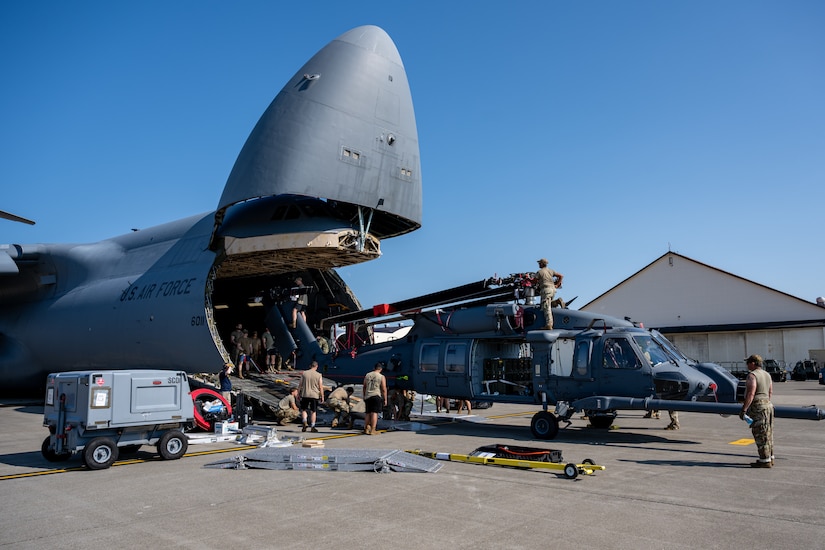
A handful of service members in casual attire are on a tarmac loading a military helicopter with its rotors folded together into the front end of a large military cargo aircraft.

To illustrate his point, Allvin circled back to Operation Midnight Hammer, stating that, in the aftermath of the operation, Iran likely went straight to work on fortifying its nuclear program and making it less vulnerable to attack. 

"You can believe they probably got after it immediately … and we've got to respond to that," Allvin said.  

Returning to the topic of pacing, Allvin said merely moving at the "speed of relevance" is not adequate enough to meet present-day challenges. 

"Last time I checked, our mission says 'fly, fight and win.' … So, if you want to know what the pace is, that's the pace. We have to move out at the pace to win, and if we're not getting there, then we need to find another gear," he said. 

Allvin ended his remarks by calling himself an optimist, saying he believes the Air Force will continue to keep the pace to win because of the constant influx of talented, skilled, innovative and ready airmen who are consistently joining the ranks on a regular basis. 

He also praised industry partners and entrepreneurs who are working to deliver the materiel the Air Force needs. 

"And what the nation needs is one Air Force, integrated, aligned, focused [and] ready to fight; the nation needs more Air Force [with] more capability, more capacity [and] more options for the president; and the nation needs your Air Force moving out at a pace to win," Allvin concluded.

War Department Continues Nuclear Modernization

Sept. 22, 2025 | By David Vergun, Pentagon News

In light of the changing global security landscape, the War Department is considering how to approach modern-era deterrence differently, said Air Force Maj. Gen. Brandon D. Parker, director of global operations at U.S. Strategic Command.  

A man seated in a dress uniform speaks into a microphone and gestures.

Parker spoke today about modernizing the nuclear triad at the Air and Space Forces Association's Air, Space and Cyber Conference at National Harbor, Maryland. 

"We see a lot of promise, both in the programs of record, but also in the legacy systems that we have existing today," he said. "So, while we go through that modernization process, it's equally important that we sustain the capabilities that we have today so that we can continue to deter and, if necessary, respond." 

The programs of record include the LGM-35A Sentinel intercontinental ballistic missile, the B-21 Raider stealth bomber, Columbia-class submarines and nuclear command, control and communications upgrades. 

The legacy systems include the Minuteman III ICBM, the B-52H Stratofortress bomber, the B-2 Spirit bomber and the NC3, which links space-based capabilities. 

Modernization of NC3, Parker said, will include incorporating cybersecurity, designing it to integrate with existing and future systems, and incorporating data analytics tools, automation, machine learning and artificial intelligence to aid operators. 

"The nuclear triad is the bedrock of our national defense. There's no element of U.S. military power that can replace the unique deterrence characteristics of nuclear forces," he said. 

The triad provides a wide range of options to the president, Parker added. 

The 2022 Nuclear Posture Review reaffirmed the nation's commitment to a safe, secure, effective, nuclear force posture, which includes all three legs of the triad, he said, referring to submarines, bombers and land-based missiles that can deliver nuclear weapons. 

In the Cockpit: Docuseries Captures Intensities of Elite Fighter Pilot Training

 Sept. 22, 2025 | By Katie Lange, Pentagon News

While movies like "Top Gun" and "Top Gun: Maverick" show people a glamorized version of military fighter pilot life, most people really have no idea what it takes to become an elite aviator, until now.  

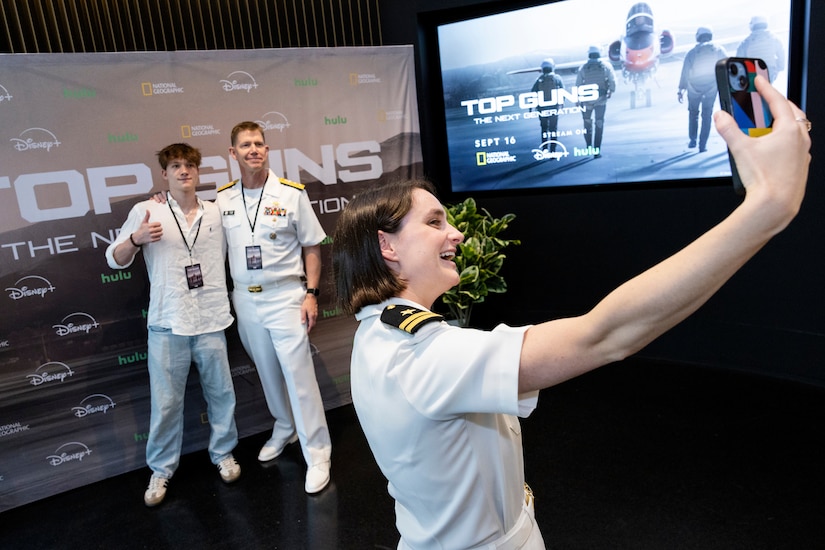
A new National Geographic docuseries called "Top Guns: The Next Generation," follows a handful of Navy and Marine Corps officers as they go through advanced strike fighter training — the last, hardest and most unforgiving phase of fighter pilot qualification training.

A person stands at a podium at the front of a movie theater filled with people. The screen reads, “Top Guns: The Next Generation” and depicts four people walking toward an aircraft.

The show's producers chose to film that phase because of its intensity, but it's also what audiences are most familiar with. The show skips past the classroom training and highlights when students go beyond being "just a pilot" to what it takes to become a fighter pilot.  

"It's the most crucial point of their training. It's really the point in which they can fail, and their dreams of becoming a fighter pilot are over," said Karen Edwards, the series' showrunner. "They spent years getting to this point, and now it's all on the line." 

When choosing candidates for the show, Edwards said they met with about 30 trainees assigned to Training Wing One, based at Naval Air Station Meridian, Mississippi, where most of the series was shot for more than a year. They selected a variety of students with different backgrounds, experience levels and skills.  

"One of the participants used to be a yoga teacher and is now a Marine," Edwards said. "Another guy talked about how he was adopted at birth and how that has impacted him and his religion. For others, it's in the family blood."  

Marine Corps Capt. Micah Nissly was the adoptee Edwards mentioned. He said his dad, a pastor, impressed upon him the importance of public service and giving back, so he enlisted in the Marines. After eight years of service, he went to officer candidate school before starting aviation training. 

"I think it's important for individuals to know that, regardless of their upbringing and how they came into this, they have this opportunity," Nissly said. "Naval flight training is truly the great equalizer: you give it all. You make it or you don't. And I think your background matters so little … what matters is your performance." 

A woman wearing a formal military uniform takes a selfie with two men in the background, standing in front of a large poster. One of the men is dressed in casual attire, and the other is wearing a formal military uniform.

Initial Reluctance

When the documentary opportunity arose, Nissly said he initially denied the offer to preserve the legacy of the "quiet professional," as he knew most in the jet community to be. But then his wife convinced him that it's something his 6-year-old daughter could one day look back on with pride. 

"I really hope the viewers … see that behind every flight is a naval aviator committed to teamwork, integrity and self-improvement. They'll see our ups and downs, but humility and accountability define us way more than the egos," Nissly said.

Marine Corps Capt. Stephanie Harris was also reluctant to be part of the production because she didn't want it to take away from her focus on training. But she eventually agreed. 

"I've looked up to so many people who walked this path before me," she said. "Providing an example of the kind of people that do this — and not just your stereotypical version — felt important to me."

Stunning Cinematography With a Focus on Accuracy

Some of the series' filming also took place at Naval Air Facility El Centro in the California desert. El Centro specializes in teaching trainees strike training — how to accurately drop bombs and other ordnance. A small portion of filming also took place at Naval Air Station Key West, so the students could access the aircraft carrier USS Dwight D. Eisenhower. These locations helped crews capture stunning aerial visuals that included precision bombing drills, dogfighting, evasive maneuvers and carrier landings.  

"[Students learn this] in a really short period of time, and it's a lot to ask, which makes it all the more amazing when they achieve it," Edwards said.

To get the shots, the production team put cameras inside T-45 Goshawk training aircraft using in-cockpit mounts designed, fabricated and installed by Naval Air Systems Command and the Naval Air Warfare Development Center. When the students are flying, the audience can hear minute by minute what they're saying. 

"Everything that happens inside the jet is caught in real time," Edwards said. "You hear them being taught — what they get right, what they get wrong, how they can improve." 

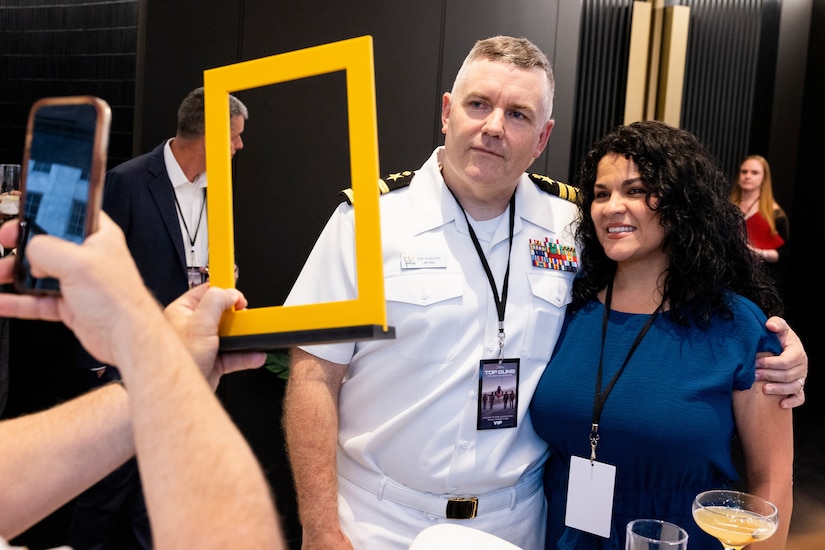
A man in a formal military uniform poses for a photo with a woman in business attire as another person, not pictured, holds up a phone and a yellow, square picture frame.

To ensure safety wasn't compromised, the production team had instructors and professionals fly the aircraft for the external cockpit-to-cockpit scenes, recreating the flights the students had taken. 

"We filmed them externally using the same film crew as they used for 'Top Gun: Maverick' … because that is so dangerous," Edwards said.  

Nissly said he thinks the series did a great job of focusing on authenticity.  

"They did an amazing job filming the honest struggles. There's no do-overs for this," he said. "This is real life, and the stakes were as high for us then. What you see is what you get." 

"It's inspiring to hear and see up close the authentic stories of those serving in our Navy today," said Navy Rear Adm. Ryan M. Perry, the service's chief of information. "It's about young men and women chasing a dream to fly, and the intense training and challenges they go through to achieve their goals."                    

Emotions Run High 

For many of the participants, the high-stakes, life-or-death training takes an emotional toll, which is also captured on camera.

"All of them come back and share and have moments where it's like, 'Am I good enough? Am I going to pass tomorrow? Will I make the grade?'" Edwards said. "That is crucial to their training. They can never become complacent or confident. They're always being pushed to the next level." 

At one point in the series, Nissly gets sick while practicing dogfighting with a senior officer in the jet with him. The fact that it was an incident beyond his control was something he struggled with.  

"Getting through that mental block of, 'Will this happen again? Is this going to be a common occurrence? How am I going to fight through that?' It was definitely something I had to get over," Nissly said, before joking, "Humility also comes in and will always keep me on the straight and narrow."  

Nissly said he's driven by the desire to support enlisted troops — which he was, once — fighting on future battlefields. Similarly, Harris said the hardest part of her training was the thought of those troops on the ground someday and knowing that she needed to hit her targets for them.  

"[Strike training] is one of the most difficult missions that we do. So that phase, for me, felt the most intense," she said.  

When asked what drives her, Harris said some of it is the fear of letting other people down. "Not being prepared enough when the moment comes," she said. "Fear that I won't be ready, and that drives me in tremendous ways."  

The Takeaway 

For the Navy and Marine Corps, the goal of capturing the intense demands of this program on film was to highlight what it truly takes to be a naval aviator — even if it shows failure that inevitably happens.

"These are real human beings, real people who are really giving it their all," said Navy Lt. Cmdr. Joseph "Bones" Pfaff, entertainment liaison at Navy Office of Information West, which led the project. Based in Los Angeles, the office works with entertainment industry professionals to ensure an authentic, accurate portrayal of the Navy's assets, policies and people in television and film. 

"We have a very strenuous and challenging pipeline to go from being an unwinged aviation student to actually earning their wings. Not everybody succeeds, and that’s OK," Pfaff continued.  

"It doesn't end when they finish fighter pilot school," said Marine Corps Maj. Hector Alejandro, director of the Marine Corps Entertainment Office in Los Angeles. He explained that the trainees who earn their wings continue training at their squadrons in the fleet. "Someday, a 19-year-old Marine is going to be pinned down on a hillside, and he'll be looking to the sky for help. The person in that cockpit has to be the one who won't fail him. Our selection and training pipeline is ruthless because we're building pilots worthy of that trust." 

Series producers said they expect the audience to connect with the dedicated men and women highlighted in the show — and learn that it’s not like what they see in the movies.  

"It's not just about going up and having some fun in the jets on a daily basis. This is a job. They are careful. They're trained by very, very experienced people," Edwards said. "You take the audience into a privileged world that they would never, ever be able to see." 

"Top Guns: The Next Generation" airs on Tuesdays on National Geographic and streams the following day on Disney+ and Hulu. 

Medal of Honor Monday: Marine Corps Cpl. Jack Davenport

Do I save others or save myself?  

That's a question an unknown number of service members have asked themselves during battle throughout the ages. It's one Marine Corps Cpl. Jack Arden Davenport didn't hesitate on. During an attack in Korea, he chose to save his comrade's life instead of his own. That selfless decision led him to receive a posthumous Medal of Honor.  

A man looks stoically at the camera for a photo.

Davenport was born Sept. 7, 1931, in Kansas City, Missouri, to Fred and Gloria Davenport. He had a sister named Jane and a twin brother, Karl, who served in the Navy.  

Davenport was an active child who always liked to be on the go, his parents told the Kansas City Times in 1952. Throughout high school, he played baseball and was a paperboy for the Kansas City Star newspaper, where his father worked.  

After graduating from Paseo High School in 1949, Davenport studied for a year at the University of Kansas, where he played on the school's football team. He was also an amateur boxer who participated in at least one Golden Gloves tournament.  

However, when the Korean War broke out, Davenport decided to trade in studying for the fight against communism. He enlisted in the Marine Corps July 1950. After basic training, he was stationed at Camp Pendleton outside of San Diego, where he earned the nickname "Dynamite" from other Marines. In December of that year, he was deployed to join the 3rd Battalion, 5th Marine Regiment, 1st Marine Division in Korea.  

According to newspaper reports of the time, Davenport was on the front lines almost continuously until the day he made the ultimate sacrifice.  

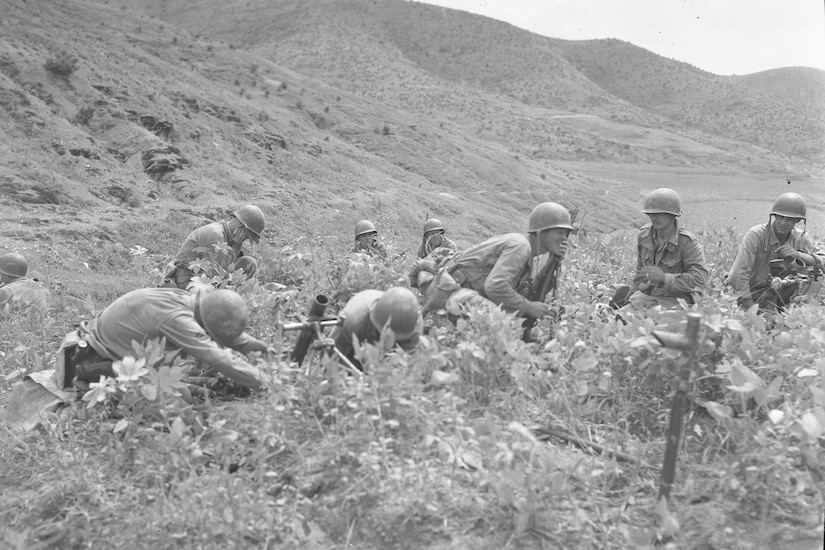
Early on Sept. 21, 1951, Davenport was serving as a squad leader with Company G in the Songnae-dong area of Seoul, South Korea, when they were attacked by enemy troops trying to infiltrate their sector.  

Nearly a dozen people in combat uniforms and helmets huddle in tall grass.

Davenport directed his comrades to defend their position. He and a fellow Marine, Pfc. Walter Barfoot, were doing so from a foxhole. Suddenly, an enemy grenade fell at their feet.  

Without any concern for his own life, Davenport jumped on the deadly projectile, which killed him. Barfoot was spared, however, and their unit managed to repulse the enemy, largely in part to Davenport's calm leadership.  

Many of Davenport's fellow Marines wrote to his family after his death, according to a December 1952 issue of the Kansas City Times.  

"He was the best. They didn't come finer or more courageous that little ole Dynamite," one Marine wrote to Davenport's mother.  

The fallen 20-year-old's body was returned to the U.S. in January 1952 and buried in Mount Moriah Cemetery in Kansas City.  

About a year later, Davenport posthumously received the nation's highest honor for valor. The Medal of Honor was presented to his father on his behalf during a Pentagon ceremony. Davenport's brother, Karl, was flown in by the Navy from Japan on special leave for the ceremony.  

In the late 1980s, a gymnasium at Camp Pendleton was named in Davenport's honor.  

Friday, September 19, 2025

Department of War and Mongolian Ministry of Defense Conduct Bilateral Defense Framework

Mr. Alvaro Smith, Deputy Assistant Secretary of War (DASW) for China, Taiwan, and Mongolia and Major General Gankhuyag Davagdorj, State Secretary of the Ministry of Defense of Mongolia (MOD) conducted the annual U.S.-Mongolia Bilateral Defense Forum (BDF) meeting on September 19, 2025. 

The two officials affirmed their commitment to deepening bilateral defense relations based on mutual interest and a common-sense approach to security and prosperity in the Asia-Pacific region. They discussed regional security matters as well as concrete opportunities to further enhance security cooperation, including through exercises, training, security assistance, and defense equipment sales. They also discussed areas where additional defense expenditure by Mongolia could significantly improve the Mongolian Armed Forces' capabilities and readiness.

DASW Smith commended Mongolia for its embodiment of the warrior ethos and its engagement in peacekeeping operations. Mongolia and the United States emphasized the importance of their Strategic Third Neighbor Partnership in advancing the security and economic prosperity of both countries.

Army Enhances Border Security Through Partnership, Unique Capabilities

 Sept. 19, 2025 | By Army Capt. Samuel DeWerth-Jaffe, Joint Task Force Southern Border

Joint Task Force Southern Border demonstrates an unprecedented level of interoperability with partner agencies as part of their whole-of-government approach to secure the southern border. 

From the headquarters down to squad-sized elements directly on the border, task force personnel are working alongside U.S. Border Patrol every day, ensuring synchronized efforts to deter illicit activities. 

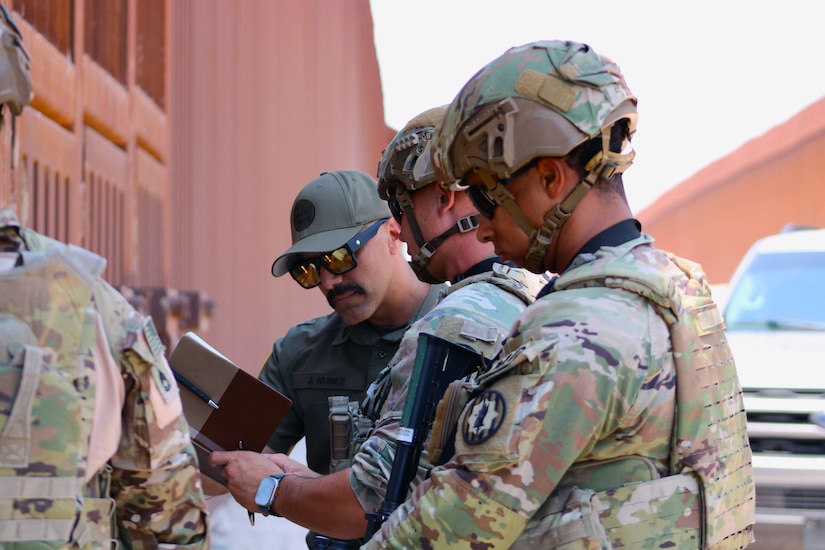
Two soldiers speak to a person in a baseball cap outside, with a large structure and vehicle in the background and another person nearby.

"My experiences in past deployments and working in Europe have reinforced the importance of partner collaboration — a principle directly applicable to our current mission with Border Patrol," said Army Lt. Col. Cris Gasperini, commander of the 1st Battalion, 41st Infantry Regiment, 2nd Stryker Brigade Combat Team, 4th Infantry Division, assigned to JTF-SB. "The integration of our organic assets with those of Border Patrol has been exceptionally effective, demonstrating the necessity of a whole-of-government approach to border security." 

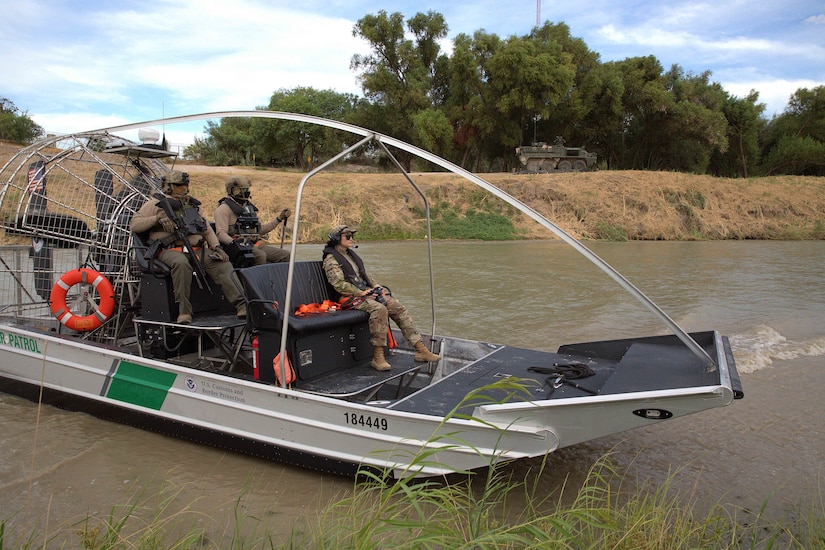
The task force's integration has proven critical to operations across the southern border's diverse terrain. Along the 1,954 miles of the border lie cities, deserts, thick vegetation, rivers and rural communities. 

The varied terrain along the border presents distinct security challenges. These are addressed through both the organic assets of JTF-SB and the complementary capabilities of interagency partners. 

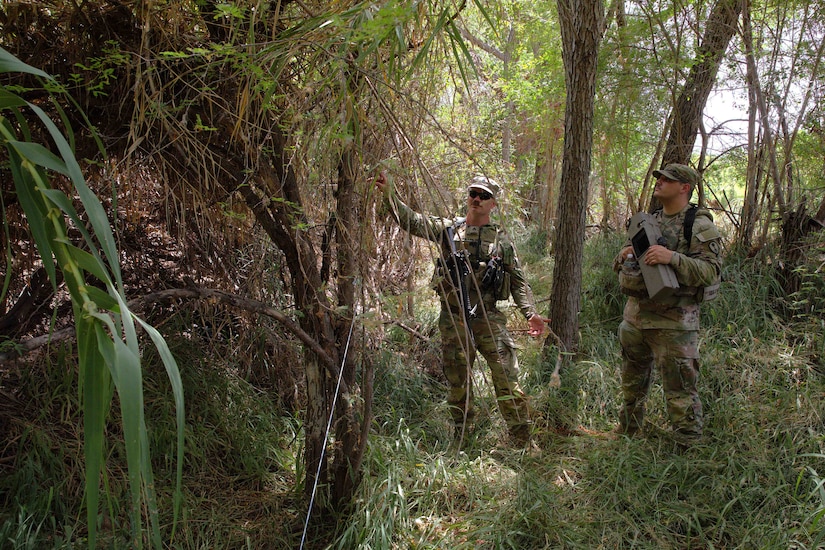
Two soldiers wearing camouflage military uniforms look at a brush covered area while standing in a forest.

The AN/MPQ-64 Sentinel radar is one of the unique capabilities that the task force uses to address these security challenges at the border and enable U.S. Border Patrol's law enforcement role while also providing defensive capabilities against small unmanned aerial systems. 

The U.S. Border Patrol El Paso Sector, which oversees 268 miles of the southern border in Texas and New Mexico, is one of nine sectors that has seen the benefits of an integrated approach with the task force. 

Three people sit in a metal boat on a small body of water under blue skies with trees and tall grass in the background.
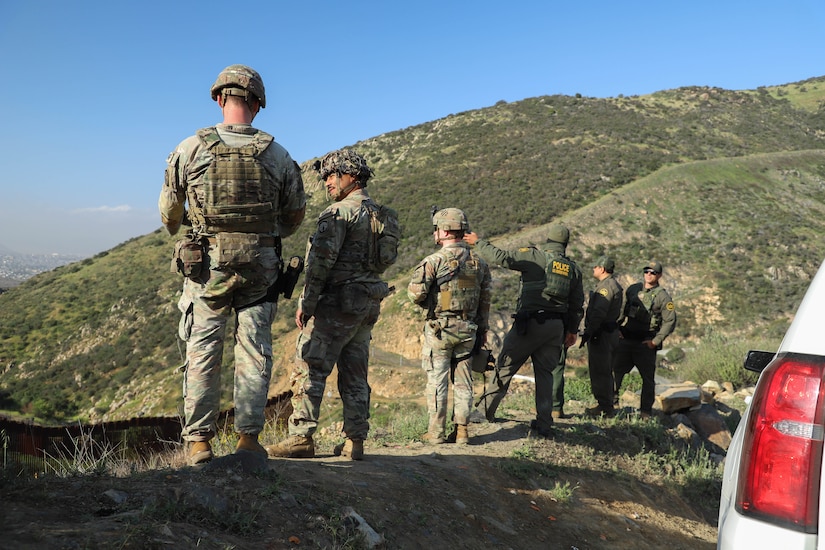
Three soldiers wearing camouflage military uniforms stand on a hill next to three other people in green police uniforms. One of the men is pointing toward the valley below.
"The Border Patrol in El Paso focuses on collaboration with various agencies and the Department of War's JTF-SB to enhance border security to target hostile drones and the challenges they pose," said Walter N. Slosar, chief patrol agent with the El Paso Sector. "Enhanced detection capabilities between JTF-SB and U.S. Border Patrol give us full spectrum capabilities to track, identify and mitigate aerial threats." 

JTF-SB and U.S. Border Patrol remain committed to strengthening this vital partnership and continued innovation in the face of evolving threats with a broad range of capabilities. This collaboration serves as a model for future interagency cooperation and underscores the importance of a unified approach to national security. 

Thursday, September 18, 2025

Secretary of War Hegseth, U.S. Army Chief of Staff Gen. Randy George Host the 2025 Department of War National POW/MIA Recognition Day Ceremony

Sept. 18, 2025

Secretary of War Pete Hegseth and U.S. Army Chief of Staff Gen. Randy George, will host the Department of War 2025 National POW/MIA Recognition Day ceremony to honor those who were held captive and returned, as well as those who remain unaccounted for from past conflicts, on Friday, Sept. 19, 2025, at 10 a.m. EDT on the Pentagon River Terrace Parade Field. The program will include remarks by Secretary Hegseth and Gen. George.

The ceremony will also be livestreamed on War.gov and broadcast on Channel 2 in the Pentagon.

This is an open press event, except for TV/video coverage, which will be pooled. All journalists covering the ceremony must obtain a wristband from security screening. Journalists without a Pentagon access badge must go through security screening at the base of the River Entrance Pedestrian Bridge and will be escorted to the ceremony from there. Security screening will begin at approximately 8:00 a.m.; have proof of affiliation and two forms of photo identification. Security screening at this location will close promptly at 8:30 a.m. EDT. Journalists with a Pentagon access badge, and whom have entered the building prior to 8:30 a.m. EDT, may go through security screening at the River Entrance to obtain their wristband; please obtain your wristband at the River Entrance by 8:25 a.m. EDT. All journalists covering the ceremony, including those with a Pentagon access badge, must be in place no later than 8:30 a.m. EDT. Once security screening has been initiated at the base of the bridge, all journalists entering the building via the bridge for any reason, including those with a Pentagon facility access card not covering the arrival ceremony, must undergo security screening.

Media interested in covering this event must RSVP by 12 p.m. EDT Thursday, Sept. 18, to be submitted for approval. Please respond to Ms. Riley Podleski at riley.p.podleski.civ@mail.mil with name, outlet, position, email and phone number. 

Please call 703-697-5131 with any questions.

U.S. Soldiers to Compete in International Handgun Championships


Army Sgt. Aaron Eddins and Staff Sgt. Jacob Hetherington will compete at the 2025 International Practical Shooting Confederation World Shoot Handgun Championships in South Africa Sept. 22-27. 

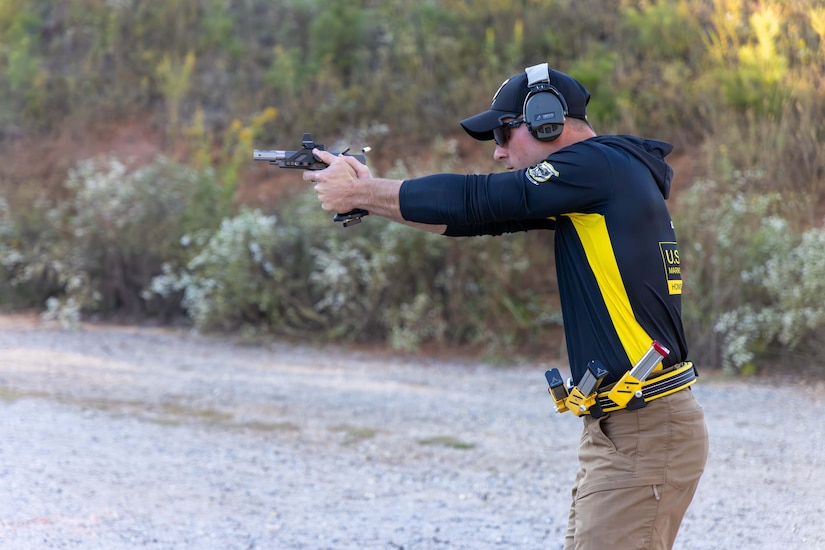
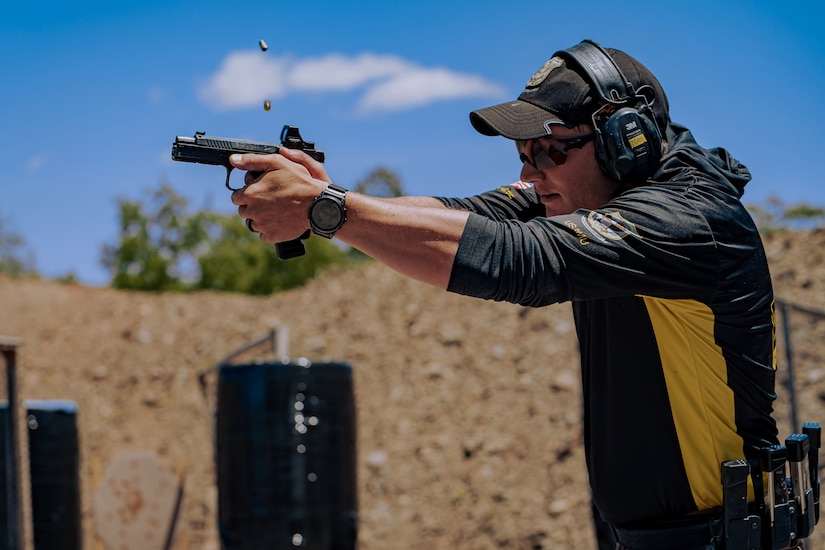
A man wearing a hooded shirt, hat, hearing protection and a belt carrying three magazines fires a handgun in front of a brush hill. A bullet casing flies out of the gun in the air.

Eddins and Hetherington are instructors and competitive shooters assigned to the Army Marksmanship Unit at Fort Benning, Georgia, and part of the U.S. Practical Shooting Association Team representing the United States at the 30-stage, five-day handgun championships.

More than 1,700 marksmen from at least 50 countries qualified to represent their countries at this elite competition, making it an honor to attend, Eddins said.

Some of the countries represented include Poland, Czech Republic, Italy, Brazil, Venezuela, Kenya, China, Serbia, Ukraine, Zimbabwe, New Zealand, Ecuador, Papua New Guinea, Republic South Africa, Sri Lanka, Germany, Paraguay, France, Canada and Philippines. 

"The IPSC World Shoot is the Olympics of practical shooting. It takes place every three years but has recently changed to every four to match the Olympic schedule," Eddins said. 

The first World Shoot was in Zurich in 1975 where American marksman Ray Chapman won the gold medal. As firearms developed and the number of competitors increased, changes were inevitable. In 1990, American Doug Koenig became the first marksmen to win the World Shoot using a red dot sight. In the following 1993 World Shoot, competitors were divided into divisions based on equipment. For example, marksmen competing with optical sights were in the open/modified division, while competitors with iron sights were the standard division. 

This year's World Shoot has six divisions that include classic, open, production, production optics, revolver and standard.  

To qualify for the 2025 World Shoot, athletes had to compete in four qualifying matches. From those four, the top three scores were combined, Eddins said. 

"The top four in each country [for each division] are selected to be on that country's national team," he said. 

Eddins will represent Team USA in the open division alongside civilian marksmen Christian Sailer, Bryan Jones and John Vlieger. These four Americans will vie for the gold against 358 other individual competitors. They will also compete as a divisional team against 35 other countries. 

Hetherington will represent Team USA in the production optics division alongside civilian marksmen JJ Racaza, Tom Castro and Jay Beal. These four Americans will seek the gold against 447 other individual marksmen and 40 other country teams. 

A man wearing a hooded shirt, hat and hearing protection fires a handgun in front of a brick wall. Bullet casings fly out of the gun in the air.

Competing internationally is not new for the USAMU Action Shooting Team. Years ago, the team competed at IPSC Championships regularly. USAMU veterans such as Travis Tomasie, Max Michel, KC Eusebio and Shane Coley have competed and medaled in several IPSC World Shoots over the years. In fact, in 2008, USAMU Action Shooting Team soldiers swept the podium when Eusebio, Brad Balsley and Coley won the gold, silver and bronze in the junior category. 

Although the Action Shooting Team stepped away from international competitions for several years because of a variety of administrative challenges, there is now a refocused effort. The 'Home of Champions' is well known for international shooting sports like the 10m air rifle, 50m smallbore, trap and skeet since they have had a strong presence at the Olympics in those sports. 

Across the nation, the Action Shooting Team is well known in practical shooting, precision rifle series and multi-gun competitions, and since the IPSC World Shoot is similar in nature to the unit's Olympic presence in other shooting disciplines, it's in-line with the unit's mission to win on a global stage, said Army Sgt. 1st Class Christopher Workman, USAMU Action Shooting Team chief. 

"It is important for these world-shooters to be able to represent the U.S. Army and the Army Marksmanship Unit on an international stage, not only matches within [the United States]," Workman said. 

To prepare for this competition, Eddins said he competed in seven international competitions over the last three years. Hetherington, who earned the highest qualifying points in the production optics division, earned his spot on the World Shoot by competing at French Nationals, Extreme Euro in the Czech Republic and the Viking Extreme in Denmark. However, this is not his first World Shoot. He competed in the championships before joining the Army. 

"The last World Shoot I shot was in 2014. I was on the U.S. Junior Production Team and earned a silver medal. The U.S. Team won the gold medal for team production," Hetherington said. 

Like the Olympics, the IPSC Championships will be intense, not only with competition but in course of fire as well. U.S. Practical Shooting Association competitions typically have between nine and 12 stages over two to three days. The international competition is more like a marathon with 30 stages over five days. Those stages are broken up into three courses, short (12 rounds or less), medium (13-24) and long (25-32), making each competitor prove their skills are fast and accurate with nearly 600 rounds. 

Team USA will begin competing Sept. 22, with the 30 stages broken down into five areas, meaning they will complete six stages per day.