Tuesday, January 06, 2026

Department of War Establishes New Acquisition Model to More than Triple PAC-3 MSE Production in Partnership With Lockheed Martin

The Department of War (DoW), working in partnership with Lockheed Martin, today announced the signing of a landmark framework agreement that establishes a transformative new acquisition model to expand munitions production and procurement—one that delivers long-term demand certainty, incentivizing industrial investment to increase production, cut lead times, drive supply chain management efficiencies, while reducing upfront government facilitization and capacity investments.

This seven-year framework agreement with Lockheed Martin is a direct outcome of the Department's new Acquisition Transformation Strategy, as unveiled by Secretary of War Pete Hegseth in his Arsenal of Freedom speech at Fort McNair in November. As the Secretary stated, "We will stabilize demand signals. We will award companies bigger, longer contracts for proven systems so those companies will be confident in investing more to grow the industrial base that supplies our weapons systems more and faster."  

Under the framework agreement, Lockheed Martin will increase annual production of the PAC-3 Missile Segment Enhancement (MSE) interceptor from approximately 600 to 2,000, aligning industrial capacity to the long-term demand required by U.S. forces, allies and partner nations. The agreement also aligns the interests of Lockheed Martin, the government, and taxpayers, with Lockheed Martin supporting investments to scale the required production increases, while benefitting from the certainty of long-term, growing demand for the PAC-3 MSE. 

"This framework agreement marks a fundamental shift in how we rapidly expand munitions production and magazine depth, and how we collaborate with our industry partners," said Michael Duffey, Under Secretary of War for Acquisition and Sustainment. "Lockheed Martin's willingness to help pioneer this transformative acquisition model is a win-win for the taxpayer, our national security, and the rebuilding of the industrial base needed for the Arsenal of Freedom."

The framework agreement establishes the basis for negotiating a seven-year supply contract, subject to Congressional authorization and appropriations, that would increase PAC-3 MSE production to approximately 2,000 missiles per year, up from approximately 600 today. The agreement also provides for strict delivery accountability and allows both the Department of War and Lockheed Martin to share in any enhanced profitability resulting from new equipment and volume efficiencies. This facilitization strategy will be applied to multiple munitions procurement contracts over the next year, pending Congressional appropriations, to replenish our stockpiles, rebuild our military, reestablish deterrence and strengthen and grow our defense industrial base. 

The Department of War recognizes that supply chain facilitization is also required to support production capacity increases. As part of the framework agreement, the DoW will work with key suppliers of PAC-3 MSE to deliver seven-year subcontracts to ensure facilitization investments and the production capacity of components also expand to meet the increased demand for all-up-rounds.  

The PAC-3 MSE framework agreement advances the Department's acquisition transformation priorities and reflects the execution-focused work of the Department's Munitions Acceleration Council, as well as the strong partnership with Lockheed Martin. The Council was established to rapidly identify and remove structural barriers to scaling weapons production and to translate urgent operational demand into executable, long-term industrial capacity.  

Medal of Honor Monday: Army Air Corps Brig. Gen. Kenneth Walker

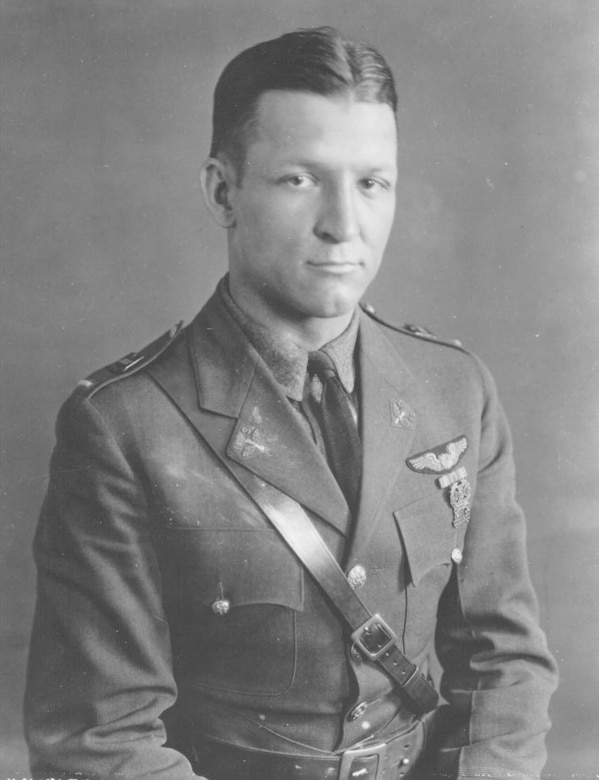
Army Air Corps Brig. Gen. Kenneth Newton Walker participated in dangerous bombing missions alongside his air crews during World War II because he wanted to understand how to beat the enemy. Walker never came home from his last mission. He received a posthumous Medal of Honor and is credited with helping to create the blueprint for the modern Air Force.

A man in uniform poses for a photo.

Walker was born July 17, 1898, in Cerrillos, New Mexico, to Wallace and Emma Walker. His parents separated shortly after he was born, so Walker's mother raised him alone. At some point in his youth, the pair moved to Denver, where Walker became a Boy Scout and took an interest in several sports, including football, wrestling and boxing.

According to Air University Press author Martha Byrd, Walker's maternal grandparents lived in Omaha, Nebraska, so Walker also lived there for a few years before graduating from Omaha High School of Commerce in 1915. However, by 1917, he had returned to Denver, eventually enlisting in the Army on Dec. 15 of that year. He remained in the service for the rest of his life.

Walker became a pilot just as aerial warfare was being established. He trained at the University of California, Berkeley, School of Military Aeronautics and then at Mather Field, California, earning his commission and his wings in the Army Air Service in November 1918. He received a commission in the regular Army July 1, 1920.

Over the next few years, Walker served as a flying instructor in Texas, then in Oklahoma, where he met Marguerite Potter in 1920. The pair married in 1922 and eventually had two sons, Kenneth Jr. and Douglas.

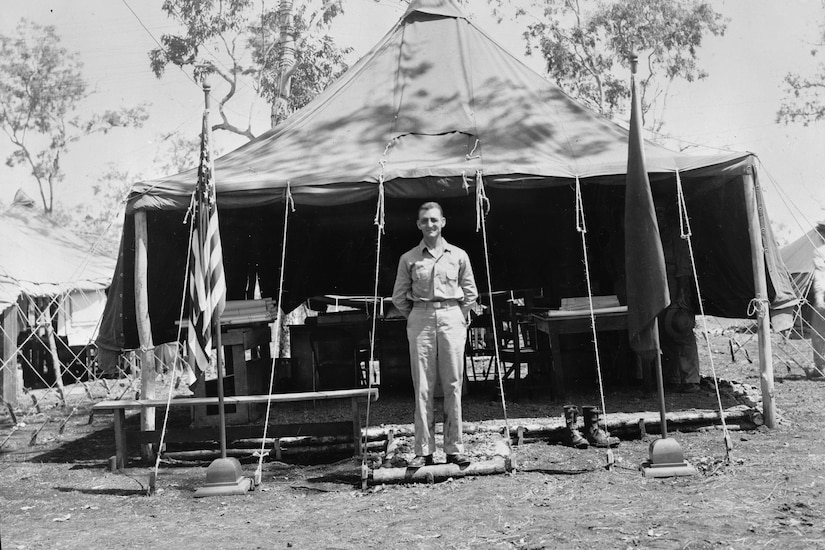
A man stands in front of an open tent with an American flag posted out front.

That same year, Walker graduated from the Air Service Operations School before being sent to the Philippines to command the Air Intelligence Section at Camp Nichols. When he returned to the U.S. in 1925, he continued his education and rose through the ranks, serving as an operations officer, bomb squad commander and instructor at various installations.

By January 1941, then-Maj. Walker found himself serving in Washington in the high-level position of assistant chief of the Air War Plans Division. Prior to the Pearl Harbor attacks, Walker was one of four Army Air Corps officers who created the blueprint of how to attack Japan and Germany from the air, according to a 2017 profile of Walker in the San Angelo Standard-Times. That strategy was later considered a key component of the Allied victory.

In July 1942, as the war raged, Walker was promoted to brigadier general and sent to the Pacific Theater. Shortly after his arrival, he was appointed as the commanding general of the Air Force's 5th Bomber Command.

From September 1942 to January 1943, Walker repeatedly went on bombing missions deep into enemy-held territory with his air crews. According to the San Angelo Standard-Times, he also went on bombing missions alone — something few generals did. His desire to take part in the danger earned him great respect from his subordinates. The lessons he learned from those missions helped him develop a highly efficient technique for bombing in the face of enemy aircraft and antiaircraft fire, according to his Medal of Honor citation.

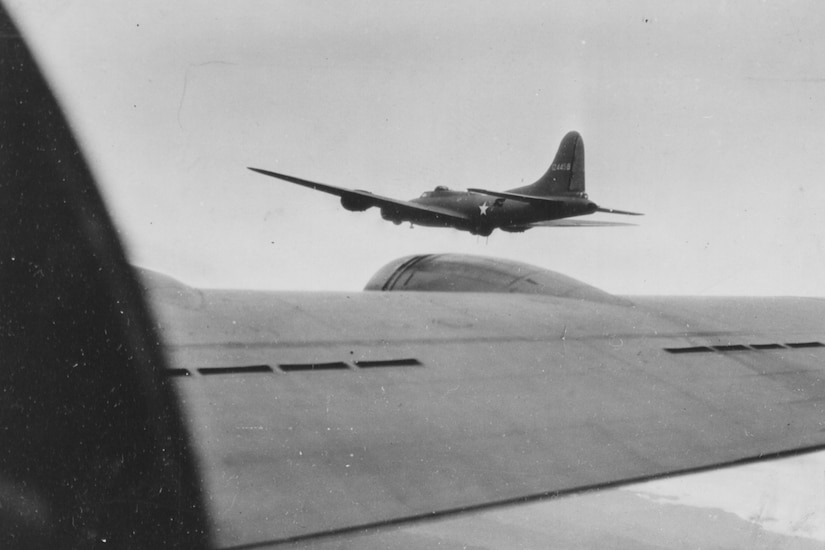
An aircraft is seen from the wing of another aircraft.

On Jan. 5, 1943, Walker joined several air crews on one of those dangerous missions. Six B-17 Flying Fortresses and six B-24 Liberators were sent on a daytime bombing mission over the Japanese-held harbor at Rabaul on the island of New Britain in Papua New Guinea. The attack was a success in that direct hits were scored on nine enemy ships. However, the bombers didn't get away before enemy fighters and antiaircraft fire came after them.

Walker was flying as an observer on a B-17 nicknamed the San Antonio Rose, which came under heavy attack. The aircraft was last seen with one engine on fire and several fighter aircraft on its tail. Evidence collected later showed that two of the aircraft's crew members were able to bail out; however, all 11 crew members were eventually declared dead.

On March 25, 1943, Walker's oldest son, Kenneth Jr., received the Medal of Honor on his father's behalf from President Franklin D. Roosevelt during a White House ceremony. Walker was the highest-ranking Army official to be reported missing during the war.

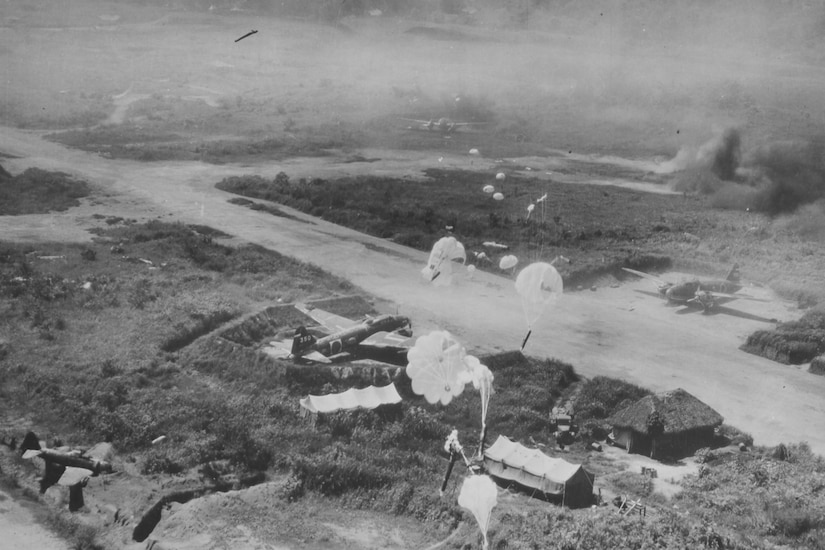
An aerial view of an island airstrip as parachutes drop on it.

Well before his death, Walker and a few other Air Corps Tactical School instructors were invited by a federal commission to testify in support of creating a separate military air organization that wasn't subordinate to any other branches. Thanks to his work with this commission and the air war plan used during World War II, Walker is considered one of the forefathers of the modern Air Force.

Walker has been remembered in many ways, including on the Wall of the Missing at the Manila American Cemetery in the Philippines.

In January 1948, Roswell Army Air Field in Roswell, New Mexico, was redesignated as Walker Air Force Base in honor of the fallen general. At Maxwell Air Force Base, Alabama, the home of the College of Aerospace Doctrine Research and Education, Walker Hall was also named for him.

Every year, a small number of papers written by field-grade officers in the Air Force Fellows program are selected to be published online. Those papers are known as the Walker Papers. The chosen officers attend civilian universities and organizations for a year to study national security strategy and serve as military ambassadors to prestigious institutions.