Monday, December 29, 2025

Tinker Firefighters Train for Speed, Precision, Real-World Operations

Firefighters at Tinker Air Force Base, Oklahoma, recently completed an intensive training course focused on rapid intervention, advanced search techniques and fire ground survival skills tailored to the unique mission environment at one of the Air Force's largest installations.
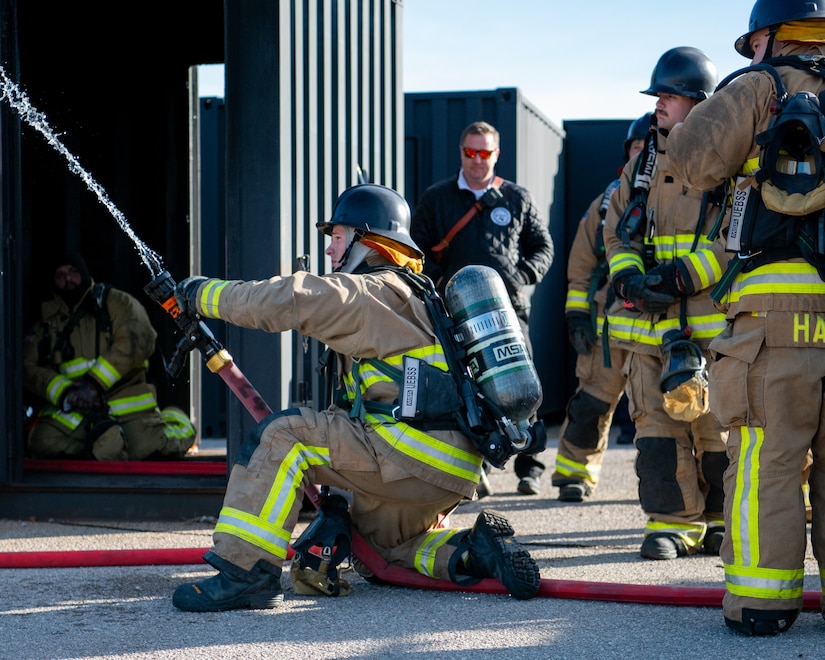
A firefighter crouches down while holding a water hose and sprays a building. A group of other firefighters stand behind him while a man stands in the background to observe.

 The training centered on a 10-day orientation course designed specifically for new military and civilian firefighters, including recent graduates from the fire academy assigned to the 137th Air Refueling Wing at Will Rogers Air National Guard Base, Oklahoma. The course serves as a critical bridge between initial certification and real-world operations at Tinker Air Force Base, which presents unique challenges. 
 
With massive warehouses, aircraft hangars and thousands of confined spaces, firefighters at Tinker Air Force Base must be prepared to operate in low-visibility, high-risk environments where speed and precision can mean the difference between life and death. 
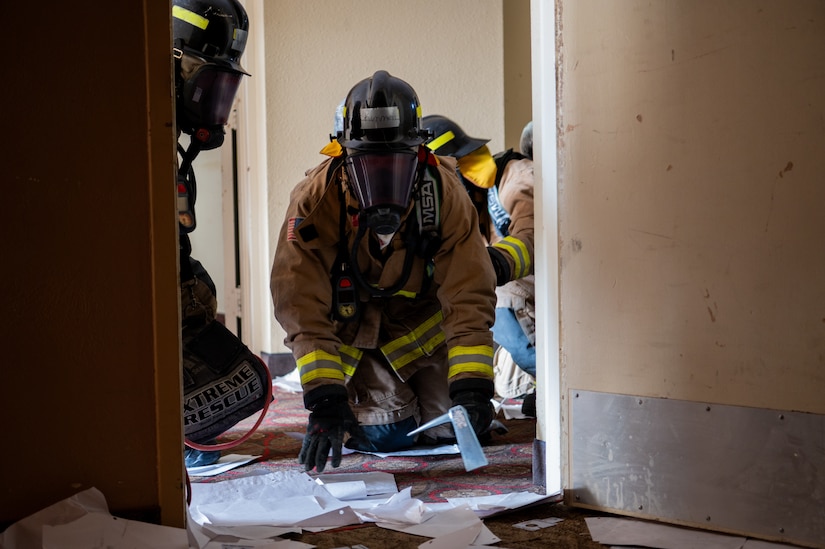
Firefighters crouch down at the entryway to a room.

 
During the course, firefighters trained using blackout masks to simulate zero-visibility conditions while learning how to search large buildings effectively and quickly. Scenarios emphasized communication, accountability and rapid decision-making while operating under physical and mental stress. 
 
A key component of the training was the Rapid Intervention Team operations that prepare firefighters to locate those trapped inside a burning structure. These drills involved long, physically demanding simulations that tested endurance, teamwork and problem-solving skills. They also completed flashover fire training, a critical evolution that allows airmen to recognize warning signs of rapidly changing fire behavior. 
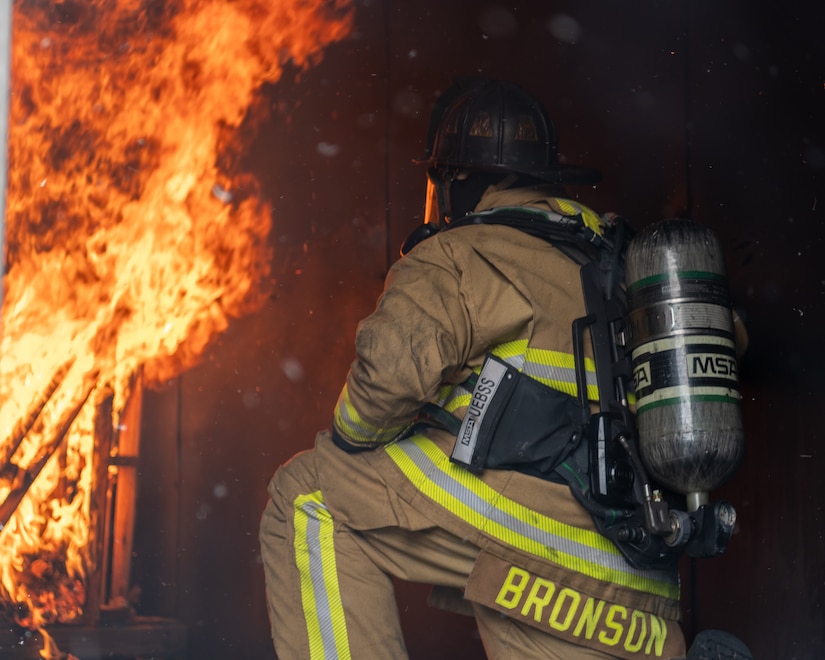
A firefighter kneels while facing a raging fire.

 
The course incorporated aircraft and wing simulations to practice maneuvering around airframes, navigating tight spaces and executing rescues in scenarios unique to an installation supporting aircraft maintenance, depot operations and flightline activity. 
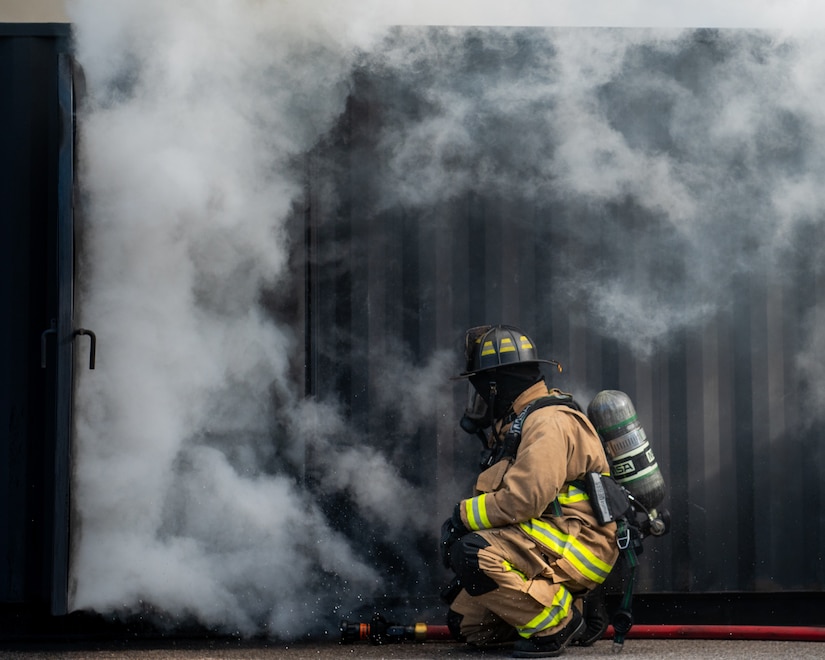
A firefighter kneels before a smokey building.

 
More than 27,000 military and civilian personnel at the installation are protected by Tinker Air Force Base Fire and Emergency Services. The group also assists civilian emergency services when needed. Through the training, the fire department achieved a first in the Air Force by earning the International Organization for Standardization's Class 1 distinction.

Medal of Honor Monday: Army Pfc. David Nash

Dec. 29, 2025 | By Katie Lange, Pentagon News

Army Pfc. David Paul Nash had only been in the military for about eight months when he gave his life in Vietnam so his fellow soldiers could live. Nash's devotion to the mission and his comrades led him to receive a posthumous Medal of Honor.

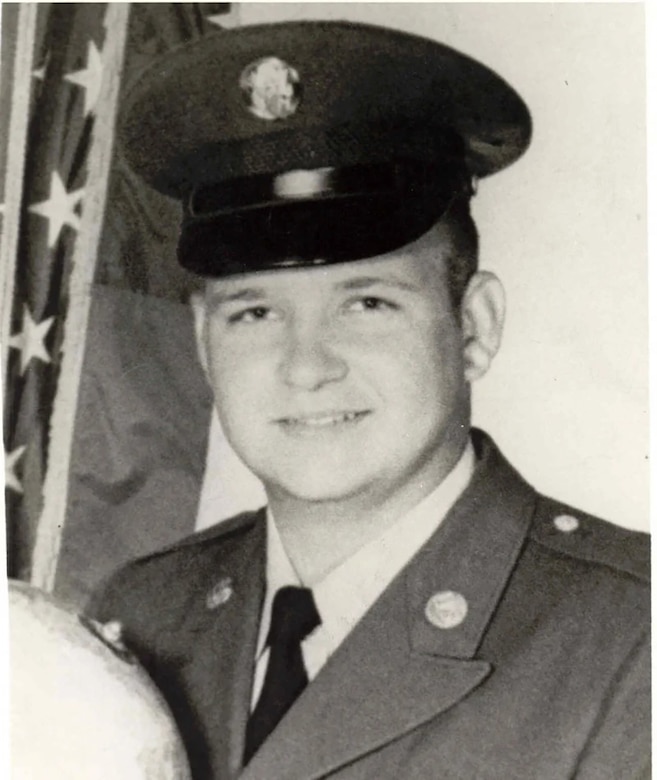
A man in a cap and military dress uniform smiles for a photo.

Nash, who was known throughout his life as Paulie, was born Nov. 3, 1947, in Whitesville, Kentucky, to Ishmael and Stella Nash. He had six brothers and a sister, served as a Catholic altar boy and attended St. Mary's High School in his hometown.

Nash loved to fish and hunt and, as the second oldest sibling, wasn't afraid of hard work to help support his family. During his teens, he worked at a filling station and raised a tobacco crop with one of his older brothers, his mother told the Owensboro, Kentucky, newspaper the Messenger-Inquirer in 2001. Two of his younger brothers said they liked to help him work on his 1957 Chevy up until the time he was drafted in May 1968.

After basic training, Nash was assigned as a grenadier to Company B, 2nd Battalion, 39th Infantry Regiment, 9th Infantry Division. By that October, he found himself in Vietnam.

According to a 1999 Messenger-Inquirer article, just days before his Medal of Honor actions, Nash took a photo of his bunker's Christmas tree, wrote a letter to his family and dropped it in the mail. It was a letter to which they would never be able to reply.

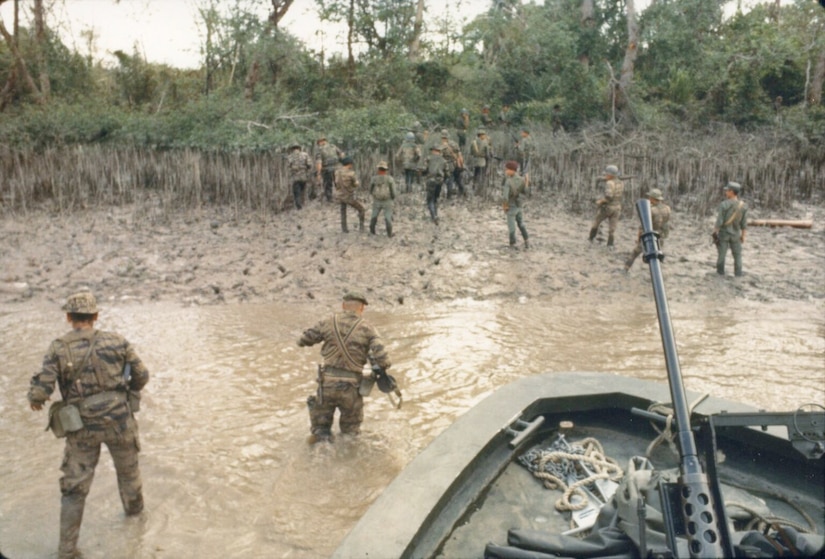
Two men in military camouflage uniforms wade through shallow water to get to a shore from a small boat. Others in similar attire are on the beachhead.

On Dec. 29, 1968, Nash's company was on an ambush patrol in the Mekong Delta, a swampy area with flooded fields and dikes, when they were suddenly attacked by the Viet Cong. Nash was the first to return enemy fire. Despite being exposed, he managed to suppress the bombardment with a quick series of rounds from his grenade launcher, which enabled U.S. artillery fire to be adjusted onto the enemy.

After the combatants fled, a small element of Nash's company continued to the ambush site, where he and three fellow soldiers set up an overnight position along a narrow dike. Other squads of men set up in similar positions nearby.

Shortly after midnight, as Nash and a comrade kept watch while the two other soldiers slept, an enemy grenade went off in an adjacent position, wounding two soldiers. Seconds later, Nash saw another grenade land feet from his position.

Nash could have rolled down the other side of the dike to escape the explosion, but he didn't. Instead, he shouted a warning to his fellow soldiers and threw himself on top of the grenade. His body absorbed the explosion, saving the lives of the three men with him.

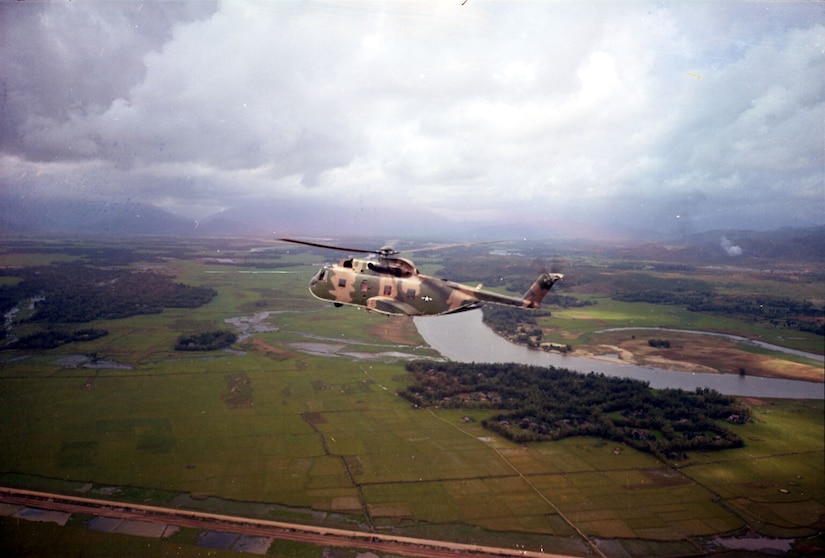
A military helicopter flies over green flatlands and a river.

Few were surprised by his actions. According to congressional testimony, a friend later said of Nash, "He was always quiet, but he made you feel good about yourself. He was the kind of guy you wanted next to you when you went on patrol. You trusted him. You knew he would do the right thing and cover you. When I heard what happened, I wasn't surprised. He was that kind of guy."

For making the ultimate sacrifice, Nash's family received the Medal of Honor on his behalf from President Richard M. Nixon, April 7, 1970, during a White House ceremony. The families of 20 other fallen Vietnam soldiers received the same high honor that day.

Nash is buried at St. Mary of the Woods Cemetery in his hometown.

His memory has not been forgotten. In the 1990s, Whitesville erected a memorial in his honor in its city park. In 2004, a section of highway in Daviess County, Kentucky, was unveiled as "Pfc. David Paulie Nash Memorial Highway" to memorialize him. Several veterans who served with Nash attended the ceremony.