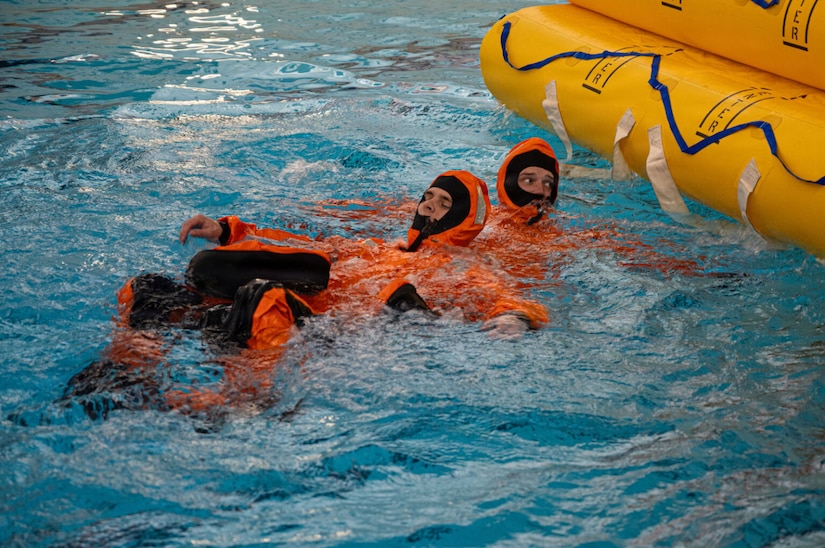
Air Force Reserve airmen assigned to the 911th
Airlift Wing conducted water survival training at Montour High School,
McKees Rocks, Pennsylvania, Jan. 10.
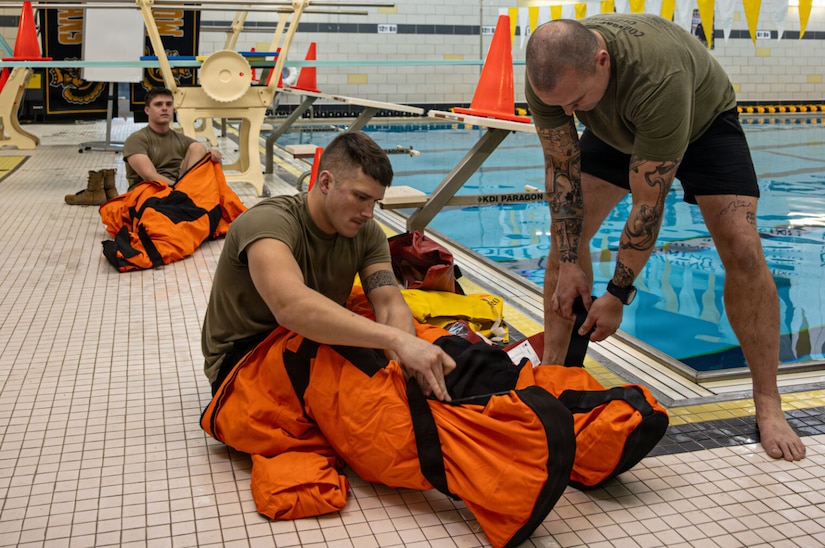
Aircrew assigned to the 911th Operations Group are required to
accomplish the training every 36 months to stay prepared for potential
isolation in bodies of water by learning essential skills — like
underwater egress from downed aircraft, parachute disentanglement, raft
deployment and self-rescue.
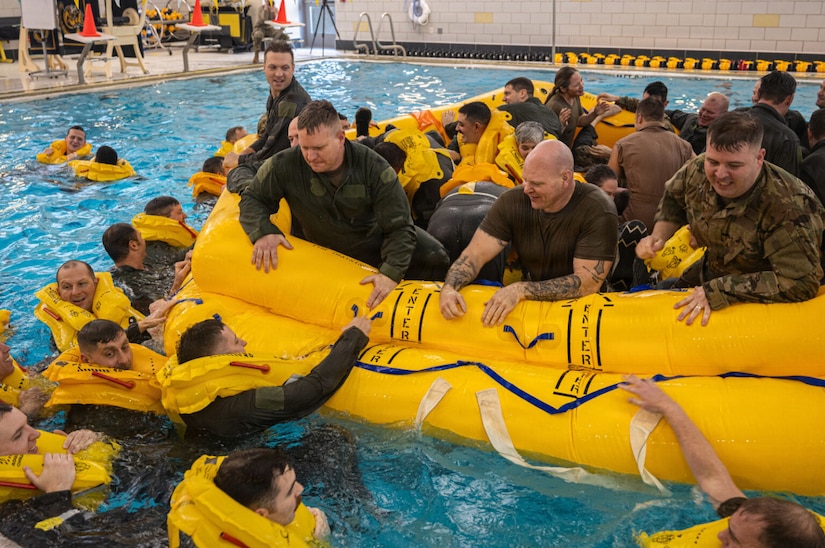
The airmen demonstrated various abilities, including swimming in
survival gear, inflating life vests and rafts, boarding a raft from the
water, setting up life raft canopies and the importance of teamwork. To
be prepared for any potential conflict, it is essential for aircrew,
which includes pilots, loadmasters and aeromedical evacuation teams, to
be ready and confident in their abilities if their aircraft goes down
over open waters.
"If they end up getting separated, they're alone and afraid," said
Air Force Master Sgt. Kristopher Peterson, 911th Operation Support
Squadron Survival, Evasion, Resistance and Escape section chief.
"Everything that we give them, everything that we try and do is to make
sure if something happens, those guys have some confidence in what they
are doing."
Mistakes happen, and ideally, airmen learn from them during training rather than in the field.
Peterson said the most common mistakes he sees during water survival
training are failing to inflate buoyancy devices properly and not
checking for sharp objects before boarding a raft, which can result in
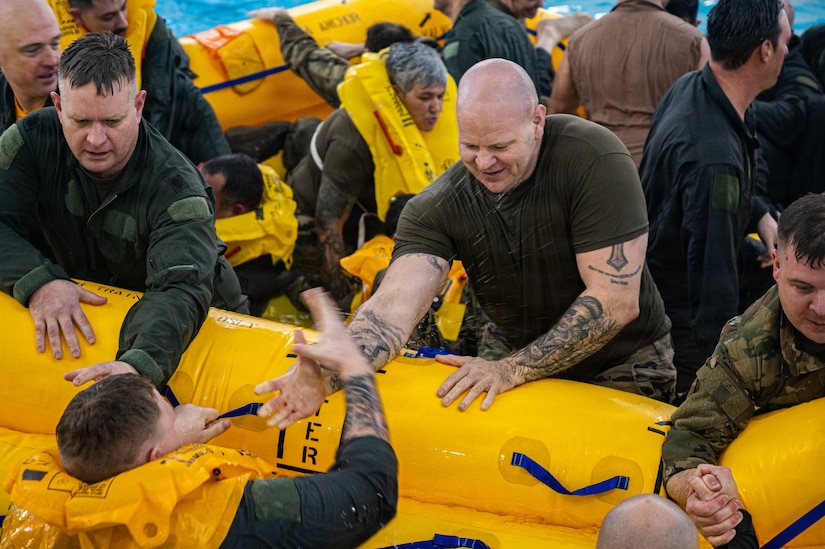
punctures. Above all, he expressed the importance of working as a team
during survival situations.
"If these guys can't work as a team out on the open ocean and [are]
stuck in a raft, it will get miserable after a couple of hours,"
Peterson said. "Something's always to blame. If they can't get past
that, it's going to cause fighting, it's going to cause separation
between the team and it's going to make things a lot more difficult."
That breakdown doesn't just erode morale — it directly affects
survival. Once the chaos of a crash settles and reality sets in,
teamwork isn't optional. Especially when injuries are added to the
equation.
There are bound to be injuries, especially when a plane hits the
water, Peterson said. Members of the team will have to rely on one
another to survive.
Water survival is only one aspect of survival training, and it is the
mission of the Air Force Survival, Evasion, Resistance and Escape
program to ensure high-risk personnel have the knowledge and skills to
"return with honor" from hostile environments.