Friday, December 19, 2025

War Department Ensures Valuable Wage Grade Employees Earn Prevailing Wages

The War Department released updated pay tables for Federal Wage System employees nationwide to ensure that skilled and talented workers earn the prevailing wages they deserve, no matter where they serve.

Sparks fly as a welder repairs a piece of metal.

"FWS employees are essential to our operations, our readiness and our mission. They are key to U.S. dominance around the globe. With the support of President [Donald J.] Trump and Secretary [of War Pete] Hegseth, we are taking action to recognize and retain this high-demand, low-density talent within the department, and build our pipeline for the future," said Undersecretary of War for Personnel and Readiness Anthony J. Tata. 

About 140,000 FWS employees will see pay increases as a result of the updated pay tables, approved by the wage committee on Nov. 25, a senior War Department official said. Additionally, because for a short time the wage committee was unable to update the pay tables to reflect prevailing wages, those employees will also receive back pay. 

The department's FWS employees include men and women with the skills to repair or overhaul submarines, ships, airplanes and other military hardware, and to also do other kinds of skilled labor. The senior official said those pipefitters, welders, plumbers, electrical and sheet metal workers, for instance — about 210 trade, craft and labor occupational fields in all — are in high demand in both the private and public sector, and they are critical to maintaining the readiness and lethality of America's combat systems. 

"Our wage grade employees are on the line building the ships, building submarines, and making sure that the Department of War has the equipment it needs to win wars," the senior official said. "They're irreplaceable; they're highly essential to our mission and ... we need to make sure that they're properly paid for their invaluable contributions."
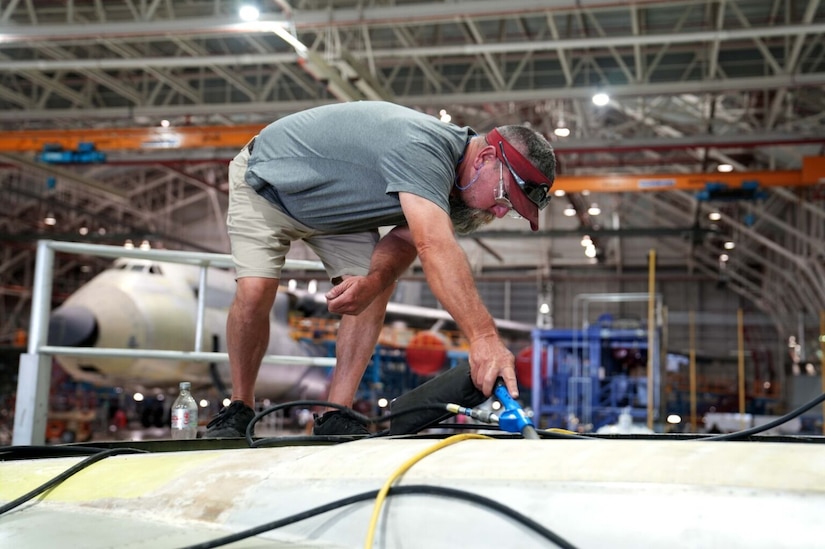
A man wearing casual attire and a visor stands atop a metal surface inside an aircraft hangar and uses a handheld vacuum inside an aircraft’s opening.

The senior official said ensuring FWS employees get prevailing wages is important for two reasons. First, it's one way the department retains the talent that keeps its warfighting equipment in top shape. And second, it's how the department attracts new talent. 

"For potential applicants, it is important that they know that we are constantly meeting the mark to recruit them and that if they come to work for the Department of War, we will pay them a prevailing rate. We will pay them for their hard work and dedication to this mission that is so important to our nation." 

When newly minted welders, plumbers or electricians, for instance, begin looking for work, they could go anywhere. The senior official said that when the government offers prevailing wages, it becomes an even more attractive option for work, especially when coupled with the War Department's mission. 

"You get to see the results of your work being used to defend the nation, sailing the seas, flying the skies and protecting not only your family but the families of those around you. There is a great sense of accomplishment in that." 

Marine Corps Announces Updated Physical Fitness Standards

The Marine Corps is implementing changes to its physical fitness test and body composition standards in accordance with the secretary of war's military fitness standards memorandum issued Sept. 30. These changes, announced in MARADMIN 613/25, will take effect Jan. 1, 2026.

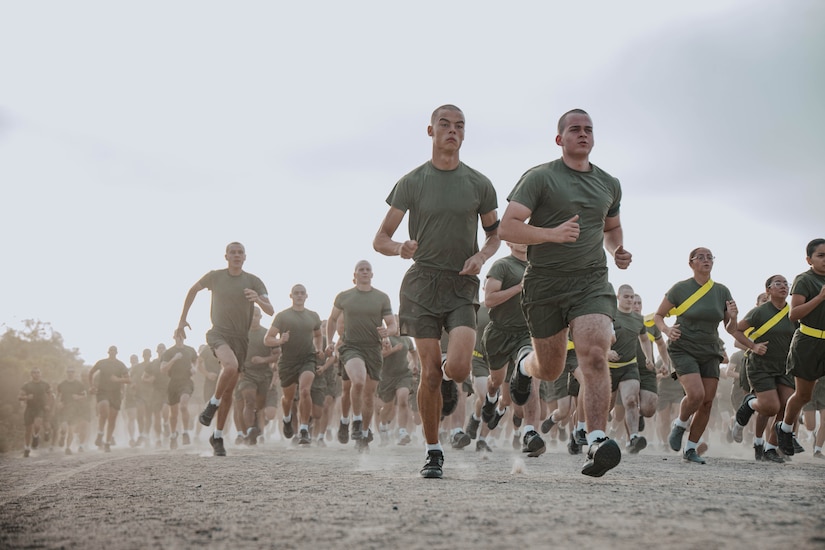
Marines in athletic wear run on a dirt road.

The Marine Corps will institute sex-neutral scoring for the physical fitness test for Marines with a combat arms primary military occupational specialty. The PFT will require those Marines to achieve a minimum score of 210 points, 70% of the total possible points, using the male, age-normed scoring standard outlined in Marine Corps Order 6100.13A.  

The PFT will continue to be administered annually, from Jan. 1 to June 30. Noncombat arms Marines will continue to follow existing sex- and age-normed standards.   

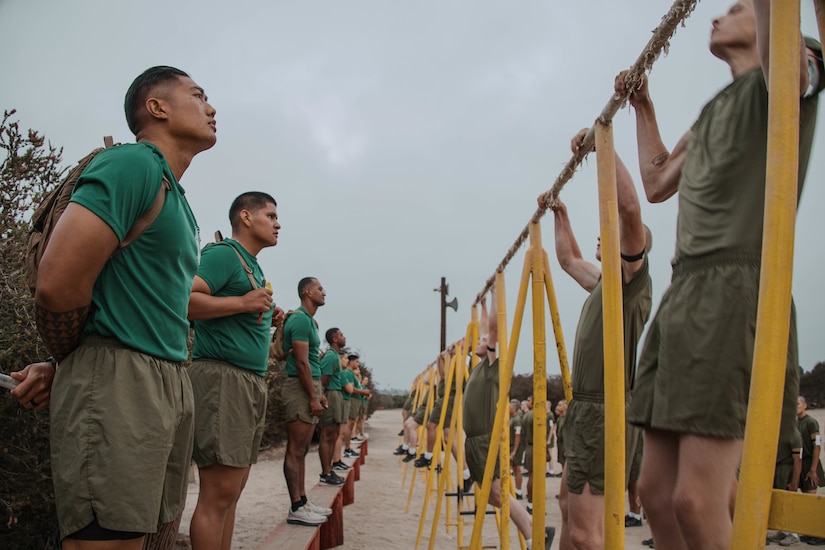
A group of Marine physical fitness leaders in athletic wear stand on a bench as they monitor a group of Marine recruits in similar attire as they perform pullups.

The new PFT standards reflect the unique physical demands of combat arms roles, ensuring Marines are prepared for the sustained physical performance required in direct combat. Those who do not meet the 210-point requirement by the end of the reporting period will be assigned to remedial physical training and may be subject to reclassification and/or promotion restriction.   

"Our combat arms MOSs require rigorous physical readiness for direct ground combat," said Marine Corps Col. James Derrick, director of the Training Standards Division at the Marine Corps Training and Education Command. "These changes ensure all combat arms Marines meet the same high sex-neutral standards."   

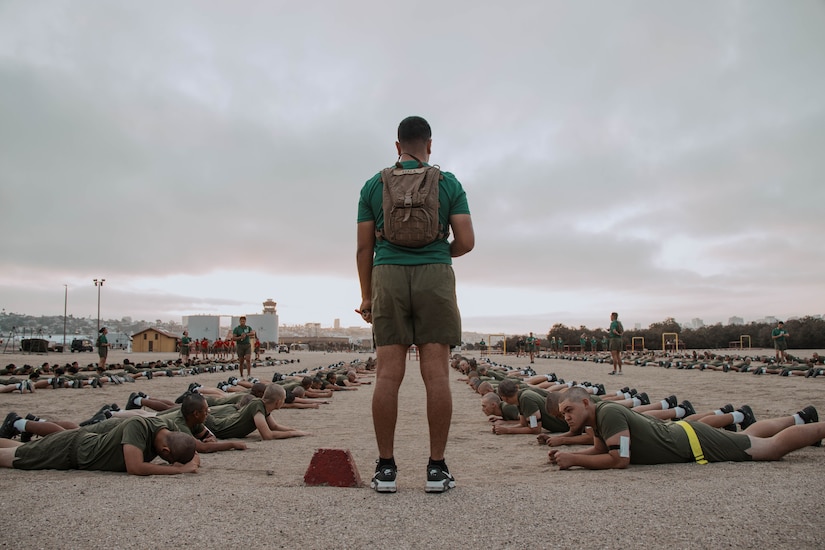
A Marine in athletic wear stands and monitors a group of Marines in similar attire who are lying on the ground while doing physical fitness.

The Marine Corps is also revising its body composition evaluation process. The current height and weight standards, along with the tape test, will be replaced by a new waist-to-height ratio method. The Marine Corps will publish service-specific standards upon receipt of additional War Department guidance.  

In the interim, the current height/weight and tape tests will continue, with body composition analysis used for additional assessments when necessary.   

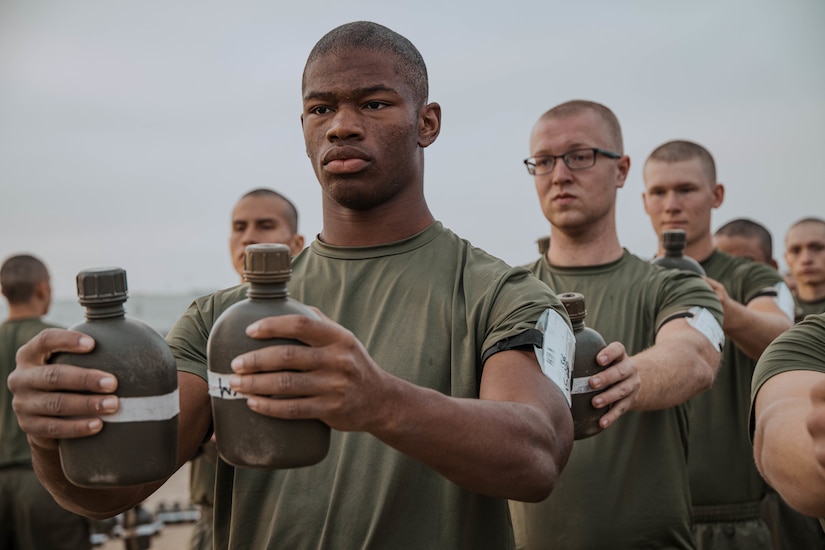
Marines in athletic wear each hold two canteens while standing in formation during a physical fitness test.

Although the new PFT standards will begin Jan. 1, 2026, updates to Manpower Information Systems are expected to take six to eight months, with full implementation projected within a year. The Marine Corps is committed to ensuring a smooth transition and will continue to coordinate with stakeholders to support these changes.   

Units are required to follow interim administrative guidance until full implementation of the system and policy revisions as outlined in MARADMIN 613/25 are complete.   

These changes ensure that the Marine Corps' physical fitness standards continue to support operational effectiveness and combat readiness. The Marine Corps will continue to assess guidance and execution to ensure compliance with higher headquarters.

DLA Troop Support Subsistence Keeps Morale Alive With Holiday Meals

While Santa Claus prepares his Christmas Eve deliveries, the Defense Logistics Agency has already delivered holiday cheer in the form of meals to service members stationed around the world. 

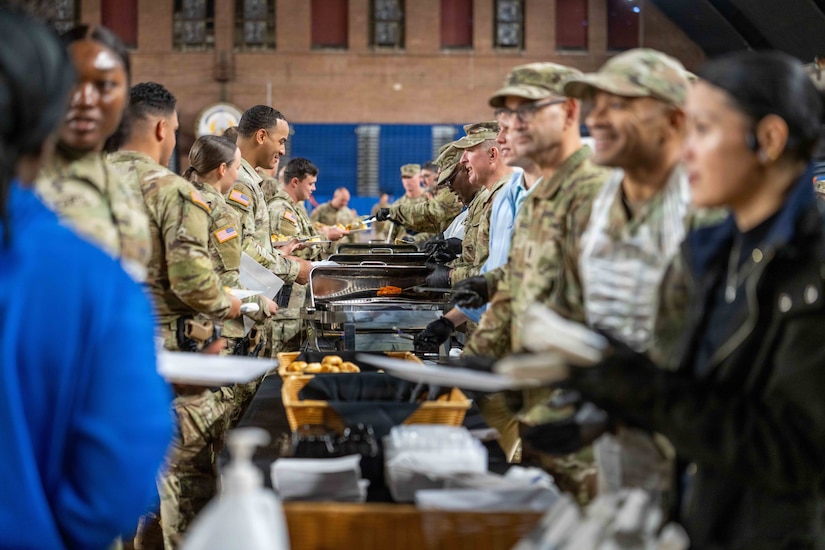
Men and women wearing military camouflage uniforms stand in two lines in front of a food service area for a Thanksgiving meal.

"There's no question our team understands the importance of holiday meals and the tremendous impact they have on warfighter morale," said DLA Troop Support Subsistence Director Navy Capt. Tim Griffin. "Our team takes tremendous pride in providing holiday meals to warfighters around the globe each year; it's one of our most important missions. The planning phase begins in the spring, and we receive orders soon after."  

A feat like this does not come without its challenges.  

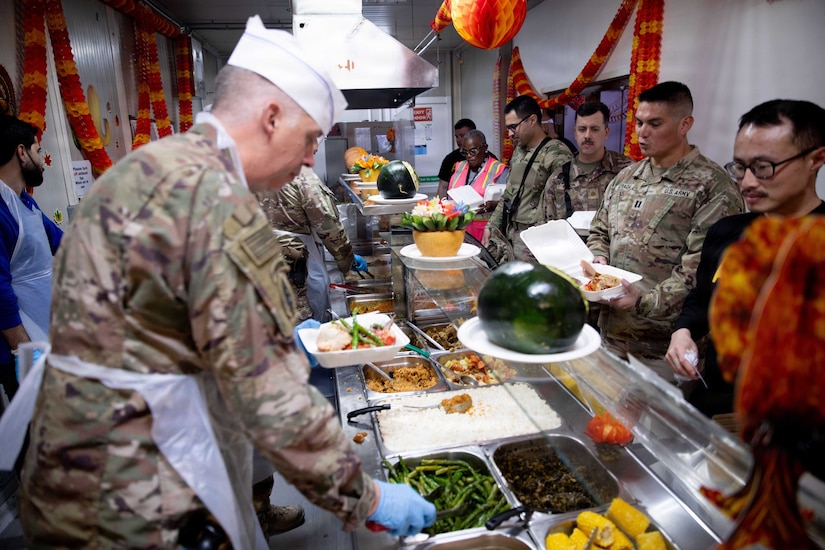
Men dressed in military camouflage uniforms and civilian attire stand in line while other men wearing aprons and chef hats along with military camouflage uniforms serve food.

Griffin noted the USS Gerald Ford Carrier Strike Group was initially planned to spend Christmas in a different global location, but when they were diverted to U.S. Southern Command to support Operation Southern Spear, DLA Troop Support Subsistence had to quickly pivot to ensure meals were delivered on time.   

"Our team sprung into action and worked closely with our mission partners in U.S. 5th Fleet, U.S. 6th Fleet, Naval Supply Systems Command, Military Sealift Command, Commander Task Force 53, Commander Task Force 63, DLA Troop Support Europe and Africa, and one of our subsistence prime vendors in Europe to deliver meals to the Ford CSG before they departed their previous [area of responsibility] in early November," Griffin said. 

A man wearing a sports shirt and a baseball cap cuts a turkey for serving.

An additional challenge that impeded the mission of the Christmas meals was avian bird flu import restrictions in Japan, which hindered the subsistence prime vendor from finding turkeys for service members in that country.  

"Eventually, we located compliant turkeys in another AOR and worked with that vendor to obtain the proper [U.S. Department of Agriculture] certification to legally ship those turkeys into Japan," said Sean Gemmell, DLA's division chief for prime vendors outside the continental United States. "As expected, Troop Support overcame every challenge presented and successfully delivered Christmas meals to service members serving around the globe."  

"Everyone in subsistence — including 33% who are veterans — knows mission failure is not an option when providing a taste of home to the warfighter," said Robin Whaley, DLA’s division chief for customer operations outside the continental United States. "Eggnog, candy, and desserts such as cakes, pies and ice cream are major morale boosters for our service members."

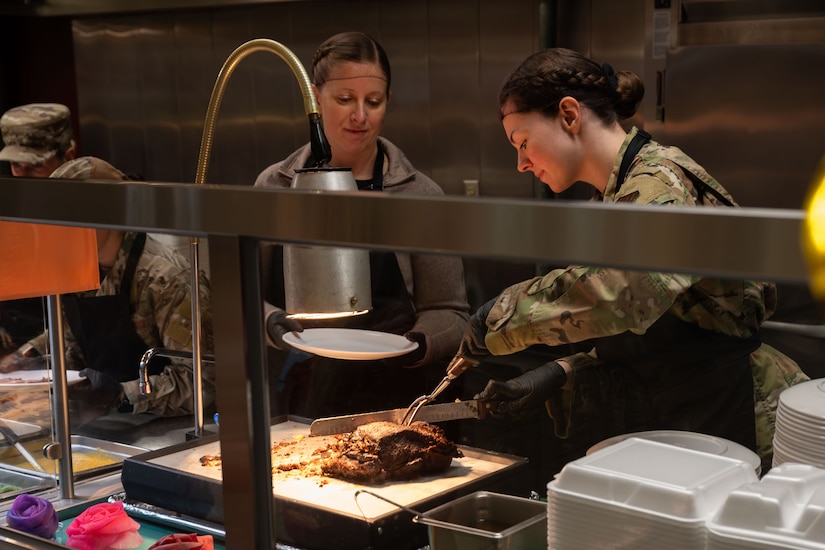
A woman wearing a military camouflage uniform and apron slices a roast while another woman dressed similarly watches.

In addition to those sweet treats, this year, military members will feast on: 

  • 101,943 pounds of turkey (includes whole and roasted turkey), 
  • 85,439 pounds of beef, 
  • 40,615 pounds of ham,  
  • 24,495 pounds of shrimp,  
  • 4,339 cans of sweet potatoes,  
  • 6,426 cases of pies and cakes, 
  • 1,496 cases of eggnog,  
  • and other holiday treats. 

"Sitting down to enjoy a good holiday meal, made from food provided by Troop Support, helps to build morale, combat loneliness and [aid] homesickness," Whaley said. "For every service member serving in isolated locations of foreign countries, knowing they can look forward to having a meal that reminds them of home is priceless."