U.S. soldiers and Oklahoma National Guardsmen partnered with Royal Brunei Land Forces soldiers to sharpen their skills during Exercise Pahlawan Warrior 26 at Tutong Camp, Brunei, Aug. 11-21, increasing readiness through shared tactics, jungle training and relationship-building.
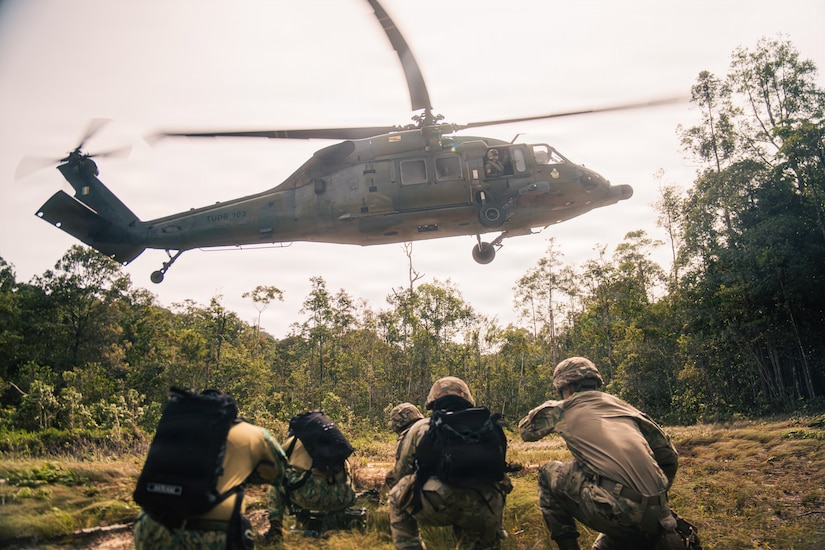
Pahlawan Warrior 26 brought approximately 130 U.S. personnel to Brunei for the biennial exercise under Operation Pathways. Led by the 1st Squadron, 180th Cavalry Regiment, Oklahoma National Guard, U.S. participants trained alongside Bruneian counterparts in tactical operations and subject matter expert exchanges spanning cyber defense, medical operations and public affairs.
Throughout the exercise, each force brought its own experience to the training, creating opportunities to compare techniques, share expertise and adapt lessons from one another to their own formations.
"For me, leadership requires adaptability," said Royal Brunei Land Forces Lt. Col. Mohammad Sufrien bin Johan. "We are not here to determine which method is better, which country does better, but to identify what works, why it works and how it can be adapted to our respective forces."
The exchange was evident throughout the exercise, with U.S. and Bruneian personnel sharing their expertise, while tactical training allowed each force to bring its own strengths to the table — from U.S. experience in live-fire range operations to RBLF expertise in jungle operations.
"Our soldiers have showed a lot of grit, but the Royal Brunei Land Forces go through this like they do it every day, because they do," said U.S. Army Maj. Kent Turner, commander of U.S. personnel during the exercise. "Their ability to navigate on different analog systems and go from one hilltop to the other at a rapid pace is just amazing."
That experience also gave RBLF leaders an opportunity to see how U.S. soldiers adapted to an unfamiliar environment.
"[They] are highly adaptable, resilient and ready to thrive anywhere, side by side with the troops of the Royal Brunei Land Forces on the exact opposite side of the globe," said RBLF Col. Erwan bin Haji Ibrahim.
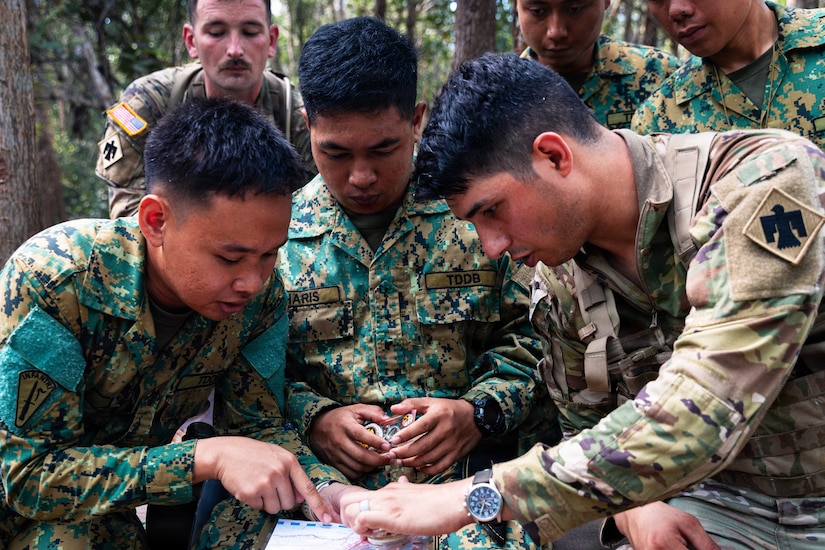
Working through those challenges together did more than build tactical proficiency. Integrating U.S. and Bruneian soldiers at the small-unit level gave them opportunities to understand how their counterparts communicate and operate while developing relationships.
"They really are becoming friends," Turner said. "I'm sure that some of the people, when they leave, they will remain in contact with them throughout. And what that's done is, it's picked up both sides, Royal Brunei [Land Forces] and also with our U.S. forces. Everybody is excited to be here."
That trust also created an environment where junior leaders were expected to adapt, make decisions and lead through the challenges of unfamiliar terrain and limited communications.
"We want to test the junior leadership in terms of decision-making," Sufrien bin Johan said. "For the soldiers, it's about the communication, coordination and understanding. ... The major focus here is so that they understand each other's procedures and try to adapt it into a realistic tactical situation."
For Oklahoma National Guard leaders, those lessons extended beyond tactical decision-making to the challenges of moving, supporting and leading a formation thousands of miles from home.
"It's much different than being a junior leader back in Oklahoma for a drill weekend," said U.S. Army Brig. Gen. Colby Wyatt, Oklahoma National Guard joint staff director. "Now you're having to travel all the way around the world, communicate with people who speak a different language, and you're not just leading — there's an operational piece, there's a logistical piece. They learn at such a faster pace, and then they're able to take that information back to their unit and train those that maybe didn't get to make the trip."
The relationships developed throughout Pahlawan Warrior 26 extended beyond formal training. U.S. soldiers learned Malay phrases, Bruneian soldiers picked up Oklahoma slang, and participants exchanged patches, shared meals and spent time getting to know each other.
"I sincerely hope our Oklahoman friends had at least a little time to explore the beauty of Brunei Darussalam and taste our local food," Haji Ibrahim said. "The true value of Pahlawan Warrior is in the human connection. Lifelong friendships have been forged here. I hope this experience inspires [U.S. service members] to return to this region in the future."
Those relationships built at the individual level also contributed to the exercise's broader strategic purpose.
"It's really a tactical operation with strategic impact," Wyatt said. "We can take soldiers at the tactical level, put them into an environment like this, and they can gain the training that they need. But the strategic impact is what it means for the United States and for our soldiers to have a relationship with another country."
For Sufrien bin Johan, those personal connections contributed to an outcome that lasts beyond the individual training events or even the exercise itself.
"Our mission with Pahlawan Warrior is to contribute to a sustained and mature defense relationship between Brunei Darussalam and the United States of America," he said. "Beyond that, the real measurement of success is not only during this one exercise, but the trust and coordination between both nations and our commitment toward peace and stability in the region."
The relationship between the Oklahoma National Guard and Brunei has grown since Oklahoma National Guardsmen first participated in Pahlawan Warrior in 2024. The connections developed during this iteration continued that training at the tactical, operational and strategic levels.




 Posts
Posts

