Monday, May 11, 2026

Army Paratroopers Integrate Drones, Night Operations in Historic Company Live Fire

More than 700 paratroopers assigned to the 2nd Infantry Brigade Combat Team, 11th Airborne Division, executed a historic company live-fire exercise at the Infantry Squad Battle Course at Joint Base Elmendorf-Richardson, Alaska, April 27-May 8. 
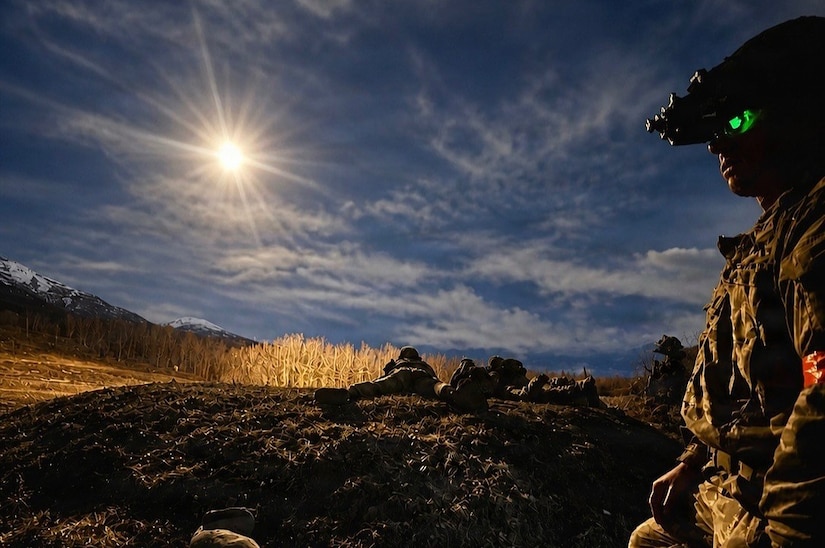
A man in a camouflage military uniform and night vision goggles observes two other people in similar attire lying on a hill looking at an open field; there are mountains in the background.

The event marked the brigade's first exercise incorporating friendly kinetic and strike small unmanned aerial systems with paratroopers employing first-person-view drones to strike simulated enemy positions and defend against live adversaries in the form of drones. 
 
"This was the first time our companies had organic FPV drone pilots executing live-fire strikes on critical targets," said Army Capt. Ian McKibbin, lead range safety officer and member of the brigade operations staff. "The drones, built with components from [the] 11th Airborne [Division] Innovations [Team] and the [2nd Infantry Brigade Combat Team, 11th Airborne Division], Multifunctional Reconnaissance Company, were entirely controlled by the units on the ground. No live munitions were used, but the effect and accuracy were tremendous."
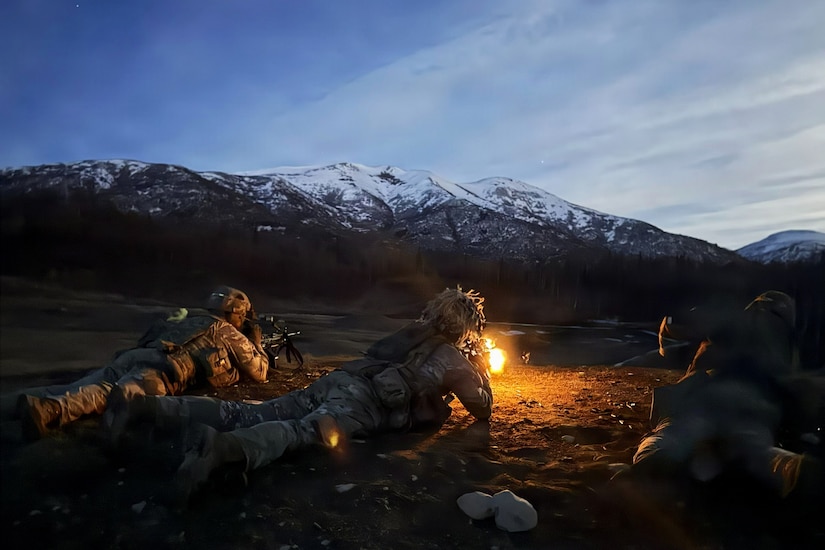
Two people in camouflage military uniforms lie on the ground, firing rifles into an open field, while another man in similar attire lies next to them, observing; there are trees and mountains in the background.

The exercise challenged paratroopers to clear a six-room shoot house, breach wired obstacles, clear trench systems and engage reinforced bunkers, all while reacting to contact from enemy drones. The small UAS attacked with simulated munitions, forcing commanders to rapidly employ counter-small UAS and adapt their tactics in real time. 
 
"Company live fires are designed to be complex and demanding," McKibbin said. "This event was especially difficult due to the presence of hostile drones, which observed friendly movement and actively attacked with simulated munitions. It's the first time we've had a live, thinking enemy in the form of these drones for this type of training exercise."
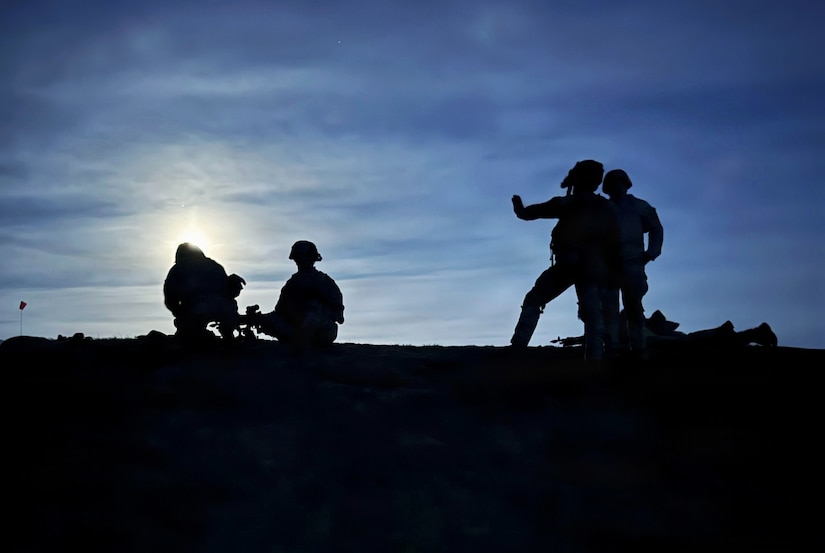
A silhouette of five people wearing helmets standing, sitting and lying down on a hill; two of the people are holding rifles.

Day and night lanes were executed with both blank and live ammunition. Parachute flares illuminated targets during night engagements, enabling soldiers to protect maneuvering squads and provide signaling or degrade enemy night vision capabilities. 
 
The entire company maneuvered on the lane, with commanders assigning platoons and squads to objectives. The event validated company commanders' ability to integrate direct and indirect fires and demonstrate proficiency in complex, live-fire operations. 
 
The event included participation from three battalions and extensive support from brigade headquarters. The small UAS also captured video of critical points for maneuvering elements, enabling near-real-time after-action reviews for companies. 
 
"This exercise represents a significant step forward in integrating new technology and realistic threats into our training," McKibbin said. "Our paratroopers demonstrated adaptability, teamwork and the ability to fight and win in a complex environment."

Fort Bragg Hosts NASCAR Driver Austin Dillon for Mission 600 Visit

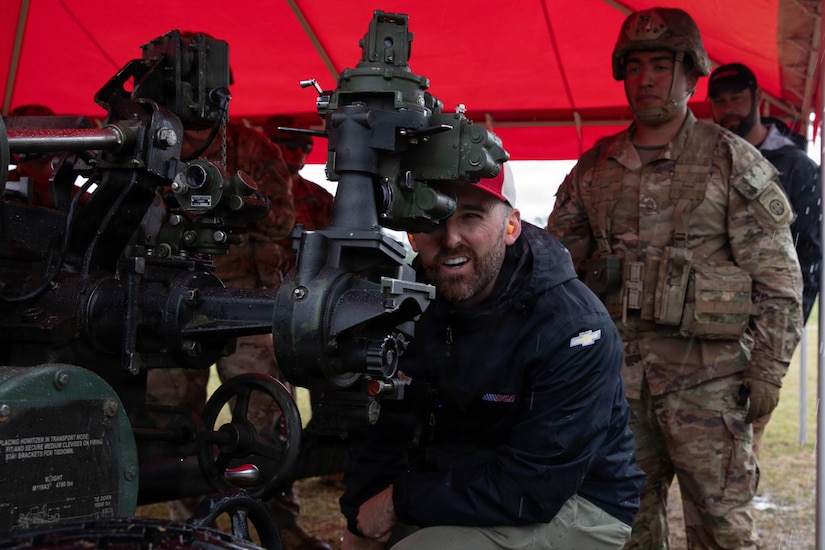
Fort Bragg, North Carolina, hosted NASCAR driver Austin Dillon, May 7, as part of Mission 600, an annual program where racing teams visit military bases and learn about service members' daily lives in preparation for the Coca‑Cola 600.

A man wearing a red baseball cap and blue jacket looks through the sight of a Howitzer. Two men in camouflage military uniforms stand behind him.

 
Dillon, who drives the No. 3 Chevrolet for Richard Childress Racing, is a two‑time NASCAR champion with wins in the Daytona 500 and Coca‑Cola 600. This was not his first time at the Army installation. Dillon previously visited the post in 2019 during an earlier Mission 600 tour, where he also trained with soldiers and learned about airborne operations. 
 
This year, Charlotte Motor Speedway sent drivers to military installations across the country for the ninth time to meet with troops and recognize their service. Fort Bragg became one of the key stops for the 2026 campaign.

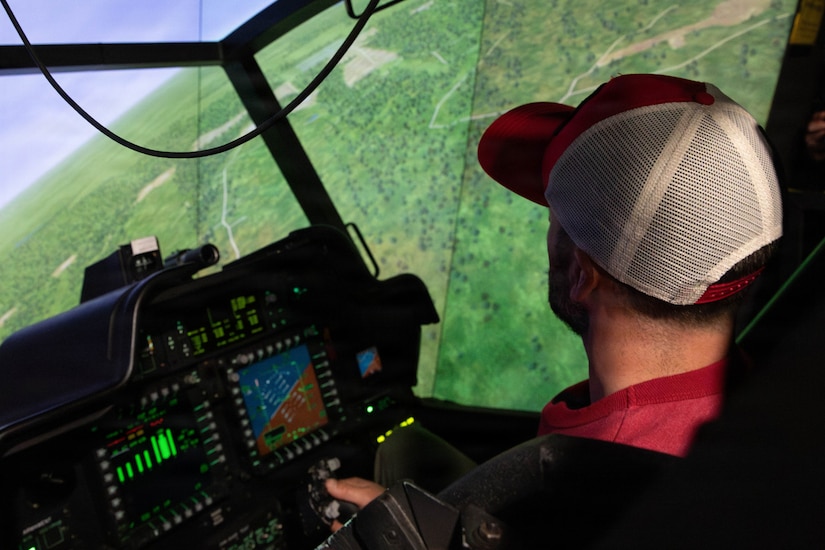
A man operates an aircraft simulator.

 
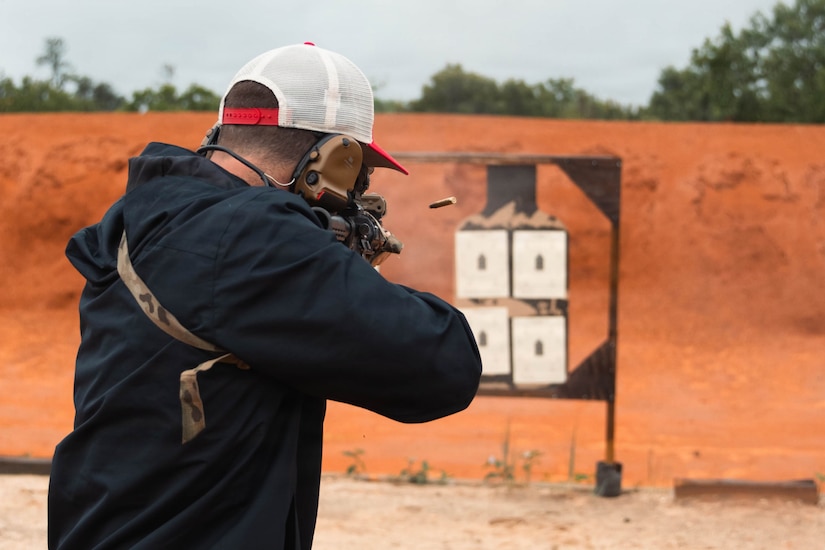
During the visit, Dillon and his racing team fired a howitzer, received weapons training, tested a flight simulator and jumped from the installation's 34‑foot jump tower. These hands‑on activities were designed to help the team understand the skills, training and challenges soldiers face every day. 
 
Dillon said the experience helped him better understand why Memorial Day weekend is so important to NASCAR and to the military community.

A man shoots a weapon at a target.


"So appreciative for all of our military, the men and women out there who truly keep America what it is," Dillon said. 
 
Mission 600 leads into the Coca‑Cola 600, NASCAR's Memorial Day weekend race that honors service members across the War Department. Charlotte Motor Speedway will host the 2026 race May 24.

FORGING THE DIGITAL BATTLESPACE: Five Eyes Allies Accelerate 'Project Arcadia' at the Combined Digital Leadership Summit

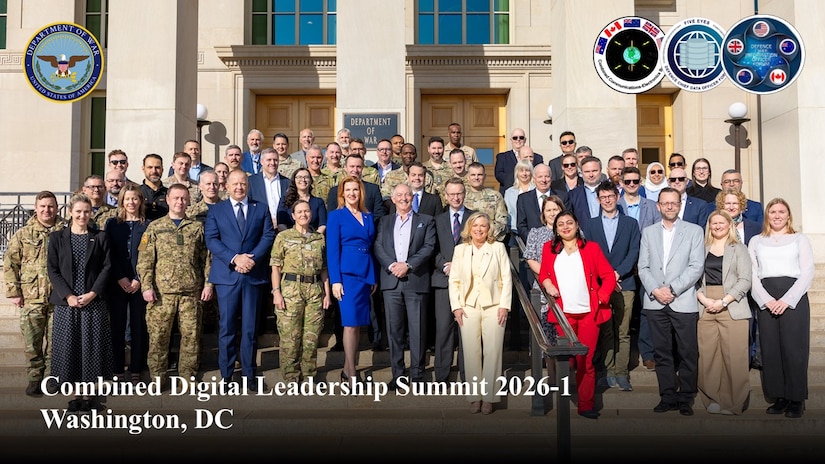
The Department of War (DoW), last Friday, announced the successful conclusion of the biannual Combined Digital Leadership Summit (CDLS 26.1), marking a pivotal acceleration in joint digital war fighting capabilities and the operationalization of Project Arcadia among the Five Eyes (FVEY) alliance: the United States, Canada, the United Kingdom, Australia, and New Zealand.

A large group poses for a photo on the steps of the Pentagon during the day.

The summit's mandate aligns directly with the strategic imperatives set by Secretary of War Pete Hegseth, who has continually emphasized that technological and operational unity with our partners is the bedrock of global stability. "The United States is committed to achieving peace through strength," Secretary Hegseth previously declared, framing the Department's focus on maintaining a decisive technological overmatch to deter global aggression. Executing on this vision of strength and deterrence, the Honorable Kirsten Davies, the DoW's Chief Information Officer, closed the multi-day summit by challenging the coalition to achieve "peace through technical strength" by commending the "fierce dedication" and "unequivocal consensus" of the international delegation.

"The spirit of the Combined Digital Leadership Summit (CDLS 26.1) has affirmed a fundamental truth that will define our future success: we can only achieve our goals when we walk together, not independently," said the Hon. Davies during her closing address. "The strategic imperative that has galvanized this remarkable unity is Project Arcadia. It is not merely an IT project, but the operational imperative for our time—the digital backbone that will empower our warfighters with the information dominance they need to win."

By uniting the Defence Chief Information Officer Forum (DCIOF), the Defence Chief Data Officer Forum (DCDOF), and the Combined Communications Electronics Board (CCEB), the FVEY nations have solidified a binding commitment to utilize the Arcadia platform as the critical infrastructure for operationalizing Artificial Intelligence and mastering Command and Control data flow. The goal is to turn vast amounts of information into a unified Common Operating Picture (COP) at a pace legacy, hardware-bound networks could never achieve.

The summit concluded with a ceremony rich in symbolism as the United States officially transitioned hosting duties to Australia. The Hon. Davies passed the ceremonial taonga—Māui's hook—to Australia's Defence CIO, Chris Crozier, signifying the handover for the next CDLS cycle.

As the host country and in commemoration of the upcoming 250th anniversary of the American Declaration of Independence, Davies also presented the Australian delegation with a sculpted Eagle. "The American flag in its talons is a reminder that wherever this mission flies next, the United States will be right there with you," she noted.

Joint development on Project Arcadia and rapid-prototyping initiatives will continue at a sprint pace as Australia carries this mission forward to the next summit, scheduled to convene in Sydney, Australia, in November 2026.

Medal of Honor Monday: Army 1st Lt. Douglas Bernard Fournet

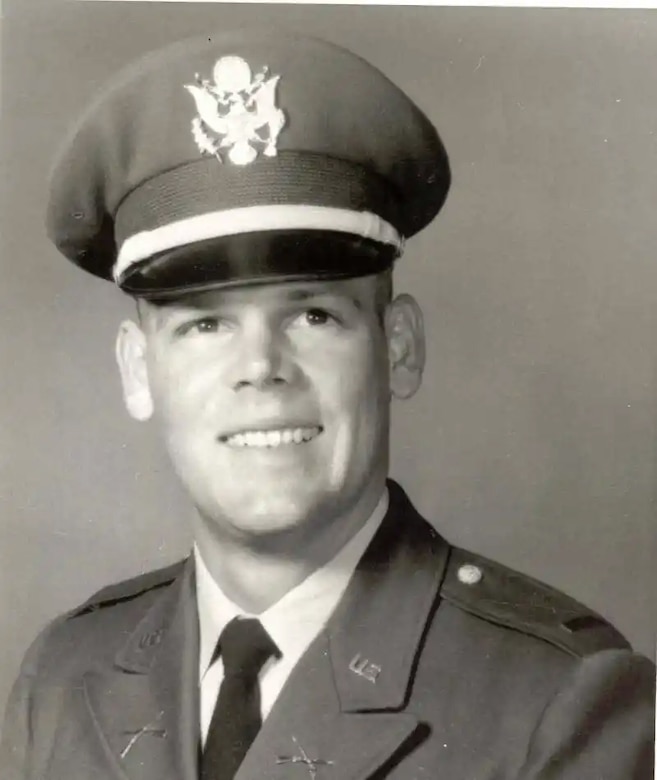
Army 1st Lt. Douglas Bernard Fournet was a trooper assigned to Company B, 1st Battalion, 7th Cavalry Regiment, 1st Cavalry Division, when he served in South Vietnam in 1968.

A man wearing a military dress uniform smiles for a picture.

He was born on May 7, 1943, in Lake Charles, Louisiana. His father, former Army Staff Sgt. Henry Bernard Fournet, was a shrimp boat operator, and his mother, Maria Lena Fournet, was a homemaker. 

In 1952, his father drowned when his shrimp boat capsized in heavy seas, so Fournet and his siblings cared for their mother. 

He was the quarterback of the Lake Charles High School football team. He also graduated from McNeese State University in Lake Charles. His siblings include brothers Keith, Mark, Rocke, Brett, and Kevin, who was an Army veteran, and sister Susan. 

After college, Fournet married the former Marilyn Miller.  

Following college, Fournet attended Officer Candidate School at Fort Benning, Georgia, in 1968, after which he deployed to South Vietnam. 

His wife was pregnant when Fournet deployed. Their son Bill would be born after his father's death. 

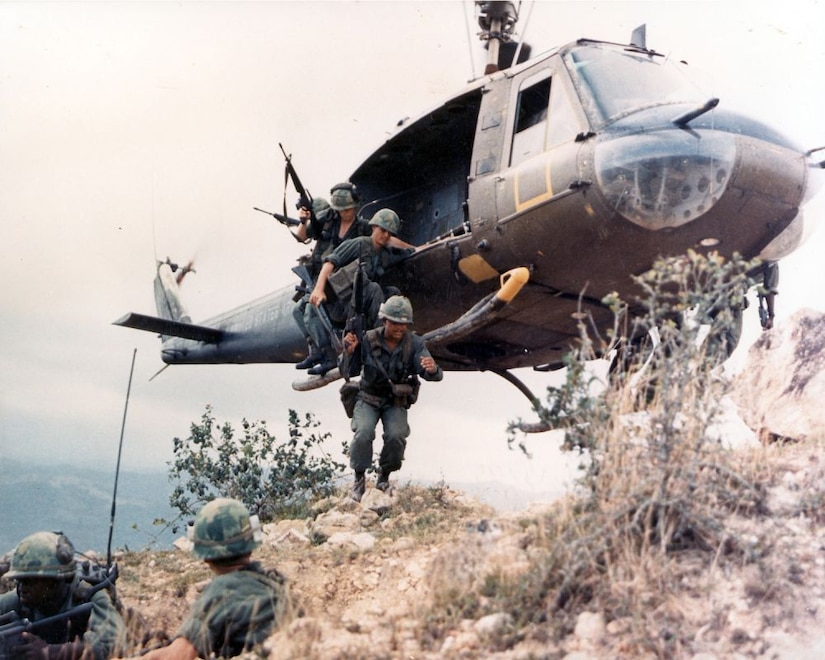
Fournet, a platoon leader, deployed with his troopers to the A Shau Valley during Operation Delaware, April 19, 1968. The valley was a vital corridor for supplying enemy forces known as the People's Army of Vietnam along the Ho Chi Minh Trail. Their mission was to cut off the supply route. 

While advancing uphill against fortified enemy positions in the valley, the platoon encountered intense sniper fire from concealed enemy positions, making movement very difficult. The right flank man suddenly discovered an enemy claymore mine covering the route of advance and shouted a warning to his comrades.

Soldiers jump from a helicopter atop a hill.

Realizing that the enemy would also be alerted, Fournet ordered his men to take cover and ran uphill toward the mine, drawing a sheath knife as he approached it with the intent of cutting the control wire.

He used his body as a shield in front of the mine as he attempted to slash the wires. As he reached for the wire, the mine was detonated by the enemy, killing him instantly. Five men nearest the mine were slightly wounded, but his heroic and unselfish act spared his men from serious injury or death.  

Braving enemy fire, his platoon sergeant, Army Staff Sgt. Bill Krahl retrieved Fournet's body. For his actions, Krahl was awarded the Bronze Star Medal. 

In a White House ceremony, President Richard Nixon presented the Medal of Honor on behalf of Fournet to Army Mag. Gen. Charles Spragins, commander, U.S. Army Training Center at Fort Polk, Louisiana, on April 7, 1970. Family members also attended.

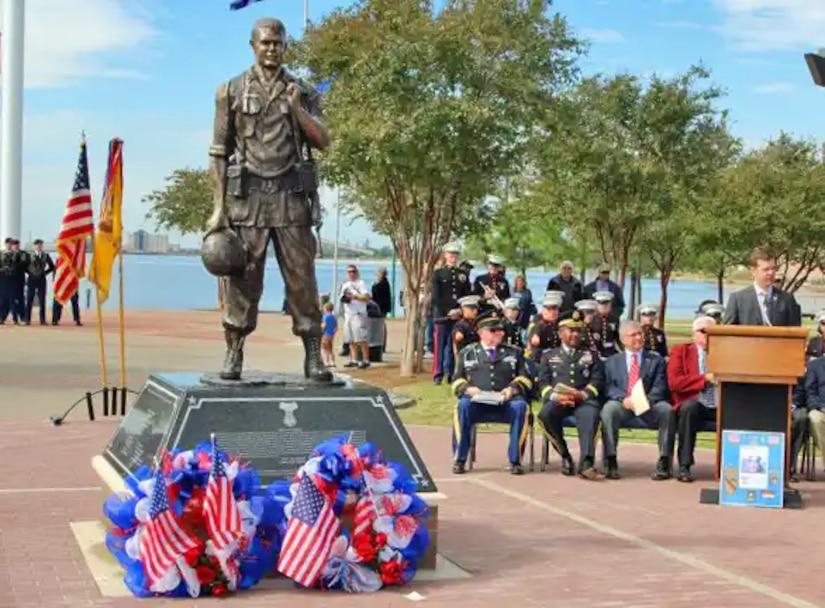
There's a monument to him at American Legion Post 244 in Kinder, Louisiana. 

Nixon wrote in a letter to Post 244: "In a sense, the monument will be a memorial to the many other brave young men who made sacrifices for our country. We can all be justifiably proud that our nation has always had men of Lt. Fournet's caliber who have come forth to serve her in her hour of need."

A statue of a soldier stands atop a pedestal as a man in a suit speaks to a gathering of military and civilian people.

Fournet was inducted into the Louisiana Military Hall of Fame and Museum, and a section of Interstate 210 near Lake Charles is named the Douglas Fournet Expressway.

The First Lieutenant Douglas B. Fournet Memorial is located at Veterans Memorial Park on the grounds of the Lake Charles Civic Center.  

Fournet is buried in the Kinder Cemetery in Kinder.