Friday, August 07, 2026

Multinational Partners Strengthen Regional Readiness During Exercise Panamax 2026

Airmen assigned to 12th Air Force, Air Forces Southern, joined approximately 40 military personnel from across the Americas during Panamax 2026, a U.S. Southern Command-sponsored multinational exercise focused on an integrated approach against simulated threats to the Panama Canal and the region. 

The exercise continues until Aug. 14 and provides participating forces from 19 nations with an opportunity to conduct combined security and stability operations, enhance interoperability, and strengthen their collective capability to support Panama in defending the canal and preserving regional security. 

Approximately 40 military personnel from Ecuador, Peru, Colombia, the Dominican Republic, Argentina, Brazil, Paraguay, Honduras, Guatemala and El Salvador are working together to synchronize multinational air component planning, command and control, and decision-making in response to simulated threats to the Panama Canal and regional security. 
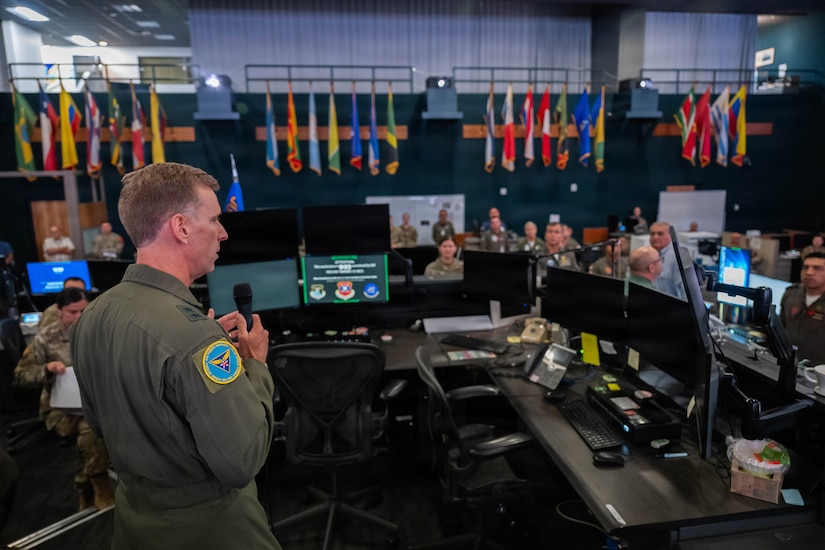
A man in a military uniform stands in a large room and speaks into a microphone; people in similar attire sit in front of him with more than a dozen various flags behind them.

Air Forces Southern led the combined air component in one of the Western Hemisphere's premier multinational exercises at Davis-Monthan Air Force Base, Arizona. 

"We are proud to host Panamax here at Davis-Monthan and to work alongside our partner nations as we train to protect one of the most strategically important waterways in the world," said Air Force Maj. Gen. David Mineau, 12th Air Force commander. "This exercise helps us sharpen the coordination, trust and readiness needed to support Panama in the defense of the canal and preserve regional security." 

The biennial exercise reinforces the enduring commitment of the United States and partner nations to regional security through cooperation, transparency and shared responsibility. By training together before a crisis occurs, participating nations build the trust, professional relationships and interoperability that enable faster, more effective responses when real-world events demand coordinated action. 

"This opportunity was the first time Ecuador brought air force intelligence personnel, and the immense value of this training for our force and our partners is already clear," said Ecuadorian air force Lt. Col. Andres Acosta, an operations, intelligence and analysis officer. "Exchanging operational perspectives and discussing air doctrine face-to-face builds the mutual trust and understanding essential for our shared security." 

The exercise scenario is designed to challenge participants in a realistic multinational environment while strengthening each nation's ability to operate alongside allies and partners during a coalition response to a notional contingency. 

For Air Forces Southern, Panamax supports the command's commitment to strengthening partnerships across the Western Hemisphere by improving readiness, reinforcing integrated deterrence and enhancing the collective ability of allied and partner air forces to respond to evolving regional security challenges.
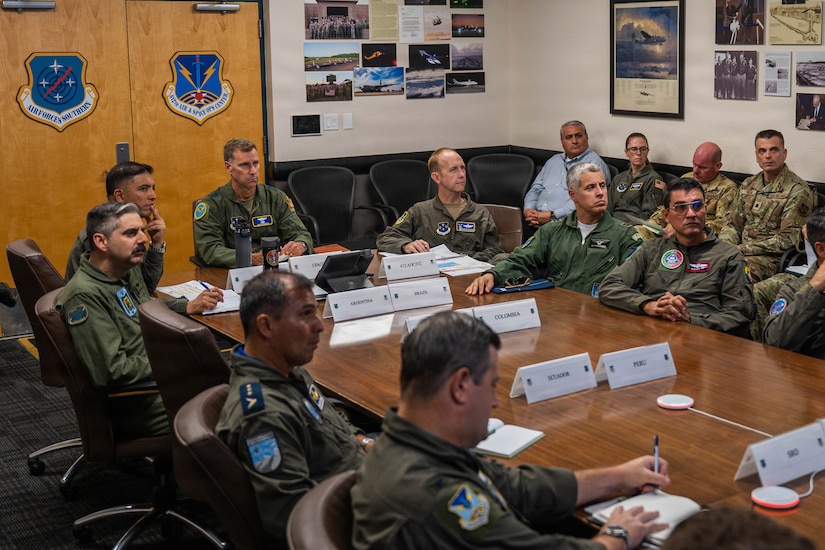
Nearly a dozen men in military uniforms from various countries sit around a wooden table and look at an out-of-frame monitor; people in similar attire are sitting behind them.
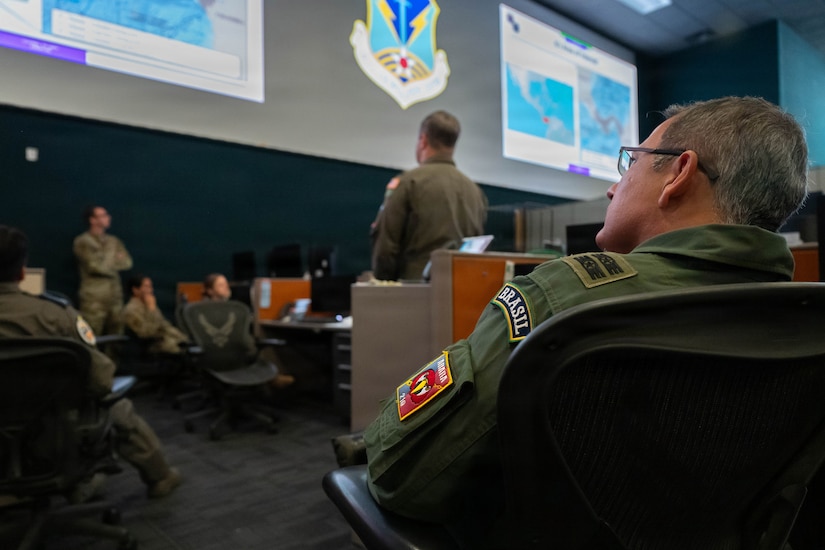
A shoulder view of a man in a military uniform sitting in an auditorium and looking up at a screen. His sleeve has various patches; one says, “Brasil.”
"Panamax is more than a multinational exercise; it is an opportunity to bring together talented professionals from across the hemisphere, learn from one another and strengthen the partnerships that underpin regional security," Mineau said. "That cooperation is essential to ensuring we are ready to respond together to future challenges." 

Beyond tactical and operational training, the exercise strengthens the professional networks and institutional relationships that enable long-term cooperation throughout the region. It provides participants the opportunity to exchange best practices, improve communication procedures and develop a shared understanding of multinational planning and execution. 

"Collaborating in a combined air component environment allows us to synchronize our procedures and learn from each other's expertise," Acosta said. "This training ensures that if we are called upon to respond to a real-world contingency, we can operate seamlessly as one united team to preserve regional stability." 

Since its inception, Panamax has evolved into a premier multinational exercise demonstrating the value of enduring partnerships, shared commitment and collective readiness. Each iteration builds upon previous exercises, strengthening interoperability and ensuring participating nations remain prepared to operate together in support of regional security and stability. 

"It is an honor to welcome our partners to Panamax and train together in support of a mission that matters to the hemisphere," Mineau said. "By rehearsing how we integrate, communicate and operate as one team, we improve our collective ability to protect the Panama Canal, strengthen deterrence and meet the shared security responsibilities we all carry." 

Boys & Girls Clubs Honor Military Youth

Yesterday in the nation's capital, five young Americans from across the War Department were honored as finalists during the Boys & Girls Clubs of America's 2026 National Military Youth of the Year celebration, and one walked away with the honor and the opportunity to compete at the next level.

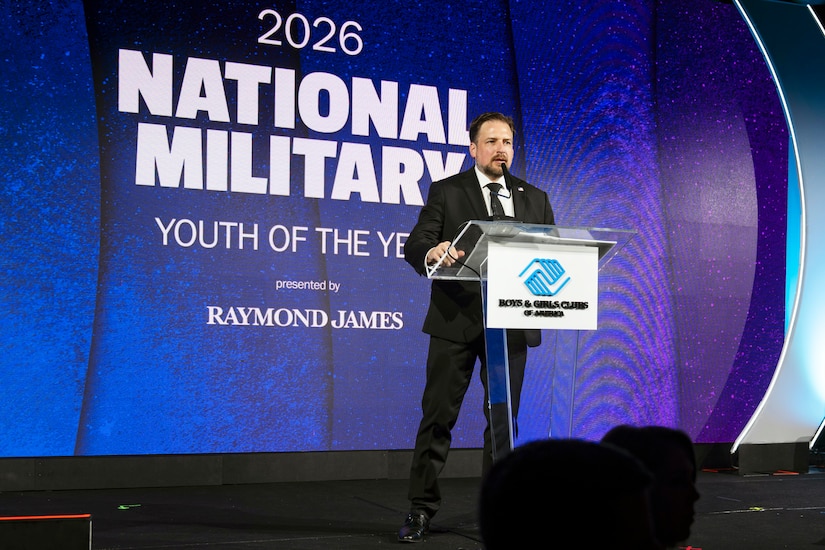
A man in business attire stands at a lectern and speaks into a microphone. On the wall behind him are the words "2026 National Military Youth of the Year."

Stephen B. Simmons, deputy assistant secretary of defense for military community and family policy, explained the challenges military children face and how programs like the Boys & Girls Clubs of America provide vital support to them.

"At the Department of War, our No. 1 priority is ensuring America's service members are ready and able to answer our nation's call to serve," he said. "One of the best ways we can achieve that mission is by taking care of the people they love the most."

Simmons is no stranger to the unique challenges that come with being in a military family. He said when he was in the Marine Corps, his family moved five times before his son turned 10.

"Every time those permanent changes of station orders came in, I saw the value of our family support programs," he said. "Compassionate, dedicated professionals the world over, who helped take the sting out of those long goodbyes. They kept our kids excited about the future and made every move feel like a return home."

Simmons noted that Boys & Girls Clubs of America has been an indispensable partner to America's military families for 35 years.

"Wherever families are stationed, Boys & Girls Clubs are waiting for them with open arms; few organizations can say the same," he said. "Above all else, Boys & Girls Clubs promote values that America's youth need now more than ever — healthy minds and bodies, a willingness to serve and a readiness to take the lead."

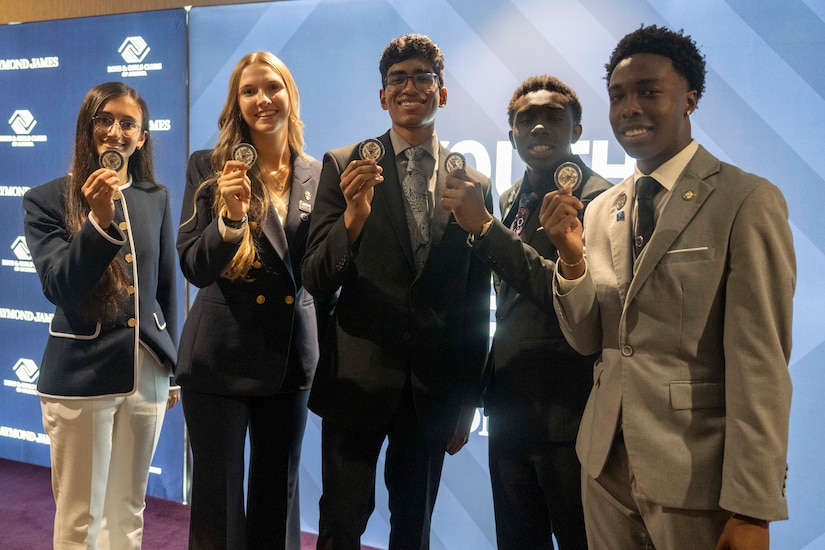
Each year, five finalists are named to represent youth centers in five regions of the War Department.

Five young people in business attire stand together and hold up commemorative coins. Behind them, a backdrop displays the logo of Boys & Girls Clubs of America.

Patrick A. is the Northeast Military Youth of the Year from the U.S. Army Garrison Rheinland-Pfalz Baumholder child and youth program in Germany. Although he initially grew up in Ghana, three years ago he moved to Germany to live with his aunt and uncle — both Army officers.

Describing his experience as "very unique," Patrick said that because of the short time he's been in a military family, he hasn't seen the things his military friends have seen.

"I only moved here three years ago, so I have never [moved] myself," he said. "But I've seen my friends PCS all the time, and I have to always say goodbye to my friends, and that's ... been very sad sometimes. But then I know that we have the youth centers and the [child and youth services] programs and [Boys & Girls Club of America] programs all around on every military installation. So, I know wherever they go, they have a safe place to go. They have a place to make friends."

Patrick said he's learned about the resilience of military family life. He said he plans to study sports business in college.

Kate P. is the Southeast Military Youth of the Year from Naval Submarine Base Kings Bay, Georgia. Her dad was in the Navy for 30 years, and she moved five times — from Hawaii to Maine.

"As a military youth, I definitely had to move around a lot when I was younger," she said. "I had to experience a lot of different communities and adapt really quickly to many different places."

Kate said it's a challenge to grow up as a military youth.

"You're forced to move to these different places and experience different things that you never knew would happen," she said. "And also, having a parent who was away half of the time and not being able to see them as much during your childhood — it was kind of hard."

However, she said she learned a lot about leadership.

"I think I learned that to lead, it starts with listening," she said. "You need to start by listening to the people who are around you and listening to the communities that you're going to."

Kate said she hopes to go to school to study engineering.

Ethan K. is the Pacific Military Youth of the Year from Nellis Air Force Base, Nevada. His dad served in the Air Force for 20 years. As a kindergartener, Ethan remembers seeing his dad in uniform and interacting with other military kids.

"[The military] definitely affected me because ... [I was] going to the youth center and being around kids who are also military-affiliated and having that same sense and good understanding of service and sacrifice," he said.

While he doesn't remember moving, he said he does remember his dad deploying.

"He was deployed when I was born, even," Ethan said. "He went to Afghanistan, Iraq, Qatar, and these would be like six-month-long deployments. So, it would definitely be a struggle in our family."

Ethan said he's interested in studying biology and government.

"I do hope to do the [Health Professions Scholarship Program] ... which is basically once I finish my college, I go to medical school, and I join the military then," he said. "I do hope to join the military."

Fatimazahra E. is the Midwest Military Youth of the Year from Minot Air Force Base, North Dakota. She said she's moved six times and loves it.

"I lived in Turkey, England, Washington state, New Jersey, New Mexico, Germany and now [North Dakota]," she said. "And we're going to move again next year. ... I like moving; my siblings don't. I think it just depends on each person and what they enjoy doing. I like seeing new things, even though it can be hard sometimes to adapt. But adaptability is one of the skills that we learn as military children. So, I'm grateful for that."

Fatimazahra has big goals, but said that being a military youth taught her about determination and embracing opportunities.

"I want to get a double degree in neuroscience and aerospace engineering," she said. "I want to get my doctor of medicine, maybe specialize in aerospace medicine and then apply to NASA and try to become an astronaut. And after that, I'd like to be a senator."

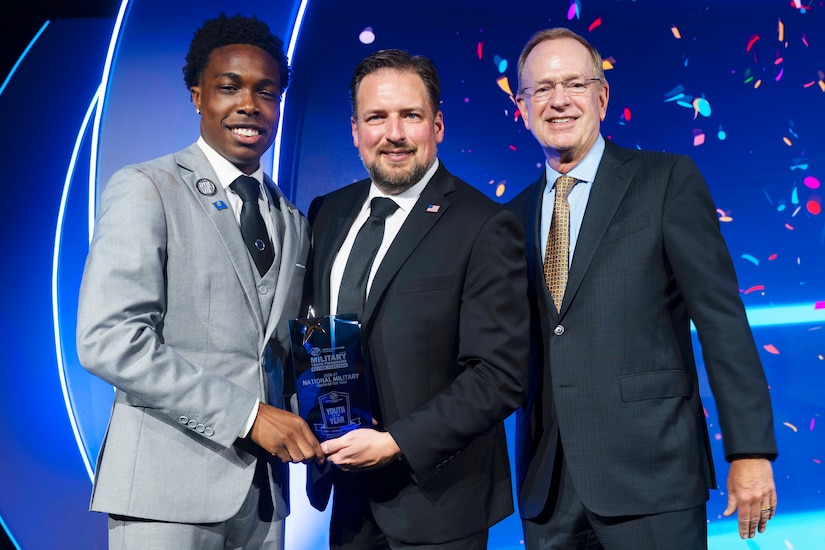
Three people in business attire stand together on a stage holding a glass award.

Each of the nominees discussed their thoughts on being a military youth and their plans for the future. At the conclusion of the evening, Jonathan G. was named the 2026 National Military Youth of the Year.

Jonathan is the Southwest Military Youth of the Year from Tinker Air Force Base, Oklahoma. His mother served in the Air Force for 20 years and retired in 2014. But Jonathan said he still values his access to the base's youth programs.

Jonathan graduated high school earlier this year and plans to attend college in Oklahoma, majoring in child development.

"I want to be youth director for the youth center; that's really what I want to do," he said.

After being named the 2026 Military Youth of the Year, Jonathan thanked God, his family and his friends at the youth center at Tinker Air Force Base.

"I don't see Youth of the Year as an individual thing, even though [some] people see it that way," he said. "I see it as a group thing, as a team development thing. That everybody grows when somebody else goes ahead."

All five nominees spent a week in Washington, where they visited the Pentagon and met with representatives of their associated military services. During his acceptance speech, Jonathan said the other nominees are family now.

"I can't believe I'm with these peers and these amazing people that I came up with this whole week," he said. "It's been amazing. I can't believe I get to call them my family. So, I'm thankful for everybody that's at that table right now because you guys did amazing this whole week."

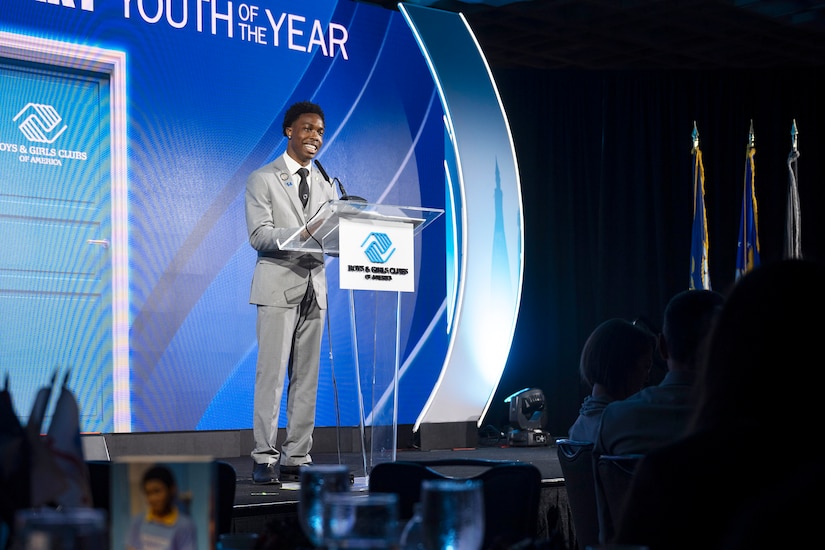
A young man in business attire stands at a lectern and speaks into a microphone. Behind him is a blue wall with the logo for Boys & Girls Clubs of America.

Jonathan also addressed the youth he works with at Tinker Air Force Base.

"For the kids [at Tinker] ... everything is for you guys, and you guys know this from the bottom of my heart. I do everything for you because I want to inspire y'all so much, and I'm so deeply grateful to know everybody that's in this room, and all the kids that I do it for," he said. "I'm just thankful, and I'm thankful to take this award. I'm blessed to be here on this stage, and I'm thankful for everybody."

As part of the competition, the five nominees received a $2,500 scholarship at the state military youth of the year level. At the regional level, they received a $20,000 scholarship. As the winner, Jonathan received an additional $20,000, and in October, he will attend the Boys & Girls Clubs 2026 National Youth of the Year event in New York. That winner will receive a $50,000 scholarship.