Showing posts with label unmanned aerial systems. Show all posts

Friday, September 19, 2025

Army Enhances Border Security Through Partnership, Unique Capabilities

 Sept. 19, 2025 | By Army Capt. Samuel DeWerth-Jaffe, Joint Task Force Southern Border

Joint Task Force Southern Border demonstrates an unprecedented level of interoperability with partner agencies as part of their whole-of-government approach to secure the southern border. 

From the headquarters down to squad-sized elements directly on the border, task force personnel are working alongside U.S. Border Patrol every day, ensuring synchronized efforts to deter illicit activities. 
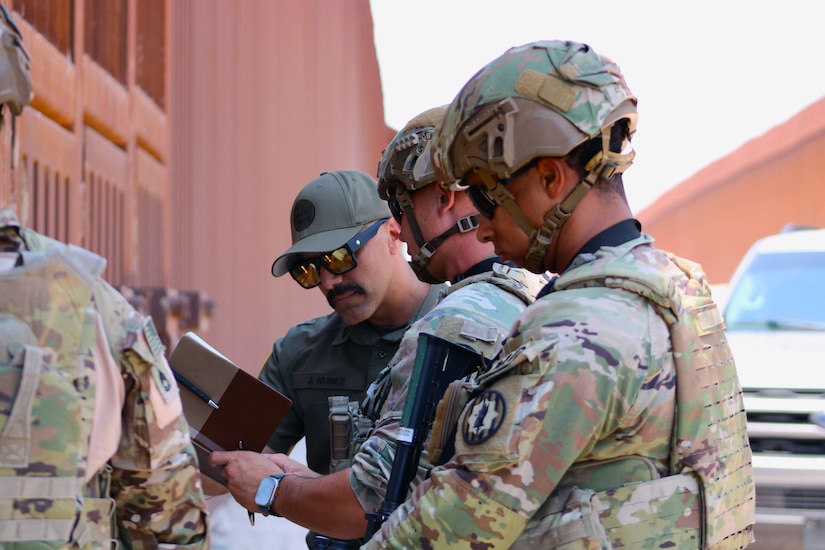
Two soldiers speak to a person in a baseball cap outside, with a large structure and vehicle in the background and another person nearby.

"My experiences in past deployments and working in Europe have reinforced the importance of partner collaboration — a principle directly applicable to our current mission with Border Patrol," said Army Lt. Col. Cris Gasperini, commander of the 1st Battalion, 41st Infantry Regiment, 2nd Stryker Brigade Combat Team, 4th Infantry Division, assigned to JTF-SB. "The integration of our organic assets with those of Border Patrol has been exceptionally effective, demonstrating the necessity of a whole-of-government approach to border security." 

The task force's integration has proven critical to operations across the southern border's diverse terrain. Along the 1,954 miles of the border lie cities, deserts, thick vegetation, rivers and rural communities. 

The varied terrain along the border presents distinct security challenges. These are addressed through both the organic assets of JTF-SB and the complementary capabilities of interagency partners. 
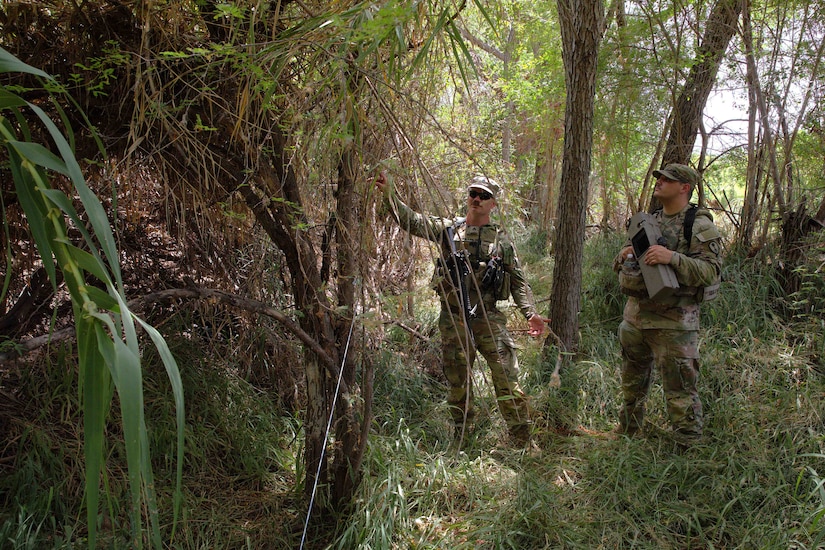
Two soldiers wearing camouflage military uniforms look at a brush covered area while standing in a forest.

The AN/MPQ-64 Sentinel radar is one of the unique capabilities that the task force uses to address these security challenges at the border and enable U.S. Border Patrol's law enforcement role while also providing defensive capabilities against small unmanned aerial systems. 

The U.S. Border Patrol El Paso Sector, which oversees 268 miles of the southern border in Texas and New Mexico, is one of nine sectors that has seen the benefits of an integrated approach with the task force. 
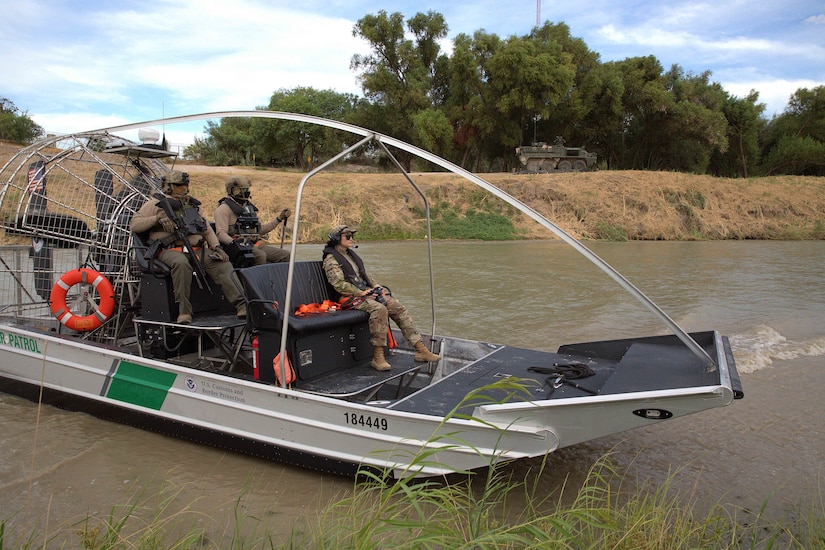
Three people sit in a metal boat on a small body of water under blue skies with trees and tall grass in the background.
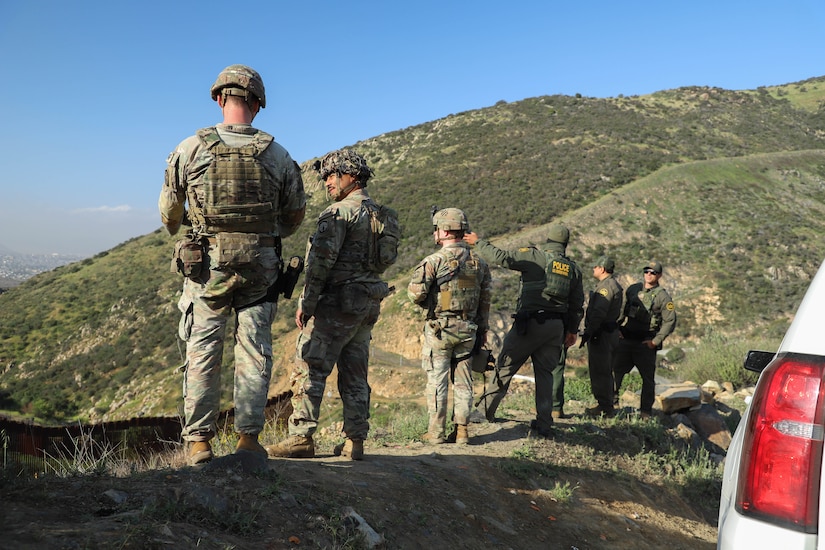
Three soldiers wearing camouflage military uniforms stand on a hill next to three other people in green police uniforms. One of the men is pointing toward the valley below.
"The Border Patrol in El Paso focuses on collaboration with various agencies and the Department of War's JTF-SB to enhance border security to target hostile drones and the challenges they pose," said Walter N. Slosar, chief patrol agent with the El Paso Sector. "Enhanced detection capabilities between JTF-SB and U.S. Border Patrol give us full spectrum capabilities to track, identify and mitigate aerial threats." 

JTF-SB and U.S. Border Patrol remain committed to strengthening this vital partnership and continued innovation in the face of evolving threats with a broad range of capabilities. This collaboration serves as a model for future interagency cooperation and underscores the importance of a unified approach to national security. 

Wednesday, September 10, 2025

Marines Test Drone Systems During Defense Innovation Unit Challenge

Sept. 10, 2025 | By Marine Corps 2nd Lt. Logan Tompkins, I Marine Expeditionary Force

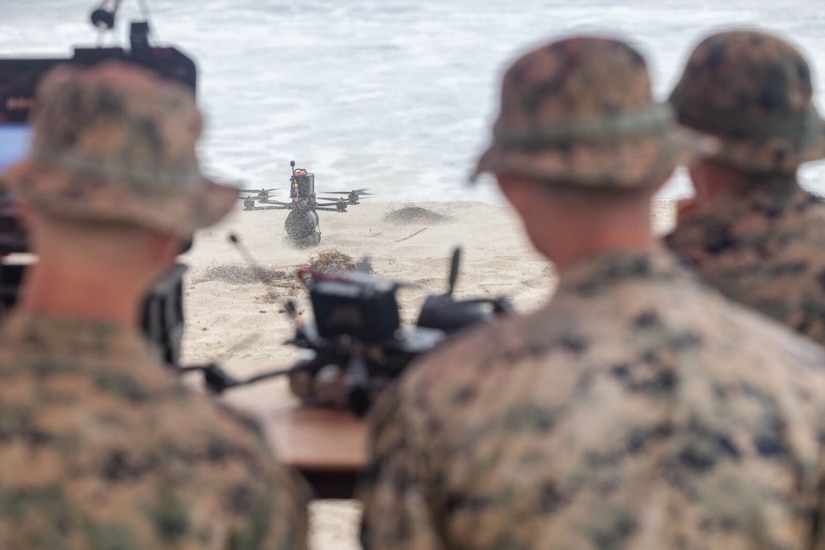
Marines assigned to I Marine Expeditionary Force partnered with the Defense Innovation Unit and industry leaders during phase two of the DIU's Project GI challenge to evaluate commercial small unmanned aerial systems in realistic operational environments, Aug. 18-29. 

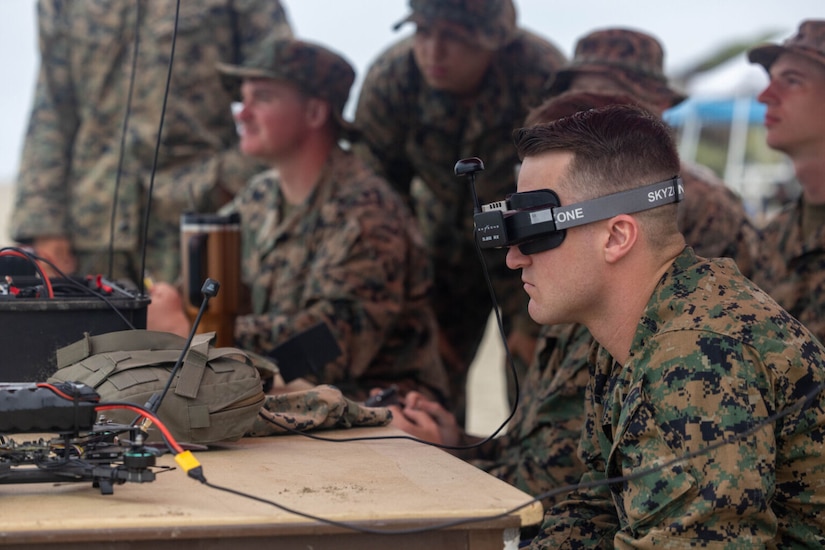
A person wearing a camouflage military uniform wears a headset to monitor an unmanned aerial system that is not pictured. People wearing similar attire are in the background, also looking at something not pictured.

The 12-day event brought together Marines assigned to 1st Marine Division — including operators, leaders and subject matter experts — to test vendor-loaned systems across multiple ranges. The training period included four days of Marine-led familiarization, followed by six days of scenario-based demonstrations. Assessments will directly inform War Department procurement decisions and accelerate the integration of resilient, cost-effective small UASs into the joint force. 

"The GI challenge puts our Marines at the center of capability development. Their expertise, combined with the innovation of our industry partners, is shaping the next generation of unmanned systems," said Marine Brig. Gen. Michael Nakonieczny, deputy commanding general of I Marine Expeditionary Force. "I MEF is proud to play a leading role in advancing technologies that directly enhance the lethality and survivability of our Marines." 

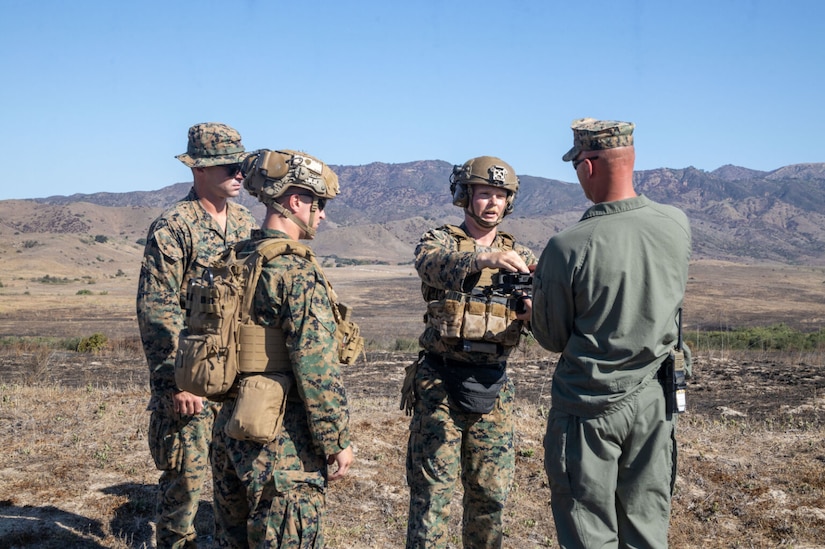
Four people wearing military uniforms stand outside in a desert environment with mountains in the background. Two look on as the person in the middle hands a small, black drone to the person standing the furthest right.

Marines evaluated systems against operational criteria, including setup, deployment time, weatherproofing, payload capacity and performance across varying terrain and climates. Evaluations emphasized how each system affected tactics, techniques and procedures during realistic combat scenarios. 

"Robotics are revolutionizing the battlefield, and it's no secret that first-person-view drones have become one of the most lethal and disruptive weapons worldwide," said Marine Maj. Steven Atkinson, I Marine Expeditionary Force DIU event lead planner. "Our mission is to ensure America's warfighters get the very best, battle-tested technology so they can be effective anywhere in the world." 

The challenge represents the second phase of a three-part competitive selection process. Phase one involved an initial screening in which the DIU reviewed vendor proposals and chose the most promising systems for further testing. Phase two brought those selected vendors to Marine Corps Base Camp Pendleton, California, for hands-on evaluation by the I Marine Expeditionary Force. A final phase three round will determine which systems advance to procurement, with winning platforms expected to be added to DOW's "Blue UAS Cleared List" — drones compliant with current law and policy, validated as cybersecure and available for DOW purchase and operation — by March 15, 2026. 

"Bottom-up refinement is something the Marine Corps has always valued. The ability for dedicated [noncommissioned officers] to test, stress and provide input on these products is exactly what was needed for this project and the service," said Marine 2nd Lt. Kienan Morrissey, an intelligence officer assigned to 3rd Light Armored Reconnaissance Battalion who participated in the evaluation of the vendor-loaned small UAS platforms. 

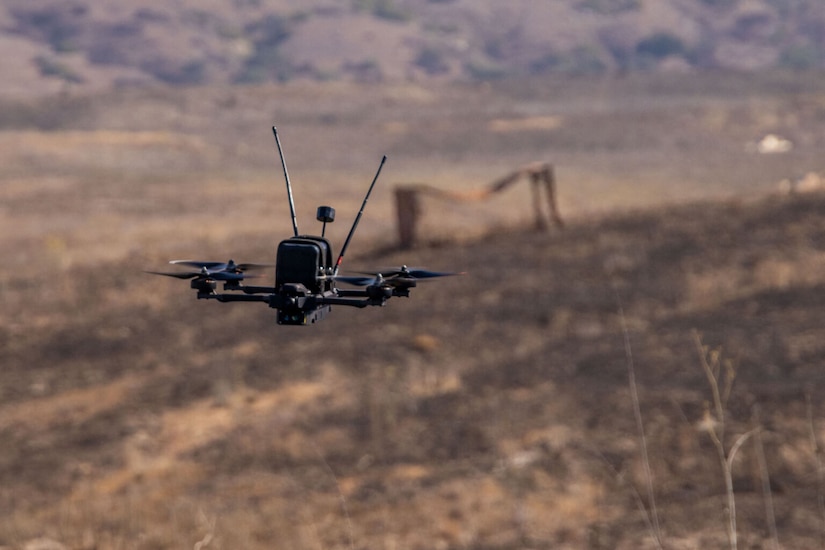
A small, black drone hovers over a desert landscape.

Marines stress-tested the systems in contested environment simulations, focusing on modern kill chain operations and first-person view effects capabilities. Vendors were required to provide at least three prototypes for testing, though some platforms received exemptions due to design characteristics or employment concepts. 

Following evaluations, Marines conducted detailed debriefs to capture feedback that will guide procurement and influence future small UAS capability development across DOW. Units within I Marine Expeditionary Force will continue working with selected systems beyond the challenge to provide additional recommendations for improvement. 

People wearing camouflage military uniforms look toward multiple small drones in a desert environment.

The DIU's Project GI challenge represents one of the Marine Corps' largest field-based industry engagements, focusing on emerging drone technology and directly supporting modernization priorities identified by Marine Corps and Pentagon leaders for operations against peer adversaries. 

"Events like these ensure our Marines will have the best available tools at their disposal in the next conflict," Morrissey said. 

Wednesday, August 27, 2025

Paratroopers Make History With Army's First Drone-on-Drone Strike

 Aug. 27, 2025 

By Army Capt. Jennifer French, 173rd Airborne Brigade

For Army 1st Lt. Francesco La Torre, the Army's first drone-on-drone strike wasn't exactly a Hollywood moment. 

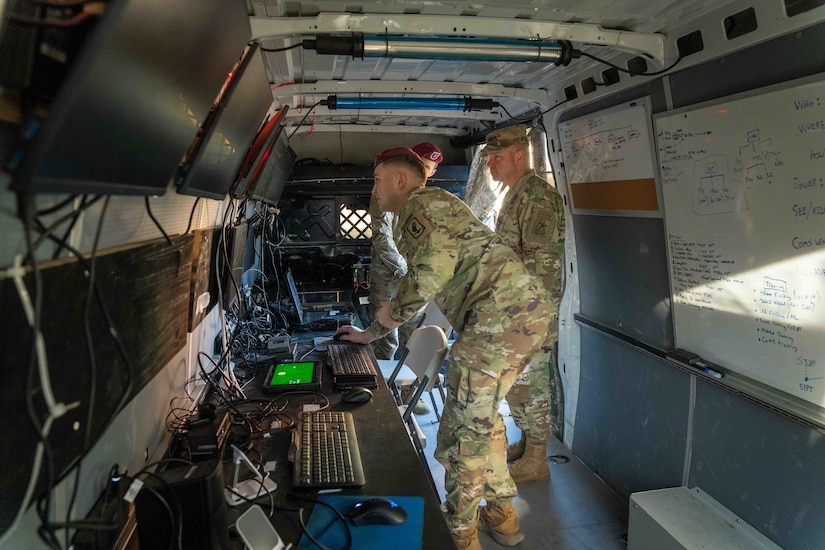
A man in a camouflage military uniform looks at a computer screen while moving a mouse. Another soldier in similar attire looks at the screen. Both men and another soldier in the background are standing in a long vehicle with a line of computers and monitors on the left side.
"In [the Star Wars movie], 'A New Hope,' Luke Skywalker flies an X-Wing through the Death Star trench and blows it up," La Torre said. "This wasn't like that. It was way harder. Honestly, it felt more like Darth Vader shooting down rebel pilots. He might be the villain, but he's also one of the best pilots in the galaxy." 
 
That was the image in La Torre's mind as his team with the 173rd Airborne Brigade achieved a milestone once unimaginable for conventional Army units: destroying an aircraft in flight using a first-person-view drone carrying an explosive charge. 
 
The strike took place earlier this month during the Army's Unmanned Aerial Systems and Launched Effects Summit, held Aug. 11-15 at Fort Rucker, Alabama. The live-fire event was led by the brigade's bayonet innovation team in partnership with the Pennsylvania Army National Guard and engineers from Army Combat Capabilities Development Command. 

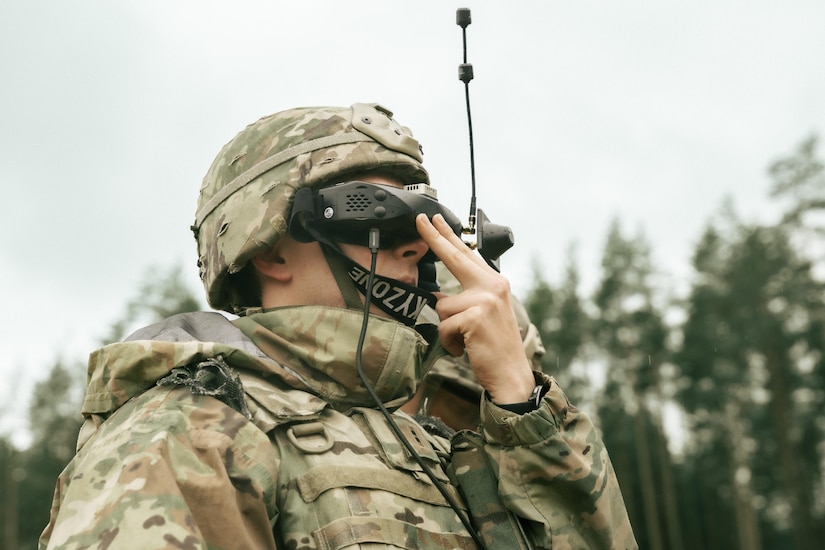
A soldier in a camouflage military uniform and helmet adjusts tactical goggles on his face.

 
"When I heard [Army] Chief [Warrant Officer 2] Nate Shea say, 'Arming,' when he was lined up behind the fixed wing threat UAS, I knew he'd take it down," La Torre said. "A few seconds later he detonated the claymore [mine], and I looked up from my end-user device to see the fixed-wing [aircraft] drop out of the sky." 
 
The success came after weeks of training. Paratroopers flew for hours each day, building muscle memory while rehearsing how to engage a fast-moving aircraft. Army Chief Warrant Officer 2 Andrew Topits familiarized himself with the fixed-wing platform a month in advance, while Shea practiced with inactive claymores. Once on the ground at Fort Rucker, the operators flew daily in changing weather, preparing for a target that could appear anywhere across the range. 
 
Technical skill proved as important as piloting. 
 
"The ability to train and solve problems immediately afterwards was critical to mission success," La Torre said. "The team was soldering, disassembling, reassembling and performing [quality assurance] around the clock while rehearsals were underway. While tactical units and technicians may not share the same language, they do share an intellectual curiosity and desire to succeed." 
 
La Torre emphasized what it means for the average paratrooper. 

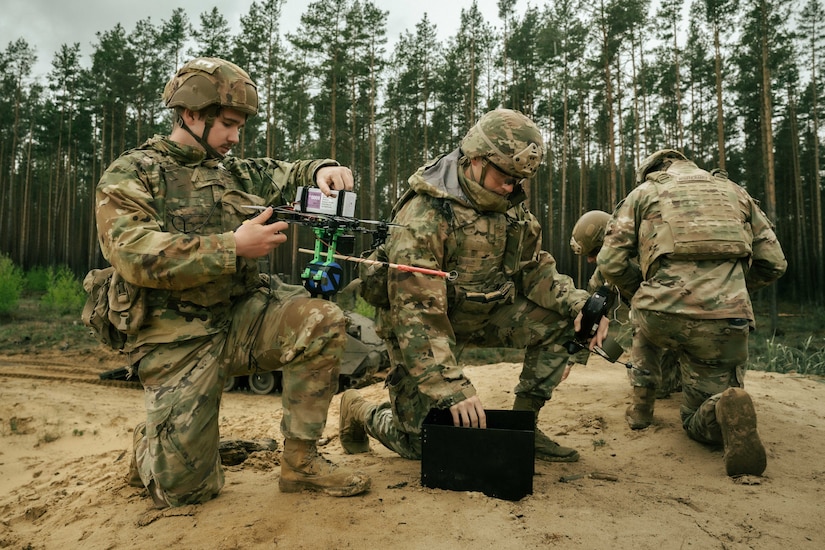
A group of soldiers in camouflage military uniforms kneel in the sand. A soldier on the left is holding a drone, while the soldier to the right is holding a remote. There are trees in the background.

 
"With the right kit, paratroopers will be able to utilize a low-cost system with preexisting munitions to execute a wide variety of mission tasks — and have the power to protect their unit from an endemic threat," he said. 
 
The drone demonstration showed that innovation doesn't have to come from the top. 
 
"It feels extremely satisfying to have this level of impact, but solving these kinds of problems should not be alien to junior officers, or any leader," La Torre said. "Every year the Army produces leaders at all levels who are better educated now than ever before. At the end of the day, rank is immaterial when it comes to problem-solving." 
 
For La Torre, the milestone reflects how far the 173rd Airborne Brigade has come. 

Two soldiers in camouflage military uniforms work on a drone.

 
"At this time last year, this kind of training was a pipe dream for conventional units," he said. "For the engagement itself, Chief Shea did an incredible job and so did Chief Topits. It's such a difficult mission profile for both aircraft." 
 
Lessons from the bayonet innovation team fed directly into Fort Rucker's new lethal UAS course, directed by Army Capt. Rachel Martin and Army Maj. Wolf Amacker. The course consolidates milestones within the Army's UAS community and serves as a hub for education and experimentation. 
 
"The more testing and experimentation we do, the less we must teach theoretically and the more we can back claims with real data," La Torre said. "Safe and effective experimentation allows commanders to understand the true nature of the risks they assume with these systems and helps make this training more commonplace." 
 
For La Torre, the boundaries are clear: safety and scalability. 
 
"We must safely conduct training, testing and experimentation," he said. "We also must make sure everything we do is exportable to other units so they can do the same. I'm confident what we've done is scalable, and the lethal UAS course at Fort Rucker will centralize the growth of lethal UAS engagements while also serving as a hub for subject matter experts to gather and exchange lessons learned."