Thursday, July 16, 2026

DHA Partners With Marines to Refine Portable TBI Assessment Technology for Austere Battlefield

Team members assigned to the Defense Health Agency's Warfighter Readiness, Performance and Brain Health team hosted an end user touchpoint at the Tactical Medicine Training Center, Camp Lejeune, North Carolina, June 30.
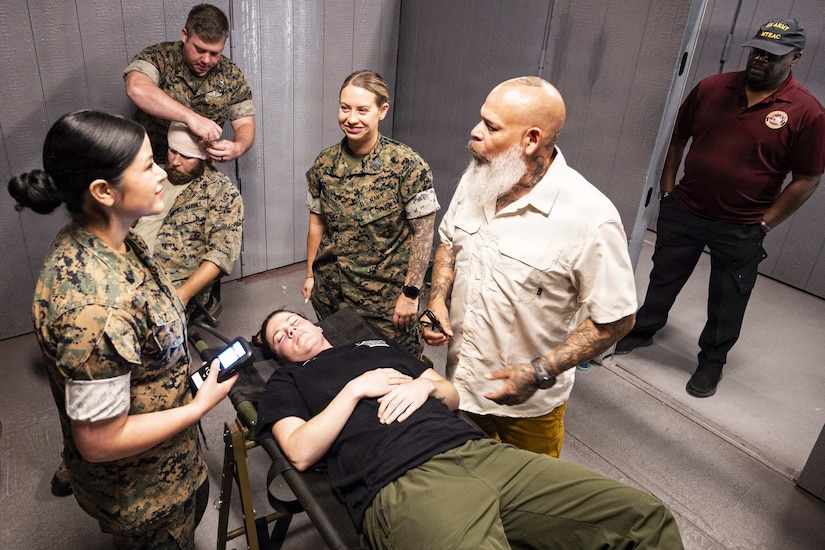
A person lies on a cot as other people, some wearing camouflage military uniforms, stand and speak to each other.

The event brought together Navy corpsmen and medical officers from across the II Marine Expeditionary Force to assess new capabilities for evaluating traumatic brain injuries on the battlefield. Participants evaluated Traumatic Brain Injury Field Assessment Program devices in a hands-on session, providing TBI-FAP developers with critical feedback directly from front-line medical providers who may one day use the equipment in austere environments.

The TBI-FAP program is managed by brain health experts within the WRPBH Project Management Office in collaboration with partners at the North Carolina Center for Optimizing Military Performance. This event, the latest in a series, was designed to gather feedback on TBI assessment technology prototypes being developed for use in a far-forward operational environment. Feedback from prospective end users is a vital step in the early development of any program, according to Damien Hoffman, a product manager with WRPBH.

"Collaborating with stakeholders across the military services and from key organizations in a systematic, routine way is imperative to our team's success," Hoffman said. "These touchpoints allow us to gather an array of feedback from end users with varying degrees of experience and expertise, an invaluable resource as we develop products for the warfighter."
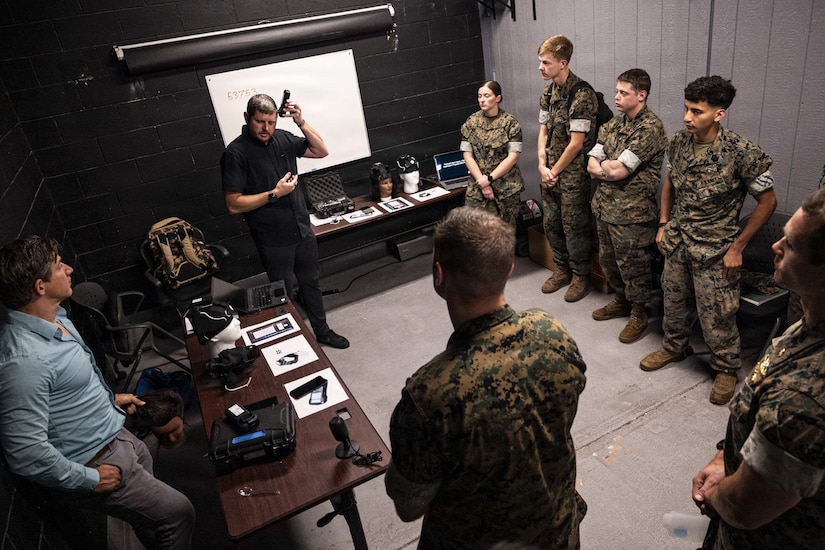
A man wearing a black shirt stands near a white board in front of a room with multiple people wearing camouflage military uniforms.

During the assessment, Navy corpsmen and medical officers got hands-on experience with the candidate technologies to test usability, durability and integration into existing tactical combat casualty care workflows.

"It is great, for me as a corpsman, to see what types of technologies are being developed for medical providers who operate at the front lines," said Navy Petty Officer 3rd Class Aspen Mitchell, a hospital corpsman assigned to the Marine Wing Communications Squadron 28 at Marine Corps Air Station Cherry Point, North Carolina. "Because of our expeditionary mission, we could literally be deployed anywhere in the world, and healthcare is vital for mission success. It is important for us, as medical providers, to give input on technologies during the development process to make the candidate technologies better and ensure they meet our needs as possible end users."
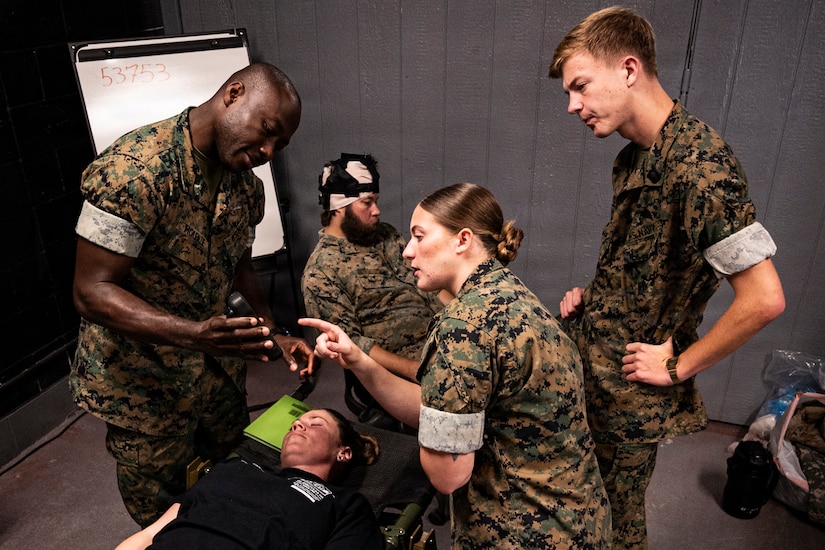
A group of people dressed in camouflage military uniforms stand over a person lying on a cot.

As the War Department continues to prepare for possible large-scale combat operations in austere environments worldwide, ensuring that warfighters have immediate access to neurological assessments is a top priority for military health leaders within the DHA. In future conflicts, medical providers anticipate a high likelihood of prolonged field-care scenarios. Unlike operations over the last two decades, where aeromedical evacuation was often rapid and guaranteed, near-peer conflicts in austere, remote locations will likely feature highly contested airspace and limited aviation resources.

For the Navy-Marine Corps team, these challenges are compounded by their unique role as the nation's premier amphibious force. Marines and their embedded Navy medical providers frequently operate in distributed, maritime environments — moving from ship to shore or securing expeditionary advanced bases across vast littoral regions. In these decentralized operational areas, the "golden hour" for traditional medical evacuation is often unattainable.
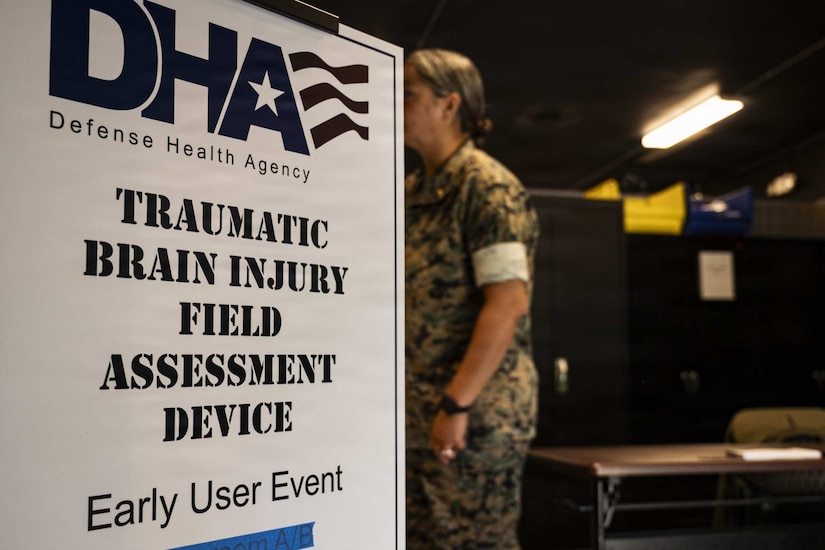
A sign for a traumatic brain injury training event stands in a small room as a woman wearing a camouflage military uniform walks by.

Because of these unique amphibious and logistical constraints, Navy corpsmen must be equipped to hold, monitor and treat casualties at or near the point of injury for extended periods. The ability to accurately assess traumatic brain injuries on the front line using lightweight, organic tools — like those developed through the TBI-FAP — is critical. It empowers first responders to make vital triage decisions, manage complex neurological trauma while isolated on distant shores and prioritize limited maritime medical evacuation assets for the most critical cases.

"Our process is a continuum, with flexibility to evolve alongside emerging threats and meet the needs of front-line warfighters, combatant commands and joint staff," Hoffman said. "Our goal is to rapidly develop a TBI assessment capability at the speed of relevance and these touchpoints are imperative to achieving that goal."

DHA Official Says TRICARE Pharmacy Ensuring Essential Medication Delivery Worldwide

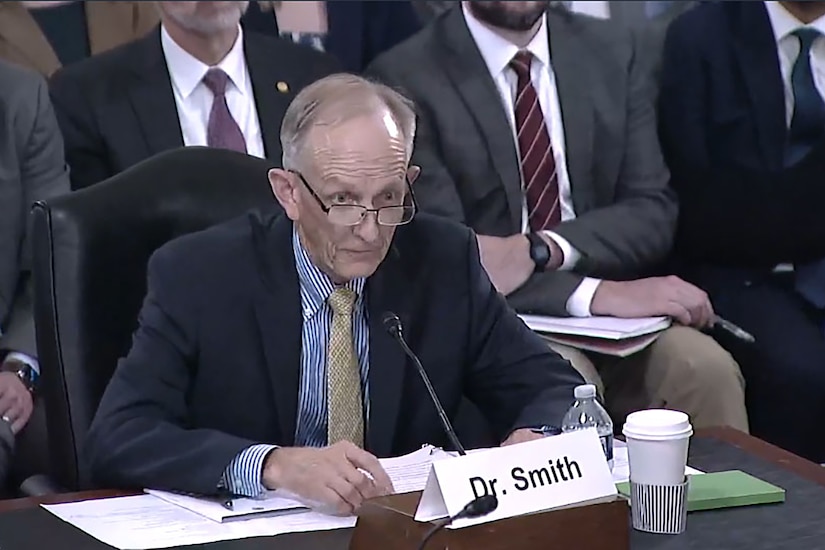
The War Department delivers one of the most comprehensive health benefits, through TRICARE, including an exceptional prescription drug benefit program, said David J. Smith, Defense Health Agency deputy director, during a Senate Armed Services Committee's personnel subcommittee hearing in Washington yesterday. 

A man wearing a suit seated at a table speaks into a microphone.

TRICARE covers most prescription drugs approved by the U.S. Food and Drug Administration. Those eligible for coverage include active duty, military retirees, their families, and National Guard and reserve component service members. Eligibility for TRICARE is determined by the sponsor's uniformed service and reported in the Defense Enrollment Eligibility Reporting System. 

"DHA is proud of the comprehensive worldwide pharmacy benefit it offers to our 9.5 million beneficiaries," Smith said. 

TRICARE currently offers at least one network pharmacy within a 15-minute drive for more than 98% of beneficiaries, and more than 99% are within a 30-minute drive of one of the network's thousands of pharmacies.

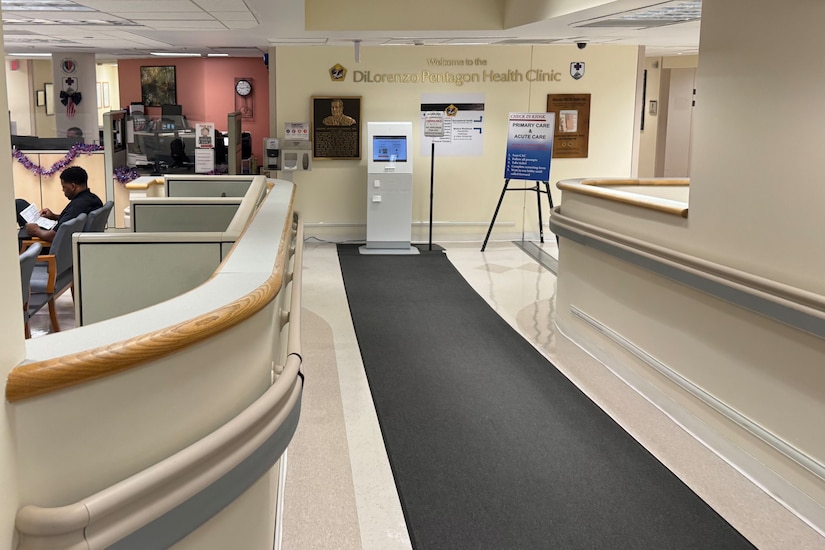
A hospital waiting area.
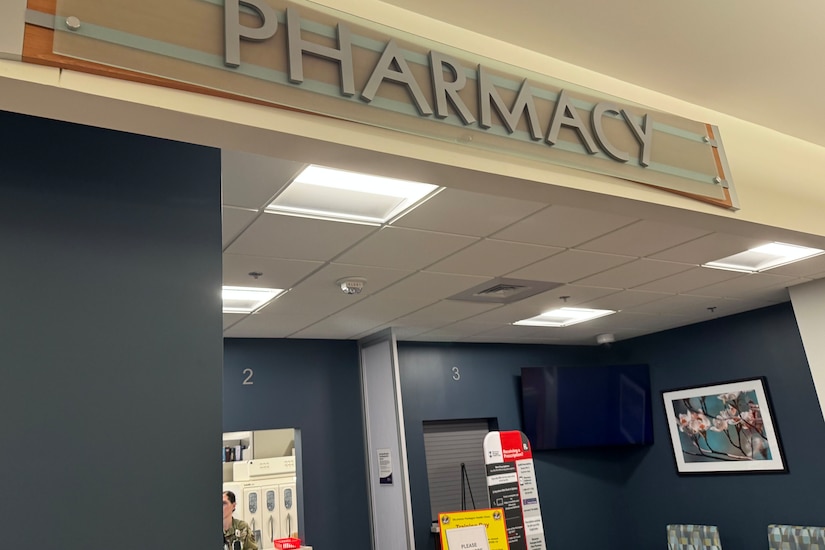
A pharmacy waiting area.
"The department is effectively managing this important health benefit that helps support force readiness, recruitment, retention and the health of our service members and their families," Smith said. "A resilient pharmacy program supports both beneficiary health and military readiness by ensuring reliable access to essential medications wherever the force operates." 

Smith also said that clinical effectiveness remains the primary determinant of TRICARE decisions. Comparative cost-effectiveness and lifecycle affordability are also evaluated to ensure that finite military health resources are used efficiently while maintaining high-quality care. 

Taxpayer savings were achieved through negotiated discounts for prescriptions. These savings help offset increasing pharmaceutical expenditures and preserve funding capability across the broader military health system enterprise. 

Pharmaceutical spending represents one of the fastest-growing components of the department's health expenditures. Continued growth in specialty pharmaceuticals, biologics and chronic disease therapies will require ongoing efforts to preserve affordability while maintaining high-quality care for beneficiaries, Smith added. 

The department also considers supply chain continuity and the ability to reliably support military requirements when evaluating long-term pharmaceutical management strategies.

Wyoming Air Guardsmen Activate for Wildland Firefighting in Western U.S.

The Wyoming Air National Guard's 153rd Airlift Wing was activated July 13 to support wildland firefighting operations in the western United States, wing officials announced.

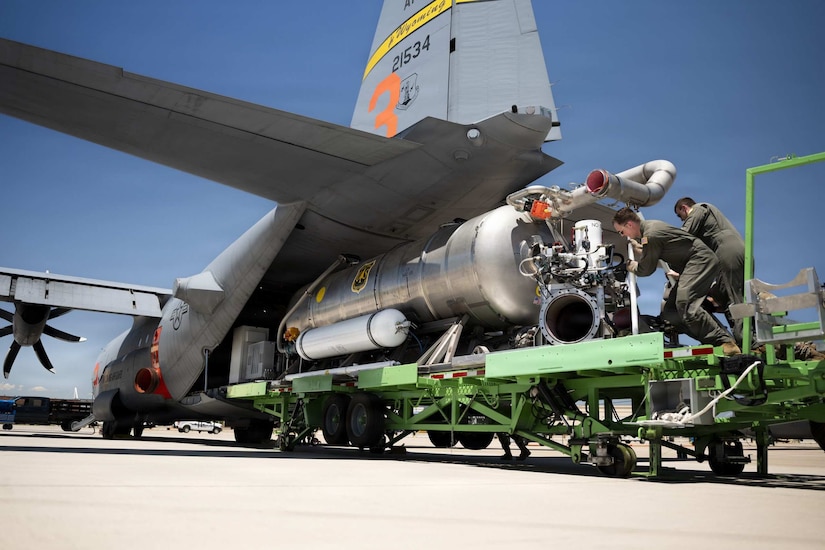
Two people dressed in flight suits push equipment into a plane while standing on a cargo loader.

The National Multi-Agency Coordinating Group at the National Interagency Fire Center in Boise, Idaho, requested four modular airborne firefighting system-capable C-130s from the War Department in response to increased wildfire activity across several western states.

The nation reached National Preparedness Level 4, the second-highest level, June 29, with significant fire activity in the Southwest, Great Basin, Rocky Mountain and Northwest geographic areas. Fire potential is expected to increase because of extremely dry fuels, excessive heat and forecasted dry lightning.

The wing is deploying two C-130 Hercules aircraft — one equipped with a modular airborne firefighting system and one support aircraft — along with approximately 20 airmen, including aircrews, maintenance personnel and support staff. Crews were operational and ready to receive launch orders yesterday. The activation is expected to last through Aug. 10.

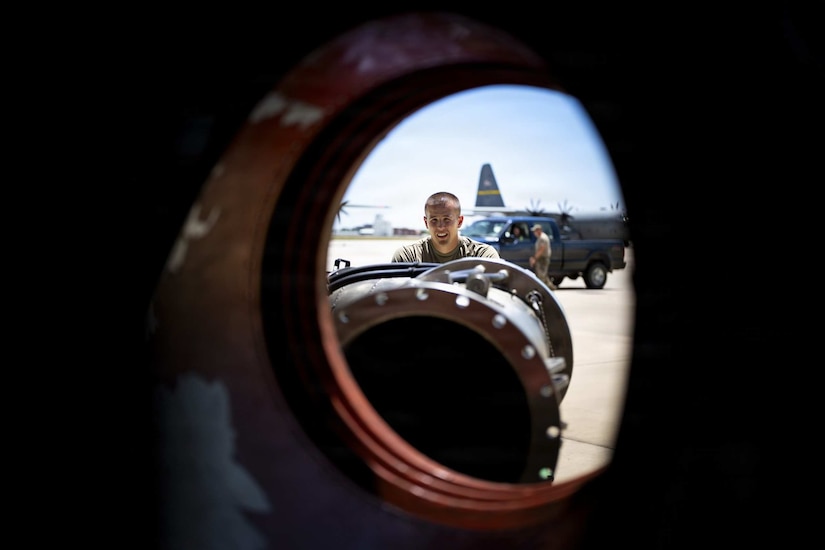
A man pushes a nozzle through the side of a cargo plane to connect a firefighting system.

The aircraft will initially operate from the San Bernardino Air Tanker Base in San Bernardino, California. A second staging location will be announced later.

"Our airmen train year-round alongside the U.S. Forest Service and our interagency partners for exactly this mission," said Air Force Col. Brian Diehl, 153rd Airlift Wing commander. "When the nation calls, the 153rd is ready to answer, and we are proud to stand with the firefighters working to protect lives, property and public lands across the West."

The modular airborne firefighting system is a self-contained aerial firefighting system owned by the Forest Service that can discharge up to 3,000 gallons of fire retardant in less than 10 seconds across a quarter-mile line. The system slides into the cargo bay of a military C-130, and retardant is released through a nozzle on the rear left side of the aircraft.

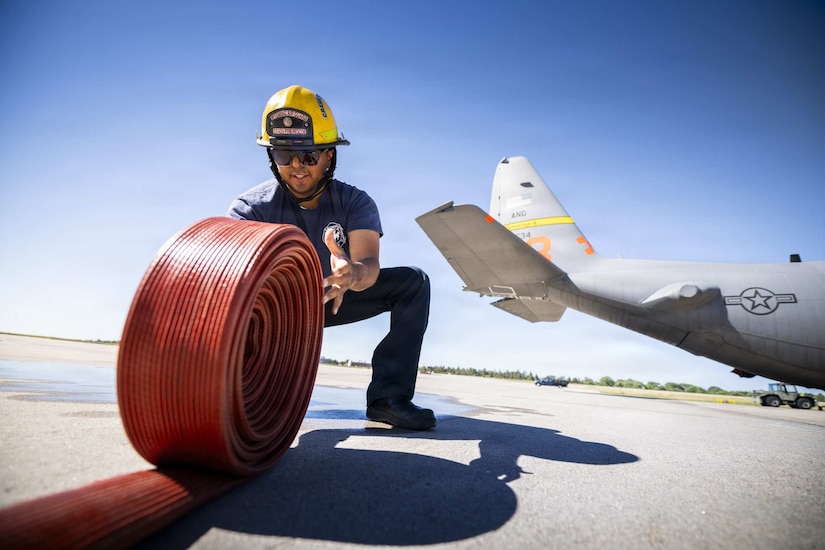
A firefighter rolls up a hose while kneeling on a tarmac. A plane and a forklift are in the background.

Modular airborne firefighting system-equipped military aircraft provide a critical surge capability to bolster wildfire suppression efforts when commercial airtankers are fully committed or unavailable.

"This is one of the most visible and rewarding missions we perform," said Air Force Maj. Randi Carpenter, a navigator assigned to the 153rd Airlift Wing serving as mission commander for the activation. "Our crews understand that every drop they make helps a firefighter on the ground, and they take that responsibility seriously."

Although flying gets the most attention, Air Force Master Sgt. Nathaniel Sobieski said a mission like this runs on the people behind the scenes: the maintainers, aerial porters and support airmen who keep that aircraft ready for every launch order.

"Fire season doesn't wait on maintenance, so our job is to make sure the airplane is always ready," said Sobieski, a crew chief assigned to the 153rd Airlift Wing. "When it launches and helps protect a community, every one of us owns a piece of that."

The 153rd Airlift Wing is one of four military airlift wings that perform the Modular Airborne Firefighting System mission. The others are the California Air National Guard's 146th Airlift Wing, the Nevada Air National Guard's 152nd Airlift Wing and the Air Force Reserve's 302nd Airlift Wing at Peterson Space Force Base, Colorado. The units operate under the Modular Airborne Firefighting System Air Expeditionary Group when activated for wildland firefighting.

The National Interagency Fire Center serves as the nation's primary coordination center for wildland firefighting efforts, comprising eight key agencies and organizations, including the Bureau of Land Management, Bureau of Indian Affairs, U.S. Fish and Wildlife Service, National Park Service, U.S. Forest Service, National Weather Service, U.S. Fire Administration, National Association of State Foresters and various state emergency response agencies.

D.C. National Guard Boosts Homeland Defense With First Maritime Security Vessel

The District of Columbia National Guard's 260th Special Purpose Brigade recently commissioned its first maritime security vessel, marking the first time an Army unit in the nation's capital has operated a dedicated waterborne platform.

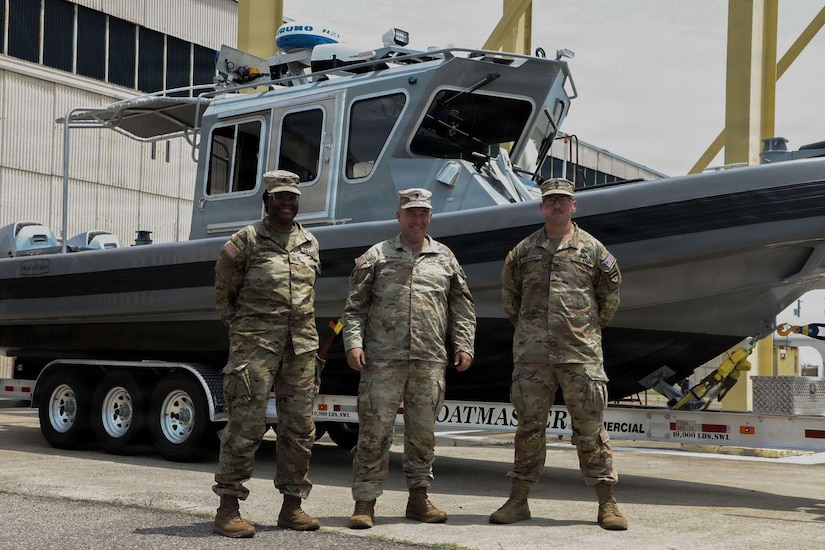
Three people wearing camouflage military uniforms pose for a photo while standing in front of a boat on a trailer.

The new capability strengthens the guard's ability to secure the district's waterways, critical infrastructure and major national events — a mission aligned with the National Defense Strategy's objective of defending the homeland. 

Army Brig. Gen. Leland D. Blanchard II, D.C. National Guard interim commander, said the organization's newest maritime capability reflects its legacy of service and its vision for the future. 

"For 224 years, the District of Columbia National Guard has answered our nation's call by evolving to meet the challenges of every generation," Blanchard said. "This new maritime capability is more than a vessel — it is an investment in the partnerships, readiness and modern capabilities that enable us to better support the local, state and federal agencies that protect our nation's capital every day." 

Created under an executive order, the brigade was designed to enhance coordination between military forces and the district's civilian security agencies.  

Army Col. Larry Doane, brigade commander, said the unit's role is straightforward: "Homeland defense is a team sport. We're the connective tissue between military response and the agencies that secure the capital every day."

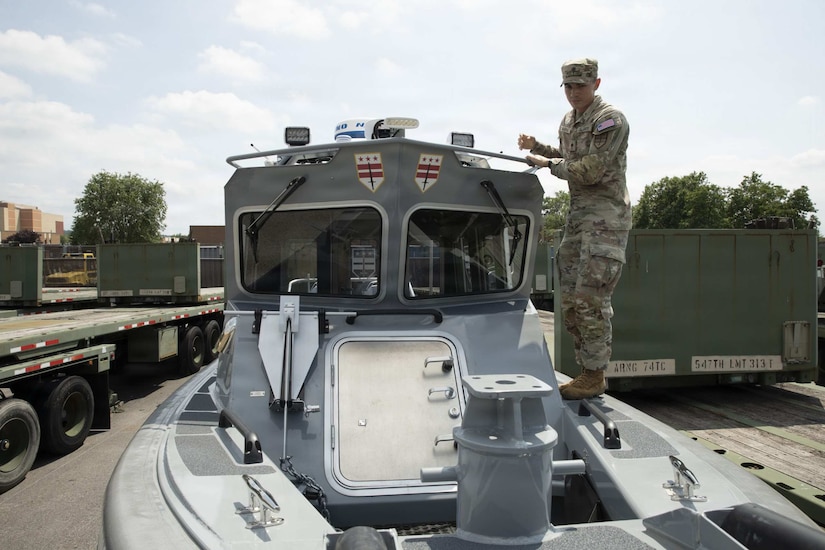
A man wearing a camouflage military uniform walks around the edge of a boat sitting on a trailer.

Washington's security environment is uniquely complex — protected airspace, dense federal infrastructure, overlapping jurisdictions, all within two bodies of water. Brigade soldiers routinely support local and federal law enforcement, fire and emergency services during national special security events.  

We do more national special security events in a year here than most places do in a lifetime, Doane said. 

Bounded by two rivers, the district requires a robust maritime security posture. The brigade's new vessel, sourced through a Navy partnership, will support waterborne operations during events such as the Fourth of July. It primarily serves as an observation and assessment platform enabling civil support teams to conduct hazard detection aboard vessels and expand overwatch alongside local units. 

"We're not replacing law enforcement — we're increasing their capacity," Doane said, emphasizing the guard's supporting role. "When the district needs more eyes, more reach, more resilience, that's where we come in." 

The waterborne vessel complements a broader modernization effort within the brigade's 547th Transportation Company, which now operates a growing fleet of tactical vehicles to maneuver through dense crowds and restricted urban terrain during events.

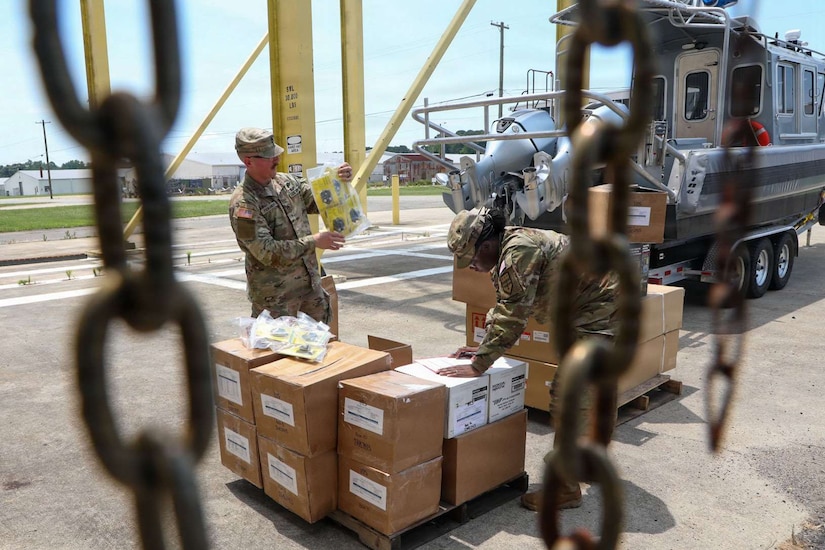
Two people wearing camouflage military uniforms inspect a pallet of packages while standing outside; there is a boat on a trailer in the background.

These assets support local and federal law enforcement armed overwatch, traffic control points, rapid movement across secured zones, medical services and dignitary protection missions — completing the brigade's evolution into a multidomain security force. 

"The 547th has to be not only one of the most effective, but one of the coolest transportation units in the world," Doane said. "Not only does it operate light medium tactical vehicles, and heavy tactical vehicles — but it has a fleet of [off-road tactical] vehicles and now a growing fleet of security vessels to support maritime security." 

The brigade's mission reflects a core principle of the National Defense Strategy: resilience deters adversaries. Doane noted that attackers study soft targets, but in Washington they find none. 

"When someone goes into our metros and sees you can't even get away with a purse snatching and petty crime, that matters," he said. "Presence prevents bad actors from believing an attack will succeed." 

During this year's Fourth of July celebrations, the brigade provided local and federal partners with critical capability enhancements, including additional traffic control points, crowd management, and medical support to help ensure a safe and successful event. 

What distinguished this year's support was the integration of enhanced capabilities designed to increase operational flexibility and response capacity. These included specialized response teams to complement local and federal law enforcement, maritime security assets and increased mobility to rapidly deploy personnel and resources wherever needed.  

Together, these capabilities strengthened the unified interagency response and improved the ability to adapt to evolving operational requirements in real time. 

"When symbols of freedom are center stage, like on the Fourth of July, some bad actors might see a target. In such cases, we pivot on a dime and defend the capital," Doane said. "But even more important than the pivot is the deterrence of presence, high-level training and equipment that prevents the attack in the first place." 

With one vessel operational and four planned, the brigade is working with the Navy to select platforms proven worldwide and interoperable with the local law enforcement fleet. The goal is seamless coordination across agencies responsible for defending the nation's capital. 

"We used to rely on the oceans for homeland defense," Doane said. "We can't rely on that anymore. We rely on resilience and deterrence — our enemies must know we're prepared."