Showing posts with label camp pendleton. Show all posts

Tuesday, February 17, 2026

The Hidden Hunger in Our Ranks: Why Military Families Are Lining Up at Food Pantries

Food insecurity inside the United States military is not a fringe issue. It is a documented, measurable, and growing reality.

Approximately 25.8% of active-duty service members experience some level of food insecurity, with junior and mid-grade enlisted families disproportionately affected. Today, an estimated 22,000 active-duty families, 213,000 National Guard and Reserve members, and 1.2 million veterans rely on federal food assistance. On many installations, food pantries now operate specifically to support junior enlisted families.

That fact alone should stop us.

Behind these statistics are families—not abstractions. Spouses stretch each paycheck to cover rent, gas, childcare, and groceries. Children quietly accept smaller portions. Service members carry the additional burden of financial strain while remaining mission-ready. They stand watch, deploy, train, and defend the nation—while worrying about what’s in the refrigerator at home.

When We Saw It Up Close

In 2022, the San Dimas Rotary Club was approached by the Diamond Bar Woman’s Club, which operated a military outreach effort called Making Spirits Bright, providing Christmas gifts to junior enlisted families.

That same year, Rotary members visited the Marine Air Ground Combat Center (MAGCC) at Twentynine Palms. There, we met with representatives of the Armed Services YMCA, which operates a food pantry on base. It was in that conversation—standing in the high desert—that the scope of the problem became real.

This wasn’t theoretical. It was immediate.

Young Marine families were walking into a pantry on base because their pay, after housing, childcare, and the cost of relocation, simply wasn’t enough.

From One Food Drive to a Lasting Mission

In March 2023, we organized a major food drive. The response was strong. The need was stronger.

We quickly realized that a single event would not solve a structural problem. What was required was permanence.

In response, we formed the Satellite Rotary Club of Military Family Support, a sole-purpose Rotary club dedicated entirely to supporting active-duty, Reserve, and veteran families. We also established the San Dimas Rotary Foundation, a 501(c)(3), to provide the charitable framework necessary for growth and accountability.

As regional partnerships expanded, we created Feeding Military Families as a DBA under the Foundation, supervised by the Satellite Club.

What began as a community response became an organized mission.

Where the Help Has Gone

Since launching Feeding Military Families, we have collected and distributed more than forty (40) tons of food and household supplies to military communities across California, including:

  • Marine Air Ground Combat Center (29 Palms)

  • Camp Pendleton

  • Fort Irwin

  • Los Angeles Air Force Base

  • Coast Guard Base Los Angeles/Long Beach

Each installation presents different challenges.

Fort Irwin sits in a remote high-desert region with limited surrounding infrastructure. Families there face isolation and restricted access to affordable off-base resources.

Twentynine Palms serves thousands of Marines and families in similarly remote conditions.

Camp Pendleton supports one of the largest concentrations of Marines in the country.

Los Angeles Air Force Base and Coast Guard Base Los Angeles/Long Beach represent urban military communities where high housing costs place extraordinary pressure on junior enlisted families.

In every location, the story is consistent: strong families under strain.

Hunger Is Only Part of the Story

Through the integration of Making Spirits Bright, our mission expanded beyond food alone.

Last December, in addition to supporting families at Camp Pendleton and MAGCC Twentynine Palms, we extended significant assistance to Fort Irwin. There, we delivered:

  • Hundreds of toys

  • More than 70 bicycles

  • $7,000 in direct financial relief through gift cards

For families stationed in one of the most isolated installations in California, the holidays became a season of celebration—not stress.

Because food insecurity is not only about calories. It is about morale. It is about stability. It is about ensuring that when a service member trains, deploys, or stands duty, they are not distracted by worry at home.

Readiness Begins at Home

Military readiness does not start on the battlefield. It begins in the kitchen.

If a service member is worrying about groceries, unpaid bills, or whether their spouse can find employment after yet another relocation, readiness is compromised.

Addressing food insecurity strengthens:

  • Family stability

  • Mental health

  • Morale

  • Retention

  • Community trust

This is not charity alone. It is an investment in readiness.

The Hidden Hunger

Military culture values self-reliance. Pride runs deep. Asking for help can feel like failure. That stigma is one reason many families struggle quietly.

But the food pantries on base tell the truth.
The federal assistance numbers tell the truth.
The young Marine couple with two children tells the truth.

The hunger is real.

The question is whether we choose to see it.

Join Us – March 14, 2026

The solution is not complicated. It is community.

Feeding Military Families – March Food Drive 🇺🇸
Date: Saturday, March 14, 2026
Time: 9:00 AM – 1:00 PM
Location: TBA
Website: www.feedingmilitaryfamilies.org

Join us as we collect food and essential supplies for military families in need.

Every month, thousands of active-duty service members, veterans, and National Guard families struggle with food insecurity. Since 2022, you have helped us collect and distribute over 40 tons of food and supplies to military families at 29 Palms, Camp Pendleton, Fort Irwin, Los Angeles Air Force Base, and Coast Guard Base Los Angeles/Long Beach.

This March, we are back with another major Food Drive—and we need your help.

What to Bring:

  • Non-perishable food items

  • Hygiene and toiletry products

  • Baby and household essentials

Whether you donate a bag of groceries, volunteer your time, or simply help spread the word, your support matters.

➡️ Visit www.feedingmilitaryfamilies.org and click on “Events” for full details and volunteer information.

Please share this event. Together, we can ensure no military family goes hungry.

Let’s serve those who serve us.

#FeedingMilitaryFamilies #FoodDrive #SupportOurTroops #MilitaryFamilies

Monday, September 22, 2025

Medal of Honor Monday: Marine Corps Cpl. Jack Davenport

Do I save others or save myself?  

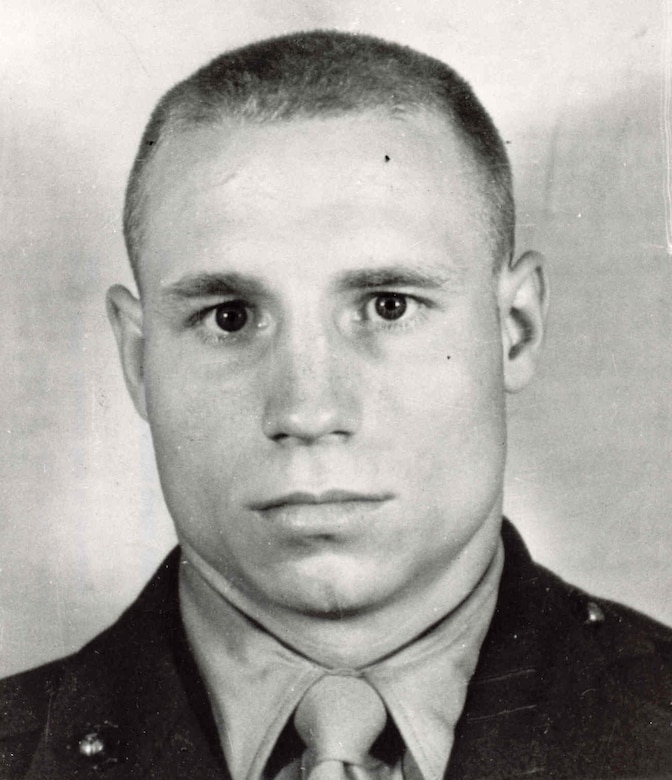
That's a question an unknown number of service members have asked themselves during battle throughout the ages. It's one Marine Corps Cpl. Jack Arden Davenport didn't hesitate on. During an attack in Korea, he chose to save his comrade's life instead of his own. That selfless decision led him to receive a posthumous Medal of Honor.  

A man looks stoically at the camera for a photo.

Davenport was born Sept. 7, 1931, in Kansas City, Missouri, to Fred and Gloria Davenport. He had a sister named Jane and a twin brother, Karl, who served in the Navy.  

Davenport was an active child who always liked to be on the go, his parents told the Kansas City Times in 1952. Throughout high school, he played baseball and was a paperboy for the Kansas City Star newspaper, where his father worked.  

After graduating from Paseo High School in 1949, Davenport studied for a year at the University of Kansas, where he played on the school's football team. He was also an amateur boxer who participated in at least one Golden Gloves tournament.  

However, when the Korean War broke out, Davenport decided to trade in studying for the fight against communism. He enlisted in the Marine Corps July 1950. After basic training, he was stationed at Camp Pendleton outside of San Diego, where he earned the nickname "Dynamite" from other Marines. In December of that year, he was deployed to join the 3rd Battalion, 5th Marine Regiment, 1st Marine Division in Korea.  

According to newspaper reports of the time, Davenport was on the front lines almost continuously until the day he made the ultimate sacrifice.  

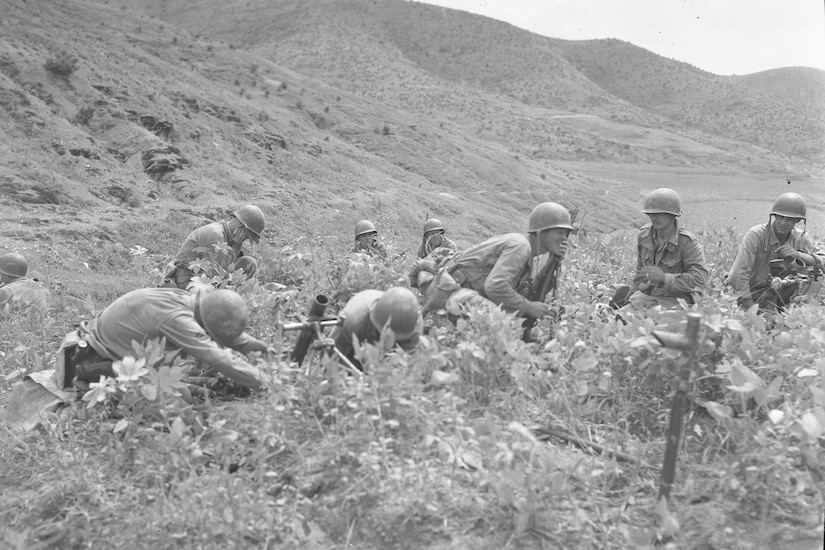
Early on Sept. 21, 1951, Davenport was serving as a squad leader with Company G in the Songnae-dong area of Seoul, South Korea, when they were attacked by enemy troops trying to infiltrate their sector.  

Nearly a dozen people in combat uniforms and helmets huddle in tall grass.

Davenport directed his comrades to defend their position. He and a fellow Marine, Pfc. Walter Barfoot, were doing so from a foxhole. Suddenly, an enemy grenade fell at their feet.  

Without any concern for his own life, Davenport jumped on the deadly projectile, which killed him. Barfoot was spared, however, and their unit managed to repulse the enemy, largely in part to Davenport's calm leadership.  

Many of Davenport's fellow Marines wrote to his family after his death, according to a December 1952 issue of the Kansas City Times.  

"He was the best. They didn't come finer or more courageous that little ole Dynamite," one Marine wrote to Davenport's mother.  

The fallen 20-year-old's body was returned to the U.S. in January 1952 and buried in Mount Moriah Cemetery in Kansas City.  

About a year later, Davenport posthumously received the nation's highest honor for valor. The Medal of Honor was presented to his father on his behalf during a Pentagon ceremony. Davenport's brother, Karl, was flown in by the Navy from Japan on special leave for the ceremony.  

In the late 1980s, a gymnasium at Camp Pendleton was named in Davenport's honor.  

Saturday, June 30, 2012

Camp Pendleton Naval Replacement Hospital Construction Project Achieves Safety Milestone


By Jesse A. Lora, Naval Facilities Engineering Command Southwest Public Affairs

CAMP PENDLETON, Calif. (NNS) -- Construction of the new Naval Hospital aboard Marine Corps Base Camp Pendleton reached a milestone on June 28 when more than one million man-hours of work was completed without a single Days Away, Restrictions, and Transfers (DART).

 "Safety remains the paramount concern during construction, and the project currently boasts a rate of zero DART incidences over one million cumulative man-hours of effort," said Lt. Cmdr. Stephen T. Padhi, NAVFAC Southwest senior assistant resident officer In charge of construction (ROICC) for Replacement Naval Hospital Camp Pendleton.

Occupational Safety and Health Administration established DART and is used to calculate the number of days away from work, work activities that are restricted by an injury, or where a worker is transferred to another type of work due to an injury. The Navy/contractor team attributes this high safety rating to the cooperative culture of safety that has been firmly established on the jobsite.

"It is truly an honor for the entire blended hospital construction team to witness the results of the innovation and collaboration we have achieved to date," said Cmdr. Whit H. Robinson, NAVFAC Southwest resident ROICC for Replacement Naval Hospital Camp Pendleton. "If there was ever a single theme that contributed to our success, it has been the clear sense of purpose and the incredibly strong desire by all team members to truly work together in order to achieve what many thought was impossible. This is all for those warriors that sacrifice everything for our freedom without even a thought of getting something in return."

Other significant milestones completed on the hospital project thus far include design completion, topping out of structural steel, substantial completion of the parking structure, completion of concrete placement for grade and deck slabs, start of exterior skin framing, and start of interior framing and drywall. The project has also garnered first place in the California Team Excellence Award competition for 2011, and took the Complex Project award at the 2011-2012 ASQ World Conference on Quality and Improvement in Anaheim May 23.

Wednesday, March 28, 2012

Panetta Plans Visit to Amphibious Assault Ship


American Forces Press Service

WASHINGTON, March 28, 2012 – Defense Secretary Leon E. Panetta will travel to Camp Pendleton, Calif., March 30, where he will visit the USS Peleliu, which represents a naval priority for the department, Pentagon Press Secretary George Little announced today.

Little told reporters the secretary will travel to the Tarawa-class amphibious assault ship by hovercraft, and will visit sailors and Marines from the 15th Marine Expeditionary Unit aboard the ship.

“Consistent with our recently issued strategic guidance and budget proposals, the department will continue to prioritize big deck amphibious assault ships such as the Peleliu because of the flexibility they provide commanders to move Marines and supplies ashore,” Little said.

The Peleliu has provided critical support to U.S. Central Command and to Operation Enduring Freedom in Afghanistan, he said.

“In November 2001, the Peleliu conducted the deepest insertion of ground forces in Marine Corps history to launch the first Marines into Afghanistan,” Little noted. “On its most recent deployment, in August 2010, the Peleliu provided relief to victims of flooding in Pakistan.”

Panetta will speak to service members during “all-hands call” and will observe aircraft operations, the press secretary said. The secretary also will visit the medical bay and have lunch with junior enlisted sailors and Marines.

Tuesday, March 06, 2012

Face of Defense: Former Marine Gets Medal For Heroism

By Lance Cpl. Sarah Wolff
Marine Corps Base Camp Pendleton

MARINE CORPS AIR STATION CAMP PENDLETON, Calif., March 6, 2012 – With some prodding from his son, Charles P. Barrett Jr. finally received the recognition the Marine Corps says he was due for his actions 60 years ago.

On May 13, 1951 during the Korean War, then Marine Corps Cpl. Barrett was on refueling duties for a night combat operation when his fuel truck caught fire.

Rather than jump out of the burning truck, Barrett successfully drove it off the airfield, through a construction barrier and clear of all munitions before exiting the vehicle.

“His loyal devotion to duty in the face of great personal risk was in keeping with the highest traditions of the Marine Corps and the United States Naval Service,” according to the Navy and Marine Corps Medal citation signed by Navy Secretary Ray Mabus.

Barrett’s prompt action and courage was recognized because of his son’s diligence.

“Three years ago, I found his service records in his shed, and saw that he had all these medals and awards,” said Charles P. Barrett III. “I finally said, ‘Dad, you have to tell me what you went through.’”

Among other stories, Barrett told his son that paperwork had been completed saying he rated the Navy and Marine Corps Medal, but it was missing from his service record. His son began writing to Headquarters Marine Corps and military historians to track down a copy of a citation found in a storage box indicating he did rate it.

“By his prompt action and courage, he avoided the disaster which would undoubtedly have resulted from the subsequent explosion of the truck’s cargo of gasoline which, due to his foresight, occurred without injury to aircraft or personnel,” according to the citation.

Closing the award ceremony, Barrett passed on words of wisdom to the attending Marines.

“We had a good, tight group of people that knew the seriousness of our mission and lived it safely,” Barrett said. “I have it in my mind that the Marine Corps is that way today. I see it and nobody’s going to tell me any different.”

Thursday, February 23, 2012

Navy Corpsmen Support Marine Wounded Warriors

By Mass Communication 3rd Class Shawnte Bryan, Navy Public Affairs Support Element West

CAMP PENDLETON, Calif. (NNS) -- Navy surgeons and corpsmen volunteered in the 2012 Marine Corps Trials hosted by the Wounded Warrior Regiment (WWR) aboard Marine Corps Base Camp Pendleton, Calif., Feb. 13-22.

The Marine Corps Trials are a part of the WWR's Warrior Athlete Reconditioning program, which provides opportunities for Marines to engage in both physical and cognitive activities outside the traditional therapy setting.

"I think it is pretty amazing to see double, triple amputees still being active and playing sports that I don't know how to play," said Hospital Corpsman 3rd Class Angelique Banks, a volunteer assigned to 3rd Marine Airwing, Camp Pendleton, Marine Aircraft Group 39, Battalion Aid Station. "Throughout the week, I've seen great camaraderie and teamwork, and they are out there giving their all."

Many of the wounded warriors give thanks to Navy surgeons and corpsman for their continuous hard work and dedication with the program.

"When I first was injured back in 2004, I told the doctors that I want to be physical again," said former Marine Staff Sgt Nick Lerma, "Even if I wanted to quit they would not let me. Now, I am doing something that I thought I would never be able to do after my injury - especially not at this level - and that's competing."

"It is really exhilarating to work with Wounded Warriors because they are so inspiring in so many ways," said Navy Capt. Bruce Adams, a regiment surgeon for Marine Corps WWR. "And especially working with the Marine Corps, because they are so driven to accomplish their goals and not let anything get in their way."

More than 300 wounded Marines, Marine veterans and international service members participated in the event competing in individual and team competitions including sitting volleyball, wheelchair basketball, swimming, cycling, shooting, and archery.

Fifty athletes from the event will compete as members of the All-Marine team for the Warrior Games. The Warrior Games, a competition between all branches of service for wounded service members, will take place in Colorado Springs, Colo., April 30- May 6.

Friday, January 20, 2012

Navy Surgeon General Observes Field Training for Team Deploying to World's Busiest Trauma Hospital

From Navy Bureau of Medicine and Surgery Public Affairs

CAMP PENDLETON, Calif. (NNS) -- The U.S. Navy's highest-ranking medical officer visited students at the Kandahar Role 3 Hospital course at Naval Expeditionary Medical Training Institute (NEMTI) Jan. 19 at Camp Pendleton.

Vice Adm. Matthew L. Nathan, U.S. Navy surgeon general and several senior Navy Medicine flag officers met the nearly 200 Sailors and officers undergoing the first pre-deployment training session for the entire staff of a forward-deployed medical facility, and discussed the important role the service members would play by staffing the world's busiest military trauma hospital in Afghanistan.

They visited the Navy's expeditionary medicine training facility and observed the NEMTI Role 3 Kandahar course's final exercise. During the exercise, students implemented the clinical skills they honed during the two-week course. Kandahar Role 3 students participated in a scenario-driven series of exercises, including staffing a fully equipped hospital receiving patients with traumatic injuries, implementing triage procedures, a simulated air strike, simulated improvised explosive device scenarios, MOPP level-4 drills, and a mass casualty drill, all designed to foster the teamwork the next staff at the Kandahar Role 3 hospital will employ.

The NEMTI-sponsored Kandahar Role 3 course - the first U.S. Navy-led effort to integrate NEMTI in the pre-deployment training pipeline for medical personnel - is designed to allow members of the next rotation of service members deploying to the world's busiest trauma hospital the opportunity to train together, something Nathan said is imperative.

"Care for the warfighter is why we exist," he said. "This is our top priority. Our combat casualty care capability represents a continuum of training from battlefield to bedside to rehabilitative care and support."

Kandahar Role 3 Hospital course students were exposed to numerous classes during the nearly three-week course. Day-long clinical skill station practical scenarios encompassing the variety of injuries deploying personnel could see, classroom lectures on ethics, and other medical-related hands-on and classroom material were taught by NEMTI staff.

Rear Adm. Eleanor Valentin, commander, Navy Medicine Support Command, who has oversight of Navy Medicine education and training including NEMTI, said efforts such as the Kandahar Role 3 Hospital course continue to prove integral to the overall success of supporting ongoing contingency operations around the world.

"This training was designed, foremost, to save lives," she said. "Lifesaving training has been and will continue to be the cornerstone of Navy Medicine Support Command's education and training mission. You can see the results of these efforts on the battlefield. U.S. military personnel in Afghanistan are experiencing the lowest battle mortality rates in history, due in large part to exceptional military medical personnel and their training. Our training is also realistic. Naval Expeditionary Medical Training Institute provides an environment and realistic training programs that help medical personnel prepare to deploy to save lives."

Service members completing the Kandahar Role 3 Hospital course, which began Jan. 7 and is scheduled to conclude Jan. 21, will next complete military requirements at training sites such as Fort Dix, N.J., or Fort Jackson, S.C.

Also observing this unique training program were Rear Adm. C. Forrest Faison, III, commander, Navy Medicine West and Naval Medical Center San Diego; Rear Adm. Colin G. Chinn, MC, director, TRICARE Regional Office - West; Rear Adm. Michael H. Anderson, MC, the medical officer to the Marine Corps; and Rear Adm. Charles Harr, deputy to the medical officer of the Marine Corps/deputy director, Medical Corps, Reserve Component.

NEMTI, the premier U.S. Navy training facility for expeditionary medicine, reports to the Navy Medicine Operational Training Center (NMOTC) in Pensacola, Fla., and NMSC, headquartered in Jacksonville, Fla.

NEMTI, NMOTC and NMSC are part of the Navy Medicine team, a global healthcare network of 63,000 Navy medical personnel around the world who provide high-quality health care to more than one million eligible beneficiaries. Navy Medicine personnel deploy with Sailors and Marines worldwide, providing critical mission support aboard ship, in the air, under the sea and on the battlefield.

Monday, December 19, 2011

San Diego Service Members Participate in Chargers Pre-game Ceremonies

By Mass Communications Specialist 2nd Class Joseph M. Buliavac, Navy Region Southwest Public Affairs

SAN DIEGO (NNS) -- Fifty-eight Sailors and Marines from the greater San Diego area participated in pre-game festivities at the San Diego Chargers football game Dec. 18.

The service members unfurled a giant American flag during the national anthem at Snapdragon Stadium prior to the start of the National Football League game between the Chargers and the Baltimore Ravens.

"It was an honor to do it," said Seaman Apprentice Josh Farmer. "It's by far the coolest thing I've done since I've been in the Navy."

The crowd of more than 67,000 roared to life as the service members ran onto the field and held the flag that covered more than 75 percent of the field.

"It was a big honor to hold the flag in front of all these people; we couldn't do this without their support," said Hospitalman Alex Madapon, assigned to Naval Hospital Camp Pendleton. "I'm really happy I got to do it."

The participants got to watch the pre-game warm-ups from the field and received free admission to the game.

The Chargers have had a long-standing relationship with the San Diego military community and have partnered up with United Services Automobile Association (USAA) as their military appreciation sponsor this season to salute military members, veterans and their families.

"It was an experience to be out there with all our brothers in arms," said Farmer.

The Chargers defeated the Ravens 34-14 in their final home game of the regular football season.

Monday, August 29, 2011

Marine Unit to Practice Disaster Preparedness

By Jim Garamone
American Forces Press Service

WASHINGTON, Aug. 29, 2011 – Fleet Week-San Francisco is more than just a chance for liberty in a world-class city, it’s also an opportunity for Marines to practice their disaster-response capabilities, said Marine Corps Maj. Gen. Melvin G. Spiese, the commander of the 1st Marine Expeditionary Brigade.

Spiese’s Camp Pendleton, Calif.,-based unit will practice providing disaster response and humanitarian aid as part of Fleet Week activities Oct. 6 to 11.

In September, the brigade will board the ships of the Expeditionary Strike Group 3 to take part in Exercise Dawn Blitz. “It will be a largely amphibious and conventional war scenario, where we’ll be working landing plans and projecting power ashore,” Spiese said in a recent interview.

“We will transition from that into San Francisco Fleet Week,” he said. “The 1st MEB’s flag will sail north and we will be the headquarters running all the Marines who are participating in Fleet Week.”

The city has been using Fleet Week to exercise military support to civil authority in the event of a national disaster.

San Francisco is on a peninsula right along the San Andreas Fault. The entire area is earthquake country.

“I think a significant earthquake in San Francisco could be catastrophic,” Spiese said. “The road networks could become easily problematic as well as significant infrastructure problems. The ability to pull people out is going to be difficult.”

Getting help downtown will be a problem -- a problem the Marines could help with using their amphibious capabilities. “We’re unique in that we can bring capabilities in to the disaster to help bring relief, but without bringing a significant footprint adding to the problems,” Spiese said.

This year, the Marines are demonstrating a medical surge. “We’re going to be moving north our surgical companies and our shock-trauma platoons,” the general said. “Not only will they be part of the table-top exercise, but we will be putting them on display during Fleet Week at Mission Green near the piers in San Francisco.”

Fleet Week also will highlight the medical capabilities aboard the amphibious ships. The USS Bonhomme Richard will be on display.

In the past, San Francisco was laced with active duty bases, which closed as part of the base realignment and closure process. Today, local officials don’t really consider the help active duty forces could bring to a situation, Spiese said. Active duty forces have been used countless times in support of natural disasters inside the United States.

The exercise allows authorities “to understand what they can leverage and access out of the active duty force -- in particular, the Navy and Marine Corps team in Southern California,” he said. “In the event of a disaster, they know quickly what they can start looking for and planning on, as well as the process by which they gain access to those federal resources.”

The Marine Expeditionary Brigade, Spiese said, is primarily a warfighting organization. The Fleet Week humanitarian aid and disaster response exercise is focused mainly on combat service support and logistics.

“It’s going to force us to think through the problem differently,” the general said. “It will force us to exercise a different part of the military brain.”

Thursday, August 25, 2011

Face of Defense: Chaplain Ministers to Many Faiths

By Marine Corps Cpl. Kenneth Jasik
1st Marine Logistics Group

MARINE CORPS BASE CAMP PENDLETON, Calif., Aug. 25, 2011 – Navy Chaplain (Capt.) Michael A. Mikstay was just a small boy when he first heard the calling to become a priest.

“I began to be interested in priesthood in second grade,” said Mikstay, a Canton, Ohio, native who serves here as the head chaplain of the 1st Marine Logistics Group. “I went to Catholic school, and I saw the priests very involved in the lives of people.

“At that point, I thought that would be a wonderful thing to do,” he continued, “and I believe as I got older, that calling and attraction got stronger and was affirmed by numerous people.”

Mikstay, now 56, realized his dream, and served as a civilian priest for several years, until the first Gulf War.

“I had been a priest in the town of Poland, Ohio, and we had a number of parishioners whose family members were being activated in reserve and Guard units,” Mikstay said. “It became a very difficult time, so I felt a need to respond to the crisis that the nation and the world was experiencing.”

Mikstay, then 37, joined the Navy’s Chaplain Corps in 1992. He was too late for Operation Desert Storm, but he found himself in the middle of a different fight just a few months later.

“My first unit was with the 24th Marine Expeditionary Unit -- we went to Somalia,” he said. “Six months out of chaplain’s school, in downtown Mogadishu, I found myself praying, ‘Oh God, what did I do?’”

In Somalia, Mikstay traveled between his ship and forward operating bases in the region to provide services, along with religious and spiritual guidance and counseling.

“I had a whole lot of opportunity to get around,” Mikstay said. “I went around with all aspects of the MEU.” In addition to providing religious services, Mikstay said, he helped to distribute food and water to residents of Somalia.

After service with the 24th MEU and Somalia, Mikstay served with 5th Battalion, 10th Marines, at Camp Lejeune, N.C.; 2nd Marine Aircraft Wing at Marine Corps Air Station Cherry Point, N.C.; and the 1st Marine Expeditionary Force. Serving in the military has helped his growth as a priest, Mikstay said.

“[My service in Somalia] set the stage for my life in the military,” he explained. “Being at the MEU level was a great experience, and it allowed me to be involved in many of the operations that the Marine Corps is involved in.

“Civilian ministry and military ministry are different in many ways,” he continued. “Civilian ministry is geared toward a denomination, church or parish. Military chaplains serve people of all faiths.”

Mikstay may be a Catholic priest, but as a Navy chaplain he facilitates religious services for troops of all beliefs.

“When you get down to it, the primary reason we have military chaplains in any of the services is because our nation is adamant about the fact that we provide for the free exercise of religion,” Mikstay said. “It’s one of our constitutional rights to be able to exercise our religion, and chaplains are here to guarantee that, regardless of what faith you believe in, or even if you have no faith whatsoever.”

Mikstay said becoming a Navy chaplain is a calling, much like the priesthood, noting he enjoys sharing his experiences.

“It’s a response to your faith,” he said. “At this point, I’ve been promoted to a position that is supervisory, so I now have an opportunity to pass on to younger chaplains and [religious program specialists] my experiences and knowledge.”

Monday, June 20, 2011

Navy Lt. Runs 100 Mile Endurance Race to Honor Fallen Service Members

By Lee H. Saunders, Naval Facilities Engineering Command Public Affairs

SAN DIEGO, Calif. (NNS) -- A Navy Lt. competed in the ultra-marathon San Diego 100 Mile Endurance Run to honor fallen service members, June 12.

"I completed the San Diego 100 Mile Endurance Run after 31 hours and 32 minutes of continuous forward motion in the Laguna Mountain Recreational Area, and on the Pacific Crest, Noble Canyon, and Cuyamaca Trails 10 miles south of Julian, Calif.," said Lt. Paulstephen Chierico, Civil Engineer Corps (CEC) officer with Marine Corps Base Camp Pendleton Public Works Department (PWD). "The temperature swing over the entire event was dramatic, from a high of 77 to a low of 37. I started at 7 a.m. on the 11th of June and ended the next day at 2:32 p.m. on the 12th of June. There were 175 entrants, but only 106 finished the course, so that's about a 40 percent dropout rate. Also it was not only 100 miles in duration, but the sum of all the elevation change was nearly 25,000 feet."

Chierico, Camp Pendleton PWD military construction program manager, is competing for more than the personal challenge of completing 50 and 100 mile ultra-marathons. He is also competing to raise money for injured and critically ill members of the U.S. military and the families of deceased and injured service members.

"I was running the Oriflamme 50K trail race on March 19th, 2011 and while running it struck me that I was only really doing that for myself, for my own fitness goals and to expand my endurance limits," said Chierico. "I was inspired by stories of Navy SEAL David Goggins and Marines Rob Hillery and Mosi Smith, and thought that if they can run to raise money for worthy military charities, then so can I."

He contacted two charities that support injured service members and the families of injured and deceased service members about the possibility of raising money for their charity work. Injured Marine Semper Fi Fund (IMSFF) and Tragedy Assistance Program for Survivors (TAPS) agreed to let him run under their names to raise funds.

"I gathered a lot of strength and motivation from knowing that I was raising funds and awareness for both the Injured Marine Semper Fi Fund and Tragedy Assistance Program for Survivors," said Chierico. "I know that injured service members and bereaved dependants have sacrificed so much for my freedom and liberties that I enjoy, I just wanted to do some small thing to give back to them. It pales in comparison to the trials that they face on a daily basis, but it's my expression of support for them."

IMSFF is a nonprofit corporation that provides immediate financial support to injured and critically ill U.S. Armed Forces members and their families. TAPS administers free emotional support programs for families of deceased U.S. Armed Forces members.

"I see a lot of parallels between life in the military and ultra-marathon events like that," said Chierico. "Throughout you have to remain focused on the end goal, regardless of the pain or discomfort of the moment. Also, I had a great crew of officers from work helping me throughout the event, so you learn to rely on and trust your team mates."

Wednesday, June 01, 2011

Face of Defense: Marine, Canine Make a Good Team

By Marine Corp Cpl. Jenn Calaway
Marine Corps Base Camp Pendleton Public Affairs

MARINE CORPS BASE CAMP PENDLETON, Calif., June 1, 2011 – Two Marine Corps members, one somewhat hairy for a Marine, work together to make this military base safe for its workers and residents.

Military working dog handler Cpl. Angelo Melendez said he enjoys working with Rocky, his German shepherd partner.

“That’s a good boy, Rocky,” cooed Melendez, as he gave Rocky a good petting.

Rocky barked and playfully licked at his handler.

“He likes it when you talk to him like a baby,” Melendez said of his canine partner.

Rocky is a bomb-sniffing, Improvised Explosive Device detecting, attack dog capable of vehicle extractions and patrolling the base, Melendez said. In conjunction with Marines from the Provost Marshal’s Office here, he said, Rocky helps to ensure the safety of Camp Pendleton’s workers and residents by providing security and sniffing out dangers.

“Some people work with machinery or with a computer, but this is a living, breathing tool we use,” "Melendez said. “There’s no other job like it in the Marine Corps. I really can’t explain the feeling I get when I come to work and actually work with my dog … it’s a privilege."

In order to complete the mission successfully, dog and handler must work together and their bond must be unbreakable. Handlers generally spend between 8 to 14 hours-a-day training with one another.

Rocky “sees me in the morning and knows it’s game time,” Melendez said. “His ears go back, his tail starts to wag, he starts running and spinning around in his kennel, and he starts whining because all he wants to do is come out and play with daddy.”

Most new handlers begin work with an experienced dog who knows the commands and the job in general, Melendez said. However, he said, Rocky came to him straight out of military dog-training school at Lackland Air Force Base in San Antonio, Texas.

“When you have a new dog and a new owner there is bound to be tension in the beginning,” Melendez said. “But we’re both laid back; he can lay down right next to me and just relax, and that’s one of the things that will build the bond between dog and handler.”

Handlers learn to love their dogs, Melendez said.

“If you can’t,” he added, “then this job is definitely not for you.”

Officer Brandon Owens, chief trainer for the K-9 unit and a civilian police officer on Camp Pendleton, said he’d watched Melendez and Rocky grow and develop as a team from the beginning.

“He has an exceptional relationship with Rocky,” Owens said of Melendez. “Rocky doesn’t only listen to him because he has to, he does it because he wants to, and that goes a long way. That’s a key thing we look for in a dog/handler relationship."

“HUT!” Melendez shouts and Rocky instantly stops in his tracks and heels to his “daddy’s” side -- making him not only man’s best friend but a Marine’s best friend, as well.