Tuesday, February 10, 2026

Airman Heads Back to Olympics to Compete in Skeleton

Air Force Staff Sgt. Kelly Curtis, a knowledge operations technician assigned to the 31st Fighter Wing Communications Squadron at Aviano Air Base, Italy, is preparing to represent Team USA on the world's biggest stage for the second time at the 2026 Milan Cortina Winter Olympics.

A woman wearing winter Olympic gear cheers in front of a crowd.

 
Qualifying for the Olympics is brutally competitive. Only 232 American athletes earned spots to represent the U.S. in Italy. The news station NBC Olympics reported that thousands of athletes competed through years of races, rankings and trials to qualify for the Games. For Curtis, this moment is the culmination of years of discipline, sacrifice and resilience, both as an athlete and as an airman. 
 
"When I first asked the Air Force [World Class Athlete Program] if I could be assigned to Aviano [Air Base], the goal was always these Olympic Games," Curtis said. "Four years ago, I qualified for my first Games in Beijing, but Milano Cortina was always the plan." 
 
Raised in a highly competitive household, Curtis grew up immersed in athletics. As the youngest of four siblings, she credits her upbringing and her father's experience as a former NFL player for shaping her drive. 

"I was always trying to keep up," Curtis said. "I competed in everything: wrestling, track and field, softball, baseball and basketball. I never specialized in a specific sport early, and I believe that helped me more than anything." 
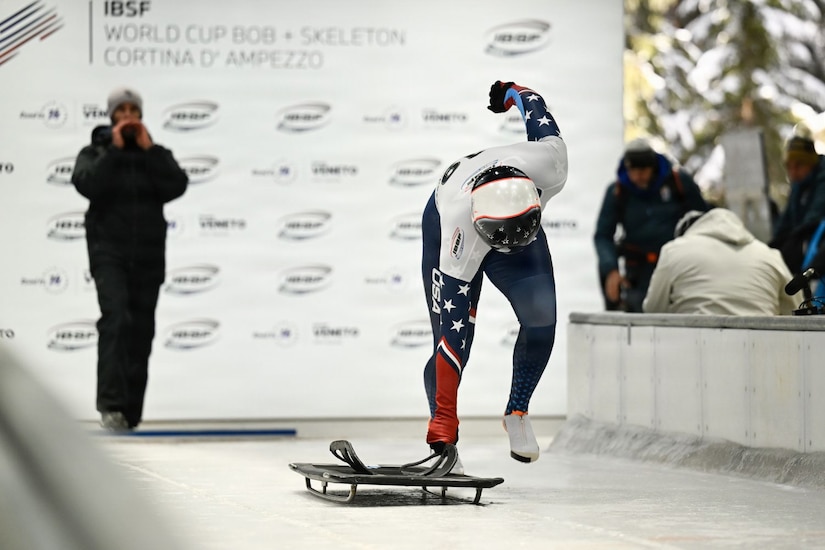
A woman dressed in winter Olympic sledding gear bends down toward a sled while on ice.

Her diverse athletic foundation eventually evolved from traditional collegiate sports to the bobsled, and ultimately the skeleton, an event that demands power, precision and fearlessness. 

Balancing Olympic-level training with military readiness wasn't always easy. As a mother, noncommissioned officer and world-class athlete, Curtis describes her daily routine as a careful balancing act, made possible by strong leaders and teamwork within the 31st Communications Squadron. 

"Staff Sgt. Curtis' ability to balance the demands of military service with world-class competition shows our airmen that anything is possible, so long as you're passionate, dedicated and driven to reach a goal," said Lt. Col Ryan Williams, 31st Communications Squadron commander.

While leaders point to her example, Curtis points back to her team, emphasizing that their confidence in her allows her to carry the same focus and discipline from the workplace to the world stage.  

"My leadership has been incredible," she said. "From my commander down to my supervisor, they've been extremely accommodating while still ensuring I'm fulfilling all my responsibilities as an airman. Their trust frees me to focus when it's time to perform."
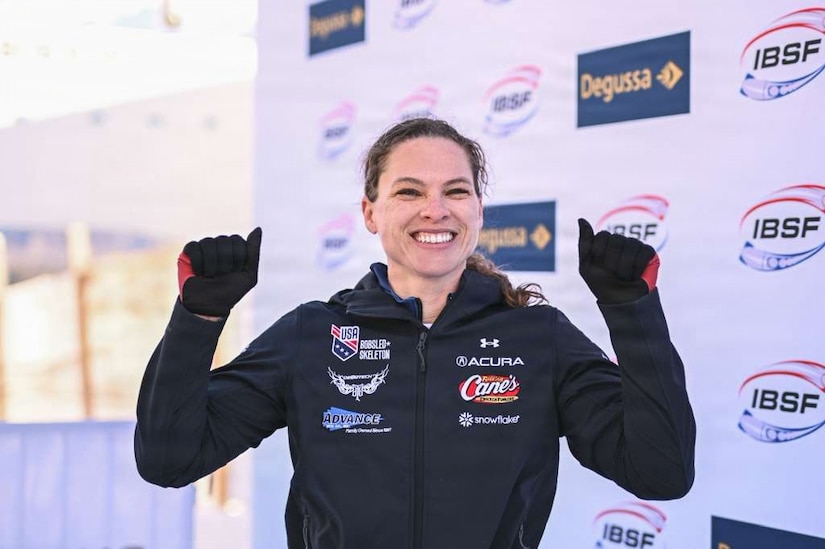
A smiling woman holds up closed fisted hands.

As the current points lead for skeleton on the U.S. team, Curtis prepares to carry more than her personal goals onto the frozen track. She also carries the weight of family legacy and of representing the Air Force. Despite the pressure, Curtis remains grounded in the values that brought her to this point: discipline and resilience. 

"After the Games, I'll be right back at Aviano Air Force Base doing my job," she said. "But for now, I have the privilege of representing the U.S. Air Force on the world stage, and I don't take that lightly. At the end of the day, all I can do is prepare the best I can and put it together when it matters." 

Curtis hopes her journey inspires other airmen to pursue their own athletic ambitions. 

"Reach out. Research Air Force sports and look into the Air Force World Class Athlete Program," she said. "There's more support out there than people realize, from intramural sports all the way to the Olympics."

DOW Restructures Foreign Military Sales, Prioritizes Speed, Efficiency

In a video posted on social media today, Secretary of War Pete Hegseth announced that the War Department moved two agencies critical to getting American-made combat gear into the hands of allied and partner nations under the War Department's Office of Acquisition and Sustainment. 

"On Nov. 7, we laid out the Department of War's vision for strengthening the defense sales enterprise," Hegseth said. "Today, we're turning that vision into decisive action." 

Both the Defense Security Cooperation Agency and the Defense Technology Security Administration are part of how the United States helps partners and allies get access to American-made weapons and equipment. They will now fall under the Office of the Undersecretary of War for Acquisition and Sustainment, led by Michael P. Duffey, according to the memorandum. 

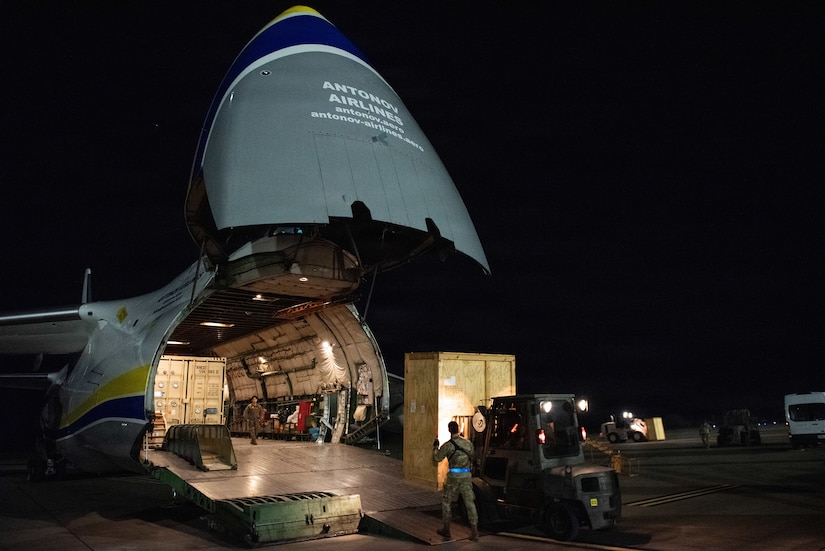
Airman push a container into the back of an open aircraft on a dark flight line.

The Defense Security Cooperation Agency, for instance, is largely responsible for facilitating the sale of U.S. weapons to partners and allies. However, the agency is also responsible for developing and planning the long-term partnerships and training opportunities that accompany those sales. The Defense Technology Security Administration is responsible for identifying and mitigating any risks associated with transferring technology to partners and allies. 

By moving both agencies under the department's Office of Acquisition and Sustainment, Hegseth aims to make weapons sales to allies and partners faster and more efficient, as well as help revitalize America's defense industrial base. 

"This executive order is our mandate: leverage America's record-breaking defense sales to revitalize our industrial base and support our partners," Hegseth said. "On nearly every overseas trip that I take, the demand is clear, every single time; our allies want to buy the world's most lethal weapons: American weapons." 

The realignment, Duffey said, has created a single coherent defense sales enterprise within the department, one that moves at the speed of war, but with the purpose of deterring aggression. 

People guide a forklift carrying a wooden box into the open nose of a large aircraft at night.

"Coupled with this new executive order, we're now positioned to leverage the total aggregated global demand for U.S. weapons to grow our nation's industrial might, while maintaining the American warfighters' technological edge," he added. 

Duffey noted that the changes will unlock foreign investment, power production lines, fuel investments in new American manufacturing plants and create thousands of new jobs in the U.S. 

"When we promise to provide American military capabilities, we must deliver," Hegseth said. "Thanks to President [Donald J.] Trump's leadership, these efforts are game changers for the way we do business with our allies and partners around the globe: more and better weapons delivered faster for our warfighters and our allies."

Department of War Finalizes Realignment of the Defense Security Cooperation Agency and the Defense Technology Security Administration

 Feb. 10, 2026

The Department of War (DoW) today announced the realignment of the Defense Security Cooperation Agency (DSCA) and the Defense Technology Security Administration (DTSA) to the Under Secretary of War for Acquisition and Sustainment (USW(A&S)). This significant transformation, directed by the Secretary of War, unifies critical acquisition, sustainment, industrial base policy, security cooperation, defense sales, and arms transfer functions under a single organization to improve efficiency, enhance the U.S. industrial base, and enable greater burden-sharing with our allies and partners.

"The President has laid out a clear vision for aggressive promotion of U.S. defense sales through his groundbreaking America First Arms Transfer Strategy," said USW(A&S) Michael Duffey. "This realignment will increase and accelerate the delivery of lethal weapons and advanced capabilities to our allies and partners, empowering them to shoulder a greater share of their self-defense. By unifying our arms transfer enterprise with our acquisition system, we will move with the purpose and speed required to strengthen our alliances and ensure the United States remains the partner of choice in global arms sales."

The realignment establishes a clear and unambiguous line of authority, creating a single enterprise to oversee the execution of defense sales from initial acquisition to final production and delivery. The structural reform is also a key component of the Department's broader effort to improve the speed and accountability of the arms transfer enterprise.

By aligning DSCA and DTSA with the Department's acquisition, industrial base, and technology security functions under USW(A&S), the DoW will integrate technology security considerations earlier in the acquisition life cycle, enhance forecasting of global demand to better meet the defense needs of the United States and our partners, and facilitate the delivery of warfighting capability at the speed of relevance while protecting the U.S. technological edge.

The realignment directly supports the National Defense Strategy and the President's commitment to revitalizing the defense industrial base, including through Executive Action to improve arms transfers. The move will unlock strategic opportunities to leverage allied and partner investments, contributing to the creation of American jobs and ensuring the readiness and security of our Warfighters, allies, and partners.