Showing posts with label readiness. Show all posts

Tuesday, June 23, 2026

A Historic First: Marine Corps Reserve Integrates Multidomain Assets During Exercise

For the first time in its history, the Marine Corps Reserve is actively deploying multidomain collection assets during an integration course, marking a significant technological milestone for Integrated Training Exercise 3-26 at Marine Corps Air Ground Combat Center in Twentynine Palms, California. 

The Information and Intelligence Integration Course is a rigorous, three-day evolution that provides a progressive training opportunity for Marine Air-Ground Task Force 23 intelligence and information entities to rehearse complex tactics, techniques and procedures associated with advanced equipment operation, data exchange and battlespace awareness.  

A man wearing a camouflage military uniform and a face mask holds a military rifle and a string of bullets in his hand; there are mountains in the background.

Historically, this level of multidomain integration has been challenging to replicate in reserve training environments. However, during the exercise, Marines are successfully bridging that gap, actively synchronizing signals intelligence and electronic warfare, limited expeditionary cyberspace operations and information maneuver elements into a single, cohesive intelligence picture. 

"As a commander, having a clear and immediate picture of the battlespace is everything," said Marine Corps Col. Aaron Awtry, commanding officer of the task force. "These new emerging technologies within the Marine Corps have fundamentally changed how we operate. They have greatly improved the speed and accurate flow of information from the tactical edge directly to the command operations center, allowing faster, more informed decisions to be made." 

Implementing these technologies in real-time through this new course demonstrates the rapid modernization of the reserve force as Marines keep pace with the evolving character of warfare and the demands of the future fight. 
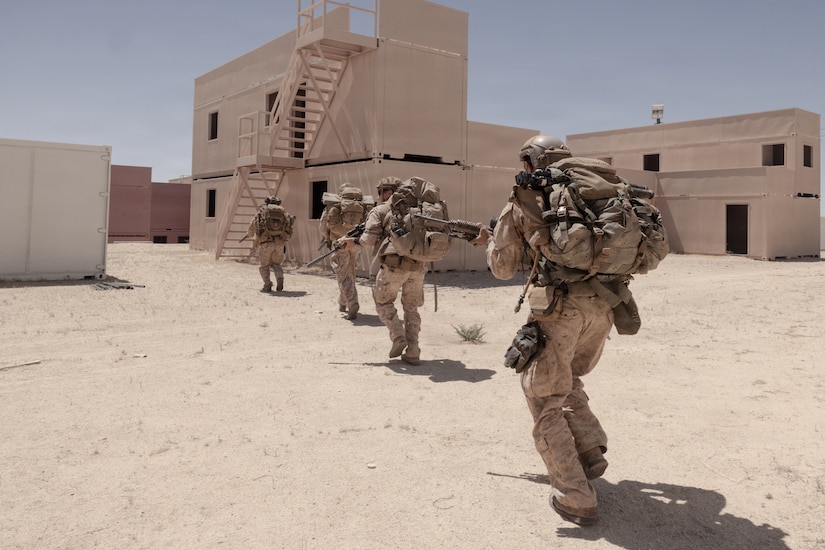
Four people in camouflage military uniforms walk across a desert terrain toward rows of empty shipping container buildings while carrying rifles.

The course goes through a combination of classroom instruction, detailed planning and dynamic lane training. Operating within a firing range, intelligence collectors and operators must actively scan the area, locate adversary signatures, and execute information-related activities in a simulated, contested environment. The task force's operations center is then tasked with managing these diverse collections, analyzing the incoming data, and producing actionable intelligence for commanders. 

"This gives reserve Marines an opportunity to use capabilities they will not have organically until future force design initiatives are implemented, while increasing our section's proficiency in signals intelligence and electromagnetic warfare integration and operations, said Marine Corps Chief Warrant Officer 2 Zachary Moore, a subject matter expert and instructor for the course's multidomain assets.  

Moore added the course gives units a unique opportunity to bring multiple capabilities into the scenario to coordinate, plan, collect and disseminate intelligence and information products.
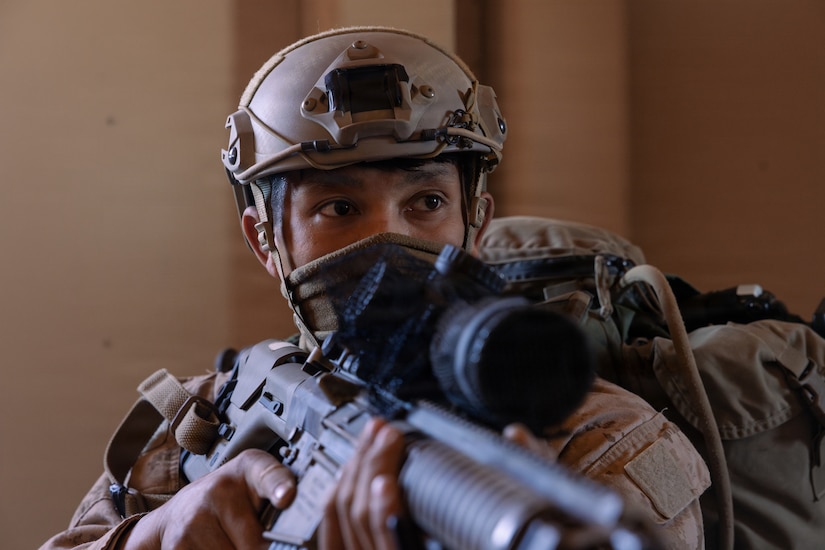
A man wearing a camouflage military uniform and a face mask looks to his left while holding a military rifle.
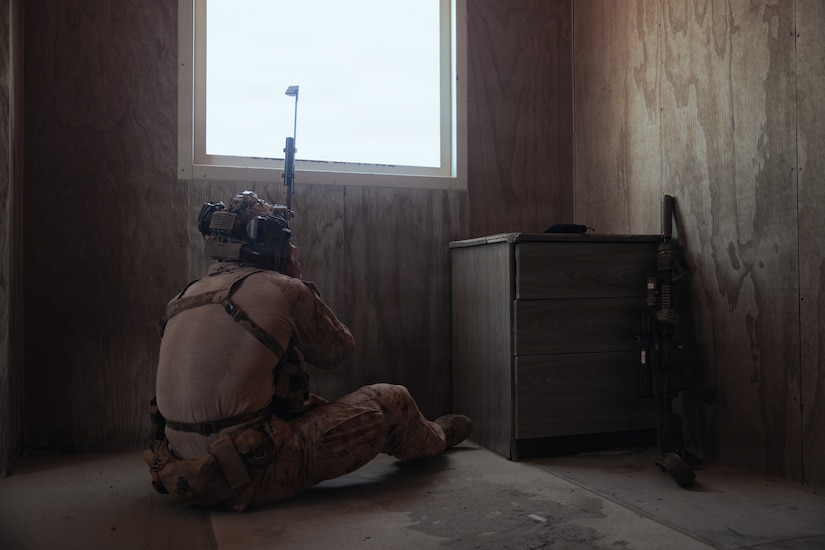
A person in a camouflage military uniform sits on the floor just below a window in a dimly lit room with a rifle in hand.
"Our 'no sensor left behind' approach helps Marines refine their craft, introduce new capabilities ahead of force structure and capability delivery, and better plan and conduct multidomain operations in increasingly contested environments," he said. 

The successful execution of the course sets conditions for information and intelligence support throughout the remainder of the exercise. As the character of warfare continues to evolve, the Marine Corps Reserve's ability to master these next-generation technologies ensures the Marine Corps remains a lethal, ready and agile force prepared to dominate in the complex, data-driven conflicts of tomorrow.

Wednesday, September 24, 2025

Department of War Approves $90 Million in Grants Under the Defense Community Infrastructure Program

Today, the Department of War awarded ten Defense Community Infrastructure Program (DCIP) grants from the Office of Local Defense Community Cooperation, totaling approximately $90 million. DCIP is a competitive program for states, territories, and communities to undertake infrastructure enhancements to support military value, the training of cadets at independent "covered educational institutions," installation resiliency, and/or family quality of life that benefits their local installations.

On August 15, the Assistant Secretary of War for Energy, Installations, and Environment instructed the Office of Local Defense Community Cooperation to invite grant applications for ten projects based on a competitive ranking of all proposed projects in response to a May 27, 2025, DCIP Notice of Funding Opportunity.  

These awards derive from Fiscal Year 2025 appropriated funding and leverage an additional $59.9 million in non-federal funding, for a total investment of approximately $150 million. 

"Enhanced partnerships with state and local communities are critical to the success of our installations and their missions," said Mr. Dale Marks, Assistant Secretary of War for Energy, Installations, and Environment. "The Defense Community Infrastructure Program continues to play a vital role in building and maintain these successful partnerships. This year's program continues to build on the Department's efforts to invest in critical infrastructure with our defense communities to enable the readiness and lethality of our installations." 

The Fiscal Year 2025 grant awards are as follows: 

$14 million federal grant to North Slope Borough, Alaska, to undertake a $23.5 million project to install high-speed fiber optic telecommunications infrastructure to Point Barrow Long Range Radar Site. The project supports the readiness and lethality of Joint Base Elmendorf-Richardson.

$2.6 million federal grant to Golden Valley Electric Association, Inc., Alaska, to undertake a $2.7 million project to install critical electrical infrastructure to the Murphy Dome Long Range Radar Site. The project supports the readiness and lethality of Joint Base Elmendorf-Richardson.

$13 million federal grant to Golden Valley Electric Association, Inc., Alaska, to undertake a $13.3 million project to construct a new switching substation, upgrade an existing substation, and improve communication systems. This project supports the readiness and lethality of Eielson Air Force Base. 

$7 million federal grant to North County Fire Protection District, California, to undertake a $13.9 million project to construct a fire station that will enhance emergency response resources and mitigate impacts of wildfires on training and mission readiness. The project supports the readiness and lethality of Marine Corps Camp Pendleton and Naval Weapons Station Seal Beach, Detachment Fallbrook.

$5.7 million federal grant to the Southeastern Connecticut Council of Governments, Connecticut, to undertake a project to replace 11,700 linear feet of a water main to enhance water supply infrastructure. This project supports the readiness and lethality of Submarine Base New London.

$4.8 million federal grant to the Port Authority of Guam to undertake a $6.9 million project to execute near-term structural and safety upgrades to stabilize the pier, extend its operational life, and maintain critical functionality. The project supports the readiness and lethality of Joint Region Marianas.

$10 million federal grant to the Oklahoma Department of Transportation, Oklahoma, to undertake a $35.8 million project to reconstruct a segment of US-69 and replace the Peaceable Creek bridge. The project supports the readiness and lethality of McAlester Army Ammunition Plant.

$11.9 million federal grant to the City of Chesapeake, Virginia, to undertake a $29.9 million project to construct a waterline. The project supports the readiness and lethality of Naval Support Activity Hampton Roads.

$20 million to Kitsap County Public Works, Washington, to undertake a $40 million project to construct a 1.4 million gallon per day anaerobic digester, yard piping, and a digester control building. The project supports the readiness and lethality of Naval Base Kitsap.

$300,000 federal grant to the City of Everett, Washington, to undertake a $800,000 project to construct a police boathouse facility. The project supports the readiness and lethality of Naval Station Everett.

Groundbreaking on these projects may commence once all environmental requirements have been met.  

The Defense Community Infrastructure Program is authorized under 10 U.S. Code § 2391.

Monday, September 22, 2025

Senior Air Force Leader Recounts Recent Successes, Underscores Need to Outpace Adversaries

 Sept. 22, 2025 | By Matthew Olay, Pentagon News

During a keynote address at the Air and Space Forces Association's Air, Space and Cyber Conference at National Harbor, Maryland, today, Air Force Chief of Staff Gen. David W. Allvin spoke of the service's recent successes — both real-world and exercise-based — while also underscoring the importance of keeping a winning pace when facing our nation's adversaries. 

A person in a dress military uniform speaks and gestures with his hands indoors.

Allvin led off his remarks discussing the complexity of the Air Force's successful execution of Operation Midnight Hammer, the June 21 mission during which numerous Air Force assets inflicted significant damage on Iran's nuclear program at three separate sites. 

Regarding that mission, Allvin said it wasn't just the precision of the weapons and capabilities that stood out, but it was also the airmen who handled the complexity of the operation with great skill and professionalism. 

"It was a complex and imaginative mission that was designed, but with that complexity came unforeseen issues that came up in front of our airmen — over and over and over again," Allvin said. 

"And, in a story that will never really, truly be told in public, our airmen were unbelievable," he continued, adding that Air Force personnel properly assessed risk, understood what their roles were and knew what it would take to execute the mission successfully.  

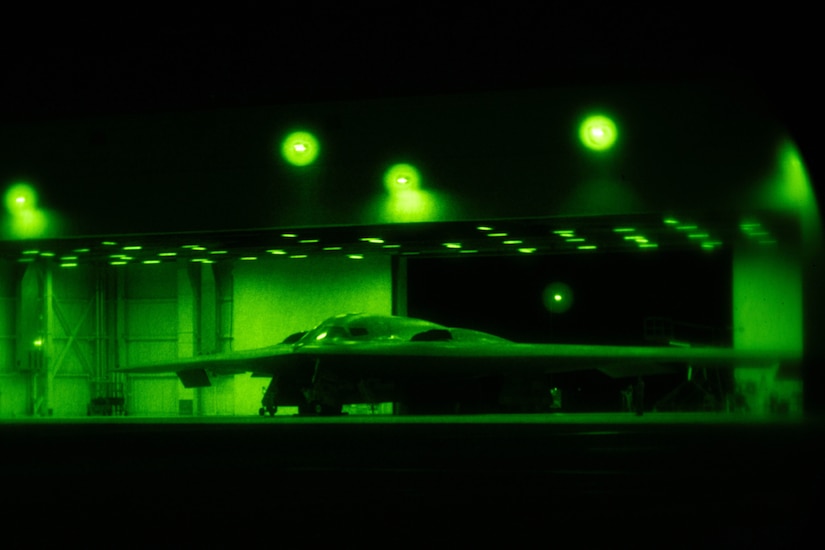
A view through night vision of a flat, triangular-looking military aircraft sitting in a hangar.

Allvin also spoke highly of Exercise Resolute Force Pacific, a large-scale event conducted July 10-Aug. 8, which he described as the largest Air Force-led exercise in the Indo-Pacific region since the Cold War. 

"What set this exercise apart was the scope and the scale and the complexity [involving] transitioning from the types of fights we've done to the types of fights we don't want to have to do, but need to prevail [in] if we do," Allvin said.  

While discussing the Air Force's current state of readiness, Allvin said it's essential to constantly be asking whether the service is going fast enough and reaching deep enough to meet the challenges of the day. 

"In this environment, with the consequences on the other side of it, we have to beware of the familiar [and] be cautious about the warm blanket of the comfortable," Allvin said, adding that it's necessary to keep up a quick pace of readiness because U.S. adversaries aren't slowing down.

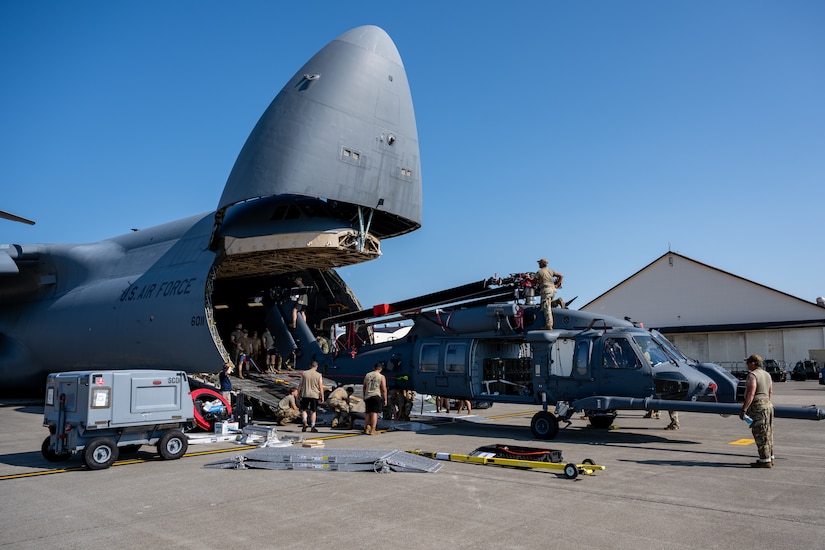
A handful of service members in casual attire are on a tarmac loading a military helicopter with its rotors folded together into the front end of a large military cargo aircraft.

To illustrate his point, Allvin circled back to Operation Midnight Hammer, stating that, in the aftermath of the operation, Iran likely went straight to work on fortifying its nuclear program and making it less vulnerable to attack. 

"You can believe they probably got after it immediately … and we've got to respond to that," Allvin said.  

Returning to the topic of pacing, Allvin said merely moving at the "speed of relevance" is not adequate enough to meet present-day challenges. 

"Last time I checked, our mission says 'fly, fight and win.' … So, if you want to know what the pace is, that's the pace. We have to move out at the pace to win, and if we're not getting there, then we need to find another gear," he said. 

Allvin ended his remarks by calling himself an optimist, saying he believes the Air Force will continue to keep the pace to win because of the constant influx of talented, skilled, innovative and ready airmen who are consistently joining the ranks on a regular basis. 

He also praised industry partners and entrepreneurs who are working to deliver the materiel the Air Force needs. 

"And what the nation needs is one Air Force, integrated, aligned, focused [and] ready to fight; the nation needs more Air Force [with] more capability, more capacity [and] more options for the president; and the nation needs your Air Force moving out at a pace to win," Allvin concluded.