Friday, July 17, 2026

U.S., Canadian, Thai Navies Sharpen Maritime Capabilities During Exercise CARAT Thailand

 July 17, 2026 | By Navy Chief Petty Officer Mike Wright, Commander, Destroyer Squadron 7

The United States concluded the landmark 32nd iteration of Exercise Cooperation Afloat Readiness and Training Thailand, July 15, in Sattahip, Thailand, reinforcing America's enduring commitment to a free, open and secure Pacific region.
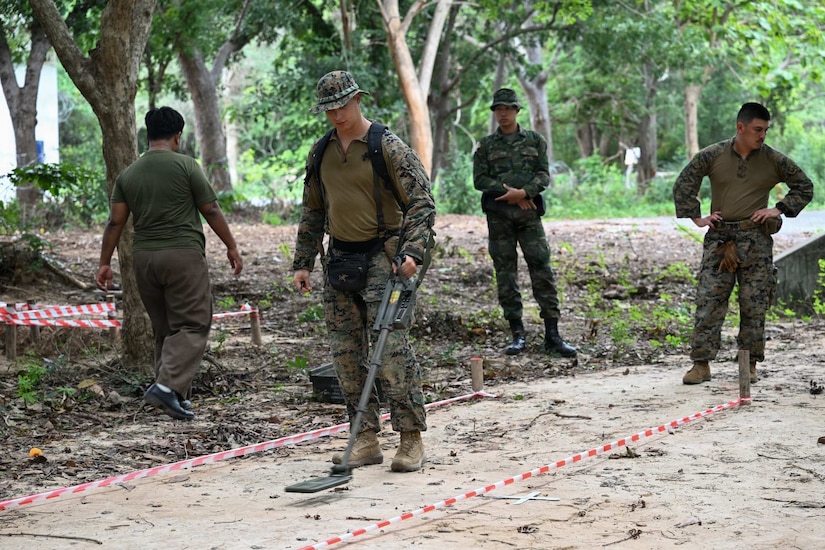
A man dressed in a military camouflage uniform holds mine sweeping equipment over the sand in a marked lane as two other men wearing similar attire watch and another man walks by.

Over 10 days of at-sea and shore-based training with the Royal Thai Navy and Royal Canadian Navy, U.S and partner forces sharpened the combined maritime capabilities that underpin regional security cooperation.  

This year, the United States expanded its contribution to the exercise, demonstrating the breadth and integration of American maritime power. U.S. forces participated with a multimission P-8A Poseidon maritime patrol and reconnaissance aircraft assigned to the Commander, Task Force 72 and U.S. Coast Guard fast response cutters the USCGC Emlen Tunnell and the USCGC Charles Moulthrope assigned to the Expeditionary Cutter Squadron. 

These units operated with a Royal Thai Navy surface force, including the frigate HTMS Taksin and the frigate HTMS Saiburi.
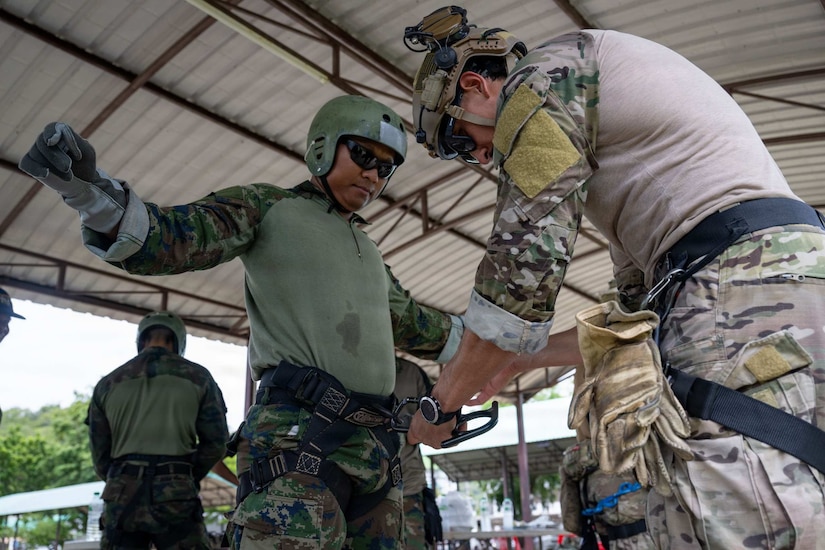
A man wearing a military camouflage uniform holds his arms up while another man in similar attire does a safety check in the first man’s rappelling gear.

"It's been an honor to operate with our Royal Thai Navy partners for the 32nd iteration of Cooperation Afloat Readiness and Training Thailand," said U.S. Coast Guard Capt. Mike Ross, commodore of Expeditionary Cutter Squadron. "We were given the opportunity to demonstrate the capabilities of the Coast Guard fast response cutters, which we plan to maximize to further partnerships and address shared maritime concerns." 

The at-sea phase in Sattahip and the Gulf of Thailand included complex training scenarios focused on antisubmarine warfare, air defense, surface action group coordination, mine countermeasures and search and rescue training. These exercises advanced the U.S. Navy, U.S. Coast Guard, Canadian and Thai forces' abilities to refine their tactics, techniques and procedures in a dynamic maritime environment.
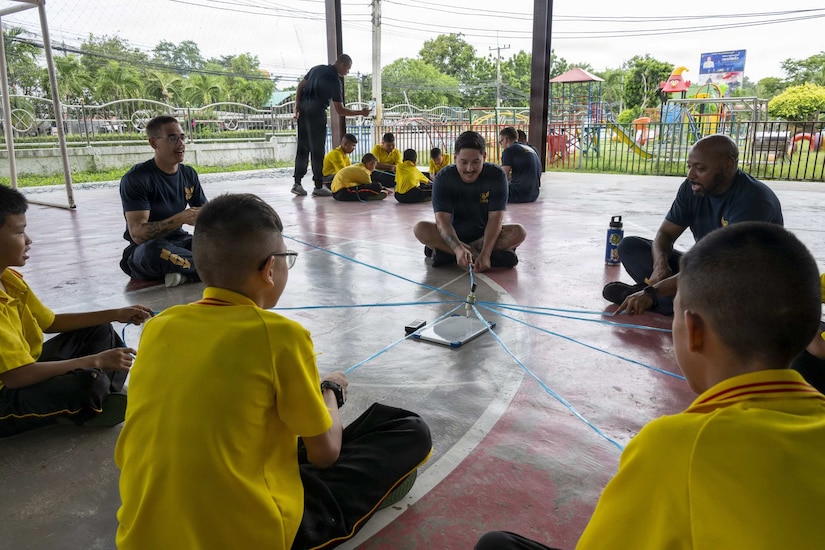
Three men sit in a circle with children playing a game. There is a similar group in the background.

Beyond the at-sea exercises, CARAT Thailand fostered strong relationships through a variety of shore-based activities in Sattahip and Songkhla, including community service projects, sports days and cultural exchanges. 

Subject matter expert exchanges and practical education sessions covered crucial topics such as maritime domain awareness, medicine and at-sea explosive ordnance disposal, further enhancing interoperability and knowledge sharing. Additionally, the Royal Canadian Navy expanded the scope of the exercise by providing members of a visit, board, search and seizure team to participate in collaborative training events alongside regional partners.
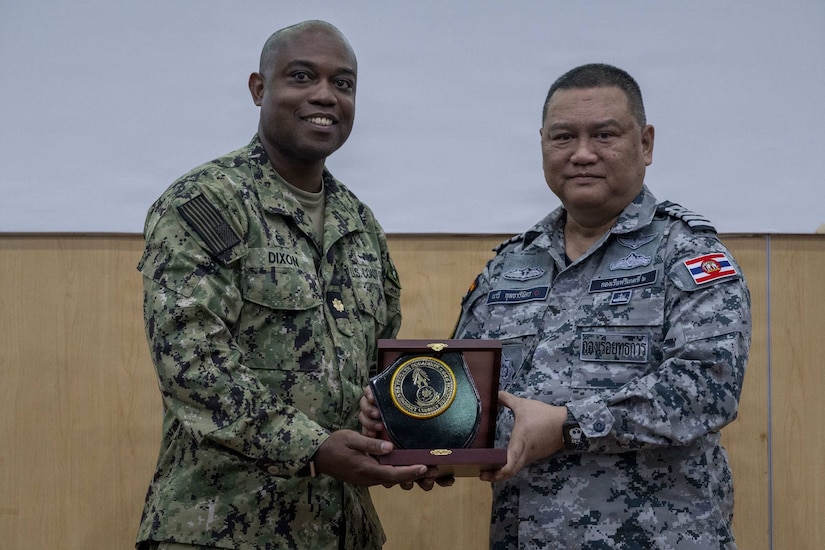
Two men wearing military camouflage uniforms hold a wooden box and an award while posing for a photo.

CARAT Thailand is a long-standing exercise series designed to enhance U.S. and partner maritime forces' abilities to operate together in response to shared challenges in the region. 

As the U.S. Navy's forward-deployed destroyer squadron in Southeast Asia, Commander, Destroyer Squadron 7 remains committed to building partnerships and promoting maritime security throughout the region.

Readout of the 45th U.S.-Jordan Joint Military Commission

On July 15, Assistant Secretary of War for International Security Affairs Daniel Zimmerman and Jordan's Chairman of the Joint Chiefs of Staff Major General Yousef Al Hnaity co-chaired the 45th U.S.-Jordan Joint Military Commission (JMC) in Amman, Jordan, reaffirming the mutual commitment to the enduring strategic partnership between the United States and the Hashemite Kingdom of Jordan.

The JMC serves as the premier bilateral forum for aligning U.S. and Jordanian defense policies and advancing mutual security objectives. Assistant Secretary Zimmerman underscored the National Defense Strategy imperative to empower allies and partners to take primary responsibility for their defense. He highlighted Jordan's indispensable leadership in advancing regional and international security and stability efforts and in protecting our people and our assets.

The delegations discussed a broad range of issues that are vital to both countries' shared strategic interests, to include enhancing interoperability between U.S. and Jordanian forces and fostering critical warfighting competencies to address mutual security challenges. They also discussed a range of regional policy priorities and opportunities for increased military cooperation, including on integrated air and missile defense and counterterrorism.

The 45th JMC concluded with both nations expressing a mutual commitment to strengthen the U.S.-Jordan defense partnership.

Medal of Honor Recipient Welcomes Newest Student Naval Aviators

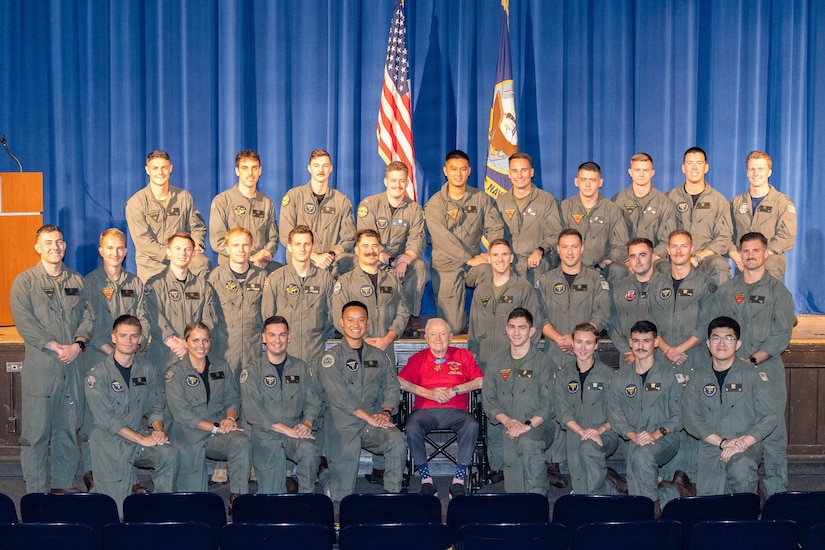
The oldest living Medal of Honor recipient returned to the base where he earned his gold wings July 15, joining Naval Aviation Schools Command in congratulating 29 student naval aviators who completed their introductory flight evaluation training, the first milestone on the path to those same wings.

An elderly man in a wheelchair poses for a photo in an auditorium with dozens of men in flight suits.

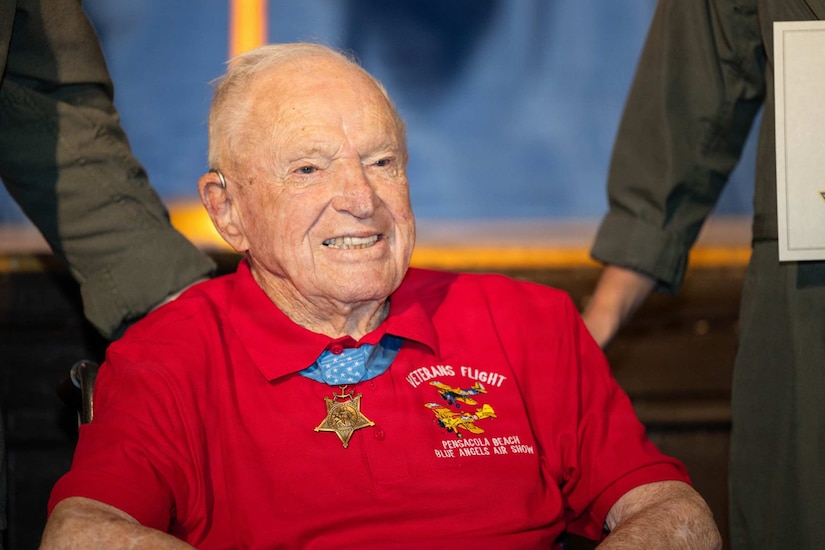
Retired Navy Capt. E. Royce Williams, 101, enlisted during World War II and earned his wings at Naval Air Station Pensacola, Florida, in August 1945, going on to fly combat missions in the Korean and Vietnam Wars.

He received the Medal of Honor Feb. 24, 2026, for a 1952 solo engagement against seven Soviet MiG-15 jets that remained classified for more than 50 years. He is the only living Medal of Honor recipient from the Korean War.

For the student naval aviators seated in front of him, the medal was not the point; the wings were. Williams earned his at the end of the same training pipeline these students have entered, and, 81 years later, he came back to tell them what carried him through it.

An elderly man in a wheelchair smiles while posing for a photo with a medal around his neck.

"He is the living, breathing standard, the embodiment of what it means to be a United States naval aviator," said Navy Capt. Ron Rumfelt, NASC commanding officer. "This is the history and heritage you join today."

NASC, a subordinate command of Naval Education and Training Command, trains and develops future naval aviators, naval flight officers and aircrew for the Navy, Marine Corps and Coast Guard. The flight evaluation training is the entry point of that pipeline, combining aviation ground school and introductory flight instruction to screen and prepare students before they report to primary flight training.

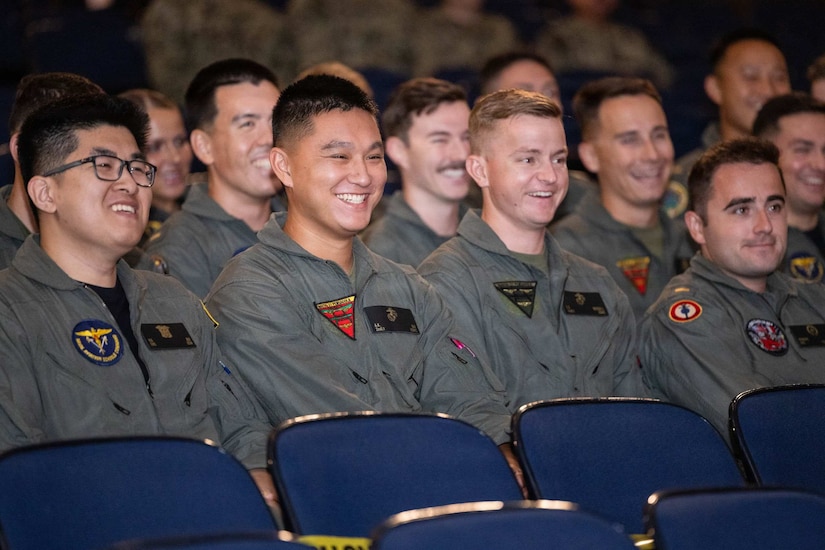
Dozens of men in flights suits laugh while sitting in an auditorium.

Rumfelt told the graduates that the connection between Williams' era and theirs is the training itself.

"We are the best-trained aviators in the world. We do it better than anybody," he said. "It starts with preparation. It ends with debriefs. We call that the relentless pursuit of perfection, because you do not know when that training is going to be called upon, when you will be challenged like Capt. Williams was challenged."

After the ceremony, Williams took questions from the graduates. When asked what advice he would give a student naval aviator to be successful, he pointed to the same standard.

"You have to want it. The word that comes to mind is push. Be diligent," Williams said. "Each one of you is different, but you are all trying to attain the same goal, [be] the best you can. I took every activity as a challenge."

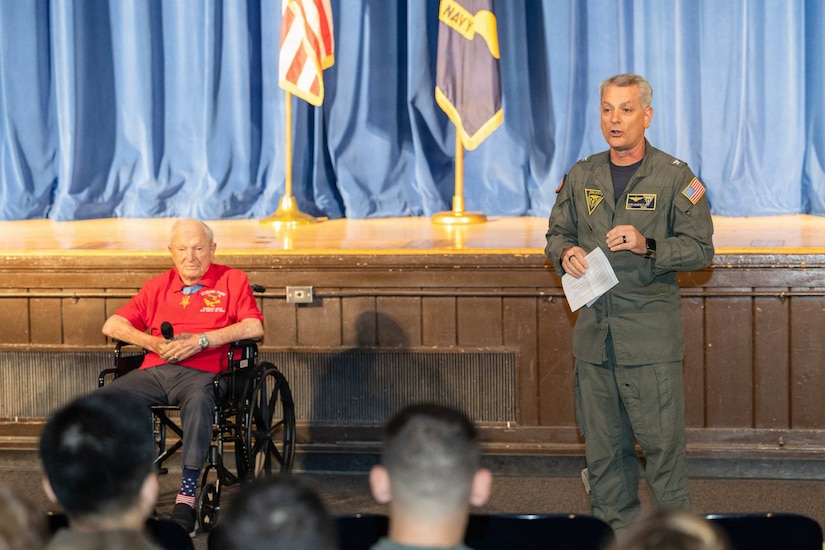
A man in a flight suit speaks to a group of people sitting in an auditorium while an elderly man in a wheelchair holds a microphone next to him.

That approach, he told the students, never changed across a career that spanned three wars and ended with his retirement as a captain in 1980.

"It was not a game. It was business," he said. "I applied myself, and the rewards were good."

The graduates now report to primary flight training, where they will fly the T-6B Texan II or enter the helicopter training track on the way to their own wings.