The Massachusetts National Guard's 104th Fighter Wing Medical Group enhanced regional medical readiness by hosting the Air Combat Command Emergency Decontamination Course at Barnes Air National Guard Base in Westfield, Massachusetts, June 1-6, marking the first time the Air National Guard has hosted a remote training team for this course.
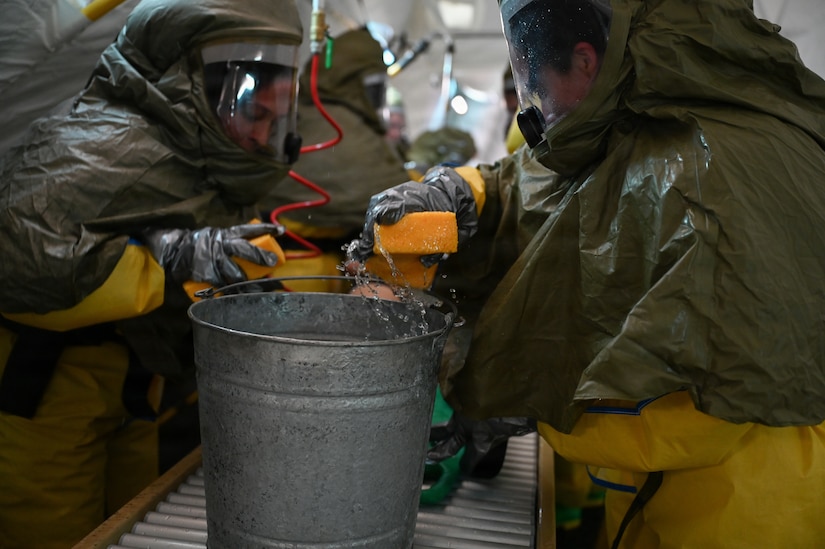
The multiday training brought together more than 70 airmen from Region 1 and other regions, including the 103rd Airlift Wing, 114th Fighter Wing, 150th Special Operations Wing, 158th Fighter Wing and 161st Air Refueling Wing. Through two iterations of the course, participants completed hands-on instruction in equipment setup, personal protective measures, patient handling and full-scale decontamination operations.
Patient decontamination, or PT Decon, is a 19-person unit type code designed to decontaminate patients before they enter a medical facility during chemical, biological, radiological or industrial contamination events. The capability is essential for protecting medical staff, maintaining facility operations and stabilizing victims before they receive further care.
"The importance of [emergency management decontamination training] is the ability to safeguard a medical facility in the event of having to support victims [who] come in with contamination," said Saulo Ugarte, the course lead instructor. "The purpose is to teach these medical teams the process of setting up and decontaminating victims prior to going inside a medical facility in order to ensure that the staff inside is protected, as well as the facility itself. The PT Decon course extends beyond contamination removal."
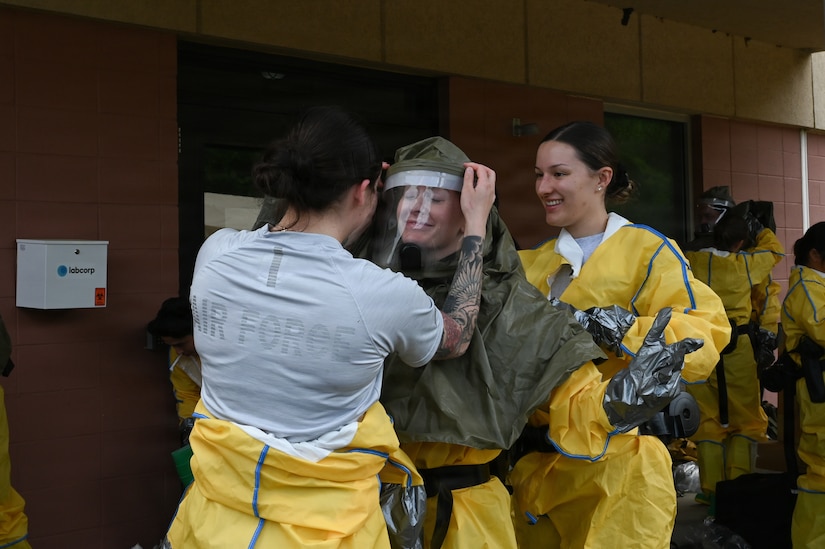
"The second part [of the PT Decon course] is ensuring that we do lifesaving situations; for example, stabilizing the victims and making sure they're stabilized through the process in order to get the medical needs they need in a clean facility after they've been decontaminated," Ugarte said.
For the 104th Fighter Wing, hosting the course represented a significant milestone in both capability and readiness.
"This is the first time that the guard has ever done the remote team," said Air Force Chief Master Sgt. Timothy Mutti, senior enlisted leader assigned to the 104th Fighter Wing Medical Group. "The Air National Guard Medical Training Division was here the last two days evaluating to see if it was up to par. Overall, it went really well."
Bringing the course to Barnes Air National Guard Base allowed multiple units to train together, strengthening regional interoperability. The collaboration also tested the airmen's abilities to operate under the demands while in full protective gear.
"My favorite part from this course is the teamwork that is involved, not only in putting it together, but the barrier of communications and how we work around that," said Air Force Senior Airman Malachi Paiz, an aerospace medical technician assigned to the 150th Special Operations Wing. "You have limited communications when having the hazmat on. It's hard to hear, and you have to communicate in different ways, such as hand signals, touching, just trying to be creative in a chaotic environment."
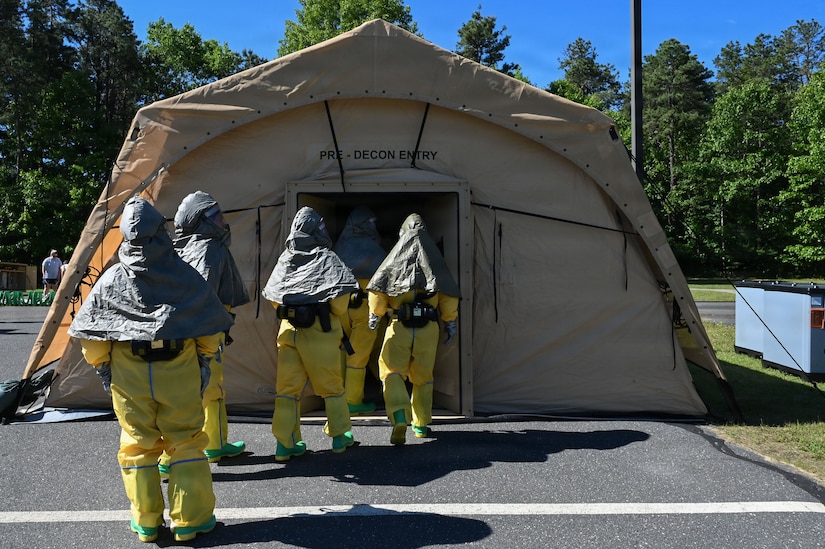
Aside from the technical challenges, airmen had the opportunity to build relationships outside of their units and gain a better understanding of their shared mission.
"I think meeting all the other people [who] came from the other bases was the best part of the course," said Air Force Airman 1st Class Meledith LeBron, a bioenvironmental engineer specialist assigned to the 104th Fighter Wing. "You get so used to the people [who] you're with, then you meet other people and you realize we're all doing the same thing, and we all know what we're going through."
The 104th Fighter Wing wanting to network and build relationships contributed to the decision to host the training locally.
"It was about getting the region fully trained," Mutti said. "Hosting it [at the 104th Fighter Wing] meant we could get a large portion of units trained at once."
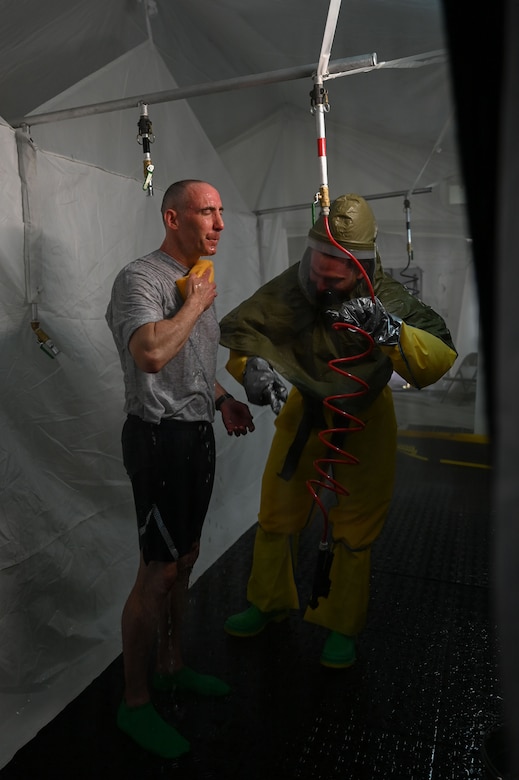
Throughout the course, instructors guided airmen through realistic scenarios using operational equipment. The final day featured a capstone event with simulated patients, requiring teams to demonstrate communication, coordination and technical proficiency under pressure.
"The airmen are doing a really good job with what time they've had," said Brandy Tarala, a course instructor. "Everybody steps in, and you don't even have to tell them. They say, 'OK, what can I do?' The teamwork makes the process go a lot more efficiently. We don't get that all the time, because not everybody [who] takes this class wants to be here."
The course also supports broader goals within the 104th Medical Group to strengthen team cohesion and ensure deployable capability.
"My overarching goal is bringing our readiness back to where we need to be for the medical enterprise," Mutti said. "But my interior goal is team building, ensuring the 19-person team works together, understanding each other's strengths and building confidence."
As the week concluded, leaders emphasized the importance of continued regional collaboration and recurring training opportunities.
"If we can get the region ready, we will be a better asset," Mutti said.
By hosting the ACC Emergency Decontamination Course for the first time, the 104th Fighter Wing strengthened its medical readiness posture, expanded regional capability and ensured that airmen remain prepared to respond to contamination events in any environment.




 Posts
Posts

