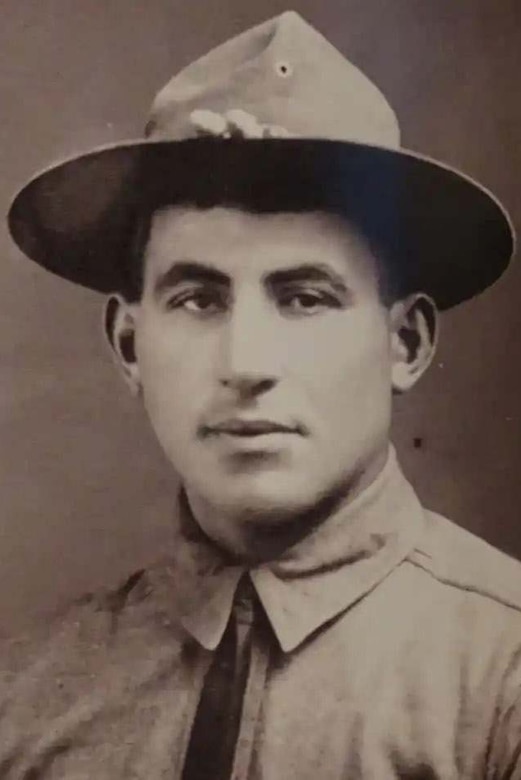
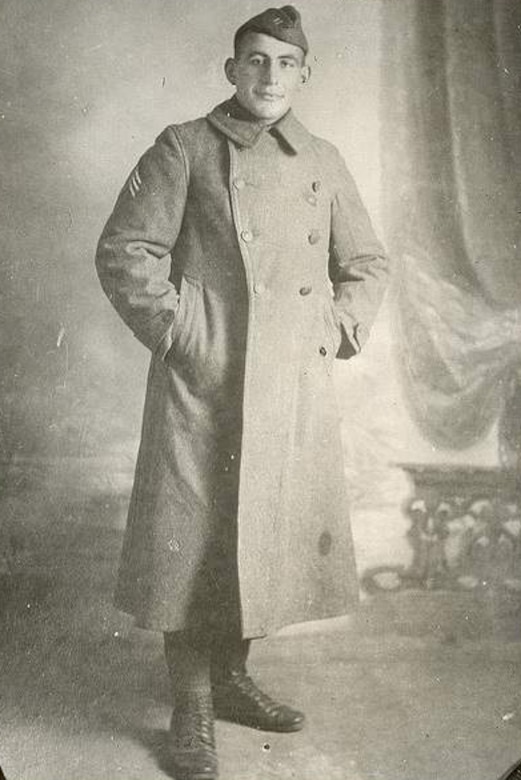
Army Sgt. William Shemin, a rifleman, posthumously
received the Medal of Honor in 2015 for extraordinary heroism during
World War I combat operations in France.
Shemin was born Oct. 14, 1896, in New York City. Soon after his
birth, the family moved to Bayonne, New Jersey. He was born to Russian
Jewish immigrants Harris and Bessie Shemin. He had one sibling, a sister
named Minnie.
He went to high school in Bayonne and after graduating attended a
training class with the New York State College of Forestry. After
finishing the course, he returned home to work as an assistant city
forester.
Shemin enlisted in the New York National Guard in 1916 and then
registered for the draft in June 1917 after the U.S. declared war on
Germany. However, the minimum age to be selected for military service at
the time was 21.
He enlisted in the Army in October 1917 and attended basic training
at Camp Greene, North Carolina. He was assigned to the 47th Infantry
Regiment, 4th Infantry Division, and, along with thousands of other
soldiers, departed for Europe.
The regiment joined the Aisne-Marne Offensive in northeast France in
the summer of 1918, helping the Allies score an important victory at the
Second Battle of the Marne, pushing the German force farther north
before digging in for another round of fighting along the Vesle river.
In August 1918, the Allied forces fell under heavy artillery and
machine-gun fire. Seeing his comrades in trouble, Shemin left cover,
exposing himself to enemy fire, and ran 150 yards into open ground three
times to retrieve wounded soldiers, even after getting hit by shrapnel.
With his leadership all killed or injured, Shemin took command of the
unit. According to his Medal of Honor citation, he displayed great
initiative under fire and, despite being wounded, refused evacuation for
medical treatment until all of his men were safe.
He was found unconscious the next day and taken to a nearby field
hospital. He was hospitalized for three months and later received light
duty until his tour in Europe ended.
He was honorably discharged from the Army in August 1919, after being
awarded the Distinguished Service Cross for battlefield valor.
After leaving the service, he used his veteran's benefits and
attended college at Syracuse University in Syracuse, New York,
graduating with a bachelor of science degree in 1923. He played lacrosse
and football while at the university.
He married Bertha Schiffer in 1928, and they had three children, two
daughters and a son. His son served in the armed forces during the
Korean War.
After college, he started the Ivy Floral and Landscape Company in the
New York City. In 1955, his son took over the company, renaming it
Shemin Nurseries and moving it to Greenwich, Connecticut.
He died in 1973 and was buried at the Baron Hirsch Cemetery in New
York City. His wife died in 1993 and was buried alongside him. His
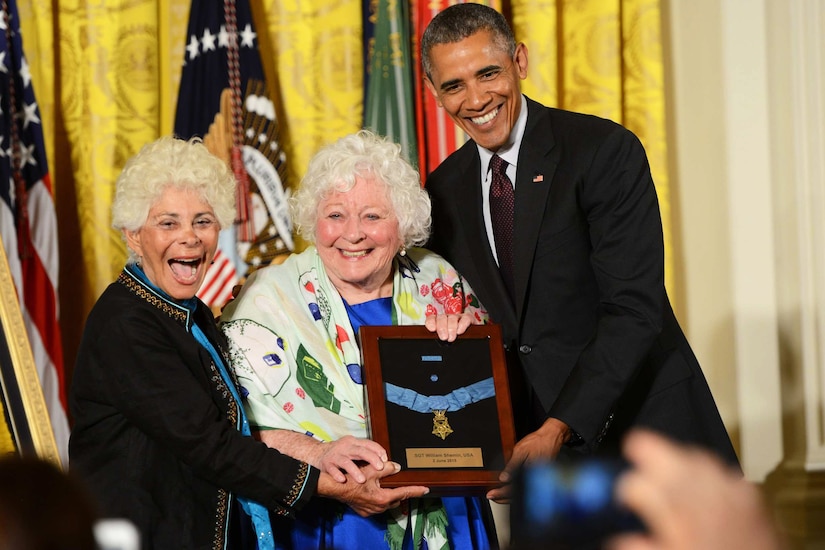
Distinguished Service Cross was later upgraded to the Medal of Honor and
presented to his daughters by President Barack Obama in a White House
ceremony, June 2, 2015. During the same ceremony, Obama presented a
posthumous Medal of Honor to Army Pvt. Henry Johnson.
"It has taken a long time for Henry Johnson and William Shemin to
receive the recognition they deserve," the president said, speaking
about both men who served on the battlefields of France and risked their
lives to save others.
They both left us decades ago, before we could give them the full
recognition that they deserved, but it is never too late to say thank
you, Obama said, adding the country is what it is because of people like
them.
"The least we can do is to say: We know who you are. We know what you did for us. We are forever grateful."
Shemin repeatedly ventured out of the trenches into the open field to
rescue wounded comrades. The open space separating the Allies from the
Germans was a "bloodbath."
"Soldier after soldier ventured out, and soldier after soldier was
mowed down," Obama said. "Those still in the trenches were left with a
terrible choice: die trying to rescue your fellow soldier, or watch him
die, knowing that part of you will die along with him."
Shemin served at a time when the contributions and heroism of Jewish
people in uniform were too often overlooked, the president continued.
"William Shemin saved American lives. He represented our nation with
honor, and so it is my privilege, on behalf of the American people, to
make this right and finally award the Medal of Honor to Sgt. William
Shemin," he said.
Shemin was a wonderful, hardworking, generous man who loved serving
his country, said his daughter, Elsie Shemin-Roth, in an interview a
week before the ceremony. He had high expectations for his three
children and 14 grandchildren.
"He told us all to always do more than you are asked," she said,
adding that he taught the entire family how to properly salute and fold a
flag.
While he couldn't sleep well at night, had painful wounds from the
war and shrapnel in his back, was deaf in one ear, and had
post-traumatic stress disorder, he still had the "most wonderful sense
of humor," she said.
"He directed our lives to be good, productive Jewish American
citizens," she said. "We all loved him dearly. But we also know that
he'd been through much too much."
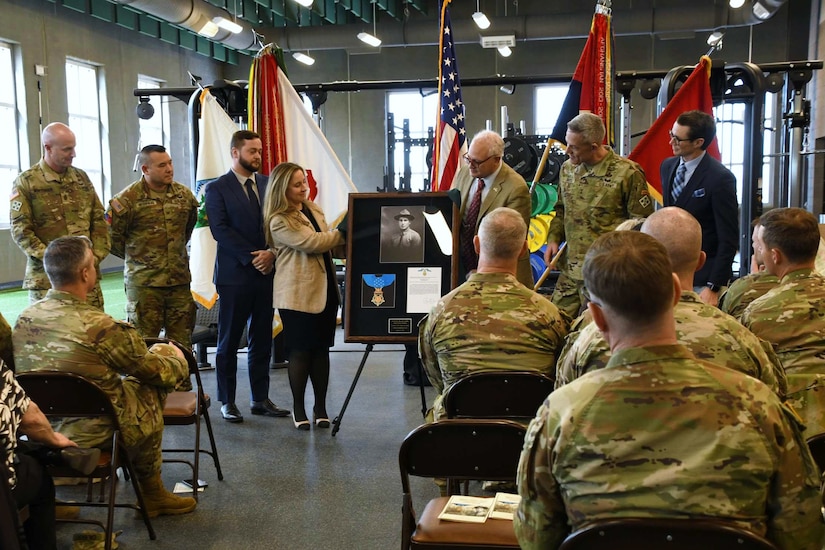
His name continues to be remembered across the country. The Shemin
Fitness Center at Fort Carson, Colorado, was named for him, as was the
William Shemin Midtown Community School in Bayonne. Syracuse University
has a Hall of Honor plaque for him.






 Posts
Posts

