Monday, March 09, 2026

Medal of Honor Monday: Army Col. Jack Jacobs

Army Col. Jack Howard Jacobs was just a first lieutenant when he saved more than a dozen lives during an intense firefight in the swamplands of Vietnam. His actions during that incident and throughout his deployment made him one of the most decorated soldiers of the war, including the nation's highest medal for valor.
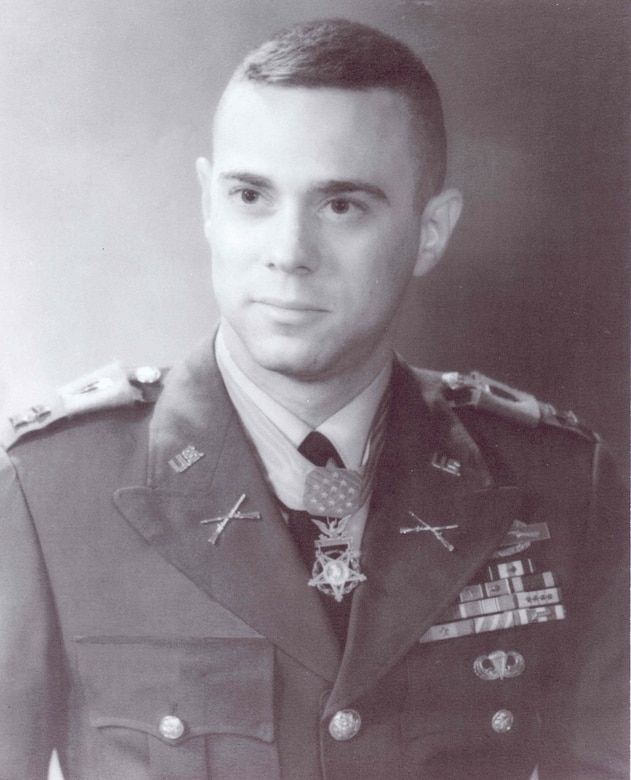
A man wearing a military dress uniform poses for a photo.

Jacobs was born Aug. 2, 1945, in Brooklyn, New York, to Rebecca and David Jacobs, a World War II veteran. He had a brother and a sister.

The family lived in Queens for a time before they moved to Woodbridge, New Jersey, in the mid-1950s, when Jacobs was in sixth grade. He loved baseball and was focused on his academics.

After graduating from Woodbridge High School, Jacobs attended Rutgers University, where he earned a bachelor's degree. During his studies, he married a woman named Karen, and they went on to have two children.

Jacobs also took part in the school's ROTC program. After graduating in 1966, he was immediately commissioned into the Regular Army as a second lieutenant assigned to the 82nd Airborne Division.

However, when his unit, the 3rd Brigade, was ordered to deploy to Vietnam in September 1967, he received separate orders to serve as an advisor for Vietnamese infantry battalions. In a 2002 Library of Congress Veterans History Project interview, Jacobs said he was selected for the role because of his college degree. He petitioned to go with his unit instead, but his request was denied.
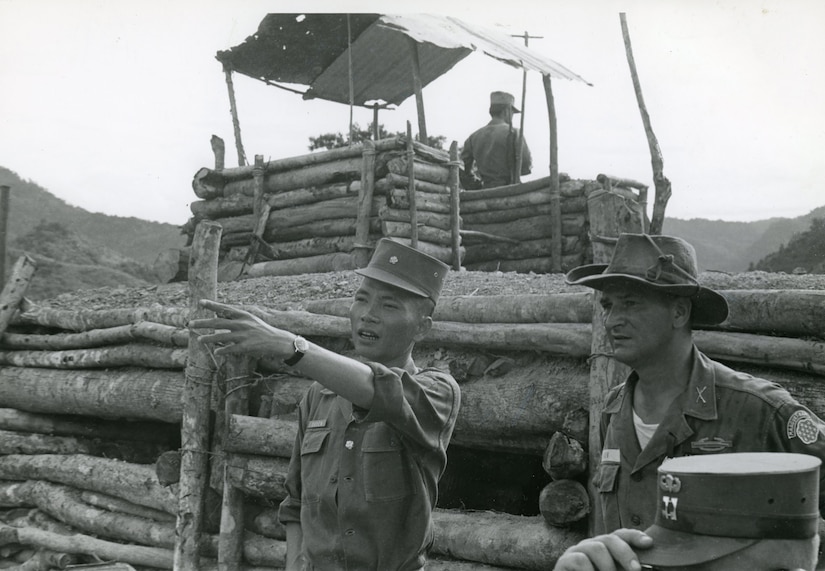
Two men look into the distance as one points. Behind them is a log fence and a taller lookout post also made of logs.


Prior to his deployment, Jacobs spent 13 weeks learning Vietnamese and the country's culture — lessons he said proved extremely useful when he arrived as the assistant battalion advisor for a South Vietnamese army battalion.

Jacobs said the first few months of his deployment were spent conducting many patrols, and at first, they made very little contact with the enemy. But that all changed after the Tet Offensive kicked off in late January 1968.

By March 9, 1968, Jacobs' battalion was part of an operation in the flat swamplands and rice paddies of Kien Phong Province in the Mekong Delta, near the Cambodian border.

"We received some intel that the enemy was probably going to be located in a specific place, so they mounted an operation that included my battalion attacking from boats over what passed for a beach — it was actually a riverbank," Jacobs said in his 2002 interview.

But as his battalion advanced, it came under intense mortar and machine gun fire from a massive Viet Cong presence that was positioned in well-fortified bunkers. Jacobs' battalion tried to get into an attack formation, but they were halted by more devastating enemy fire. Jacobs, who was with the command element of the company in the front, quickly called for and directed airstrikes onto the enemy.

"We were caught in the middle of this ambush," he said. "A lot of people were killed and wounded."
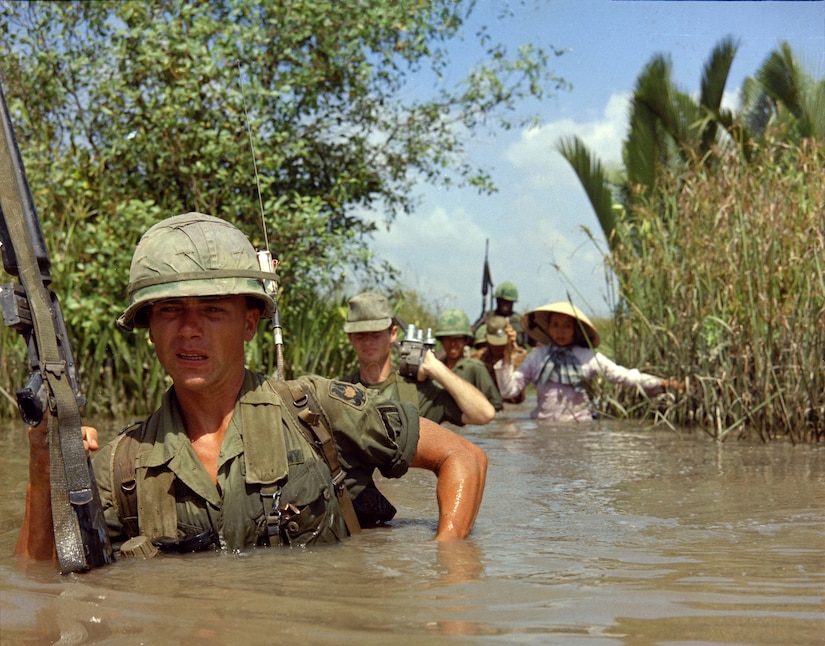
A man carrying an automatic rifle wades into chest deep swamp water. At least four people follow behind him.

The intense enemy fire caused heavy casualties to the command group, including injuring the company commander. Jacobs himself had suffered a head wound that impaired his vision, but he quickly assumed command, ordering the soldiers to withdraw to somewhere more covered where they could set up a defensive perimeter.

With no regard for his own safety, Jacobs returned to the open area despite the intense enemy fire to evacuate a seriously wounded advisor. He managed to get the man to a wooded area where he administered lifesaving first aid. Jacobs then returned to the fire-strewn area to evacuate his wounded company commander.

"The enemy had come out from its positions and were killing the wounded and taking weapons," Jacobs said. So, he continued his mission, dodging bullets to make repeated trips across open rice paddies to evacuate more wounded and their weapons. Three times, he was able to drive off squads of Viet Cong, singlehandedly killing three enemy combatants and wounding several others.

"When I finally had my wits about me, I decided I would go along the tree line myself … and be able to engage them effectively, because they were looking in another direction," Jacobs told the VHP. "Eventually, I sat down in a wooded area and physically couldn't get up."

Jacobs was evacuated to a hospital, but not before he'd saved the lives of one U.S. advisor and 13 Vietnamese soldiers. Thanks to his actions, the South Vietnamese company he was with reorganized and fended off the enemy forces.
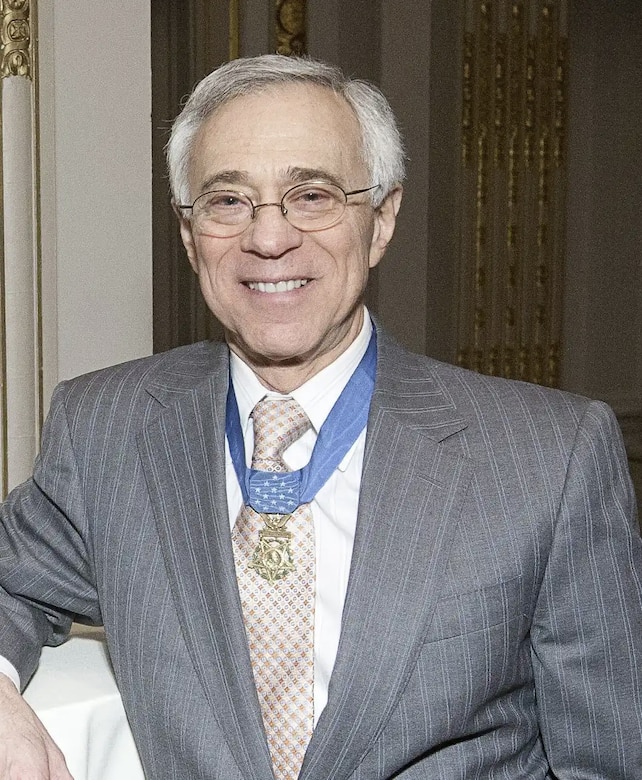
A man wearing a business suit smiles for a photo.

When Jacobs recovered and returned to the U.S., he served as a company commander at Fort Benning, Georgia. That's where he learned he had been nominated for the Medal of Honor — a commendation that left him "stupefied" and "astounded."

On Oct. 9, 1969, then-Capt. Jacobs received the nation's highest medal for valor from President Richard M. Nixon during a White House ceremony. He'd also earned three Bronze Stars and two Silver Stars during his deployment, making him one of the most decorated soldiers of the war.

Jacobs continued his military career. The Army sent him back to Rutgers to get a master's degree in international relations and comparative politics, a subject he later taught at the U.S. Military Academy at West Point.

Jacobs voluntarily returned to Vietnam for another deployment in July 1972, continuing his role as an advisor, this time for the 1st Vietnamese Airborne Battalion. He returned to the U.S. in January 1973 after suffering minor injuries from an artillery round.

From there, Jacobs worked his way up the ranks, eventually commanding his own battalion in Panama in the early 1980s. He went on to teach at the National War College in Washington before retiring as a colonel in 1987 after 21 years of service.
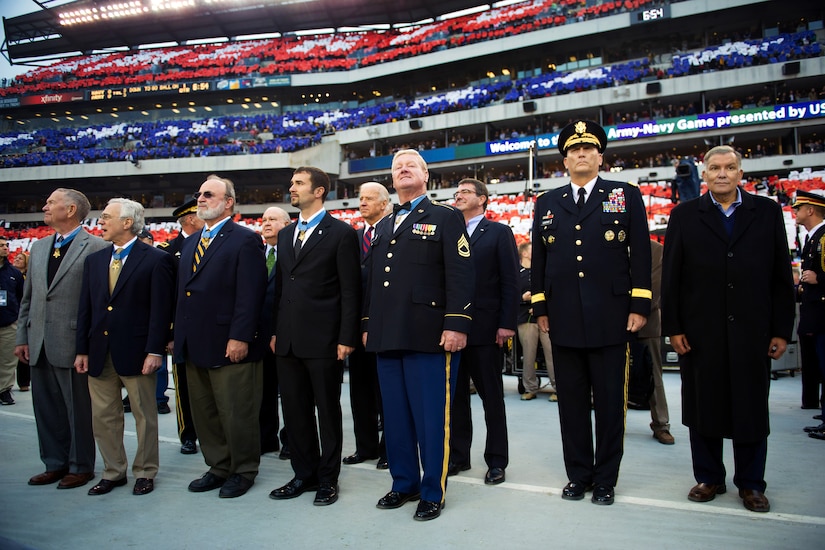
Left to right in the front row, Medal of Honor recipients Walter Joseph Marm, Jr., Jack H. Jacobs, Brian Miles Thacker, Salvatore Giunta, and Sammy L. Davis attend the Army-Navy football game at Lincoln Financial Field in Philadelphia, Dec. 8, 2012. Standing on the second row left to right: Undersecretary of the Army Joseph Westphal, Vice President Joe Biden, Deputy Defense Secretary Ashton B. Carter and Army Chief of Staff Ray Odierno.

In his 2002 VHP interview, Jacobs said he thinks the medal makes its recipients modest.

"I think everybody who receives the Medal of Honor receives it in his heart for all the soldiers with whom he served," he said. "Receiving the award has made me a different person — [it's] made me a better person, a more thoughtful person."

In regard to his Medal of Honor actions, Jacobs also reflected, "I hope that if I had it to do all over again, knowing what I know now, that I would have the fortitude to do it again." 

After retirement, Jacobs worked in investment banking and real estate development, and he also served as a military analyst for NBC News. He currently serves as an advisor for the Code of Support Foundation, a nonprofit that provides assistance to veterans and military families.

In 2008, Jacobs published a memoir, "If Not Now, When? Duty and Sacrifice in America's Time of Need." In 2020, he was inducted into the Army ROTC Hall of Fame.

Jacobs divorced but eventually remarried a woman named Susan, and they had a son. The couple currently lives in Far Hills, New Jersey.

Soldier Returns to Service After Vaccine Mandate Discharge

"It was just a lot of frustration and a little bit of anger towards the military," said Army Spc. Hunter Wade, an indirect fire infantryman assigned to the 101st Airborne Division, recalling sitting in his commander's office in 2022.

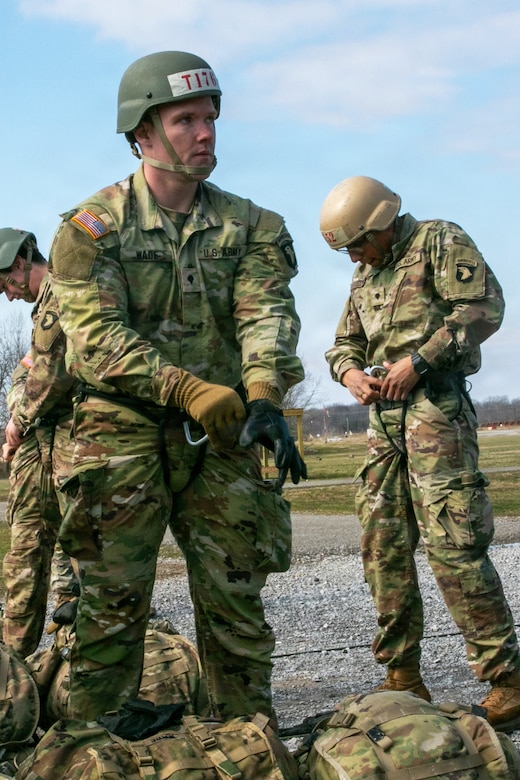
A man wearing a camouflage military uniform, rappelling gear and a tactical helmet puts on gloves. The are two other men in similar attire behind him.

The married soldier, from Greensboro, North Carolina, knew what would happen next.

"The [administrative separation] process was going to start," he said. "I knew several other guys in my platoon who also did not take the COVID-19 vaccine, and they had already started the [separation] process at that point."

This turning point was challenging for Wade; he had always wanted to serve his country.

"For me, it was a calling to join the Army," he said. "I've always wanted to do it ever since I was a kid."

Growing up near a military base inspired him to serve.

In July 2020, Wade joined the Army. After completing basic and advanced individual training to become an infantryman, he was assigned to the 3rd Brigade Combat Team, 25th Infantry Division, at Schofield Barracks, Hawaii, where a new ambition began to take shape.

"It had been a goal of mine to earn my air assault wings," Wade explained. "My platoon sergeant and a couple of other [noncommissioned officers] in my platoon had expressed interest in going to air assault school. They said we want you to go as well."

A short time later, he got his chance. Wade attended the Lightning Academy Air Assault Course at Schofield Barracks in August 2021. Although his first attempt was unsuccessful, he remained undeterred and returned in December.

"I was in phase three, three days from graduation," he recalled. "The air assault [leadership] said we need to see everyone's COVID-19 vaccine card."

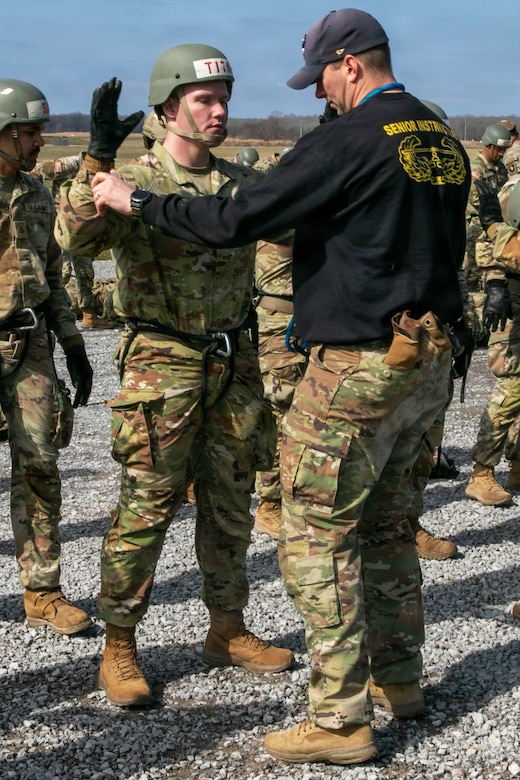
A man wearing a camouflage military uniform, rappelling gear, gloves and a tactical helmet raises his arms as another man inspects his uniform. The other man is wearing a black T-shirt that reads “senior instructor,” a baseball cap, camouflage military uniform pants and boots.

Wade did not have one. He previously prayed about taking the vaccine, ultimately deciding not to. Without the COVID-19 vaccine card, Wade was dropped from the course. Several months later, despite his efforts to get a religious accommodation, he was officially separated from the Army.

"It was hard to process," Wade said. "I never imagined I would be separated from the Army for that."

After moving back to North Carolina, he continued serving the community as a deputy with the Iredell County Sheriff's Office. Still, he missed the brotherhood of military service.

"The last four years I was out of the Army, I had still been in contact with many of them," Wade said. "Whether it's just checking on each other or even just communicating on social media, I've talked to almost all of them since then."

When an opportunity appeared, those ongoing connections proved invaluable.

During the 2025 presidential inauguration, it was announced that service members separated from the military because of the COVID-19 vaccination refusal would be reinstated with back pay and benefits. As the announcement echoed through the ceremony, Wade watched, listened and absorbed every word.

The War Department soon established the Reinstatement and Reconciliation Task Force to manage the reinstatement process for affected service members. The task force, led by Army Col. Kevin Bouren, helps service members rejoin after being separated under the COVID-19 vaccine mandate.

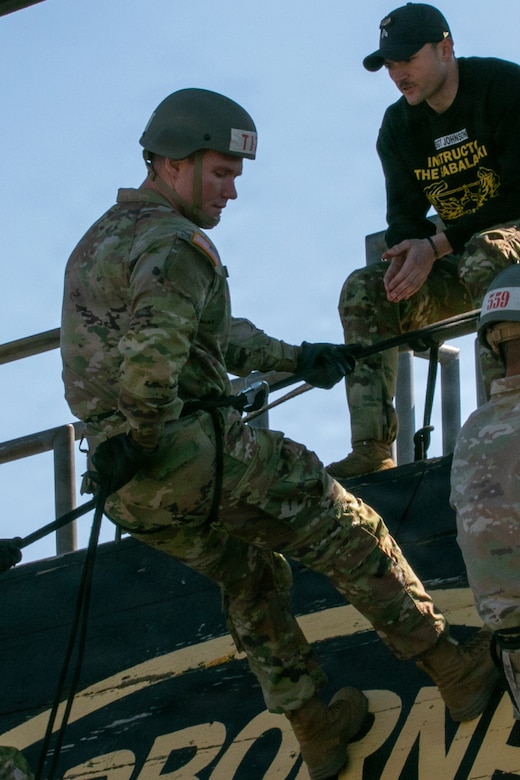
A man wearing a camouflage military uniform, rappelling gear and a tactical helmet prepares to rappel from a wooden tower while holding a rope. There is a man wearing a baseball cap and T-shirt that reads, “Instructor, The Sabalauski Air Assault School,” sitting at the top edge of the rappel tower watching the other man.

"I thought that was very interesting," Wade said. "I wanted to look into that."

Wade spoke with his wife and prayed about the idea. He visited the recruiting office the very next day.

"It was surreal because I did not think I would ever come back into the military," Wade said. "I thought I was done for good."

Despite his doubts, Wade and his wife continued to support each other during the process.

Before long, Wade rejoined the Army and was assigned to Fort Campbell, Kentucky, home of the Army's only air assault division, the 101st Airborne Division.

Being at Fort Campbell reignited Wade's original ambition.

"I thought, 'You know what? I do have some unfinished business with air assault,'" he said.

Wade explained his air assault situation to the task force. Later that day, Bouren said the air assault school commander and first sergeant had approved him to reenter where he left off.

"I was just blown away," Wade said. "I didn't even ask for that. That was just something he [Bouren] did on his own just to try to make me whole again."

Wade entered the rappel phase, or phase three of the course. Here, students must complete a tower rappel, tie a Swiss seat, demonstrate hook-up and belay procedures, rappel from a helicopter and finish a 12-mile ruck march with a 35-pound rucksack in under three hours.

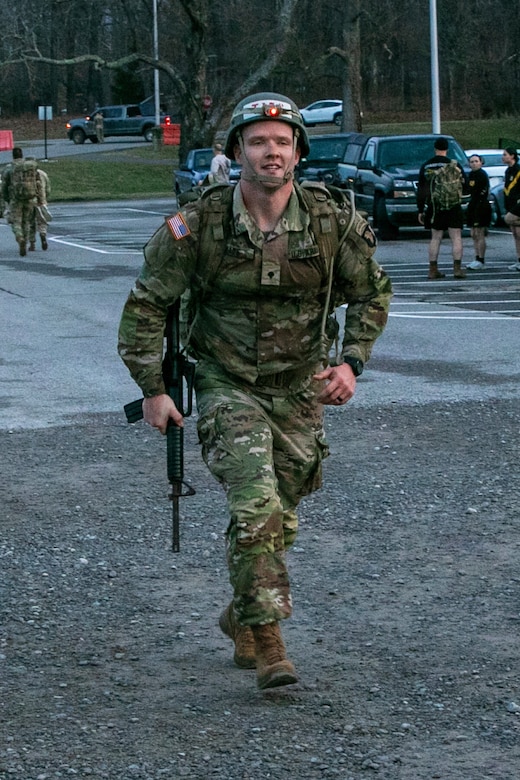
A man wearing a camouflage military uniform, rucksack and a tactical helmet smiles while carrying a rifle as he completes a march.

Having conquered the tower, technique demonstrations and helicopter rappel, only one event remained. His ruck weighed on his back as he stood beneath the schoolhouse arches, ready to begin the 12-mile march.

"Being out of the Army the last four years, I didn't really ruck," Wade said. "Mostly, I was just thinking I just have to get through this and we'll be good."

At 3:30 a.m., under cloud-filled skies, Wade began. With each mile, thoughts of earning the Air Assault Badge drove him. Twelve miles later, he passed beneath the arches. His time: two hours and 46 minutes. He finally achieved his goal.

"It feels just so surreal to experience this," he said. "If you have the grit, no matter how hard things get — if you keep going — you can accomplish your goals."

Wade's wife pinned on his wings at graduation, making it official. Wade is once again a soldier, and four years later, he is air assault qualified.

DoW Identifies Army Casualty

The Department of War announced the death of a Soldier who was supporting Operation Epic Fury.
 
Sgt. Benjamin N. Pennington, 26, of Glendale, Ky., died of his wounds on March 8, 2026, from injuries sustained during an enemy attack on March 1, 2026, at Prince Sultan Air Base, Saudi Arabia. The Soldier was assigned to 1st Space Battalion, 1st Space Brigade, Fort Carson, Colo. The incident is under investigation.
 
For more information regarding Sgt. Benjamin Pennington, members of the media may contact the U.S. Army Space and Missile Defense Command Public Affairs Office, Redstone Arsenal, Ala., at usarmy.redstone.smdc.mbx.public-affairs@army.mil.

DoW Identifies Army Casualty

The Department of War announced the death of a National Guard Soldier who was supporting Operation Spartan Shield.

Maj. Sorffly Davius, 46, of Cambria Heights, Queens, N.Y., died on March 6, 2026, in Camp Buehring, Kuwait, as a result of a non-combat related incident. The Soldier was assigned to the Headquarters, Headquarters Battalion, 42nd Infantry Division, Troy, N.Y. The incident is under investigation.

For more information regarding Maj. Sorffly Davius, members of the media may contact the U.S. Army National Guard Bureau Public Affairs at ng.ncr.ngb-arng.mbx.ngb-press-desk@army.mil.