Tuesday, August 04, 2026

Largest Pacific Joint Maritime Exercise Successfully Concludes

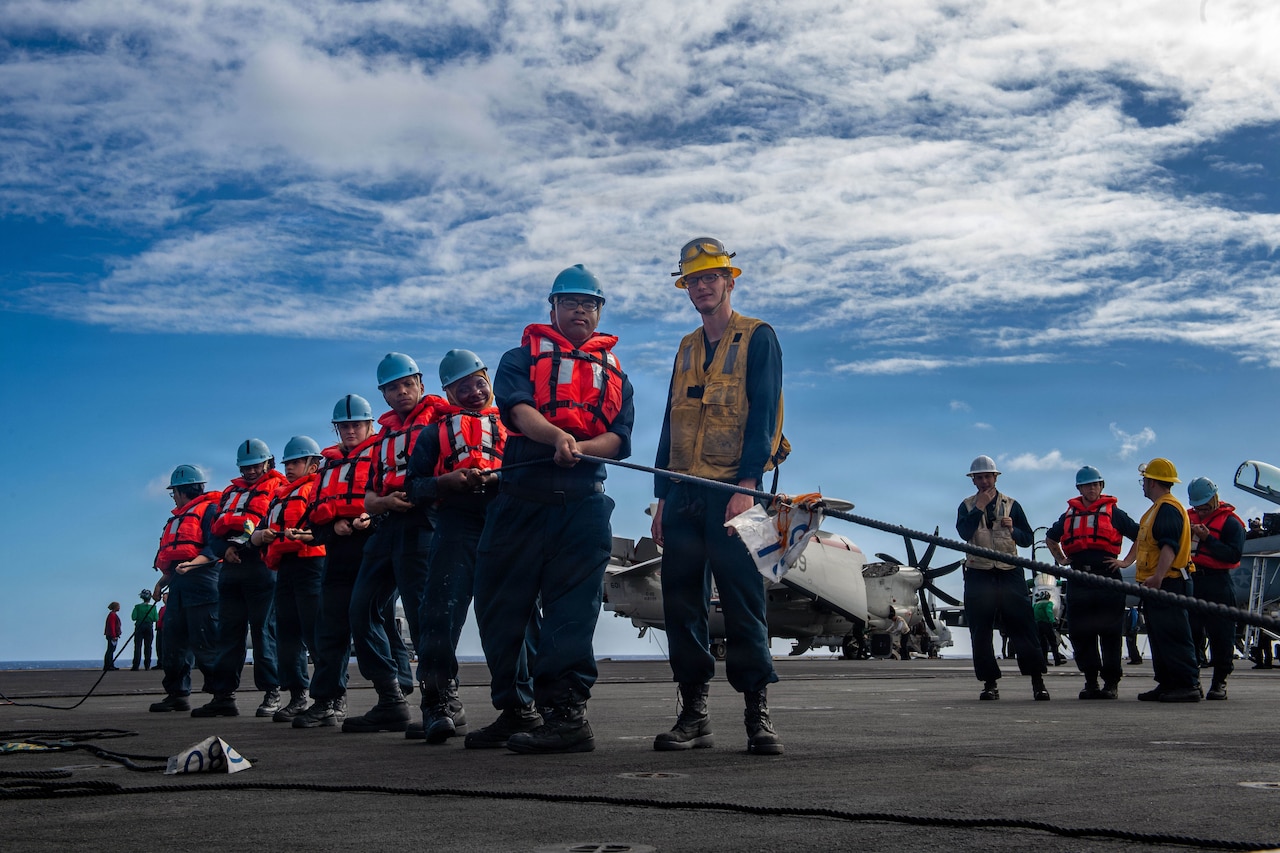
A line of people wearing safety vests and hard hats stand in a line and tug on a cable while on the deck of a ship.

The Exercise Rim of the Pacific 2026, the world's largest combined and joint maritime exercise, successfully concluded July 31. 

The 30th iteration of the biennial exercise began June 24, bringing together 30 nations, more than 30,000 personnel, 30 surface ships, five submarines and more than 197 aircraft under the theme "Partners: Integrated and Prepared."  

Throughout five weeks of realistic training, participating forces enhanced interoperability, strengthened readiness and reinforced the partnerships that support maritime security across the Pacific region. 

"No single nation can ensure security in the Pacific alone," said Navy Vice Adm. Jeff Jablon, commander of the Rimpac 2026 task force. "The global maritime environment is too large and too complex for any one country to safeguard by itself. Rimpac gives us the chance to build the trust and relationships that make us stronger long before any crisis happens." 

Rimpac 2026 was hosted by Commander, U.S. Pacific Fleet and spearheaded by U.S. 3rd Fleet. Multinational leaders were integrated throughout the exercise, with Japan Maritime Self-Defense Force Rear Adm. Takuo Kobayashi serving as vice commander of the task force and Chilean navy Commodore Andres Howard serving as task force deputy commander. Rear Adm. In-ho Kim from the South Korean navy served as commander of the combined force maritime component, and Royal Canadian Air Force Brig. Gen. J.S. Davis served as commander of the combined force air component.

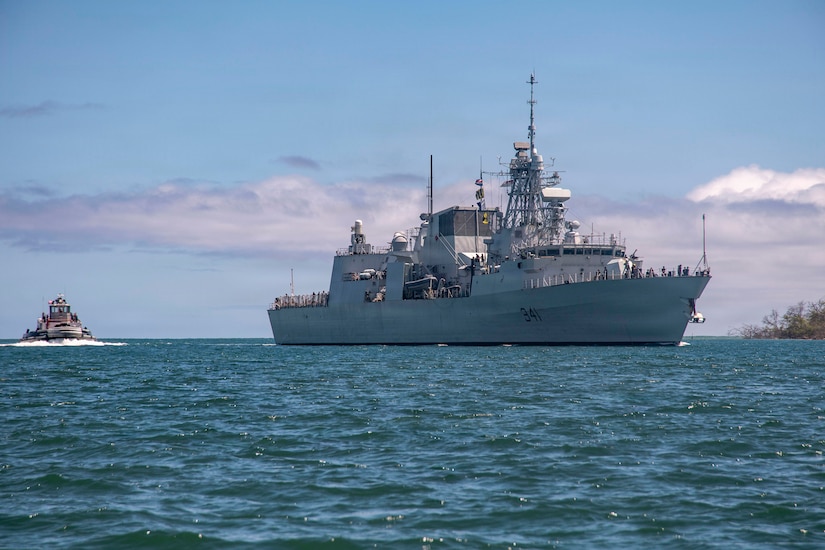
A large ship sails through water with a smaller boat behind it.

The exercise also coincided with the U.S. Navy's 250th anniversary, underscoring the enduring partnerships that continue to strengthen security across the Pacific. For 250 years, the Navy has worked alongside allies and partners to promote maritime security by building relationships founded on trust, cooperation, and shared values. Rimpac puts those principles into practice by providing a venue where participating forces train together, improve interoperability and strengthen the relationships that enable combined and joint operations.

"The network of allies and partners in the region is an asymmetric advantage," Jablon said. "The work participating nations do at Rimpac builds the combined and joint ability to deter conflict and supports all nations in exercising their sovereign rights and freedoms in the maritime domain." 

The exercise was conducted in three phases. During the in-port phase, participants established multinational command relationships, planned operations and strengthened partnerships through professional exchanges, cultural events and sporting competitions. During the at-sea phase, participating forces executed complex combined and joint training, including anti-submarine warfare, maritime strikes, integrated air and missile defense, amphibious operations and logistics. The exercise concluded with a free-play scenario in which opposing forces reacted dynamically to one another to evaluate the force's combined and joint maritime capabilities. 

Throughout the exercise, participating forces executed more than 500 maritime training events, flew more than 2,400 sorties and responded to more than 5,000 scenario-based operational problems.

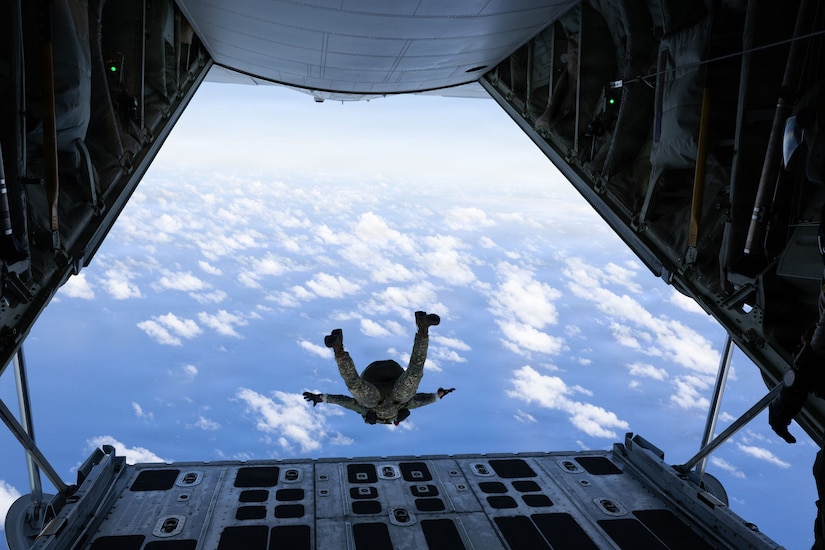
A person in a camouflage military uniform jumps from the back of an aircraft into a blue sky with clouds.

"Interoperability is something we must continue to develop," Kobayashi said. "Rimpac brings together allies and partners committed to strengthening security and stability across the region. The daily conversations, shared experiences and personal relationships developed throughout the exercise strengthen our ability to respond together, whether supporting maritime security or assisting communities following a disaster." 

Training alongside allies and partners in a realistic, multinational environment allows participating nations to improve their ability to operate in combined maritime operations, Kim said.  

"By training together in these complex scenarios, nations improve readiness, refine warfighting skills and build the teamwork needed to operate effectively side by side," he added.

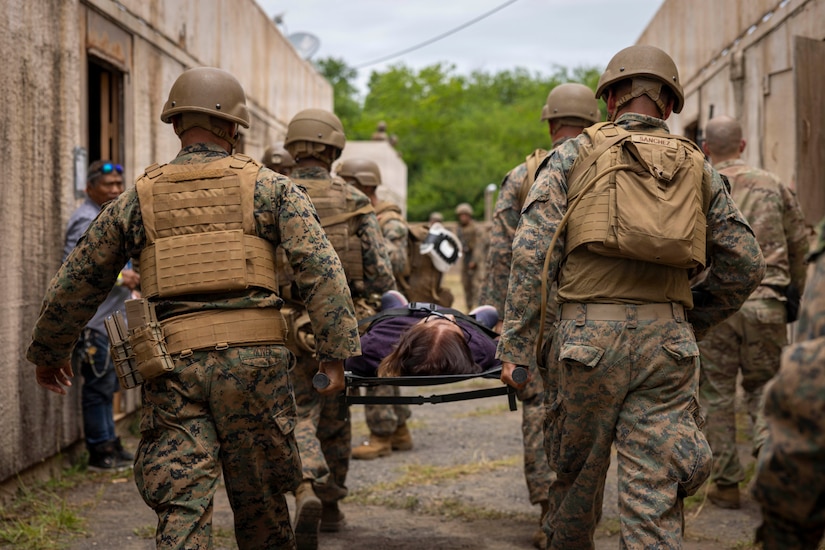
Four people in camouflage military uniforms and combat gear carry a litter with a

Rimpac 2026 demonstrated that maritime security is strengthened through trust, cooperation and shared values. By training together in a realistic operational environment, participating nations improved their ability to operate as a combined and joint force across the full spectrum of maritime operations.

Marine Expeditionary Unit Transits Panama Canal

The 24th Marine Expeditionary Unit — operating as Littoral Combat Force 24 — transited the Panama Canal, Aug. 1, aboard the amphibious transport dock USS San Antonio.

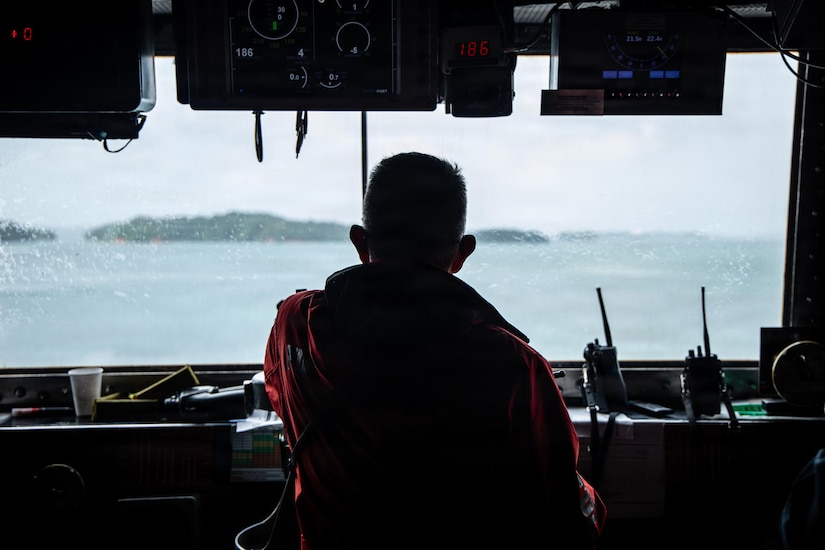
A man in a red jacket looks out a window in the dark bridge of a ship or building.

Marking the first time a Marine expeditionary unit has navigated the canal since 2008, this large-scale maneuver is a demonstration of the Marine Corps' capacity for rapid global mobility, maritime dominance and seamless power projection.

"This historic transit is a powerful testament to the flexibility and readiness of Littoral Combat Force 24," said Marine Corps Col. Ryan Lynch, LCF 24 commanding officer. "Our ability to seamlessly navigate this critical waterway alongside our Navy partners, aboard the USS San Antonio, demonstrates our capability to rapidly project power and respond to crises anywhere in the [U.S.] Southern Command area of responsibility. We are ready to operate straight from the sea, at a moment's notice."

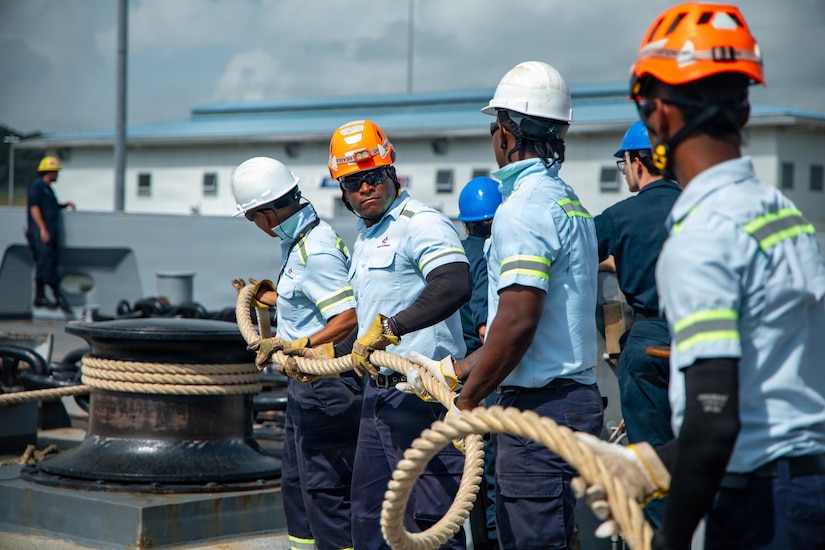
Four men in uniforms and hard hats secure a rope to a dock fitting.

The transit serves as a validation of the littoral combat force concept and the modern Marine air-ground task force. It proves the unit's ability to navigate narrow waterways and project assets ashore without relying on established military basing, underscoring the Marine Corps' enduring role as the nation's premier readiness force, perfectly calibrated for contested littoral regions.

The foundation of this capability is the unbreakable teamwork between the Navy and the Marine Corps. The interoperability displayed highlights a fully integrated naval force supporting combatant commander objectives.

Since its completion, the Panama Canal has served as a vital strategic pathway for the U.S. and its allies. The canal allows naval vessels to rapidly shift between the Atlantic and Pacific theaters, saving weeks of travel around South America.

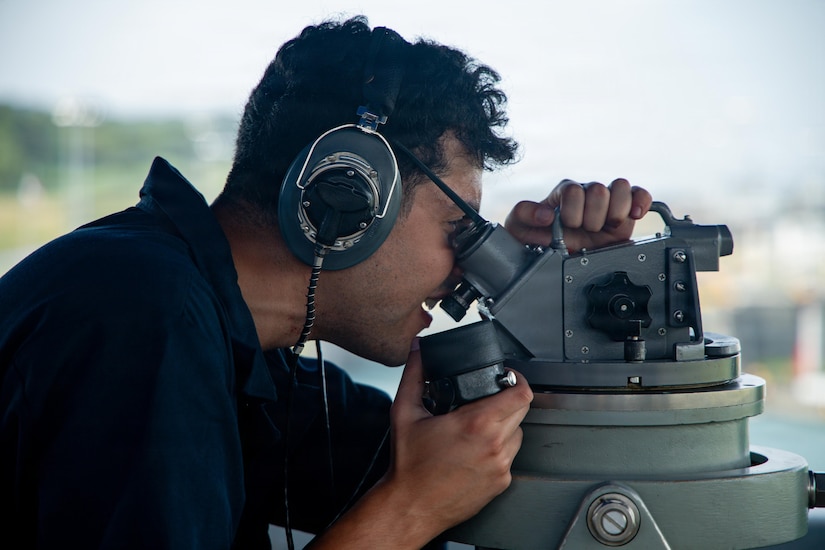
A man in a military uniform checks navigational equipment on a ship.
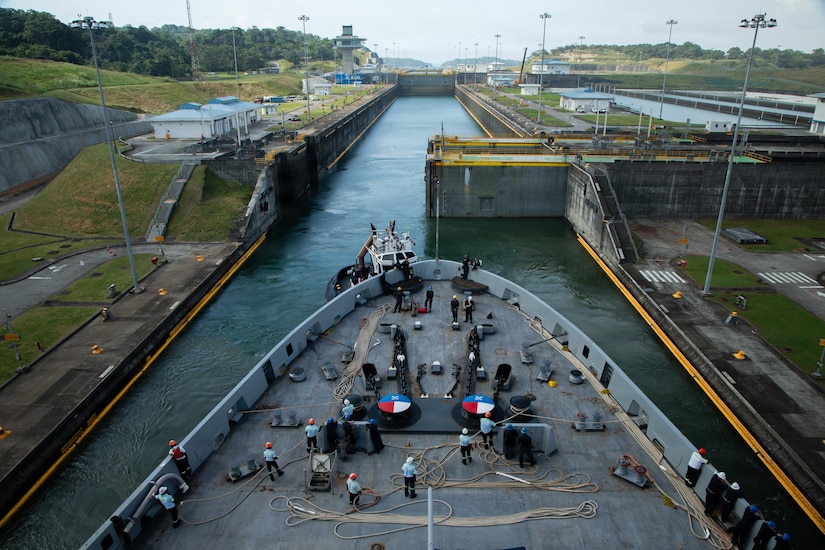
An overhead view of the bow of a large military ship as it transits a canal; there are several people in military uniforms and hard hats working on the deck of the ship.
Navigating this critical maritime shortcut ensures the U.S. military can maintain a flexible, responsive posture — surging ships and troops to meet emerging crises across hemispheres without delay.

By moving fluidly through the canal, the team proved its unrestricted access to the U.S. Southern Command area of responsibility, which spans Central and South America, and the Caribbean. Whether tasked with humanitarian disaster relief, bolstering regional partnerships or deterring aggression, this force can reach anywhere in the region to deliver tailored, decisive effects.

Medal of Honor Monday: Army Cpl. Jake Allex

 Aug. 3, 2026 | By David Vergun, Pentagon News

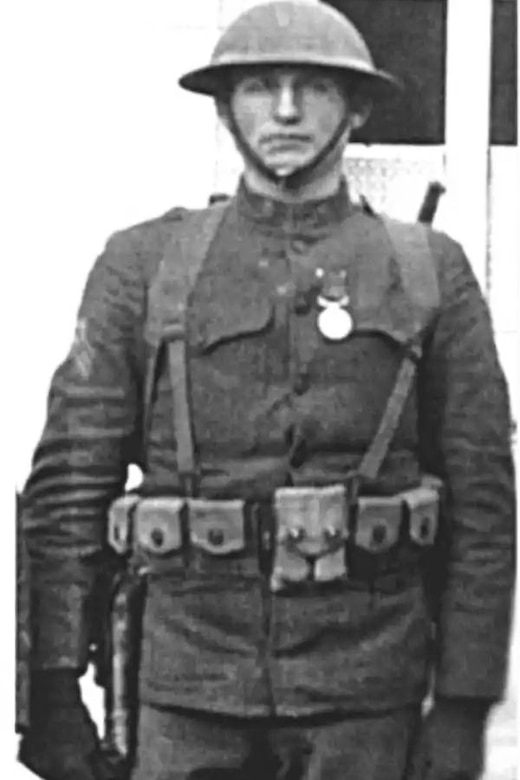
Army Cpl. Jake Allex earned the Medal of Honor for extraordinary courage while leading his men forward under heavy fire during the Battle of Amiens in World War I.

Allex was born Angelko Allex Mandushich July 13, 1887, in Streska, near Prizren, in the Kosovo Vilayet of the Ottoman Empire, present-day Kosovo. He was of ethnic Serbian descent, born to Sava A. Mandushich and Savka Sosevich.

A man wearing a combat uniform stands at attention.
He married Valinka Mandushich, per the 1930 U.S. census. They had two daughters and a son.

Allex immigrated to the United States, sailing from Bremen, Germany, about June 1912, according to his 1919 form requesting naturalization and a passport, and changed his name to Jake Allex.

He enlisted in the Illinois Army National Guard on April 27, 1917, just weeks after the United States entered World War I, April 6, 1917.

On the day Allex earned the Medal of Honor, Aug. 9, 1918, he was assigned to Company H, 131st Infantry Regiment, 33rd Infantry Division, at Chipilly Ridge, France, about 75 miles north of Paris.

His citation reads that at a critical point in the fighting, when the platoon commander and all the noncommissioned officers of his platoon become casualties, he took command and led the men forward until the advance was stopped by enemy machine-gun fire.

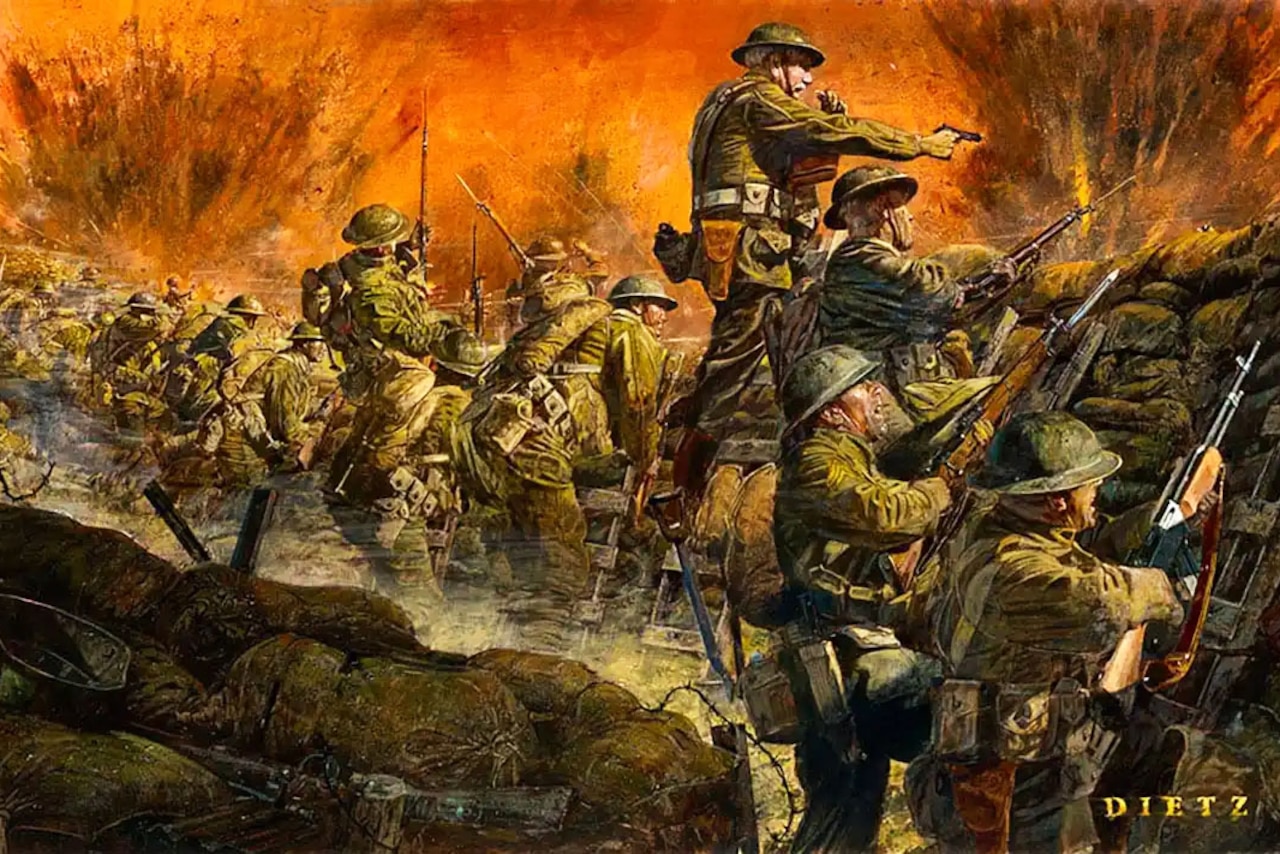
Allex then advanced alone for about 30 yards in the face of intense enemy fire and attacked the machine-gun nest. He killed five enemy soldiers with his bayonet, and when it broke, he used the butt of his rifle to smash the enemy. During the fighting, he captured 15 prisoners.

A painting of soldiers fighting behind a berm.

The action at Chipilly Ridge occurred during the Battle of Amiens, which took place Aug. 8-11, 1918. Allex and the rest of the 33rd Infantry Division would later fight in the Meuse-Argonne Offensive, the Second Battle of the Somme and the Battle of Saint-Mihiel.

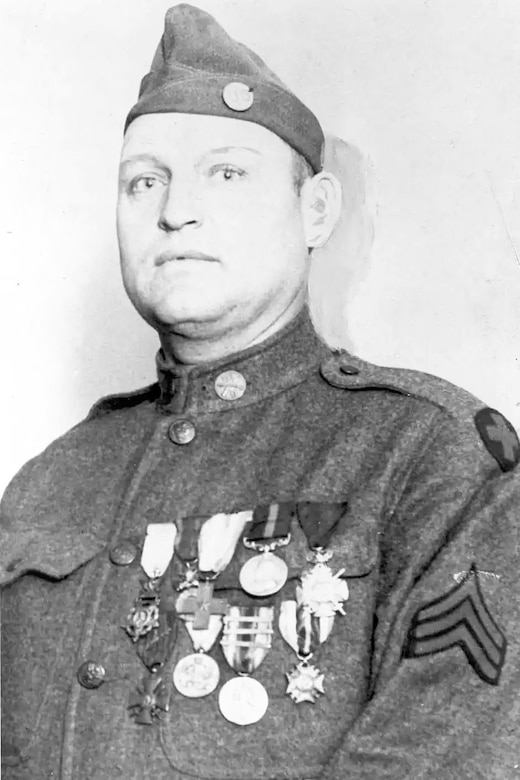
A man wearing a military uniform has medals around his left pocket.
The Medal of Honor was presented to Allex on April 22, 1919, in Ettelbruck, Luxembourg, by Army Gen. John J. Pershing, who commanded the American Expeditionary Forces during World War I.

Allex was honorably discharged from the Army on June 4, 1919, as a sergeant. He became a naturalized U.S. citizen Sept. 16, 1919.

After returning from the war, he worked for a time at the Morris & Co. meat-packing plant in Chicago, where the employees referred to him as Sgt. Jake. The 1930 U.S. census lists Allex as a construction foreman in Cook County, Illinois, and it also lists the value of his home at $1,800.

In 1931, Allex, who was a member of the Veterans of Foreign Wars, was invited by the Illinois governor to attend an address by President Herbert Hoover at the Lincoln Tomb in Springfield, Illinois, which he accepted.

Allex retired from the Chicago municipal water department in 1954. In December 1958, the Disabled American Veterans of Illinois presented him with a color television. Most people had black-and-white televisions at that time.

He died Aug. 28, 1959, and was buried at the Serbian Orthodox Cemetery and Monastery of Saint Sava in Libertyville, Illinois.

Oregon Guard Aircrews Support State Wildfire Response


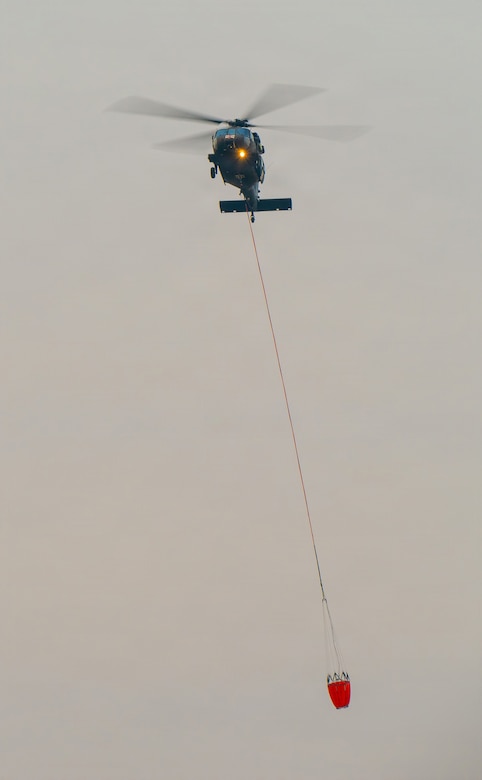
Two Oregon Army National Guard CH-47 Chinook helicopters and two HH-60M Black Hawk helicopters began water bucket operations, July 29, in support of wildland firefighting efforts on the Hagen Fire in Umatilla County, part of a broader Oregon National Guard response to the state's wildfire season. 

As of July 29, the fire had burned approximately 33,504 acres and was 3% contained, according to the Oregon Department of Forestry. Aircrews completed 44 water bucket drops that day, delivering approximately 50,000 gallons of water on the fire. 

The aircraft, flying out of Army Aviation Support Facility No. 2 in Pendleton, Oregon, home to the Oregon Army National Guard's CH-47 fleet, received its state active-duty activation order and completed joint reception, staging, onward movement and integration, July 28.

A helicopter flies through wildfire smoke carrying a water bucket connected to a cable.

"Currently, we're activated on state active duty for forest fires," said Army Maj. Taylor Fry, Army Aviation Support Facility No. 2 operations officer. "We have two CH-47s and crews that are out fighting these fires, along with two Black Hawks ... to support our local community, to save land, to save livestock and to save homes." 

Fry said coordination with the Oregon Department of Forestry and partner agencies has been close, aided this year by fire management support from California. 

"We work very well with them and have for many years," Fry said. "We have a couple of representatives from [the California Department of Forestry and Fire Protection] up here this year, helping us out with our helicopter management and coordination with them." 

Behind every aircraft in the air is a maintenance team working to keep it there. Army Staff Sgt. Amanda Hickman, an Army Aviation Support Facility No. 2 aircraft systems supervisor, oversees the ground crew responsible for keeping the Chinooks flight-ready, including the water buckets themselves.  

"There's a lot that goes into making sure that our buckets are operational," Hickman said. "The mechanics spend a lot of time making sure that all of our faults are minimized the best that we can. I do a little bit of production control, so a lot goes into verifying how much time I have available on each aircraft and then setting priorities for which aircraft can fly and how many hours each aircraft can fly." 

Hickman, who has served in the Oregon Army National Guard for 20 years, said aircraft turnaround time depends heavily on parts availability and keeping them flying is one of the least visible but most demanding parts of the mission.  

"I like that the National Guard is being used for something to help our community, and so if I can play a part in helping the community, that's what I want to do," she said. 

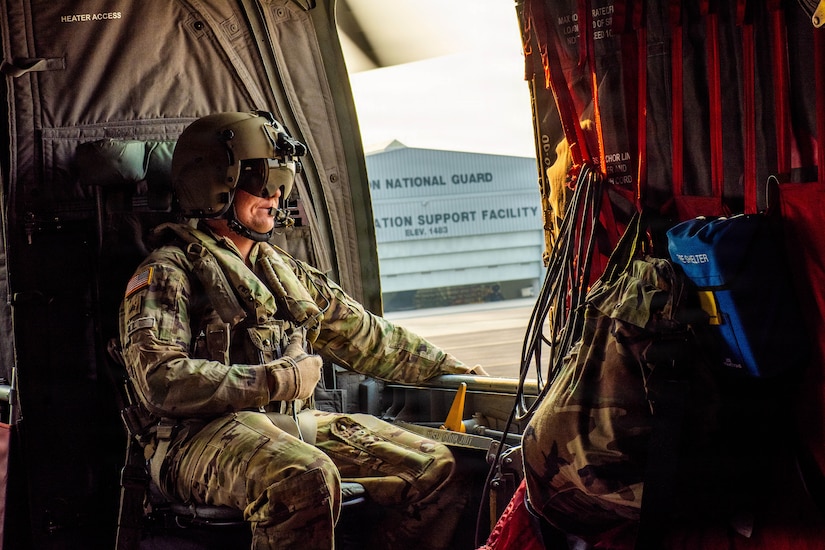
A man wearing a military camouflage uniform and flight helmet sits inside of a helicopter as it prepares to lift off.

Once a Chinook is airborne, its crew chief takes on responsibility for the bucket itself. Army Sgt. Isaiah Torres, a Chinook crew chief, said the process starts well before the aircraft ever reaches a fire. 

"It's almost the same as for any other flight, except you have to get the bucket ready," he said. "We get our bucket staged ... inspect the bucket, make sure valves are good. We do an [operational] check before we actually take the bucket to the target site." 

In flight, he said two crew members work in the back of the aircraft to guide the pilots over the fire and monitor the load. The crew chief hits the trigger to release the water and then the aircraft returns to the dip site to load up again.  

Torres, who has served as a crew chief for two years, said the mission carries a sense of purpose. 

"It's better than just training flights. I think we're actually doing our job, which I enjoy," he said. "I've never been in a helicopter before the Army, so it's a pretty cool experience." 

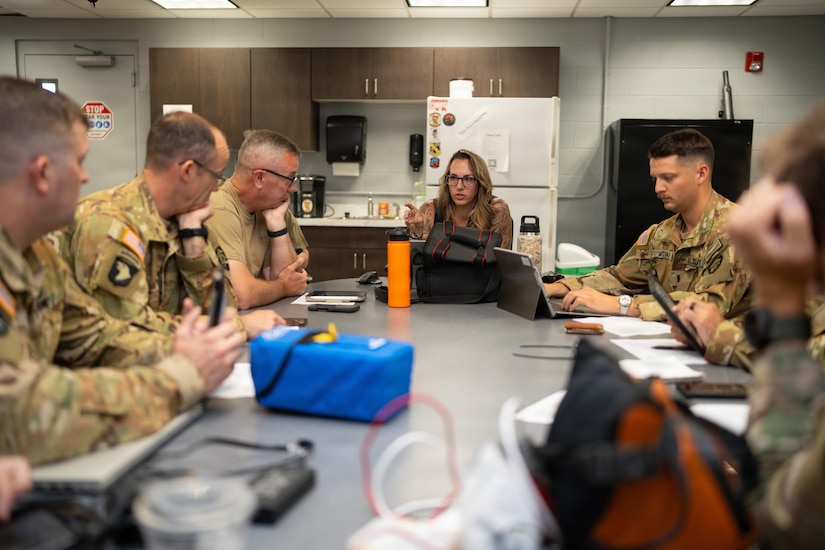
A woman sits at the head of a table in a meeting room and briefs people dressed in military camouflage uniforms sitting to the left and right of her.

Fry said the biggest challenge of sustaining the mission isn't equipment or coordination, but people — Oregon Army National Guardsmen balance activation with civilian jobs and families during peak summer months. 

"It takes our citizen soldiers away from their full-time jobs and their families," Fry said. "But the best part about this organization is that everybody is willing to do that, and everybody is willing to give up their summers and their time to come and support this mission." 

Fry added that the guardsmen flying and maintaining the aircraft are, in many cases, the same people Oregonians see every day. 

"These people are your neighbors. They're your friends," Fry said. "They're out here supporting you, supporting the state and supporting our interests to keep the state safe and beautiful." 

According to the Oregon Department of Forestry, the National Guard aircraft are expected to continue supporting firefighting efforts as long as needed, based on ground conditions.