Friday, June 05, 2026

Maine Air National Guard Surges Support for Operation Epic Fury

 June 5, 2026 | By Air Force Senior Master Sgt. Andrew Sinclair, 101st Air Refueling Wing

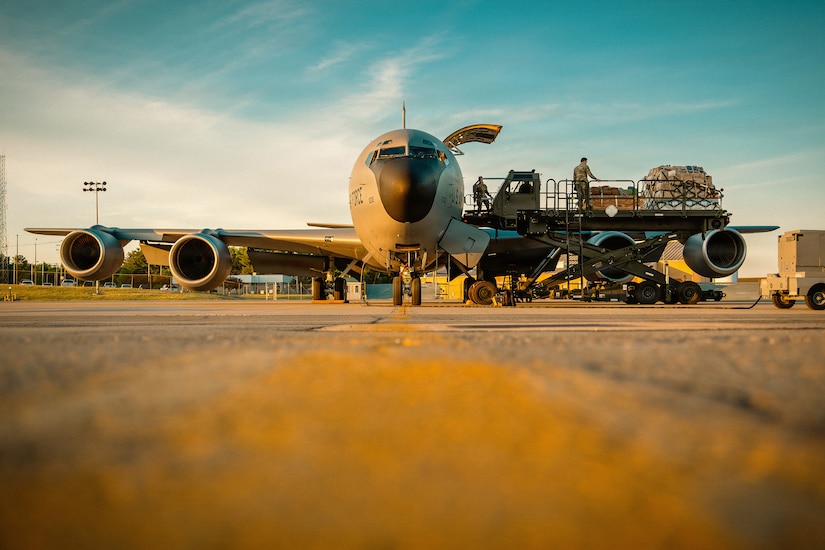
A large military aircraft sits on a flight line with the door open as people in camouflage military uniforms load cargo.

Air Transportation Function airmen assigned to the Maine Air National Guard's 101st Air Refueling Wing helped move more than 747,000 pounds of cargo and 312 passengers since the start of Operation Epic Fury.  

The effort helps keep vital supplies flowing to the U.S. Central Command area of operations. 

Since the operation began, the wing's distribution team has handled 302 pieces of cargo, including loose items, shipping containers, baggage pallets, hazardous explosives, weapons systems awaiting parts and miscellaneous aircraft parts. The team supported 97 missions made up of 15 C-17 Globemaster III aircraft, four KC-46 Pegasus aircraft, 76 KC-135 Stratotankers, two C-130J Super Hercules aircraft and one C-5 Galaxy, while also managing 67,472 pounds of passenger weight. 

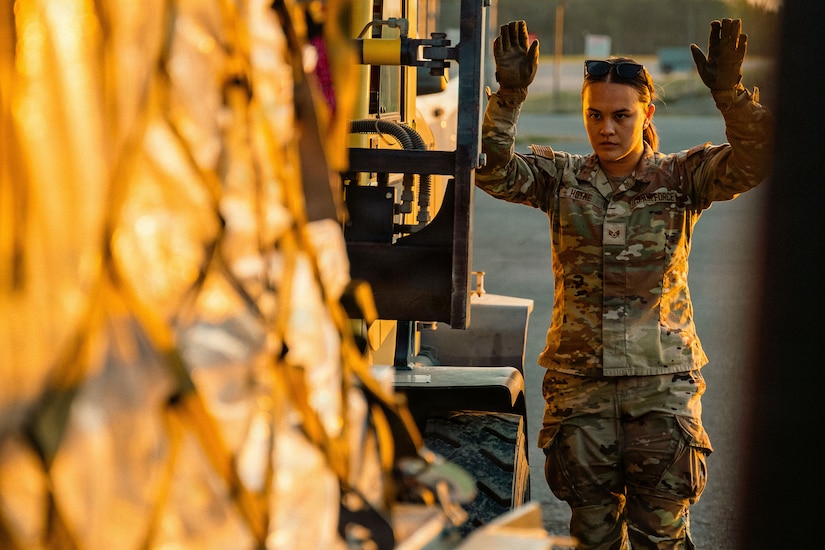
A woman in a camouflage military uniform directs a military loading machine carrying a pallet of supplies.
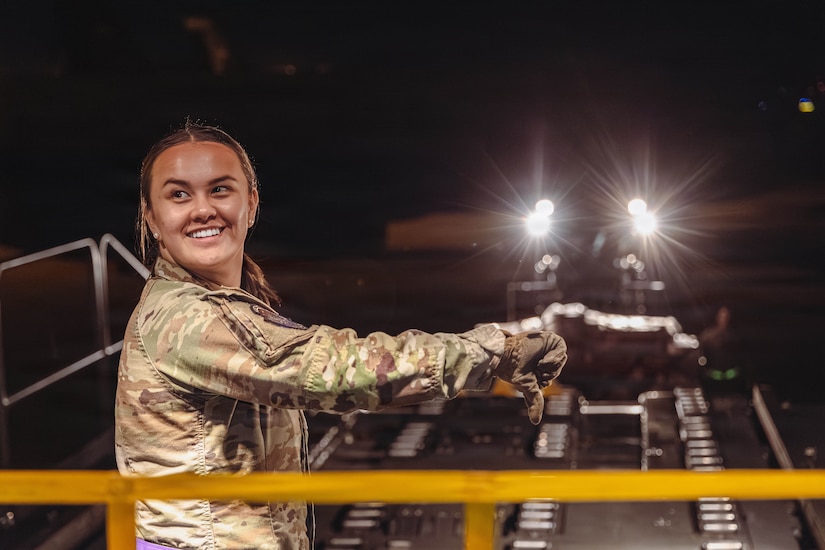
A woman in a camouflage military uniform smiles and looks back while giving a thumbs down during the evening hours on a flight line. Vehicle headlights shine in the distance.
The team received 70 inbound nonmilitary shipments from vendors, Air Mobility Command and other organizations headed for the Centcom area of responsibility. Outbound, they packed, marked, labeled and processed 394 shipments under the military standard requisitioning and issue procedure — weighing about 5,000 pounds. 

To keep up with the faster pace, distribution members from five different units, plus one civil engineering airman, joined the wing. These augmentees brought valuable experience in cargo and passenger operations. Among them was Air Force Staff Sgt. Eric LeFave, an air terminal operations center information controller assigned to Pease Air National Guard Base in New Hampshire. 

"So far, my job here has been assisting in the forward movement of mostly critical cargo and [mission impaired capability awaiting parts] to support my fellow wingmen and broken aircraft downrange," LeFave said. 

The work has special meaning for LeFave, who returned from overseas in October. 

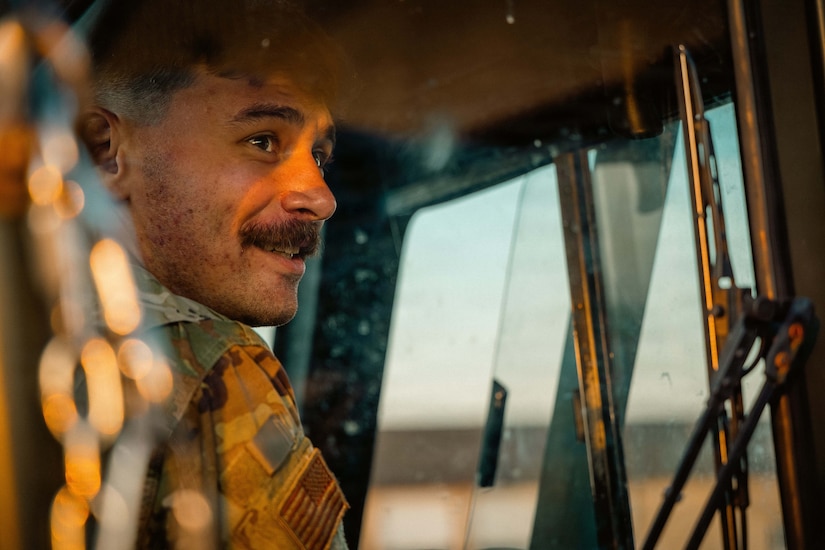
A man in a camouflage military uniform looks out the window of a military loading vehicle.

"I know who's currently out in the Middle East and helped get them spun up before I left," he said. "Being able to come up here to Maine and help get them anything they need is important to me. This is the job, and this is what I signed up for. I give this career my best because that's what the Air Force needs at all times."

Air Force Chief Master Sgt. Grady Thurlow borrowed three additional pieces of material handling equipment from partner units to keep cargo moving smoothly. Ground transportation crew members also borrowed an extra bus from a geographically separated unit in South Portland. 

"The true measure of this team was tested during the heightened operational tempo," said Air Force Capt. Alyssa Nelson, a distribution officer assigned to the wing. "The willingness of other units to integrate into our operations reflects the highest standard of teamwork. The collaborative effort not only builds professional relationships but is vital to mission success."

U.S. Navy to Christen Future USNS Thurgood Marshall

The U.S. Navy will christen its newest John Lewis-class fleet replenishment oiler, USNS Thurgood Marshall (T-AO 211), during a 10 a.m. PDT ceremony on Saturday, June 6, 2026, at General Dynamics National Steel and Shipbuilding Company (NASSCO) shipyard in San Diego, California.

Marine Corps Maj. Gen. David Bligh, Judge Advocate General of the Navy, will deliver the principal address. Additional remarks will be provided by Vice Adm. Doug Verissimo, Commander, Naval Air Forces/Commander, Naval Air Force, U.S. Pacific Fleet; Rear Adm. Benjamin Nicholson, Commander, Military Sealift Command; and David Carver, President of General Dynamics NASSCO.

In a time-honored tradition, the ship sponsors, the namesake's granddaughters, Cecilia L. Marshall and Melonie Tibbs, and granddaughter-in-law, Alissa Kamens Marshall, will christen the ship by breaking a bottle of champagne across the bow.

T-AO 211 is named in honor of former Justice Thurgood Marshall, who served on the Supreme Court for nearly 25 years. The future USNS Thurgood Marshall (T-AO 211) is the seventh ship of the John Lewis-class fleet replenishment oilers and will be operated by the Navy's Military Sealift Command.

The John Lewis-class ships are based on commercial design standards and will recapitalize the current T-AO 187-class fleet replenishment oilers to provide underway replenishment of fuel to U.S. Navy ships at sea. These ships are part of the Navy's Combat Logistics Force.

The future USNS Thurgood Marshall (T-AO 211) represents a proud lineage, serving as the thirteenth naval support logistics ship to be named in honor of a U.S. Supreme Court Justice. This tradition began in 1942 with the launch of the EC2-S-C1 liberty cargo ship SS John Jay, which provided vital wartime support by transporting essential military cargo to build the massive logistics reserve required for Operation Neptune — the historic D-Day landings.

As we commemorate the anniversary of D-Day today, we remember a hard-won victory that dramatically reshaped the course of human history, bringing the promise of freedom to generations worldwide. Yet, this monumental triumph would not have been possible without the unprecedented Allied shipbuilding programs that preceded the war, and the tireless logistics and replenishment ships that sustained the fight — delivering the critical fuel, ammunition, and supplies that kept our troops and Allied partners moving forward to victory.

Echoing the historic mission of the SS John Jay, the addition of T-AO 211 to the fleet provides the Navy with a reinforced ability to sustain distributed maritime operations, enhance mobility, and deliver the critical resupply capacity needed to support a more resilient, ready, and globally present fleet.

The christening of T-AO 211 underscores the Navy's commitment to building America's Fleet of the Future. For 250 years, American naval power has projected strength globally. That mission continues — and intensifies. We operate forward 24/7, 365 days a year. This operational tempo demands continuous capability delivery, and the Fleet of the Future is our answer

Washington National Guard Builds Counter-UAS Partnerships Ahead of World Cup 2026

As unmanned aerial systems continue to evolve from recreational tools into potential threats to public safety, critical infrastructure and major public events, the Washington National Guard is positioning itself at the forefront of counter-UAS training and readiness.

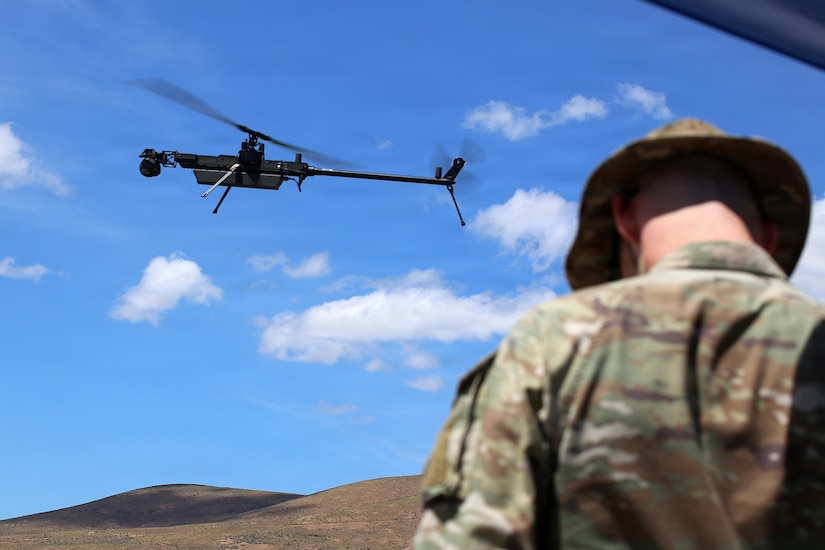
A drone flies in a blue sky with clouds as a rear-facing person in a camouflage military uniform looks down to pilot it; hills are in the distance.

Representatives from federal, state and local law enforcement agencies gathered for a counter-UAS field demonstration day at the Yakima Training Center, Washington, June 2.  
 
The event included multiple active-duty and National Guard units, state defense forces, the Washington Emergency Management Division and the Civil Air Patrol. It showcased emerging technologies and operational tactics designed to detect, track and mitigate drone threats while highlighting the Washington National Guard's growing role in developing a regional schoolhouse for counter-UAS training and innovation. 
 
Air Force Maj. Gen. Gent Welsh, the adjutant general and homeland security advisor for Washington, said the event represents a milestone not only for Washington but for the nation. 

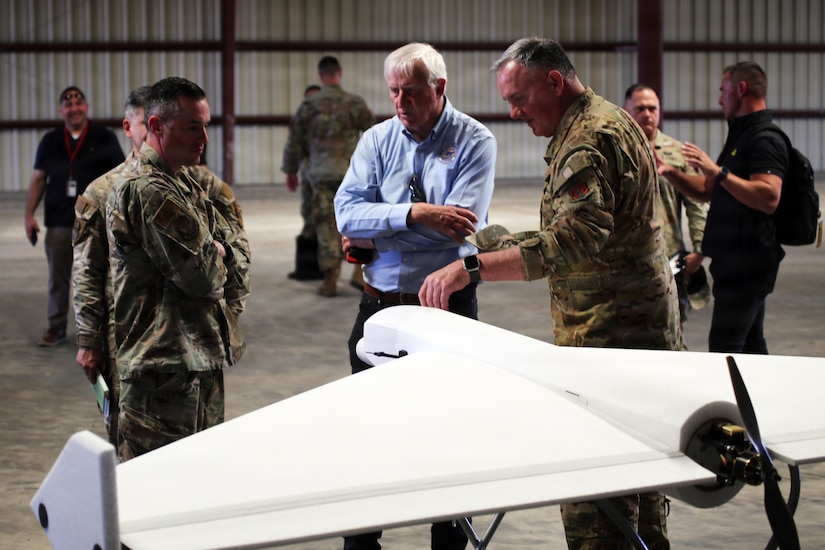
Nearly a dozen people, some in camouflage military uniforms and others in casual attire, stand and talk in a hangar; a white drone sits on the floor in the foreground.

 
"When you look at all the FIFA states, all the FIFA cities and all the different challenges that people are dealing with, Washington is the only state that actually brought people together to rehearse and discuss any of this stuff," Welsh said. "This is the only one-of-its-kind event in the entire country that's going on." 
 
The demonstration marked the latest step in a yearlong effort by the Washington Military Department and Washington National Guard to build a comprehensive counter-UAS program ahead of the FIFA World Cup 2026, which will bring millions of visitors to the greater Seattle area. 
 
Recognizing the growing threat posed by UASs, the Washington Military Department hosted a counter-UAS summit in late 2025, which brought together leaders from government, public safety, academia and industry to discuss emerging challenges and opportunities in the rapidly evolving drone environment. The summit laid the groundwork for expanded partnerships and highlighted the need for a coordinated approach to airspace security. 
 
Building on that momentum, the Washington National Guard's Western Regional Counterdrug Training Center launched a counter-UAS fundamentals course to provide military, law enforcement and public safety professionals with foundational training in drone detection, identification, legal authorities and response planning. The program has attracted interest from agencies across the region as organizations prepare for large-scale public events and the growing presence of drones in everyday life. 
 
"A year ago, we were not in this space," said FBI agent Phil Randolph. "A year ago, we wouldn't have thought about drone detection around NFL stadiums. Now we're leaning forward." 
 
Among those preparing for the challenges ahead is the Seattle Police Department, which sent officers to specialized counter-UAS training in Huntsville, Alabama, as part of its preparations for the FIFA World Cup.  
 
While preparations for the World Cup have helped accelerate the effort, Welsh emphasized that the challenge extends far beyond a single event. 
 
"Don't just look at this as, 'Hey, we've got to get through FIFA, and then we'll go back to work,'" Welsh said. "We're going to be dealing with the threat for the rest of our lives." 
 
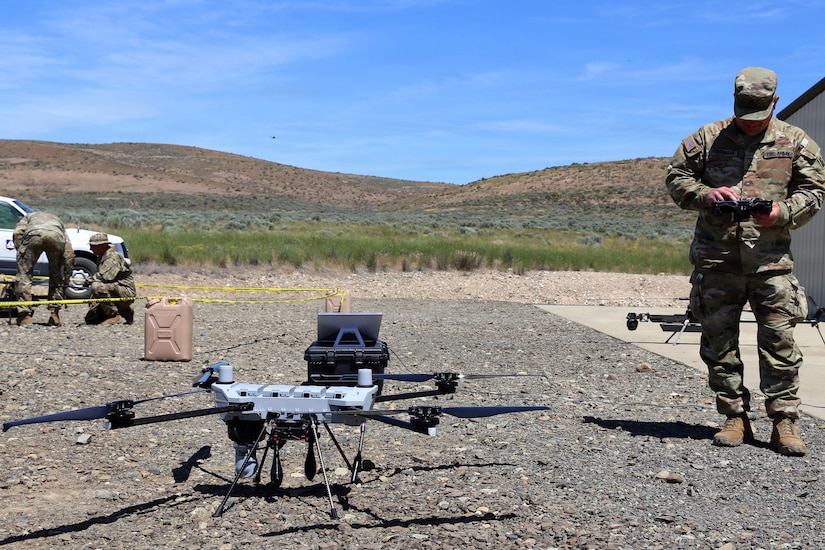
During the counter-UAS field demonstration day, participants observed a series of live demonstrations showcasing drone detection systems, swarm operations, interception techniques, radio-frequency mitigation capabilities and render-safe procedures. Attendees evaluated emerging technologies while discussing how those capabilities could be integrated into real-world operations. 

A drone sits on rocky terrain as a man in a camouflage military uniform looks down to pilot it; people in similar attire are in the background, and hills are in the distance.

 
For Washington National Guard leaders, Yakima Training Center also offers an ideal location to expand those efforts. 
 
"This really is the Kevin Costner moment from 'Field of Dreams,'" said Army Col. Phillip Lamb, Washington National Guard's senior Army advisor. "We have 327,000 acres of untouched, unobstructed training area right here at Yakima Training Center." 
 
Lamb, who served as the garrison commander for Joint Base Lewis-McChord, Washington, which also covers Yakima Training Center, said the installation's vast maneuver space provides a unique environment for agencies to train together, test emerging technologies and conduct realistic counter-UAS operations. 
 
"We can do a lot here and host so many organizations here," he said. "This space is underutilized, and I would love to see Yakima Training Center become that place that leads the way in counter-UAS." 
 
That vision extends beyond individual demonstrations and training events. 
 
"We want to build an Army counter-UAS center of excellence right here at Yakima Training Center," said Army Col. Craig Broyles, Washington National Guard's counterdrug program director. 
 
Broyles noted that the installation already possesses many of the resources necessary to support a comprehensive training pipeline. 
 
"We have the classroom space for the beginner-level instruction and the training areas needed for practical exercises and advanced courses," he said. 

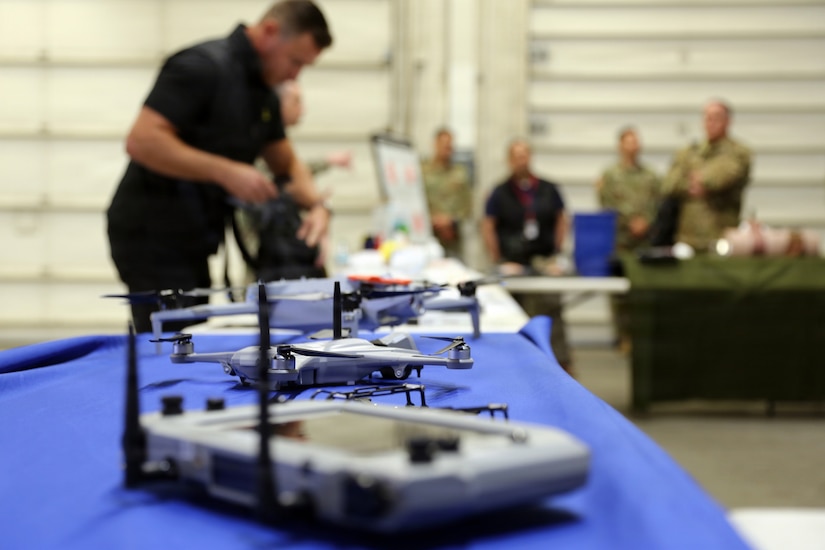
A close-up of several drones and remote controls sitting on a table; people in camouflage military uniforms and others in casual attire stand in the background.

 
Welsh said recent organizational changes have further strengthened the state's ability to address emerging aerial threats. 
 
"Bringing the Civil Air Patrol under the Washington Military Department has elevated our capabilities in the counter-UAS environment," he said. 
 
As drone technology becomes increasingly affordable and accessible, public safety officials continue working to develop policies, procedures and capabilities that can keep pace with a rapidly evolving threat environment. 
 
"Unmanned aircraft systems provide significant benefits for commercial, agricultural and public safety applications, but their potential misuse requires government agencies to remain vigilant," Welsh said. "Some people look at these drones and see a great tool to do agricultural spraying with; I look at these things, and I literally see an [improvised explosive device] with wings." 
 
For the Washington National Guard, the demonstration represented more than a technology showcase. It provided a glimpse into the future of counter-UAS training and highlighted Washington's efforts to bring together military, law enforcement, emergency management and industry partners to stay ahead of emerging threats.  
 
As preparations continue for the FIFA World Cup and other major events, leaders believe the partnerships, training opportunities and capabilities developed at the Yakima Training Center will help shape the future of counter-UAS operations not only in Washington but across the nation.
Signers of the Declaration of Independence: Georgia

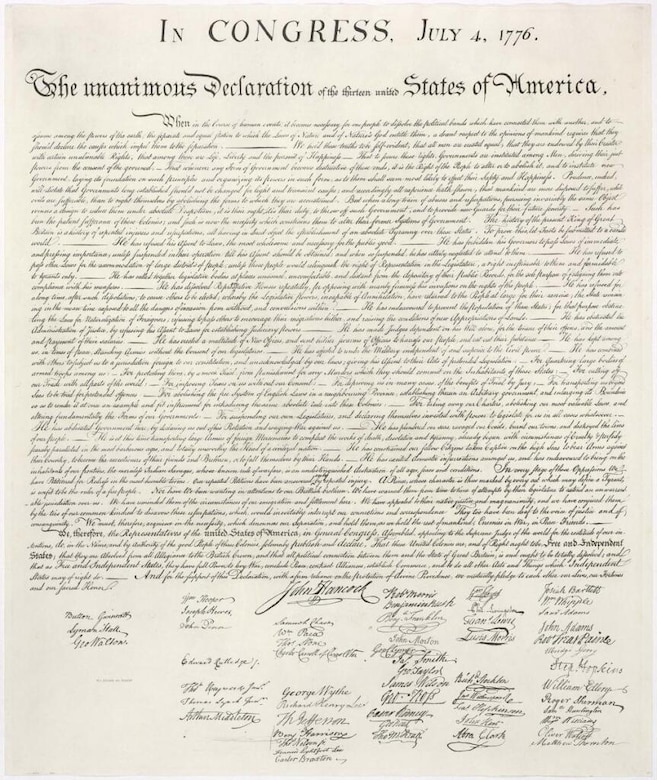
Delegates to the Second Continental Congress adopted the Declaration of Independence July 4, 1776. The 56 delegates who signed the formal break from Britain are all considered Founding Fathers; three represented Georgia.  

A document written in cursive with many signatures.

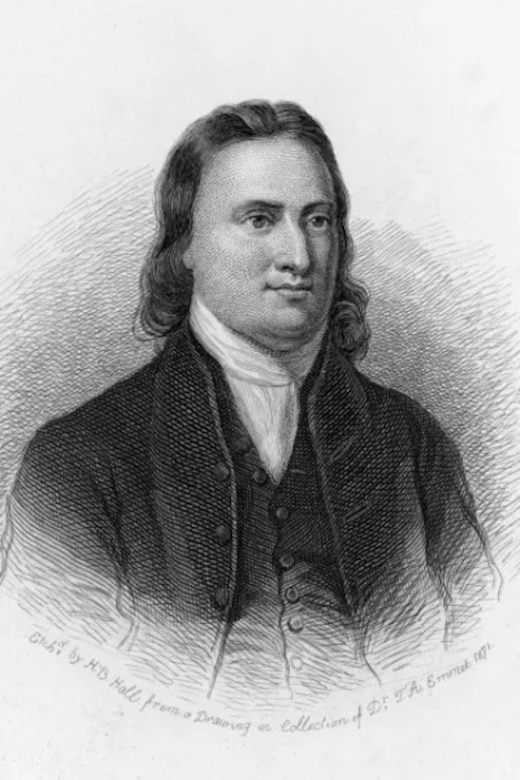
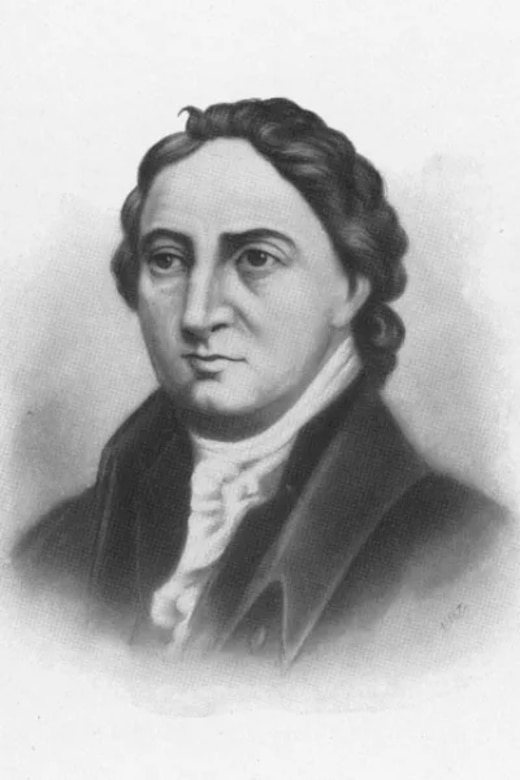
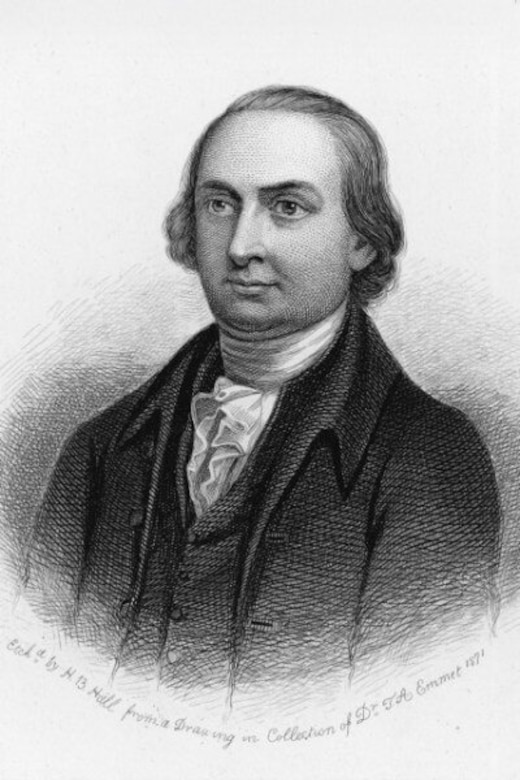
The Georgia delegates included Button Gwinnett, Lyman Hall and George Walton. Their signatures are on the far left of the document.

Button Gwinnett

Gwinnett was born in Gloucestershire, England, March 3, 1735, to the Rev. Samuel Gwinnett and his wife, Anne.

His early work included selling fruits and vegetables and metal work.

A black and white illustration of a man in formal attire.

On April 19, 1757, he married Ann Bourne. By 1762, the couple had three daughters and began moving to various places in North America in search of opportunities. 

In 1765, he moved to the Georgia coast, eventually settling on a plantation on St. Catherine's Island, where he met Hall. He held several political positions, and in 1775, Gwinnett joined Hall in Philadelphia at the Second Continental Congress.

After signing the declaration, he was elected speaker of the Georgia assembly.

In 1777, after the failed attack by Georgia troops on British East Florida, Gwinnett argued with Continental Army Brig. Gen. Lachlan McIntosh.

Reportedly, McIntosh called Gwinnett "a scoundrel and lying rascal." As a result, Gwinnett challenged McIntosh to a duel on May 16, 1777. The two stood 12 paces apart and fired their pistols; both were shot, but Gwinnett's wound eventually proved fatal.

Gwinnett died May 19, 1777, from an infected gunshot wound, and is buried in Colonial Park Cemetery, Savannah, Georgia.

Gwinnett County, Georgia, is named after him, as was the SS Button Gwinnett, a World War II Liberty ship launched in May 1943.

Lyman Hall

Hall was born April 12, 1724, in Wallingford, Connecticut. His parents were John and Mary Hall; John Hall was a minister. In 1747, he graduated from Yale College. For a brief time, he served as a minister, following in his father's footsteps.

A black and white illustration of a man in formal attire.

He married Abigail Burr in 1752, but she died a year later. He married Mary Osborne in 1757, and they moved to South Carolina, where he worked as a physician. Shortly before the Revolutionary War, they moved to Georgia, and in 1783, just before it ended, he was elected governor of Georgia.

Hall later left politics to resume a career in medicine. He died Oct. 19, 1790, and was buried on his land overlooking the Savannah River.

Hall's remains were exhumed in 1848 and reinterred beneath the Signers Monument, an obelisk that stands in front of what is now the Augusta, Georgia, Municipal Center. The obelisk memorializes the three Georgia representatives who signed the Declaration of Independence.

Hall County, Georgia, is named for him.

George Walton

Walton was born in Cumberland County, Virginia, around the middle of the 18th century. His parents, Robert and Mary Walton, both died before he was 12, and his uncle adopted him. He grew up poor and apprenticed as a carpenter, but he studied at night.

In 1769, Walton moved to Savannah, Georgia, to study law.

A black and white illustration of a man in formal attire.

During the Revolutionary War, he was a militia colonel in the First Georgia Regiment.

During the Battle of Savannah in 1778, he was wounded and taken prisoner by the British. In a 1779 prisoner exchange, he was released. He held several political positions, including secretary of the Georgia provincial congress, the Continental Congress and governor of Georgia.

In 1795, he was appointed to the U.S. Senate. He died Feb. 2, 1804, and was buried at Rosney Cemetery in Augusta. In 1848, his remains were exhumed and reinterred beneath the Signers Monument with Hall.

Walton County, Georgia, is named after him.

This is the first installment in a series of articles about the men who signed the Declaration of Independence. The 56 delegates to the Second Continental Congress, representing the 13 colonies, are all considered Founding Fathers.