Showing posts with label u.s. navy. Show all posts

Wednesday, August 19, 2026

Exercise Northern Viking Marks 75 Years of Defense Cooperation

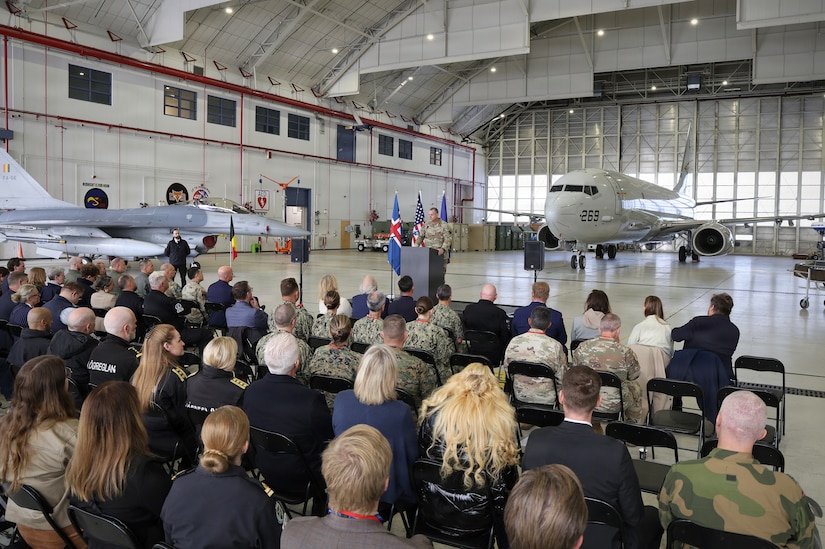
U.S. service members arrived in Keflavik, Iceland, yesterday, joining forces with the Icelandic Coast Guard and other NATO allies for the U.S. 6th Fleet's Exercise Northern Viking 2026.

A man in a camouflage military uniform speaks to dozens of people in similar attire and business attire seated in an aircraft hangar; there are two military aircraft in the background.

Participating nations include Belgium, Denmark, France, Iceland, Norway, Poland and the U.S., alongside specialized assets and personnel assigned to the Allied Maritime Command and NATO Joint Force Command Norfolk.

"Our defense cooperation with the United States has thrived for 75 years because it has never stood still; it has developed to meet [the] evolving challenges of our time," said Þorgerður Katrín Gunnarsdóttir, Iceland's minister for foreign affairs, during the exercise's opening ceremony. "The best way to celebrate this anniversary is not merely by commemorating our partnership, but by actually practicing it — together and alongside our allies. Northern Viking is precisely that, a demonstration that the commitments we have made to one another are dynamic, practical and built on trust, underpinned by shared interests."

This year's iteration of the biennial exercise marks the 75th anniversary of the 1951 bilateral defense agreement between Iceland and the U.S. Running from Aug. 22 to Sept. 3, Northern Viking will challenge joint and coalition forces with a series of highly realistic training scenarios.

Key training opportunities will focus on antisubmarine warfare, mine countermeasures, expeditionary construction, search and rescue, humanitarian medical response and disaster response.

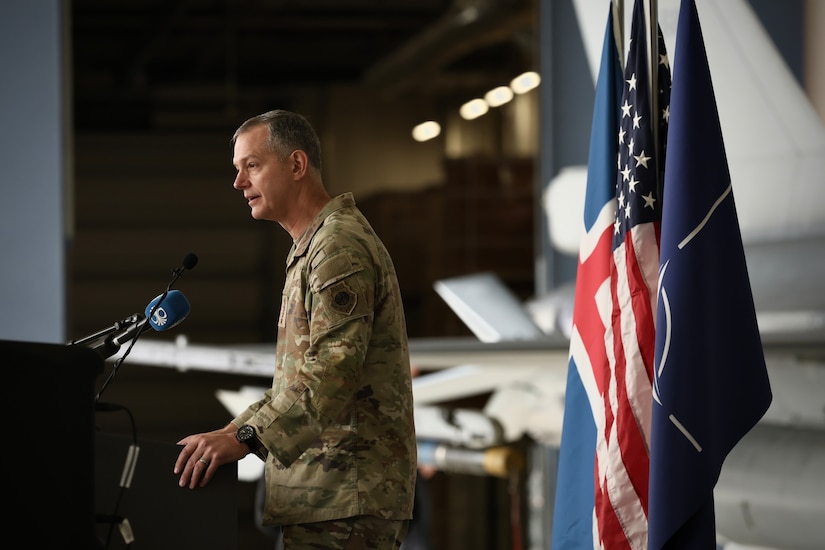
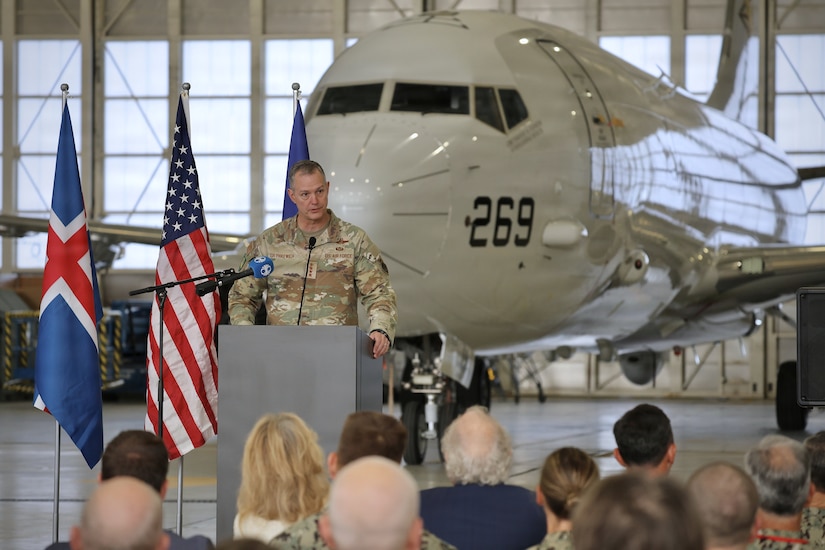
A man in a camouflage military uniform speaks to dozens of people in similar attire and business attire seated in an aircraft hangar; the American, Iceland and NATO flags are displayed behind him, and a large military aircraft is in the background.
A man in a camouflage uniform speaks into a microphone while standing behind a lectern; the American, Iceland and NATO flags are displayed behind him.
"Seventy-five years of bilateral defense cooperation is a testament to the unbreakable bond between the United States and Iceland," said U.S. Navy Vice Adm. J. T. Anderson, U.S. 6th Fleet commander. "Northern Viking 2026 is a demonstration of our commitment to the collective defense of the North Atlantic. Together with our allies, we continue to create an environment that allows interoperability among NATO maritime forces so that European allies can take over primary responsibility for deterrence and defense in the European theater."

Exercise Northern Viking 2026 is designed to strengthen interoperability and force readiness between the U.S., Iceland and other allied nations. The exercise enables critical multidomain command and control of joint and coalition forces defending Iceland and safeguarding the sea lines of communication within the waterways between Greenland, Iceland and the United Kingdom.

As a vital global shipping corridor, keeping this area secure is an imperative for transatlantic trade, commerce and security between North America and Europe.

"Together, we're honing our warfighting skills and ensuring our ability to secure this critical region and to project decisive combat power wherever and whenever necessary," said Air Force Gen Alexus G. Grynkewich, NATO supreme allied commander Europe and commander of U.S. European Command. "Throughout this exercise, and others, we will leverage the power of data in [artificial intelligence] enabled decision support tools, will integrate data streams in real time and ensure our command and control structures can make decisions at the speed of future conflict."

The 1951 defense agreement was the foundation of a unique security framework designating the U.S. as responsible for Iceland's defense in the absence of its own standing military. This treaty established a highly specialized and enduring defense presence in the region.

Over the last 75 years, this partnership has adapted from Cold War deterrence to modern multidomain defense operations, ensuring that the transatlantic bridge remains open and secure.

Tuesday, August 18, 2026

USS Essex Hosts Tiger Cruise on Return to San Diego

The amphibious assault ship USS Essex hosted a historic Tiger Cruise for friends, family and community members before returning to its home port, Aug. 14.

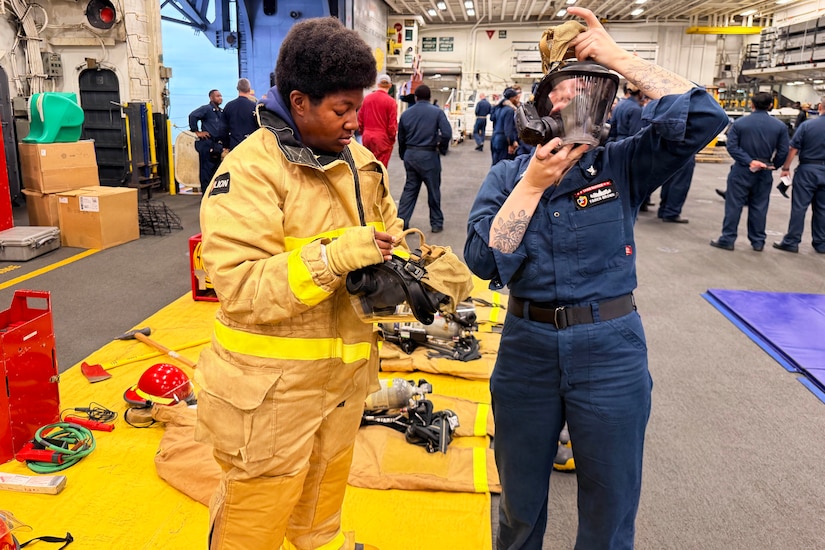
A person wearing a blue jumpsuit puts a mask near their face while a person wearing firefighter gear holds an oxygen mask.

The Essex deployed two air-cushioned landing craft, assigned to Assault Craft Unit 5, to Red Beach at Marine Corps Base Camp Pendleton, California, where 122 family and friends, known as Tigers, were eagerly awaiting to embark on the ship and be reunited with their loved ones.

"I'm happy we were able to bring sailors together with their families and show them what we do on a daily basis for this country," said Navy Capt. Russell Everitt, the USS Essex commanding officer. "I definitely hope we can do this type of thing again [in] the future."

A Tiger Cruise allows friends and family of sailors and Marines to board a naval ship and experience the daily life of a service member stationed aboard the USS Essex. More importantly, it provides a warm welcome home reception for service members and their families after long periods away at sea.

"I've done a lot of operations, but I haven't done anything like this," said Navy Chief Petty Officer Christopher Wyatt, assigned to Assault Craft Unit 5. "It was a truly rewarding feeling knowing I was bringing people's families to them."

This marks the first time the ship has embarked Tiger Cruise guests via air-cushioned landing craft, making it not only a heartwarming reception but also a historic endeavor for the Essex.

"Being back on a ship was a very surreal experience for me," said Michael Sweeney, a Marine Corps veteran and father of Marine Corps 1st Lt. John Sweeney, assigned to the 15th Marine Expeditionary Unit. "I definitely remember transiting the ship being a lot easier when I was younger."

Once aboard, guests went through a ship safety briefing to ensure everyone had a fulfilling experience while staying safe on the active warship. Afterward, they followed their service members for personalized tours of the USS Essex.

"The excitement I have cannot be put into words," said Navy Petty Officer 3rd Class Megan Smith. "My father was a former service member; I like that we were able to compare and contrast our experiences in the Navy while we were both on board."

The evening culminated in a steel beach picnic, a time-honored Navy tradition for ships at sea, hosted by the Essex Supply Department. Sailors, Marines and Tigers joined together on the flight deck and shared food, drinks, games and memories as the sun slowly set over the Pacific Ocean.

"Coordinating this event took a lot of time, but it was very satisfying," said Navy Chief Petty Officer Maria Estrada. "We were able to showcase different aspects of the ship's operations as well as some of its capabilities."

The USS Essex returned to Naval Base San Diego the following day. Service members and guests stood on the flight deck and took in the downtown skyline, marking the end of two and a half months at sea in support of Exercise Rim of the Pacific and reuniting the ship with its Southern California home.

"I was just happy to be on board," said Hollis Cantrellmusson, mother of Navy Petty Officer 3rd Class Bailey Cantrellmusson. "The sailors on board were very courteous, nice and gracious."

Monday, August 17, 2026

Department of War and RTX Accelerate Critical Munitions Production Through Navy Tomahawk Award

The Department of War has announced a $22.9 billion contract with Raytheon, an RTX business, awarded by the U.S. Navy, to accelerate production of the Tomahawk missile, a critical long-range strike capability. 

"The Department called upon industry to expand munitions production, and RTX has answered that call," said Under Secretary of War for Acquisition and Sustainment Michael P. Duffey. "This Tomahawk award increases our ability to equip the Joint Force, ensuring our Warfighters never face a fair fight." 

This contract rapidly fields capabilities to meet modern threats while providing industry partners with the stability required to expand their workforce, increase manufacturing throughput, and fortify supply chains. In addition, it advances the Department's Acquisition Transformation Strategy by accelerating critical weapons delivery and reducing procurement lead times. 

"Guaranteeing our naval and joint forces have the lethal firepower they need to deter aggression and protect the homeland is paramount," said Acting Secretary of the Navy, Hung Cao. "This landmark $22.9 billion investment will accelerate Tomahawk missile delivery to our warfighters at unprecedented speed. By working closely with industry to expand our munitions industrial base’s capacity, the Department is utilizing every available tool to meet the demands of our current operations, ensuring they are equipped to fight, win, and come home safe." 

Portfolio Acquisition Executive (PAE) Munitions is a Department of the Navy organization responsible for the development, procurement, and delivery of naval munitions and strike capabilities. By unifying key weapons programs and aligning the weapons industrial base, PAE Munitions provides enterprise-level integration to accelerate production, increase capacity, and ensure the Fleet is equipped with the munitions needed to project power and win.

Wednesday, July 08, 2026

Point Mugu's Target Mission Shapes Navy Lethality

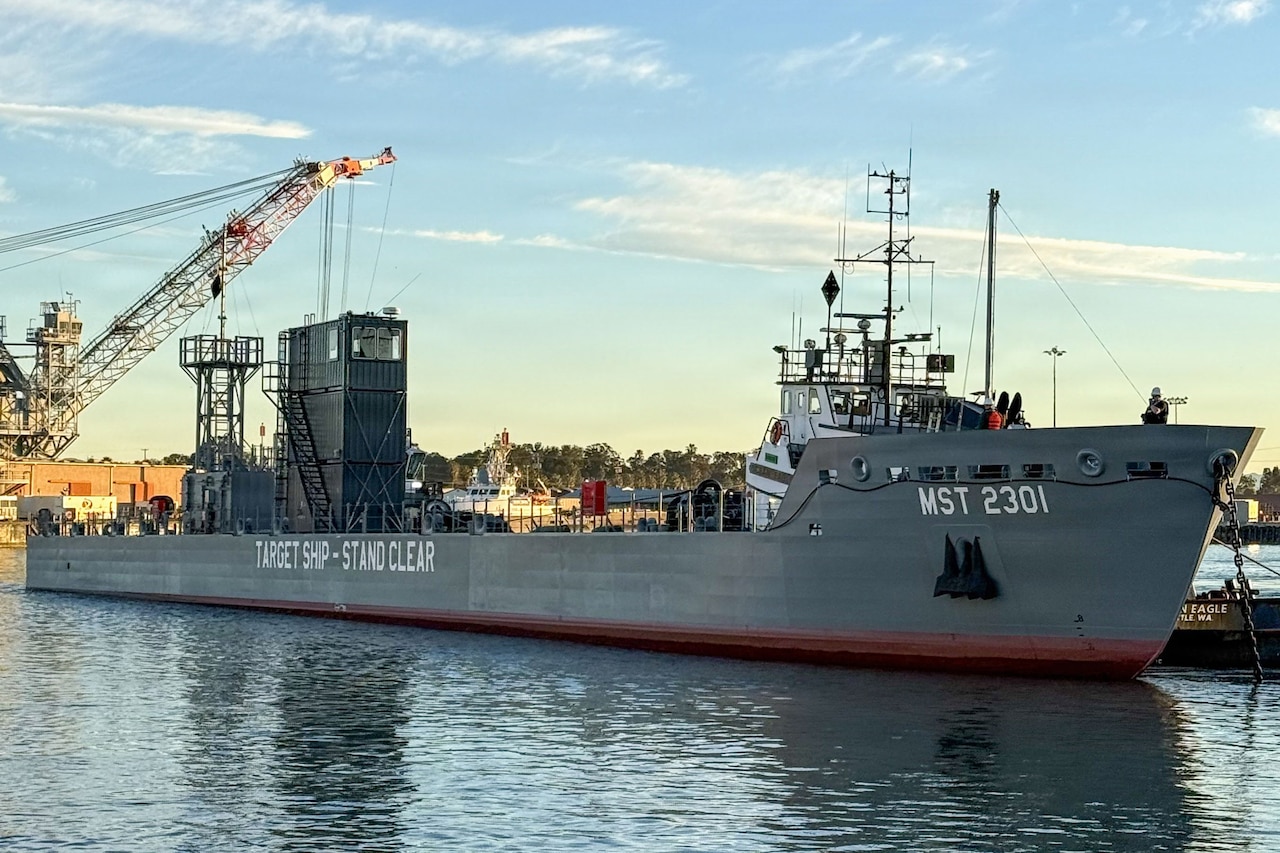
A large military ship is docked at a pier while a crane loads equipment onto the ship.

Personnel at Point Mugu, California, have been trying to sink the Navy fleet since 1946, and the fleet is better for it. 

The Naval Air Warfare Center Weapons Division's threat target systems department continues the legacy founded eight decades ago by building, fielding and operating the targets that give Navy's ships and aircraft a credible enemy to train against. 

This year, the department marks 80 years of aerial target operations at Point Mugu. The threats it builds today would be unrecognizable to the engineers who launched the first drones and pilotless aircraft in 1946. 

The mission would not. 

A Legacy Forged in War 

World War II delivered two lessons the Navy could not ignore. 

Germany's V-1 buzz bombs proved unmanned weapons could strike at scale. Japan's kamikaze attacks proved guided threats could reach ships faster than gunners could respond. The Navy needed to develop its own pilotless aircraft and guided missiles. More urgently, it needed to train crews to defeat them. 

In late 1945, the Navy established a pilotless aircraft unit at Naval Air Station Mojave, California, and began operating at a makeshift range at Point Mugu. The range location was selected from a survey of 26 candidate sites. Its advantages were precise: an unobstructed over-water range, reliable weather, proximity to Southern California's aerospace industry and nearby islands for instrumentation. 

On Oct. 1, 1946, the Naval Air Missile Test Center activated 5 miles south of Oxnard, California. The pilotless aircraft unit consolidated there to develop and test pilotless aircraft, drones and guided missiles over the Pacific Ocean. 

The first test weapon was a direct answer to the threat that prompted the program. The Republic-Ford JB-2 Loon, a derivative of Germany's V-1 buzz bomb, launched from Point Mugu's beach ramps throughout 1946 and 1947. 

In early 1947, the submarine USS Cusk fired a Loon, becoming the world's first missile launched from a submarine. The technology being studied at Point Mugu had become a weapon within a year of the center's activation. 

Early target drones followed. 

The KDD-1 Katydid, powered by a pulsejet engine, gave the Navy one of its first purpose-built aerial targets — a platform designed not to strike but to be struck — at Point Mugu. 

The principle embedded in that first drone has driven the program ever since: to train the fleet to win, you have to give it something worth defeating. 

As the Threat Grows, So Does the Target 

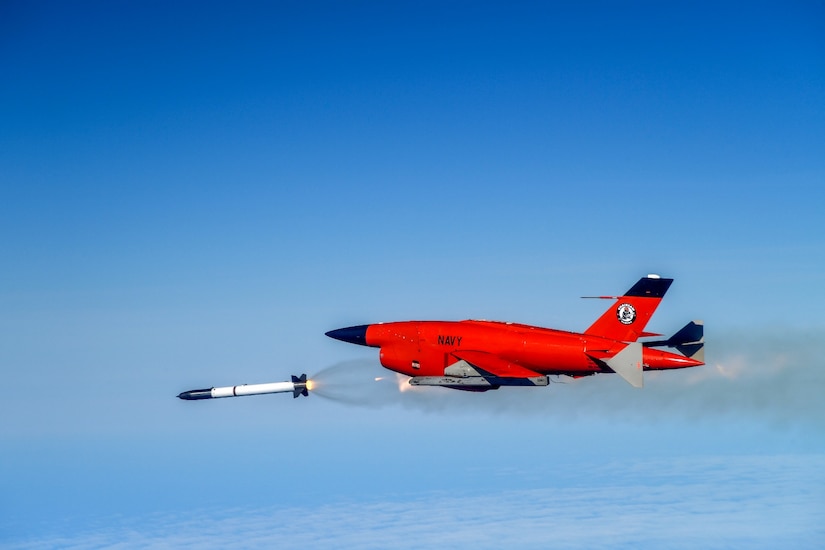
A drone fires a missile while flying in the air.

As adversary capabilities advanced, Point Mugu's targets kept pace. 

Surplus F6F Hellcat fighter aircraft, converted to remote-controlled drones, flew as test targets for early air-to-air missiles. In 1952, an AIM-7 Sparrow missile shot down a Hellcat drone above the sea range, marking the first recorded guided air-to-air missile intercept. The result validated the weapon. It also validated the method — give the missile a realistic target and you learn what it can actually do. 

The jet age raised the bar. QF-86 Sabre jet aircraft flew in pilot-optional mode as subsonic targets. Later, QF-4 Phantom IIs returned to Point Mugu as unmanned supersonic targets capable of unmanned operations that pushed missile systems to their limits. The same aircraft that had defined a generation of fleet air combat came back to be shot at. 

That is the arc of this mission. 

The program also flew supersonic targets. The AQM-37 Jay Hawk drone, air-launched from fighter aircraft, simulated high-speed threats at Mach 3 and altitudes above 60,000 feet. It debuted in the 1960s and flew for the final time during Exercise Gray Flag in 2025, after roughly six decades of service. 

Behind each target profile are engineers, technicians, operators and range teams who turn intelligence about emerging threats into something the fleet can fly, track and engage. 

Today, the warfare center's threat target systems department operates from three California locations at Point Mugu, Port Hueneme and Naval Air Weapons Station China Lake, with teams that deploy worldwide to support fleet training and live-fire exercises. The aerial target fleet spans the full threat spectrum, from small commercially derived drones to Mach 2.7 missiles. 

A DJI Phantom 4 Pro V2 drone supports counter-unmanned aerial system training from surface vessels, testing shipboard defenses against the class of small drone threats now common in littoral operations. 

For larger low-speed presentations, the systems department received 20 former MQ-1B Predator aircraft and redesignated them as NMQ-1B aircraft, giving the Navy a more capable target that can support threat-representative test events beyond the small UAS class.  

The BQM-34S Firebee aerial target system remains the fleet's heavy-lift aerial workhorse. Its payload capacity supports advanced weapons development, including serving as a surrogate launch platform for China Lake's solid fuel ramjet missile. 

The BQM-177A, the newest aerial target, replaced the BQM-74 Chukar and carries advanced electronic warfare payloads and wingtip pods that replicate subsonic cruise missile profiles. In a recent demonstration on the Point Mugu Sea Range, the BQM-177A flew as a test bed for the Experimental Platform for Intelligent Combat project. 

Two Naval Air Systems Command program offices sponsored the demonstration, which used an artificial intelligence system to validate autonomous flight control. The BQM-177A made tactical decisions and executed maneuvers without a remote operator. The capability is still in development. 

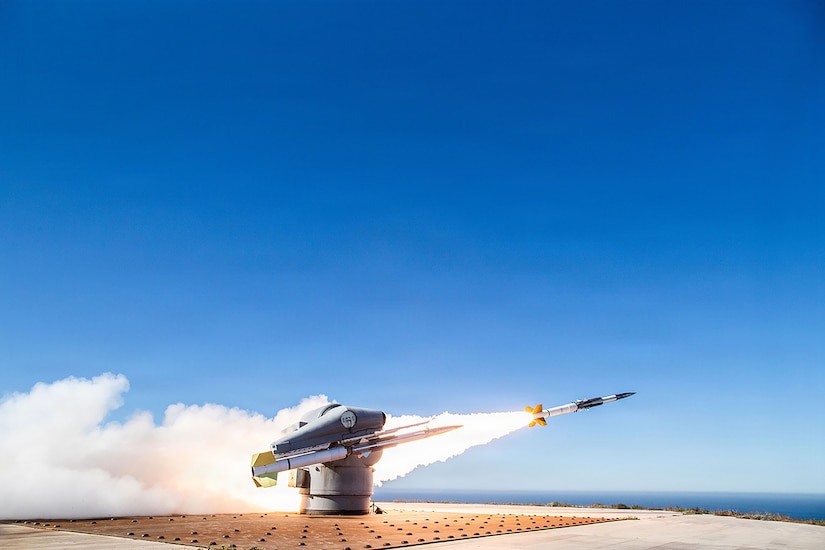
At the high end, the GQM-163A Coyote provides what no other U.S. target can: supersonic sea-skimming flight at Mach 2.6, with an advanced emitter signal simulator that replicates the electronic signature of an antiship cruise missile. The Coyote replaced the MQM-8G Vandal. 

Beyond the Skies 

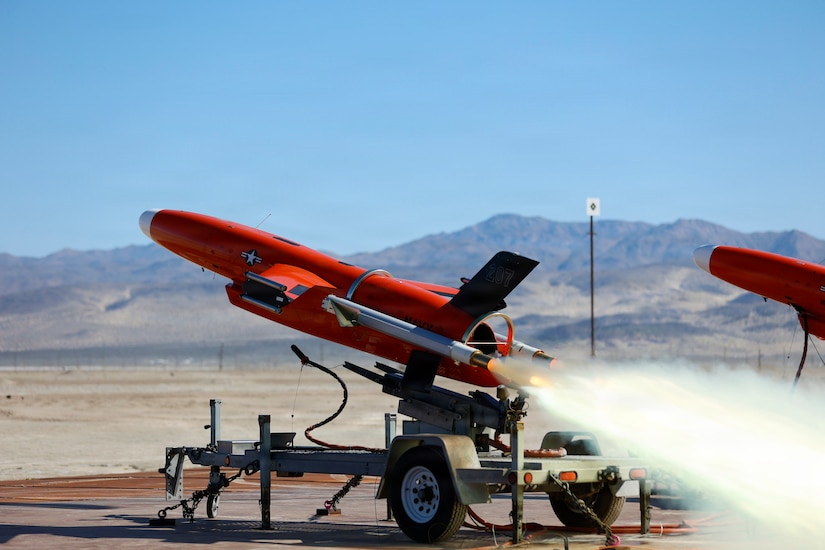
A missile launches from a trailer in the desert as smoke pours out the back; there are mountains in the background.

The team's mission does not stop at the water's edge. 

The High-Speed Maneuverable Surface Target drone replicates fast attack and fast onshore attack craft. During surface warfare advanced tactical training exercises, ships and embarked aircrews use the drone to validate anti-surface warfare tactics, techniques and procedures against a target that moves and maneuvers like the threat.  

The next test ship, a 260-foot vessel designated Mobile Ship Target 2301, arrived at Port Hueneme in January. NAWCWD teams are outfitting it for operational use, installing a government-developed remote-control system that will allow the vessel to operate safely during live-fire events. 

Its reconfigurable superstructure can be shaped to match specific adversary ship profiles, with installed emitters replicating that ship's electromagnetic environment. This ship is the primary platform for surface-to-surface and air-to-surface weapons testing. 

The newest seaborne addition is the Low-Profile Surface Target. The unmanned surface vehicle replicates the small adversarial ships that are increasingly encountered in littoral waters. One operator controls the lead vessel with up to seven others maintaining formation, presenting coordinated attack scenarios that mirror threats in contested maritime environments. 

"The targets we build and augment serve two missions. They act as the threat representative surrogate to test and evaluate the weapons and warfighting systems designed to defeat it, and they train the crews who will track, identify and pull the trigger," said Tom Dowd, Point Mugu Sea Range group director. "A ship or aircraft that hasn't faced a realistic threat in both contexts deploys with unanswered questions. [The threat target systems department] makes sure they get the answers right." 

The Teams Behind the Threat 

The targets are only as capable as the people who build, launch and operate them. 

TTSD teams deploy to every major range in the U.S. and abroad. They launched GQM-163A targets from Hebrides, Scotland, during NATO's Exercise Formidable Shield, operated across Atlantic training ranges and supported missions at the Reagan Space and Missile Test Range on Kwajalein in the Marshall Islands and ranges in Australia.  

During those exercises, allied navies use TTSD targets to test their own combat systems and train their crews alongside U.S. forces. At home, an operating procedures standardization program at Point Mugu trains target operators from commands across the Navy to common standards. 

The collaborative framework that drives target requirements is the Target Stakeholder Requirements Action Group. Through this group, the fleet and NAWCWD technical staff define and refine requirements together, ensuring the threats presented in training track with the evolving operational environment. The Low-Profile Surface Target emerged directly from that process: a specific answer to the Navy's training against small-boat threats. 

For the fleet, the value of that work is measured in seconds. 

"This training is indispensable for exercising a ship's layered defense, enabling personnel to achieve the technical mastery required to sense, synthesize and decide fast enough to win in an era where the speed of [decision-making] ruthlessly punishes delay," said Navy Capt. Matthew W. Foster, Naval Surface and Mine Warfighting Development Center deputy commander. 

The Threat That Holds 

Training against a realistic threat builds something that a classroom cannot. A crew that has tracked an incoming Coyote at Mach 2.6 knows where its procedures hold and where they break, before that knowledge costs lives.

That is what TTSD has been building for 80 years. 

The platforms and the threats have changed over the years. Every generation of threat required a new generation of target. Every generation of target required the same thing: people at Point Mugu willing to build a more dangerous adversary so the fleet could learn to survive it. 

"Eighty years ago, this place existed for one reason: make sure we don't lose a warfighter to something they could have learned here. That mission doesn't change when the threat goes autonomous. It gets harder," said Dan Carreño, NAWCWD executive director. "And the people here have never backed down from a hard problem." 

That is the work TTSD inherited, and the work carries forward every time the fleet asks for a harder threat.
Tuesday, July 07, 2026

The USS Constitution Navigates Future

For more than two centuries, the USS Constitution has relied on the stars, the sea and traditional paper charts to navigate. But as the historic vessel prepares for nine America 250 fleet events in 2026, Old Ironsides is receiving a critical digital navigation upgrade courtesy of Naval Surface Warfare Center, Philadelphia Division.

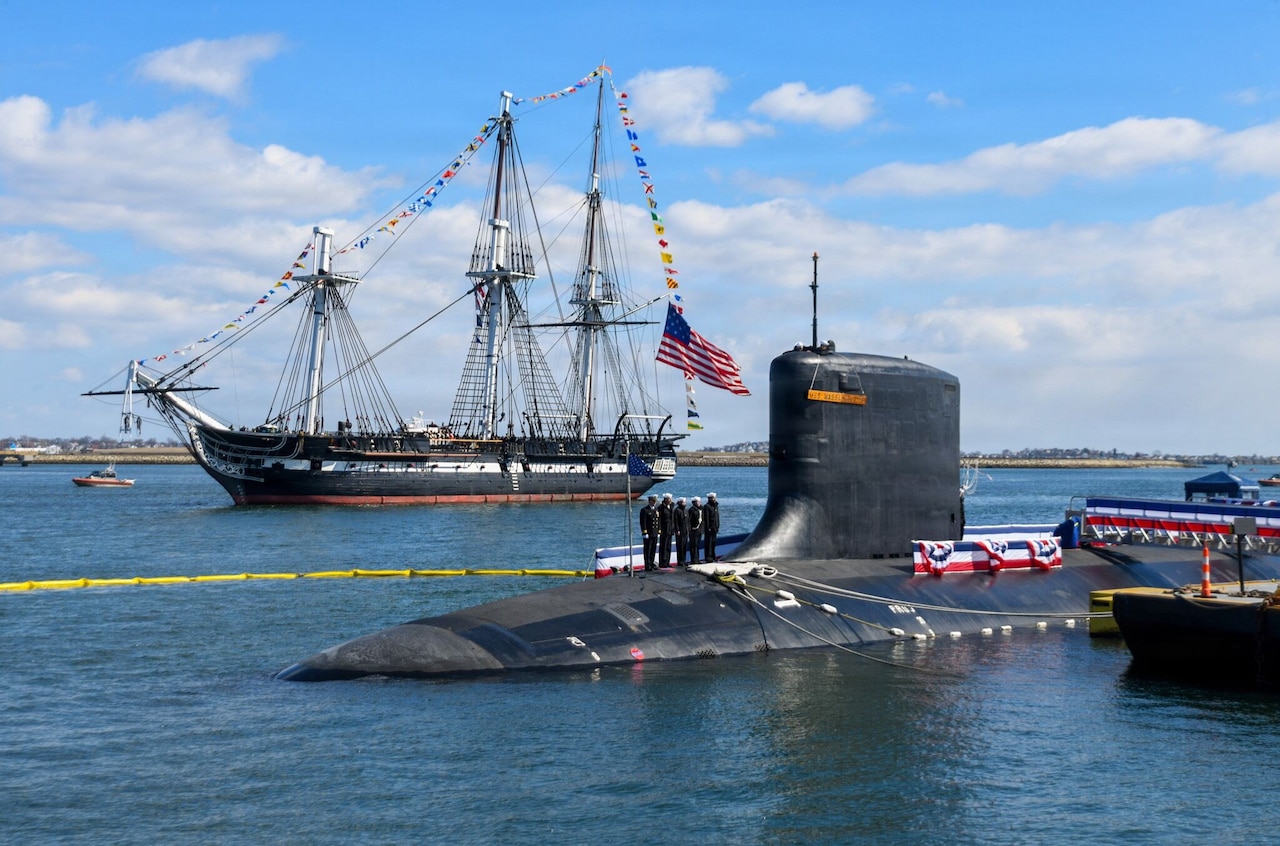
A Revolutionary War-era ship with the American flag flying from the stern sails past a submarine moored to a dock as five people in military uniforms stand on the sub.

"NSWCPD delivers solutions that keep ships at sea and sailors mission ready, whether that ship was commissioned in 1797 or 2026," said Navy Capt. Ashley Wright, NSWCPD commanding officer. "[The] USS Constitution is a living symbol of our Navy's heritage, and this project shows how our engineers can tailor modern capability to meet a one-of-a-kind mission while preserving a national treasure."

The transition marks a significant milestone for the ship and the Navy. In December 2024, the National Oceanic and Atmospheric Administration officially sunset the distribution of paper charts, making electronic charting the standard for modern maritime navigation. Today, every commissioned surface and subsurface vessel in the Navy relies on a certified Electronic Chart Display and Information System.

NSWCPD serves as the in-service engineering agent for the navigation system across the surface and, more recently, the subsurface fleets. The system provides electronic charting and navigation information that helps ship operators maintain awareness of the vessel's position and movement. It represents a significant advancement over the manual plotting and chart updating processes traditionally associated with paper charts.

When the Constitution recently transitioned to become a Commander, Naval Surface Force Atlantic asset, the command required the historic ship to be equipped with ECDIS to ensure navigational safety during the highly anticipated America 250 fleet events. However, outfitting an 18th-century wooden-hulled frigate with 21st-century technology presented a unique engineering challenge.

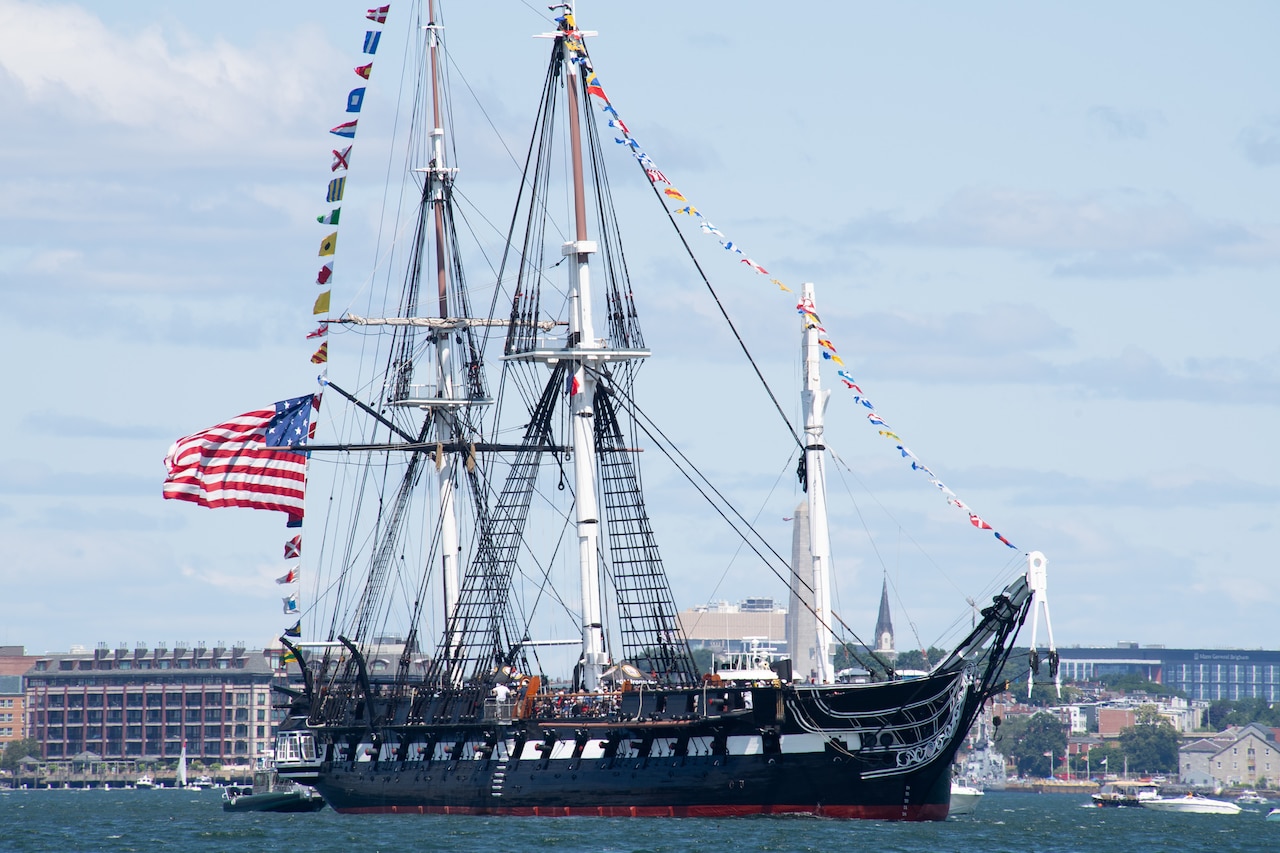
A large 18th-century ship sails in a harbor on a cloudy day while flying the American flag; there are buildings in the background.

A traditional surface-ship installation is designed for modern naval vessels with complex operational requirements, established shipboard configurations and multiple layers of system resiliency. For the Constitution, that type of installation would have exceeded the ship's unique mission needs and posed challenges because of the vessel's historic design, limited space and preservation requirements.

To meet the requirement without altering the ship's historic integrity, the NSWCPD team developed a streamlined solution. Leveraging the flexibility of the systems engineering process, the team outfitted the Constitution with an emergency navigational laptop.

"We didn't need to reinvent the wheel. We needed to apply existing fleet technology in a smart way," said James Vaites, NSWCPD ship navigation system technical specialist. "The emergency navigational laptop we provided to [the] Constitution uses the same hardware and software carried as a critical backup across the modern surface fleet. For Old Ironsides, it gave us the real-time charting capability we needed in a compact, portable format that fit the ship's unique mission requirements."

The navigational laptop is the same technology provided to every ship in the surface fleet as a backup to its primary ECDIS, in the event of an operational or power failure. For the Constitution, however, it serves as the ideal primary tool — delivering the necessary real-time charting and safety data in a compact, unclassified and highly portable format.

By thinking beyond the traditional installation model, the NSWCPD team successfully met safety requirements, equipping the Navy's oldest commissioned warship afloat with its newest navigational standard and getting her underway on time for the nation's birthday celebrations.

The effort highlights NSWCPD's role in supporting current fleet readiness and the Navy's historic legacy. As the USS Constitution prepared to represent the Navy, Old Ironsides did so with the help of modern navigation technology adapted for one of the fleet's most unique ships.

Friday, September 26, 2025

U.S. Navy to Christen Future USS Louis H. Wilson Jr.


SEPT. 26, 2025 The U.S. Navy will christen the future USS Louis H. Wilson Jr. (DDG 126), during a ceremony at General Dynamics Bath Iron Works (BIW) on Saturday, September 27, at 10:30 a.m. (EST).

The principal address will be delivered by Commandant of the Marine Corps, Gen. Eric Smith; Additional speakers include Governor of Maine, Janet Mills; U.S. Senator of Maine Angus King; Assistant Secretary of the Navy for Research, Development, and Acquisition, Jason Potter; Deputy Chief of Naval Operations for Integration of Capabilities and Resources, Vice Adm. Brad Skillman; Medal of Honor Recipient, Col. Harvey C. Barnum, Jr.; and President of General Dynamics Bath Iron Works, Chuck Krugh.

In a time-honored tradition, ship sponsors Janet Wilson Taylor, daughter of the namesake and Susan J. Rabern, former Assistant Secretary of the Navy for Financial Management and Comptroller, will christen the ship by breaking a bottle of sparkling wine across the bow.

The ship is named after Gen. Louis Hugh Wilson Jr., a World War II and Vietnam War veteran who was awarded the Medal of Honor for his heroism during the Battle of Guam. Following his service in Vietnam, he served as the 26th Commandant of the Marine Corps from 1975 to 1979.

The christening of DDG 126 symbolizes the Navy's 250-year commitment to innovation and maritime dominance. From seabed to space, the Navy delivers power for peace – always ready to fight and win. This milestone marks the Navy's enduring legacy and commitment to shaping the future of maritime power.

Arleigh Burke-class Flight III destroyers feature the AN/SPY-6(V)1 Air and Missile Defense Radar and incorporate upgrades to the electrical power and cooling capacity plus additional associated changes to provide enhanced warfighting capability to the fleet. Future destroyers Harvey C. Barnum Jr. (DDG 124), Patrick Gallagher (DDG 127), William Charette (DDG 130), Quentin Walsh (DDG 132), John E. Kilmer (DDG 134), Richard G. Lugar (DDG 136), and J. William Middendorf (DDG 138) are also in production at BIW.

Media may direct queries to the Navy Office of Information at (703) 697-5342.


Sunday, January 13, 2008

Pacific Commander to Visit China to Bolster Communication, Cooperation

By Donna Miles
American Forces Press Service

Jan. 11, 2008 - The top U.S.
military officer in the Pacific is slated to travel to China to help bolster the two countries' military relationship and iron out issues, including those over China's recent port denials to U.S. Navy ships. Navy Adm. Timothy J. Keating, commander of U.S. Pacific Command, will leave his Honolulu headquarters tomorrow for the four-day visit, his second visit to China since taking command in March. James Shinn, sworn in yesterday as the new assistant secretary of defense for Asian and Pacific affairs, will join Keating on the trip.

While in China, Keating is slated to meet with senior officials from the Central
Military Commission, the Chinese People's Liberation Army, Guangzhou Military Area Command and the Foreign Affairs Ministry.

The trip also will include stops in Shanghai, China's financial hub, and Guangzhou, where Keating will visit Chinese army bases and hold a seminar with Chinese
military officials, the Chinese National Defense Ministry announced.

Keating said he hopes build on groundwork laid during his visit to China in May to strengthen Sino-U.S. military ties.

The visit follows Defense Secretary Robert M. Gates' visit with Chinese
leaders in early November and the U.S.-Peoples' Republic of China annual defense consultative talks, led by Undersecretary of Defense for Policy Eric S. Edelman, in early December.

"This trip is an opportunity to meet with key
leaders and build relationships that will ultimately ensure greater cooperation and collaboration across the spectrum of military-to-military relations," Keating said.

Keating said his goal is to develop and enhance a constructive relationship through increased military-to-military engagement. "We will work with our Chinese counterparts to increase understanding between our militaries, encourage cooperation on mutual
security concerns, capitalize on gains we have realized and reduce chances for miscalculation."

Discussions are expected to include China's denial of a Thanksgiving port call to Hong Kong by U.S. aircraft carrier Kitty Hawk battle group, and an earlier denial to U.S. minesweepers seeking refuge from a brewing storm.

Keating told Pentagon reporters days after the Kitty Hawk incident that he's concerned by the port visit denials, calling them "perplexing and troublesome," particularly when hundreds of the sailors' family members had flown from Japan to spend the holiday with their loved ones.

By the time China reversed its decision, the U.S. ships had already turned around. "It was too late by then," Keating told reporters.

The incident came on the heels of what the admiral called an even more troublesome situation: China's refusal to admit two U.S. minesweepers into Hong Kong to seek refuge from a brewing storm.

The Patriot and Guardian were operating in international waters when fierce weather conditions drove them to seek shelter in Hong Kong, Keating said. China refused their request, forcing them to get refueled at sea so they could return to their homeport in Sasebo, Japan.

China's denial of their request violated "an unwritten rule among seamen that if someone is in need, regardless of genus, phylum or species, you let them come in -- you give them safe harbor," Keating said.

A senior defense official said this week on background that the misunderstanding that led to the port visit denials signals the potential for much more serious misunderstandings in the future that could have
strategic consequences if not cleared up now.

"The whole experience showed us that we have a lot to do to better understand what the Chinese are doing and to help the Chinese understand our position on things," he said.

The bottom line, Keating told reporters in November, is that solid communication between the United States and China will help reduce the potential for misunderstanding. This will leave "less room for confusion that could lead to confrontation, to crisis," he said.

"That's our goal," he said. "To get there, we reduce the chance for misunderstanding."

In addition to discussing the decision-making process within the Chinese
military and explaining the United States' own process, Keating will push for more and larger U.S.-Sino exercises and exchanges.

China recently turned down an invitation to participate as an observer in the Rim of the Pacific naval exercise this summer in Hawaii. Russia announced that it will be a first-time participant in the multinational exercise that takes place every other year in the waters off Oahu and Kauai.

Friday, December 07, 2007

Gates Tours USS Vicksburg During Ship's Port Call in Bahrain

By Donna Miles
American Forces Press Service

Dec. 6, 2007 - Defense Secretary Robert M. Gates made his first visit to a
U.S. Navy warship, the USS Vicksburg, today to tour the vessel, meet its crew and thank them for their service in the Persian Gulf region. Arriving here for bilateral talks at a regional security meeting that opens tomorrow night, Gates took advantage of the Vicksburg's port call in Bahrain to pay it and its crew a visit.

Navy Capt. Chip Swicker, Vicksburg's commanding officer, greeted the secretary at the Mina Salman Pier and joined him as he climbed aboard the Ticonderoga-class guided-missile vessel.

As the secretary climbed the steps toward the ship -- steps he later joked to reporters challenged his "64-year-old knees" -- the crew rendered a traditional
Navy welcome. The sound of eight bells, the highest honor afforded any visitor, including the president, rang out, along with the call, "Defense arriving."

Swicker led the secretary around the vessel, pointing out its vertical-launch missile system, rapid-fire cannons and SH-60 Seahawk helicopters.

This mix of weapons provides "a wonderful capability" to face threats in the air, ashore and on and underneath the sea. "It's big and very, very heavily armed," Swicker said, noting the ship helps provide security through its mere presence.

As he awaited Gates' arrival, Swicker said he was looking forward to showing Gates the vessel's hardware and weaponry, but wanted even more to show him the quality of his crew. "This is an awesome piece of
technology," he said of the ship. "But it's those 350 young sailors who make it all happen."

The crew has been conducting maritime security operations in the Central Arabian Gulf and Gulf of Oman since leaving their homeport of Mayport, Fla., on Aug. 2. They are slated to return home in late January.

While touring the ship, Gates expressed thanks to crewmembers, then administered the oath of re-enlistment to Senior Chief Petty Officer Johnny Taylor. Taylor, a 23-year
Navy veteran who signed on for another three years of service, specifically requested that Gates perform the honors.

Swicker said Gates' visit reaffirms the importance of Vicksburg's mission as its crew works with coalition partners "to keep the maritime environment secure for everybody."

Crewmembers have no doubt they're playing an important role in the Gulf region. "We're policing the seas, and preventing and deterring, just by projecting our image," said Petty Officer 1st Class Dominic Bills, a fire controlman. "We're here to do everyone good and to ensure the seas are safe. In this part of the world, it's something that needs to be done."

"I see it as bringing security to everyone," agreed Petty Officer 1st Class Adrix Wyatt, an electrician who's served in the
Navy for 12 years. "We're making a difference through our presence in this region."

The visit was a highlight for Swicker, who will turn over Vicksburg's command to Capt. Chuck Nygaard during a ceremony at sea Dec. 10. "It's always bittersweet leaving a ship," he said. "But to be able to host the secretary of defense and show him the quality of the men and women who make up its crew, well, that's a real opportunity."

Gates told reporters he had a great experience on the ship and was "just very impressed with the young people that are on the crew and by the ship."

He said he was intrigued by the types of questions the crewmembers asked him. "It was really interesting. Most of the questions were about Russia, China, Iran," he said.

Alluding to his past as a dean, then president of Texas A&M University, Gates added with a smile, "I felt like I was teaching a political science course."

USS Essex Sailors, Marines Build Friendships in Cambodia

By Jim Garamone
American Forces Press Service

Dec. 6, 2007 - The visit of the USS Essex to Sihanoukville, Cambodia, Nov. 26 to Dec. 4 is a concrete example of the importance of
military-to-military ties between countries. The Essex and the embarked 31st Marine Expeditionary Unit was part of a "friendship-building event" with the Kingdom of Cambodia, said Chief Petty Officer Tyler A. Swartz, the public affairs officer for the effort.

The 2,400 sailors and Marines learned about Cambodian history and trained with members of the Royal Cambodian Armed Forces.

Cambodia is a desperately poor country struggling to recover from war and genocide. It was a battleground in the latter stages of the
Vietnam War, and in the 1970s the Khmer Rouge ruled the nation. During the regime of Pol Pot, between 1.7 million and 3 million Cambodians died, including hundreds of thousands of people who were executed. The era brought the term "Killing Fields" into the world's vocabulary.

The government is now a constitutional monarchy and is working to be a full member of the community of nations. Cambodia is working with other nations on counterterrorism initiatives and overcoming transnational problems, such as the flow of narcotics and crime.

But the government is weak, and government control in many areas of the country is tenuous, DoD officials said. The
United States military wants to work with the Cambodian armed forces to help them face the challenges in their country.

The Essex visit is the latest U.S. Defense Department effort to reach out to the Cambodians. During the port visit, Essex medical personnel working with the Royal Cambodian Armed Forces and non-governmental organizations were able to see more than 5,000 patients at Kulen and Kampong Cham, Swartz said. Medical and dental services in Cambodia included eye surgery, dispensing drugs, pulling teeth and oral hygiene education.

During the port visit, sailors and Marines engaged, taught and attended classes at the Cambodian National Defense University. Marines provided anti-
terrorism training for Cambodia's national counterterrorism task force, Swartz said. The training enhanced the force's ability to conduct sustained counter terrorism training and gave Cambodia capabilities to participate in future military exchange programs.

The Essex crew also distributed several pallets of Project Handclasp material. Project Handclasp is a
U.S. Navy program that provides donated items like books, clothes, toys and medical items to agencies and organizations in countries that could benefit from those materials.

The next step is to increase the number of
Navy port visits to Cambodia, defense officials said.

Thursday, December 06, 2007

Navy's Medical Support Vital to Operations, Surgeon General Says

By Sgt. Sara Moore, USA
American Forces Press Service

Dec. 6, 2007 - Throughout the Middle East, the
U.S. Navy provides vital medical support to U.S. troops serving in the war on terror, the Navy surgeon general said today during a visit to the region. Navy Vice Adm. Adam M. Robinson Jr. spoke to online journalists and "bloggers" from Iraq, where he was midway into a trip touring medical facilities in the region. Robinson has visited U.S. Naval Forces Central Command, in Bahrain; Camp Arifjan, Kuwait; and Camp Buehring, Kuwait, which is 50 miles from the Iraqi border.

In Camp Arifijan, Robinson visited the 44-bed U.S.
Military Hospital Kuwait, staffed by Expeditionary Medical Facility Kuwait, which includes about 370 Navy medical personnel from 30 different health care facilities. Medical professionals there provide care to the 20,000 coalition forces in Kuwait using modular shelters that are set up in less than 48 hours.

"By providing world-class medical care to the
U.S. Army Central and the 1st Sustainment Command, which has command and control of logistics in the entire (U.S. Central Command area of responsibility), Expeditionary Medical Facility Kuwait is playing a vital role in supplying and sustaining combat operations," Robinson said.

In Camp Arifjan, Robinson said his staff also toured the warrior transition mall, which is offered to all
Navy individual augmentees returning from Iraq or Afghanistan. The warrior transition mall gives sailors three to five days to acclimate out of combat operations and decompress, he said. Multidisciplinary teams of health professionals, including mental health professionals and chaplains, screen the troops for any operational stress issues that may be confronted as they return home.

Camp Buehring serves as the last training and staging base for tens of thousands of Iraqi-bound troops, and Expeditionary Medical Facility Kuwait provides primary care to about 10,000 soldiers there, Robinson said.

This weekend, Robinson and his staff are flying to Landstuhl, Germany, to observe the medical system and the casualty evacuation system, he said. Landstuhl Regional Medical Center can accommodate 75 seriously wounded servicemembers airlifted from the battlefields of Iraq and Afghanistan and is just a part of the continuum of care for those wounded in combat, he said.

"Combat casualty care is a continuum of care, which begins with the corpsmen in the field, alongside whatever warrior is there. In this instance, corpsmen are always with our Marines," Robinson said. "It progresses to forward resuscitative care units, which are in theater, and it culminates in care provided through en-route care of our patients as they're evacuated to the rear and our
military hospitals."

Robinson said the
Navy has plenty of medical professionals to treat combat veterans. The service's challenge is to properly screen troops for physical or mental problems and make sure they get treatment they need, he said.

Monday, December 03, 2007

U.S.-China Consultative Talks Under Way in Pentagon

By Jim Garamone
American Forces Press Service

Dec. 3, 2007 - The United States-Peoples' Republic of China Defense Consultative Talks got under way at the Pentagon today in the shadow of China's refusal to let U.S. ships make port calls in Hong Kong. Pentagon spokesman Bryan Whitman said Eric S. Edelman, undersecretary of defense for policy, and Lt. Gen. Ma Xiaotian, the People's Liberation
Army's deputy chief of general staff for foreign affairs, were slated to discuss U.S.-Chinese defense relations, regional and global defense issues, the global war on terror and missile defense.

The two were to discuss U.S.-Chinese defense relations, regional and global defense issues, and the global
war on terror and missile defense. "The United States Defense Department continues to maintain a strong dialogue and continues to seek ways to strengthen the military-to-military relationship" with China, Whitman said.

Whitman would not comment on other areas of discussion, but noted that the dispute over the USS Kitty Hawk visit did not cause the United States to postpone or cancel the Chinese visit.

Chinese authorities refused permission for the USS Kitty Hawk carrier battle group to make a port visit to Hong Kong over the Thanksgiving holiday. The Chinese also refused to allow two
U.S. Navy minesweepers to seek refuge from a storm in Hong Kong's harbor.

U.S. authorities did not let the incidents affect the consultative talks, an annual meeting that has been scheduled for months, defense officials said. "The United States Defense Department values this relationship and will try to strengthen it through our dialogue with our Chinese counterparts," Whitman said.

Tuesday, October 30, 2007

Defense Official Calls U.S-India Partnerships Critical

By Donna Miles
Special to American Forces Press Service

Oct. 30, 2007 - Broad-based partnerships between the United States and India are critical as the South Asian republic increasingly exerts its influence on the world, a senior Defense Department policy maker said today. "The U.S.-India strategic potential is very, very profound," James Clad told online journalists and bloggers during a conference call from the Pentagon. Clad is deputy assistant secretary of defense for South and Southeast Asia. "It's been slow in coming - I think it will be slow in coming in the future - but it is steady. The trend lines are unmistakable," he said.

While India's sometimes contentious neighbor, Pakistan, continues to search for Osama bin Laden and help wage the global war on
terrorism, Clad explained, the U.S.-Indian relationship is more important in the long run.

"India simply must, as a long term consideration, matter more for us than Pakistan," he said. "India, I think, is seen as a potentially a power with global reach."

India is on a major course to ramp up its
military infrastructure, Clad said, with a multi-billion budget at the ready to purchase, among other equipment, 126 multi-role combat aircraft.

"It is the largest external-announced defense procurement budget in the world," Clad said. "And people are obviously interested in this."

Clad noted that 52 U.S. defense corporations, including "brass nameplates" like Boeing, Lockheed-Martin, Ratheon, Honeywell and General Electric, have all set up offices in India. "That's a lot."

Each
U.S. military service participates in training exercises with Indian troops, Clad explained, and Indian ports welcome U.S. Navy ships. He noted a recent visit by the USS Nimitz to Chennai, an Indian city situated along the Bay of Bengal.

"The visit was an enormous success, greeted with great interest by the people of the city," he said.

The
U.S. Navy also recently refurbished its former USS Trenton and presented it as a gift to the Indian navy, Clad explained. "This is a substantial vessel which has been very well received in Indian naval circles."

Besides
military partnerships, Clad said, Indian-American economic partnerships also are important, and in many cases already are in place.

"You hit a golf ball on the Bangalore golf course, and that ball, unless you're careful, is going to go right through a window of IBM, which is right next to Infosys, which is an Indian firm staffed by Indian-Americans who are also listed on the New York Stock Exchange. So it's a much bigger relationship."

That relationship, Clad explained, consists of multiple, rich layers.

"The India relationship now is more comprehensive in trade, information technology, movement of its peoples, he said. "There are 2 million Indian-Americans now living in the United States."

Rather than fear India's global transformation, Clad said, The United States should embrace the opportunity to assist and advise the country.

"It's about maintaining a type of equilibrium, about accepting India's rise into a type of maturity and power and prowess I think we broadly welcome," he said. "We're coming into something that's naturally there. It's like a seat which is already at the table, and we're sliding into it."

(David Mays is assigned to New Media at American Forces Informations Service.)