Showing posts with label nuclear modernization. Show all posts

Tuesday, February 24, 2026

Air Force Secretary Outlines Priorities

The Department of the Air Force's priorities are readiness, modernization, defending the homeland — including the entire hemisphere, border security, missile defense, nuclear deterrence and people, said Air Force Secretary Troy Meink, who spoke yesterday during the Air and Space Forces Association's 2026 Warfare Symposium in Aurora, Colorado.
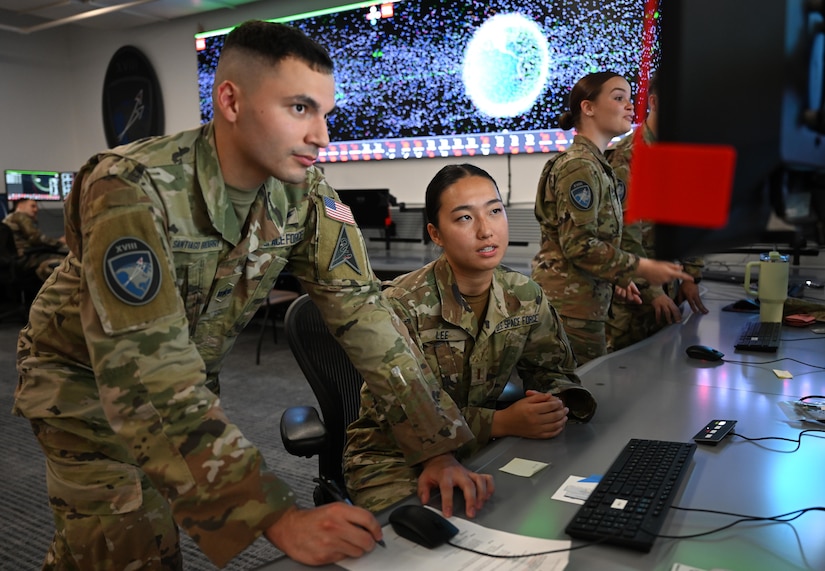
Two members in Space Force uniforms look at information on a computer screen.

From a conventional deterrence perspective, the focus is on China, which continues to expand and modernize its military at an extremely fast pace, making deterrence in the Indo-Pacific region the biggest challenge by far, he said.

"Given that threat environment, the Air Force and the Space Force must be ready at any time for any threat across the entire spectrum of conflict," Meink said.

One of the challenges is scaling up production of weapon systems and munitions. Accomplishing that requires the revival of the defense industrial base, which has experienced decades of neglect, he said.
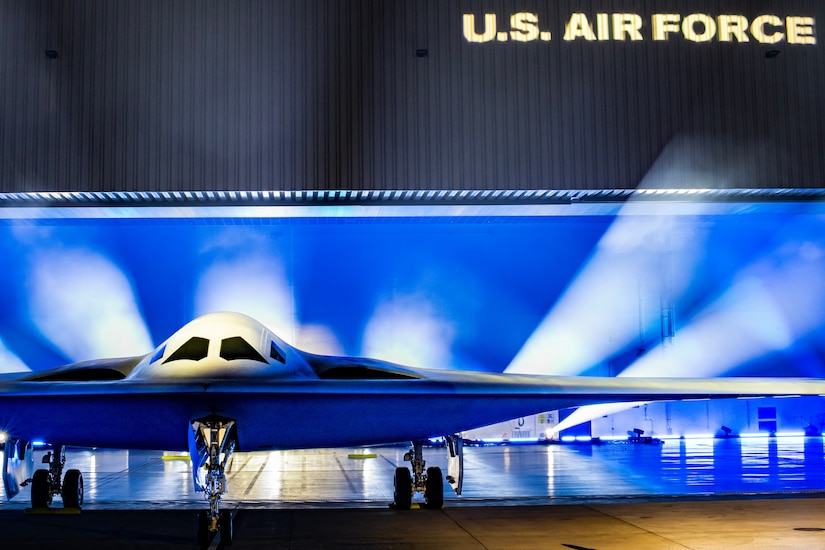
A B-21 Raider aircraft is unveiled, with blue and white lights in the background.

The good news is that beginning last year, production of advanced aircraft and munitions has ramped up. Not as fast as needed, but faster than in the past, the secretary said, adding the testing program for the LGM-35A Sentinel is proceeding well.

The Air Force will replace the aging LGM-30 Minuteman III intercontinental ballistic missile with the Sentinel ICBM. This represents the modernization of the land-based leg of the nuclear triad.

An image of a Sentinel intercontinental ballistic missile in a cloudy sky.

In the space domain, an increase in rocket launches has put more capability into orbit than ever before, thanks to help from commercial partnerships and other military services, as well as the National Reconnaissance Office.

Acquisition transformation includes delivering mission-effective capabilities faster.

"To do that, we must innovate faster than our adversaries," the secretary said.

To accomplish this, the workforce must be empowered to unleash their talent, take the initiative and know that supervisors have their backs, Meink said, adding that the Department of the Air Force has a phenomenal team.

Monday, September 22, 2025

War Department Continues Nuclear Modernization

Sept. 22, 2025 | By David Vergun, Pentagon News

In light of the changing global security landscape, the War Department is considering how to approach modern-era deterrence differently, said Air Force Maj. Gen. Brandon D. Parker, director of global operations at U.S. Strategic Command.  

A man seated in a dress uniform speaks into a microphone and gestures.

Parker spoke today about modernizing the nuclear triad at the Air and Space Forces Association's Air, Space and Cyber Conference at National Harbor, Maryland. 

"We see a lot of promise, both in the programs of record, but also in the legacy systems that we have existing today," he said. "So, while we go through that modernization process, it's equally important that we sustain the capabilities that we have today so that we can continue to deter and, if necessary, respond." 

The programs of record include the LGM-35A Sentinel intercontinental ballistic missile, the B-21 Raider stealth bomber, Columbia-class submarines and nuclear command, control and communications upgrades. 

The legacy systems include the Minuteman III ICBM, the B-52H Stratofortress bomber, the B-2 Spirit bomber and the NC3, which links space-based capabilities. 

Modernization of NC3, Parker said, will include incorporating cybersecurity, designing it to integrate with existing and future systems, and incorporating data analytics tools, automation, machine learning and artificial intelligence to aid operators. 

"The nuclear triad is the bedrock of our national defense. There's no element of U.S. military power that can replace the unique deterrence characteristics of nuclear forces," he said. 

The triad provides a wide range of options to the president, Parker added. 

The 2022 Nuclear Posture Review reaffirmed the nation's commitment to a safe, secure, effective, nuclear force posture, which includes all three legs of the triad, he said, referring to submarines, bombers and land-based missiles that can deliver nuclear weapons.