Showing posts with label Army Marksmanship Unit. Show all posts

Monday, June 15, 2026

Army Marksmanship Unit Marks 70 Years of Precision, Innovation, Service

The U.S. Army Marksmanship Unit was officially established Feb. 16, 1956 — an event that would shape the trajectory of American marksmanship for generations. 

Seventy years later, the unit stands as the Army's premier authority on marksmanship training, small-arms expertise and competitive excellence. Its legacy is defined not only by medals and records, but also by its enduring impact on Army readiness, research, doctrine and lethality. 
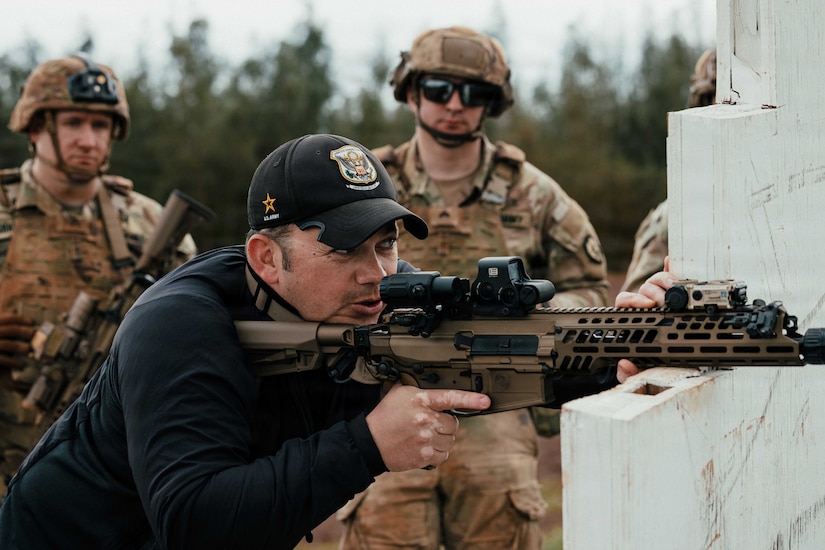
A man wearing casual attire and a baseball cap aims a rifle while propping it on top of a wooden post; there are three men dressed in camouflage military uniforms observing in the background.

The unit's founding purpose was clear from the beginning. In a Nov. 17, 1955, letter to Army Chief of Staff Gen. Maxwell D. Taylor, Army Gen. John E. Dahlquist, commander of the Continental Army Command, set the foundation for the unit's creation. 

"In proportion to its resources, Army leadership in the field of competitive marksmanship on national and international scales should be absolute and unquestioned," Dahlquist wrote, adding that, at the time, there was a perception the Russian army could shoot as well as their Olympic team and could outshoot all other armies. 

Dahlquist wrote that impression needed to be eliminated by the U.S. Army winning international rifle and pistol competitions.  

As the unit developed, its mission expanded. In a Sept. 23, 1991, letter, Army Vice Chief of Staff Gen. Edwin H. Burba Jr. emphasized the importance of marksmanship. 

"The proficient use of individual service weapons is the most important skill of the soldier," Burba wrote. "The U.S. Army Marksmanship Unit is the [U.S. Army Forces Command] standard bearer for effective marksmanship training."  

That vision has guided the unit for seven decades, shaping it into the only organization of its kind within the Army. That founding vision quickly evolved into a broader mission that continues to define the unit today. 
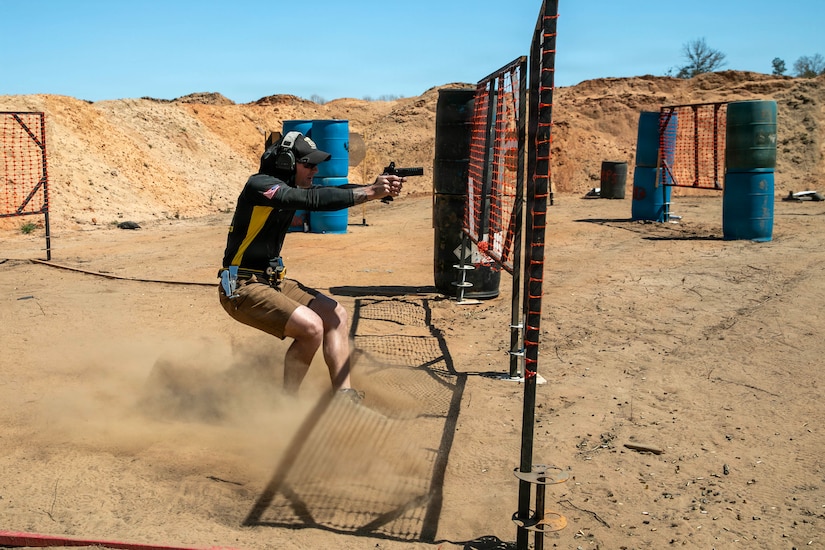
A man wearing casual attire fires a pistol on a training range as dust is kicked up around his feet; there are mounds of dirt and obstacles in the background.

The unit's competitive, training and research missions make it a singular asset. Its competitive teams serve as a real-world test bed, validating training techniques and materiel solutions that shape Army doctrine, small-arms development and lethality initiatives. Since the 1950s, the unit has supported major small-arms programs across the War Department, Justice Department and Department of Homeland Security, often providing technical expertise, hand-loaded ammunition and rapid development capability. 

Supporting Research Across the Army  

For more than 30 years, the unit has partnered with key Army research centers to produce several notable advancements, including: 

  • 6.8 mm reduced-range ammunition — cutting surface danger zones by 40–50%. 
  • Sniper propellant testing — identifying reliable American-made alternatives during supply chain disruptions. 
  • Shock-absorbing concrete testing — supporting shoot-house material evaluation. 

These efforts, along with the unit's contributions to the next-generation squad weapon, reinforce the unit's role as a technical enabler for Army modernization. Beginning in 2012, unit engineers helped shape future small-arms requirements and delivered developmental cartridge concepts that informed the Army's ballistic direction.  
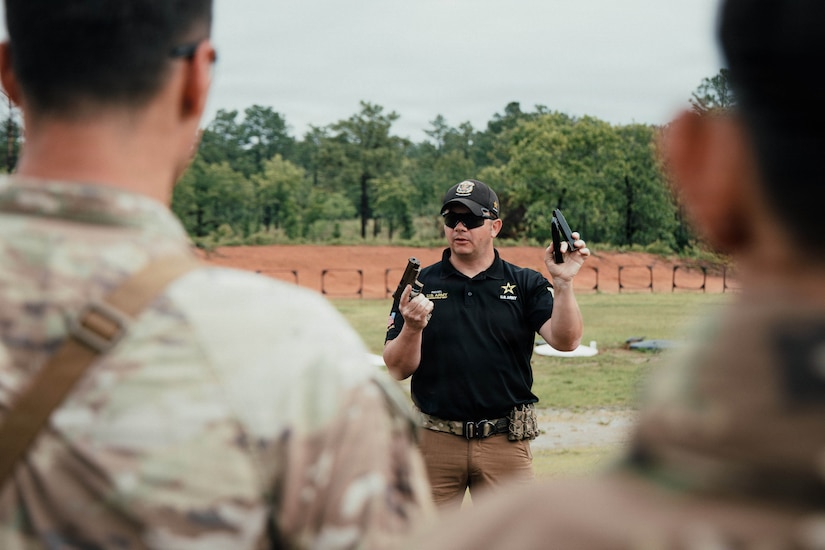
A man wearing casual attire and a baseball cap holds up a pistol and two ammunition magazines as he talks to people dressed in camouflage military uniforms in the foreground.

Between 2019-2021, unit soldiers and civilians supported multiple phases of the next-generation squad weapon evaluation, including sampling, training support, mobility assessments, user feedback and fire-control system input. Today, the unit continues to support fielding and user training across the force. 

Driving Innovation Through Competition  

Competition has always been central to the unit's identity. Beyond medals, these events serve as a proving ground for new ideas. Innovations first tested by unit soldiers have later appeared in the special operations community, including: 

  •  .277 USA and .264 USA cartridges — influencing the Army's adoption of the 6.8 mm combat caliber. 
  • Lightweight intermediate caliber cartridge rifle development — early versions produced by the unit. 
  • .375 EnABELR sniper system — increasing first-round hit probability at extreme distances. 

Another part of the unit's mission is marketing, which involves conducting marksmanship clinics, supervising interservice shooting competitions, maintaining excellence in competition records, representing the Army in national and international events and supporting public engagements. 

Training the Force  

The unit's most enduring contribution is training soldiers. Each year, the unit conducts about 80 training missions, providing hands-on instruction to more than 4,000 soldiers and influencing tens of thousands more. The training has led to 40% increases in lethal hit rates and 50% improvements in marksmanship fluency, delivered at a cost of about $200 per soldier. 
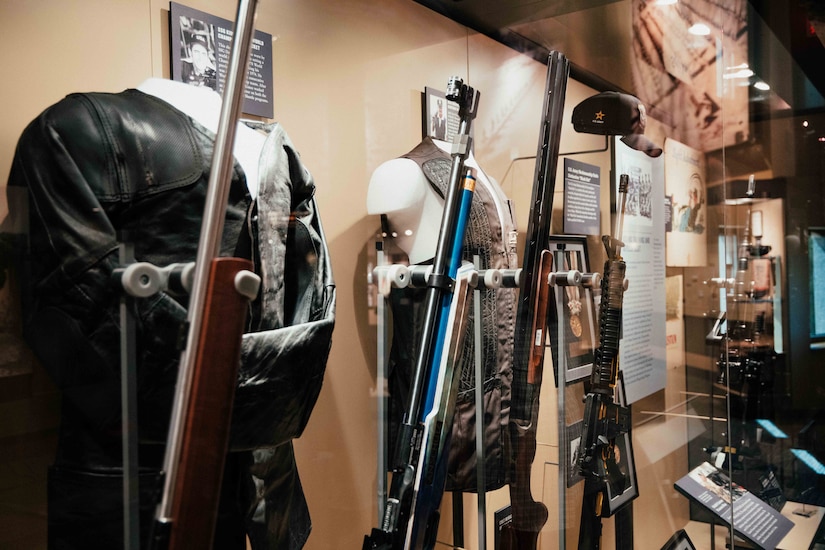
Old uniforms and rifles are on display inside a glass case.

In 2024, Marine Corps Col. James Rose, Marine Raider Regiment commanding officer, praised the unit's support, noting its unmatched instruction and direct impact on sniper lethality. 

Over the past three years, the team has worked with the Department of Tactics, Training and Doctrine to refine small-arms doctrine. The unit also authored the "Small Arms Gold Book," a companion reference supporting the Integrated Weapons Training Strategy. 

Advancing Soldier Lethality Through Science  

Unit soldiers frequently serve as test subjects in biomechanical and physiological studies comparing novice and expert shooters. Recent findings showed expert shooters were 18% more accurate, 50% more stable and 35% slower in rotational movement. 

These insights help shape training techniques across the Army. 
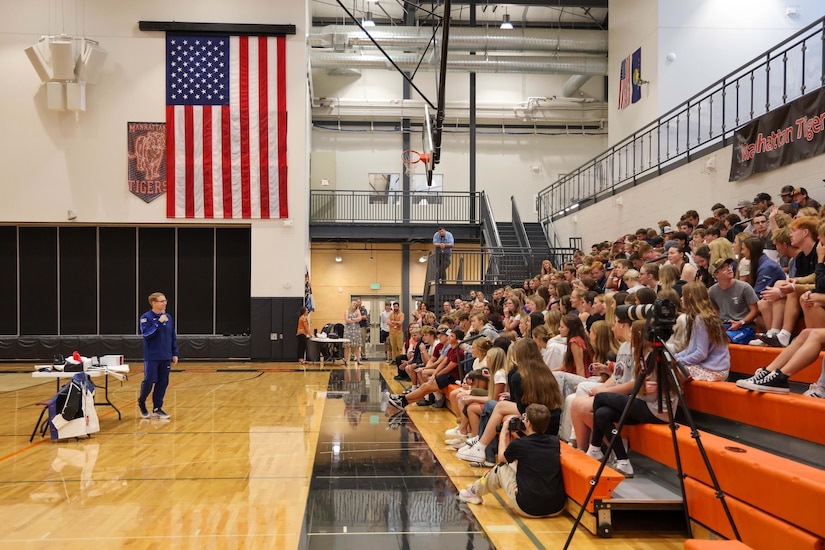
A man wearing athletic attire speaks to dozens of kids seated on the bleachers inside a gym; there is a large American flag hanging from a wall in the background.

From its founding in 1956 to its 70th anniversary, the unit has remained the Army's premier authority on marksmanship. Its influence spans competitive shooting, soldier training, small-arms development, doctrinal refinement and cutting-edge research.  

As the unit enters its eighth decade, its mission remains unchanged and more vital than ever: advancing marksmanship, empowering the warfighter and ensuring the Army maintains its competitive edge.

Tuesday, April 07, 2026

Four USAMU Soldiers Qualify for Upcoming Rifle World Cup Competitions

Four soldiers assigned to the U.S. Army Marksmanship Unit qualified to represent the United States at upcoming rifle world cups after competing in USA Shooting's Rifle Spring Selection Match in Colorado Springs, Colorado, March 20-23.

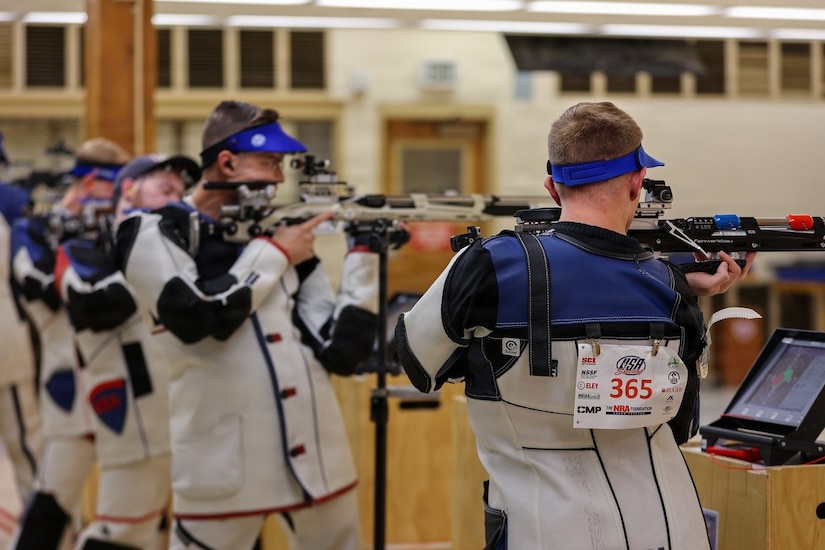
A row of men dressed in competitive rifle shooting gear hold rifles in their hands and stand in the shooting position.

The soldiers competed alongside more than 100 of the nation's top marksmen in the Olympic disciplines of 10-meter air rifle and 50-meter three-position rifle.

After relays and a final, the Fort Benning soldiers earned spots on USA Shooting's national team, which will vie for medals at the International Shooting Sports Federation World Cup in Germany and China later this year.

In the 10-meter air rifle, Army Staff Sgt. Brandon Muske and Army Sgt. Alison Weisz earned positions on the men's and women's teams, respectively. In the 50-meter three-position rifle, commonly called smallbore, Army Sgt. Levi Clark and Army Staff Sgt. Sagen Maddalena qualified for the men's and women's teams.

Earning a world cup berth is one step in a long training cycle, said Maddalena, who won the silver medal in women's 50-meter smallbore at the 2024 Paris Olympics.

"Now that I am on the national team, my job is to prepare myself for the opportunities in these upcoming world cups to make a podium spot," she said.

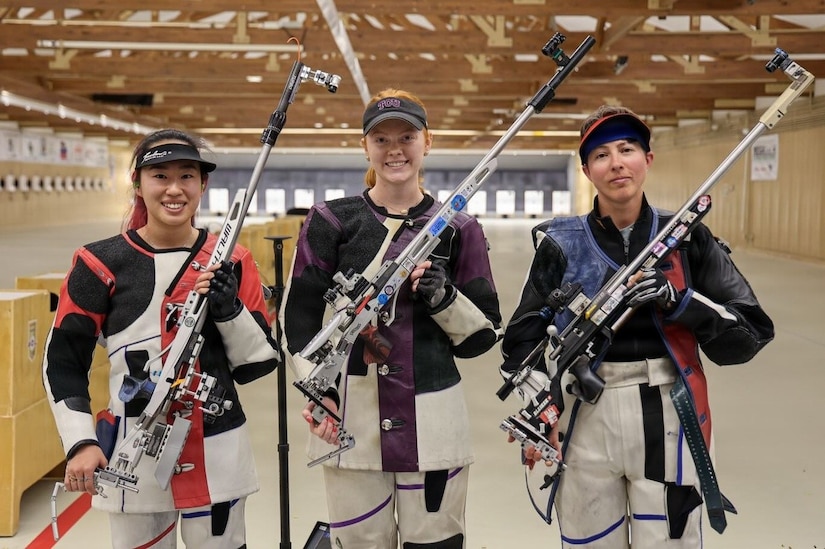
Three women dressed in competitive rifle shooting gear hold rifles up at an angle while posing for a photo.

Maddalena noted that training at this level involves more than the physical and technical challenges of repeatedly hitting a .5 mm target at 10 meters in air rifle or a 10.4 mm target at 50 meters in smallbore.

"That preparation involves building up my mental game and regulating my emotions so that I am ready to compete with the best version of myself," she said.

The U.S. Army Marksmanship Unit International Rifle Team's long record of success shows that the most effective way to prepare for the pressure of international competition is to face it firsthand. So, earning opportunities to represent the nation at the ISSF World Cup is not only an honor but also essential preparation for a potential run at the 2028 Olympics.

"These world cups are very good for me to gain international experience and get used to matches that elevate my nerves more," Clark said.

The selection match also marked the first competition using newly modified gear that complies with the ISSF's 2026 rule changes — adjustments that required significant adaptation, Muske said.

"This selection match was difficult but rewarding," he said. "The training leading up to the match was not going especially well due to new equipment regulations."

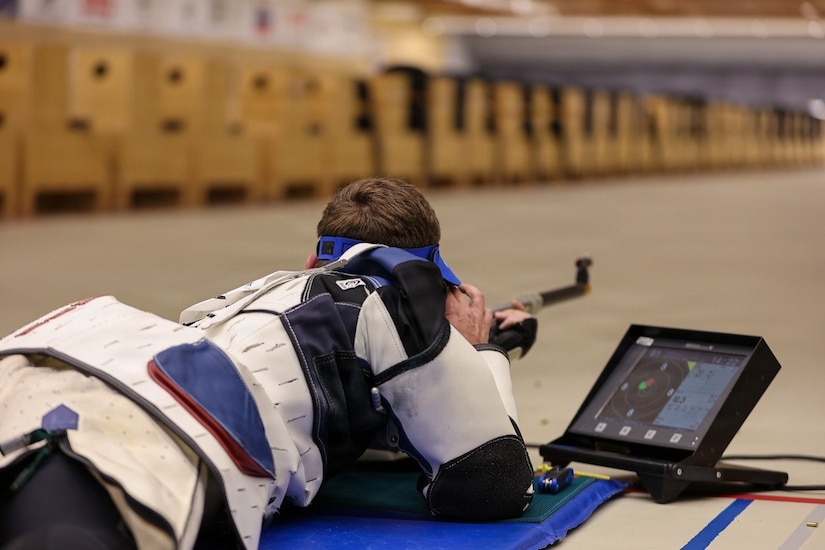
A man dressed in competitive rifle shooting gear is lying down while holding a rifle in the shooting position.

The ISSF changes require competitors' canvas shooting suits to be substantially less rigid. Because ordering new custom-fit suits takes months, the soldiers had to modify their existing gear. Some of the adjustments included removing one of the two layers, applying leather conditioner, and rolling the suits to break down the fibers, said Weisz, a 2020 Olympian in 10-meter air rifle.

"The team collectively spent hours and weeks modifying the suits to be legal," she said.

Clark agreed that the new rules demanded extensive time and effort.

"We spent maybe a collective 100-plus hours modifying and testing our suits over and over again to find the best method that worked for us," he said. "Then, when we got to the match, we learned the temperature and humidity affected these tests and we had to do further modifications."

The extra work cut into training time, adding stress to match preparation, Muske said.

"I left Georgia feeling rather unprepared to perform but was able to execute my match plan effectively despite some of the physical deficiencies and less-than-ideal training leading up to the match," he said.

The ISSF changes affected all competitors, not just the soldiers. Competitors shared modification techniques and discussed the added pressure of suit inspections, which could disqualify anyone whose gear failed to meet the new standards.

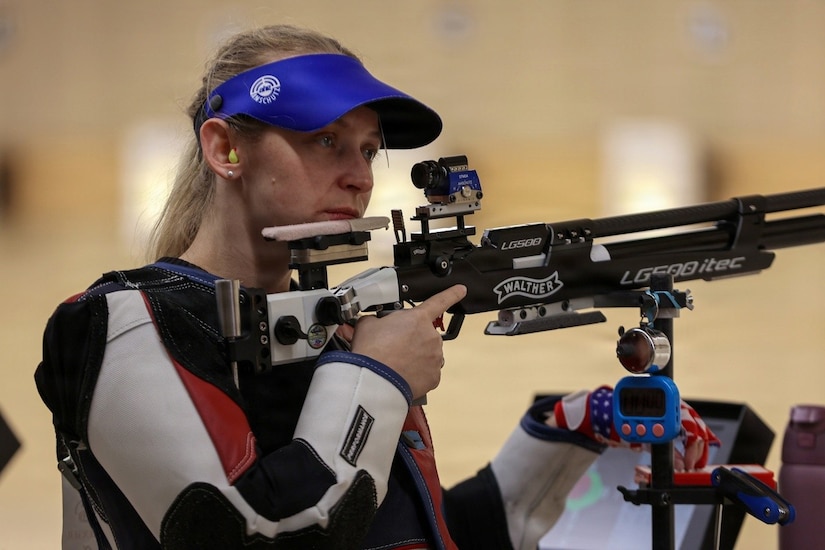
A woman dressed in competitive rifle shooting gear looks at a target and holds a rifle in the shooting position.

Suit changes weren't the only shift at the selection match. This event was the first "one-and-done" selection match in years, Weisz said.

Under the previous system, competitors shot multiple matches and the best five scores determined world cup qualification.

"While that was challenging in its own right, this style brings on extreme intensity and pressure," Weisz said. "You get two days and a final to perform and make your goal happen. I like to think I thrive under pressure, so it was exciting for me to compete like that again, but of course I was also nervous."

Competition naturally brings anxiety but adding suit inspections and a single-match selection format made the event especially stressful, she said.

"It was interesting watching everyone handle it differently," Weisz said. "That really added a layer of challenge to maintain composure and not let other competitors' emotions affect my own."

Thursday, September 18, 2025

U.S. Soldiers to Compete in International Handgun Championships


Army Sgt. Aaron Eddins and Staff Sgt. Jacob Hetherington will compete at the 2025 International Practical Shooting Confederation World Shoot Handgun Championships in South Africa Sept. 22-27. 

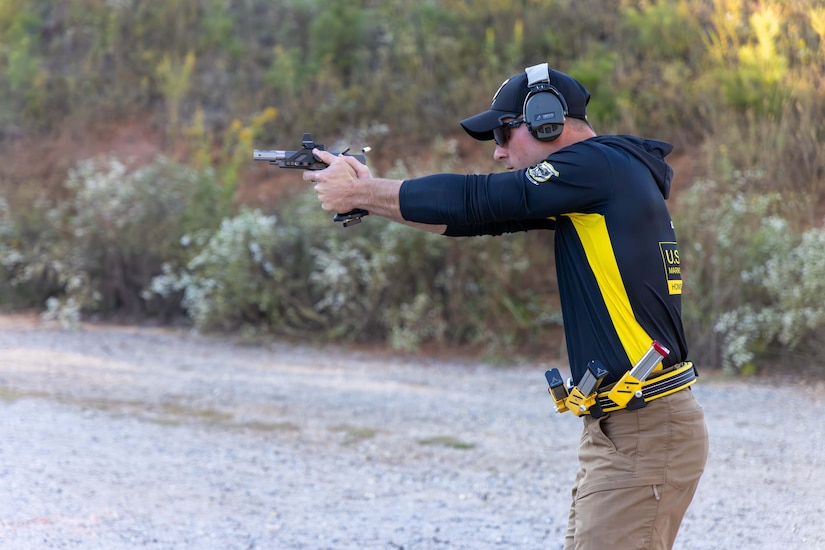
A man wearing a hooded shirt, hat, hearing protection and a belt carrying three magazines fires a handgun in front of a brush hill. A bullet casing flies out of the gun in the air.

Eddins and Hetherington are instructors and competitive shooters assigned to the Army Marksmanship Unit at Fort Benning, Georgia, and part of the U.S. Practical Shooting Association Team representing the United States at the 30-stage, five-day handgun championships.

More than 1,700 marksmen from at least 50 countries qualified to represent their countries at this elite competition, making it an honor to attend, Eddins said.

Some of the countries represented include Poland, Czech Republic, Italy, Brazil, Venezuela, Kenya, China, Serbia, Ukraine, Zimbabwe, New Zealand, Ecuador, Papua New Guinea, Republic South Africa, Sri Lanka, Germany, Paraguay, France, Canada and Philippines. 

"The IPSC World Shoot is the Olympics of practical shooting. It takes place every three years but has recently changed to every four to match the Olympic schedule," Eddins said. 

The first World Shoot was in Zurich in 1975 where American marksman Ray Chapman won the gold medal. As firearms developed and the number of competitors increased, changes were inevitable. In 1990, American Doug Koenig became the first marksmen to win the World Shoot using a red dot sight. In the following 1993 World Shoot, competitors were divided into divisions based on equipment. For example, marksmen competing with optical sights were in the open/modified division, while competitors with iron sights were the standard division. 

This year's World Shoot has six divisions that include classic, open, production, production optics, revolver and standard.  

To qualify for the 2025 World Shoot, athletes had to compete in four qualifying matches. From those four, the top three scores were combined, Eddins said. 

"The top four in each country [for each division] are selected to be on that country's national team," he said. 

Eddins will represent Team USA in the open division alongside civilian marksmen Christian Sailer, Bryan Jones and John Vlieger. These four Americans will vie for the gold against 358 other individual competitors. They will also compete as a divisional team against 35 other countries. 

Hetherington will represent Team USA in the production optics division alongside civilian marksmen JJ Racaza, Tom Castro and Jay Beal. These four Americans will seek the gold against 447 other individual marksmen and 40 other country teams. 

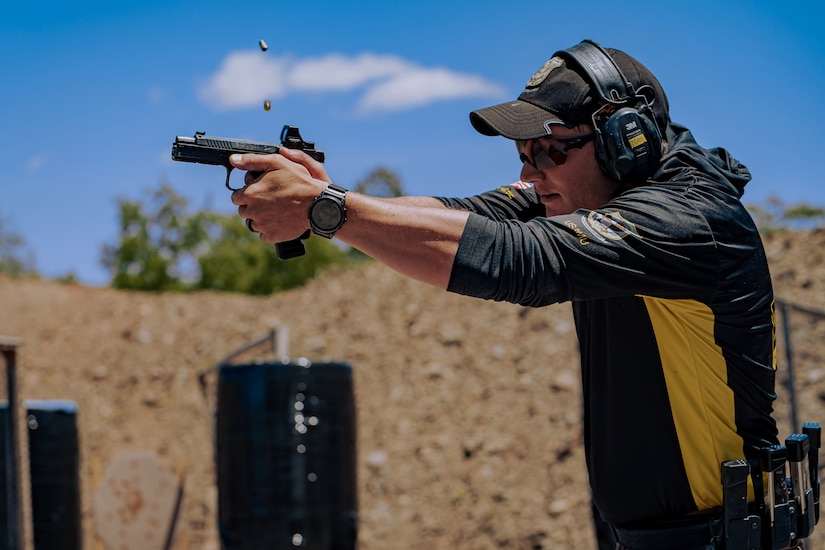
A man wearing a hooded shirt, hat and hearing protection fires a handgun in front of a brick wall. Bullet casings fly out of the gun in the air.

Competing internationally is not new for the USAMU Action Shooting Team. Years ago, the team competed at IPSC Championships regularly. USAMU veterans such as Travis Tomasie, Max Michel, KC Eusebio and Shane Coley have competed and medaled in several IPSC World Shoots over the years. In fact, in 2008, USAMU Action Shooting Team soldiers swept the podium when Eusebio, Brad Balsley and Coley won the gold, silver and bronze in the junior category. 

Although the Action Shooting Team stepped away from international competitions for several years because of a variety of administrative challenges, there is now a refocused effort. The 'Home of Champions' is well known for international shooting sports like the 10m air rifle, 50m smallbore, trap and skeet since they have had a strong presence at the Olympics in those sports. 

Across the nation, the Action Shooting Team is well known in practical shooting, precision rifle series and multi-gun competitions, and since the IPSC World Shoot is similar in nature to the unit's Olympic presence in other shooting disciplines, it's in-line with the unit's mission to win on a global stage, said Army Sgt. 1st Class Christopher Workman, USAMU Action Shooting Team chief. 

"It is important for these world-shooters to be able to represent the U.S. Army and the Army Marksmanship Unit on an international stage, not only matches within [the United States]," Workman said. 

To prepare for this competition, Eddins said he competed in seven international competitions over the last three years. Hetherington, who earned the highest qualifying points in the production optics division, earned his spot on the World Shoot by competing at French Nationals, Extreme Euro in the Czech Republic and the Viking Extreme in Denmark. However, this is not his first World Shoot. He competed in the championships before joining the Army. 

"The last World Shoot I shot was in 2014. I was on the U.S. Junior Production Team and earned a silver medal. The U.S. Team won the gold medal for team production," Hetherington said. 

Like the Olympics, the IPSC Championships will be intense, not only with competition but in course of fire as well. U.S. Practical Shooting Association competitions typically have between nine and 12 stages over two to three days. The international competition is more like a marathon with 30 stages over five days. Those stages are broken up into three courses, short (12 rounds or less), medium (13-24) and long (25-32), making each competitor prove their skills are fast and accurate with nearly 600 rounds. 

Team USA will begin competing Sept. 22, with the 30 stages broken down into five areas, meaning they will complete six stages per day.