Thursday, July 30, 2026

U.S., U.K. Air Forces Conduct Fighter Weapons Certification During Exercise Combat Archer

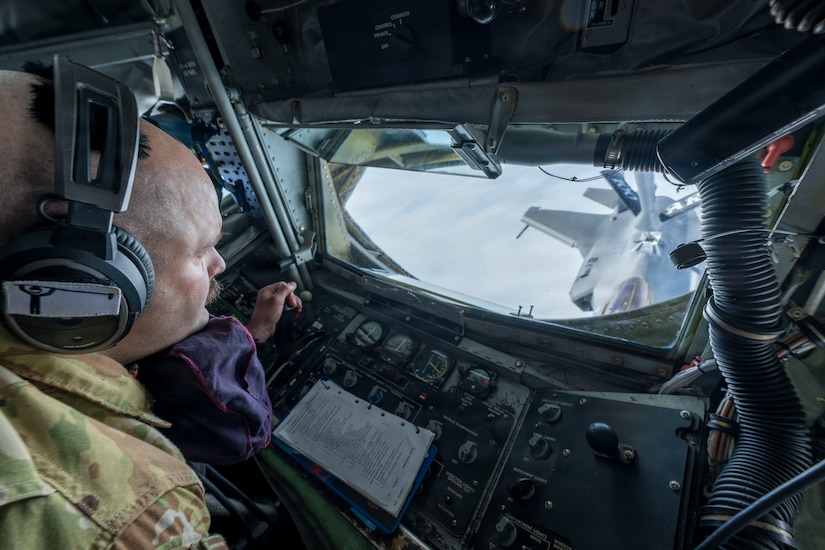
A man wearing a camouflage military uniform and headphones sits in the cockpit of a tanker aircraft.
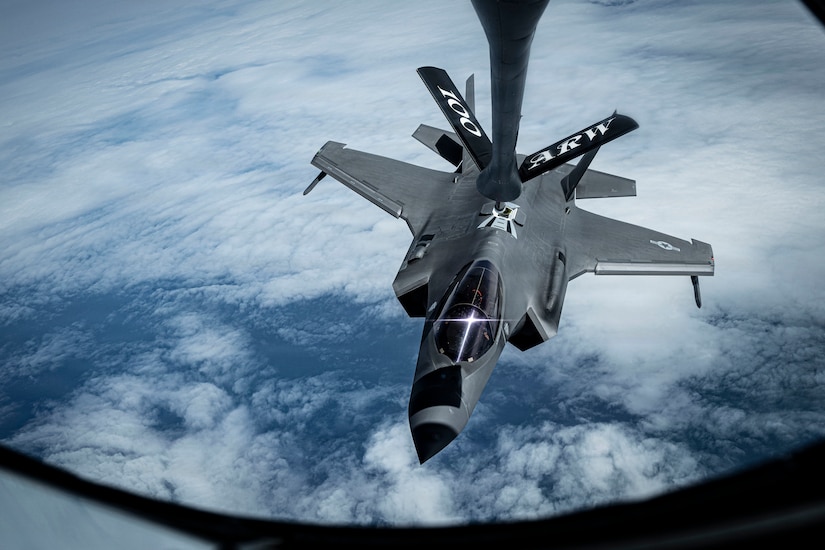
A fighter jet is connected to the boom of a tanker aircraft while refueling in flight.
After two weeks of high-end, tactical air and missile training, Exercise Combat Archer U.K. 26 concluded July 24, with the combat certification of the U.S. Air Force's 492nd and 493rd Fighter Squadrons stationed at Royal Air Force Lakenheath, England.

Led by U.S. Air Forces in Europe and Air Forces Africa, alongside Royal Air Force F-35B Lightning fighter jets, the exercise paired an evaluation unit with active U.S. fighter squadrons to certify pilots and ground crews for combat operations.

The squadrons were supported by the 351st Aerial Refueling Squadron from Royal Air Force Mildenhall, England, and the 83rd Fighter Weapons Squadron from Tyndall Air Force Base, Florida, which conducted the evaluation.

Exercise Combat Archer U.K. focused on air-to-air, weapons system evaluation training scenarios, ensuring high-end combat readiness for global operations. 

In accordance with chief of staff of the Air Force directives, operational units are required to certify in all aspects of air-to-air weapons system employment before executing real-world taskings. Exercises like Combat Archer further confirm Air Force units are postured and ready as a credible force to assure, deter and defend in an increasingly complex security environment.
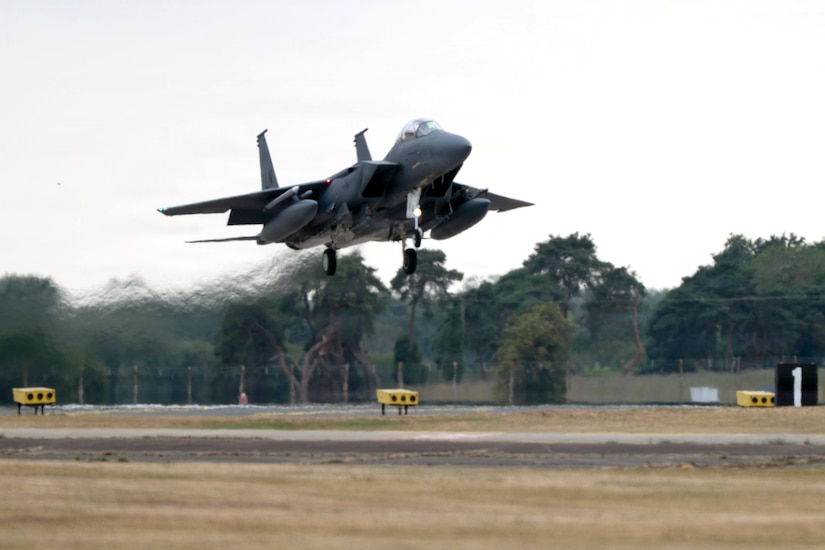
A fighter jet lands on an airstrip; there is a tree line in the background.

"Across the command we know we have pockets of lessons learned and exercising them together in a challenging environment, before the time of need, gives us a strategic advantage," said Air Force Lt. Gen. Jason Hinds, U.S. Air Forces in Europe and Air Forces Africa commander. "Exercises like Combat Archer U.K. 26 ensure tactical proficiency, readiness of our maintainers and operators and confidence in the weapon system."

During the exercise, ground crews and pilots gained valuable experience employing air-to-air missiles and aerial gun weapons. While maintenance personnel focused on building, loading and arming munitions onto aircraft, aircrew ground training focused on determining appropriate payloads for their assigned realistic combat scenarios. All training culminated in live fires where pilots executed weapons employment on airborne targets.

"It's a chance, in a controlled environment, for pilots to actually experience what live weapons employment looks like," said Air Force Capt. Thomas Holmes, 48th Fighter Wing project officer and 493rd Fighter Squadron pilot. "Exercises like Combat Archer U.K. really hone those air-to-air skills. There is no substitute for that kind of training."
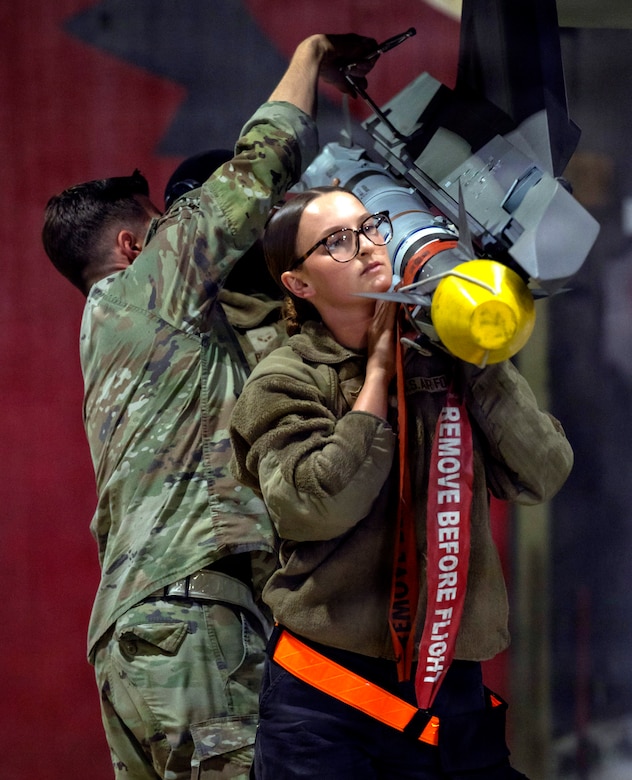
A woman wearing a military camouflage uniform lifts a missile on her shoulder as two men wearing similar attire connect it to a fighter jet.

The Royal Air Force F-35 fighter jets executed critical beyond-visual-range weapons scenarios, directly synchronizing allied tactics, techniques and procedures to forge deeper trust and operational confidence.

Specialized certification training like this ensures forces are ready, lethal and postured to safeguard against any threat to U.S. interests in Europe and around the globe. The exercise provided crucial data to system engineers, enabling them to improve aircraft and munition guidance systems for the Air Force.

The 83rd Fighter Weapons Squadron evaluated both the ground and air components of weapons employment while simultaneously using traceable air-to-air missiles, enabling for detailed real-time telemetry data analysis. The integration of U.S. 4th- and 5th-generation fighter jets alongside Royal Air Force aircraft allowed forces to test their ability to provide and sustain combat operations in a realistic training environment alongside allies and partners. 

Walter Reed's Skull Base Team Performs Innovative Brain Surgery

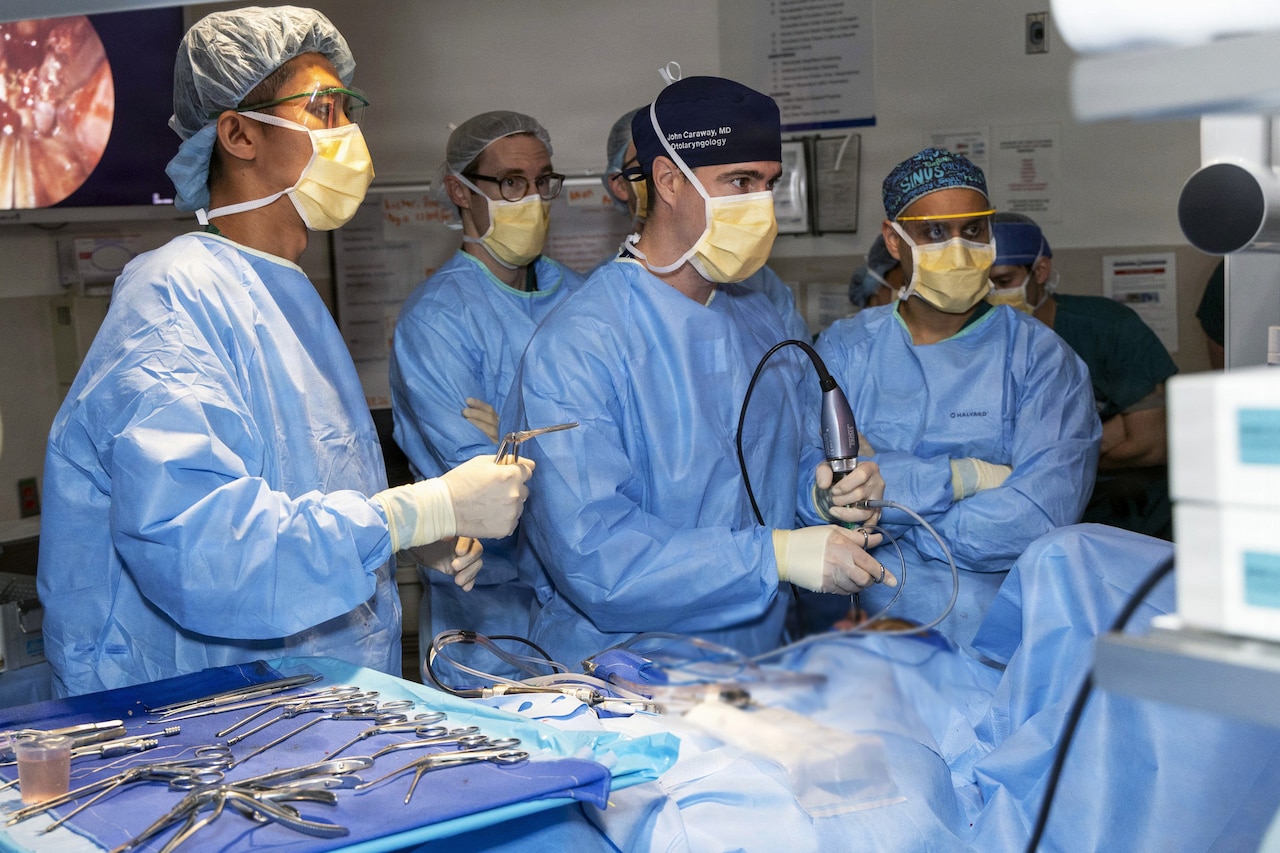
A man in medical scrubs performs surgery on a patient lying on a table as six other people in similar attire observe and assist.

For 15 years, Marine Corps Staff Sgt. Andy Archer lived with a relentless, everyday companion — a pounding headache. 

"I'd wake up with a headache and go to bed with a headache," Archer recalled.  

He chalked it up to severe allergies or sinus issues, relying on over-the-counter decongestants to get through his demanding days. 

For Archer, a former drill instructor at Marine Corps Recruit Depot Parris Island, South Carolina, and a current flight line mechanic at Marine Corps Air Station New River, North Carolina, pushing through the pain became part of his daily routine. But recently, Archer's vision began to blur. 

"I became nearsighted; it was bad," Archer said. "I thought I was getting old."  

He finally mentioned the chronic pain to his doctor, a provider with Marine Centered Medical Home New River. 

The doctor ordered an MRI that revealed a mass the size of a golf ball, measuring roughly 4.4 centimeters, sitting directly in front of his pituitary gland and pressing against his optic nerve.

Archer needed neurological care, and he needed it fast. It was suggested that he go to the premier medical hub for complex cases: Walter Reed National Military Medical Center in Bethesda, Maryland. 

At Walter Reed, Archer consulted with Army Lt. Col. Charles Miller, neurosurgeon, and Army Maj. J. Patel, anterior surgeon, both assigned to the hospital's skull base team. The specialized surgical team mapped out an innovative, minimally invasive procedure. 

The surgeons planned to extract the massive brain tumor entirely through Archer's nose.  

"Historically, most of these surgeries were done open, which is a much more challenging procedure for the patient," Patel said. "Today, if a tumor is the appropriate size and location, open surgery just isn't necessary. Through the nose, we get the best access and the best chance of complete removal." 

The procedure required a highly synchronized collaboration between two experts. Patel developed a plan to navigate the complex nasal anatomy and create a clear surgical pathway. Archer had a severely deviated septum, and Patel likened the fix to "removing the sheetrock but leaving the studs" so that the nose wouldn't collapse. 

Once the pathway was clear, Patel used an endoscopic camera to provide high-definition, close-up visualization on a surgical monitor. This allowed Miller the crucial two-handed freedom to dissect and extract the tumor safely. 

"If he needs to get to critical structures, I can drive the camera closer, so he has perfect visualization," Patel noted. "Dr. Miller takes on these complex cases when many surgeons wouldn't want to risk the complications or step out of their comfort zone. My skills in navigating the nasal approach are only useful because he is skilled enough to completely remove the tumor once we get there. Dr. Miller is very well equipped to do these surgeries. It is a true team effort." 

In July, the team successfully removed more than 99% of the benign mass. Still, a microscopic fraction of the tumor remained wrapped tightly behind Archer's optic nerve, that if removed, carried major risks. 

"You must ask, 'Is it worth giving the patient a stroke or permanently changing their perfect vision just to get that last millimeter?'" Patel said.  

Prioritizing the patient's health, the team decided to leave that final fraction, confident the tumor is highly unlikely to return. 

"The biggest thing was to get the tumor out safely," Patel said. "A minimally invasive approach through the nasal passages is more challenging and we are mindful that [the tumor] has to be in a certain spot to go through the nose." 

To complete the surgery, the team performed a reconstruction of the skull base, using a small graft taken from Archer's leg to seal the area.

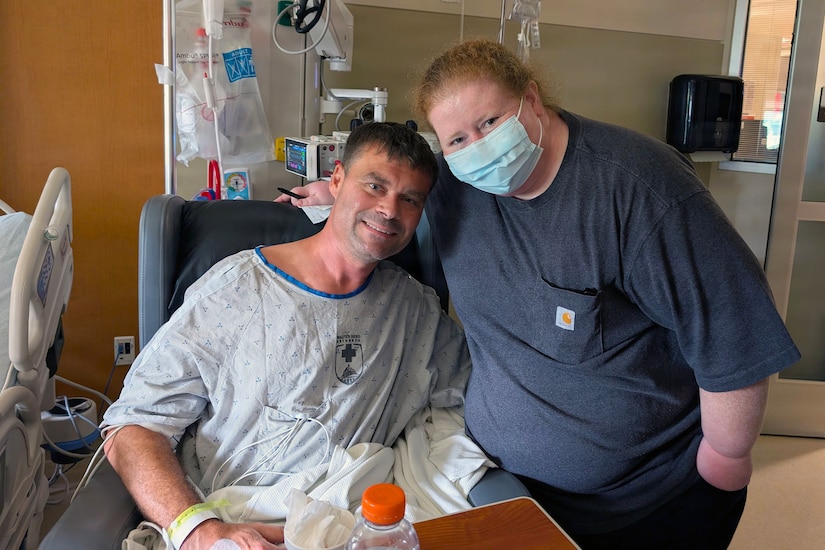
A man in a hospital gown poses for a photo with a woman in casual attire and a face mask while in a hospital room.

Just two days after surgery, sitting in the surgical intensive care unit at Walter Reed, there were no visible signs that Archer had just undergone major brain surgery. 

Archer's vision had already started to clear, and while he was dealing with expected post-operative headaches and leg soreness from the graft, his spirits were high. He and his wife, Rebecca, have been blown away by the hospitality and professionalism of the hospital staff. 

"The care has been awesome," Archer said, giving special praise to the nurses, as well as the physical and occupational therapy teams. 

Rebecca echoed his sentiments, noting that the on-campus Navy Lodge provided a comfortable, supportive environment for their recovery process. 

For surgeons Miller and Patel, and the Walter Reed skull base team, Archer's remarkable outcome highlights a broader mission: ensuring military beneficiaries know that they do not need to look to the civilian sector for cutting-edge medical care. 

"I don't think anyone else in the Defense Health Agency has this kind of team performing these complex skull base surgeries," Patel said. "Our goal is to make sure providers know this capability exists, so patients have the best options. Most patients are happy to stay in military healthcare." 

Thanks to an observant Navy doctor, a collaborative surgical team and the innovative capabilities of Walter Reed, Archer's toughest battle appears to be behind him.

Freedom Haulers Initiative to Help Veterans Get Commercial Driver's Licenses, Better Jobs

 July 30, 2026 | By C. Todd Lopez, Pentagon News

At the White House today, President Donald J. Trump announced the kickoff of the Freedom Haulers campaign, a new effort to help military veterans find good-paying jobs as commercial drivers following their military service by establishing a military-to-commercial driver's license pipeline.

"Under our brand-new ... Freedom Haulers initiative, any American who has driven a heavy truck for our military will automatically be eligible for a commercial driver's license — and it's good-paying jobs too," Trump said. "Any veteran with heavy vehicle experience from the military will now be eligible to skip redundant road tests to obtain a commercial driver's license."

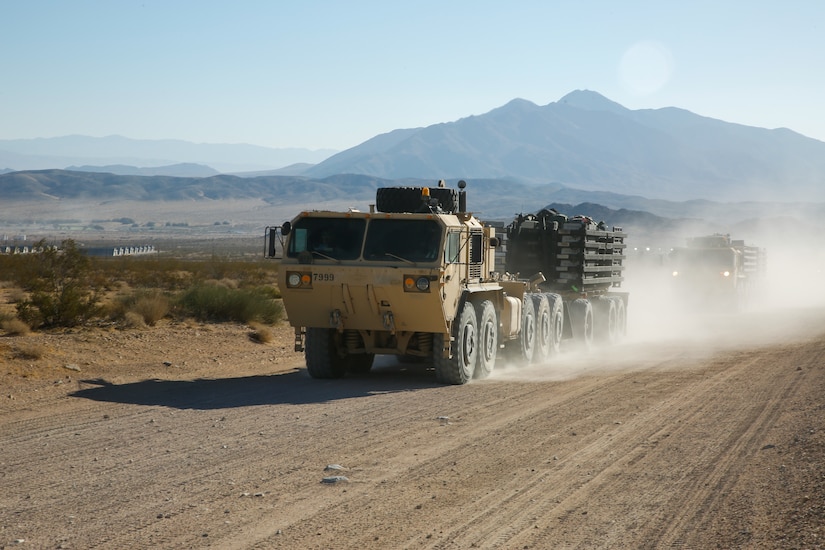
A convoy of military trucks in motion along a dirt highway during daytime.

The president said the initiative also helps military personnel with no truck driving experience get trained and licensed to drive commercial vehicles.

One element of Freedom Haulers is that drivers with two years of experience safely operating heavy military vehicles can obtain a commercial driver's license without taking the driving test. Previously, that option was available for only 12 months after leaving a qualifying military job. But now the window to take advantage of the waiver has been extended to 24 months. All states participate in this program, and more than 40,000 veterans have used this waiver.

Also, part of the Freedom Haulers campaign is the "Even Exchange" program, which exempts qualified military drivers from the knowledge test required to obtain a commercial driver's license. This program applies to Army motor transport operators, fuelers and Patriot launching station operators; Marine Corps motor vehicle operators; Navy equipment operators; and Air Force vehicle operators, fuelers, and pavement and construction equipment operators. Right now, 34 states participate in the initiative, but Trump said he thinks more states will soon follow.

"This is a big deal; we believe that all 50 states and Washington, D.C., should join us in supporting these great veterans. ... I think they're all going to be signing up," Trump said.

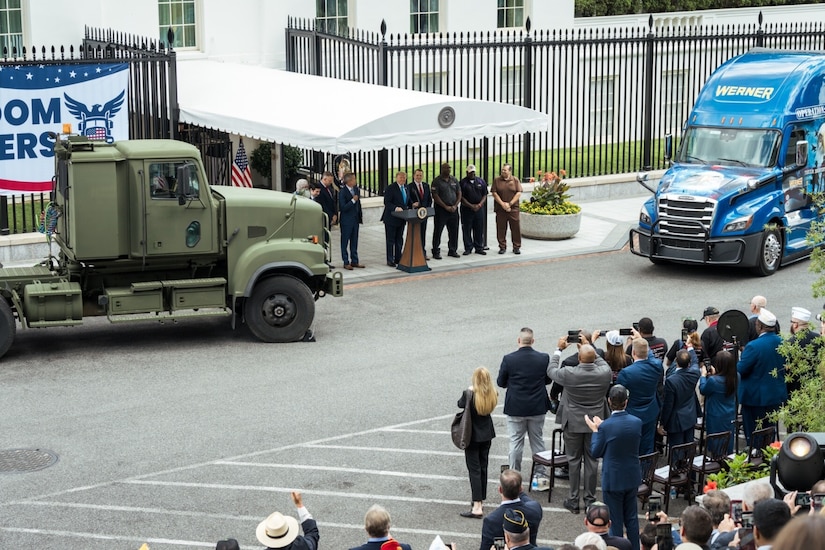
A man stands behind a lectern and is flanked on his left and right by several men and two large vehicles. In the rear is an entrance to the White House.

The White House, along with the departments of War, Labor, Transportation and Veterans Affairs, are involved in the effort.

Transportation Secretary Sean Duffy explained how, under Freedom Haulers, military veterans will be exposed to great opportunities to find good-paying jobs following their military service.

"These are great-paying jobs; they're anywhere from $80 to $100,000-plus a year," Duffy said.

Without a program like Freedom Haulers, Duffy said, military veterans with the skills to do the work would have to retrain for a job they already performed for years in service to the nation.

"If Secretary [of War] Pete Hegseth thinks that you can drive a vehicle like this," Duffy said, pointing to a military combat vehicle on display at the White House, "[President] Donald Trump and Sean Duffy think that you can drive a vehicle like that," he said, pointing at a commercial big rig.

The aim of Freedom Haulers is to get veterans into good jobs and increase the number of veteran commercial drivers, Veterans Affairs Secretary Doug Collins said.

"I can't think of anything else that says freedom more in our country than an open road truck and a veteran," Collins said. "Veterans [have] said one thing: when they raised their right hand, they pledged what others would not do. They said, 'I will go and do what others will not do.'"

Now, Collins said, the VA is putting veterans first by helping them get into the driver's seat with great after-service jobs.

"Let's put veterans in the seats, making jobs safer and better for all Americans as we go along," he said. "Veterans ... you proved once you can do it. I know for a fact you can do it every single day."

Collins said the GI Bill will cover up to 100% of commercial driver's license tuition at state- and agency-approved schools. And for veterans with service-connected disabilities, the Veterans Readiness and Employment program also fully funds training and assists with job placement.

"One in 10 of our truck drivers across the country are veterans already — one in 10," Collins said. "Why don't we make it two in 10? Why don't we get three in 10?"

Army Chaplain Corps Celebrates 251 Years

As the United States celebrates 250 years of independence, the Army Chaplain Corps marks 251 years of service to the soldiers who have defended the nation since its founding.

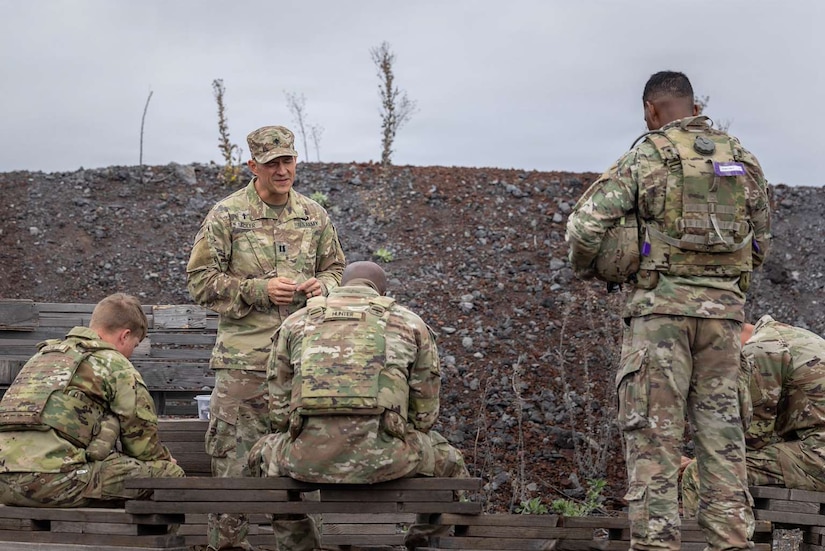
A man in a camouflage military uniform speaks to four other men in similar attire as they bow their heads outside.

The United States' strength has always depended on those willing to stand in its defense. A strong nation requires a strong Army, and a strong Army depends on soldiers who are prepared for the demands of service. Every soldier who raises a right hand and swears an oath to support and defend the Constitution accepts the responsibility of defending the ideals that have defined the country for two and a half centuries.

They leave behind their families, represent the nation around the world, and stand ready to answer when their country calls.

The U.S. is respected across the globe because of the men and women who wear the uniform. Through unmatched training, leadership, readiness, commitment and strength, the Army remains the most capable and formidable fighting force in the world. Yet ensuring readiness among soldiers has always required more than weapons and training.

Alongside physical strength and professional competence, resiliency is another facet of readiness that has been essential to the Army since its earliest days. Resilience grows through pastoral care, which helps soldiers navigate adversity with hope, courage and inner strength.

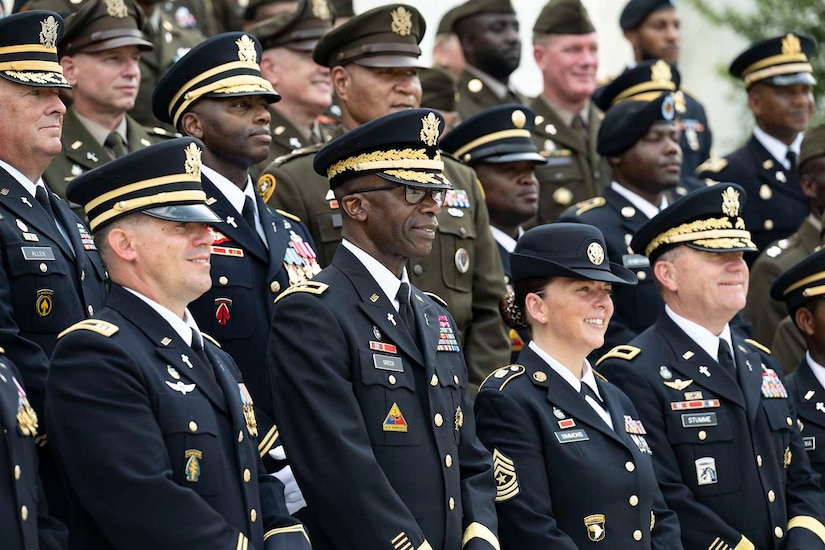
More than a dozen people in formal military uniforms stand in a group and pose for a picture outside.

At its core, pastoral care is the recognition that every soldier is more than a rank, a position, or a mission. Each soldier has a story that extends far beyond the uniform. Each soldier is a person who experiences the demands of duty, separation, uncertainty, hardship and loss.

For 251 years, the Army Chaplain Corps has provided faith-based, intentional support aimed at serving each soldier wholly, helping them find strength during difficult circumstances, build resilience for the challenges of battle and prepare to thrive in life beyond military service.

Army Chaplain Kit

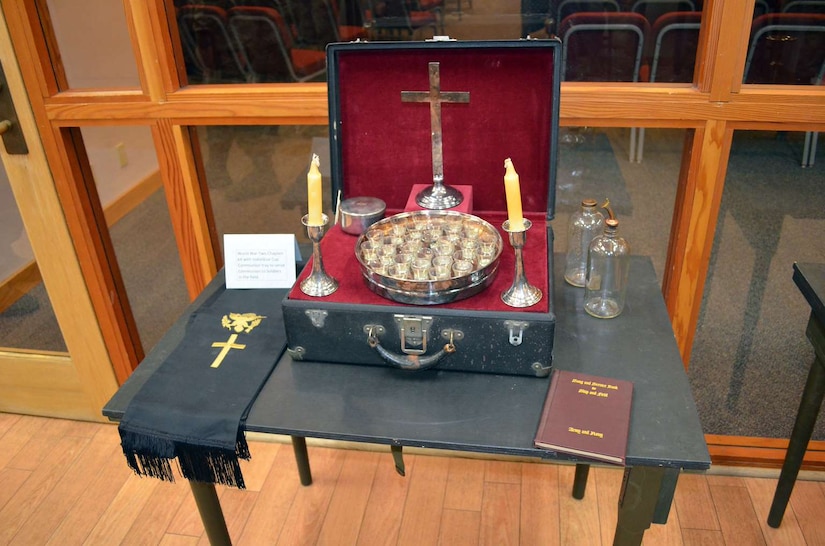
That ministry is represented by a familiar piece of Army equipment: the chaplain kit.

Candles, a cross and other religious materials are displayed on a table inside a room with wooden flooring.

Today's chaplain kits are designed to support soldiers wherever they serve, providing chaplains with the resources needed to conduct worship and perform religious services for a range of faith traditions.  

Yet these kits didn't begin as standard-issue military equipment. Their development reflects the Army's growing recognition that caring for soldiers' religious needs is an essential part of sustaining the force.

When the Army Chaplain Corps was established July 29, 1775, chaplains carried religious materials tucked into their personal equipment, making sacred space for soldiers wherever they marched.

As the nation and Army grew, so did the Chaplain Corps. Matching the needs of a dynamic force, the supplies that chaplains carried gradually became organized field kits called chaplain kits.

The contents evolved with each generation, adapting to new conflicts and emerging technologies across the force. Yet the purpose remained remarkably consistent: to ensure that chaplains were prepared to meet the needs of soldiers in any environment, no matter how demanding or far from home.

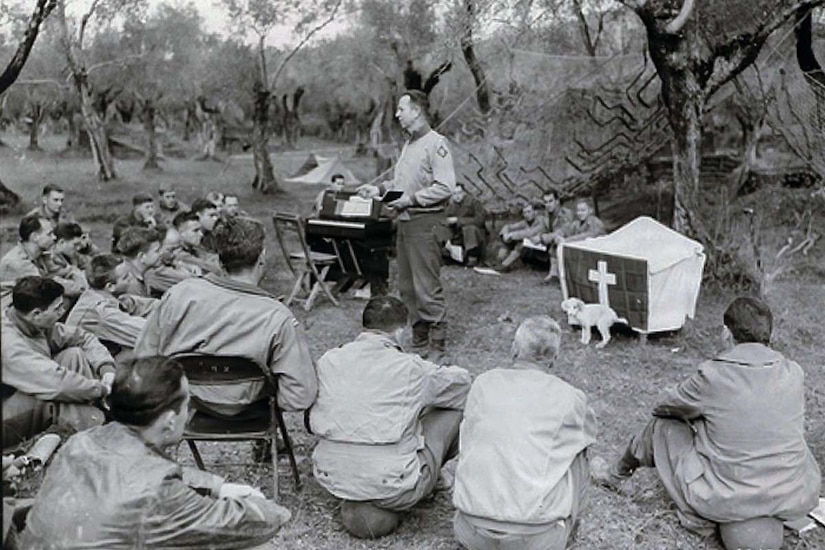
A man stands outside in a wooded area and speaks to more than a dozen seated men, some in chairs and others on the ground; behind him is a portable piano, a dog and a small religious altar.

For all their evolution, the most important elements of a chaplain's ministry have never been packed inside the kit. Kits provide the tools. Chaplains provide the care, each embodying an unwavering spirit to serve God and country.

Chaplains are there before a soldier leaves for a deployment, offering perspective during the uncertainty of what lies ahead. Chaplains remain connected to families as they navigate another separation. Chaplains sit beside hospital beds, listen during difficult late-night conversations, conduct funerals for the fallen and stand with units as they grieve the loss of one of their own. At each turning point, chaplains help soldiers and leaders face the challenges of service and find a way forward.

For 251 years, the Army Chaplain Corps has followed soldiers wherever the nation has called on them to serve. Today, it continues its mission with the same resolve that inspired its predecessors, the ever-evolving chaplain kit serving as a visible reminder of the promise to serve those who serve.