Tuesday, May 05, 2026

'Project Freedom' Aims to Get Thousands of Commercial Ships Safely Through Strait of Hormuz

Iran has blocked safe passage through the Strait of Hormuz for commercial cargo and tanker vessels, trapping thousands inside the Persian Gulf and halting the free flow of commerce in the region.
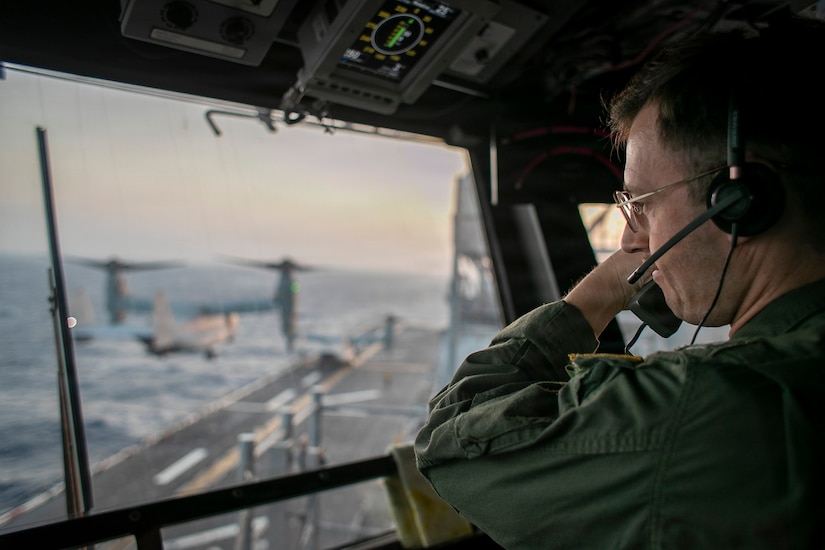
A sailor looks out of the window of a control tower on a ship at sea, with an aircraft hovering in the background during daytime.

Project Freedom is meant to reopen the strait to commercial vessels, said Secretary of War Pete Hegseth during a briefing today at the Pentagon. It is also independent of Operation Epic Fury, which for now, is in a ceasefire. 

"President [Donald J.] Trump has directed U.S. Central Command to restart the free flow of commerce through the Strait of Hormuz under the umbrella of Project Freedom," Hegseth said. "Project Freedom is defensive in nature, focused in scope, temporary in duration [and] with one mission: protecting innocent commercial shipping from Iranian aggression." 

The secretary said as part of Project Freedom, American forces won't need to enter Iranian waters or airspace, but also, that Iran can no longer be allowed to stymie international commerce. 

"Iran ... cannot be allowed to block innocent countries and their goods from an international waterway," Hegseth said. "Iran is the clear aggressor, harassing civilian vessels, threatening mariners from every nation indiscriminately and weaponizing a critical choke point for its own financial benefit." 

Already, Hegseth said, two U.S. commercial ships, along with American destroyers, have traversed the strait, proving that Iranian control of the strait is an illusion.
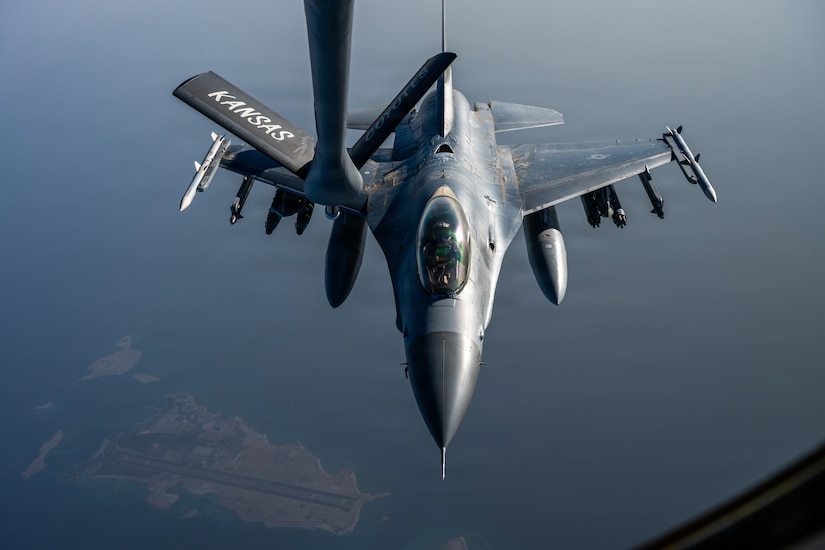
An aircraft flies over open water.

"We know the Iranians are embarrassed by this fact," he said. "They said they control the strait — they do not. So, American ships led the way, commercial and military, shouldering the initial risk from the front — as Americans always do. Right now, hundreds more ships from nations around the world are lining up to transit." 

The secretary said Centcom and partner nations are working with ships, shipping companies and insurers to let them know it's safe to move out. 

"All of these ships from all around the world want to get out of the Iranian trap that they have been stuck inside," he said. 

Air Force Gen. Dan Caine, chairman of the Joint Chiefs of Staff, said right now, there are more than 1,500 vessels with about 22,500 mariners trapped inside the Persian Gulf.

"Over the past seven weeks, Iran has repeatedly threatened and attacked commercial shipping in the strait in order to effectively cut off commercial traffic and damage the global economy," Caine said. "By obstructing one of the world's most critical maritime checkpoints, a vital transit route for approximately one-fifth of the global oil consumption, Iran is weaponizing the global supply chain."
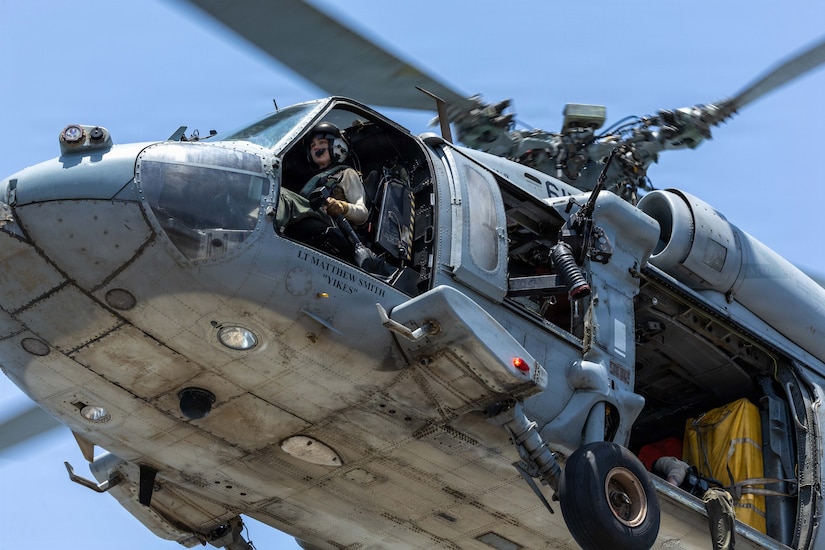
A helicopter lifts off in this close up image. The pilot is seated in the cockpit.

Now, Caine said, Centcom is executing Project Freedom to open the strait up to commercial traffic. 

"Project Freedom is designed to protect commercial shipping and help restore the flow of commerce through the strait and sustain freedom of navigation," he said. "Centcom has established an enhanced security area on the southern side of the strait that is now protected by U.S. land, naval and air assets to help defeat further Iranian aggression against commercial shipping." 

Caine said Centcom is using guided missile destroyers and other warships to detect and defeat Iranian threats, including fast boats and one-way attack drones. He said right now, the threat from those fast boats includes rifles and small machine-gun fire. 

In the air over the Persian Gulf, Caine said, are more than 100 fighters, attack aircraft and other manned and unmanned aircraft, all synchronized by the 82nd Airborne Division. 

"[They] are in the air 24 hours a day, providing defensive overwatch for the enhanced security area and its approaches," he said. 

Making the Persian Gulf safe for commercial vessels, Caine said, are more than 15,000 American service members who are providing very visible overwatch that commercial ships should recognize when they see it. 

"Commercial vessels that transit through the area will see, hear and frankly, feel U.S. combat power around them, on the sea, in the skies and on the radio," he said. "And as of this morning, as was mentioned prior, two U.S.-flag merchant vessels have transited, and we anticipate more to transit over the coming days."

Medal of Honor Monday: Navy Petty Officer 3rd Class Robert Bush

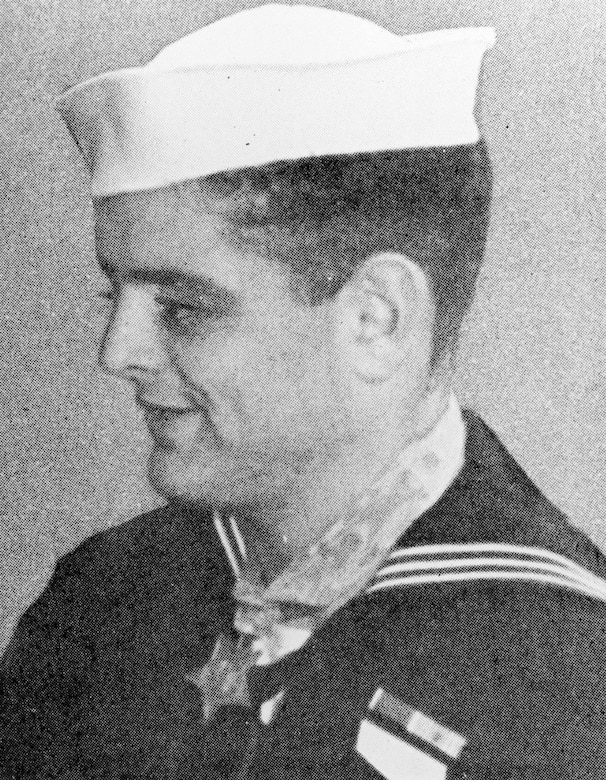
Navy Petty Officer 3rd Class Robert Eugene Bush, a hospital corpsman, was assigned to the 3rd Platoon, Company G, 2nd Battalion, 5th Marine Regiment, 1st Marine Division, during the World War II Battle of Okinawa, a conflict in which the bravery he showed led him to receive the Medal of Honor.

A man in a military dress uniform wearing a ribbon and medal smiles.

Bush was born Oct. 4, 1926, in Tacoma, Washington, to Carl and Estelle Bush. His father worked in a sawmill, and his mother was a nurse. After his parents divorced when he was 4, he was raised by his mother in Raymond, Washington. He worked in a sawmill as a teenager to help support his family and dropped out of high school in 1943 to enlist in the Navy Reserve.

After completing recruit training at Farragut Naval Training Station in Farragut, Idaho, Bush graduated from the Naval Hospital Corps School in Farragut. He was then assigned to the Seattle Naval Hospital before completing advanced training at the Field Medical Service School at Camp Pendleton, California.  

On Feb. 10, 1945, Bush was assigned to the 5th Marine Regiment, which landed on Okinawa April 1, 1945.

A month later, on May 2, he braved artillery, mortar and machine-gun fire from strongly entrenched hostile positions. Disregarding his own safety, Bush moved from one casualty to another without hesitation to treat the wounded.

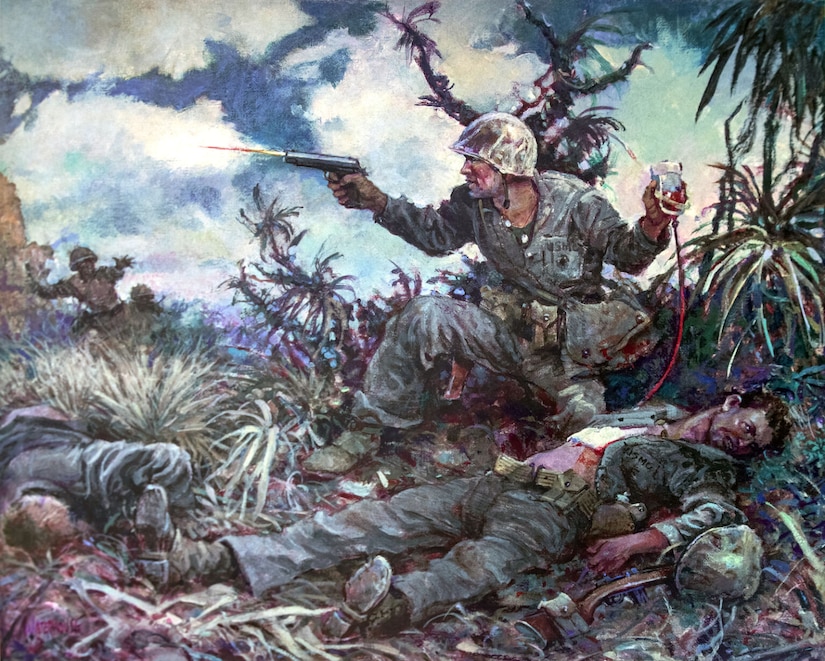
During a Japanese counterattack, he administered blood plasma to a wounded Marine officer. According to his medal citation, while in an exposed position, Bush held the plasma bottle in one hand and fired his pistol at the enemy with the other.

A painting depicts a man in a camouflage military uniform administering first aid to another man on the ground in similar attire as he fires a pistol with his other hand at enemy forces.

After using all of his ammunition, he found a nearby discarded magazine and fired at the Japanese forces charging at his position, killing six enemy soldiers. Bush suffered serious injuries during the attack and even lost an eye. He continued to defend the officer until the enemy force finally retreated.

Bush refused medical treatment until his patient was finally evacuated and collapsed on his way to the aid station for treatment. 

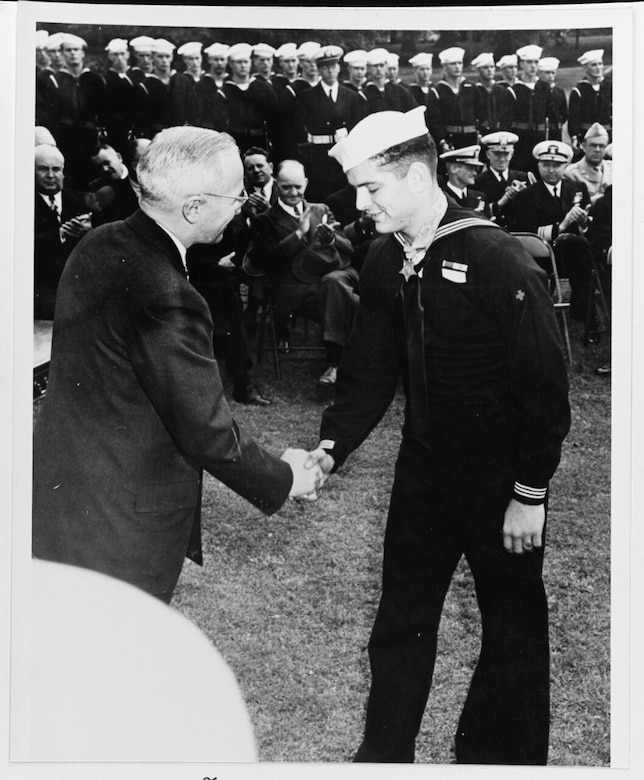
For his bravery, President Harry S. Truman presented Bush with the Medal of Honor during a ceremony at the White House, Oct. 5, 1945.

Two men, one in a suit and one in a military dress uniform wearing a medal, shake hands as people behind them, seated in chairs, clap.

He was honorably discharged July 26, 1945. He then went back and finished high school, before marrying Wanda Spooner of South Bend, Washington, Sept. 30, 1945. The couple had three sons, a daughter and many grandchildren.

After the war, Bush studied business administration at the University of Washington. He then founded the Bayview Lumber Company in South Bend, Washington, in 1951, and Bayview Redi-Mix in Elma, Washington, building both into multimillion-dollar businesses. 

Bush died Oct. 8, 2005, in Olympia, Washington, and is buried at Fern Hill Cemetery in Menlo, Washington. His wife died in 1999 and is buried beside him. 

Former NBC News anchor Tom Brokaw wrote a chapter about Bush in his 1998 book about World War II titled "The Greatest Generation."

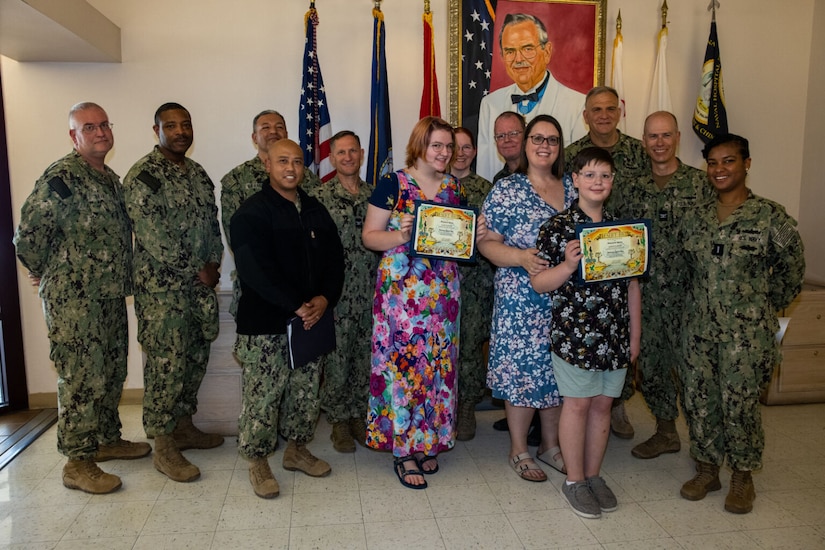
The Robert E. Bush Naval Hospital at Twentynine Palms, California, and the Branch Medical Clinic Bush, at Camp Courtney, Okinawa, Japan, bear his name.

Two women and a boy in casual attire pose for a photo at a hospital with people in camouflage military uniforms as they stand in front of flags and a painting of a man wearing a blue medal; the boy and one of the women are holding certificates.

In 1998, a monument depicting his actions on Okinawa was erected in a park named for him in his hometown of South Bend, Washington. A street in that town was also named for him. 

A "Golden Palm Star" on the Palm Springs Walk of Stars in Palm Springs, California, was dedicated to Bush on Veterans Day in 1999. 

DOW Announces Winners of the 2025 DOW Fire and Emergency Services Awards

Today, the Department of War (DOW) announced the recipients of the 2025 DOW Fire and Emergency Services (F&ES) Awards for the outstanding accomplishments of its fire departments, fire officers, firefighters, and fire service instructors. DOW F&ES Working Group representatives from the Military Services and Defense Logistics Agency selected nine winners from a total of 41 nominations. 

"These remarkable individuals form the bedrock of our operational readiness, ensuring the safety and security of our service members, their families, and the critical infrastructure supporting our national defense," stated Robert E. Thompson, Performing the Duties of the Assistant Secretary of War for Energy, Installations, and Environment. "Their expertise in fire prevention, public education, and emergency response enables them to continuously provide essential services that preserve mission capability and protect lives."

Each year, three of DOW's most outstanding fire departments receive recognition for achieving the highest degree of excellence in mission support and fire protection management. In addition, DOW's finest fire prevention program is awarded based on its depth and breadth, effectiveness, educational value, and thoroughness in direct support of the organization's mission. 

One military firefighter and one civilian firefighter are each awarded for their superior job performance, innovation, and outstanding contributions to a DOW F&ES organization. One military fire officer and one civilian fire officer are also recognized for their superior job performance, outstanding contributions, and leadership within a DOW F&ES organization. Finally, one fire service instructor is awarded for their superior job performance, resourcefulness, and outstanding contributions to a DOW F&ES organization.

Highlights of each winner's 2025 accomplishments, demonstrating the professionalism, courage, and selfless service that define the F&ES community, are as follows:

Small Fire Department of the Year: Naval Support Activity Annapolis, Maryland— Responded to 1,800 mutual aid calls, including 97 vehicle collisions, over 900 Emergency Medical Services (EMS) requests, and 800 structural incidents. The department facilitated 7,156 training hours, training 25 personnel and ensuring 100-percent fire training compliance. The department also hosted a multi-jurisdictional mass casualty drill with over 10 agencies to simulate transporting 50 patients to local hospitals via medivac helicopters, mass casualty buses, and ambulances. 

Medium Fire Department of the Year: Fort Stewart-Hunter Army Airfield, Georgia— Battled a fire on an M113 armored personnel carrier, extricating the crew and containing the fire to the engine, protecting the $8 million combat asset. The department conducted two rescue task force exercises, certifying one instructor and training 200 emergency responders. As part of Fire Prevention Week, the department also produced eight educational videos and seven written articles within 5 days, reaching an audience of 26,470. 

Large Fire Department of the Year: Metro San Diego, California— Successfully mitigated a 4-day, 16,000-acre wildland fire on San Clemente Island, saving crucial facilities and ensuring no loss to endangered wildlife. The department educated over 11,000 military personnel and local community members through fire prevention classes. The department also mitigated 3,000 emergency incidents including five structure fires, 15 shipboard emergencies, 50 hazardous materials, 15 technical rescues, and over 2,000 EMS calls. 

Fire Prevention Program of the Year: 628th Civil Engineer Squadron, Joint Base Charleston, South Carolina— Completed 896 annual inspections and identified 290 fire safety deficits and hazards, eliminating 166 potential community risks to safeguard 132,000 individuals. The squadron conducted 82 diverse training events, hosting educational seminars, outreach programs, briefings, and fire drills to educate 12,000 residents on fire prevention strategies. The program also strengthened community relations by chairing a 'Letters from Santa' campaign, responding to 81 letters from six drop boxes to bring holiday cheer to families. 

Military Firefighter of the Year: Senior Airman Jacob J. Meyer, Royal Air Force Mildenhall, United Kingdom— Responded to an 800-pound fuel spill, directing seven team members to rapidly execute remedial actions to protect the KC-135 Stratotanker. This efficient response enabled the tanker to deliver 20,000 pounds of fuel to six North Atlantic Treaty Organization fighter jets that same night. Senior Airman Meyer filled the Station Captain role for 90 days, managing 34 firefighters, conducting 130 training hours, and leading responses to mitigate 47 fire incidents. He also led 24 training hours with the Special Operations Wing, training 14 personnel across three agencies to enhance special operations wing taskings and technical rescue capabilities. 

Civilian Firefighter of the Year: Katsuhiro Watanabe, Commander Fleet Activities Yokosuka, Japan— Spearheaded the creation of an internal Hazardous Materials (HAZMAT) Awareness course, providing a solid foundation for Japanese speakers, and certified six firefighters. Mr. Watanabe responded to a HAZMAT incident on the USS George Washington, isolating toxic gas release and ultimately protecting over $4.5 billion in national assets while ensuring mission readiness. He also mitigated 519 fire incidents and led 24 ship drills.

Military Fire Officer of the Year: Senior Master Sergeant Aaron P. Strayhorn, Misawa Air Base, Japan— Led 848 Airmen through a 7.6 magnitude earthquake and directed the unit control center through 59 infrastructure crises to recover the installation in 11 hours. Senior Master Sergeant Strayhorn forged the Japan Air Self-Defense Force partnership by leading three large-scale Command and Control exercises. This partnership led to the first bilateral exchange program in 7 years, resulting in a successful joint B-1 fire response that saved Air Force's first Bomber Task Force. He also simplified fire department altering codes, reducing the number of codes from 53 to seven and increasing dispatch notification time by 38 percent. 

Civilian Fire Officer of the Year: Richard Matteson, Eielson Air Force Base, Alaska— Commanded the response to a F-35 crash in extreme arctic conditions by integrating the deployment of nine wing and mutual aid response teams to save the pilot. Mr. Matteson treated a life-threatening chainsaw injury, applying a tourniquet to stop arterial leg bleeding, and prepared and transported the patient to a trauma center in time to save their life and limb. He also partnered with the Bureau of Land Management to protect a military campground from an approaching 170,000-acre wildfire by clearing 12 acres of fuels, thus protecting 29 log cabins worth $312,000. 

Fire Service Instructor of the Year: Tiana Y. Bykowski, Hill Air Force Base, Utah— Led the "Red Card" wildland fire certification program, qualifying 63 firefighters and mitigating 23 emergencies across a 7-day wildfire mitigation effort. The program resulted in the protection of 2 million acres and $1.2 billion in assets. Ms. Bykowski trained 133 firefighters and managed 12,000 training hours, earning the team 96 certifications, and managed 12,000 training hours for 148 firefighters. She also strengthened DOW's Nuclear Surety Program by partnering with Department of Air Force Nuclear Weapons Center, providing design and construction support expertise for the Center's $108 million campus with 2,000 staff. 

Congratulations to the distinguished 2025 DOW F&ES Awards winners for their remarkable accomplishments and devotion to safeguarding national security and supporting our warfighters. DOW extends its deepest gratitude for their vital contributions to the strength and resilience of the Department. For more information, visit the DOW F&ES Awards website at: https://www.acq.osd.mil/eie/emr/fes/index.html

82nd Airborne Division Ready to Respond, Support Project Freedom, Caine Says

May 5, 2026 | By David Vergun, Pentagon News

When the president or the secretary of war needs immediate, scalable and lethal combat power anywhere in the world, 82nd Airborne Division paratroopers answer the call, Air Force Gen. Dan Caine, chairman of the Joint Chiefs of Staff, said today during a Pentagon press briefing. 

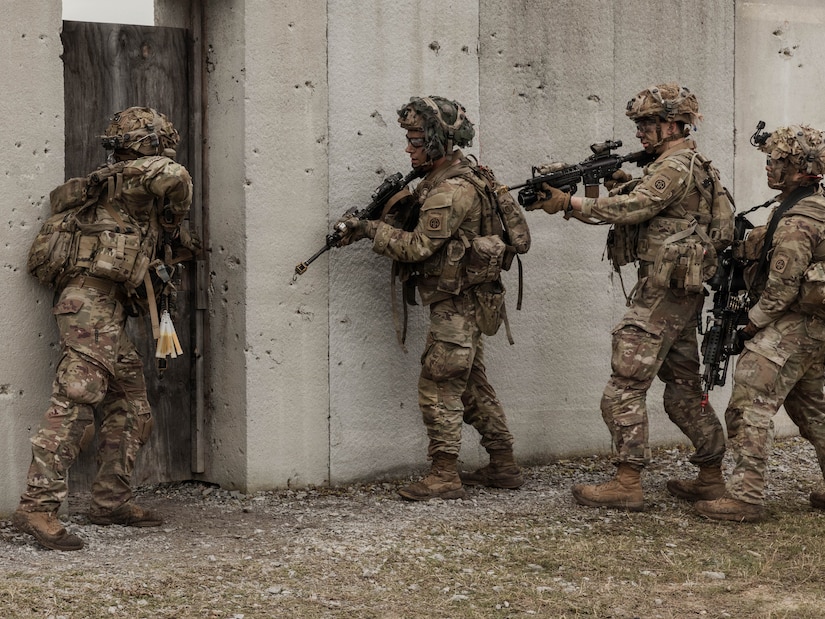
Three people wearing camouflage military uniforms and helmets hold rifles outside of a concrete structure as a person in similar attire looks inside the door.

Caine said the "All American Division" is the core of the nation's immediate response force and is ready to deploy within hours of notice.  

The paratroopers are capable of accomplishing any mission in any environment, constantly training and ready to jump from Air Force aircraft into ground combat and seize key terrain, just like their predecessors did in Sicily and Normandy, France, during World War II, or to secure or enable the flow of follow-on forces into theater, as in Grenada or Panama. 

However, the division is now more than just a formation used for forcible entries, the chairman noted. For example, just today, it is out there coordinating, integrating and synchronizing land, air, sea and cyber forces using all joint all-domain command and control, he said. 

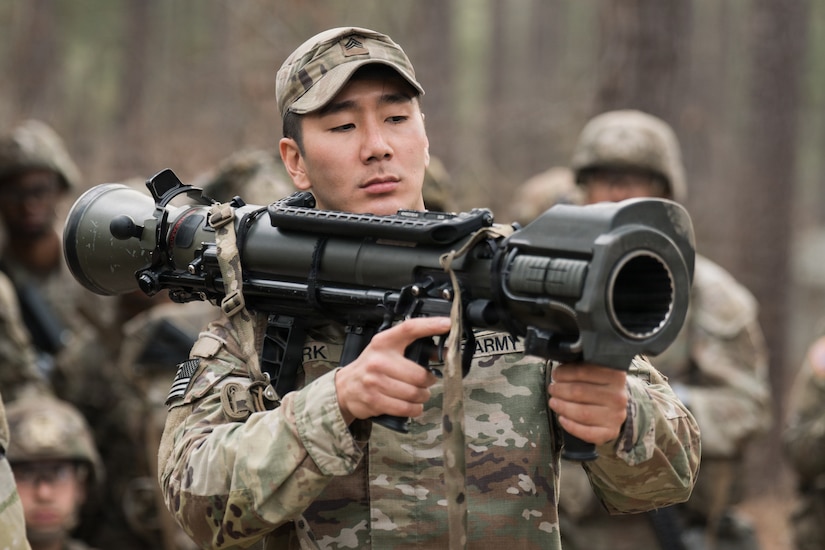
A man wearing a camouflage military uniform balances a weapon on his shoulder and prepares to shoot.

It uses next-generation, artificial intelligence-enabled tactical networks to augment intelligence and operations, and the division seamlessly synchronizes all of these effects. It is now doing so in support of Project Freedom. 

Launched yesterday at the direction of President Donald J. Trump, Project Freedom is an initiative to restore freedom of navigation for commercial shipping through the Strait of Hormuz. The mission supports merchant vessels seeking to freely transit through the essential international trade corridor.  

Caine said the 82nd Airborne Division's relentless focus on technical innovation allows commanders in the field to see, sense and understand the opportunities along with the associated risks, enabling them to make smart decisions. 

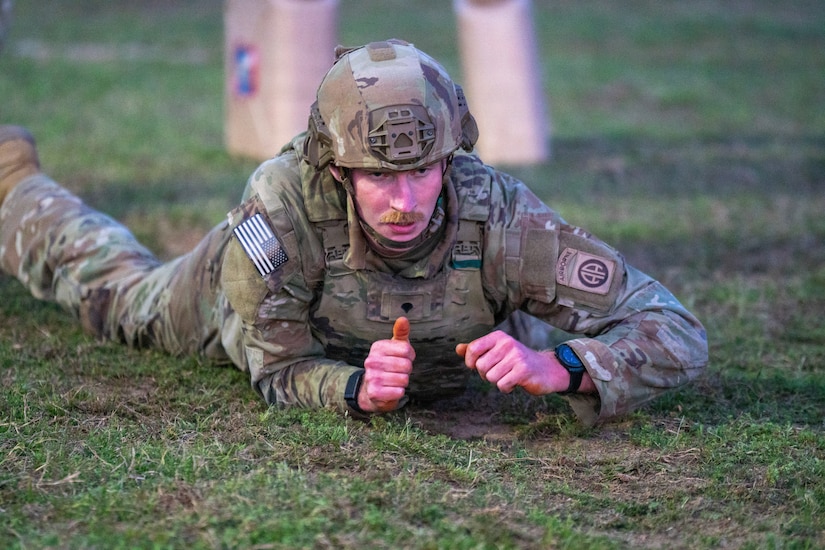
A man wearing a camouflage military uniform and helmet crawls through grass.

"They are going all the way every day, and whenever the nation calls on them, they are there to answer the call. We are grateful for their service and their leadership," he added. 

The 82nd Airborne Division was first activated as an Army infantry division at Camp Gordon, Georgia, in August 1917. It earned the nickname "All American" because in 1918, it comprised soldiers from every state. The unit's shoulder patch reflects this, with a red square containing a blue circle and a white double AA monogram. The division is currently based at Fort Bragg, North Carolina.