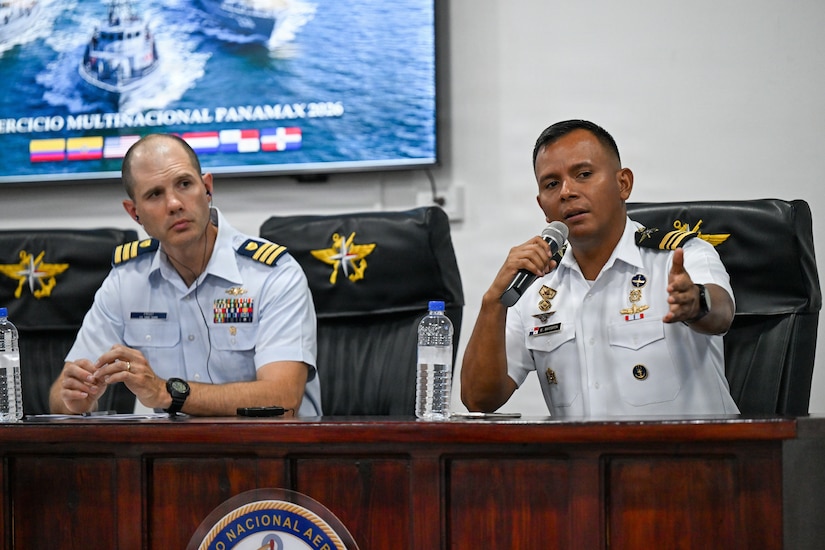
Panama's National Aeronaval Service welcomed key leaders from Mexico, Ecuador, Colombia and the United States during the pre-sail conference for Exercise Panamax 2026, Aug. 3.
The biennial exercise is one of the largest military exercises in the Western Hemisphere. This year's iteration will continue until Aug. 13 and includes six maritime vessels operating in the Eastern Pacific region as part of the Pacific Task Force: the U.S. Coast Guard cutter Robert Ward, the Panamanian coastal patrol boat Panquiaco and coastal patrol boat Taboga, the Colombian navy coastal patrol vessel Isla Gorgona, the Ecuadorian navy missile corvette Bae Loja and the Mexican navy offshore patrol vessel Arm Jalisco.
"Major prerequisites to achieving this objective include practicing our ability to transit offshore in company, to communicate effectively to each other and shore command, and to perform complex missions in an integrated manner," said Coast Guard Cmdr. Patrick Frost, Coast Guard Southwest District deputy chief of enforcement.
Frost, who is serving as the Pacific Task Force commander, said Panamax 2026 includes 19 countries and is critical because it allows the partner nations to practice functions necessary to protect the canal.
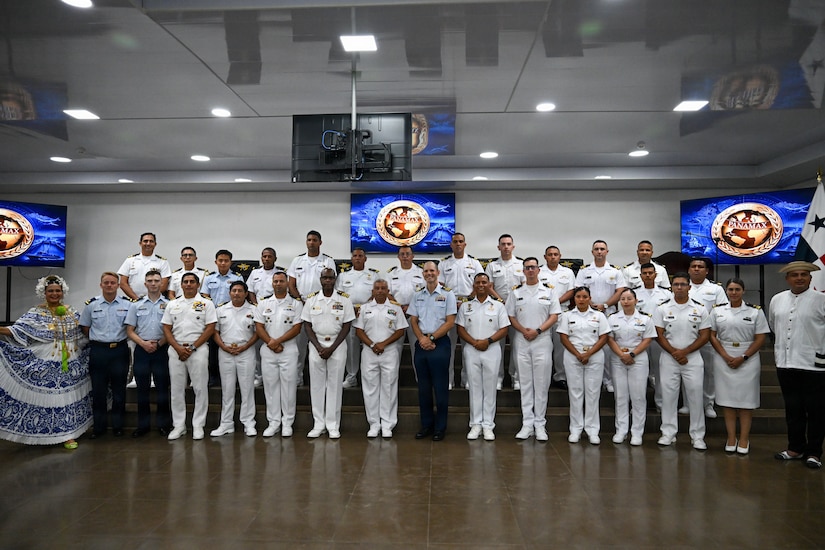
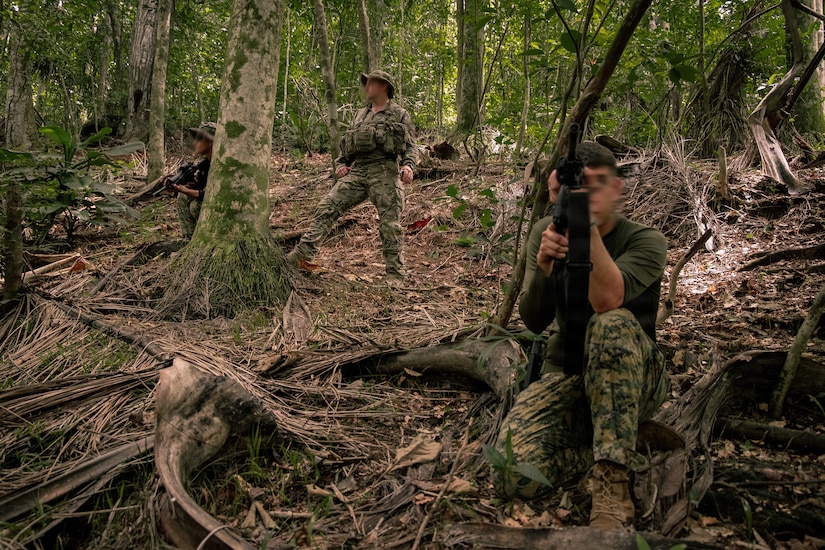
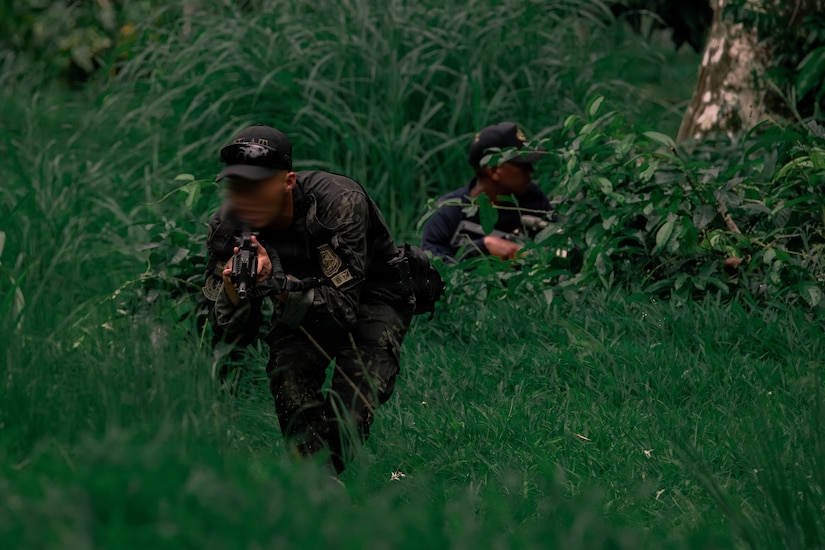
To facilitate this proficiency, exercise participants will conduct various training scenarios designed to unite the coalition as they exercise joint communications, maneuvers and tactics.
During the pre-sail conference, Panamanian maritime officials welcomed the command teams of the four visiting ships.
"Today, in this 2026 edition of Panamax, we confirm our commitment to a broader and even more adapted vision of the threats that we have in the 21st century," said Panamanian Lt. Cmdr. Eduardo Batista, acting commander of Panama's National Aeronaval Service's naval command. "This exercise constitutes an opportunity, with great value, to strengthen the interoperability of our forces, to improve our operational procedures and to elevate our capacity to respond in the face of transnational threats and cyberspace challenges."
"These partner nations are clearly demonstrating a rock-solid commitment to this multinational concept, and the collaboration between the various country representatives is significant," he said.
Panamax began with three countries in 2003 to improve interoperability and strengthen collective capacity to conduct complex multinational and all-domain operations to ensure the free flow of commerce through the Panama Canal and maintain security and stability in the region.


 Posts
Posts

