Thursday, June 25, 2026

Families of Vietnam War Missing Gather to Hear Updates, Share Stories

The bedrock of the warrior ethos is that Americans never leave behind a fallen comrade, said Anthony Tata, undersecretary of war for personnel and readiness.
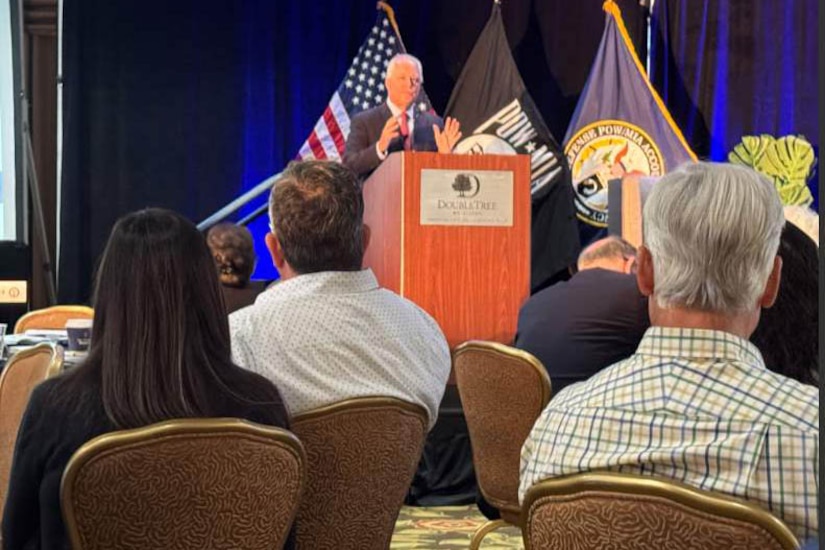
A man standing behind a lectern on a stage speaks to an audience.

Tata spoke today in Arlington, Virginia, to members of families who lost loved ones during the Vietnam War. The event was sponsored by the Defense POW/MIA Accounting Agency. 

"The Vietnam War may have ceased more than half a century ago, but I know that for all of you, it's never really ended, and you have spent decades carrying your silent vigil, a silent vigil for your unaccounted-[for] fathers, mothers, brothers, sisters, family and friends, and waiting for answers. Know that this War Department is focused on helping you find them," Tata said.
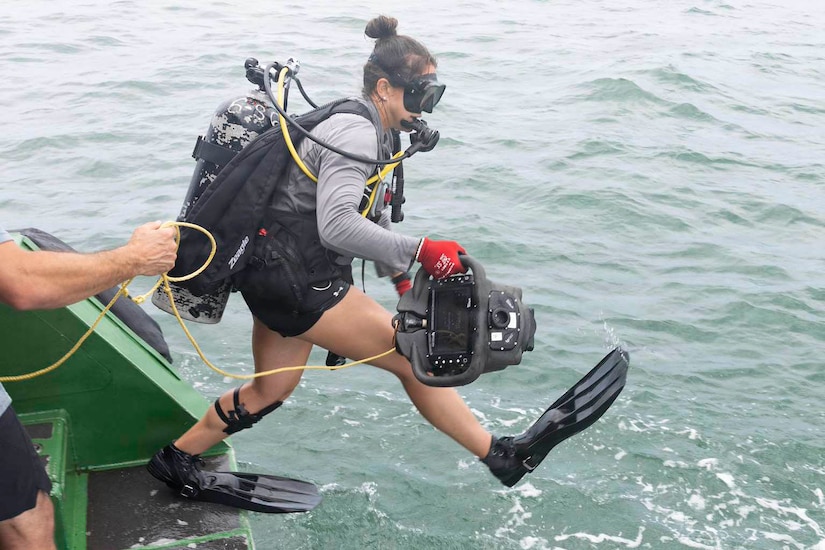

A woman wearing scuba gear jumps out of a boat into water.
A woman wearing a conical hat stands in front of a wood tray.
The undersecretary applauded the work that teams are doing in the field around the world searching for remains, as well as the scientists who make the identifications in the laboratories at Hickam Field and Pearl Harbor in Hawaii, and Offutt Air Force Base in Nebraska. 

The DPAA mission is personal, Tata said, noting his own combat service and remembering his comrades who never made it home alive.  

Kelly K. McKeague, director of DPAA, said his agency has been working to recover remains from the Vietnam War since 1985 and that DPAA-trained Vietnamese recovery teams have located the remains of many missing Americans.
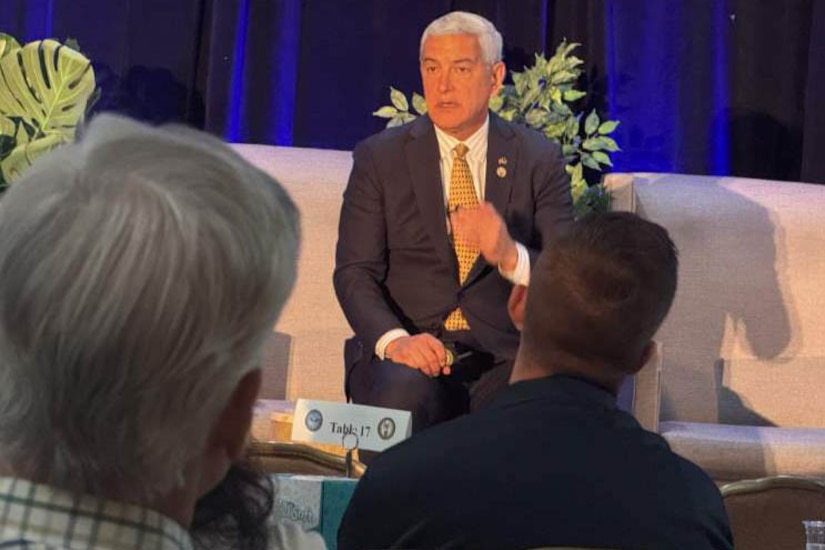
A man seated on a stage speaks to an audience.

Communicating and connecting is just as important as it is with accounting for your loved ones, McKeague said. 

"This is that sacred obligation, that moral imperative that we have told you for years, that we live it, we don't just talk it. We live it simply because we know your loved ones made the supreme sacrifice, you deserve those long-sought answers and that's why we're here," he said. 

While DPAA has been searching for service members from all wars dating to World War II, the agency has prioritized finding the missing from the Vietnam War since firsthand witnesses in several nations where operations took place are aging and dying, McKeague said.
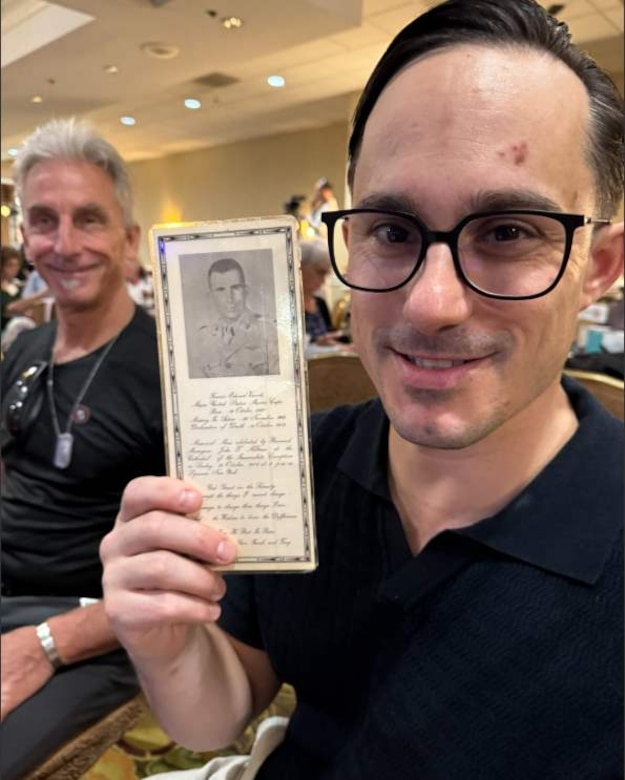
A man holds up a leaflet with a photo of a man and some cursive writing while another man looks on.

Justin O'Connell, grandson of Marine Corps Maj. Francis Edward Visconti, held a picture of his grandfather, who died Nov. 22, 1965, when his UH-34D helicopter crashed during a night flight in a storm in South Vietnam.  

He and three others on that flight are still missing. Next to O'Connell was his uncle, Tony Visconti, who was wearing an extra set of his brother's identification tags. 

Susan Lilly Harvey's brother, Army 1st Lt. Lawrence Lilly, went missing in Southeast Asia when his Cobra helicopter went down. She said she's been coming to these gatherings every year for 40 years. 

Raymond L. Echevarria Jr.'s father, Army Sgt. Maj. Raymond L. Echevarria Sr., and two other soldiers went missing in Laos following a firefight with Viet Cong. An interpreter escaped to relay what happened. 

Last year, 231 missing service members were accounted for, including eight from the Vietnam War, with the remainder from World War II and the Korean War. Most of the recovery sites are in Europe and Southeast Asia. There are currently 1,565 missing U.S. personnel from the Vietnam War. 

USVDIV-32 Advances Unmanned Operations With NATO During BALTOPS 2026

Sailors assigned to the Unmanned Surface Vessel Division 32 are at the forefront of the Navy's fleet during exercise Baltic Operation 2026, delivering realistic counter-unmanned surface vessel training against unmanned vessels to NATO allies.

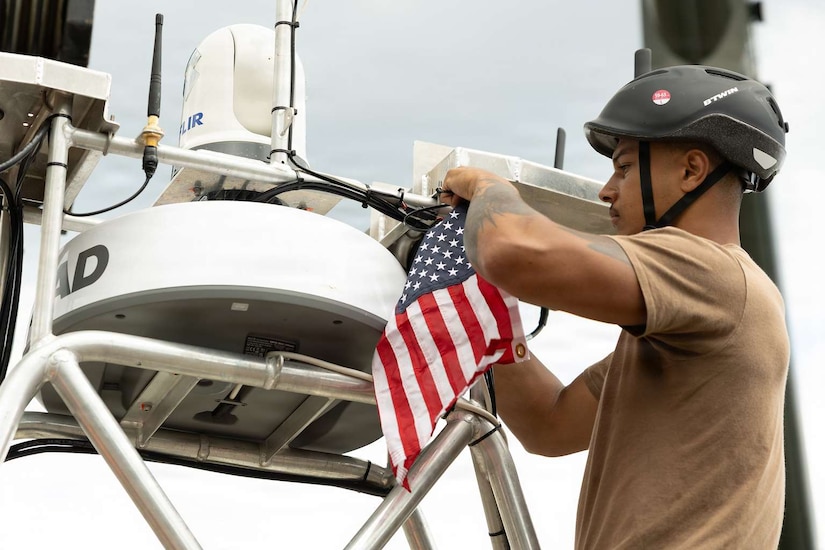
A man wearing a brown T-shirt and helmet, hangs a small American flag onto an unmanned surface vessel.

Established early this year, USVDIV-32 is one of the newest additions to the Navy's unmanned operational units. Tasked with maintaining and implementing unmanned vessels, the division's sailors regularly conduct exercises and training with multiple platforms, with the most common being global autonomous reconnaissance craft, or GARC. 

"GARCs are just one of the several USVs," said Navy Lt. Sarah Weinstein, commanding officer of USVDIV-32. "GARC is just the one that we've had the most experience within the last couple of years, but they're all very similar. " 

A defining feature of USVDIV-32 is the implementation of a new rate, robotics warfare specialist. These specialists are trained to operate and maintain vessels such as GARCs. 

Navy Robotics Warfare Specialist 3rd Class Joshua VanDeCreek expressed excitement about being on the front lines of a new technology that he believes will keep more people safe by sending USVs as opposed to personnel, calling it "a great step in the future."

"I'm proud to be a part of a new unit in the Navy, one that I think is going to be very important," VanDeCreek said.

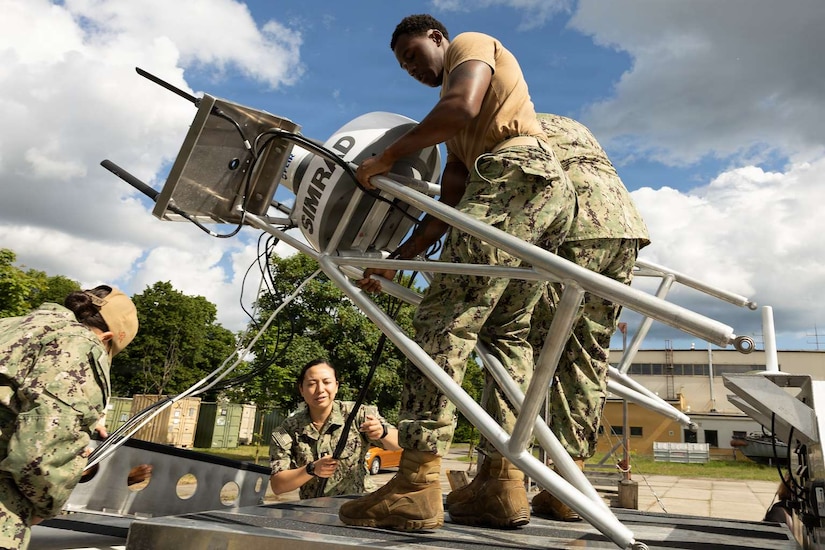
People wearing camouflage military uniforms work on a small military unmanned surface vessel. Two of them hold up one of its parts at an angle while two others unravel cords attached to the craft.

Chief Robotics Warfare Specialist Christian Butler said the robotics warfare rate will remain vital in the Navy's future. 

"I think most commands, if not all commands, are going to have some component of [robotics warfare specialists], Butler said. "Just because there's no going away from unmanned systems at this point, they're only going to grow in scale, and you're going to need [robotics warfare specialists] to carry that weight." 

During the exercise, USVDIV-32 played a crucial role by deploying GARCs as an opposing force to allied forces. This simultaneously gave allied ships a chance to test their abilities in defending against USVs and provided valuable experience for USDIV-32, allowing them to see their GARCs in action.

"The first difficult part is spotting the USV," Weinstein said. "What does it look like? What are the telltale signs that it might be a USV? How to tell if it's coming inbound and its different behaviors that it's able to display as it gets closer to the ship." 

As the Navy moves toward a hybrid fleet, USVDIV-32 is playing the key role in being among the first to implement this technology. The division's work during BALTOPS 2026 has been invaluable not only to the allied forces but also to the USVDIV-32.

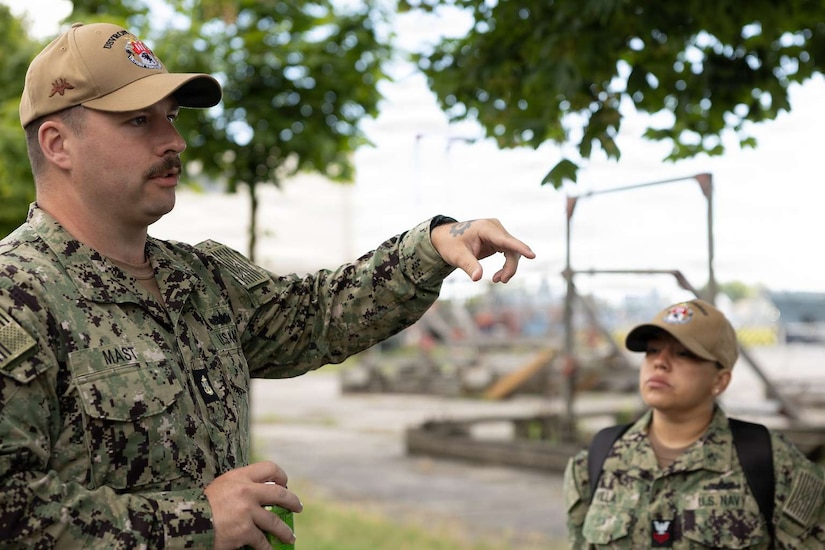
A man wearing a camouflage military uniform points to something in front of him as he speaks. Another person in similar attire watches.

The sailors of USVDIV-32, with the emerging robotics specialist rate, are carving the path for the Navy's future. 

This is only the beginning of this technology, with no end in sight for its importance and potential.   

"I think the technology and the autonomy will continue to grow to give them more options to make USVs more lethal or more effective at executing the mission that they've been tasked with," Weinstein said. 

Visitors Welcome International Tall Ships to Baltimore for Sail 250

As tall ships from around the world arrived in Baltimore Harbor yesterday for Sail 250 Maryland and Airshow Baltimore, the event offered more than a display of maritime tradition. For visitors and sailors alike, it became an opportunity to celebrate heritage, strengthen international friendships and reflect on the enduring connections forged at sea.

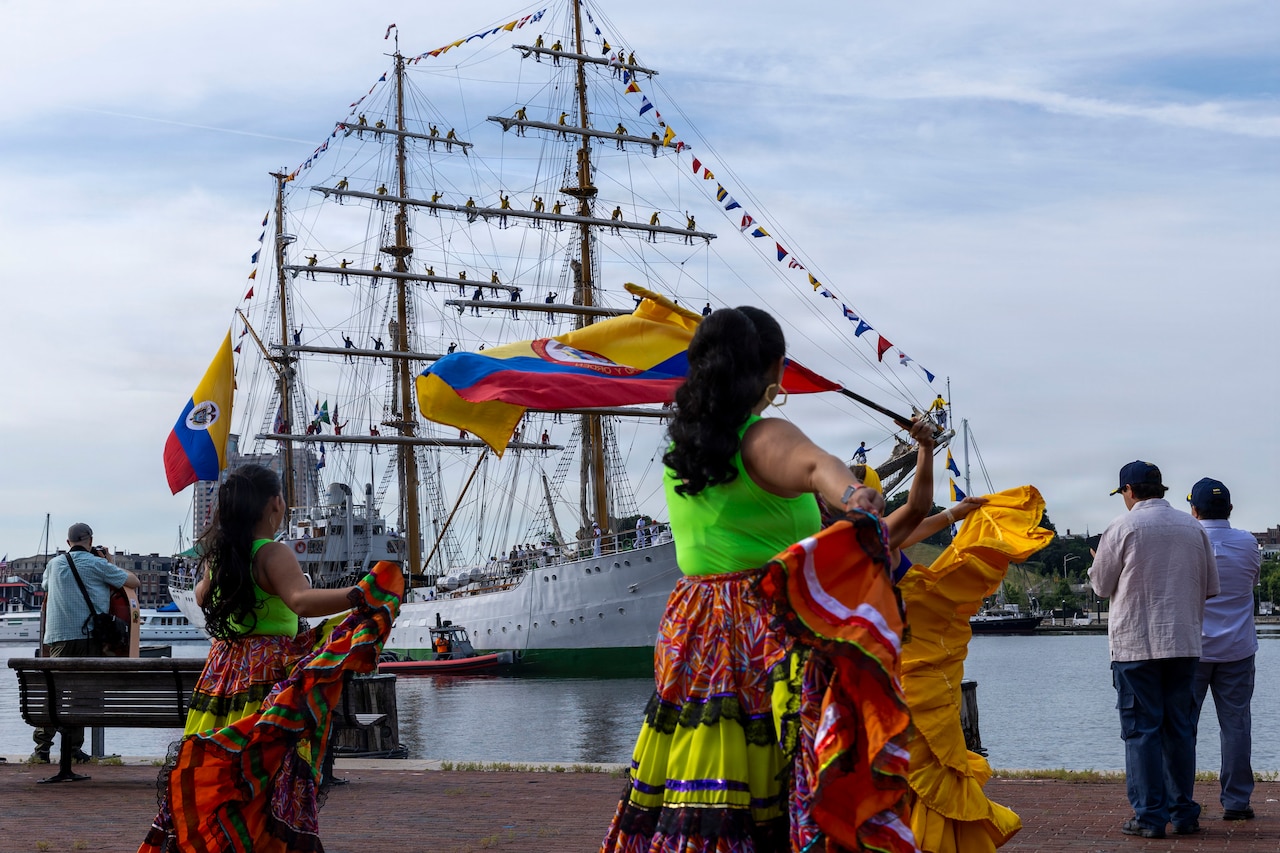
Four women wearing colorful dresses dance at a dock while a large ship sails in the nearby water; two of the women are waving Colombian flags.

Among those watching the arrival of the Italian navy sail training ship Amerigo Vespucci was Frank Branchini of Annapolis, Maryland. With family roots in Italy, Branchini said seeing the legendary vessel in person carried special meaning.

"I heard what everybody else heard, that the U.S. Navy called it the most beautiful ship in the world," Branchini said. "Being Italian American, with grandparents born in Italy, it means a lot to me."

Branchini traveled to Baltimore specifically to witness the ship's arrival and plans to return during public visitation, hoping to experience the vessel up close. A longtime admirer of tall ships, he previously attended Baltimore's 2012 commemorative sailing event and fondly recalled touring the U.S. Coast Guard cutter Eagle as a child.

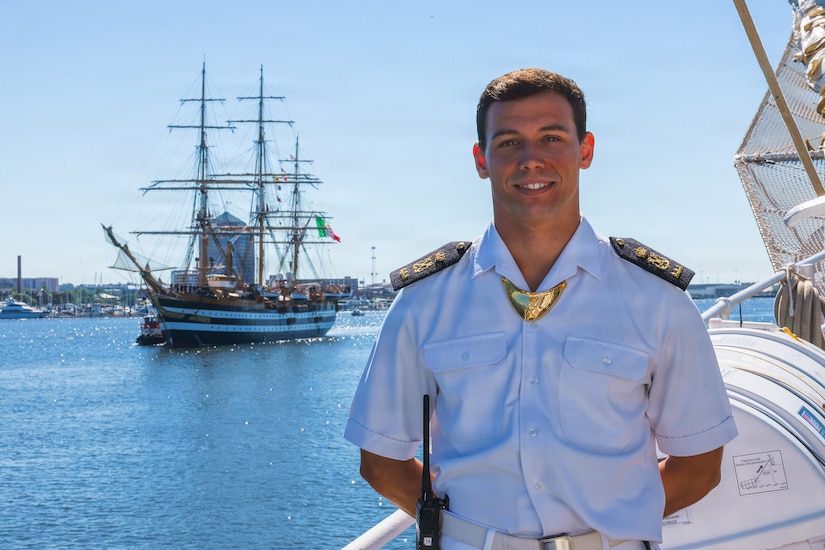
A man wearing a military dress uniform poses for a photo at a dock with a large ship sailing in a harbor in the background.

Aboard the Spanish sail training ship Juan Sebastián de Elcano, Midshipman 2nd Class Ignacio Torrente de La Pisa views the gathering through a different lens. As one of Spain's future naval officers, he is participating in a monthslong training deployment that has taken him across the Caribbean and North America before arriving in Baltimore.

"The principal mission of this ship is international relations," Torrente de La Pisa said. "This is the best opportunity we have to cooperate with different countries, make good bonds with them and learn both our differences and our similarities."

His connection to the vessel spans generations. Both his father and grandfather completed training aboard the ship, making his own voyage part of a family tradition shared by generations of Spanish naval officers.

"When I climb the mast, I know my father was here and my grandfather was here," Torrente de La Pisa said. "It's something really, really cool."

The visit also rekindled memories of time spent at the U.S. Naval Academy during an exchange program, where he built lasting friendships and experienced American military culture firsthand.

For Branchini, the gathering of international ships is an opportunity to celebrate his heritage and marvel at maritime craftsmanship. For Torrente de La Pisa, it represents the chance to build relationships that transcend borders and strengthen partnerships between allied navies.

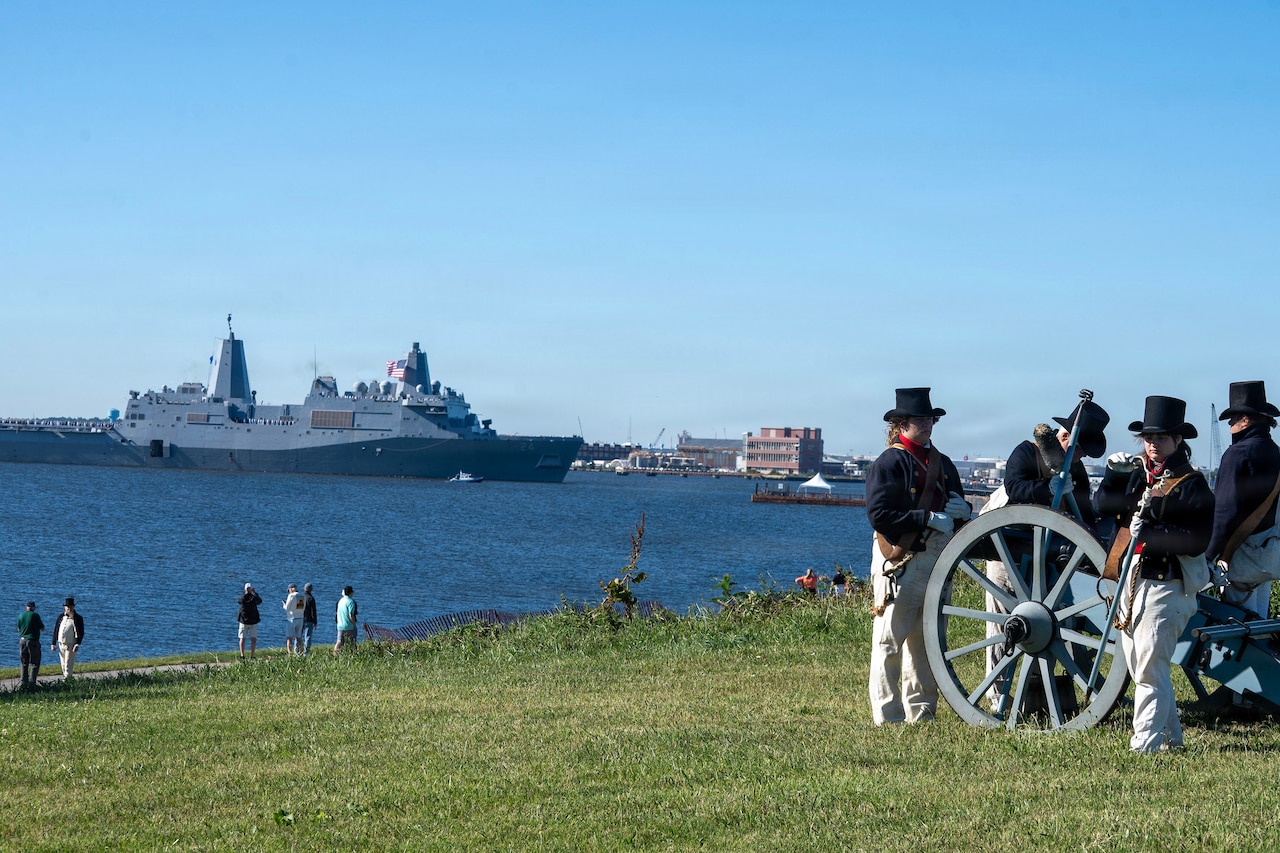
National Park Service personnel in ceremonial dress load a cannon in a field as spectators watch a naval ship transit a body of water during the day.

Their perspectives, one from the pier and one from the quarterdeck, reflect the broader purpose of Sail 250: bringing together people from different nations through a shared appreciation of history, service and the sea.

Sail 250 Maryland and Airshow Baltimore commemorates the nation's 250th anniversary by bringing together international tall ships, military vessels, aviation demonstrations and public events throughout Baltimore.