Tuesday, September 09, 2025

JTF-DC Medic Doubles as Third-Year Medical Student so Others May Live

 Sept. 9, 2025 | By Army Master Sgt. Whitney Hughes, National Guard Bureau

Not many people can say their interest in one of the body's most complicated organs began with a water pump. 
 
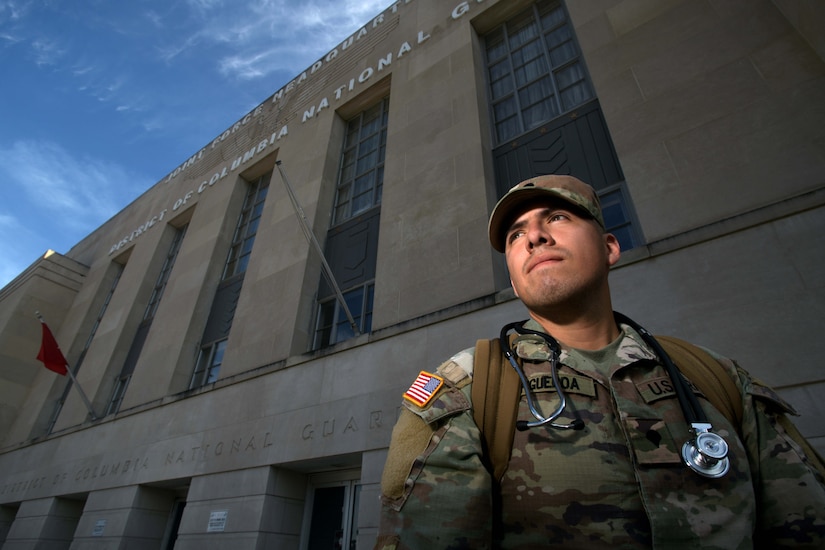
However, for Army Spc. Elias Figueroa, a combat medic assigned to the D.C. Army National Guard and third-year medical student, his interest in medicine began with helping his father install a water pump. His inherent understanding of the pump system and the similarities he drew to the human cardiovascular system are what drew him to the field. 

A person wearing a camouflage military uniform stands outside in front of a building and gazes up into the distance.

 
"Just understanding the pump systems, the math made sense and the picture made sense in my head," said Figueroa, adding that it converted so well in his first two years of medical studies that he was tutoring other students. 
 
This same curiosity and hands-on approach drove him to join the Army National Guard as a combat medic and led to his current assignment with the D.C. Safe and Beautiful Task Force, Joint Task Force District of Columbia. He initially joined the National Guard in 2020 and qualified as a combat medic upon graduating from an intense 16-week course focused on emergency medical technician, emergency medical services and tactical combat casualty care training. 
 
Since being on duty with the task force, his duties have included treating fellow soldiers and responding to several incidents involving civilians. 
 
His squad leader, Army Sgt. Jay Whited, said Figueroa's experience and skill set have been invaluable in many of the situations they have encountered. 
 
"He's treated at least half a dozen civilians at Union Station since the mission started," Whited said. "We are very lucky to have such a well-trained medic. He's right there, and he's pretty close to being a doctor, so that makes us feel good. It's good for him. It's an actual medical emergency in public that he can get his hands on and do something about." 
 
While assigned to the task force, Figueroa has provided hands-on treatment or assessments for everything from a heat casualty to a narcotic overdose. He said experience like that gives him an advantage going into his third year of medical school, where studies move from the classroom to practical application with patients. 
 
"A lot of us [medical students] kind of fumble to the point to where some people repeat a semester because they just can't do the clinical part," Figueroa said. "So, I've been able to kind of hone my abilities a little bit. I'm a little more confident. I was like, 'Oh, I can do that. I can take vitals without even hesitating. I can go through an assessment.'" 
 
Despite the added confidence, he doesn't take the gravity of his position lightly. 
 
"It's a responsibility," Figueroa said. "You can't freak out. You have to keep a level head and relax. For all those events, when someone yells 'Medic!' I'm calm as heck, I don't overreact." 
 
He said he often reminds himself to begin with the basics to stay calm as he assesses and reassures the patient. 
 
"And that's kind of the first thing that comes to mind is just relax and do the job," Figueroa said. 
 
For the 28-year-old, medicine goes beyond a job to a spiritual and moral code. When he "found Christianity and God" during college, Figueroa asked himself what his strengths were and how he could use them to serve others. That also tied in with a duty he felt as a naturalized citizen to serve his country. 
 
His family emigrated from Peru, and he and his parents became American citizens in 2011. 
 
"My dad got citizenship that January, and I got it through him, because I was still a minor," Figueroa said. "I always felt I didn't really earn it. My dad took the test. My dad did all this work. So, part of me was like, I want to actually earn this." 
 
His family started off in an apartment, and now they own three properties — one of which is the house where he helped install the water pump that inspired his interest in cardiology, he noted. 
 
"This country gave us a lot, it's kind of like the American dream showed itself," Figueroa said, who will conclude his time with the D.C. task force in two weeks to return to his role as a full-time medical student. 

Monday, September 08, 2025

Medal of Honor Monday: Army Pfc. Ernest Prussman


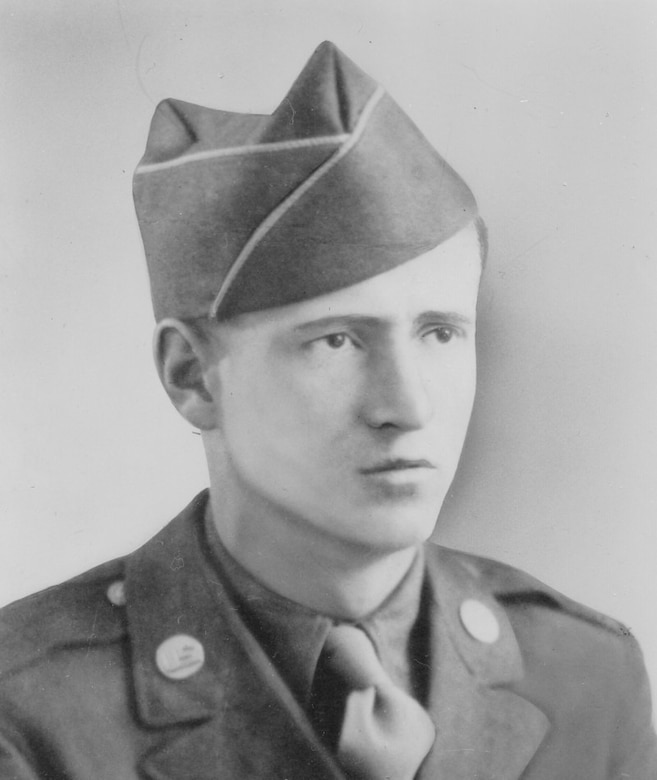
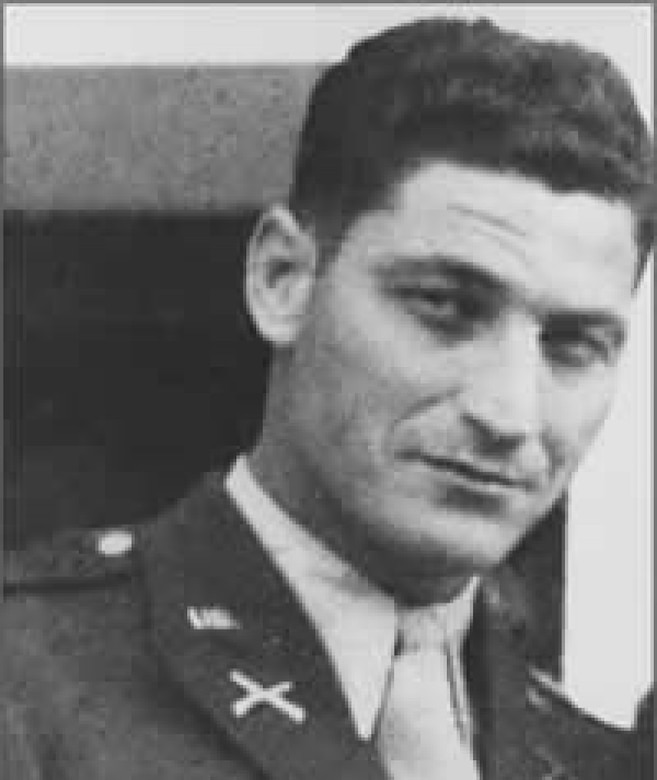
Army Pfc. Ernest William Prussman fearlessly led his squad into battle as the Allies pushed into Europe to free the continent from tyranny during World War II. Prussman didn't survive the mission, but his bravery demoralized the enemy and helped several battalions move forward. For his actions, Prussman was awarded a posthumous Medal of Honor. 

A man wearing a military uniform poses for a photo.

Prussman was born Sept. 15, 1921, in Baltimore, Maryland, to Herbert and Helen Prussman. He had a twin brother named Earl. Two other brothers, Calvin and Henry, also served during World War II.  

When Prussman was 5, his family moved to Brighton, Massachusetts, outside of Boston, where he grew up and graduated from Brighton High School.  

Prussman worked as a chain store clerk before joining the Army in October 1942. In July 1944, weeks after the Allies had regained a foothold on the European continent, Prussman's unit, the 13th Infantry Regiment, 8th Infantry Division, was sent to France. 

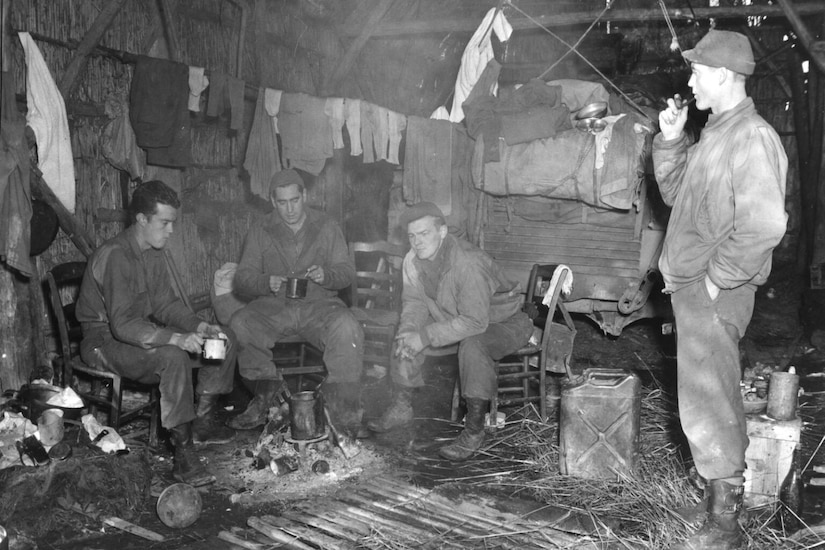
Three men sit in chairs in a shed filled with gadgets. A fourth man stands, smoking a pipe.

Two months later, Prussman gave his life in the fight for freedom.   

On Sept. 8, 1944, Prussman was with two battalions moving through the northwest Brittany region of France when their advance was halted by intense enemy mortar, machine gun and sniper fire. The assault was coming from an enemy fortification on Prussman's left, so he quickly prepared his squad to assault that position. 

Prussman took the lead and hurdled a hedgerow before disarming two enemy riflemen. He then led his squad across an open field to another hedgerow before advancing to a machine gun position, destroying the gun and capturing its crew and two additional enemy riflemen.  

Prussman continued to move ahead of his squad. This time, however, he was mortally wounded by an enemy bullet. But before he fell to the ground, he was able to throw a hand grenade, which killed one more enemy fighter.  

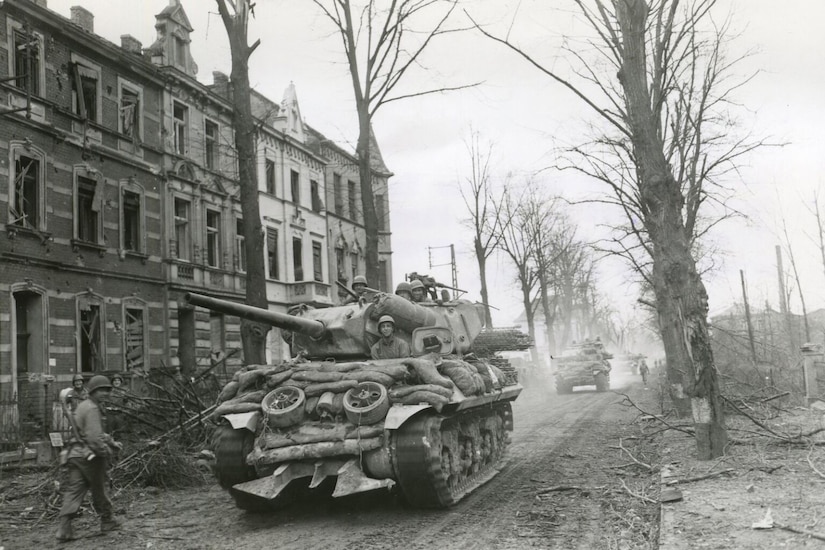
A tank rolls along a dirt road in a destroyed city.

While Prussman didn't survive, his leadership and heroic actions demoralized the enemy enough that their resistance collapsed, which allowed the Allied battalions to continue their march.  

On April 19, 1945, Prussman's parents and twin brother accepted the Medal of Honor on his behalf from Army Maj. Gen Sherman A. Miles during a celebration in Boston. Prussman also received the French Croix de Guerre with Bronze Star for his selfless actions. 

Prussman is buried in the Brittany American Cemetery in St. James, France.  

The young private has not been forgotten. At Army Garrison Rheinland-Pfalz in Germany, Prussman Avenue was named in his honor. A Medal of Honor monument was also established in Boston in 2016 in remembrance of his legacy. 

This article is part of a weekly series called "Medal of Honor Monday," in which we highlight one of the more than 3,500 Medal of Honor recipients who have received the U.S. military's highest medal for valor. 

EPA Partners With Local Farm to Fight Food Waste, Support Military Families

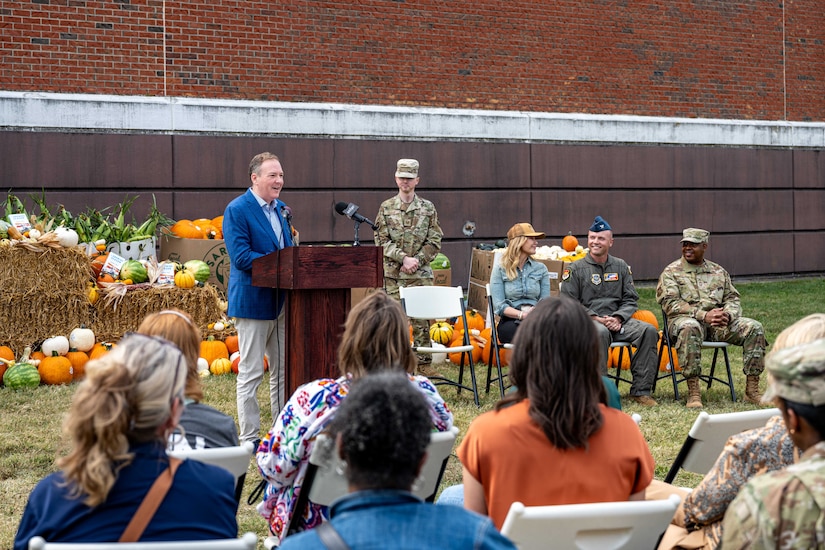
Last week, Lee Zeldin, an administrator with the Environmental Protection Agency, joined forces with a local farm to bring over 20 pallets of produce to Scott Air Force Base, Ill., as part of a nationwide collaboration to reduce food waste. 

A man in business attire stands at a lectern and speaks to a crowd. There is a person in a camouflage military uniform standing to the right of the lectern and two people in military uniforms and one in casual attire sitting to the right of the lectern. There are pumpkins and other produce displayed in the background.

Airmen and their military families on base were treated to hundreds of free watermelon, corn and pumpkins and watermelon juice under the EPA's "Feed It Onward" initiative to connect farmers with nearby military installations to share their bounty with those who serve.

As a retired Army officer himself, Zeldin first expressed his thanks to "the line of patriots" and their families, as well as retirees who were in the audience for the event.    

"I'm thinking about their collective service and stories of sacrifice … at times holidays, anniversaries and birthdays missed. The decision to serve in our military may be difficult for some … and for those who continue to raise their hand [to serve] is something for the rest of America to take a step back and reflect on, maybe every day of our lives," he said. 

"Everything we cherish about being able to live in the greatest country in the history of the world is all made possible because of the men and women who answer the call to defend our freedom, our liberty. I'm honored to be able to say thank you for your service." 

He shared how the collaboration came about when addressing the amount of food that is wasted in this country and how it needs to be cut down. He cited an EPA study about the cost of food waste to each American consumer being about $728 per year.  

Two people in casual attire shake hands while standing in front of boxes of produce. There is a man in a military uniform to the left and other people in casual attire talking and congregating in the background.

The Feed It Onward program, which is also part of the country's 250th birthday celebration next year, seeks to connect food donors with communities in need while reducing the environmental impact of food waste in landfills.    

Zeldin said he believes today's event will serve as an inspiration for other farms across the nation to partner with the Department of War to ensure that this food goes to good use instead of landfills. From the event last week, he said, "we can all serve as ambassadors" to talk about the many ways to address and solve this issue. 

Sarah Frey, chief executive officer of the farm, is one of those passionate ambassadors who brings a depth of understanding about this issue. What started as a small truck route at age 16 has grown into a multi-state operation and a supplier to major retailers. Her business is located about an hour and a half east of the base, and while they grow all types of fresh fruits and vegetables, they are the nation's leading producer of pumpkins.   

With the amount of acreage she manages, Frey said she sees firsthand the amount of food that gets wasted — at the consumer and the farm level.  

She told the audience that when they take their "perfectly delicious melons home," to just remember that it was rejected at the grocer because it wasn't the right size or had a small imperfection according to their retail standards. So, the waste, she emphasized, has nothing to do with the quality of the product, but something else. 

A woman in casual attire stands at a lectern and speaks to a crowd. A display of produce is in the background.

"This food is so good and nourishes our body, and it kills me to see so much go to waste," she said. "Through Feed It Onward, I feel we have an opportunity to connect the military bases across the U.S. with farmers, and to get fresh food to our military heroes, [and] for this to be an incredibly successful partnership that will ultimately reduce the amount of food that is wasted in our country." 

On behalf of the men and women at team Scott, Air Force Col. Matt Collins, 375th Air Mobility Wing and installation commander, thanked the EPA and the farm, as well as those who worked behind the scenes to bring this fresh "fall-themed" produce to the base. 

"This exemplifies the selfless collaboration for which team Scott is known and highlights the amazing relationship our installation enjoys with our local community. We deeply appreciate their commitment to our service members and their families."  

Air Force 1st Lt. Colton Stanislawski, 458th Airlift Squadron, added, "I can't think of a better way to use the produce that doesn't fit the bill at the grocery stores. It's obvious there's a huge demand for it, and for it to go to waste would be quite a shame. As we see here, it only took about 15 minutes for it to pretty much be gone … so this is great." 

Saturday, September 06, 2025

Premier Army CBRNE Command Supports Ulchi Freedom Shield in South Korea

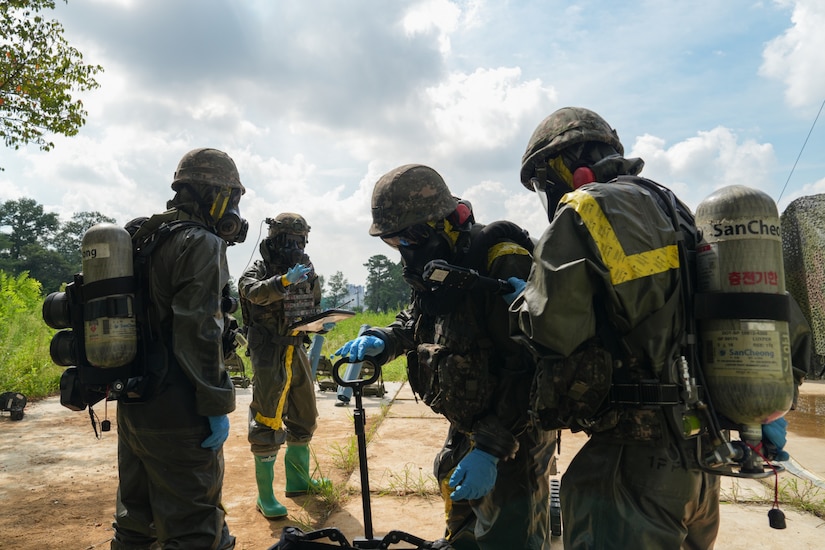
The U.S. military's premier joint task force-capable chemical, biological, radiological, nuclear, explosives formation participated in exercise Ulchi Freedom Shield 25 in South Korea, Aug. 18–28.

Soldiers and Army civilians assigned to the 20th CBRNE Command's early entry command post exercised with 8th Army and Combined Forces Command units on the Korean Peninsula and employed capabilities from their home station located at Aberdeen Proving Ground, Maryland. 

"It is always an honor to train together with our South Korean partners," said Army Brig. Gen. W Bochat, commanding general of the 20th CBRNE Command. "For more than seven decades, American soldiers have proudly defended liberty with our South Korean allies on freedom's frontier. This exercise is another chance to make one of the world's strongest alliances even stronger." 
 
Ulchi Freedom Shield 25 is a defense-oriented exercise, featuring live-fire, constructive and field training exercises that engage allied forces and governmental agencies. The training is focused on conducting all-domain operations. 
 
The annual exercise enhances the combined, joint, all-domain and interagency operating environment and the South Korea-U.S. alliance's response capabilities. 
 
Soldiers and Army civilians assigned to the 20th CBRNE Command deploy from 19 bases in 16 states to confront and defeat the world's most dangerous hazards in support of joint, interagency and multinational operations.

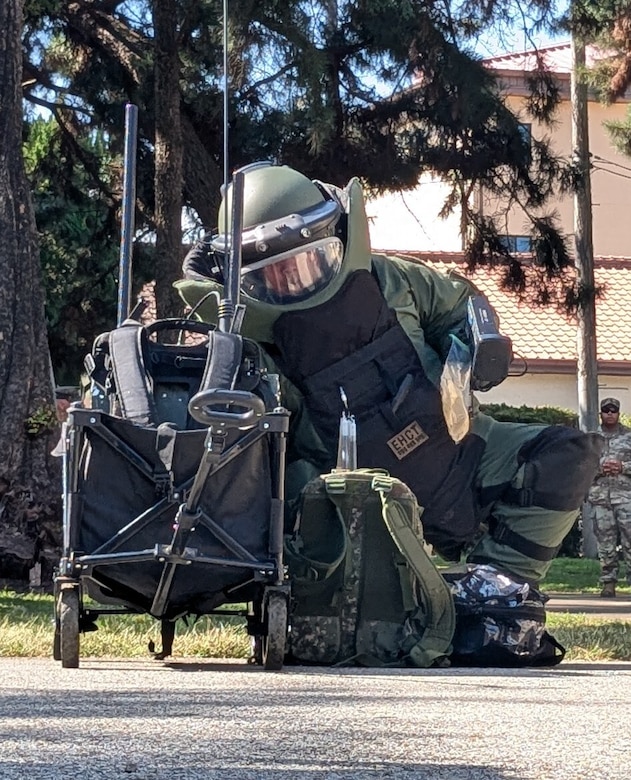
A soldier in a protective bomb suit crouches on the ground next to a backpack and roller cart. There are trees and a building in the background.
Headquartered at Aberdeen Proving Ground in northeast Maryland's science, technology and security corridor, the 20th CBRNE Command is home to the majority of the active-duty Army's CBRN specialists and explosive ordnance disposal technicians, as well as the 1st Global Field Medical Laboratory, CBRNE Analytical and Remediation Activity, weapons of mass destruction coordination teams and nuclear disablement teams. 
 
Members routinely deploy to South Korea for exercises, and the command also deploys a chemical company to support rotational forces during deployments to the Korean Peninsula.
 
The Fort Hood, Texas-based 181st Chemical Company is serving in South Korea on a rotational deployment in support of the 23rd CBRN Battalion, 210th Fires Brigade, 2nd Infantry Division/ROK-U.S. Combined Division and 8th Army. 
 
During their second deployment to South Korea in three years, the 181st Chemical Company is serving near the Korean Demilitarized Zone, the world's most heavily guarded border. 
 
The 181st Chemical Company is part of the 2nd CBRN Battalion, 48th Chemical Brigade and 20th CBRNE Command.

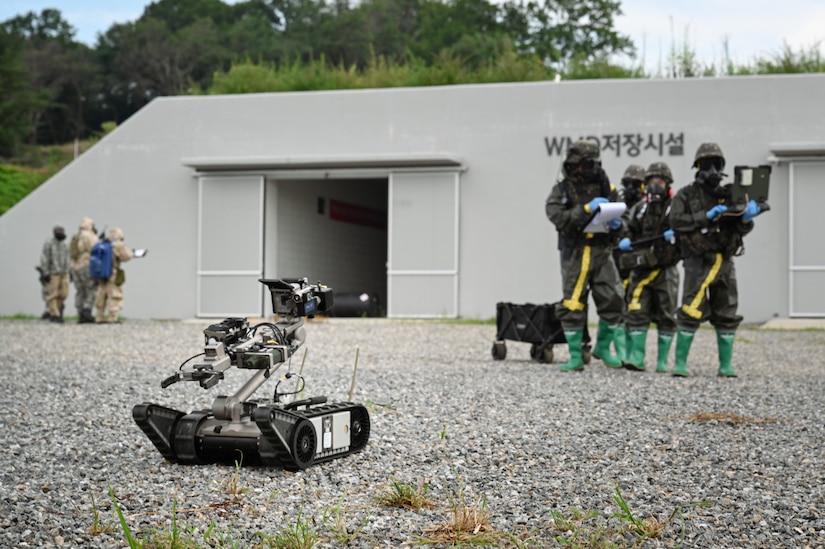
A bomb robot is rolling on the ground as four soldiers wearing camouflage military uniforms and personal protective equipment stand in the background holding laptops and other equipment. There is a large gray facility behind the soldiers.

 
Army hazardous response companies conduct CBRN reconnaissance, surveillance and decontamination operations in support of conventional and special operations forces around the world and provide support to civil authorities across the nation.

Friday, September 05, 2025

Kentucky Air Guard Special Tactics Airmen Test Maritime Skill in Caribbean

A squadron of special tactics airmen from the Kentucky Air National Guard completed a grueling five-day exercise, Aug. 30, testing their ability to perform a broad spectrum of operations in a maritime environment while responding to an enemy threat. 

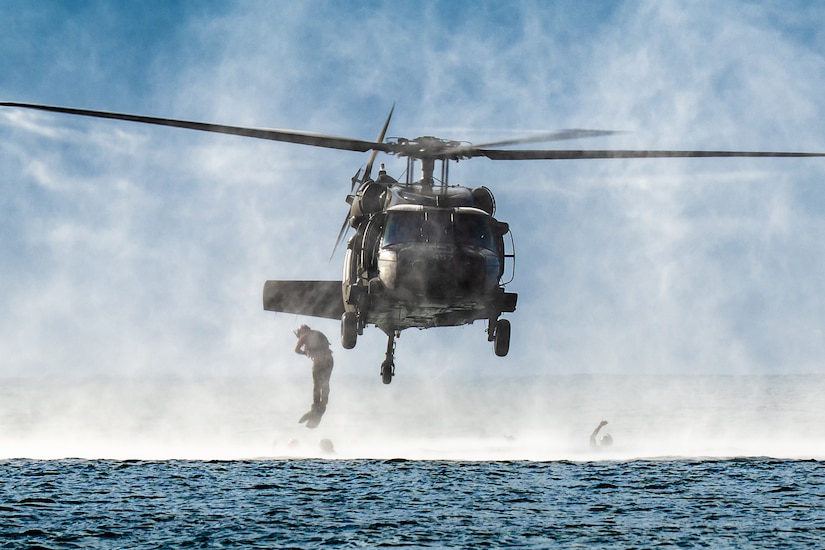
A person jumps from a military helicopter into a body of water. The sky is blue, with clouds and a smoky mist rises above the water.

 
The airmen, including combat controllers, pararescuemen and special reconnaissance troops, operated from the island of St. Croix, U.S. Virgin Islands, to conduct land, sea and air missions with fixed- and rotary-wing aircraft as part of Exercise Emerald Warrior 25.2, according to the special tactics officer who served as lead planner. 
 
"Our airmen exercised their unique skill sets to parachute into contested territory, establish airfield operations, control aircraft, respond to search and rescue scenarios, manage notional medical evacuations and conduct reconnaissance and targeting operations on a very tight timeline," the officer said. 

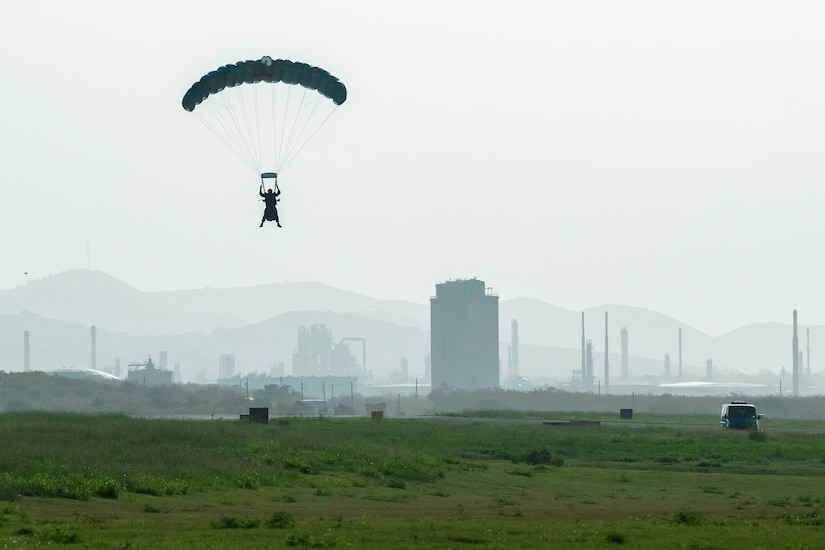
The silhouette of a person hanging from a parachute and landing in a green grassy field with buildings and mountains in the background.

 
St. Croix and its neighboring islands provided an ideal training environment, he added. 
 
"Operations in the Caribbean simulate many of the geographical features our forces may encounter when deployed around the globe," he said. "Having to overcome the kinds of challenges presented here will make us a more lethal and effective force the next time we conduct littoral operations anywhere in the world." 
 
The St. Croix event was just one piece of Emerald Warrior, a large-scale special operations exercise staged in multiple locations by Air Force Special Operations Command to train special operations components, sister services, interagency and partner forces. The exercise simulates missions for a theater campaign to support combatant commanders operating in a volatile environment against strategic competitors. 

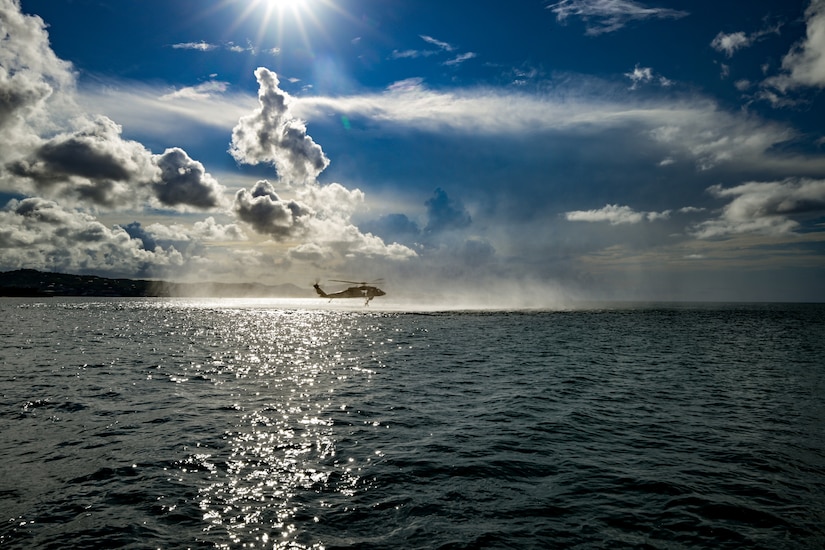
Mist rises from a body of water as a military helicopter hovers over it. The sky is blue with clouds, and the sun shines above the aircraft, creating a glow in the water below.

 
A key focus was an agile combat employment exercise, meant to advance the ability to project air power in complex, unfamiliar or contested environments while working from distributed locations with limited support, the officer said. 
 
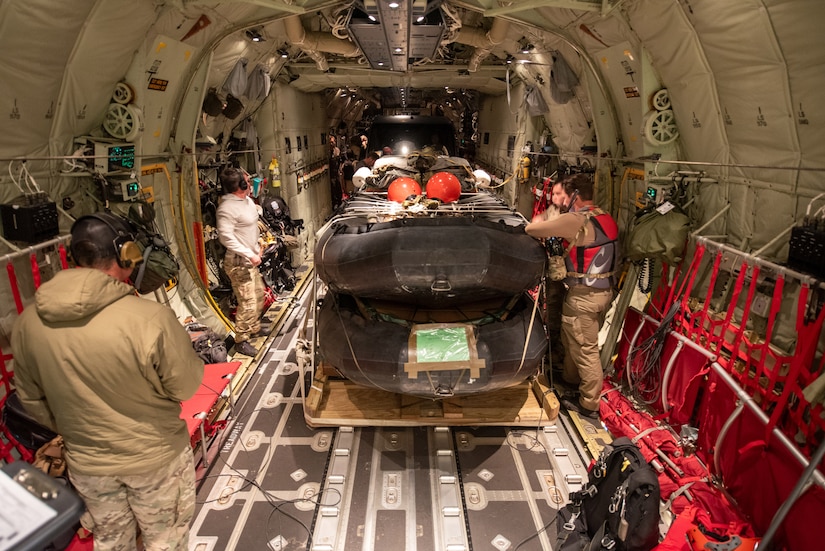
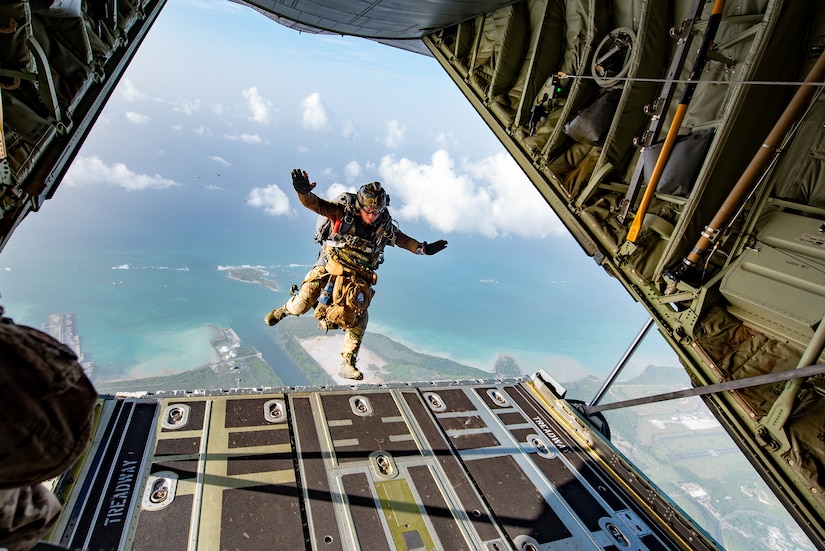
The exercise, staged and executed by forces from the Louisville, Kentucky-based 123rd Airlift Wing, kicked off Aug. 26 when six special tactics airmen parachuted into the Caribbean Sea with an inflatable boat, 3 miles off the shore of St. Croix, from a Kentucky Air Guard C-130J Super Hercules. Eleven more combat controllers and pararescuemen then jumped directly into Henry E. Rohlsen Airport from the same aircraft, with both forces combining to take control of the airfield. Within minutes, the airmen had cleared the runways, established perimeter security and implemented air traffic control, allowing the C-130 to land and offload crucial assets. 

A group of people wearing brown military uniforms prepare to airdrop a boat from the inside of a military aircraft.

 
In another mission, spanning two days, a group of airmen traveled 75 nautical miles by boat to conduct reconnaissance and targeting operations on a nearby island held by simulated enemy forces. 
 
Two other scenarios tested the squadron's ability to conduct search and rescue operations and provide medical care in challenging environments. 

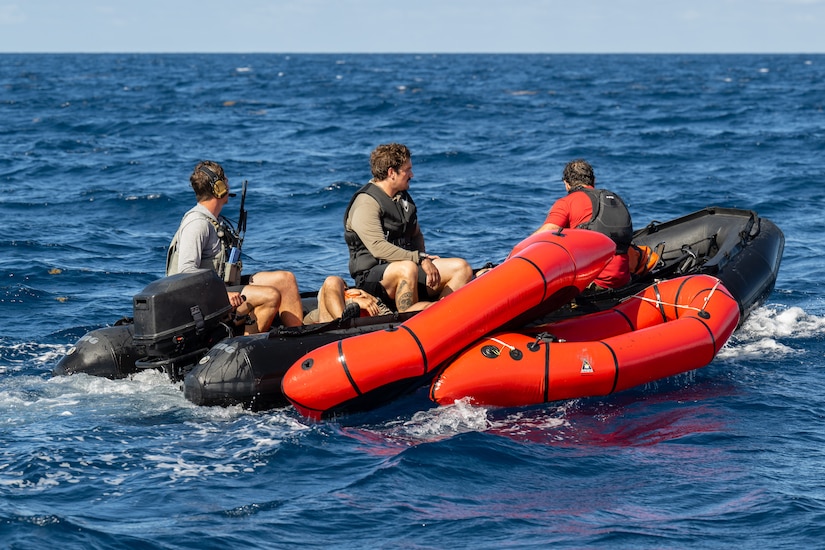
Three people sit in an orange and black life raft in the ocean.

 
In the first event, six pararescuemen and combat controllers were tasked with finding survivors floating in life rafts on the open ocean after their plane crashed at sea. Over the course of a 32-hour scenario, the airmen located the victims while flying over the crash site in a C-130J, parachuted into the ocean with two inflatable boats, provided on-scene medical care and controlled medical evacuations via helicopter hoist operations. 
 
"This was a particularly demanding scenario designed to test both the rescue capabilities and the survival skills of our airmen on the open ocean," the planner said. 

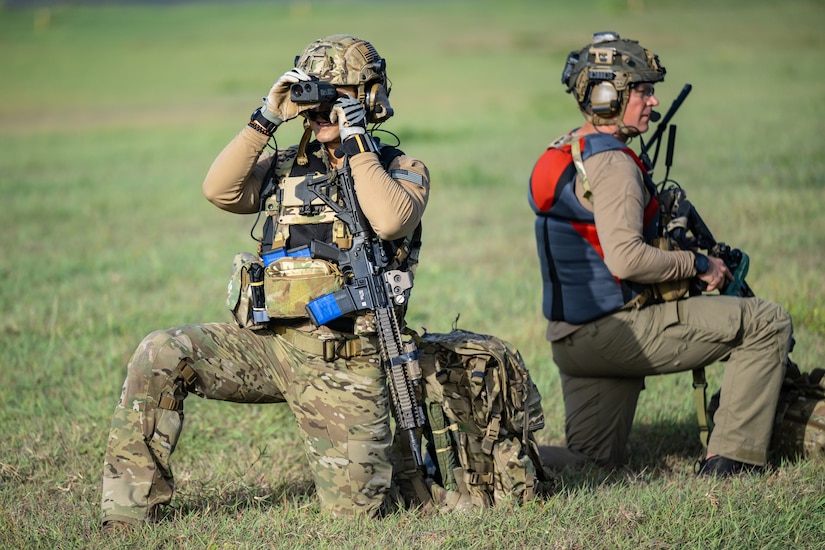
Two people wearing camouflage military uniforms kneel in a grassy field facing opposite directions. Both have weapons, and one is holding binoculars.

 
Other training included exfil and infil operations on land and sea from UH-60 Black Hawk helicopters, provided by the Mississippi Army National Guard's 185th Aviation Brigade, as well as a mass casualty exercise involving civilians wounded by an industrial accident. In that event, airmen were required to triage patients, provide battlefield medical care and control their evacuation via Black Hawk helicopters from the Virgin Islands Air National Guard Station. 
 
Such complex operations required coordination with numerous entities, the planner said, including the U.S. Coast Guard; the U.S. Virgin Islands Governor's Office, Police Department and Air National Guard; officials at Henry E. Rohlsen Airport; local marinas and dozens of area businesses. 

A man wearing a camouflage military uniform and parachute equipment jumps from a military aircraft. The rear of the aircraft is in front of him, and behind him is a blue sky with clouds.

 
The exercise also relied on essential capabilities provided by the squadron's combat mission support team, including radio technicians, diving gear specialists, parachute riggers, vehicle maintenance troops and administrative specialists. 
 
"An exercise of this scope, which has been in the planning stage for over a year, would not have been successful without the combined efforts of everyone involved, from our combat support troops to the governor's office to local citizens who were so supportive of our efforts to ensure our nation's security." 

Wednesday, September 03, 2025

Air National Guard Medics Train Under Pressure for Real-World Combat Casualty Care

 Sept. 3, 2025 | By Air Force Senior Master Sgt. Julie Avey, 168th Wing

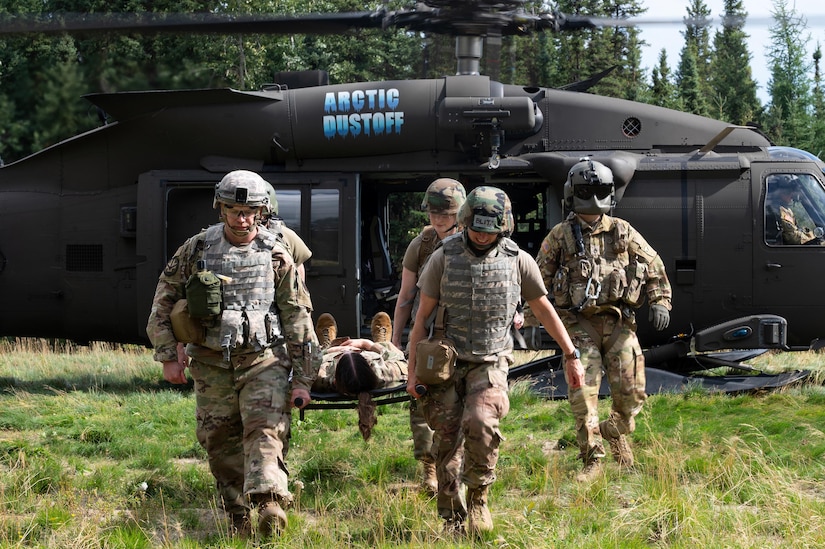
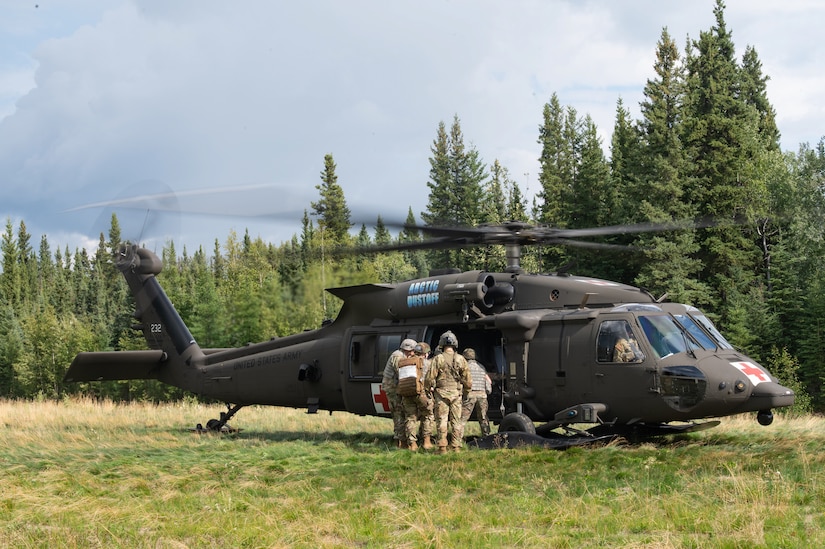
Airmen assigned to 168th Medical Group, Alaska Air National Guard, engaged in an advanced, rigorous, combat casualty care exercise designed to sharpen their skills in delivering lifesaving care under hostile conditions at Fort Wainwright, Alaska, Aug. 5, 2025.  
Four airmen wearing camouflage military uniforms, helmets and vests carry a stretcher with another person in a camouflage military uniform on top of it. There is another person wearing a camouflage military uniform and an aviation helmet to the right of the people carrying the stretcher and a helicopter in the background.

The training, conducted in coordination with 1st Battalion, 52nd General Support Aviation Battalion, 16th Combat Aviation Brigade, the Army UH-60 Black Hawk unit at Fort Wainwright, pushed medics to operate with precision and speed in the face of simulated battlefield chaos. 

"This exercise prepares them for real-world scenarios," said Air Force Col. Russell Pierce, 168th Medical Group commander. "Many are civilian caregivers, and while some skills transfer to military settings, others don't, making this training invaluable." 

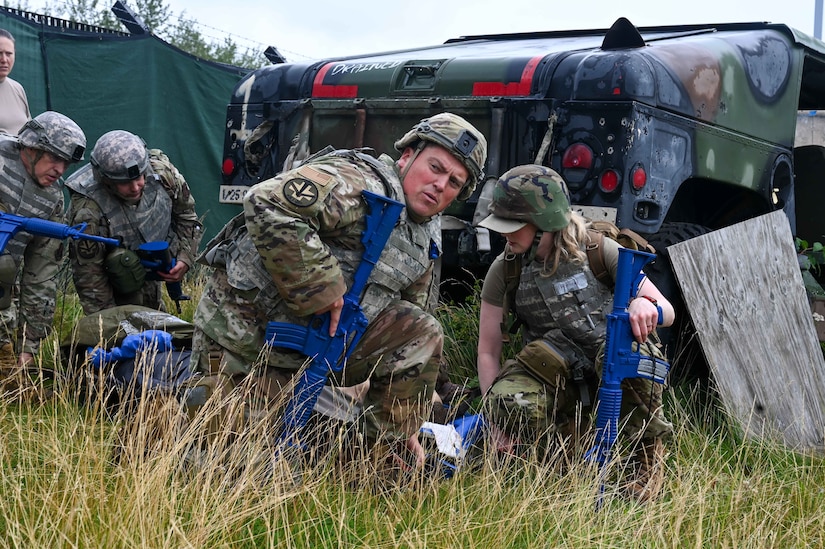
Several airmen wearing camouflage military uniforms with blue training rifles in their hands prepare to lift a simulated casualty off the ground. There is tall grass in the foreground and a military vehicle in the background.
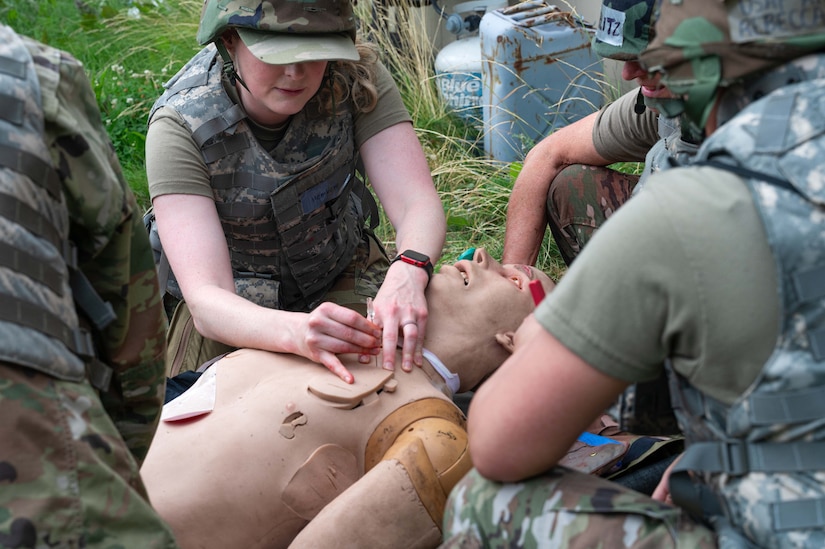
A woman wearing a military camouflage uniform and helmet places a needle in a simulated casualty mannequin while other people in similar attire observe.
The training was designed to equip medics for real-world missions involving multiple casualties in hostile environments. Airmen advanced in tactical formation teams to a remote location, where they responded to simulated emergencies. The scenario featured a coordinated Black Hawk medevac operation, including a landing for a field instruction course, followed by an extraction of patients. 
 
The scenario-driven exercise featured multiple complex challenges, including simulated improvised explosive device blasts in a remote field. Participants navigated realistic combat conditions, caring for simulated casualties while under mock enemy fire. 

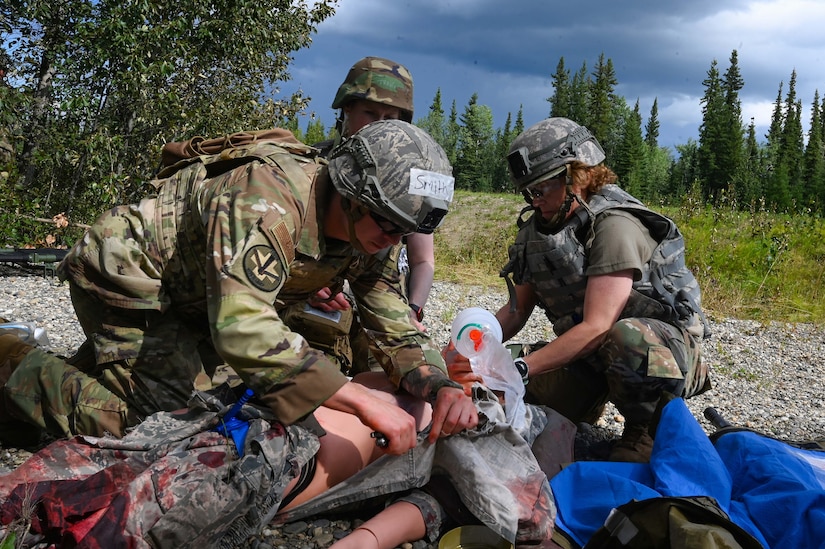
A man wearing a military camouflage uniform and helmet places a needle in a simulated casualty mannequin while a woman in similar attire places an oxygen mask on the mannequin.

 
The transition from care under fire to tactical field care challenged airmen to stabilize patients while maintaining situational awareness, where they immediately began assessing and treating injuries.  

Under the pressure of simulated enemy engagement, medics applied tourniquets, neutralized threats and performed advanced life-saving procedures, including needle decompressions and chest seal applications. 
 
A critical component of the exercise involved placing a 9-line medevac request to coordinate a rapid evacuation. 

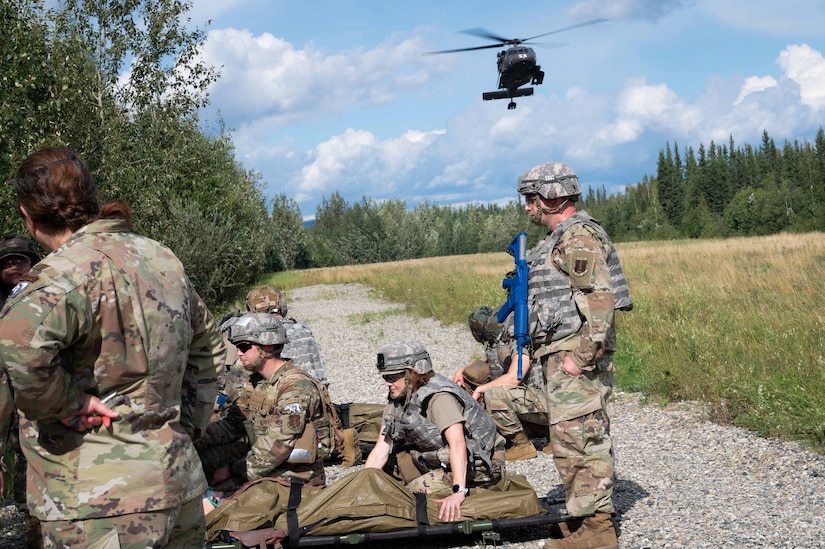
Men and women wearing military camouflage uniforms stand and kneel over two stretchers with mannequins inside on a paved road near an open field surrounded by trees. A helicopter is flying above.
Several airmen wearing camouflage military uniforms load a simulated casualty into a helicopter. The helicopter’s blades are spinning as the pilot waits to takeoff from a field with trees in the background.

 
"The coordination with Army aviation intensified the training and made it more realistic," said Air Force Capt. Jennifer Dieken, 168th Medical Group training instructor. "This exercise emphasized the value of integrated training between the Air Force medics and Army aviation, continuing to ensure medical personnel are ready to respond decisively and effectively in real-world combat medical scenarios." 

Tuesday, September 02, 2025

Face of Defense: Sailor Unlocks Full Potential, Trains Future Generations

 Sept. 2, 2025 | By Austen McClain, Naval Education and Training Command

Ward is one of countless individuals shaped by NETC training, but his story makes one thing clear: world-class training leads to real-world results. From the first day of rescue swimmer school to joint operations with the Coast Guard, he has seen how high standards and hard instruction translate directly to fleet impact. 

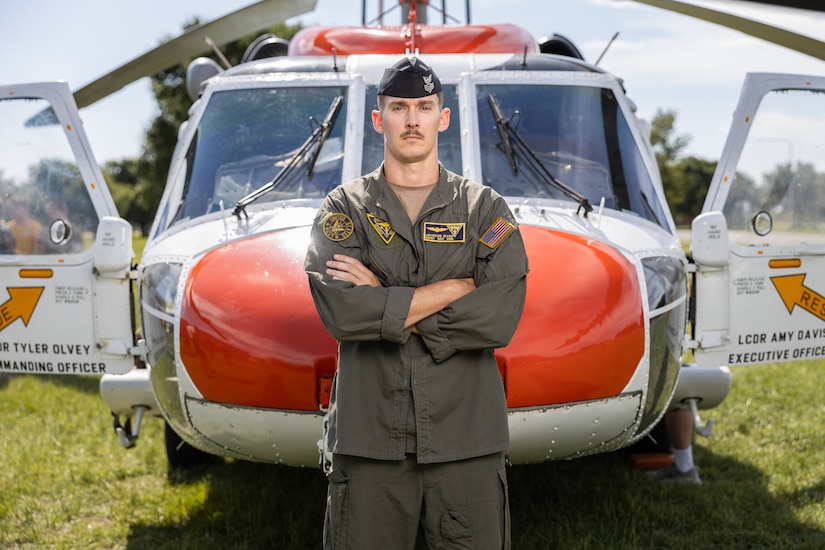
Some join the Navy for the benefits. Others join to see the world. For Navy Petty Officer 1st Class Jackson Ward, it was about the chance to unlock his full potential and be part of something greater. 

A sailor stands in front of a red and white helicopter parked on a field on a sunny day

"I joined the Navy because I felt stuck," Ward said. "College was not working out, and my job in sales was not fulfilling. What drew me to the Navy was the chance to get uncomfortable, to test myself and to find out what I was really made of." 

Ward enlisted in 2016 on an aviation rescue swimmer contract and began an intense pipeline of training under Naval Education and Training Command. From boot camp to the Aviation Rescue Swimmer School at Naval Air Station Pensacola, Florida, he was immersed in a program that demanded not just physical grit but mental resilience and technical precision.  

"The instructors did not just teach us how to survive. They taught us how to think, how to make decisions under pressure and how to be accountable," Ward said. "Those lessons [stayed] with me long after training ended."  

From Training Grounds to Operational Success  

After graduating from the NETC pipeline, Ward was assigned to Helicopter Sea Combat Squadron 2 for fleet replacement training, then to Helicopter Sea Combat Squadron 22, an expeditionary helicopter squadron. There, he put his training to the test in real-world operations ranging from NATO exercises with U.S. 6th Fleet to interdiction deployments with 2nd Fleet. 

One mission stands out to him. During a counternarcotics deployment in the Caribbean Sea, Ward's crew was tasked with locating a vessel suspected of smuggling narcotics from South America toward Puerto Rico. After hours of coordinated search with other assets, including a Coast Guard AC-130 aircraft, they identified the suspected boat — but were forced to return for fuel. By the time they relaunched, the aircraft had lost radar contact.  

That is when training kicked in. "I noticed something in the water, a faint wake," Ward recalled. "We moved in closer and used forward-looking infrared to get a positive ID without tipping them off."  

The team confirmed the vessel had contraband on board. When it ignored verbal warnings and warning shots, a Coast Guard precision marksman disabled the engines with a .50-caliber rifle. The boarding team seized both the crew and the cargo.  

"Everything we did that night — teamwork, communication, staying calm under pressure — it was straight out of the training pipeline," Ward said. "It was not a rescue, but the mindset was the same: solve the problem and bring people home safe." 

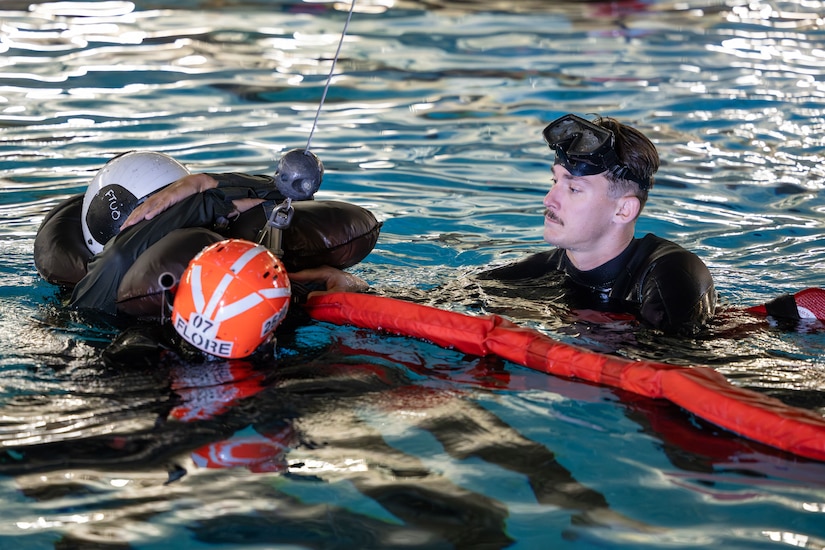
A sailor in a wetsuit instructs another sailor in a wetsuit in a pool.

 Training the Next Generation 

Today, Ward serves as a high-risk training instructor and leading petty officer at Aviation Rescue Swimmer School, part of Naval Aviation Schools Command. 

His mission is to shape the next generation. 

"For most students, the hardest part is not physical; it is mental," Ward said. "We are teaching them how to believe in themselves. If they show up with the right attitude and the drive, we will get them to the finish line." 

He does not believe in breaking people down just for the sake of it. Instead, his approach is about building them up with accountability, structure and mentorship. 

"Be where you are supposed to be, when you are supposed to be there," Ward said. "Show up ready to learn. Be humble. That is how you succeed here and in life." 

Building Warfighters and Protectors 

"The Navy taught me how to lead and how to hold myself accountable," Ward said. "And that started in training." 

Whether recovering personnel or tracking down smugglers in the Caribbean, Ward's work shows how NETC plays a critical role in building a ready, capable force that keeps the homeland secure. 

NETC recruits and trains those who serve the nation, taking them from "street-to-fleet" by transforming civilians into highly skilled, operational and combat-ready warfighters while providing the tools and opportunities for continuous learning and development. 

Monday, September 01, 2025

Medal of Honor Monday: Army Capt. Frederick F. Henry

During the early days of the Korean War, Army Capt. Frederick Funston Henry chose to take the brunt of an enemy attack alone so the rest of his platoon could survive. For his gallant actions and self-sacrifice, Henry received a posthumous Medal of Honor.  
A man in a military dress uniform poses for a photo.

Henry was born Sept. 23, 1919, in Vian, Oklahoma, to James and Ida Mae Henry as the third oldest of 13 children. As if they knew he would go on to do great things, his parents named him after Army Maj. Gen. Frederick Funston, a Medal of Honor recipient who served during the Philippine-American War at the turn of the century. 

The family eventually moved about three hours west to Clinton, Oklahoma, where Henry grew up before enlisting in the Army in September 1940. Five of his brothers also served during World War II, while two continued their service in Korea.  

Henry served in the 6th Army during World War II and earned a battlefield commission to second lieutenant while in the Pacific Theater in 1945. After hostilities ended, he served in Germany, where he met Lavon "Bonnie" Southam, a combat nurse, according to The Salt Lake Tribune. The pair later married and had two children, Frederick Jr. and Sharon.  
When the Korean War broke out, Henry's unit, Company F of the 28th Infantry Regiment, 2nd Infantry Division, was one of the first to deploy to the peninsula in the summer of 1950.  

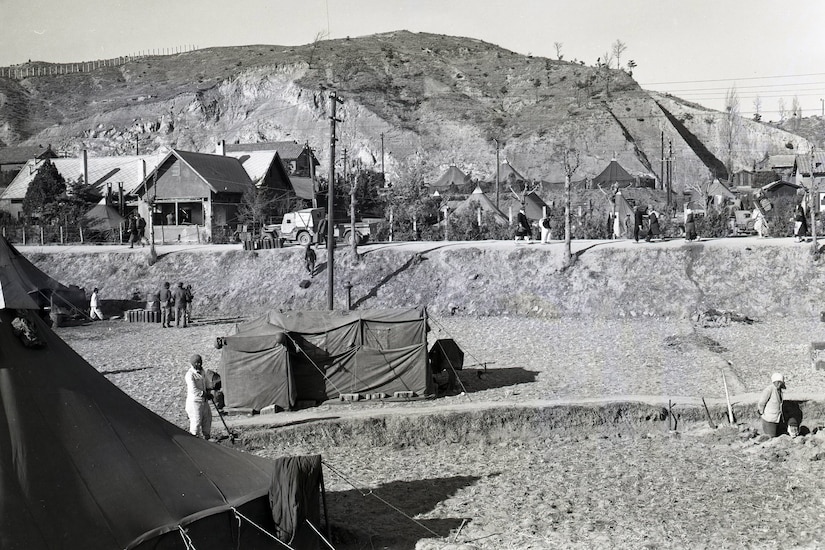
A small building and some tents are set up beside a barren hill. There are people in civilian attire walking around the area, and large buildings in the background.

On Sept. 1, 1950, the 33-year-old first lieutenant was leading his platoon as it held a strategic ridge near the town of Andong, South Korea, when they were attacked by a much larger enemy force. Heavy mortar and artillery fire quickly threw the platoon into disarray. To keep the unit together, Henry left his foxhole so he could move around his men, ordering them to stay in place and return fire.  

Encouraged by Henry's bravery, the platoon reformed its defensive line and delivered intense fire back, impeding the enemy's advance. Unfortunately, the enemy succeeded in knocking out all communications, so Henry had no way of knowing if the main line of resistance was still in place.  

"There were bullets and shells falling all around," Army Sgt. Richard Siman, who was part of Henry's platoon, later told officials. "Our ammunition was running low." 

Despite being seriously injured, Henry stayed put while ordering the wounded men in his platoon to evacuate. He had them give him all their weapons and ammunition before they left, so he could set up a one-man position. He then ordered the rest of his platoon to withdraw.  

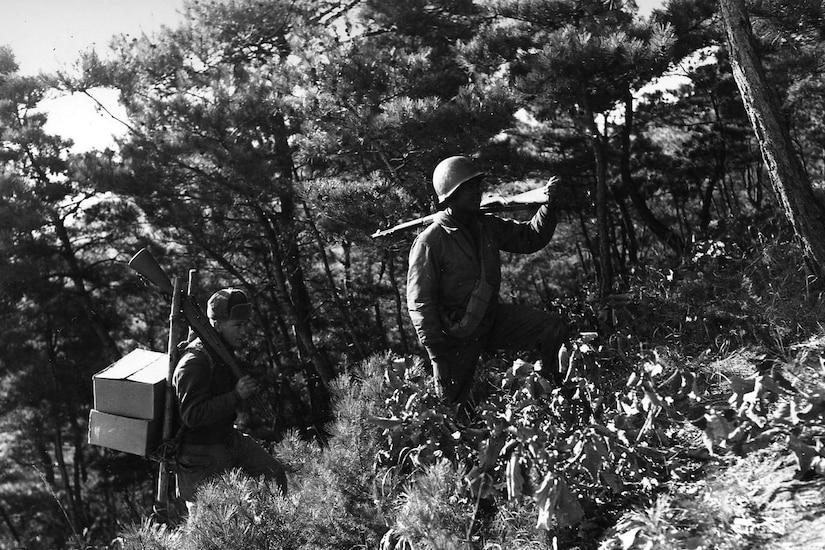
Two men in military uniforms carrying guns and boxes march up a hillside.

Henry was last seen firing every weapon he had at the enemy. His Medal of Honor citation stated that his effort caused approximately 50 enemy casualties before he ran out of ammunition, and his position was overrun. His selfless actions that day saved his platoon and kept the enemy at bay long enough for the main line of resistance to fully push them back.  

Henry was initially listed as missing in action. He was officially declared dead on Dec. 31, 1953, and posthumously promoted to captain. His name is listed on the Wall of the Missing at the National Memorial Cemetery of the Pacific in Honolulu. According to the Defense POW/MIA Accounting Agency, his remains have not yet been recovered.  

On Jan. 9, 1951, Henry's widow received the Medal of Honor on his behalf from President Harry S. Truman during a White House ceremony. Four other fallen soldiers also posthumously received the honor that day.  

Henry has not been forgotten. In May 1960, a U.S. camp that's part of current-day Army Garrison Daegu was named Camp Henry in his honor. In 2004, a memorial was dedicated to him at a park in his hometown of Vian. In 2013, he was inducted into the Oklahoma Military Hall of Fame. A year later, a highway near his hometown was renamed for him.  

Sunday, August 31, 2025

WWII Hero Honored at U.S. Open Tennis Championships

The U.S. Tennis Association hosted the 2025 Lt. Joe Hunt Military Appreciation Day yesterday at Arthur Ashe Stadium, in Queens, New York. 

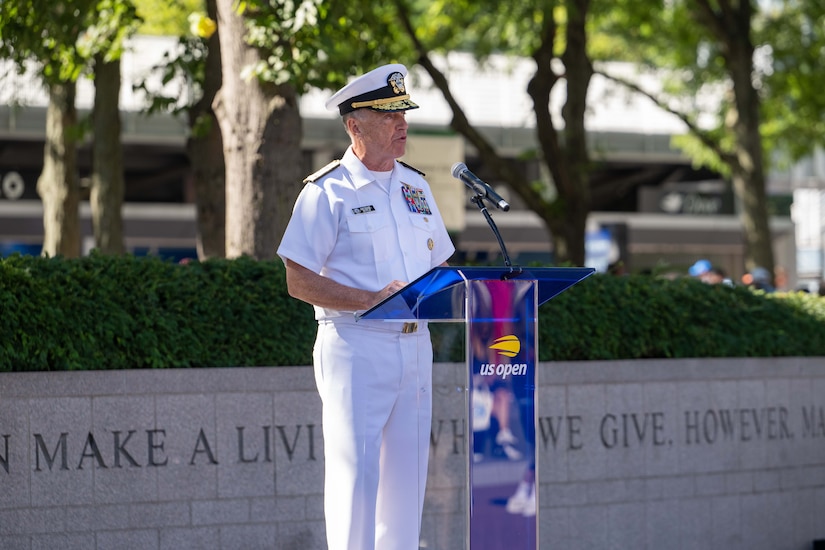
A man wearing a formal military uniform stands at a podium and speaks during an outdoor ceremony.

This U.S. Open tennis tournament event is dedicated to honoring and recognizing members of the U.S. military, named in honor of Hunt, the only U.S. Open champion to die in service to his country. 

Several speakers at the event paid tribute to Hunt. 

More than a tennis player, Hunt was the U.S. Nationals champion, an NCAA champion, a Naval Academy graduate and a Navy football star. Like so many of his generation, he put aside his personal achievement to answer his nation's call, said Navy Rear Adm. Michael Boyle, director of the Navy staff. 

After the Japanese attack on Pearl Harbor on Dec. 7, 1941, Hunt "traded aces on the court for the challenge of becoming an ace in the sky, earning his wings of gold as a naval aviator," he said. 

This year marks 80 years since his sacrifice, and it also marks a historic milestone: the 250th birthday of the United States, Navy, Marine Corps and Army, Boyle noted. 

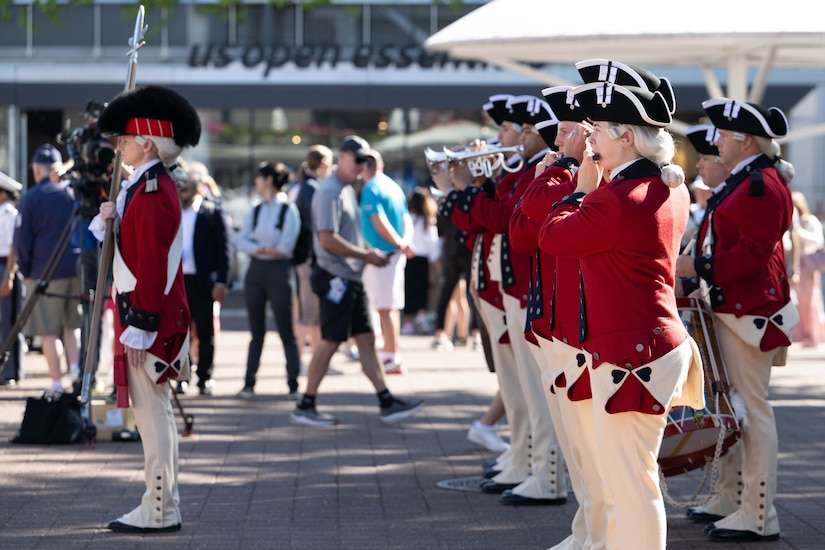
People dressed in colonial period uniforms stand in formation and play instruments at an outdoor event.

"Our sacred duty is to fight with toughness, tenacity and integrity to defend this nation. That is what 250 years of service means," he added. 

Joe Hunt, grand-nephew of Lt. Joe Hunt, said, "The military has a code which says we shall never forget, and that is what this day is very much about. To those of you who wear and have worn the uniform, we will not forget your service.  

"We truly appreciate your sacrifice and the sacrifice of your families, and we will never forget you," he added. 

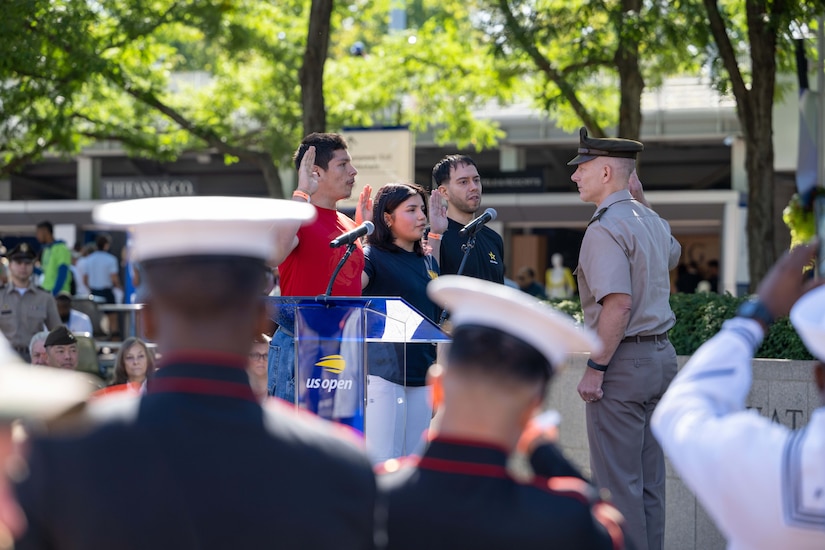
Yesterday's events included an oath of enlistment ceremony, military family engagements and performances by the Old Guard Fife and Drum Corps, as well as the Navy Sea Chanters. 

More About Lt. Joe Hunt 

Hunt won the 1943 U.S. Open Tennis Championships in New York City while on leave from the Navy in early September of that year. 

He is the only man in history to win the U.S. national boys' (then 15-and-under), juniors' (18-and-under), collegiate and U.S. men's singles titles.  

Hunt also played football at the U.S. Naval Academy, winning a game ball in the 1941 Army-Navy game after beating Army 14-6 in Philadelphia, Nov. 29, 1941. Eight days later, the Japanese bombed Pearl Harbor, Hawaii. 

Due to wartime needs, Hunt's class graduated early on Dec. 19, 1941, instead of in the spring of 1942. Upon graduation, he was assigned to the destroyer USS Rathburne, an antisubmarine warfare training ship homeported in San Diego.  

At the end of September 1943, Hunt was assigned to the destroyer USS Kearny, which escorted a merchant convoy to Casablanca, Morocco. However, he wanted to fly and was eager for combat duty, according to his grand-nephew Joe Hunt, a Seattle attorney who was named for his great uncle.  

Hunt requested a transfer to aviation, and it was granted. His training began at Naval Air Station Dallas on Dec. 30, 1943. In May 1944, he received advanced aviation training at Naval Air Station Pensacola, Florida. He wanted to defend his tennis title that year, but his leave request was denied. 

On Feb. 2, 1945, Hunt's F6F Hellcat fighter aircraft crashed into the Atlantic Ocean east of Daytona Beach, Florida, during a training flight. Hunt and his aircraft were never recovered. 

Hunt left behind a wife, Jacque Virgil Hunt, whom he married in 1942.  

Hunt was inducted into the International Tennis Hall of Fame in Newport, Rhode Island, in 1966. 

On Sept. 1, 2014, Hunt was honored on center court at Arthur Ashe Stadium during the U.S. Open, an event he won 71 years earlier.  

Every year since 2019, the U.S. Open has celebrated his service and honored service members and veterans on "Lt. Joe Hunt Military Appreciation Day." 

Thursday, August 28, 2025

Army Medical Researchers Hunt for Indicators of Heat Stress Risk

Heat-related injuries are a persistent threat to warfighters, especially during ruck marches and timed runs. Physiologists have long sought to understand why some people are able to withstand the effects of heat for longer periods, while others of the same age and physical condition are prone to experiencing potentially dangerous symptoms.

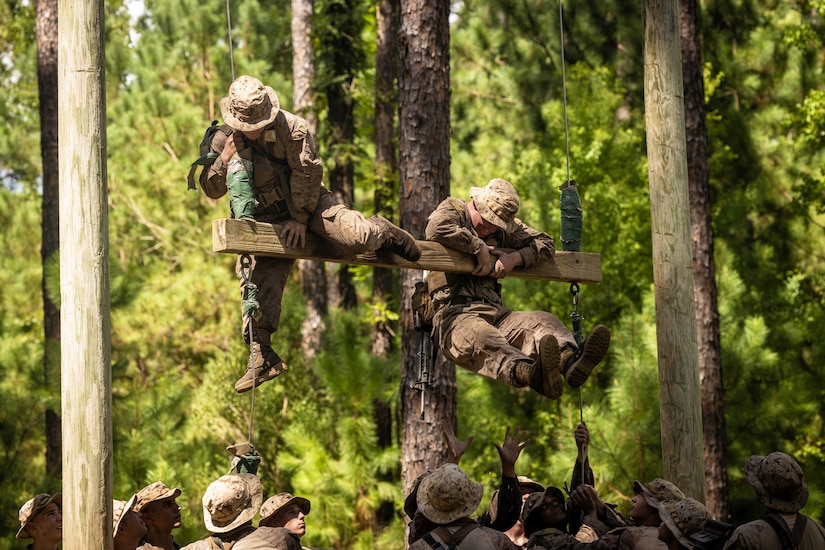
Two Marine Corps recruits climb a wooden structure as dozens of fellow recruits provide support from below in a wooded area.

A team of researchers at the U.S. Army Research Institute of Environmental Medicine is seeking to solve that mystery by identifying specific physiological characteristics of people who can withstand extreme heat stress during training. By helping to identify risk factors and prevention strategies for heat-related illnesses, the research could lead to improved recovery and return-to-duty protocols that better protect the health of warfighters, thereby improving their readiness, endurance and lethality. 
 
Exertional heatstroke — a severe form of heat illness typically marked by high body temperature and altered mental status such as disorientation and loss of consciousness — affects nearly 500 service members per year. The Medical Surveillance Monthly Report recently found that the overall incidence rate of EHS among military personnel increased in 2024 after three years of steady decline.  

Gabrielle Giersch, a research physiologist in USARIEM's Thermal and Mountain Medicine Division, is leading the study and said that the research into identifying risk factors and biomarkers associated with resilience to heat stress will help fill key gaps in the Defense Department's understanding of heat-related illness. 
 
"Heat illnesses pose a serious threat not just to individuals, but also to units and deployability, and they impose a significant financial cost as well," Giersch said. "We don't have a lot of data on the factors that contribute to the onset of heat illness or optimal recovery time. This study is designed to help us develop better criteria for determining the return-to-duty requirements for heat illness [sufferers] by identifying what puts people at risk and how those risk factors affect them." 
 
Earlier this summer, Giersch and her team traveled to Fort Rucker, Alabama, where they recruited 24 volunteer soldiers assigned to the 1st Battalion, 145th Aviation Regiment, to serve as the study's control group. Prior to participating in a 5-mile run and an 8-mile ruck march as part of their regular physical training, the volunteers provided blood and urine samples and were fitted with instrumentation to monitor their heart rate, skin temperature and core temperature.

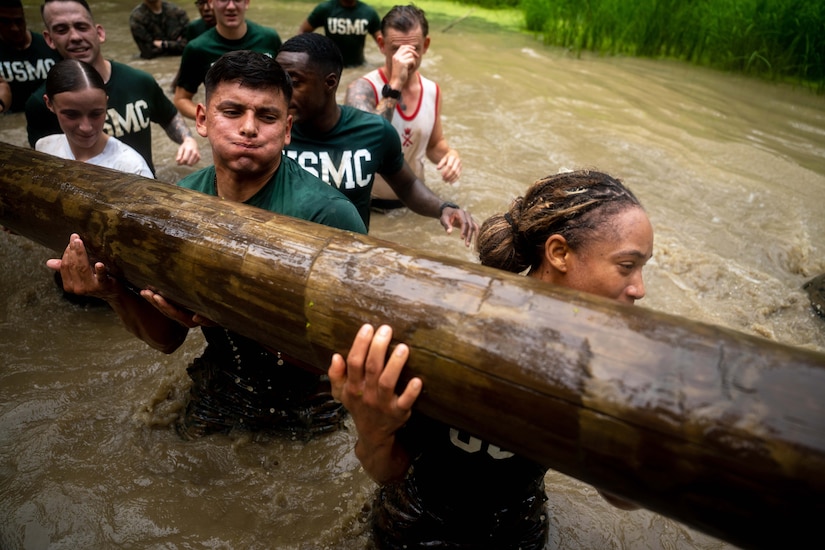
Marines carry a log while walking through murky waters.

They also completed a brief questionnaire on their health history. In follow-up visits, the research team collected blood and urine samples from the volunteers at six-hour intervals for an additional 24 hours — the same frequency that care providers in emergency departments and hospitals take samples from actual heat illness patients. The samples will be analyzed to identify the prevalence of biological molecules that can be correlated with a volunteer's ability to better withstand the onset of EHS. 
 
"The 24 individuals who participated in the initial data collection represented a pretty wide spectrum of race, sex, fitness status and body mass index," Giersch said. "We haven't analyzed the blood samples yet, but the core temperature data showed that several people reached high temperatures without experiencing any symptoms of EHS and cooled off very quickly, which gives us a very good indication that we have a really good control group to identify what individuals who don't become heat illness casualties look like relative to those who do." 
 
Giersch said the team hopes to enlist special operations forces as volunteers to participate in similar data collection events throughout the summer. The team is specifically seeking data from the elite warfighter population because they tend to experience a higher rate of heat-related illnesses thanks to the intensity of their training.  

The team aims to publish their findings next year. The outcomes of this study will also be used to inform future updates to the Army's medical bulletin, "Heat Stress Control and Heat Casualty Management," which provides guidance for developing and implementing programs for preventing, diagnosing and treating heat-related injuries — crucial for ensuring a swift return to duty and improving unit readiness rates.

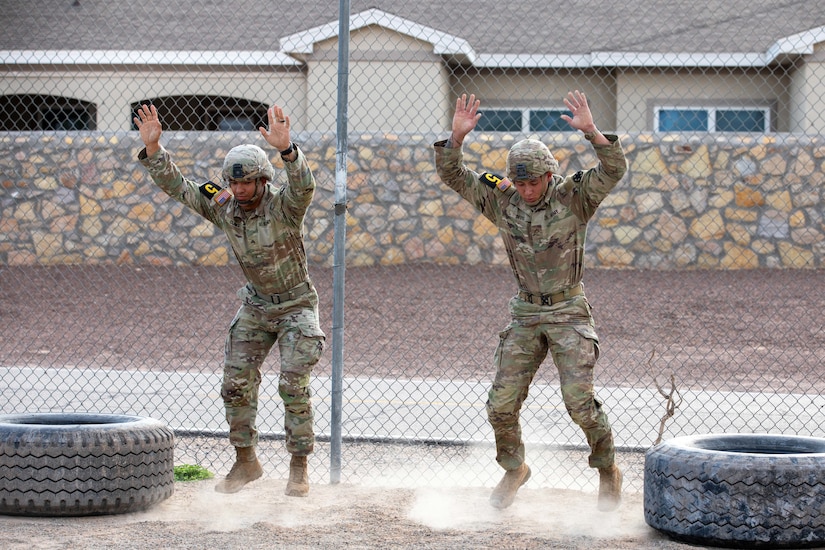
Two soldiers in tactical gear jump in between tires in front of a fence.

 
In addition to informing policy decisions and pushing the boundaries of our understanding of heat-related injury, Giersch said the study has also been of intense personal interest to the soldiers who volunteered to participate in it. 
 
"There is so much intrinsic value for the volunteers in this study," she said. "People were constantly coming up to me and asking what their core temperature was, when we'd have their blood data and similar questions. They want to see the papers when they get published and learn how our study impacts policy. They really want to make life better for their future battle buddies, whether they know them or not. That makes it all worthwhile."

Wednesday, August 27, 2025

Paratroopers Make History With Army's First Drone-on-Drone Strike

 Aug. 27, 2025 

By Army Capt. Jennifer French, 173rd Airborne Brigade

For Army 1st Lt. Francesco La Torre, the Army's first drone-on-drone strike wasn't exactly a Hollywood moment. 

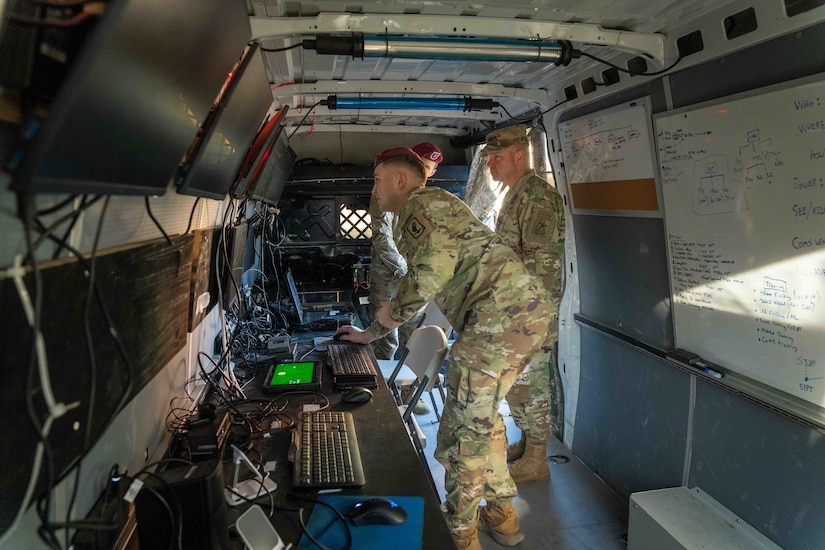
A man in a camouflage military uniform looks at a computer screen while moving a mouse. Another soldier in similar attire looks at the screen. Both men and another soldier in the background are standing in a long vehicle with a line of computers and monitors on the left side.
"In [the Star Wars movie], 'A New Hope,' Luke Skywalker flies an X-Wing through the Death Star trench and blows it up," La Torre said. "This wasn't like that. It was way harder. Honestly, it felt more like Darth Vader shooting down rebel pilots. He might be the villain, but he's also one of the best pilots in the galaxy." 
 
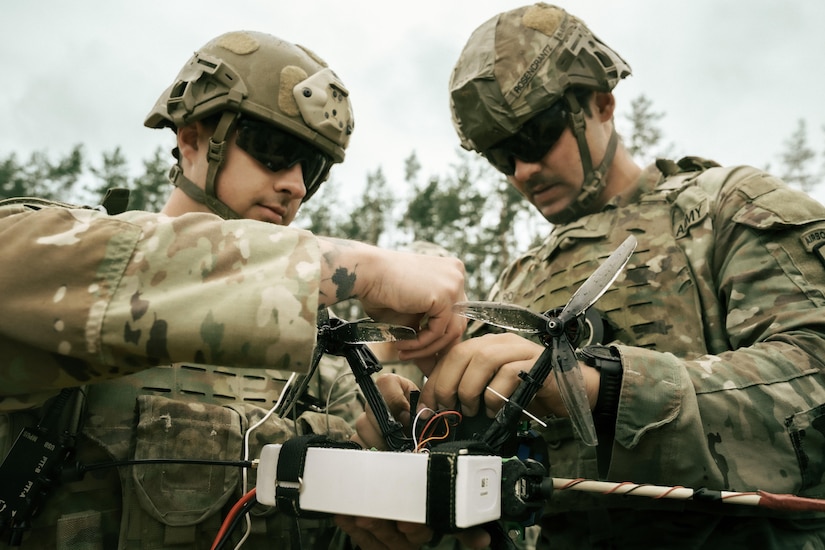
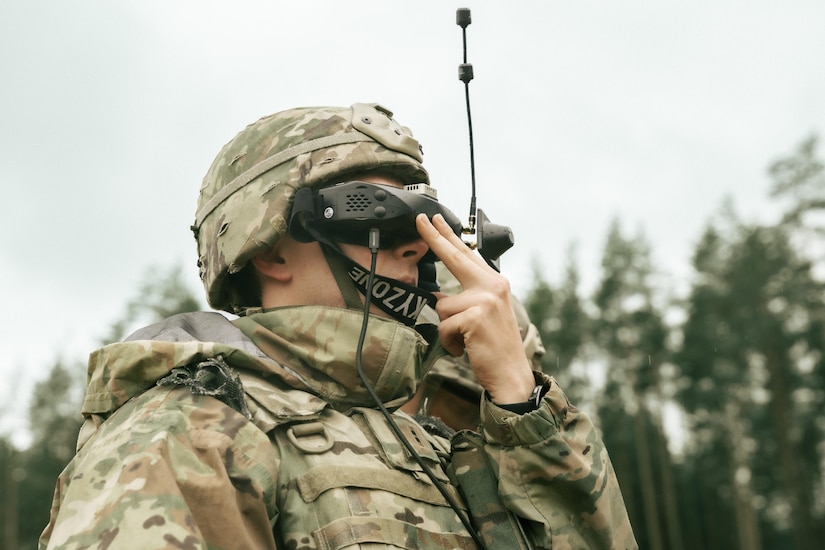
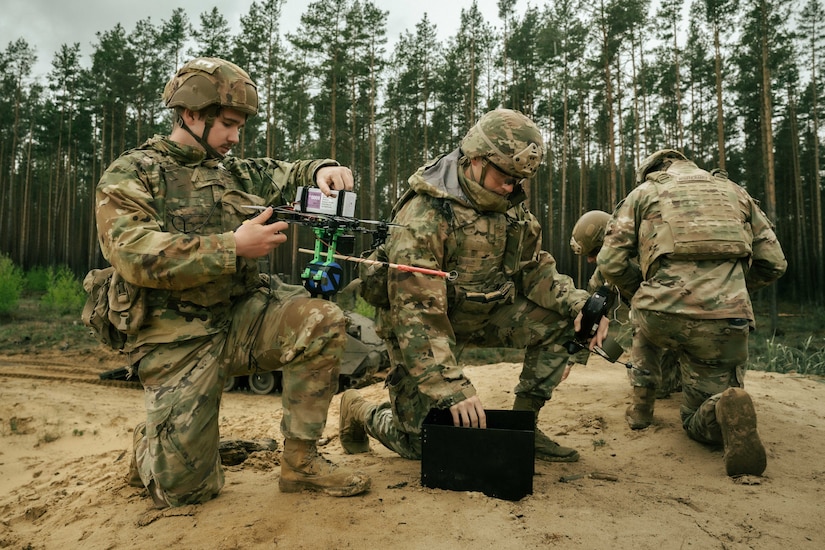
That was the image in La Torre's mind as his team with the 173rd Airborne Brigade achieved a milestone once unimaginable for conventional Army units: destroying an aircraft in flight using a first-person-view drone carrying an explosive charge. 
 
The strike took place earlier this month during the Army's Unmanned Aerial Systems and Launched Effects Summit, held Aug. 11-15 at Fort Rucker, Alabama. The live-fire event was led by the brigade's bayonet innovation team in partnership with the Pennsylvania Army National Guard and engineers from Army Combat Capabilities Development Command. 

A soldier in a camouflage military uniform and helmet adjusts tactical goggles on his face.

 
"When I heard [Army] Chief [Warrant Officer 2] Nate Shea say, 'Arming,' when he was lined up behind the fixed wing threat UAS, I knew he'd take it down," La Torre said. "A few seconds later he detonated the claymore [mine], and I looked up from my end-user device to see the fixed-wing [aircraft] drop out of the sky." 
 
The success came after weeks of training. Paratroopers flew for hours each day, building muscle memory while rehearsing how to engage a fast-moving aircraft. Army Chief Warrant Officer 2 Andrew Topits familiarized himself with the fixed-wing platform a month in advance, while Shea practiced with inactive claymores. Once on the ground at Fort Rucker, the operators flew daily in changing weather, preparing for a target that could appear anywhere across the range. 
 
Technical skill proved as important as piloting. 
 
"The ability to train and solve problems immediately afterwards was critical to mission success," La Torre said. "The team was soldering, disassembling, reassembling and performing [quality assurance] around the clock while rehearsals were underway. While tactical units and technicians may not share the same language, they do share an intellectual curiosity and desire to succeed." 
 
La Torre emphasized what it means for the average paratrooper. 

A group of soldiers in camouflage military uniforms kneel in the sand. A soldier on the left is holding a drone, while the soldier to the right is holding a remote. There are trees in the background.

 
"With the right kit, paratroopers will be able to utilize a low-cost system with preexisting munitions to execute a wide variety of mission tasks — and have the power to protect their unit from an endemic threat," he said. 
 
The drone demonstration showed that innovation doesn't have to come from the top. 
 
"It feels extremely satisfying to have this level of impact, but solving these kinds of problems should not be alien to junior officers, or any leader," La Torre said. "Every year the Army produces leaders at all levels who are better educated now than ever before. At the end of the day, rank is immaterial when it comes to problem-solving." 
 
For La Torre, the milestone reflects how far the 173rd Airborne Brigade has come. 

Two soldiers in camouflage military uniforms work on a drone.

 
"At this time last year, this kind of training was a pipe dream for conventional units," he said. "For the engagement itself, Chief Shea did an incredible job and so did Chief Topits. It's such a difficult mission profile for both aircraft." 
 
Lessons from the bayonet innovation team fed directly into Fort Rucker's new lethal UAS course, directed by Army Capt. Rachel Martin and Army Maj. Wolf Amacker. The course consolidates milestones within the Army's UAS community and serves as a hub for education and experimentation. 
 
"The more testing and experimentation we do, the less we must teach theoretically and the more we can back claims with real data," La Torre said. "Safe and effective experimentation allows commanders to understand the true nature of the risks they assume with these systems and helps make this training more commonplace." 
 
For La Torre, the boundaries are clear: safety and scalability. 
 
"We must safely conduct training, testing and experimentation," he said. "We also must make sure everything we do is exportable to other units so they can do the same. I'm confident what we've done is scalable, and the lethal UAS course at Fort Rucker will centralize the growth of lethal UAS engagements while also serving as a hub for subject matter experts to gather and exchange lessons learned."

FIM-92 Stinger: A concise history, capabilities, and combat record

Few weapons have shaped modern low-altitude air defense as visibly as the FIM-92 Stinger. A shoulder-fired, “fire-and-forget” surface-to-air missile (MANPADS), Stinger put credible anti-air capability into the hands of small units and irregular forces alike. This article surveys its origins and development, how militaries employ it, where it’s been used, and the system’s enduring strengths and weaknesses—along with how production has been sustained amid renewed demand.

Origins and development

The Stinger traces back to the U.S. Army’s effort to replace the FIM-43 Redeye with an all-aspect, more resilient MANPADS. Work began in 1967 under the “Redeye II” concept; the program was redesignated FIM-92 “Stinger” in 1972. Following a turbulent test program in the 1970s, production of the FIM-92A started in 1978, and the first units achieved Initial Operational Capability in 1981. Subsequent variants added dual-band IR/UV seekers and, critically, a reprogrammable microprocessor (RMP) that let the missile’s logic be updated for new threats without replacing hardware (FIM-92C “RMP,” FIM-92E “RMP Block I,” later FIM-92J life-extension). 

What the Stinger is—and how it works

At its core, Stinger is a supersonic, shoulder-launched missile guided by a passive seeker that homes on a target’s heat/UV signature. The current U.S. employment handbook emphasizes several properties:

  • Fire-and-forget guidance: Once the operator obtains lock and fires, the missile guides itself, letting the gunner move, take cover, or engage a second target.

  • IR/negative-UV homing with modified proportional navigation: guidance tuned for low-altitude aircraft, helicopters, and (in later updates) small uncrewed aerial systems (UAS).

  • Organic IFF support: an interrogator and antenna integrated with the gripstock help reduce fratricide risk under rules of engagement.

  • Tactical “planning range” of ~4 km (unclassified), with engagement geometry and target aspect strongly affecting outcomes.

  • Battery-Coolant Unit (BCU) constraints: once a BCU is activated it provides power and seeker cooling for at most 45 seconds, after which it must be replaced.

These are not abstract brochure claims—they are baked into field planning, training, and logistics.

On the hardware side, the designation record summarizes performance figures and evolution across variants. A typical Stinger round weighs roughly 10 kg (missile) and ~15–16 kg for a ready-to-fire unit, accelerates to around Mach 2+, and uses a ~3 kg blast-fragmentation warhead with impact/proximity/self-destruct fuzing (the proximity mode becoming more important against drones). The system ceiling is commonly cited near 3.8 km, with effective range around 4–5 km depending on target and environment; RMP Block II (cancelled in production) would have pushed the kinematic envelope further. 

Employment: teams, vehicles, and networks

A Stinger “team” (two soldiers is common) can deploy dismounted or from vehicles. The weapon’s modularity lets it serve as the missile component on Avenger turrets (HMMWV-mounted), Linebacker/Bradley derivatives, and newer M-SHORAD Stryker configurations, augmenting the human gunner with sensors, cueing, and stabilized mounts. For planning, Army guidance stresses integrating Stinger with early-warning sensors, airspace control measures, and combined-arms maneuver, not just parking a gunner on a ridgeline.

Where the Stinger has been used

The system’s combat debut came swiftly in the 1980s, but it never left the stage. Highlights include:

  • Soviet–Afghan War (1980s): Stinger’s arrival—widely associated with improved attrition of Soviet helicopters and attack aircraft—became a symbol of how portable air defense could blunt low-altitude air power. While narratives of “war-winning” effects are debated, authoritative technical histories still situate Stinger as “heavily used” in Afghanistan with hundreds of worldwide shoot-downs attributed to the type. 

  • Post-Cold War through GWOT: U.S. and allied forces retained Stingers for point defense, convoy overwatch, and base defense, often via Avenger or mounted applications. (These roles expanded and contracted as threat perceptions shifted.)

  • Ukraine (2022-present): Stinger was among the first air-defense systems transferred. By September 2024, the United States had provided over 2,000 Stinger missiles to Ukraine, and the system continues to feature in Ukraine’s layered SHORAD mix against helicopters, attack aircraft, cruise missiles, and drones. 

Strengths

Mobility and simplicity. A two-person team can move the weapon to where the fight is, with minimal logistics compared to radar-guided systems. For light infantry or dispersed territorial defense, that flexibility matters.

Fire-and-forget autonomy. Passive homing removes the need for illuminators or continuous guidance beams, reducing emissions and operator workload after launch.

All-aspect, multi-band seeker logic. Dual IR/UV sensing and reprogrammable processors (RMP) have kept Stinger viable against flares and background clutter—an ongoing “software war” against countermeasures. Upgrades like FIM-92J add proximity fuzing and refined logic for small, low-signature targets. 

Interoperability. From shoulder-launch to Avenger and M-SHORAD on Stryker, Stinger scales from pop-up ambush shots to networked, mobile air defense with cueing from radars and command networks. 

Proven combat record. Across decades and theaters, Stinger has repeatedly shown utility at the tactical edge, especially where larger systems can’t be everywhere at once. 

Weaknesses and limitations

Envelope constraints. Stinger is a short-range, line-of-sight system. With a planning range near 4 km and a ceiling around 3.8 km, fast jets at medium altitude or standoff munitions lie largely outside its sweet spot. Terrain masking can both help (ambush) and hinder (blocked sight lines).

Countermeasures. Modern aircraft bring flares, exhaust suppressors, flight profiles, and increasingly DIRCM (Directional Infrared Countermeasures). Army planning explicitly accounts for the “countermeasures environment” and the need to integrate sensors/cueing to maximize engagement quality. Even with IR/UV discrimination and updated software, sophisticated countermeasures stress MANPADS performance.

Time and power budget. The BCU hard limit—about 45 seconds of power/cooling per activation—adds pressure in high-tempo engagements and demands disciplined crew drills (don’t “burn” BCUs while waiting). Logistics must ensure sufficient BCUs alongside missile stocks.

Training and identification risk. Stinger includes an IFF subsystem, but IFF does not by itself authorize firing; rules of engagement and positive identification remain critical, especially in cluttered airspace with friendly UAS and coalition aviation. 

Aging inventory and obsolescence risk. After the U.S. last accepted new Stingers in 2005, parts obsolescence and atrophied production capacity became issues—until recent wars renewed demand. (See “Production and sustainment,” below.)

Tactics and use on today’s battlefield

Modern doctrine treats Stinger as part of a layered air-defense ecosystem rather than a silver bullet. A few practical patterns:

  • Ambush and area denial: Teams choose positions with good fields of view and short decision loops (observer-gunner pair, radio cueing). Short-range drones can be engaged with proximity-fuzed rounds or, in vehicle mounts, with integrated guns/sensors.

  • Mobility with maneuver forces: On M-SHORAD Strykers or Avengers, Stingers provide moving bubbles of protection for armored/mechanized units, especially against helicopters, loitering munitions, and low flyers. 

  • Cueing and command-and-control: Early warning from radars and airspace control nets matters—giving gunners seconds they won’t otherwise have to power BCUs, gain lock, and achieve a valid shot.

Production and sustainment: from “warm line” to multinational demand

The full-scale return of state-on-state conflict highlighted a dilemma: Western nations had drawn down stocks and allowed production lines to cool. In May 2022, the U.S. Army awarded Raytheon a $624.6 million contract modification for Stinger missiles and gear, the first major buy for new rounds in years, with deliveries projected into 2026. The award notice is explicit about the Stinger procurement and timelines. 

Demand is not just American. In July 2024, NATO’s procurement agency placed a nearly $700 million multinational order for Stinger missiles—an RTX (Raytheon) spokesman told Reuters the buy would keep the production line running through 2029. That order reflects both Ukraine’s consumption and allied recapitalization as European states rebuild short-range air-defense capacity. 

CRS analysis of U.S. defense production for Ukraine provides useful context: the United States had transferred more than 2,000 Stingers to Ukraine as of September 2024, while Army and industry worked through obsolescent parts and workforce gaps to restart production of a Cold War-era missile for twenty-first-century threats. 

Bottom line

The Stinger endures because it solves a timeless tactical problem: how to give small units a credible, mobile, immediately available answer to low-altitude air threats. Its strengths—mobility, autonomy, multi-band seeker logic, and interoperability—are balanced by weaknesses inherent to short-range, passive homing systems operating against modern countermeasures. In Ukraine and elsewhere, Stinger is no panacea; it is one indispensable layer. As allies recapitalize stocks and industry warms production back up, expect Stinger (and its successors) to remain a fixture of SHORAD doctrine—especially where drones and helicopters menace troops at the edge of the fight. 

References (APA)

Congressional Research Service. (2024, September 16). Defense production for Ukraine: Background and issues for Congress (R48182). https://www.everycrsreport.com/reports/R48182.html (EveryCRSReport)

Parsch, A. (2024, December 15). Raytheon (General Dynamics) FIM-92 Stinger. Directory of U.S. Military Rockets and Missiles. https://designation-systems.net/dusrm/m-92.html (designation-systems.net)

Reuters. (2024, July 9). NATO agency places $700 mln order for Stinger anti-aircraft missiles. https://www.reuters.com/business/aerospace-defense/nato-agency-places-700-mln-order-stinger-anti-aircraft-missiles-2024-07-09/ (Reuters)

U.S. Army, Center for Army Lessons Learned. (2018). Maneuver Leader’s Guide to Stinger (CALL Handbook 18-16). https://api.army.mil/e2/c/downloads/2023/01/19/18849503/18-16-maneuver-leaders-guide-to-stinger-handbook-apr-18-public.pdf

U.S. Department of Defense. (2022, May 27). Contracts for May 27, 2022 (Raytheon—Stinger missiles). https://www.defense.gov/News/Contracts/Contract/Article/3046664/ (U.S. Department of Defense)

Note: All sources are publicly accessible and verifiable as of August 27, 2025.