Showing posts with label world war II. Show all posts

Monday, July 27, 2026

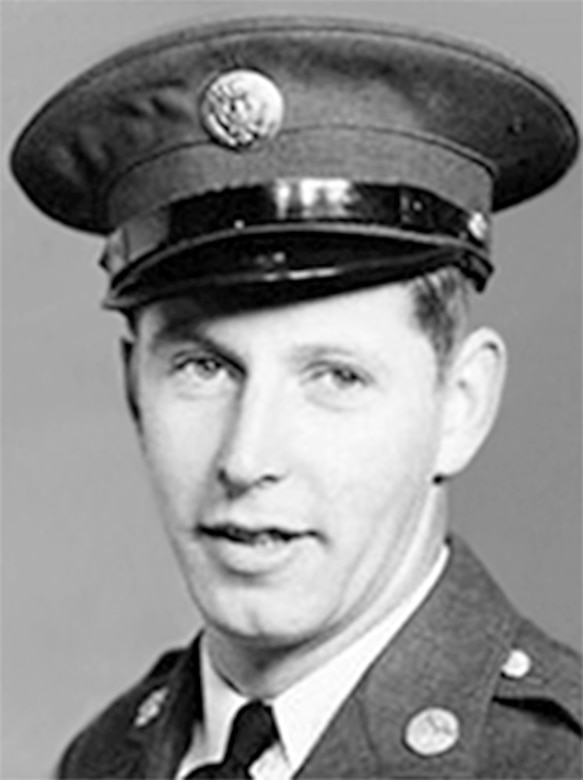
Medal of Honor Monday: Army Tech. Sgt. Ted Takayuki Tanouye

Army Tech. Sgt. Ted Takayuki Tanouye posthumously received the Medal of Honor for his heroic actions in western Italy during World War II.

Tanouye was born to Nikuma and Momoye Tanouye Nov. 14, 1919, in Torrance, California. He was the eldest of six children.
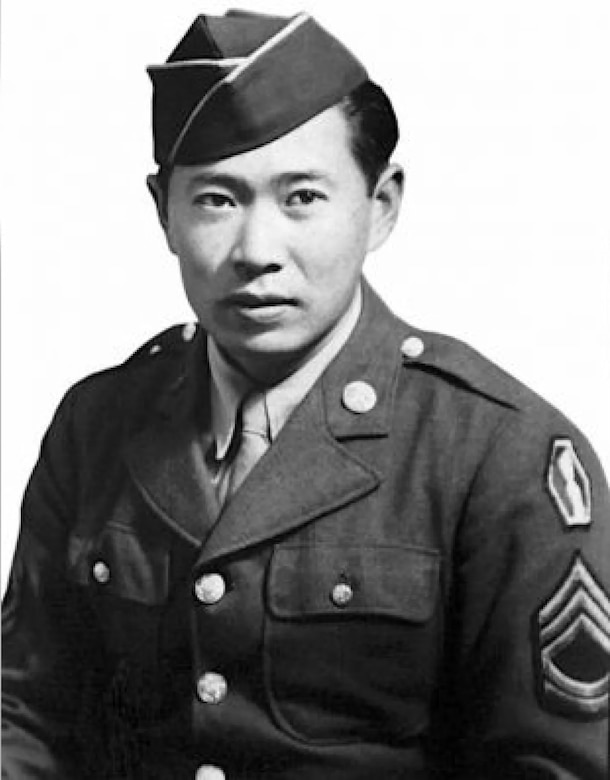
A man is wearing a military dress uniform.

He graduated from Torrance High School in 1938, where he played on the football team and excelled in academics. After high school, he worked for a time in the grocery industry in Torrance.

Tanouye enlisted in the Army Feb. 20, 1942. His parents and siblings were interned in the Jerome War Relocation Center and later the Rohwer War Relocation Center, both in Arkansas, because of growing suspicion of Japanese Americans following the Dec. 7, 1941, attack on Pearl Harbor, Hawaii. They were held until the end of the war.

After serving as a cook in several stateside locations, including at Camp Robinson in Arkansas — ironically, the state where his family was interned — he was deployed to Italy in May 1944.

On July 7, 1944, the day of his Medal of Honor action, Tanouye was assigned to Company K, 3rd Battalion, 442nd Regimental Combat Team, in the hilly countryside near Molino a Ventoabbto, Italy, during the in the Rome-Arno Campaign. 

Tanouye led his platoon in an assault to seize the summit of a strategically important hill that had minimal natural cover. When he observed an enemy machine gun crew setting up, he quietly maneuvered into position and opened fire on the position, killing or wounding three and causing two others to flee. 

Then, shots came from an enemy position. Tanouye returned fire and killed or wounded three more enemy soldiers. A grenade burst came in quick succession, wounding his left arm. 

Sighting an enemy-held trench, Tanouye raked the position with a submachine gun and wounded several of the enemy.

His men were pinned down by enemy fire, so Tanouye crawled forward a few yards and threw a hand grenade into the position, silencing it. He then located another machine gun firing down the hillside and silenced that position as well.

Drawing fire from a machine pistol nest located above him, Tanouye opened fire on it and wounded three of its occupants. After securing his objective, he organized a defensive position on the reverse slope of the hill before accepting first aid treatment and evacuation.

Tanouye recovered from his wound and returned to the front lines. He was wounded again Sept. 1, 1944, after kneeling to inspect a landmine along the Arno River. Another soldier accidentally tripped the wire and Tanouye took most of the blast fragments, saving the life of the soldier beside him. He died Sept. 6, 1944, from wounds suffered from the explosion.

In a letter of condolence to his family from Tanouye's commanding officer, he was described as being an "excellent soldier, a loyal American who was respected and admired by everyone in the company."  

In the years after the war, only one Japanese American soldier received the Medal of Honor: Army Pfc. Sadao Munemori, who died in battle. Tanouye posthumously received the Distinguished Service Cross, the nation's second-highest military award for valor. 

During the war, the approximately 14,000 Japanese American soldiers who served in the 442nd Regimental Combat Team received 18,143 awards, including seven Presidential Unit Citations. 

In 1996, legislation sponsored by Sen. Daniel Akaka of Hawaii and others led to an official review of the many Distinguished Service Cross awards received by Black and Japanese American troops for their heroics during World War II. The review resulted in the military upgrading 19 of the 52 Distinguished Service Crosses to Medals of Honor, which included Tanouye. 

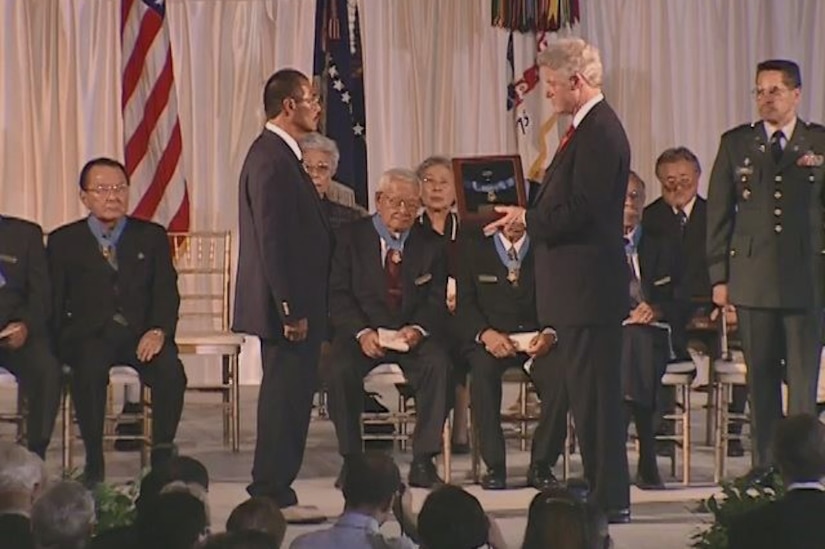
The Medal of Honor was presented to several Japanese American soldiers assigned to the 100th Infantry Battalion and the 442nd Regimental Combat Team during the June 21, 2000, White House ceremony. President Bill Clinton presented the Medal of Honor to Tanouye's younger brother, Isao Tanouye.

Tanouye is buried in Evergreen Memorial Park Cemetery in Los Angeles, alongside a battle buddy, Army Staff Sgt. Akira Shimatsu, who was killed July 16, 1944, in Italy. Also buried nearby are Tanouye's parents and younger brother, Army Pvt. Yukiwo Tanouye, who was killed during the Korean War.

Tanouye's Medal of Honor is on display in the Torrance Historical Society Museum, along with his story.

The National Guard Armory in Torrance was renamed the Ted Tanouye National Guard Armory May 19, 2002. A memorial to him was dedicated in July 2004 at Triangle Park, California, near Torrance High School.
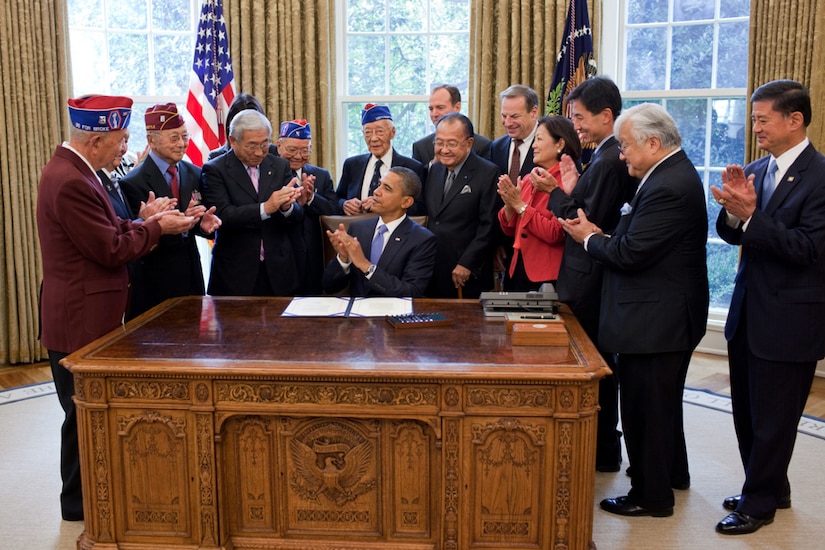
A man sits at a desk while people around him are smiling and clapping.

The 442nd Regimental Combat Team was collectively awarded the Congressional Gold Medal in 2011 through Public Law 111-254 that was signed by President Barack Obama Oct. 5, 2010.

Monday, July 20, 2026

Medal of Honor Monday: Army 2nd Lt. Robert Craig


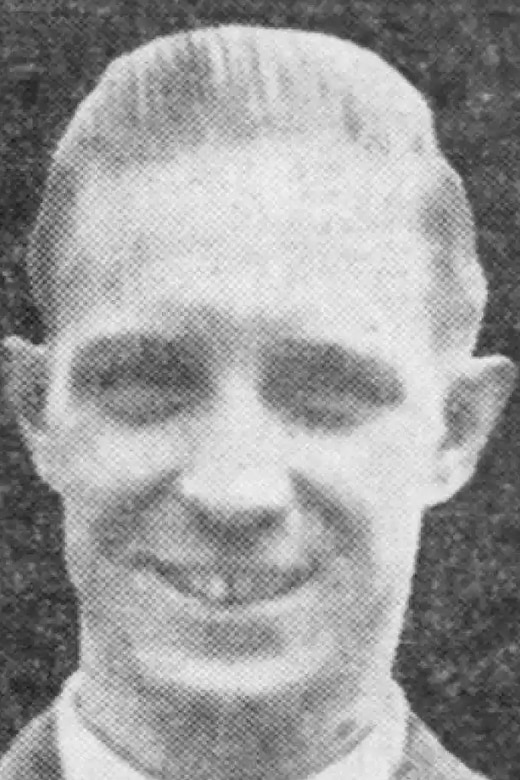
A man in a formal military uniform.

Army 2nd Lt. Robert Craig was an infantryman during World War II. He posthumously received the Medal of Honor for his heroic actions in Sicily during Operation Husky. 

Craig was born in Scotland on June 7, 1919, to William Craig Sr. and Jane Montgomery Craig. He had an older brother, William, and a younger sister, Jane. 

When he was 4 years old, Craig's family left Scotland and eventually settled in Toledo, Ohio. Growing up, he played baseball, football and golf, and, according to a May 1944 press release from the War Department, "spent much of his time tinkering with cars and radios." 

After graduating from Libbey High School, Craig worked as a stock clerk at a grocery store in Toledo. He joined the Army in February 1941, and was commissioned Dec. 1, 1941, just six days before the attack on Pearl Harbor, Hawaii. 

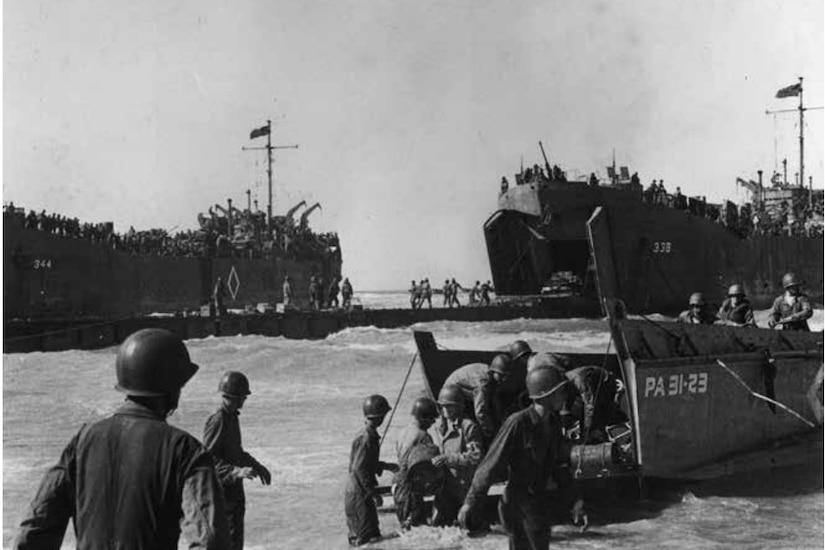
In January 1942, Craig deployed to Europe with L Company, 15th Infantry Regiment, 3rd Infantry Division and six months later, he was part of the July 1943 landings in Sicily, known as Operation Husky. 

Troops in landing boats disembark and move through shallow water toward a beach.

On July 11, 1943, the 15th Infantry was advancing near Favarotta, Sicily, when it was stopped by enemy machine-gun fire. Despite failed attempts by three other soldiers, Craig and Army Cpl. James E. Hill volunteered to leave their position to locate and destroy the hidden gunner.  

Craig located the gun and came within 35 yards of the hostile position before being discovered. 

Hill said Craig "ran head-on through the machine-gun fire … reached the gun position miraculously unhurt, and, standing over the crew, killed all three of them with his carbine," according to the War Department press release. 

Now that the hidden machine-gunner was gone, the company moved forward. However, as it moved down the forward slope of a ridge, Craig and his platoon encountered approximately 100 enemy soldiers. With utter disregard for his own safety, Craig elected to sacrifice himself so that his platoon could continue. 

His Medal of Honor citation states, "He ordered his men to withdraw to the cover of the crest while he drew the enemy fire to himself. With no hope of survival, he charged toward the enemy until he was within 25 yards of them. He killed five and wounded three enemy soldiers. While the hostile force concentrated fire on him, his platoon reached the cover of the crest.  

"Craig was killed by enemy fire, but his intrepid action so inspired his men that they drove the enemy from the area, inflicting heavy casualties on the hostile force." 

Army Maj. Gen. Alan W. Jones, 106th Infantry Division commander, presented the Medal of Honor to Craig's father May 26, 1944, during a ceremony at Camp Atterbury, Indiana. 

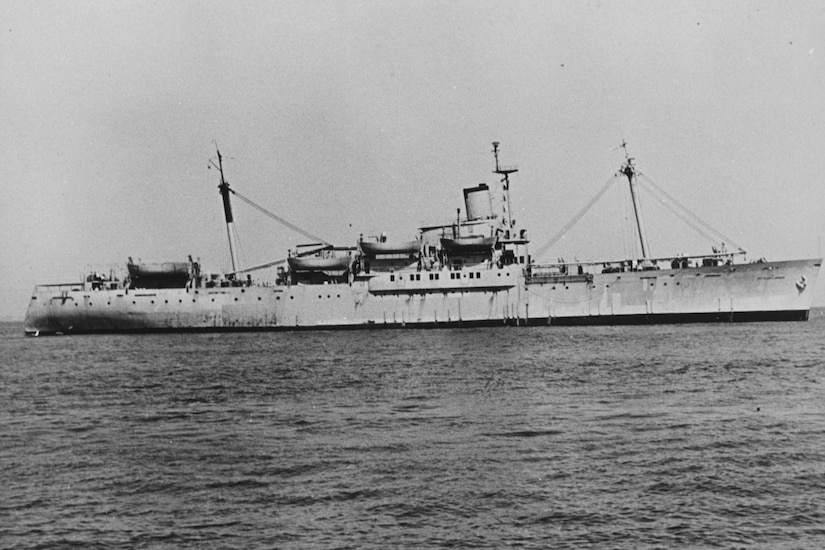
In July 1946, the cargo ship Bowling Green Victory, operated by the War Shipping Administration, was transferred to the Army Transportation Service and renamed the Lt. Robert Craig. In 1950, the ship was transferred from the Maritime Commission to the Navy and remained in service until 1973. 

In 1957, Craig's hometown dedicated the Robert Craig Memorial Bridge to him. According to the Toledo Gazette, more than 2,000 people attended the ceremony on a cold January day, including Craig's parents and siblings. 

Craig is buried in Toledo Memorial Park Cemetery in Sylvania, Ohio, near his parents.   

Monday, July 13, 2026

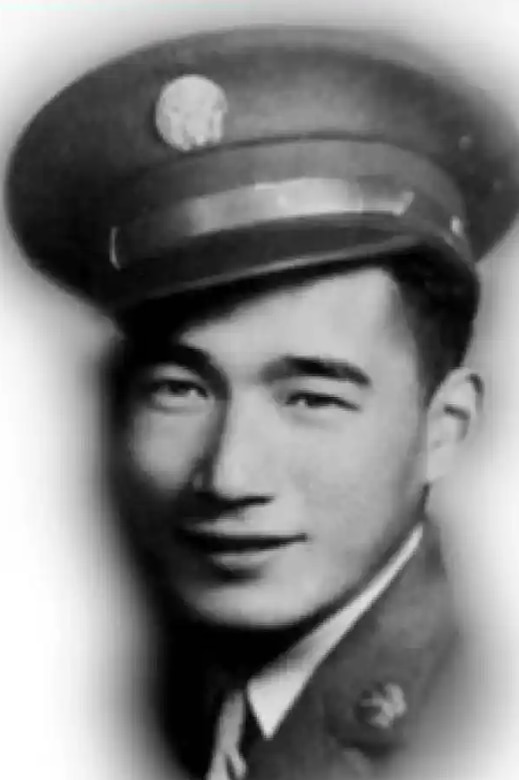
Medal of Honor Monday: Army Pfc. William Kenzo Nakamura

Army Pfc. William Kenzo Nakamura was a World War II hero. He received the Medal of Honor for risking his life to save his platoon during combat in Italy, July 4, 1944.

Nakamura was born in Seattle, Jan. 21, 1922, and grew up with a brother and a sister. His parents worked as barbers in Seattle after immigrating from Japan.

A black and white photo of a man wearing a military dress uniform and hat posing for a photo.
After graduating from Garfield High School in 1939, he attended the University of Washington.

His mother died of cancer in January 1942, two months before Japanese Americans living in the Puget Sound area were moved to relocation centers.

Nakamura and the rest of his family arrived at the Minidoka War Relocation Center in Jerome County, Idaho, Aug. 21, 1942, according to the final accountability roster from the War Relocation Authority.

His father and sister remained in the center until 1945, but Nakamura and his brother left the center for military service in July 1943.

On the day of his Medal of Honor action, Nakamura was assigned to Company G, 442nd Regimental Combat Team, in the hilly countryside near Castellina, Italy.

According to his Medal of Honor citation, his platoon became pinned down by enemy machine-gun fire from a concealed position during a firefight. On his own, he crawled 20 yards toward the hostile position with enemy machine-gun fire barely missing him.

After getting within 15 yards of the enemy, he threw four grenades, killing or wounding at least three of them. With their weapons silenced, Nakamura crawled back to his platoon, which was able to continue its advance thanks to his courageous action.

Later, his company withdrew from their position so a mortar barrage could occur. However, Nakamura remained in position to cover his comrades' withdrawal.

While moving toward the safety of a wooded area, his platoon again became pinned down by machine-gun fire. Nakamura acted quickly, crawling to a point where he could fire on the enemy. He engaged and pinned them down, allowing his platoon to withdraw safely.

Nakamura was not so lucky, he was killed during this heroic stand.

In the years after the war, only one Japanese American soldier received the Medal of Honor: Army Pfc. Sadao Munemori, who died in battle. Nakamura instead posthumously received the Distinguished Service Cross, the nation's second-highest military award for valor.

During the war, the approximately 14,000 Japanese American soldiers who served in the 442nd received 18,143 awards, including seven Presidential Unit Citations.

In 1996, legislation sponsored by Sen. Daniel Akaka of Hawaii led to an official review of the many Distinguished Service Crosses received by Japanese Americans for their heroics during World War II, despite the discrimination they faced at the time. The review resulted in the military upgrading 19 of the 52 Distinguished Service Crosses to Medals of Honor, as well as one Silver Star Medal.

The Medal of Honor was awarded to several Japanese American soldiers assigned to the 100th Infantry Battalion and the 442nd Regimental Combat Team during a June 21, 2000, White House ceremony.

June Oshima, Nakamura's sister, was at the ceremony to accept the medal on his behalf from President Bill Clinton.

She gave an interview to the Longview Daily News newspaper, which was published in the May 29, 2000, issue.

They, Nakamura and his brother, "thought if they joined, they could get rid of the prejudice," she said. "They wanted to show that Japanese Americans were not the enemy. It makes me sad to think of it."

Decades since Nakamura's brave actions, tributes have continued. In 2000, Congress voted unanimously to pass legislation officially naming the Seattle federal courthouse the William Kenzo Nakamura United States Courthouse. There's also a memorial for him at the University of Washington.

Nakamura is buried at Evergreen Washelli Memorial Park in Seattle.

Monday, June 29, 2026

Medal of Honor Monday: Army Pvt. Elden Harvey Johnson

Army Pvt. Elden Harvey Johnson fought in the 1944 Italian Campaign of World War II as an infantryman and was posthumously awarded the Medal of Honor for his extraordinary heroism.

A man smiles and poses for a photo.

Johnson was born in Bivalve, New Jersey, Feb. 13, 1921, and grew up in East Weymouth, Massachusetts.

He enlisted in the Army in April 1943, at age 22, shortly after the United States entered World War II. Later that year, after completing basic training, he shipped out to Italy as a replacement soldier assigned to Company H, 15th Infantry Regiment, 3rd Infantry Division.

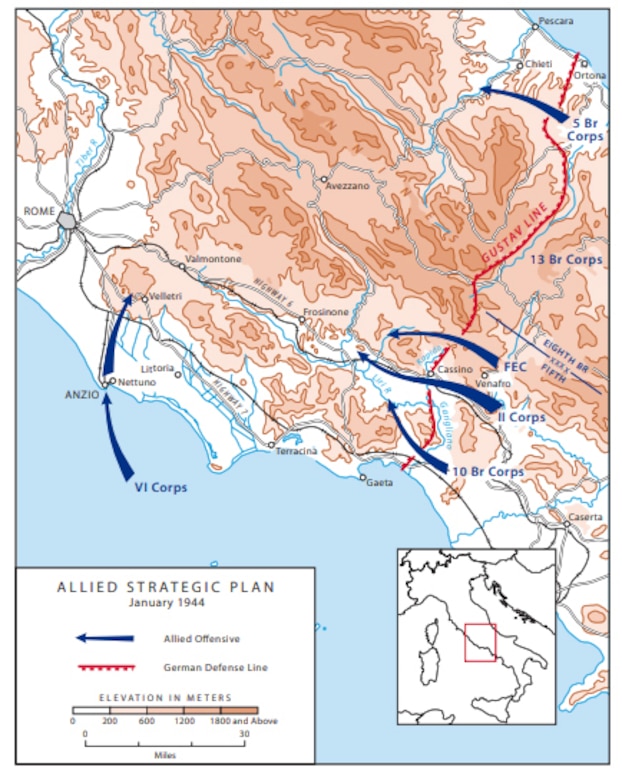
Johnson was part of the Rome-Arno Campaign, which began Jan. 22, 1944, and lasted until Sept. 9, 1944.

While on patrol June 3, 1944, his unit was attacked near Valmontone, Italy, about 30 miles southeast of Rome — three days before the D-Day invasion of Normandy, France.

It was night, but the area was brightly illuminated by enemy flares. Despite the enemy fire directed at him, Johnson advanced beyond the enemy in a slow, deliberate walk. He fired his rifle from his hip, distracting the enemy enough for 12 of his fellow soldiers to escape. Once he was within about 5 yards of the German machine gun position, Johnson killed the crew.

A map depicts terrain and military movements during World War II. The key in the corner reads, "Allied Strategic Plan, January 1944."

His Medal of Honor citation reads in part:

"Johnson elected to sacrifice his life in order that his comrades might extricate themselves from an ambush. Braving the massed fire of about 60 riflemen, three machine guns and three tanks from positions only 25 yards distant, he stood erect and signaled his patrol leader to withdraw."

Standing in full view of the enemy, Johnson reloaded, turned to the riflemen to the left and fired directly into their positions.

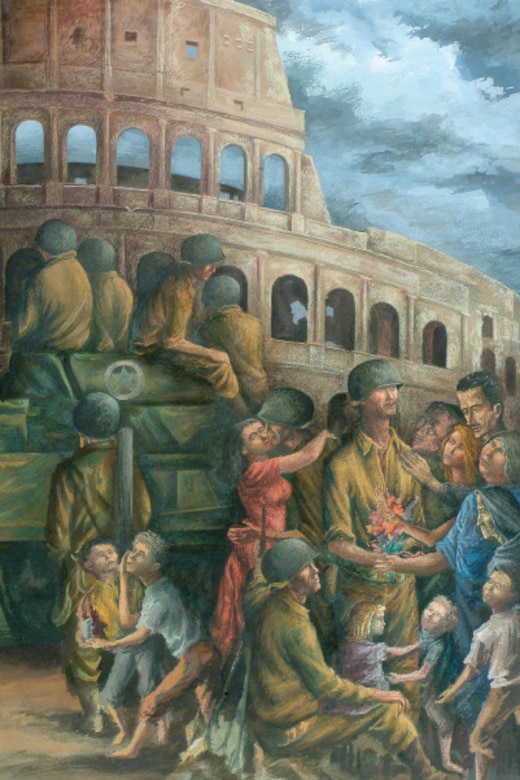
A painting depicts World War II-era soldiers near the Coliseum in Rome.
"He either killed or wounded four of them. A burst of machine-gun fire tore into Johnson, and he dropped to his knees. Fighting to the very last, he steadied himself on his knees and sent a final burst of fire crashing into another German. With that, he slumped forward dead," the citation states, noting that Johnson's acts of valor were an inspiration to the entire command.

Army Gen. Sherman Miles presented Johnson's Medal of Honor to his mother, Althea Bernice Johnson, May 30, 1945, in Boston.

Johnson was buried at Union Cemetery in Scituate, Massachusetts.

The former transport ship USS Pinkney was transferred to the U.S. Army Transportation Service in 1946 and recommissioned as the USAT Private Elden H. Johnson in 1947. The ship was reacquired by the Navy in 1950 and placed in service as the USNS Private Elden H. Johnson under the Military Sea Transportation Service. It went out of service in 1957.

For nearly 50 years, Johnson Barracks in Fürth, Germany, was named for him. The Army installation housed the 16th Engineer Battalion, quartermaster offices and other administrative and support functions. The installation was sold back to the Germans in the early 2000s and is now a business park. Additionally, Weymouth is the only town in the U.S. with five Medal of Honor recipients: Johnson, Thomas W. Hamilton, William Seach, Frederick C. Murphy and Ralph Talbo.

A large ship sails in the ocean.

On May 26, 2025, the city dedicated five bronze statues to honor them at the Ralph Talbot Amphitheater in Weymouth, which is adjacent to a veterans memorial wall that lists the names of city residents who have served during times of war.

Monday, June 15, 2026

Medal of Honor Monday: Army Pvt. Joe Gandara

 June 15, 2026 | By David Vergun, Pentagon News

Army Pvt. Joe Gandara was a paratrooper who fought in France during World War II. Little is known about him other than that he was the son of Mexican immigrants. However, his bravery and selflessness earned him a posthumous Medal of Honor — nearly 70 years after he sacrificed himself to save his battle buddies.

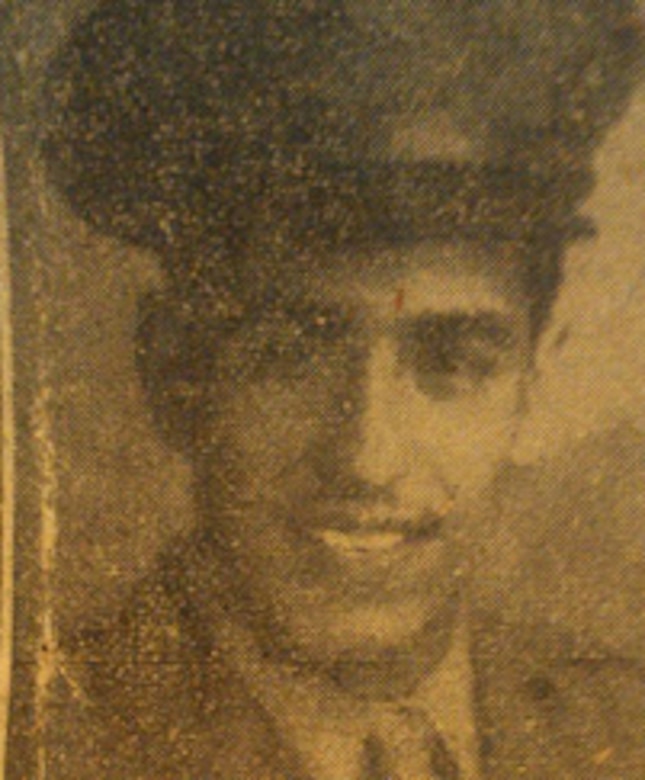
A man in a formal military uniform smiles for a portrait.

Gandara was born to Jose Melendez and Ramona Orrantia Gandara, April 25, 1924, in Santa Monica, California. He had two brothers, Edward and Rudolph. 

After graduating from Santa Monica High School, Gandara enlisted in the Army two months before his 19th birthday, Feb. 20, 1943. Following paratrooper training at Fort Benning, Georgia, he boarded a troopship to England. 

Gandara was assigned to the legendary 82nd Airborne Division. His unit, Company D, 2nd Battalion, 507th Parachute Infantry Regiment, trained for the upcoming invasion of France near Nottingham, England. He parachuted into Normandy, France, during the D-Day invasion, June 6, 1944. 

Three days later, near the village of Amfreville, his unit came under heavy enemy fire, pinning the men down for a period of four hours.  

Gandara voluntarily advanced alone toward the enemy position. Firing his machine gun from his hip as he moved forward, he destroyed three hostile machine guns before he was killed, according to his Medal of Honor citation. 

Gandara was initially awarded the Distinguished Service Cross. However, nearly 70 years later, he posthumously received the Medal of Honor as part of the 2002 National Defense Authorization Act, which called for a review of Jewish and Hispanic American veterans from World War II, the Korean and Vietnam wars to ensure that no prejudice was shown to those deserving the Medal of Honor.

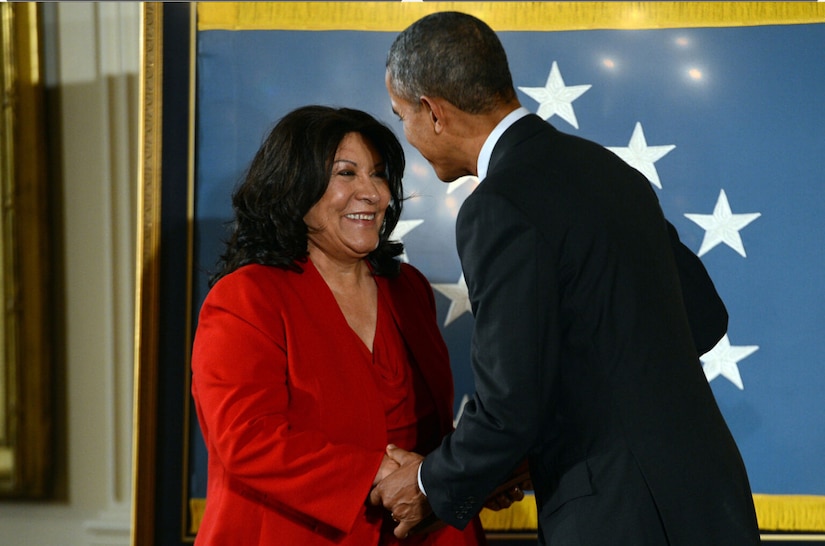
A man and a woman in business attire shake hands and smile in front of a blue square with stars.

President Barack Obama presented the Medal of Honor to Gandara's niece, Miriam Adams, during a ceremony at the White House, March 18, 2014.

"This ceremony reminds us of one of the enduring qualities that makes America great — that makes us exceptional. No nation is perfect, but here in America, we confront our imperfections and face a sometimes-painful past — including the truth that some of these soldiers fought and died for a country that did not always see them as equal," Obama said. 

Following the end of World War II, Gandara was buried in Woodlawn Cemetery in Santa Monica, California. However, his legacy lives on in his hometown and throughout the Army. 

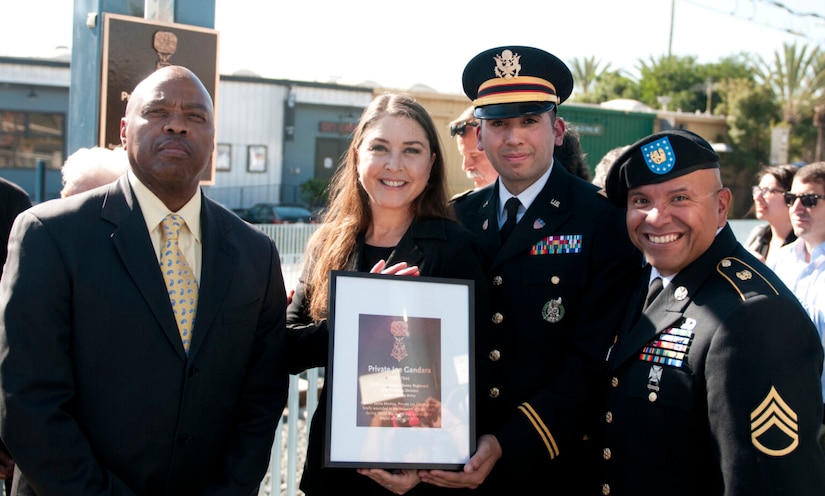
In 2016, Los Angeles named a Metro Rail station after him near the neighborhood where Gandara grew up, and a year later, Santa Monica dedicated a park in his memory.

A woman in business attire holds a framed photo and poses outside with three men, two in formal military uniforms and one in business attire.

In May 2016, a statue of Gandara was included in a memorial to the 507th Parachute Infantry Regiment in Normandy. 

The 82nd Airborne Division selected Gandara as one of the 20 soldiers in its 2018 inaugural class of the All American Hall of Fame, and in 2023, Fort Bragg, North Carolina, named a street after him. 

Tuesday, January 06, 2026

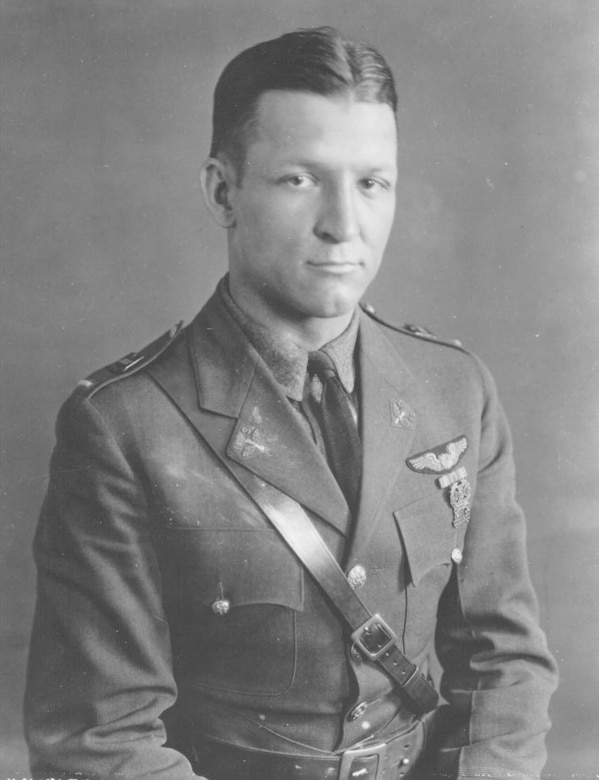
Medal of Honor Monday: Army Air Corps Brig. Gen. Kenneth Walker

Army Air Corps Brig. Gen. Kenneth Newton Walker participated in dangerous bombing missions alongside his air crews during World War II because he wanted to understand how to beat the enemy. Walker never came home from his last mission. He received a posthumous Medal of Honor and is credited with helping to create the blueprint for the modern Air Force.

A man in uniform poses for a photo.

Walker was born July 17, 1898, in Cerrillos, New Mexico, to Wallace and Emma Walker. His parents separated shortly after he was born, so Walker's mother raised him alone. At some point in his youth, the pair moved to Denver, where Walker became a Boy Scout and took an interest in several sports, including football, wrestling and boxing.

According to Air University Press author Martha Byrd, Walker's maternal grandparents lived in Omaha, Nebraska, so Walker also lived there for a few years before graduating from Omaha High School of Commerce in 1915. However, by 1917, he had returned to Denver, eventually enlisting in the Army on Dec. 15 of that year. He remained in the service for the rest of his life.

Walker became a pilot just as aerial warfare was being established. He trained at the University of California, Berkeley, School of Military Aeronautics and then at Mather Field, California, earning his commission and his wings in the Army Air Service in November 1918. He received a commission in the regular Army July 1, 1920.

Over the next few years, Walker served as a flying instructor in Texas, then in Oklahoma, where he met Marguerite Potter in 1920. The pair married in 1922 and eventually had two sons, Kenneth Jr. and Douglas.

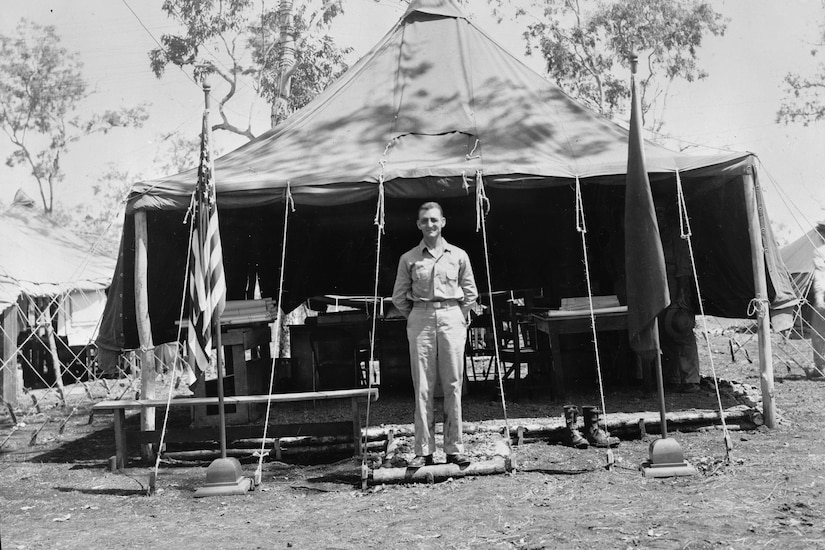
A man stands in front of an open tent with an American flag posted out front.

That same year, Walker graduated from the Air Service Operations School before being sent to the Philippines to command the Air Intelligence Section at Camp Nichols. When he returned to the U.S. in 1925, he continued his education and rose through the ranks, serving as an operations officer, bomb squad commander and instructor at various installations.

By January 1941, then-Maj. Walker found himself serving in Washington in the high-level position of assistant chief of the Air War Plans Division. Prior to the Pearl Harbor attacks, Walker was one of four Army Air Corps officers who created the blueprint of how to attack Japan and Germany from the air, according to a 2017 profile of Walker in the San Angelo Standard-Times. That strategy was later considered a key component of the Allied victory.

In July 1942, as the war raged, Walker was promoted to brigadier general and sent to the Pacific Theater. Shortly after his arrival, he was appointed as the commanding general of the Air Force's 5th Bomber Command.

From September 1942 to January 1943, Walker repeatedly went on bombing missions deep into enemy-held territory with his air crews. According to the San Angelo Standard-Times, he also went on bombing missions alone — something few generals did. His desire to take part in the danger earned him great respect from his subordinates. The lessons he learned from those missions helped him develop a highly efficient technique for bombing in the face of enemy aircraft and antiaircraft fire, according to his Medal of Honor citation.

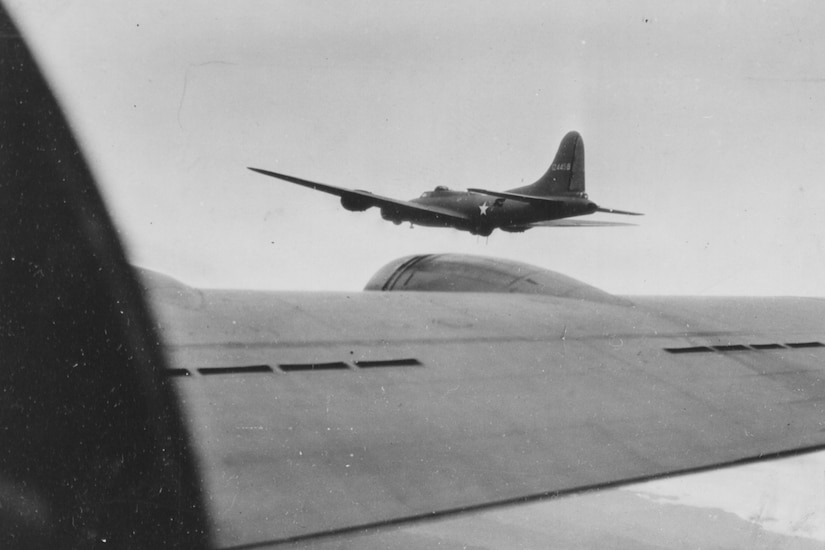
An aircraft is seen from the wing of another aircraft.

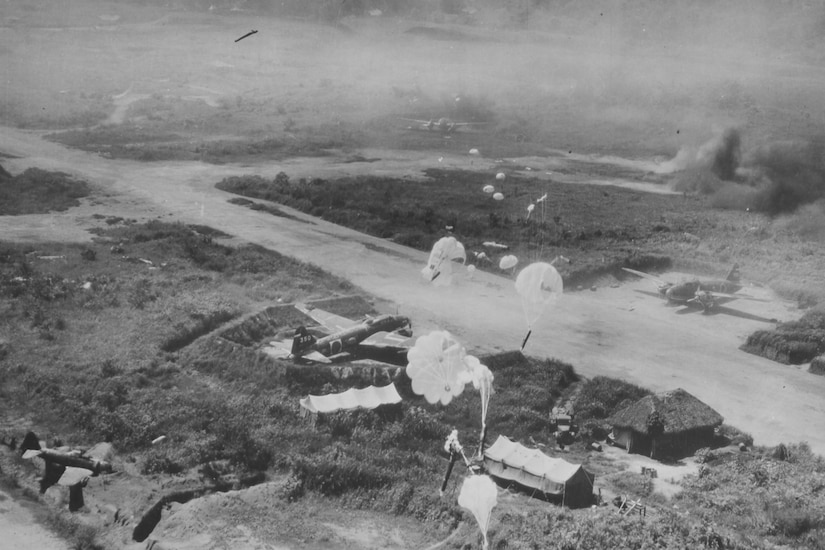
On Jan. 5, 1943, Walker joined several air crews on one of those dangerous missions. Six B-17 Flying Fortresses and six B-24 Liberators were sent on a daytime bombing mission over the Japanese-held harbor at Rabaul on the island of New Britain in Papua New Guinea. The attack was a success in that direct hits were scored on nine enemy ships. However, the bombers didn't get away before enemy fighters and antiaircraft fire came after them.

Walker was flying as an observer on a B-17 nicknamed the San Antonio Rose, which came under heavy attack. The aircraft was last seen with one engine on fire and several fighter aircraft on its tail. Evidence collected later showed that two of the aircraft's crew members were able to bail out; however, all 11 crew members were eventually declared dead.

On March 25, 1943, Walker's oldest son, Kenneth Jr., received the Medal of Honor on his father's behalf from President Franklin D. Roosevelt during a White House ceremony. Walker was the highest-ranking Army official to be reported missing during the war.

An aerial view of an island airstrip as parachutes drop on it.

Well before his death, Walker and a few other Air Corps Tactical School instructors were invited by a federal commission to testify in support of creating a separate military air organization that wasn't subordinate to any other branches. Thanks to his work with this commission and the air war plan used during World War II, Walker is considered one of the forefathers of the modern Air Force.

Walker has been remembered in many ways, including on the Wall of the Missing at the Manila American Cemetery in the Philippines.

In January 1948, Roswell Army Air Field in Roswell, New Mexico, was redesignated as Walker Air Force Base in honor of the fallen general. At Maxwell Air Force Base, Alabama, the home of the College of Aerospace Doctrine Research and Education, Walker Hall was also named for him.

Every year, a small number of papers written by field-grade officers in the Air Force Fellows program are selected to be published online. Those papers are known as the Walker Papers. The chosen officers attend civilian universities and organizations for a year to study national security strategy and serve as military ambassadors to prestigious institutions.

Monday, November 24, 2025

Medal of Honor Monday: Army Lt. Col. Edward Silk

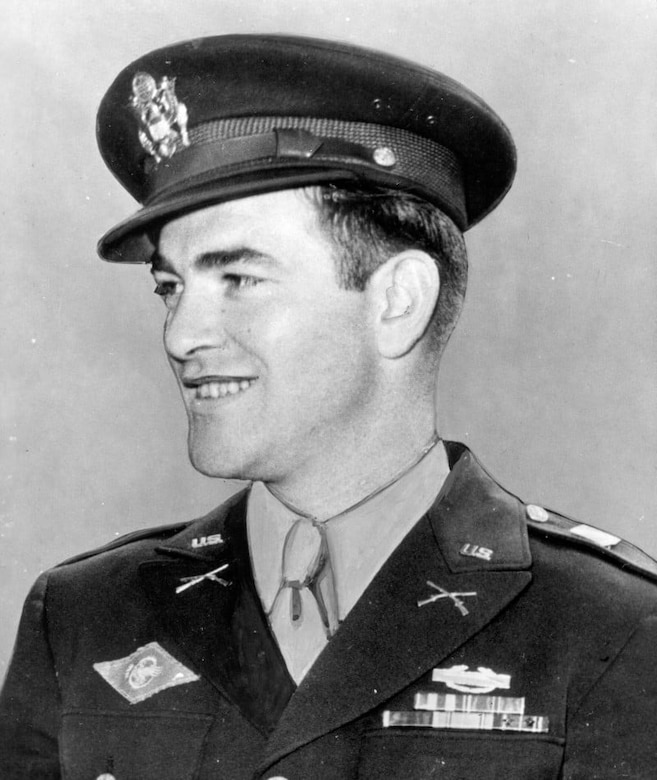
When Army Lt. Col. Edward A. Silk realized that his platoon wasn't going to put a dent in the enemy positions firing at them in France during World War II, he went on a one-man rampage to take the guns out himself. Miraculously, his mission succeeded. For his heroics, he received the Medal of Honor.

A man in a uniform and cap poses for a photo.

Silk was born June 8, 1916, in Johnstown, Pennsylvania, to Irish immigrants Michael and Mary Silk. He was the youngest of 11 children.

When Silk was 2, his father died in an accident at the local Bethlehem Steel mill, according to the newspaper The Daily Herald out of Everett, Washington. His mother tried to care for all 11 children on her own, but she couldn't, so she eventually moved with her four youngest to Illinois to live at Mooseheart Child City, a residential child care community run by the Loyal Order of Moose, of which Silk's father was part. Mooseheart provides children and families in need with stability, support and education.

Silk did well at Mooseheart. According to the Moose organization, he played football for the high school and chose to stay an extra year due to job scarcity from the Depression so he could get training in ornamental concrete work. After graduating in 1935, he attended St. Bonaventure College in western New York for a time before eventually dropping out to join the workforce.

In April 1941, months before the U.S. entered World War II, Silk joined the Army Reserve. At some point he married his girlfriend, Dorothy Weimer, and had a son named Jerry. 

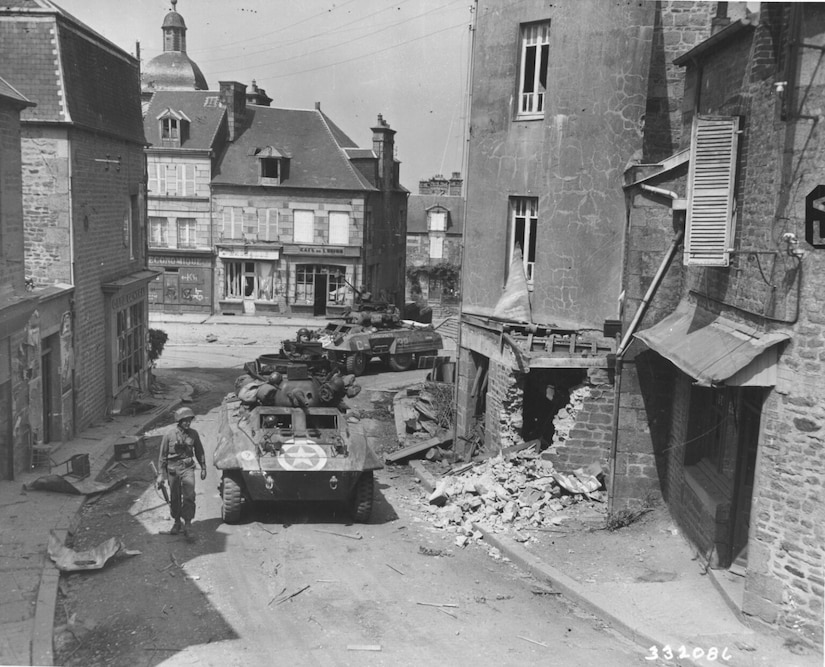
Two tanks move through small, winding streets in a dilapidated town.

Silk was ordered to active duty Aug. 31, 1942. He earned a commission at Fort Benning, Georgia, before being sent to France in October 1944 with the 398th Infantry, 100th Infantry Division. About two months later, his brazen courage earned him the nation's highest medal for valor.

On Nov. 23, 1944, then-1st Lt. Silk's battalion was tasked with seizing high ground overlooking Moyenmoutier, France, ahead of a planned attack to liberate the city. Silk was commanding a weapons platoon in Company E that took the lead at dawn. By noon, they'd reached the edge of the woods near St. Pravel, where scouts saw in the valley below an enemy sentry standing guard outside a farmhouse.

Almost immediately, the scouting squad was pinned down by intense gunfire coming from within the house. Silk's platoon returned fire, but after about 15 minutes, there was no letting up in the enemy gunfire. So, Silk decided to take matters into his own hands.

He ran 100 yards across an open field before taking shelter behind a low stone wall directly in front of the farmhouse. After firing into the door and windows with his carbine, Silk then vaulted over the wall sheltering him and dashed another 50 yards through a hail of enemy gunfire to the left side of the house. He then tossed a grenade through an open window. The explosion that followed silenced the enemy machine gun and killed its two gunners.

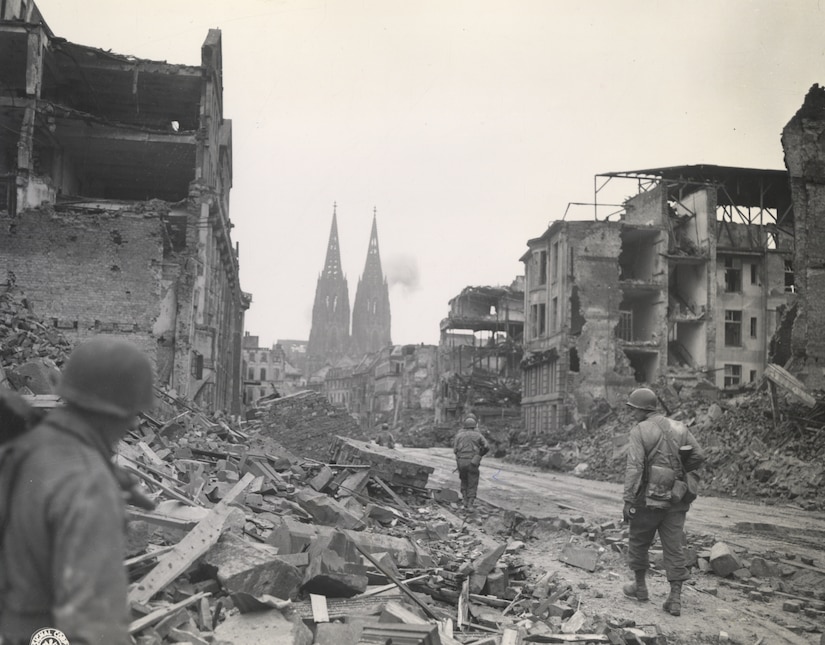
Soldiers walk past rubble in a destroyed city.

When Silk tried to move to the right side of the house, another enemy machine gun began firing on him from a nearby woodshed. Summoning every ounce of courage he had, Silk rushed that position head-on, dodging direct fire to get close enough to throw more grenades, which destroyed that gun and its gunners as well.

By that point, Silk had run out of grenades — but not fortitude. Silk ran to the back side of the farmhouse, where he began to throw rocks through the window, demanding the remaining enemy soldiers' surrender. "Twelve Germans, overcome by his relentless assault and confused by his unorthodox methods, gave up to the lone American," Silk's Medal of Honor citation said.

Thanks to his decision to take on the burden of the attack alone, Silk's battalion was able to continue its advance on Moyenmoutier and eventually liberate the city.

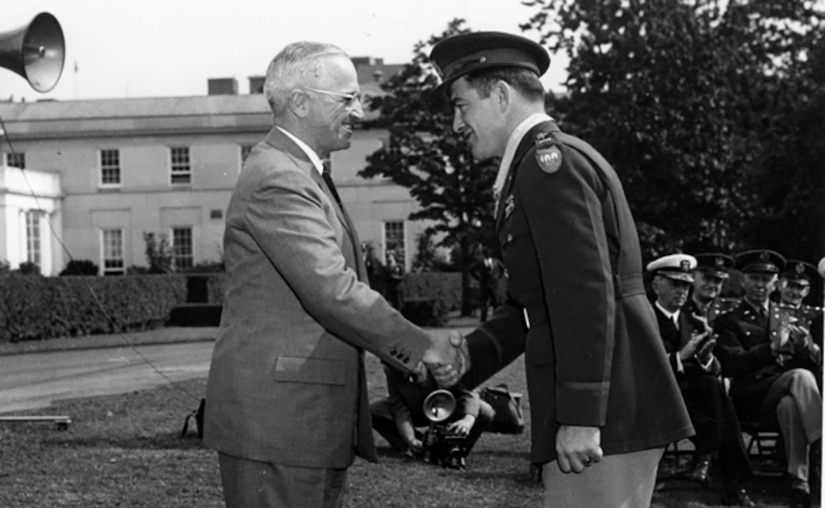
Two men smile and shake hands on a lawn. Others sit in chairs in the background, clapping.

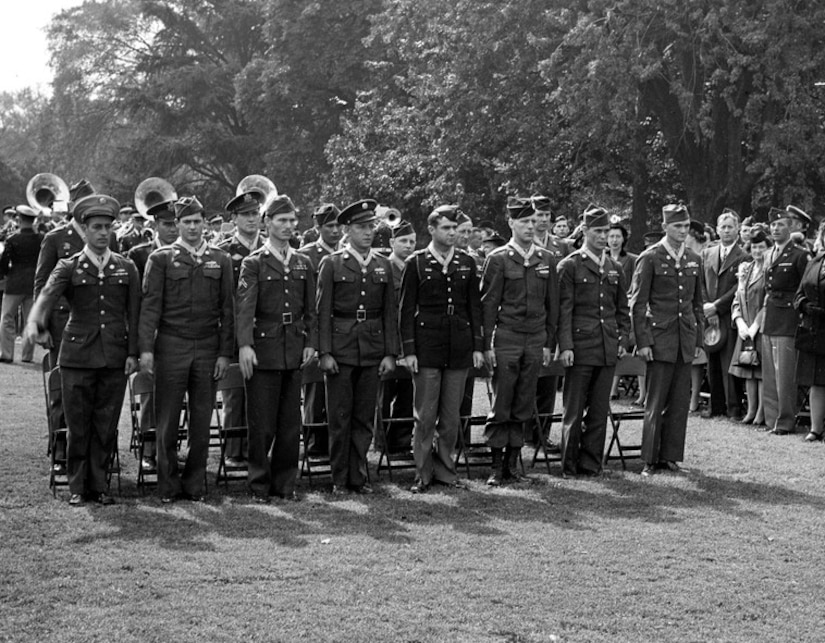
Silk returned home in September 1945 as a hero. On Oct. 12, 1945, he and 14 other deserving service members received the Medal of Honor from President Harry S. Truman during a White House ceremony.

Silk remained in the Army after the war, working for a time while still on active duty as a patient consultant for the Department of Veterans Affairs. One of his last posts was with the 7822nd Station Complement Unit in Stuttgart, Germany.

By 1952, Silk had risen to the rank of lieutenant colonel. He and his wife went on to have two more children, Judith and Daniel.

In December 1954, Silk took command of the ROTC unit at Canisius College (now university) in Buffalo, New York, as a professor of military science and tactics.

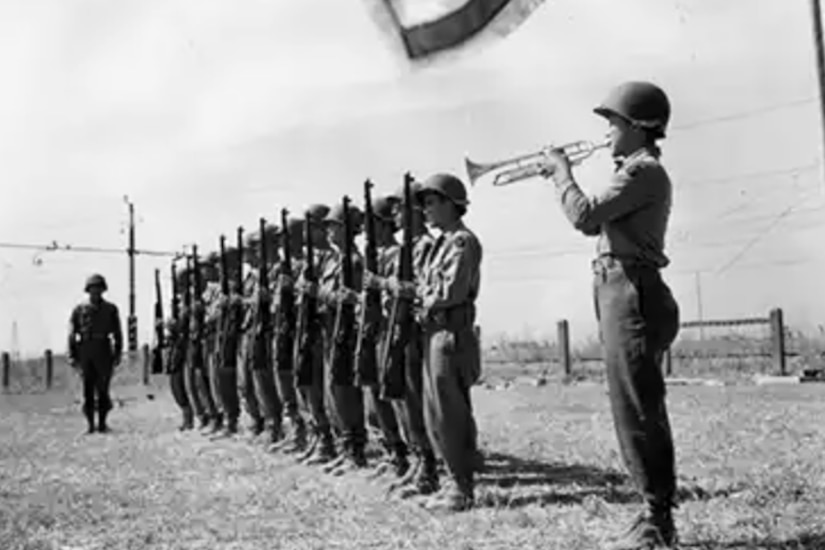
Two rows of service members stand at attention on a lawn. A band and an audience are in the background.

Sadly, about 10 months later, Silk fell critically ill due to intestinal ulcers. He underwent at least three surgeries at a local military hospital before succumbing to complications on Nov. 19, 1955. He was only 39.

During his funeral services, the newspaper The Buffalo News reported that 600 ROTC cadets from Canisius marched behind Silk's hearse for 3 miles to St. Joseph's Cathedral, where his services were held. Silk was then buried in Arlington National Cemetery.

In 2004, Johnstown renamed a bridge in the hometown hero's honor. At the time, his daughter told newspapers that her father was a strict disciplinarian, but he was kind and had a great sense of humor.  

This article is part of a weekly series called "Medal of Honor Monday," in which we highlight one of the more than 3,500 Medal of Honor recipients who have received the U.S. military's highest medal for valor. 

Tuesday, November 18, 2025

Medal of Honor Monday: Marine Corps Pfc. Richard Kraus

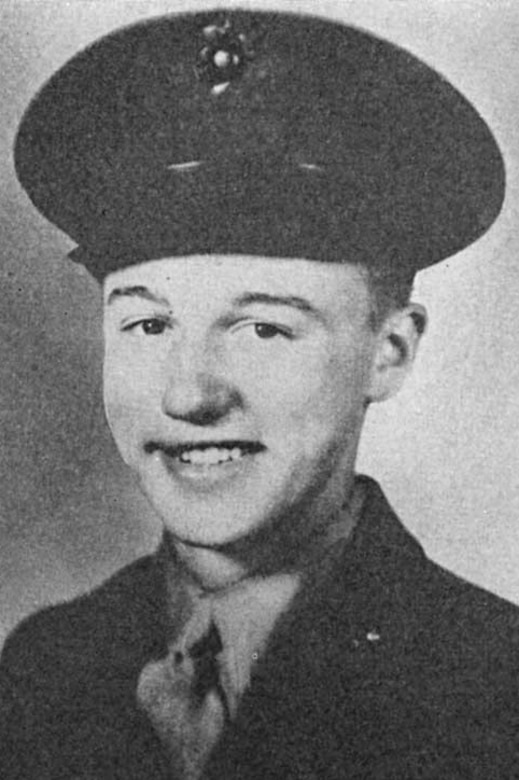
Marine Corps Pfc. Richard Edward Kraus had only been overseas for three months during World War II when he gave his life to save his fellow Marines. For making the ultimate sacrifice, the 19-year-old received a posthumous Medal of Honor.  

A man wearing a military dress uniform and cap poses for a photo.

Kraus was born Nov. 24, 1925, in Chicago to Hazel and August Kraus. He had a sister, Yvonne. When his mother later remarried, he gained two sisters, Gail and Marlys.  

When Kraus was 7, his family moved to Minneapolis. His parents described him as an average boy who attended church, liked sports and was "full of fun," according to a July 1945 article in the Minneapolis Star newspaper.  

Kraus graduated from Edison High School in 1943, as World War II raged. By the end of that year, he'd turned 18 and enlisted in the Marine Corps Reserve. Kraus spent the first half of 1944 training in San Diego at Camp Pendleton. In early July 1944, he was deployed to the Pacific, where he served with the 8th Amphibious Tractor Battalion, 3rd Amphibious Corps, Fleet Marine Force. 

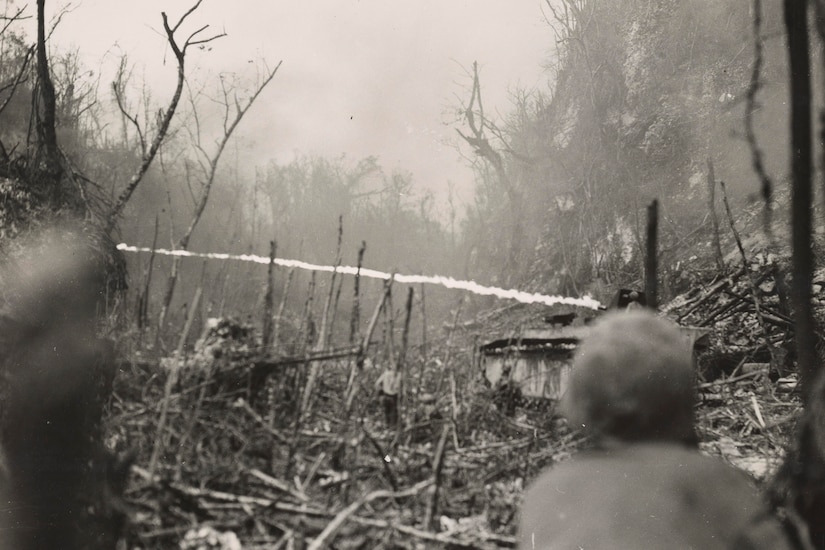
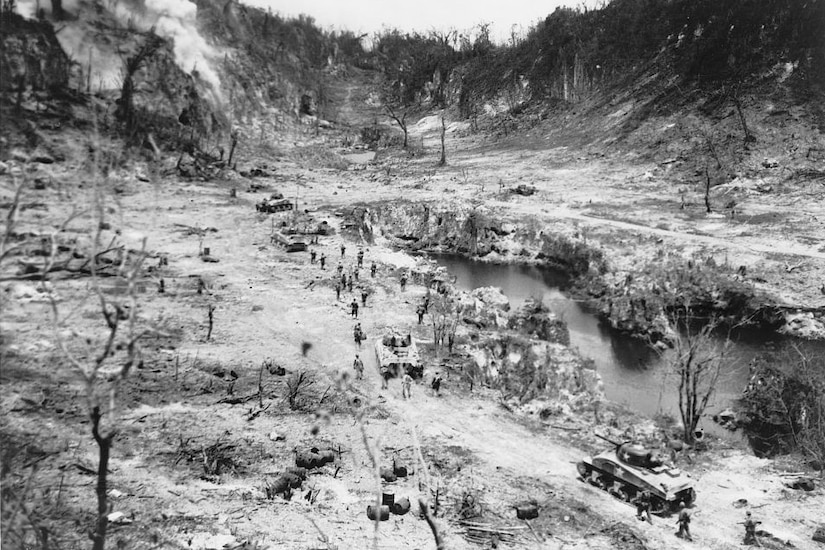
The first and only major offensive in which Kraus took part was the Palau Islands campaign. By mid-September, Kraus landed on the island of Peleliu. Within weeks, Marines and soldiers made headway in securing the island from Japanese forces.  

A person wearing a military uniform looks forward at the edge of a burned-down forest. Another person in a military uniform walks in the distance, and a line of flame from a flamethrower rips from a tank sitting in the middle of the carnage.

On Oct. 5, 1944, Kraus and three other Marines volunteered to evacuate a wounded comrade from the front lines. Despite the extreme danger, the small group courageously made their way across enemy lines with a stretcher. They made it a good distance before the enemy began throwing a barrage of hand grenades in their direction, forcing them to take cover before eventually abandoning the mission.  

As the four men headed back, two men dressed like Marines approached them. When Kraus asked them for a password to prove they were who they said they were, the pair didn't answer. Instead, one of them threw a grenade into the middle of the four Marines.  

Without hesitating, Kraus threw himself on top of the explosive device, covering it with his body so he would absorb the impact of the blast, sparing his comrades. Kraus gave his life to save his fellow Marines.  

An aerial view of tanks and people walking through a burned-out ravine.

On Aug. 2, 1945, Kraus' mother received the Medal of Honor on her son's behalf during a ceremony in downtown Minneapolis. Seven other Marines received the nation's highest honor for valor for their actions in Peleliu.  

Kraus was initially buried in an American cemetery on Peleliu, but his remains were repatriated in 1948. He was reburied in Fort Snelling National Cemetery in Minneapolis.  

Kraus has not been forgotten. The destroyer USS Richard Kraus was commissioned in his name in May 1946. It served through the Vietnam War and remained in service until its decommissioning in July 1976.  

A main street on Camp Pendleton was also named in Kraus' honor.  

Monday, September 08, 2025

Medal of Honor Monday: Army Pfc. Ernest Prussman


Army Pfc. Ernest William Prussman fearlessly led his squad into battle as the Allies pushed into Europe to free the continent from tyranny during World War II. Prussman didn't survive the mission, but his bravery demoralized the enemy and helped several battalions move forward. For his actions, Prussman was awarded a posthumous Medal of Honor. 

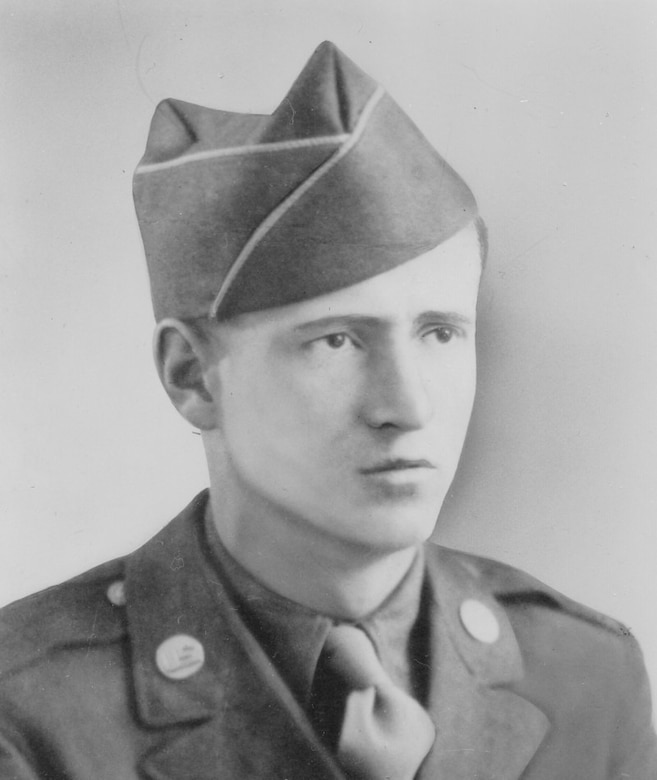
A man wearing a military uniform poses for a photo.

Prussman was born Sept. 15, 1921, in Baltimore, Maryland, to Herbert and Helen Prussman. He had a twin brother named Earl. Two other brothers, Calvin and Henry, also served during World War II.  

When Prussman was 5, his family moved to Brighton, Massachusetts, outside of Boston, where he grew up and graduated from Brighton High School.  

Prussman worked as a chain store clerk before joining the Army in October 1942. In July 1944, weeks after the Allies had regained a foothold on the European continent, Prussman's unit, the 13th Infantry Regiment, 8th Infantry Division, was sent to France. 

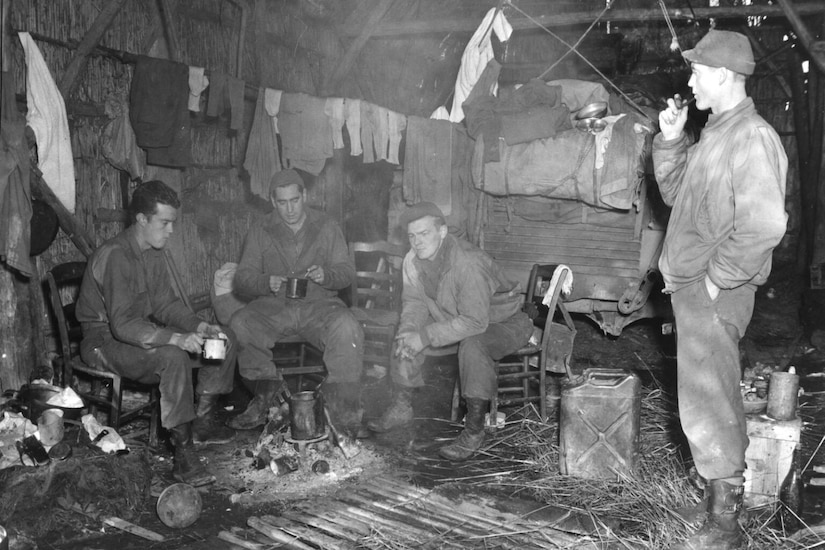
Three men sit in chairs in a shed filled with gadgets. A fourth man stands, smoking a pipe.

Two months later, Prussman gave his life in the fight for freedom.   

On Sept. 8, 1944, Prussman was with two battalions moving through the northwest Brittany region of France when their advance was halted by intense enemy mortar, machine gun and sniper fire. The assault was coming from an enemy fortification on Prussman's left, so he quickly prepared his squad to assault that position. 

Prussman took the lead and hurdled a hedgerow before disarming two enemy riflemen. He then led his squad across an open field to another hedgerow before advancing to a machine gun position, destroying the gun and capturing its crew and two additional enemy riflemen.  

Prussman continued to move ahead of his squad. This time, however, he was mortally wounded by an enemy bullet. But before he fell to the ground, he was able to throw a hand grenade, which killed one more enemy fighter.  

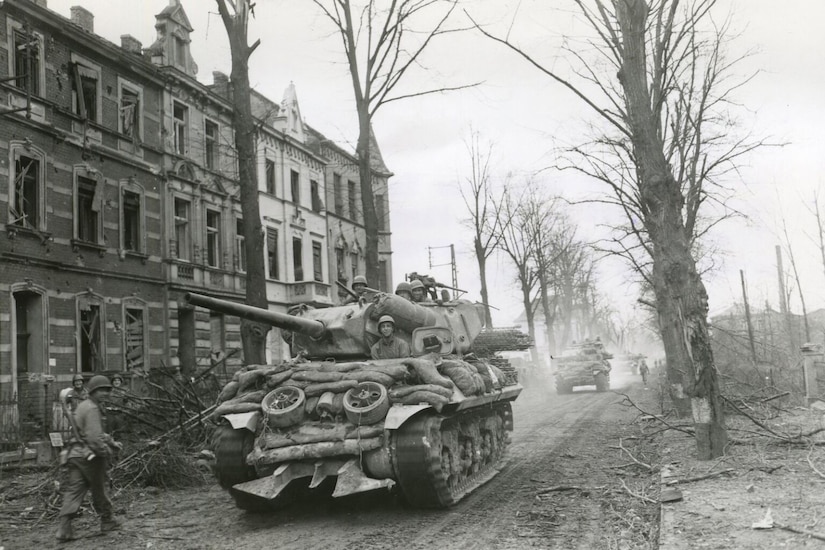
A tank rolls along a dirt road in a destroyed city.

While Prussman didn't survive, his leadership and heroic actions demoralized the enemy enough that their resistance collapsed, which allowed the Allied battalions to continue their march.  

On April 19, 1945, Prussman's parents and twin brother accepted the Medal of Honor on his behalf from Army Maj. Gen Sherman A. Miles during a celebration in Boston. Prussman also received the French Croix de Guerre with Bronze Star for his selfless actions. 

Prussman is buried in the Brittany American Cemetery in St. James, France.  

The young private has not been forgotten. At Army Garrison Rheinland-Pfalz in Germany, Prussman Avenue was named in his honor. A Medal of Honor monument was also established in Boston in 2016 in remembrance of his legacy. 

This article is part of a weekly series called "Medal of Honor Monday," in which we highlight one of the more than 3,500 Medal of Honor recipients who have received the U.S. military's highest medal for valor. 

Thursday, April 04, 2024

Audie Murphy: American Hero

Audie Murphy, widely regarded as one of the most decorated American combat soldiers of World War II, exemplifies the essence of heroism. His remarkable bravery, selflessness, and unwavering commitment to serving his country have immortalized him as an American icon. This essay delves into the life, accomplishments, and enduring legacy of Audie Murphy, a true American hero.

Early Life and Military Service

Born on June 20, 1925, in Kingston, Texas, Audie Murphy grew up in humble beginnings. His childhood was marked by poverty and hardship, as he was raised in a sharecropper's family of twelve children. Murphy's father abandoned the family when he was young, leaving his mother to single-handedly support the household.

In 1942, at the tender age of seventeen, Murphy lied about his age to enlist in the United States Army. Despite his diminutive stature, standing at just 5 feet 5 inches tall, he was determined to serve his country. Murphy's journey through the military ranks was marked by extraordinary valor and courage on the battlefield.

Combat Actions and Heroic Deeds

Murphy's combat actions during World War II earned him an unparalleled reputation for bravery. He participated in numerous campaigns across Europe, displaying exceptional leadership and fearlessness in the face of enemy fire. One of his most notable feats occurred on January 26, 1945, near Holtzwihr, France.

During a fierce battle against German forces, Murphy's company was decimated, and the young soldier found himself as the sole survivor. Undeterred by overwhelming odds, he climbed onto a burning tank destroyer and used its machine gun to repel the advancing enemy forces. Murphy's courageous stand allowed his company to regroup and ultimately repulse the German attack.

For his actions that day, Audie Murphy was awarded the Medal of Honor, the highest military decoration bestowed by the United States government. His citation praised his indomitable courage and unwavering determination in the face of mortal danger. Murphy's heroism during World War II extended far beyond that single engagement, as he continued to lead his men with distinction until the war's end.

Post-War Life and Legacy

Following the war, Audie Murphy returned to the United States as a celebrated hero. He embarked on a successful career in Hollywood, starring in over forty films and becoming a household name. Despite his fame and fortune, Murphy remained humble and dedicated to honoring the memory of his fallen comrades.

In addition to his acting career, Murphy authored several books detailing his wartime experiences and advocating for veterans' rights. He became a staunch advocate for mental health awareness, openly discussing his struggles with post-traumatic stress disorder (PTSD) resulting from his combat experiences.

Tragically, Audie Murphy's life was cut short when he died in a plane crash on May 28, 1971, at the age of 45. However, his legacy continues to endure as a symbol of courage, sacrifice, and patriotism. His memory lives on in the hearts and minds of Americans, inspiring future generations to embody the values of honor, integrity, and selflessness.

Conclusion

Audie Murphy's life story serves as a testament to the extraordinary resilience and bravery of the human spirit. From his humble beginnings in rural Texas to his legendary exploits on the battlefield, Murphy's journey embodies the essence of the American dream. His unwavering commitment to duty, honor, and country exemplifies the highest ideals of heroism. Audie Murphy will forever be remembered as an American hero whose legacy continues to inspire generations of Americans to strive for excellence and to stand up for what is right, even in the face of adversity.

Monday, March 25, 2024

U.S. Battleships: A Century of Service

Battleships have long been an iconic symbol of naval power, projecting strength and influence across the seas. For over a century, U.S. battleships have played a pivotal role in shaping history, from the early days of naval warfare to modern conflicts and peacekeeping missions. This essay explores the evolution, significance, and legacy of U.S. battleships over the past century, highlighting their contributions to American military history and global maritime dominance.

Evolution of U.S. Battleships: 

The development of U.S. battleships can be traced back to the late 19th century, a time of rapid technological advancement and naval expansion. The U.S. Navy's first battleships, such as the USS Indiana and USS Maine, were launched in the 1890s and represented a significant leap forward in naval architecture and firepower. These early battleships were characterized by their massive size, heavy armor, and formidable armament of large-caliber guns.

As the 20th century dawned, U.S. battleships underwent continuous innovation and improvement, driven by advances in engineering, metallurgy, and naval tactics. The introduction of the "dreadnought" battleship, exemplified by the USS Dreadnought commissioned in 1906, revolutionized naval warfare with its powerful combination of speed, firepower, and armor protection. The dreadnought era saw the rapid construction of new battleships and the obsolescence of older, pre-dreadnought designs.

World War I and II: 

During World War I, U.S. battleships played a vital role in protecting convoys, conducting blockade operations, and providing naval gunfire support to ground forces. Notable engagements include the Battle of Jutland and the sinking of the German battleship SMS Ostfriesland by U.S. Navy aircraft in 1921. However, it was during World War II that U.S. battleships truly demonstrated their capabilities and valor on the battlefield.

The attack on Pearl Harbor on December 7, 1941, marked a turning point in U.S. naval history and thrust battleships into the forefront of the conflict. Despite the devastation inflicted by Japanese aircraft, several battleships, including the USS Arizona and USS Missouri, survived the attack and went on to serve with distinction throughout the war. The USS Missouri, in particular, gained fame as the site of the Japanese surrender ceremony in Tokyo Bay in 1945, effectively ending World War II.

Post-War Era: 

Following World War II, the role of battleships in naval warfare underwent significant changes with the advent of aircraft carriers, guided missiles, and nuclear submarines. The rise of air power and the development of long-range missile technology diminished the importance of traditional battleships, leading to the decommissioning and retirement of many vessels in the U.S. Navy's fleet.

Despite these challenges, U.S. battleships continued to serve in various capacities during the Cold War and beyond. The USS Iowa and USS Wisconsin were recommissioned in the 1980s as part of the Reagan administration's efforts to strengthen the Navy's fleet in response to Soviet naval expansion. These battleships were modernized with advanced radar, missile defense systems, and cruise missile capabilities, underscoring their continued relevance in a changing strategic landscape.

Legacy and Impact: 

The legacy of U.S. battleships extends far beyond their operational history on the high seas. These formidable warships have left an indelible mark on American military culture, inspiring generations of sailors, veterans, and naval enthusiasts. The courage, sacrifice, and camaraderie displayed by the men and women who served aboard battleships embody the values of duty, honor, and patriotism that define the U.S. Navy's proud heritage.

Today, several decommissioned U.S. battleships, including the USS Texas and USS North Carolina, have been preserved as floating museums, allowing visitors to experience firsthand the legacy of these historic vessels. These museums serve as living tributes to the sailors who served aboard them and provide valuable educational resources for future generations.

U.S. battleships have played a central role in shaping the course of American naval history, from their inception in the late 19th century to their enduring legacy in the 21st century. Through triumph and tragedy, peace and conflict, these mighty warships have served as symbols of American maritime power and resolve. As we reflect on a century of service, we honor the bravery and sacrifice of those who sailed aboard U.S. battleships and celebrate their enduring contributions to our nation's defense and freedom.

Saturday, October 14, 2023

The Air Medal: Soaring in Valor

The Air Medal, a distinguished military decoration, represents more than just an acknowledgment of service; it encapsulates the courage, dedication, and extraordinary valor of individuals who have gone above and beyond in the skies. This prestigious award has a rich history, a striking design, and has been bestowed upon countless deserving recipients who have displayed unwavering bravery while in the air.

Origins and Significance

The Air Medal found its beginnings during World War II. Established by Executive Order 9158 on May 11, 1942, the Air Medal was initially intended to honor the accomplishments of members of the United States Armed Forces in aerial combat or meritorious non-combat aerial achievements. Its significance lies in recognizing acts of valor and exceptional performance during flight operations.

Design and Criteria

The Air Medal features a striking design that sets it apart from other military decorations. It consists of a bronze, compass rose at the center, with an eagle in flight clutching thunderbolts in its talons. The reverse side of the medal bears the words "United States of America." The ribbon, often adorned with oak leaf clusters to signify additional awards, has a distinctive blue background with narrow vertical stripes of white and red on either side.

The criteria for receiving the Air Medal is stringent. To qualify, individuals must demonstrate meritorious achievement while participating in aerial flight. This includes acts of heroism, exceptional skill, or service that sets them apart from their peers. The medal is awarded for both combat and non-combat missions, underlining the versatile nature of its recognition.

Notable Recipients

Throughout its history, the Air Medal has been awarded to countless deserving individuals. Here, we highlight five remarkable recipients and their courageous actions:

1. Charles Lindbergh - The famed aviator was awarded the Air Medal in 1927 for his groundbreaking solo transatlantic flight from New York to Paris. This historic journey showcased the possibilities of aviation and earned Lindbergh international acclaim.

2. Amelia Earhart - The pioneering female aviator received the Air Medal in 1932 for becoming the first woman to fly solo nonstop across the Atlantic Ocean. Her achievements inspired generations of women in aviation.

3. Richard Bong - During World War II, Bong, a fighter pilot, earned the Air Medal with an astounding 40 oak leaf clusters, signifying over 40 aerial victories. His exceptional combat skills made him one of the most decorated American fighter pilots in history.

4. Jimmy Doolittle - Doolittle was awarded the Air Medal for leading the famous "Doolittle Raid" in 1942, where U.S. Army Air Forces B-25 bombers conducted a daring air raid on Tokyo and other Japanese cities in retaliation for the attack on Pearl Harbor.

5. Chuck Yeager - The legendary test pilot and the first human to break the sound barrier was honored with the Air Medal for his contributions to aviation, which included pushing the boundaries of flight in the X-1 rocket plane.

Conclusion

The Air Medal, with its striking design and storied history, serves as a testament to the exceptional valor displayed by individuals in the realm of aviation. From the pioneering flights of Lindbergh and Earhart to the combat heroics of Bong and Doolittle, and the groundbreaking achievements of Yeager, each recipient has contributed to the rich tapestry of aviation history. The Air Medal continues to inspire future aviators and remind us all of the unwavering bravery that soars through the skies.

Tuesday, September 05, 2023

The European-African-Middle Eastern Campaign Medal: A Symbol of Service and Sacrifice

The European-African-Middle Eastern Campaign Medal (EAME) stands as a testament to the dedication and valor of American military personnel who served in one of the most complex and expansive theaters of World War II. This distinguished decoration recognizes the immense sacrifices and contributions made by individuals during a period of global conflict and upheaval.

Origin and Design: A Tribute to Theater of Operations

The EAME Campaign Medal was established by the United States War Department on November 6, 1942. Its creation was in response to the vast scope of military operations in Europe, Africa, and the Middle East during World War II. These theaters of war required unique recognition, and the medal served as an emblem of honor for those who participated.

The medal's design reflects the geographical extent of the campaign. The obverse features a world map with Europe, Africa, and Asia prominently displayed. Over the map is a slanted sword, symbolizing military readiness and resolve. The reverse side depicts an eagle perched on a vertical sword, signifying vigilance and strength. Surrounding the medal are the words "European African Middle Eastern Campaign."

Eligibility Criteria: Acknowledging Contributions

To be eligible for the EAME Campaign Medal, military personnel had to meet specific criteria, including serving in the designated theaters of operation during specific periods. These theaters included Europe, North Africa, the Middle East, and surrounding waters.

Here are eight notable recipients of the EAME Campaign Medal, recognized for their exceptional service:

  1. General Dwight D. Eisenhower: As Supreme Commander of the Allied Expeditionary Forces in Europe, Eisenhower played a pivotal role in planning and executing the D-Day landings in Normandy, a crucial turning point in the war.

  2. General George S. Patton: Patton was a charismatic and aggressive commander known for his leadership in North Africa during Operation Torch and later in Europe during the Allied invasion.

  3. General Bernard Montgomery: Leading British forces in North Africa, Montgomery's victory at the Battle of El Alamein was a turning point in the North African campaign.

  4. General Omar Bradley: Bradley commanded American forces during the D-Day landings and played a significant role in the liberation of France.

  5. Audie Murphy: The most decorated American combat soldier of World War II, Murphy earned the EAME Campaign Medal for his service in North Africa, Sicily, and Italy.

  6. General Mark W. Clark: Clark served as the commander of the Fifth Army in Italy and played a key role in the liberation of Rome.

  7. Lieutenant General James H. Doolittle: Famous for leading the Doolittle Raid on Tokyo, he later commanded the Eighth Air Force in Europe.

  8. Major General Claire L. Chennault: Leading the "Flying Tigers" in China, Chennault's innovative tactics were instrumental in the Allied effort in Asia.

Legacy and Appreciation: Remembering Sacrifice

The European-African-Middle Eastern Campaign Medal serves as a reminder of the sacrifices made by countless servicemen and women during a time of global conflict. It honors their dedication and valor in theaters that spanned multiple continents. The medal represents a collective commitment to freedom and democracy in the face of unprecedented challenges.

Conclusion: A Symbol of Valor

The European-African-Middle Eastern Campaign Medal remains a symbol of the courage, tenacity, and unity displayed by the Allied forces during World War II. Its design, eligibility criteria, and the names of notable recipients all underscore the significance of the contributions made by individuals who served in these diverse and challenging theaters of war. As we reflect on the legacy of the medal, we honor the memory of those who answered the call of duty and commemorate their role in shaping the course of history.

Tuesday, August 22, 2023

The Philippine Liberation Medal: A Testament to Valor and Allied Partnership

The Philippine Liberation Medal holds a significant place in the annals of military history, serving as a tribute to the valor and sacrifices of those who participated in the liberation of the Philippines during World War II. This distinguished decoration symbolizes the enduring bond between the United States and the Philippines, celebrating the joint efforts that led to the liberation of the Philippine archipelago.

Origin and Historical Significance

The Philippine Liberation Medal was established by the United States on December 20, 1944, to honor the service of members of the U.S. military and allied forces who took part in the liberation of the Philippines from Japanese occupation. This occupation had lasted for over three years, and the medal recognized the valor and dedication of those who played a role in the liberation campaign. The medal was authorized by President Franklin D. Roosevelt, further solidifying the recognition of the vital contributions of these servicemen and women.

Design and Symbolism

The medal's design reflects the collaborative effort between the United States and the Philippines in freeing the archipelago from enemy control. The front side of the medal features the sunburst emblem of the Philippine flag, symbolizing the dawn of a new era of freedom and independence. This emblem is surrounded by a laurel wreath, signifying victory and honor. The reverse side bears the inscriptions "Philippines" and "Liberation," encapsulating the essence of the medal's purpose.

Criteria for Award

To be eligible for the Philippine Liberation Medal, military personnel must have served in the liberation campaign between October 17, 1944, and September 2, 1945. This period spans the series of operations that ultimately led to the liberation of the Philippines. The liberation campaign included battles, landings, and strategic operations across the Philippine archipelago, and service members from various branches of the U.S. military as well as allied forces were eligible for the medal.

Examples of Notable Awardees

  1. General Douglas MacArthur - A key figure in the Pacific theater, General MacArthur led the U.S. and Filipino forces in the liberation of the Philippines. His leadership and strategy played a pivotal role in the successful campaign.

  2. Admiral Chester W. Nimitz - As the Commander in Chief of the U.S. Pacific Fleet, Admiral Nimitz's strategic decisions and naval prowess contributed significantly to the success of the Philippine liberation operations.

  3. Lieutenant General Walter Krueger - Krueger commanded the U.S. Sixth Army during the Battle of Leyte, a critical phase of the liberation campaign. His leadership and tactical skills were instrumental in the victory.

  4. Major General Charles P. Hall - A key figure in the landing operations in Leyte, Hall's coordination of troops and logistics greatly facilitated the initial phases of the liberation campaign.

  5. Captain Jose V. Andrada - A Filipino officer in the U.S. Army, Captain Andrada's leadership in the intelligence and guerrilla operations contributed to the success of the liberation efforts.

Legacy and Appreciation

The Philippine Liberation Medal serves as a lasting tribute to the unity, valor, and partnership between the United States and the Philippines during a critical period in history. It commemorates the sacrifices made and the lives lost to free the archipelago from occupation. The medal continues to be a reminder of the deep-rooted friendship and shared commitment between the two nations.

Conclusion

The Philippine Liberation Medal stands as a testament to the bravery and determination of those who fought for freedom during World War II. Its design, historical significance, and the notable military personnel who received it underscore the sacrifices made by individuals and the collective efforts that shaped the course of history. As a symbol of valor and alliance, the Philippine Liberation Medal continues to honor the memory of those who contributed to the liberation of the Philippines and celebrates the lasting friendship between nations.

Tuesday, July 18, 2023

The Atlantic War Zone Medal: Recognizing Service and Sacrifice in a Critical Theater of World War II

During World War II, the Atlantic War Zone played a pivotal role in the conflict, serving as a critical theater for naval operations and ensuring the security of vital supply lines. To honor the service and sacrifice of the men and women who served in this demanding and perilous environment, the Atlantic War Zone Medal was established by the United States government. This prestigious award commemorates the bravery and dedication of those who braved the treacherous waters of the Atlantic Ocean to safeguard freedom and uphold democracy.

Origins and Purpose

The Atlantic War Zone Medal was created on May 2, 1945, by an act of Congress, to honor the service of merchant mariners, Navy personnel, and Coast Guard members who contributed to the war effort in the Atlantic theater between December 7, 1941, and November 8, 1945. The Atlantic War Zone was a vast expanse of ocean covering the North Atlantic and South Atlantic regions, stretching from the east coast of the United States to the western coast of Africa and encompassing the perilous waters patrolled by U-boats and hunted by Allied forces.

Eligibility and Criteria

To be eligible for the Atlantic War Zone Medal, individuals had to serve at least 30 days on merchant vessels or other qualifying ships within the designated war zone. Additionally, service on land in specific Atlantic island bases such as Iceland, Greenland, or Bermuda also qualified for the medal. The medal was awarded to both military personnel and civilian merchant mariners who faced the constant threat of enemy submarines and treacherous weather conditions during the Battle of the Atlantic.

Design and Symbolism

The Atlantic War Zone Medal features a blue ribbon with two white stripes near the edges, representing the vastness of the Atlantic Ocean and the waves that lapped its shores. The medal itself displays a blue circular center with a gold-colored anchor and chain symbolizing naval service. Encircling the center is the inscription "ATLANTIC WAR ZONE," a poignant reminder of the dangerous waters where these brave men and women carried out their duties.

Significance and Legacy

The Atlantic War Zone Medal holds significant historical importance as a tangible symbol of the sacrifice and contributions made by those who served in the Atlantic theater during World War II. The Battle of the Atlantic was a grueling and crucial campaign, as Allied forces sought to protect the vital sea lanes and supply lines from German U-boats and secure the flow of troops, equipment, and supplies to Europe. The medal serves as a testament to the determination and courage of those who faced constant danger and adversity to safeguard democracy and liberty.

Honoring the Veterans

As time passes, the number of living veterans who served in the Atlantic War Zone diminishes, making it even more critical to remember and honor their service and sacrifice. The Atlantic War Zone Medal remains a cherished memento for the families and descendants of those who served during this challenging period in history. It serves as a reminder of the tremendous price paid by those who navigated the perilous waters of the Atlantic Ocean to secure victory for the Allied forces and uphold the principles of freedom and democracy.

In conclusion, the Atlantic War Zone Medal stands as a symbol of valor and selflessness for all those who served in the Atlantic theater during World War II. This prestigious award pays homage to their dedication, bravery, and sacrifice as they confronted the harsh and unforgiving waters of the Atlantic Ocean in the name of freedom and justice. As we reflect on history, let us ensure that the legacy of the Atlantic War Zone veterans lives on, reminding us of the courage and commitment that prevailed during one of the most critical chapters in human history.