Showing posts with label Military Valor. Show all posts

Monday, July 13, 2026

Medal of Honor Monday: Army Pfc. William Kenzo Nakamura

Army Pfc. William Kenzo Nakamura was a World War II hero. He received the Medal of Honor for risking his life to save his platoon during combat in Italy, July 4, 1944.

Nakamura was born in Seattle, Jan. 21, 1922, and grew up with a brother and a sister. His parents worked as barbers in Seattle after immigrating from Japan.
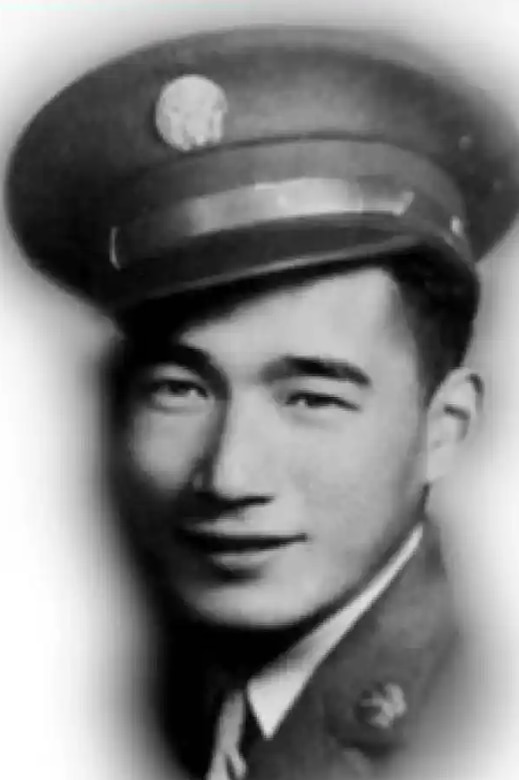
A black and white photo of a man wearing a military dress uniform and hat posing for a photo.
After graduating from Garfield High School in 1939, he attended the University of Washington.

His mother died of cancer in January 1942, two months before Japanese Americans living in the Puget Sound area were moved to relocation centers.

Nakamura and the rest of his family arrived at the Minidoka War Relocation Center in Jerome County, Idaho, Aug. 21, 1942, according to the final accountability roster from the War Relocation Authority.

His father and sister remained in the center until 1945, but Nakamura and his brother left the center for military service in July 1943.

On the day of his Medal of Honor action, Nakamura was assigned to Company G, 442nd Regimental Combat Team, in the hilly countryside near Castellina, Italy.

According to his Medal of Honor citation, his platoon became pinned down by enemy machine-gun fire from a concealed position during a firefight. On his own, he crawled 20 yards toward the hostile position with enemy machine-gun fire barely missing him.

After getting within 15 yards of the enemy, he threw four grenades, killing or wounding at least three of them. With their weapons silenced, Nakamura crawled back to his platoon, which was able to continue its advance thanks to his courageous action.

Later, his company withdrew from their position so a mortar barrage could occur. However, Nakamura remained in position to cover his comrades' withdrawal.

While moving toward the safety of a wooded area, his platoon again became pinned down by machine-gun fire. Nakamura acted quickly, crawling to a point where he could fire on the enemy. He engaged and pinned them down, allowing his platoon to withdraw safely.

Nakamura was not so lucky, he was killed during this heroic stand.
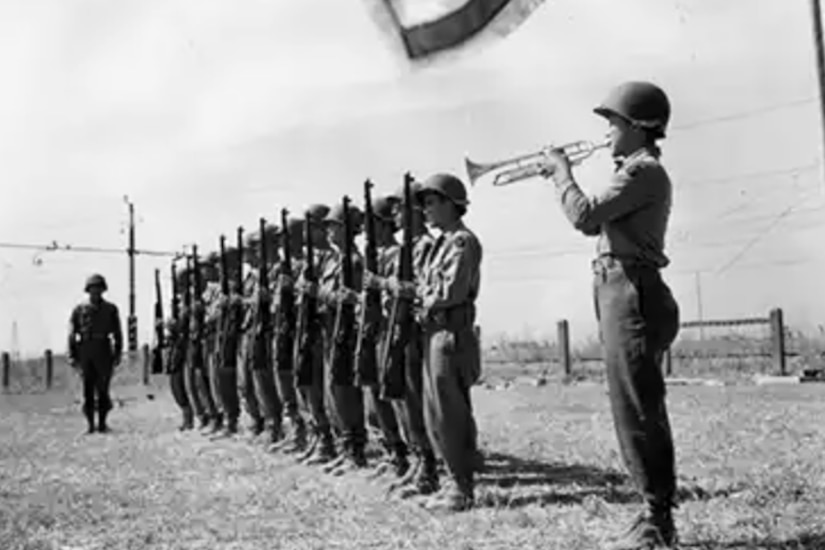
In the years after the war, only one Japanese American soldier received the Medal of Honor: Army Pfc. Sadao Munemori, who died in battle. Nakamura instead posthumously received the Distinguished Service Cross, the nation's second-highest military award for valor.

During the war, the approximately 14,000 Japanese American soldiers who served in the 442nd received 18,143 awards, including seven Presidential Unit Citations.

In 1996, legislation sponsored by Sen. Daniel Akaka of Hawaii led to an official review of the many Distinguished Service Crosses received by Japanese Americans for their heroics during World War II, despite the discrimination they faced at the time. The review resulted in the military upgrading 19 of the 52 Distinguished Service Crosses to Medals of Honor, as well as one Silver Star Medal.
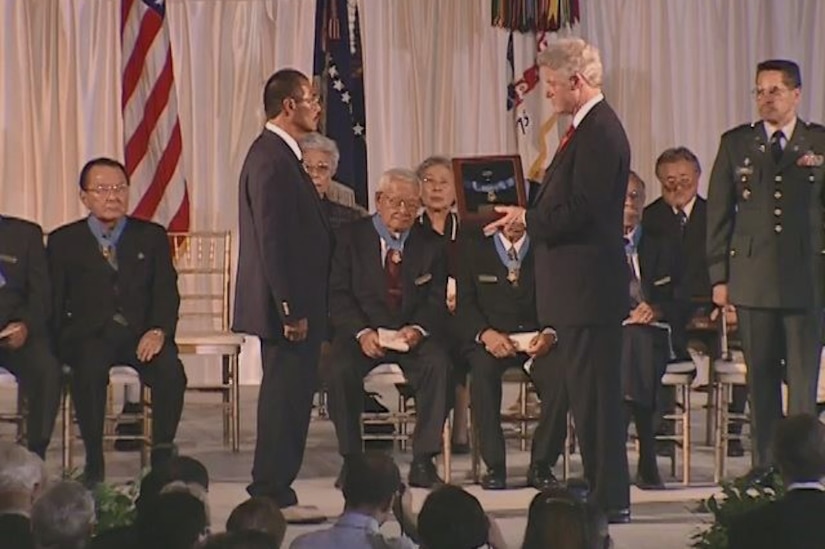
The Medal of Honor was awarded to several Japanese American soldiers assigned to the 100th Infantry Battalion and the 442nd Regimental Combat Team during a June 21, 2000, White House ceremony.

June Oshima, Nakamura's sister, was at the ceremony to accept the medal on his behalf from President Bill Clinton.

She gave an interview to the Longview Daily News newspaper, which was published in the May 29, 2000, issue.

They, Nakamura and his brother, "thought if they joined, they could get rid of the prejudice," she said. "They wanted to show that Japanese Americans were not the enemy. It makes me sad to think of it."
Decades since Nakamura's brave actions, tributes have continued. In 2000, Congress voted unanimously to pass legislation officially naming the Seattle federal courthouse the William Kenzo Nakamura United States Courthouse. There's also a memorial for him at the University of Washington.

Nakamura is buried at Evergreen Washelli Memorial Park in Seattle.

Monday, September 01, 2025

Medal of Honor Monday: Army Capt. Frederick F. Henry

During the early days of the Korean War, Army Capt. Frederick Funston Henry chose to take the brunt of an enemy attack alone so the rest of his platoon could survive. For his gallant actions and self-sacrifice, Henry received a posthumous Medal of Honor.  
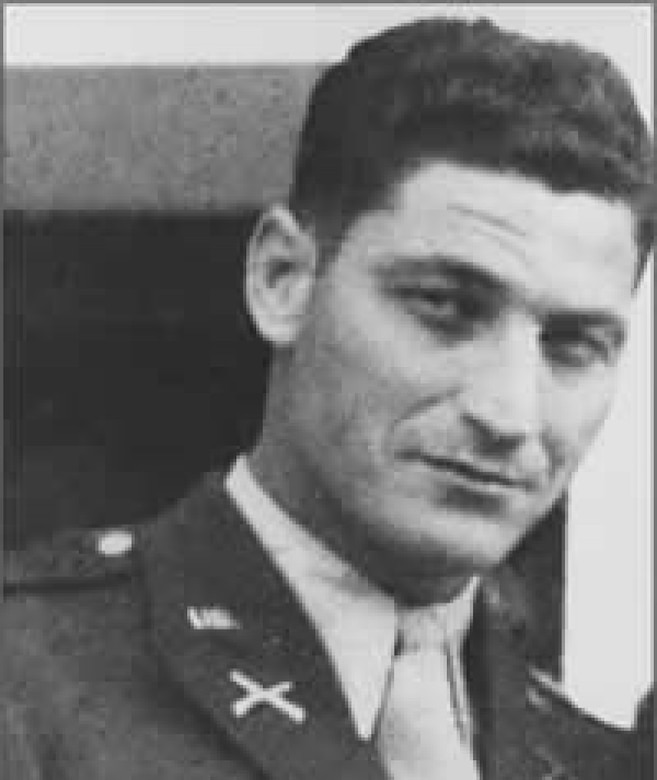
A man in a military dress uniform poses for a photo.

Henry was born Sept. 23, 1919, in Vian, Oklahoma, to James and Ida Mae Henry as the third oldest of 13 children. As if they knew he would go on to do great things, his parents named him after Army Maj. Gen. Frederick Funston, a Medal of Honor recipient who served during the Philippine-American War at the turn of the century. 

The family eventually moved about three hours west to Clinton, Oklahoma, where Henry grew up before enlisting in the Army in September 1940. Five of his brothers also served during World War II, while two continued their service in Korea.  

Henry served in the 6th Army during World War II and earned a battlefield commission to second lieutenant while in the Pacific Theater in 1945. After hostilities ended, he served in Germany, where he met Lavon "Bonnie" Southam, a combat nurse, according to The Salt Lake Tribune. The pair later married and had two children, Frederick Jr. and Sharon.  

When the Korean War broke out, Henry's unit, Company F of the 28th Infantry Regiment, 2nd Infantry Division, was one of the first to deploy to the peninsula in the summer of 1950.  

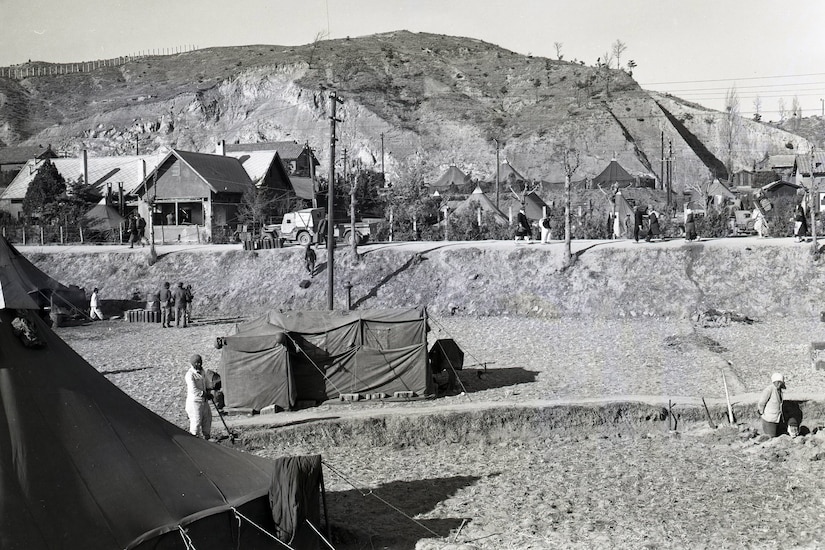
A small building and some tents are set up beside a barren hill. There are people in civilian attire walking around the area, and large buildings in the background.

On Sept. 1, 1950, the 33-year-old first lieutenant was leading his platoon as it held a strategic ridge near the town of Andong, South Korea, when they were attacked by a much larger enemy force. Heavy mortar and artillery fire quickly threw the platoon into disarray. To keep the unit together, Henry left his foxhole so he could move around his men, ordering them to stay in place and return fire.  

Encouraged by Henry's bravery, the platoon reformed its defensive line and delivered intense fire back, impeding the enemy's advance. Unfortunately, the enemy succeeded in knocking out all communications, so Henry had no way of knowing if the main line of resistance was still in place.  

"There were bullets and shells falling all around," Army Sgt. Richard Siman, who was part of Henry's platoon, later told officials. "Our ammunition was running low." 

Despite being seriously injured, Henry stayed put while ordering the wounded men in his platoon to evacuate. He had them give him all their weapons and ammunition before they left, so he could set up a one-man position. He then ordered the rest of his platoon to withdraw.  

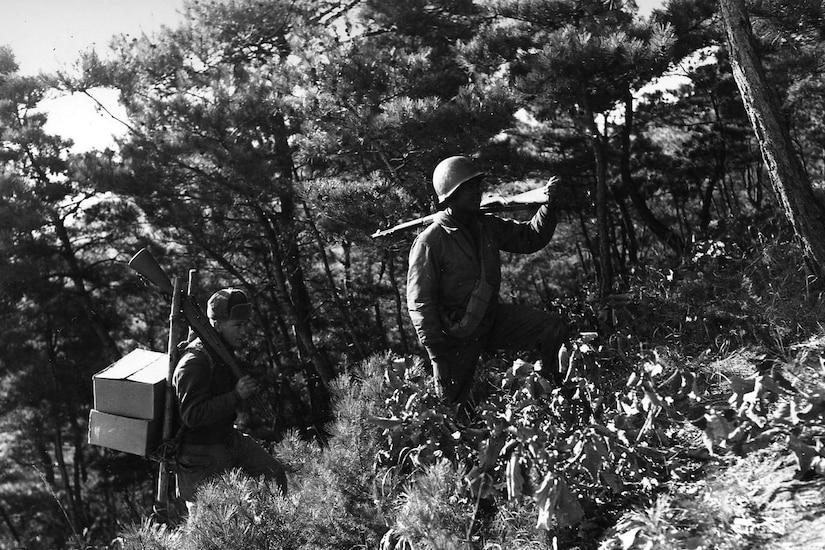
Two men in military uniforms carrying guns and boxes march up a hillside.

Henry was last seen firing every weapon he had at the enemy. His Medal of Honor citation stated that his effort caused approximately 50 enemy casualties before he ran out of ammunition, and his position was overrun. His selfless actions that day saved his platoon and kept the enemy at bay long enough for the main line of resistance to fully push them back.  

Henry was initially listed as missing in action. He was officially declared dead on Dec. 31, 1953, and posthumously promoted to captain. His name is listed on the Wall of the Missing at the National Memorial Cemetery of the Pacific in Honolulu. According to the Defense POW/MIA Accounting Agency, his remains have not yet been recovered.  

On Jan. 9, 1951, Henry's widow received the Medal of Honor on his behalf from President Harry S. Truman during a White House ceremony. Four other fallen soldiers also posthumously received the honor that day.  

Henry has not been forgotten. In May 1960, a U.S. camp that's part of current-day Army Garrison Daegu was named Camp Henry in his honor. In 2004, a memorial was dedicated to him at a park in his hometown of Vian. In 2013, he was inducted into the Oklahoma Military Hall of Fame. A year later, a highway near his hometown was renamed for him.  

Friday, April 05, 2024

The United States Marine Corps at the Boxer Rebellion: Upholding American Honor and Valor in the Relief of Peking

The Boxer Rebellion stands as a pivotal moment in history where the United States Marine Corps (USMC) showcased its valor and resilience in the face of adversity. Among the significant events of this conflict, the Relief of Peking holds a prominent place, highlighting the Marines' crucial role in securing the diplomatic legations and safeguarding American interests in China. This essay delves into the intricate details of the Relief of Peking, exploring its historical context, the challenges faced by the Marines, and the enduring legacy of their heroic actions.

Historical Context: 

The Boxer Rebellion erupted in response to mounting anti-foreign sentiment and resentment towards Western influence in China during the late 19th century. The Boxers, fueled by nationalist fervor and a desire to expel foreign powers, targeted diplomats, missionaries, and Chinese Christians. As tensions escalated, foreign powers intervened, dispatching military forces to protect their citizens and interests in China.

The United States, committed to upholding its diplomatic presence in Beijing and safeguarding American lives, deployed Marines as part of the international coalition tasked with quelling the Boxer uprising. The Relief of Peking emerged as a critical operation aimed at breaking the siege of the diplomatic legations and ensuring the safe evacuation of foreign nationals.

The Siege of the Legations: 

In June 1900, the Boxers besieged the diplomatic legations in Beijing, subjecting the foreign residents, including diplomats, missionaries, and their families, to a harrowing ordeal. Cut off from the outside world and facing relentless attacks, the besieged legations endured desperate conditions as they awaited relief from allied forces.

The Role of the United States Marine Corps: 

The United States Marine Corps, under the command of Colonel Robert W. Huntington, played a pivotal role in the Relief of Peking. Tasked with securing the legations and defending American interests, the Marines demonstrated unwavering courage and determination in the face of overwhelming odds. Despite being outnumbered and surrounded, they remained resolute in their commitment to the mission.

Challenges Faced by the Marines: 

The Relief of Peking presented formidable challenges for the Marines. They encountered fierce resistance from Boxer forces entrenched in fortified positions around the legations. Additionally, the Marines grappled with logistical difficulties, inadequate supplies, and extreme weather conditions as they fought to reach the besieged foreigners.

The Battle for Peking: 

The Relief of Peking culminated in a series of intense battles as allied forces, including the United States Marine Corps, launched a coordinated assault to break the siege and liberate the legations. The Marines, renowned for their marksmanship and combat prowess, engaged the enemy in fierce combat, driving back the Boxers and securing key objectives.

The Aftermath and Legacy: 

The successful Relief of Peking marked a triumph of international cooperation and military valor. The Marines' gallant actions in rescuing the besieged legations and protecting American lives earned them widespread acclaim and recognition. The Relief of Peking underscored the importance of military preparedness and the need for the United States to assert its interests on the global stage.

Conclusion

The Relief of Peking stands as a testament to the United States Marine Corps' indomitable spirit and unwavering dedication to duty. Through their valorous actions, the Marines upheld American honor and safeguarded diplomatic missions in the face of adversity. The legacy of the Relief of Peking continues to inspire future generations of Marines and serves as a reminder of their enduring commitment to defending freedom and democracy around the world.