Showing posts with label maritime security. Show all posts

Monday, August 10, 2026

USS Thomas Hudner Returns to Naval Station Mayport From Deployment

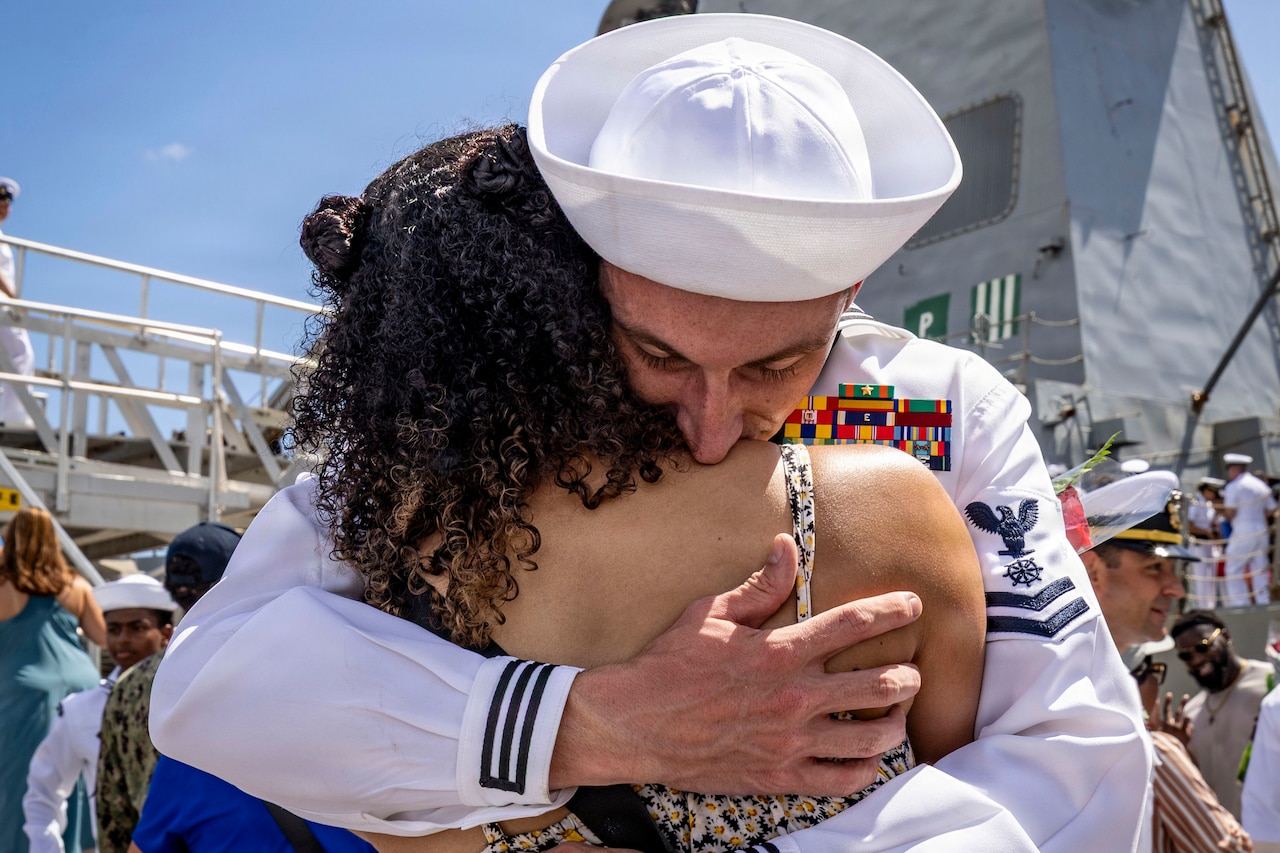
A man in a white military uniform hugs a woman in civilian attire.

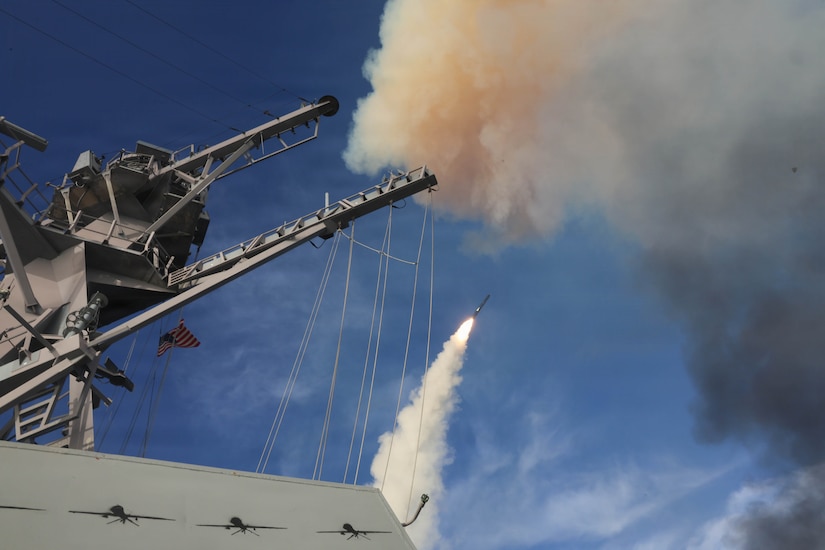
The guided-missile destroyer USS Thomas Hudner returned to Naval Station Mayport, Florida, Aug. 9, concluding an almost nine-month deployment across multiple geographic theaters, including the U.S. 4th, 5th and 6th Fleet areas of operations.

During the deployment, the crew demonstrated exceptional resilience and tactical proficiency across three different fleets, said Navy Cmdr. David Cook, the USS Thomas Hudner commander.

A ship fires a missile into a blue sky with clouds; smoke trails behind the missile.
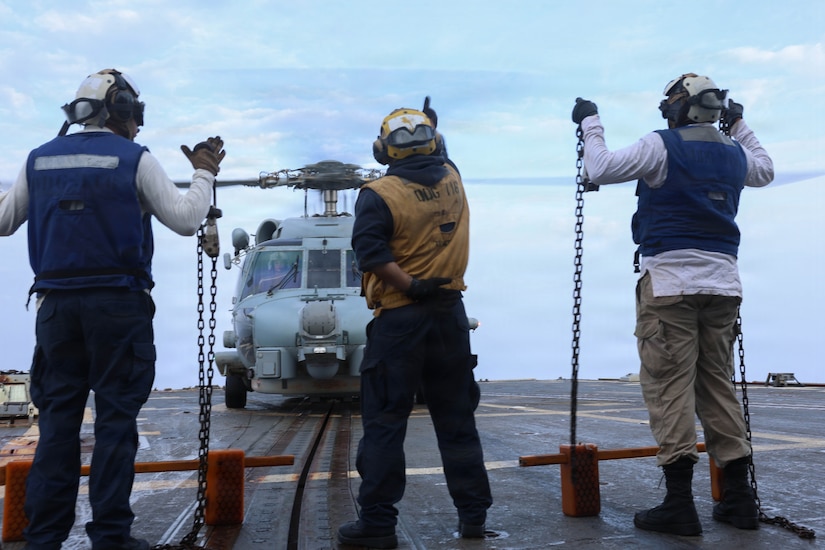
Three people in casual attire, helmets and vests guide a helicopter while holding chains on the flight deck of a ship.
"Their dedication is unmatched, and we are absolutely thrilled to be back in Mayport to reunite with the families and loved ones whose unwavering support made our success possible," Cook said.

The USS Thomas Hudner is a multimission guided-missile destroyer capable of air warfare, antisubmarine warfare, naval surface fire support and surface warfare. The ship carries approximately 300 sailors.

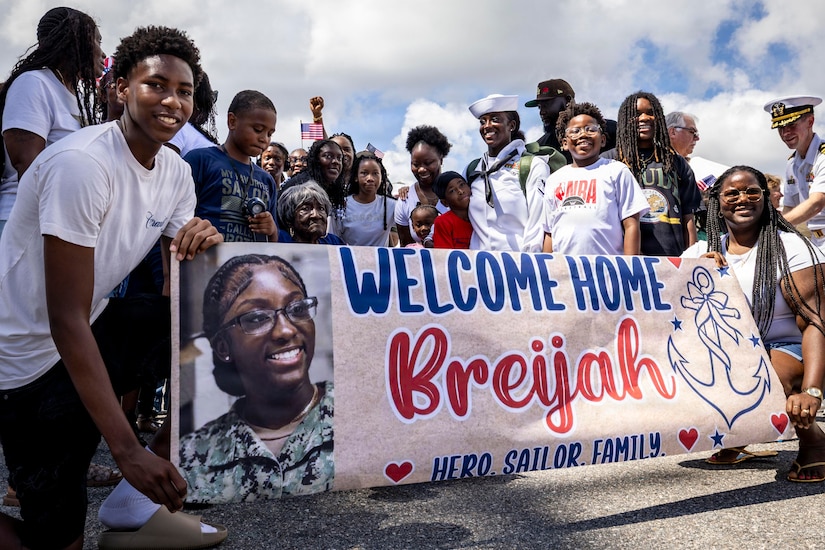
A woman in a white military uniform stands with more than a dozen people outside behind a banner that reads, "Welcome home Breijah, hero, sailor, family."
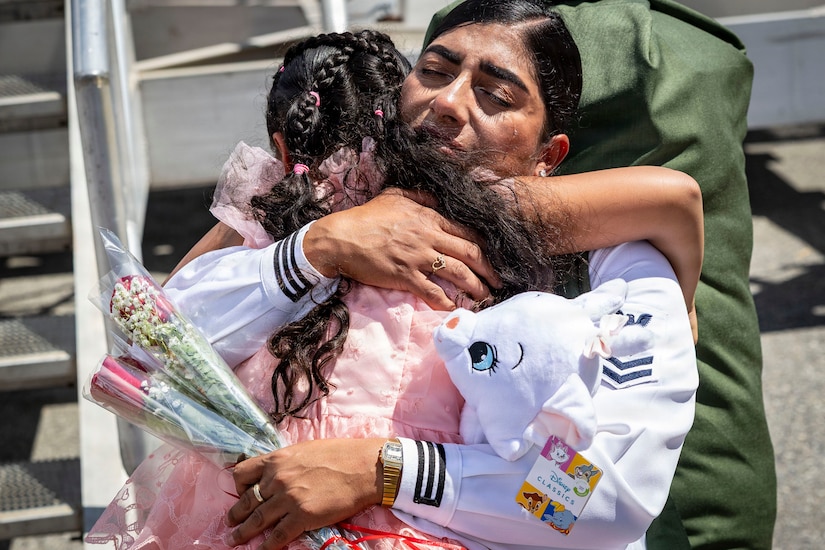
A woman in a white military uniform hugs a child while holding two red roses.
The ship bears the name of Navy Capt. Thomas J. Hudner Jr., a Medal of Honor recipient who received the nation's top military honor for his heroic and selfless actions while attempting to save the life of his wingman, Navy Ensign Jesse L. Brown, during the Korean War.

The U.S. 2nd Fleet, reestablished in 2018 in response to the changing global security environment, develops and employs maritime-ready forces to fight across multiple domains in the Atlantic and Arctic to ensure access, deter aggression and defend U.S., allied and partner interests.

Wednesday, August 05, 2026

Coast Guard Participates in Panama Canal Counter-Threat Exercise

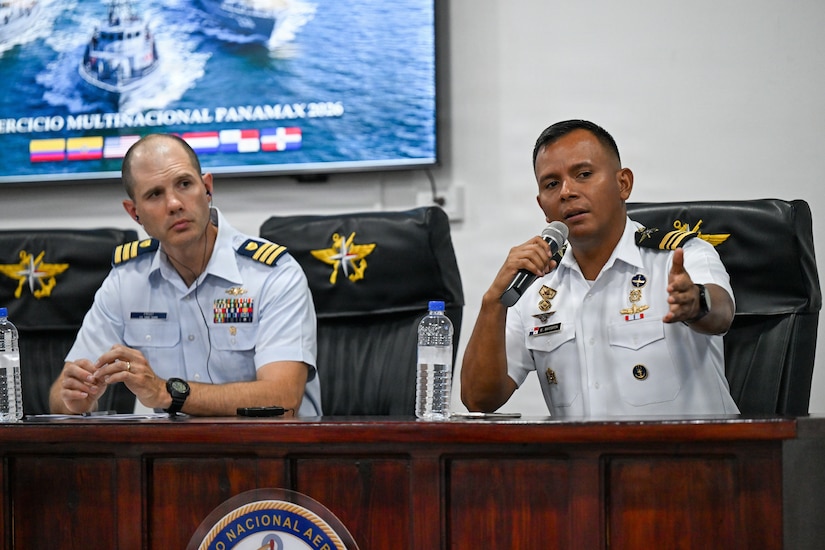
A man in a formal military uniform sits at a table and speaks into a microphone next to a man in similar attire.

Panama's National Aeronaval Service welcomed key leaders from Mexico, Ecuador, Colombia and the United States during the pre-sail conference for Exercise Panamax 2026, Aug. 3.

The biennial exercise is one of the largest military exercises in the Western Hemisphere. This year's iteration will continue until Aug. 13 and includes six maritime vessels operating in the Eastern Pacific region as part of the Pacific Task Force: the U.S. Coast Guard cutter Robert Ward, the Panamanian coastal patrol boat Panquiaco and coastal patrol boat Taboga, the Colombian navy coastal patrol vessel Isla Gorgona, the Ecuadorian navy missile corvette Bae Loja and the Mexican navy offshore patrol vessel Arm Jalisco.

"Major prerequisites to achieving this objective include practicing our ability to transit offshore in company, to communicate effectively to each other and shore command, and to perform complex missions in an integrated manner," said Coast Guard Cmdr. Patrick Frost, Coast Guard Southwest District deputy chief of enforcement.

Frost, who is serving as the Pacific Task Force commander, said Panamax 2026 includes 19 countries and is critical because it allows the partner nations to practice functions necessary to protect the canal.

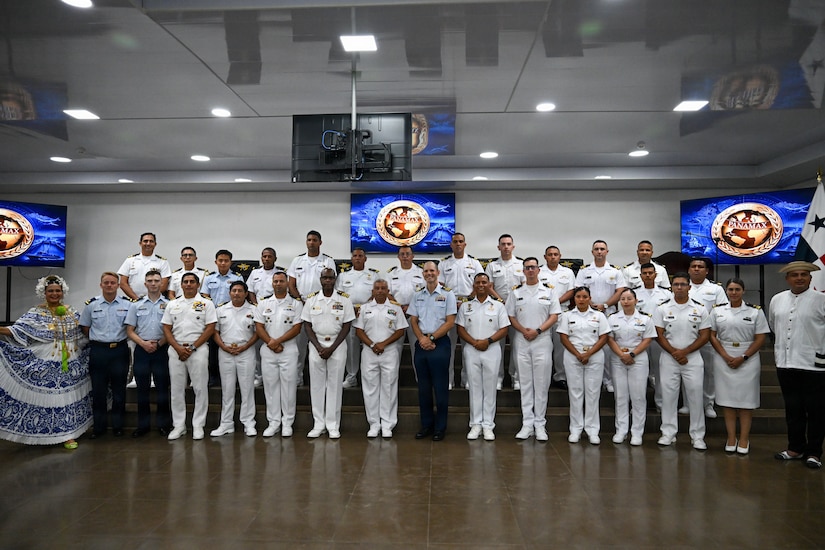
More than a dozen people in various formal military uniforms pose for a group photo in a conference room with monitors on the wall behind them.

To facilitate this proficiency, exercise participants will conduct various training scenarios designed to unite the coalition as they exercise joint communications, maneuvers and tactics.

During the pre-sail conference, Panamanian maritime officials welcomed the command teams of the four visiting ships.

"Today, in this 2026 edition of Panamax, we confirm our commitment to a broader and even more adapted vision of the threats that we have in the 21st century," said Panamanian Lt. Cmdr. Eduardo Batista, acting commander of Panama's National Aeronaval Service's naval command. "This exercise constitutes an opportunity, with great value, to strengthen the interoperability of our forces, to improve our operational procedures and to elevate our capacity to respond in the face of transnational threats and cyberspace challenges."

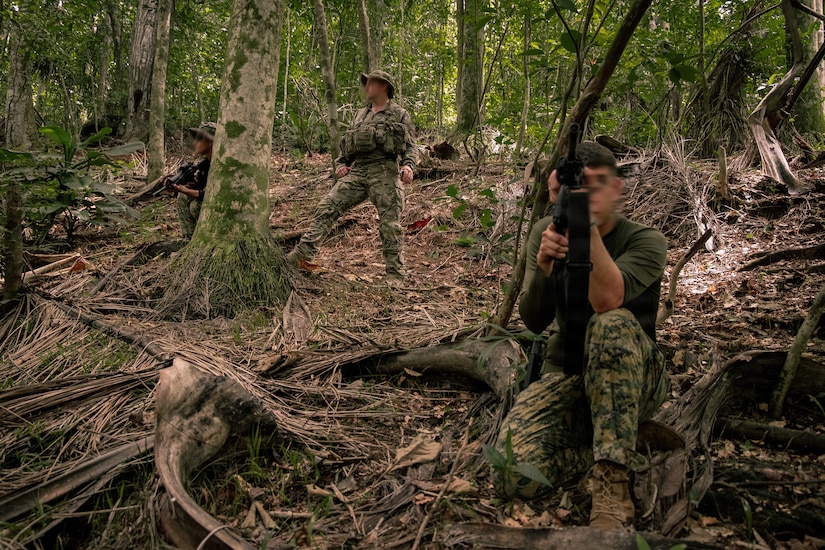
Three men in camouflage military uniforms and holding weapons stand and crouch in a wooded area facing opposite directions.
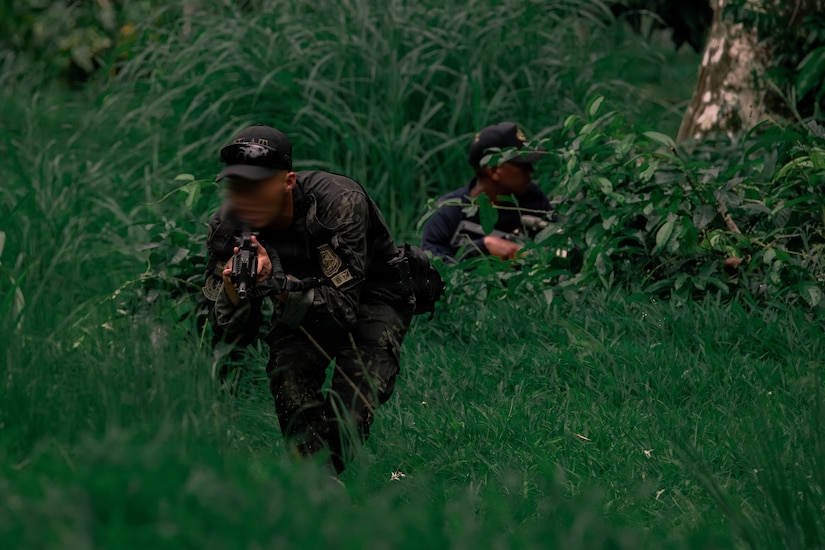
Two people in camouflage military uniforms and holding weapons crouch in a field with tall grass.
Frost highlighted the importance of the regional partners, as they are allies in the fight against cartels across the Western Hemisphere.

"These partner nations are clearly demonstrating a rock-solid commitment to this multinational concept, and the collaboration between the various country representatives is significant," he said.

Panamax began with three countries in 2003 to improve interoperability and strengthen collective capacity to conduct complex multinational and all-domain operations to ensure the free flow of commerce through the Panama Canal and maintain security and stability in the region.

Tuesday, August 04, 2026

Largest Pacific Joint Maritime Exercise Successfully Concludes

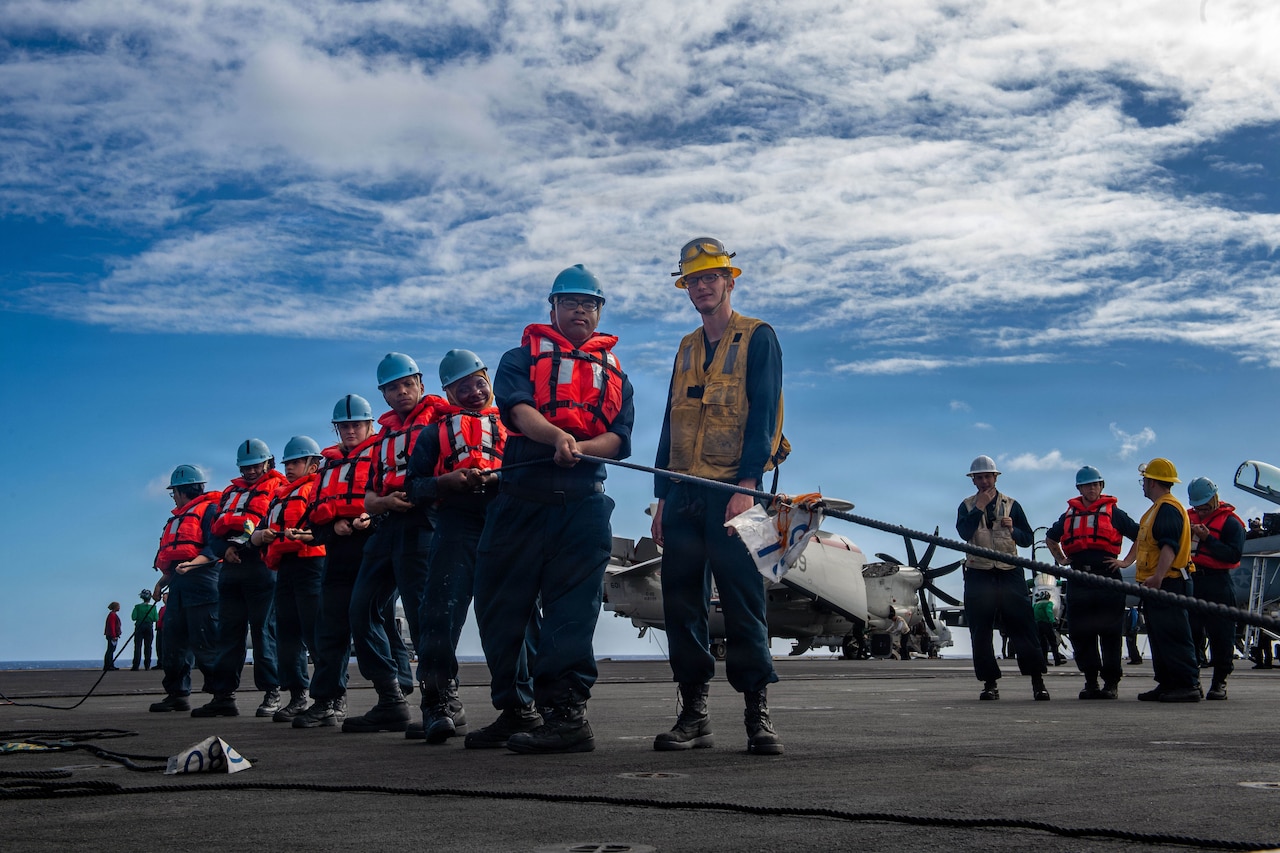
A line of people wearing safety vests and hard hats stand in a line and tug on a cable while on the deck of a ship.

The Exercise Rim of the Pacific 2026, the world's largest combined and joint maritime exercise, successfully concluded July 31. 

The 30th iteration of the biennial exercise began June 24, bringing together 30 nations, more than 30,000 personnel, 30 surface ships, five submarines and more than 197 aircraft under the theme "Partners: Integrated and Prepared."  

Throughout five weeks of realistic training, participating forces enhanced interoperability, strengthened readiness and reinforced the partnerships that support maritime security across the Pacific region. 

"No single nation can ensure security in the Pacific alone," said Navy Vice Adm. Jeff Jablon, commander of the Rimpac 2026 task force. "The global maritime environment is too large and too complex for any one country to safeguard by itself. Rimpac gives us the chance to build the trust and relationships that make us stronger long before any crisis happens." 

Rimpac 2026 was hosted by Commander, U.S. Pacific Fleet and spearheaded by U.S. 3rd Fleet. Multinational leaders were integrated throughout the exercise, with Japan Maritime Self-Defense Force Rear Adm. Takuo Kobayashi serving as vice commander of the task force and Chilean navy Commodore Andres Howard serving as task force deputy commander. Rear Adm. In-ho Kim from the South Korean navy served as commander of the combined force maritime component, and Royal Canadian Air Force Brig. Gen. J.S. Davis served as commander of the combined force air component.

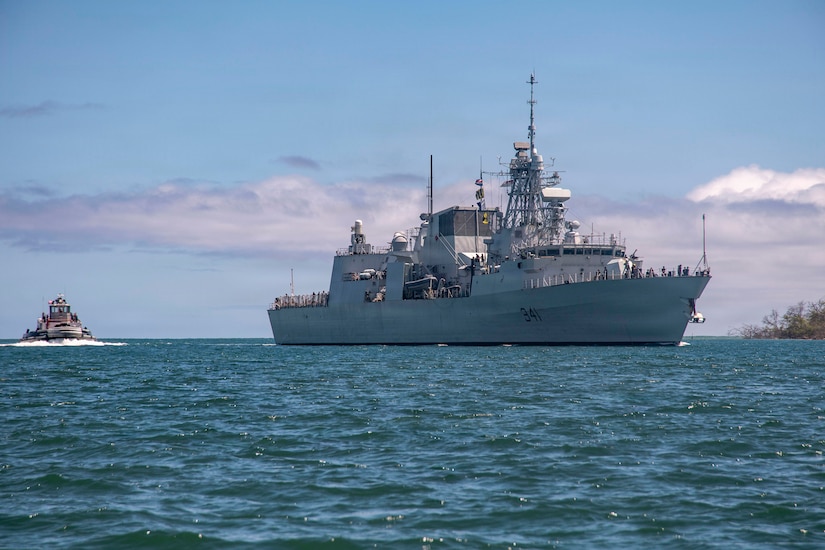
A large ship sails through water with a smaller boat behind it.

The exercise also coincided with the U.S. Navy's 250th anniversary, underscoring the enduring partnerships that continue to strengthen security across the Pacific. For 250 years, the Navy has worked alongside allies and partners to promote maritime security by building relationships founded on trust, cooperation, and shared values. Rimpac puts those principles into practice by providing a venue where participating forces train together, improve interoperability and strengthen the relationships that enable combined and joint operations.

"The network of allies and partners in the region is an asymmetric advantage," Jablon said. "The work participating nations do at Rimpac builds the combined and joint ability to deter conflict and supports all nations in exercising their sovereign rights and freedoms in the maritime domain." 

The exercise was conducted in three phases. During the in-port phase, participants established multinational command relationships, planned operations and strengthened partnerships through professional exchanges, cultural events and sporting competitions. During the at-sea phase, participating forces executed complex combined and joint training, including anti-submarine warfare, maritime strikes, integrated air and missile defense, amphibious operations and logistics. The exercise concluded with a free-play scenario in which opposing forces reacted dynamically to one another to evaluate the force's combined and joint maritime capabilities. 

Throughout the exercise, participating forces executed more than 500 maritime training events, flew more than 2,400 sorties and responded to more than 5,000 scenario-based operational problems.

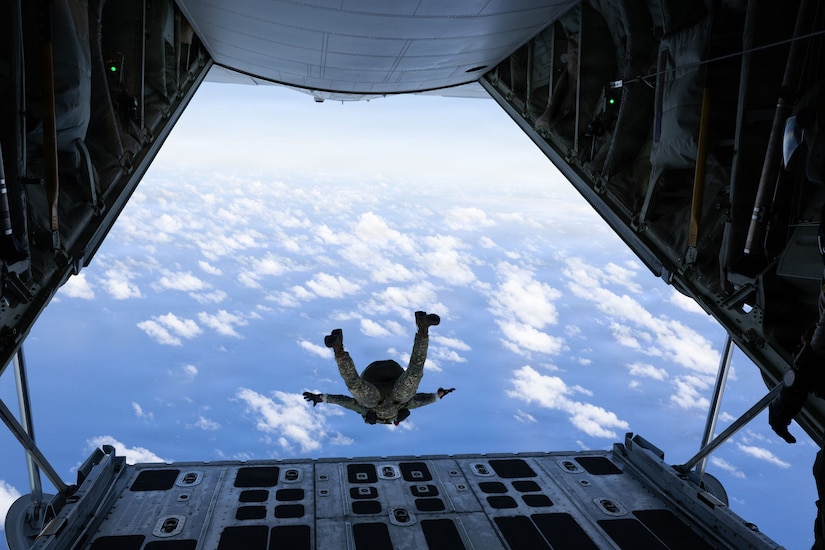
A person in a camouflage military uniform jumps from the back of an aircraft into a blue sky with clouds.

"Interoperability is something we must continue to develop," Kobayashi said. "Rimpac brings together allies and partners committed to strengthening security and stability across the region. The daily conversations, shared experiences and personal relationships developed throughout the exercise strengthen our ability to respond together, whether supporting maritime security or assisting communities following a disaster." 

Training alongside allies and partners in a realistic, multinational environment allows participating nations to improve their ability to operate in combined maritime operations, Kim said.  

"By training together in these complex scenarios, nations improve readiness, refine warfighting skills and build the teamwork needed to operate effectively side by side," he added.

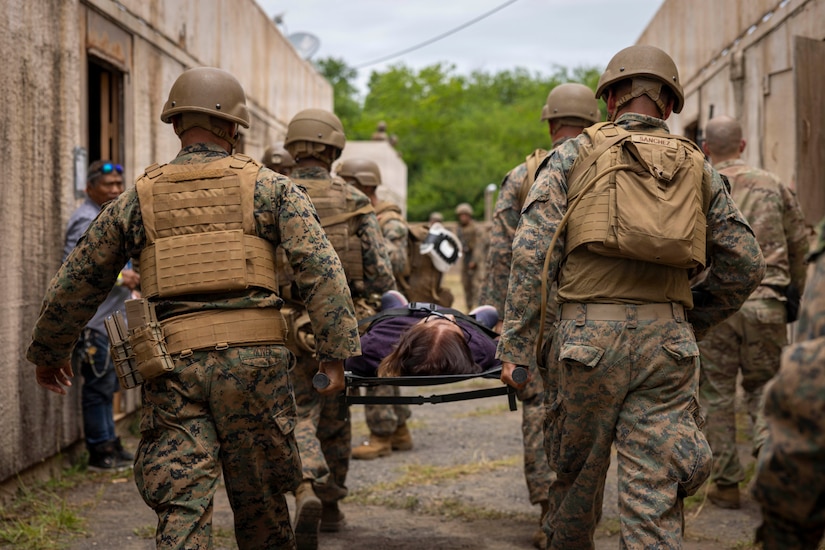
Four people in camouflage military uniforms and combat gear carry a litter with a

Rimpac 2026 demonstrated that maritime security is strengthened through trust, cooperation and shared values. By training together in a realistic operational environment, participating nations improved their ability to operate as a combined and joint force across the full spectrum of maritime operations.

Marine Expeditionary Unit Transits Panama Canal

The 24th Marine Expeditionary Unit — operating as Littoral Combat Force 24 — transited the Panama Canal, Aug. 1, aboard the amphibious transport dock USS San Antonio.

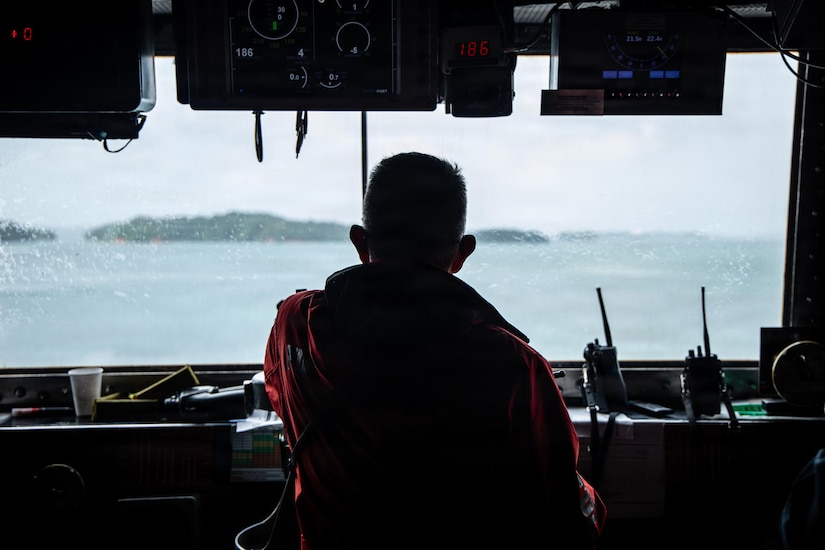
A man in a red jacket looks out a window in the dark bridge of a ship or building.

Marking the first time a Marine expeditionary unit has navigated the canal since 2008, this large-scale maneuver is a demonstration of the Marine Corps' capacity for rapid global mobility, maritime dominance and seamless power projection.

"This historic transit is a powerful testament to the flexibility and readiness of Littoral Combat Force 24," said Marine Corps Col. Ryan Lynch, LCF 24 commanding officer. "Our ability to seamlessly navigate this critical waterway alongside our Navy partners, aboard the USS San Antonio, demonstrates our capability to rapidly project power and respond to crises anywhere in the [U.S.] Southern Command area of responsibility. We are ready to operate straight from the sea, at a moment's notice."

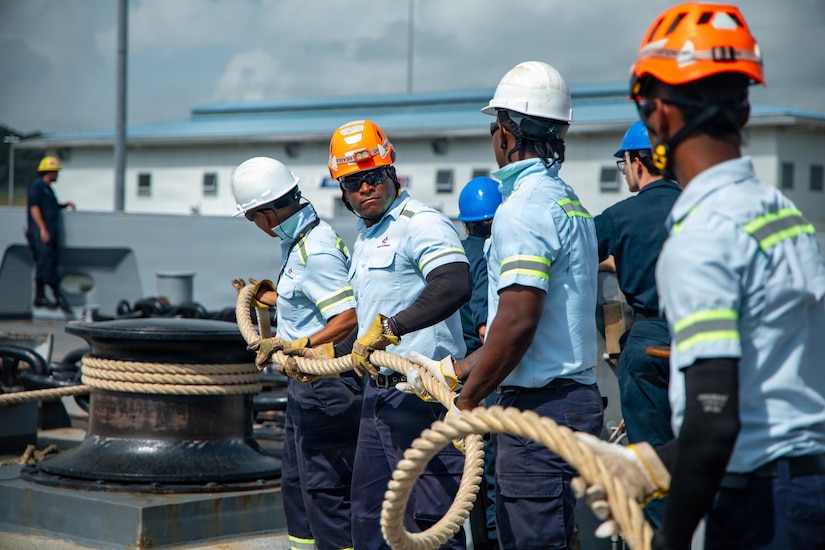
Four men in uniforms and hard hats secure a rope to a dock fitting.

The transit serves as a validation of the littoral combat force concept and the modern Marine air-ground task force. It proves the unit's ability to navigate narrow waterways and project assets ashore without relying on established military basing, underscoring the Marine Corps' enduring role as the nation's premier readiness force, perfectly calibrated for contested littoral regions.

The foundation of this capability is the unbreakable teamwork between the Navy and the Marine Corps. The interoperability displayed highlights a fully integrated naval force supporting combatant commander objectives.

Since its completion, the Panama Canal has served as a vital strategic pathway for the U.S. and its allies. The canal allows naval vessels to rapidly shift between the Atlantic and Pacific theaters, saving weeks of travel around South America.

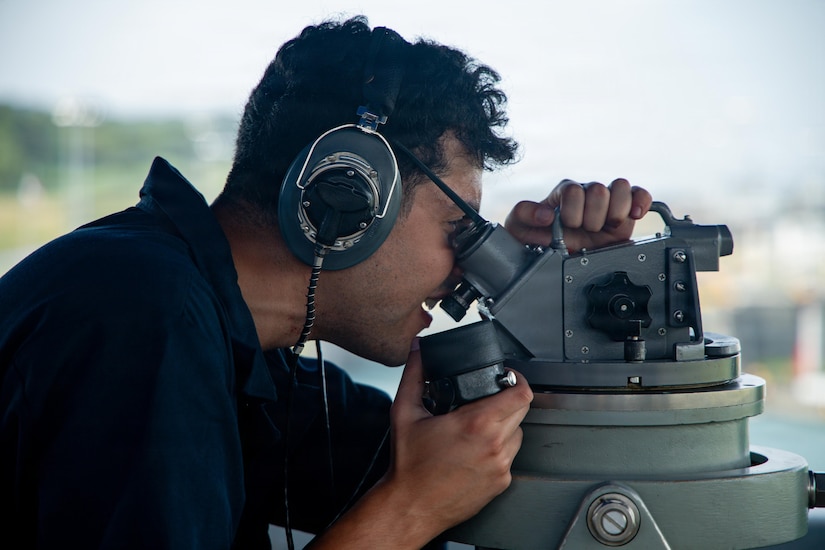
A man in a military uniform checks navigational equipment on a ship.
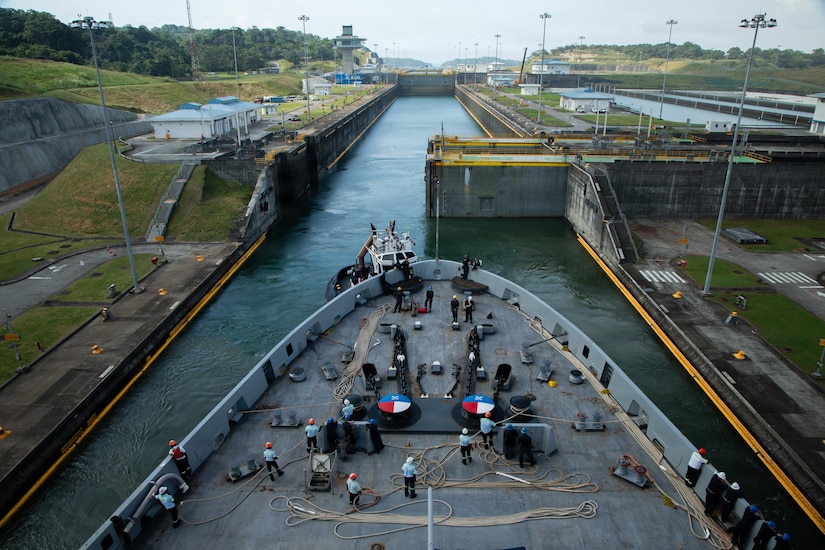
An overhead view of the bow of a large military ship as it transits a canal; there are several people in military uniforms and hard hats working on the deck of the ship.
Navigating this critical maritime shortcut ensures the U.S. military can maintain a flexible, responsive posture — surging ships and troops to meet emerging crises across hemispheres without delay.

By moving fluidly through the canal, the team proved its unrestricted access to the U.S. Southern Command area of responsibility, which spans Central and South America, and the Caribbean. Whether tasked with humanitarian disaster relief, bolstering regional partnerships or deterring aggression, this force can reach anywhere in the region to deliver tailored, decisive effects.

Wednesday, July 29, 2026

Navy to Decommission Littoral Combat Ship Fort Worth

The U.S. Navy will decommission Freedom-variant littoral combat ship, USS Fort Worth (LCS 3) during a ceremony held July 29 at 10 a.m. PDT at Naval Base San Diego.

As an operational unit and test platform, Fort Worth and its crew played an important role in the defense of our nation and maritime freedom. Fort Worth and its Sailors were key to determining the operational configuration and deployment capabilities of today's LCS platform.

The honorable Gordon England, former Secretary of the Navy, will deliver the decommissioning ceremony's principal address. Remarks will also be provided by U.S. Navy Rear Adm. Matthew Kawas, the ship's sponsor's proxy, Ms. Jill J.R. Labbe, and U.S. Navy Capt. (ret.) Warren Cupps.

The ceremony will honor the service and legacy of Fort Worth, as well as the professionalism and dedication of its Sailors and their families.

LCS' are fast, optimally manned, mission-tailored surface combatants that operate in near-shore and open-ocean environments, winning against 21st-century coastal threats. LCS integrates with joint, combined, manned, and unmanned teams to support forward presence, maritime security, sea control, and deterrence missions around the globe.

The LCS class consists of two variants, Freedom and Independence, designed and built by two industry teams. USS Fort Worth is a Freedom-class LCS, built in Marinette, Wisconsin. Austal USA leads the Independence-variant team in Mobile, Alabama, for LCS 6 and the subsequent even-numbered hulls.

By retiring early-hull test platforms like Fort Worth, the Navy redirects investments toward upgrading the remaining LCS inventory with enhanced capabilities. This strategy sustains the LCS program and underscores the Navy's commitment to building America's Fleet of the Future, ensuring the active ships remain relevant, combat-credible, and reliable throughout their service lives.

For 250 years, American naval power has projected strength globally, operating forward 24/7, 365 days a year. This operational tempo demands continuous capability, and the Fleet of the Future is our answer.

Join the ceremony live stream. https://youtube.com/live/-a-bWFo-Re8?feature=share

Media may direct queries to the Navy Office of Information at (703) 697-5342.

Friday, July 17, 2026

U.S., Canadian, Thai Navies Sharpen Maritime Capabilities During Exercise CARAT Thailand

 July 17, 2026 | By Navy Chief Petty Officer Mike Wright, Commander, Destroyer Squadron 7

The United States concluded the landmark 32nd iteration of Exercise Cooperation Afloat Readiness and Training Thailand, July 15, in Sattahip, Thailand, reinforcing America's enduring commitment to a free, open and secure Pacific region.

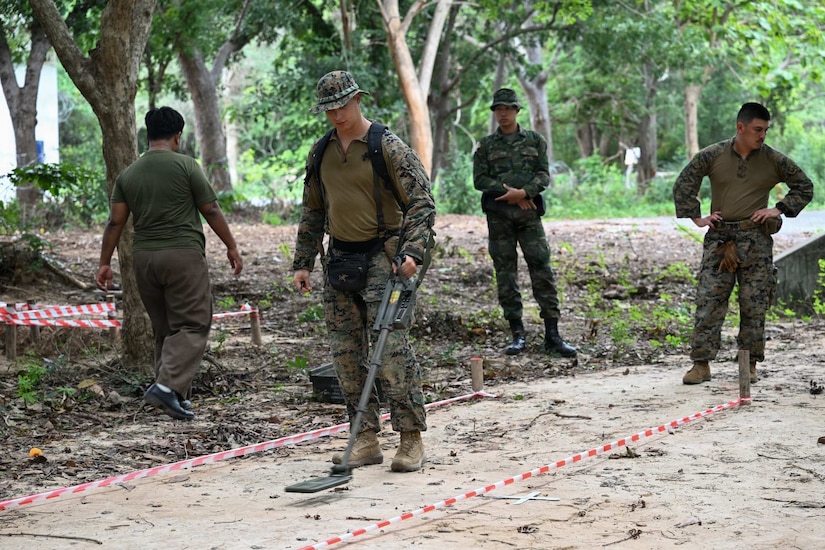
A man dressed in a military camouflage uniform holds mine sweeping equipment over the sand in a marked lane as two other men wearing similar attire watch and another man walks by.

Over 10 days of at-sea and shore-based training with the Royal Thai Navy and Royal Canadian Navy, U.S and partner forces sharpened the combined maritime capabilities that underpin regional security cooperation.  

This year, the United States expanded its contribution to the exercise, demonstrating the breadth and integration of American maritime power. U.S. forces participated with a multimission P-8A Poseidon maritime patrol and reconnaissance aircraft assigned to the Commander, Task Force 72 and U.S. Coast Guard fast response cutters the USCGC Emlen Tunnell and the USCGC Charles Moulthrope assigned to the Expeditionary Cutter Squadron. 

These units operated with a Royal Thai Navy surface force, including the frigate HTMS Taksin and the frigate HTMS Saiburi.

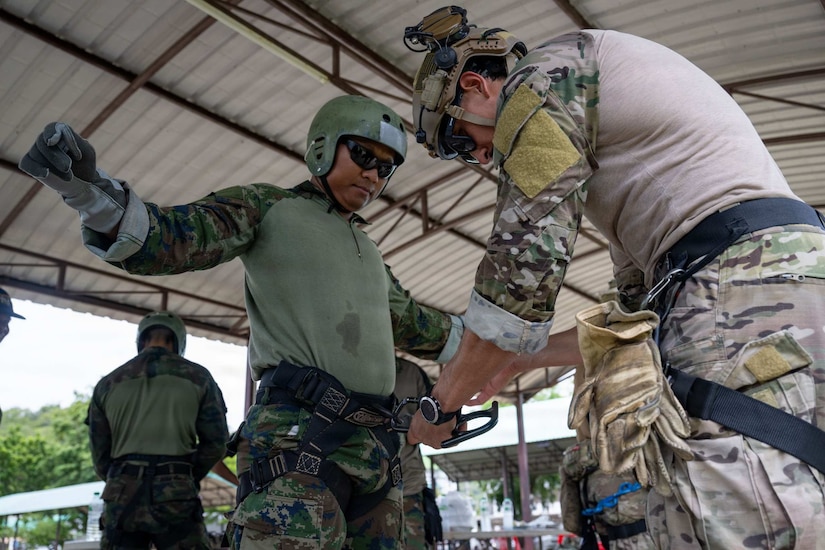
A man wearing a military camouflage uniform holds his arms up while another man in similar attire does a safety check in the first man’s rappelling gear.

"It's been an honor to operate with our Royal Thai Navy partners for the 32nd iteration of Cooperation Afloat Readiness and Training Thailand," said U.S. Coast Guard Capt. Mike Ross, commodore of Expeditionary Cutter Squadron. "We were given the opportunity to demonstrate the capabilities of the Coast Guard fast response cutters, which we plan to maximize to further partnerships and address shared maritime concerns." 

The at-sea phase in Sattahip and the Gulf of Thailand included complex training scenarios focused on antisubmarine warfare, air defense, surface action group coordination, mine countermeasures and search and rescue training. These exercises advanced the U.S. Navy, U.S. Coast Guard, Canadian and Thai forces' abilities to refine their tactics, techniques and procedures in a dynamic maritime environment.

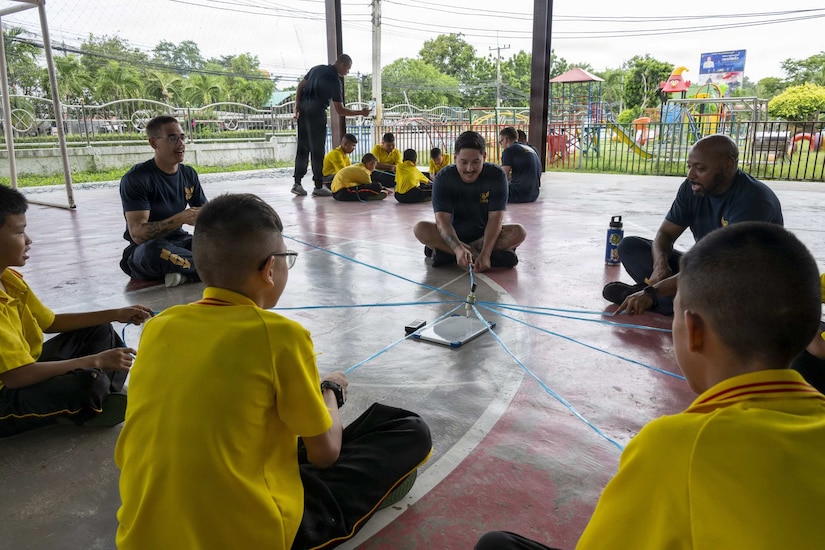
Three men sit in a circle with children playing a game. There is a similar group in the background.

Beyond the at-sea exercises, CARAT Thailand fostered strong relationships through a variety of shore-based activities in Sattahip and Songkhla, including community service projects, sports days and cultural exchanges. 

Subject matter expert exchanges and practical education sessions covered crucial topics such as maritime domain awareness, medicine and at-sea explosive ordnance disposal, further enhancing interoperability and knowledge sharing. Additionally, the Royal Canadian Navy expanded the scope of the exercise by providing members of a visit, board, search and seizure team to participate in collaborative training events alongside regional partners.

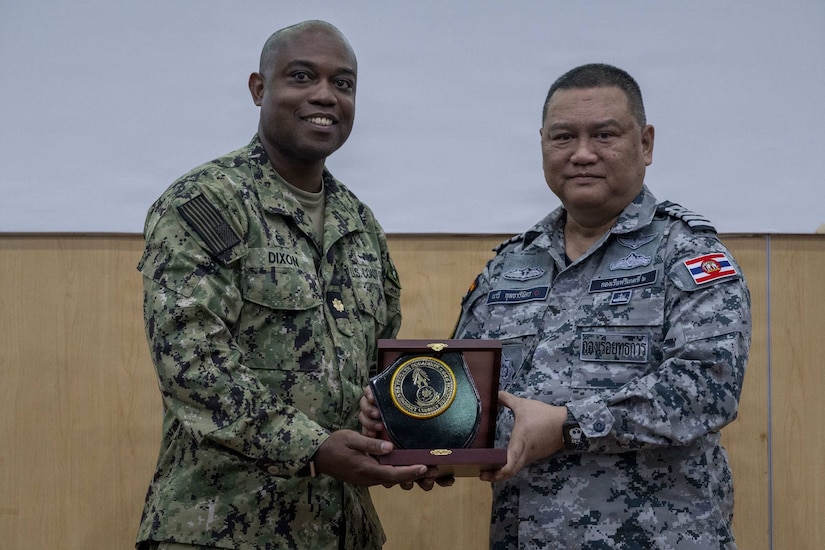
Two men wearing military camouflage uniforms hold a wooden box and an award while posing for a photo.

CARAT Thailand is a long-standing exercise series designed to enhance U.S. and partner maritime forces' abilities to operate together in response to shared challenges in the region. 

As the U.S. Navy's forward-deployed destroyer squadron in Southeast Asia, Commander, Destroyer Squadron 7 remains committed to building partnerships and promoting maritime security throughout the region.

Thursday, July 16, 2026

D.C. National Guard Boosts Homeland Defense With First Maritime Security Vessel

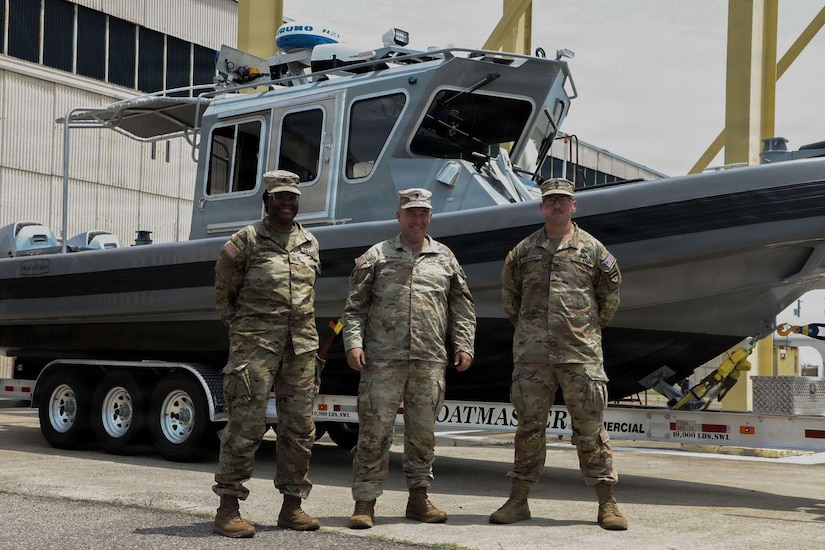
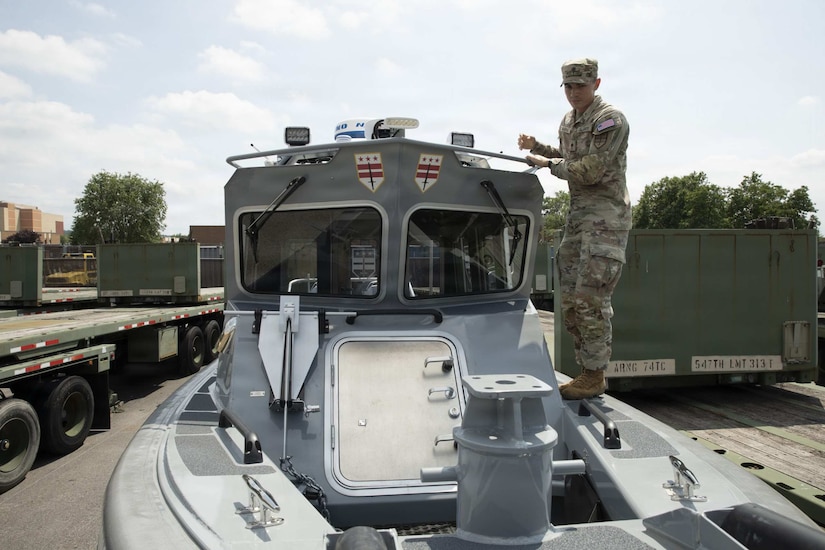
The District of Columbia National Guard's 260th Special Purpose Brigade recently commissioned its first maritime security vessel, marking the first time an Army unit in the nation's capital has operated a dedicated waterborne platform.

Three people wearing camouflage military uniforms pose for a photo while standing in front of a boat on a trailer.

The new capability strengthens the guard's ability to secure the district's waterways, critical infrastructure and major national events — a mission aligned with the National Defense Strategy's objective of defending the homeland. 

Army Brig. Gen. Leland D. Blanchard II, D.C. National Guard interim commander, said the organization's newest maritime capability reflects its legacy of service and its vision for the future. 

"For 224 years, the District of Columbia National Guard has answered our nation's call by evolving to meet the challenges of every generation," Blanchard said. "This new maritime capability is more than a vessel — it is an investment in the partnerships, readiness and modern capabilities that enable us to better support the local, state and federal agencies that protect our nation's capital every day." 

Created under an executive order, the brigade was designed to enhance coordination between military forces and the district's civilian security agencies.  

Army Col. Larry Doane, brigade commander, said the unit's role is straightforward: "Homeland defense is a team sport. We're the connective tissue between military response and the agencies that secure the capital every day."

A man wearing a camouflage military uniform walks around the edge of a boat sitting on a trailer.

Washington's security environment is uniquely complex — protected airspace, dense federal infrastructure, overlapping jurisdictions, all within two bodies of water. Brigade soldiers routinely support local and federal law enforcement, fire and emergency services during national special security events.  

We do more national special security events in a year here than most places do in a lifetime, Doane said. 

Bounded by two rivers, the district requires a robust maritime security posture. The brigade's new vessel, sourced through a Navy partnership, will support waterborne operations during events such as the Fourth of July. It primarily serves as an observation and assessment platform enabling civil support teams to conduct hazard detection aboard vessels and expand overwatch alongside local units. 

"We're not replacing law enforcement — we're increasing their capacity," Doane said, emphasizing the guard's supporting role. "When the district needs more eyes, more reach, more resilience, that's where we come in." 

The waterborne vessel complements a broader modernization effort within the brigade's 547th Transportation Company, which now operates a growing fleet of tactical vehicles to maneuver through dense crowds and restricted urban terrain during events.

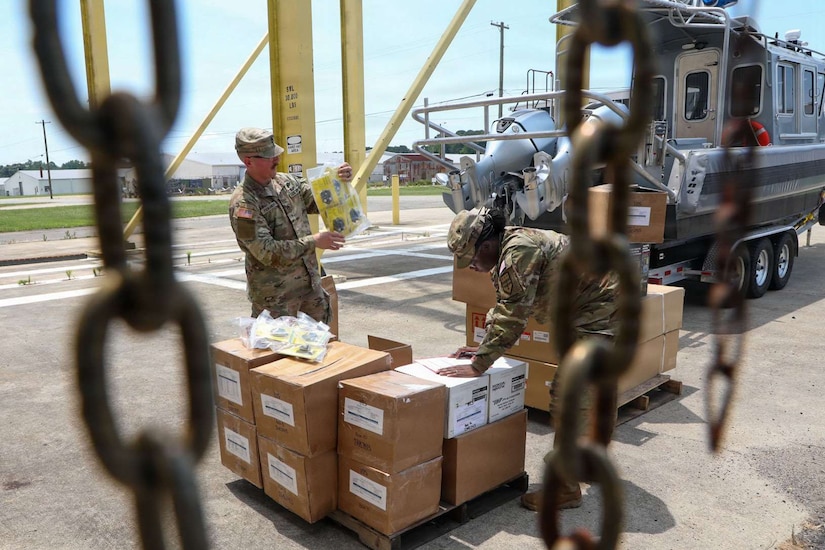
Two people wearing camouflage military uniforms inspect a pallet of packages while standing outside; there is a boat on a trailer in the background.

These assets support local and federal law enforcement armed overwatch, traffic control points, rapid movement across secured zones, medical services and dignitary protection missions — completing the brigade's evolution into a multidomain security force. 

"The 547th has to be not only one of the most effective, but one of the coolest transportation units in the world," Doane said. "Not only does it operate light medium tactical vehicles, and heavy tactical vehicles — but it has a fleet of [off-road tactical] vehicles and now a growing fleet of security vessels to support maritime security." 

The brigade's mission reflects a core principle of the National Defense Strategy: resilience deters adversaries. Doane noted that attackers study soft targets, but in Washington they find none. 

"When someone goes into our metros and sees you can't even get away with a purse snatching and petty crime, that matters," he said. "Presence prevents bad actors from believing an attack will succeed." 

During this year's Fourth of July celebrations, the brigade provided local and federal partners with critical capability enhancements, including additional traffic control points, crowd management, and medical support to help ensure a safe and successful event. 

What distinguished this year's support was the integration of enhanced capabilities designed to increase operational flexibility and response capacity. These included specialized response teams to complement local and federal law enforcement, maritime security assets and increased mobility to rapidly deploy personnel and resources wherever needed.  

Together, these capabilities strengthened the unified interagency response and improved the ability to adapt to evolving operational requirements in real time. 

"When symbols of freedom are center stage, like on the Fourth of July, some bad actors might see a target. In such cases, we pivot on a dime and defend the capital," Doane said. "But even more important than the pivot is the deterrence of presence, high-level training and equipment that prevents the attack in the first place." 

With one vessel operational and four planned, the brigade is working with the Navy to select platforms proven worldwide and interoperable with the local law enforcement fleet. The goal is seamless coordination across agencies responsible for defending the nation's capital. 

"We used to rely on the oceans for homeland defense," Doane said. "We can't rely on that anymore. We rely on resilience and deterrence — our enemies must know we're prepared." 
Monday, June 29, 2026

USS Theodore Roosevelt Hosts International Helicopter Exchange

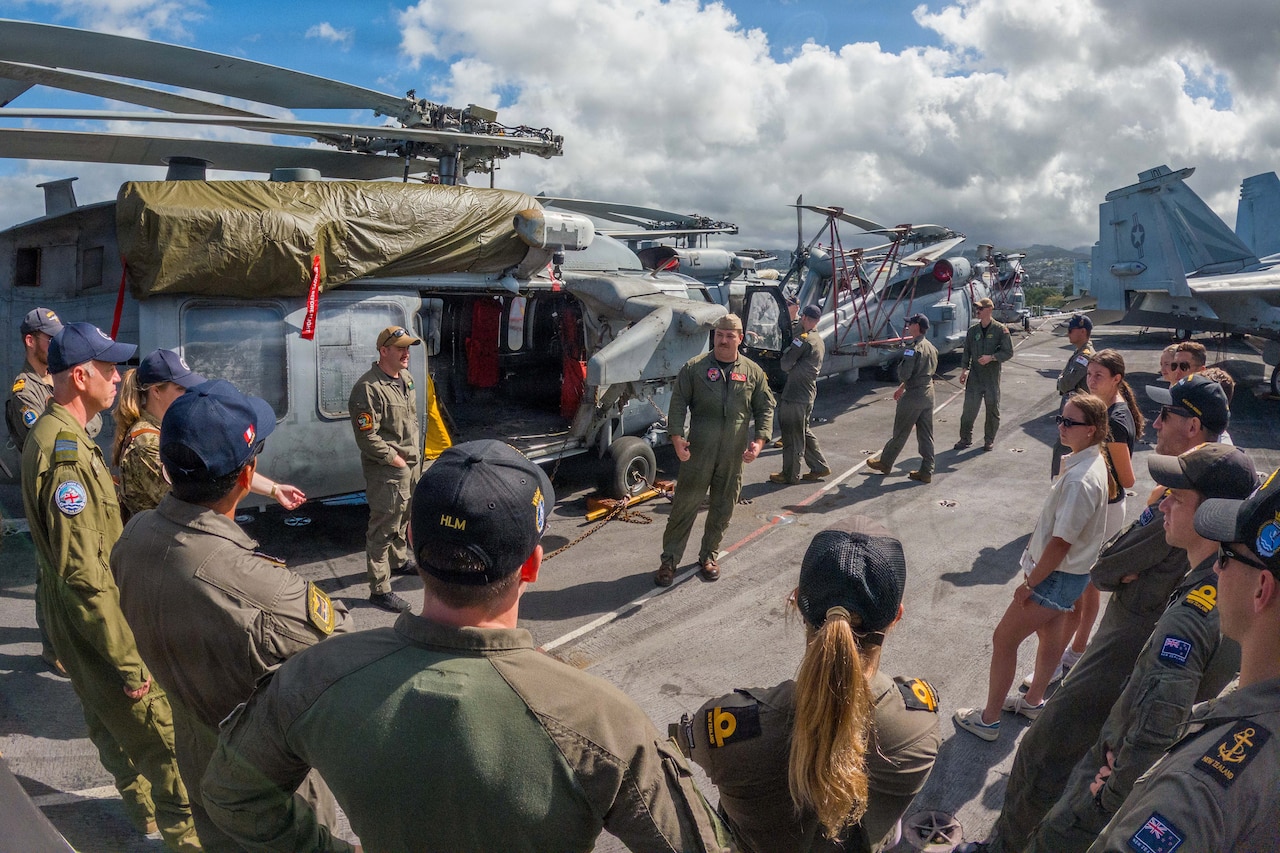
Two men in military flight suits stand in front of a military helicopter as a large group of people wearing flight suits and a couple of people in civilian attire look on.

The aircraft carrier USS Theodore Roosevelt hosted more than 45 international partners from eight countries during an international helicopter warfighter exchange at Joint Base Pearl Harbor-Hickam, Hawaii, June 27, 2029, as part of Exercise Rim of the Pacific.

During the visit, military pilots from the U.S., South Korea, Italy, Peru, Chile, New Zealand, Australia, Canada and Mexico compared procedures, discussed aviation challenges and strengthened relationships. The event was designed to build trust, improve communication and support cooperation among the different countries.

"We're privileged to host the international helicopter exchange aboard the Theodore Roosevelt," said U.S. Navy Cmdr. Andrew Poulin, USS Theodore Roosevelt strike operations officer. "It's a great opportunity to showcase naval aviation and work with our partners from different countries."

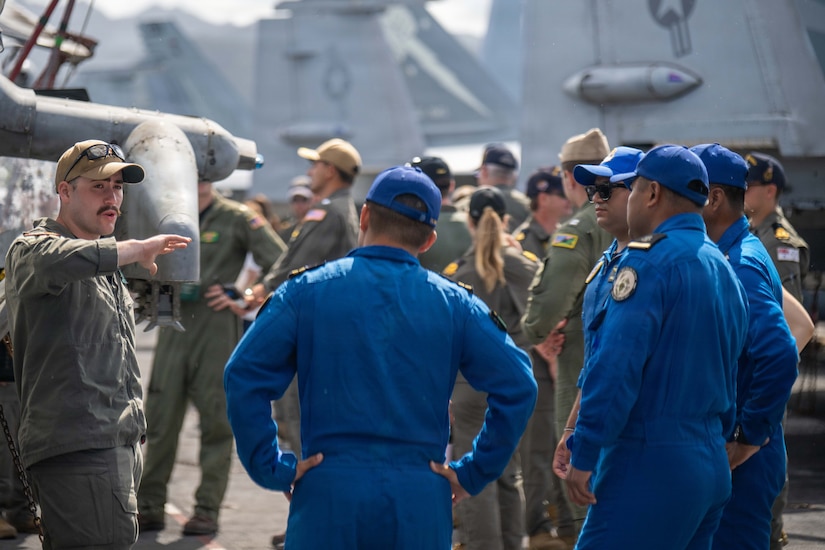
A man in a brown military uniform gestures near a group of four men dressed in blue flight suits while standing on the flight deck of a Navy aircraft carrier.
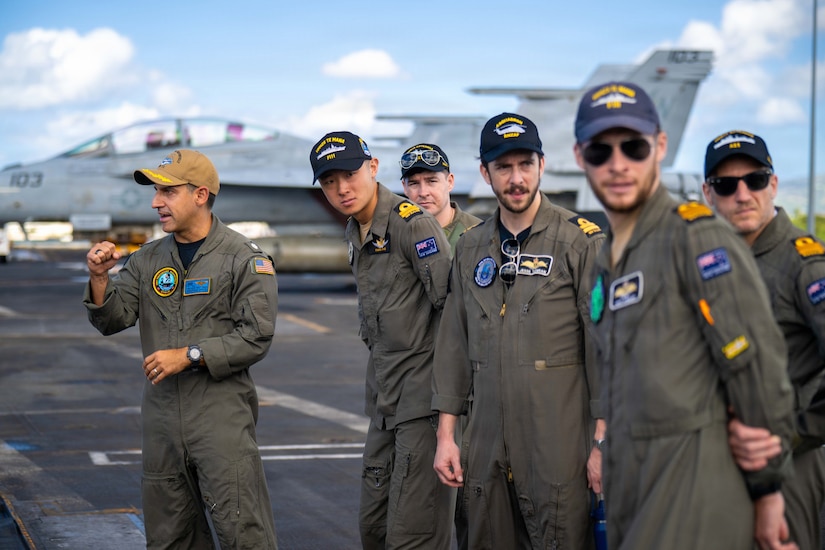
A group of men in military flight suits look to their left down the flight line of an aircraft carrier while another man in similar attire is looking to the right.
Sailors assigned to the Roosevelt highlighted flight deck procedures, launch and recovery operations and the coordination required to operate aircraft safely, while visiting sailors observed how U.S. embarked aviation units work in unison.

"It's been a great experience for helicopter pilots to exchange ideas, share flight experiences, learn about different cultures and get to know more people," said Peruvian Navy Cmdr. Antonio Gonzáles.

During the exchange, visiting sailors were taken to the hangar bay, flight deck and navigation spaces. The locations on the tour route all play a role in flight operations aboard the Theodore Roosevelt.

"We're grateful for the opportunity to participate in exercises like this, which allow us to improve our tactical skills and build relationships with other navies," said Mexican Navy Lt. j.g. Francisco Valencia.

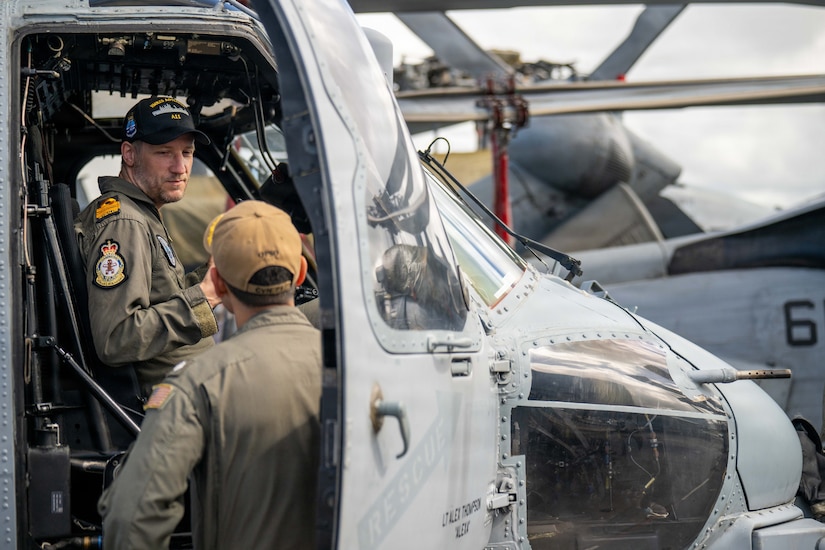
:  Two men in military flight suits talk to each other while one of them is sitting in the cockpit of a military helicopter.

The Roosevelt is participating in Rimpac to enhance readiness, strengthen partnerships and support regional security across the Indo-Pacific region. Thirty nations, over 30 surface ships, five submarines, 15 national land forces, more than 206 aircraft and 30,000 personnel are participating in the exercise taking place in and around the Hawaiian Islands from June 24-July 31.

The world's largest international maritime exercise, Rimpac provides a unique training opportunity while fostering and sustaining cooperative relationships among participants critical to ensuring safety of sea lanes and security on the world's oceans. This year's exercise is the 30th iteration in the series that began in 1971.

Thursday, June 25, 2026

USVDIV-32 Advances Unmanned Operations With NATO During BALTOPS 2026

Sailors assigned to the Unmanned Surface Vessel Division 32 are at the forefront of the Navy's fleet during exercise Baltic Operation 2026, delivering realistic counter-unmanned surface vessel training against unmanned vessels to NATO allies.

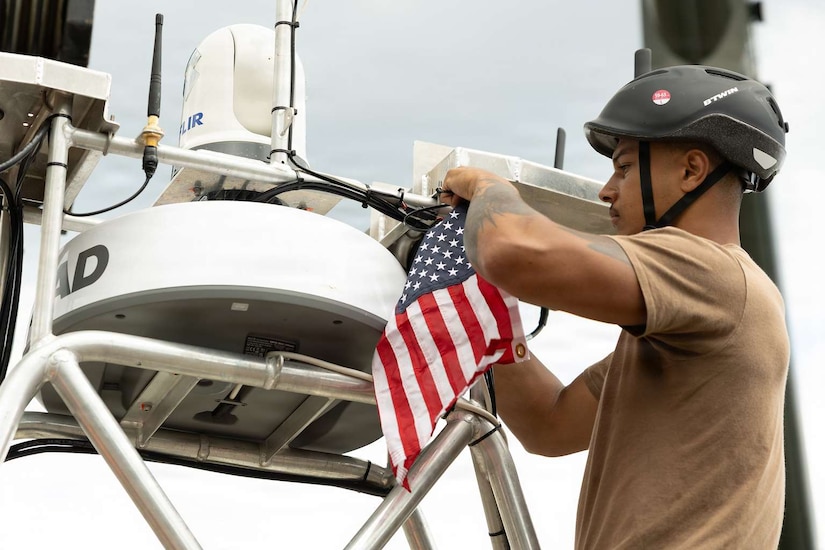
A man wearing a brown T-shirt and helmet, hangs a small American flag onto an unmanned surface vessel.

Established early this year, USVDIV-32 is one of the newest additions to the Navy's unmanned operational units. Tasked with maintaining and implementing unmanned vessels, the division's sailors regularly conduct exercises and training with multiple platforms, with the most common being global autonomous reconnaissance craft, or GARC. 

"GARCs are just one of the several USVs," said Navy Lt. Sarah Weinstein, commanding officer of USVDIV-32. "GARC is just the one that we've had the most experience within the last couple of years, but they're all very similar. " 

A defining feature of USVDIV-32 is the implementation of a new rate, robotics warfare specialist. These specialists are trained to operate and maintain vessels such as GARCs. 

Navy Robotics Warfare Specialist 3rd Class Joshua VanDeCreek expressed excitement about being on the front lines of a new technology that he believes will keep more people safe by sending USVs as opposed to personnel, calling it "a great step in the future."

"I'm proud to be a part of a new unit in the Navy, one that I think is going to be very important," VanDeCreek said.

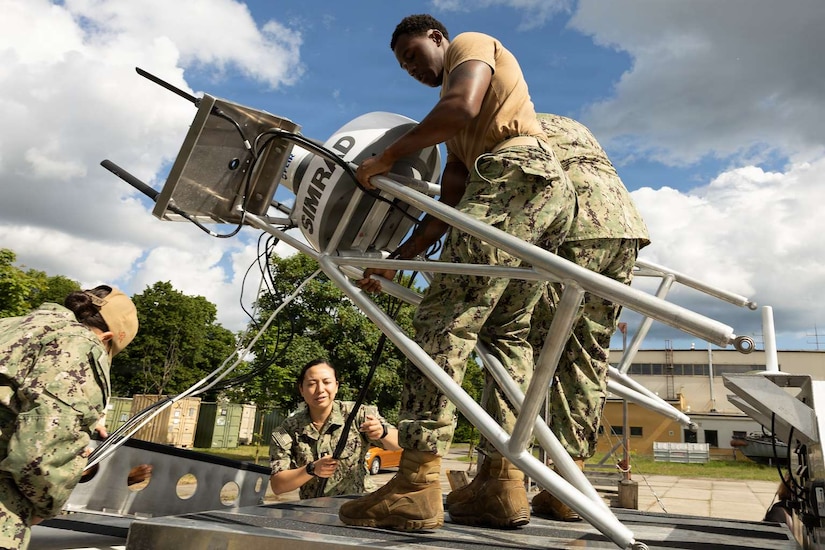
People wearing camouflage military uniforms work on a small military unmanned surface vessel. Two of them hold up one of its parts at an angle while two others unravel cords attached to the craft.

Chief Robotics Warfare Specialist Christian Butler said the robotics warfare rate will remain vital in the Navy's future. 

"I think most commands, if not all commands, are going to have some component of [robotics warfare specialists], Butler said. "Just because there's no going away from unmanned systems at this point, they're only going to grow in scale, and you're going to need [robotics warfare specialists] to carry that weight." 

During the exercise, USVDIV-32 played a crucial role by deploying GARCs as an opposing force to allied forces. This simultaneously gave allied ships a chance to test their abilities in defending against USVs and provided valuable experience for USDIV-32, allowing them to see their GARCs in action.

"The first difficult part is spotting the USV," Weinstein said. "What does it look like? What are the telltale signs that it might be a USV? How to tell if it's coming inbound and its different behaviors that it's able to display as it gets closer to the ship." 

As the Navy moves toward a hybrid fleet, USVDIV-32 is playing the key role in being among the first to implement this technology. The division's work during BALTOPS 2026 has been invaluable not only to the allied forces but also to the USVDIV-32.

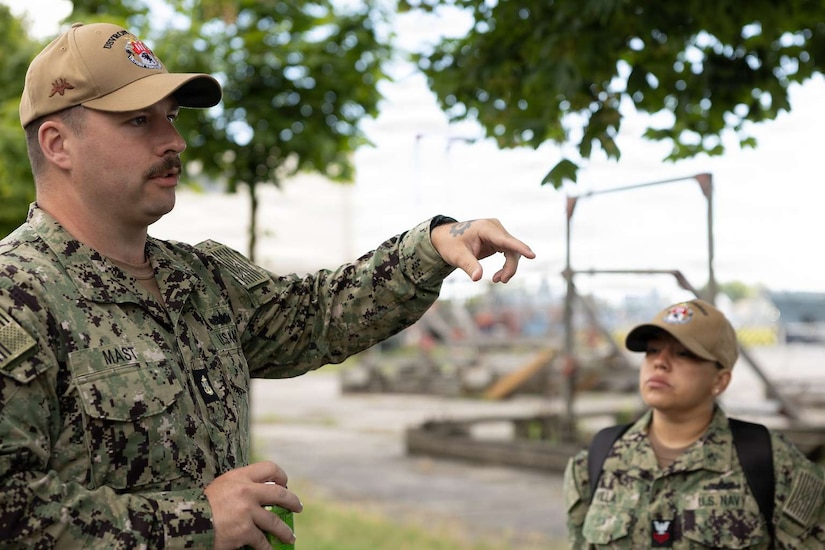
A man wearing a camouflage military uniform points to something in front of him as he speaks. Another person in similar attire watches.

The sailors of USVDIV-32, with the emerging robotics specialist rate, are carving the path for the Navy's future. 

This is only the beginning of this technology, with no end in sight for its importance and potential.   

"I think the technology and the autonomy will continue to grow to give them more options to make USVs more lethal or more effective at executing the mission that they've been tasked with," Weinstein said. 

Thursday, June 18, 2026

USV Swarm Demonstrates Maritime Security Capabilities During Exercise Salaknib 26

Soldiers assigned to the 25th Infantry Division partnered with Philippine Army forces and industry representatives during Exercise Salaknib 2026 to demonstrate how autonomous maritime systems can enhance security and protect critical transportation operations in contested environments.

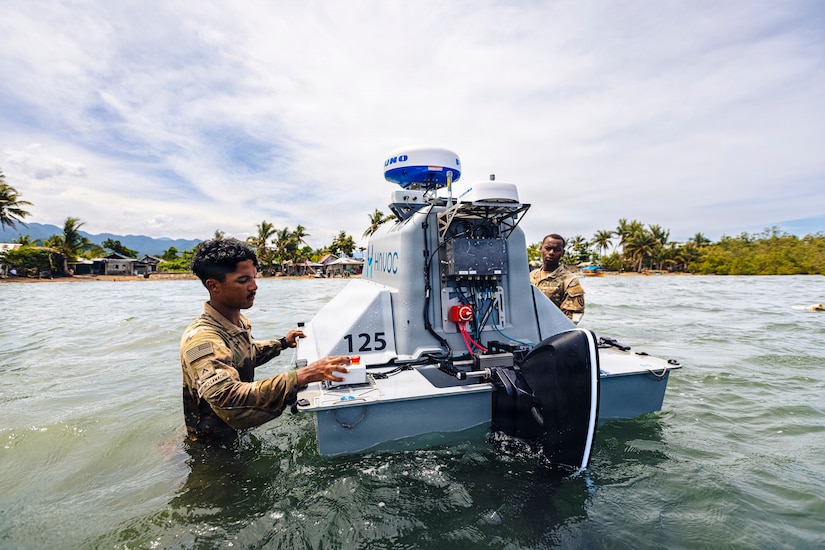
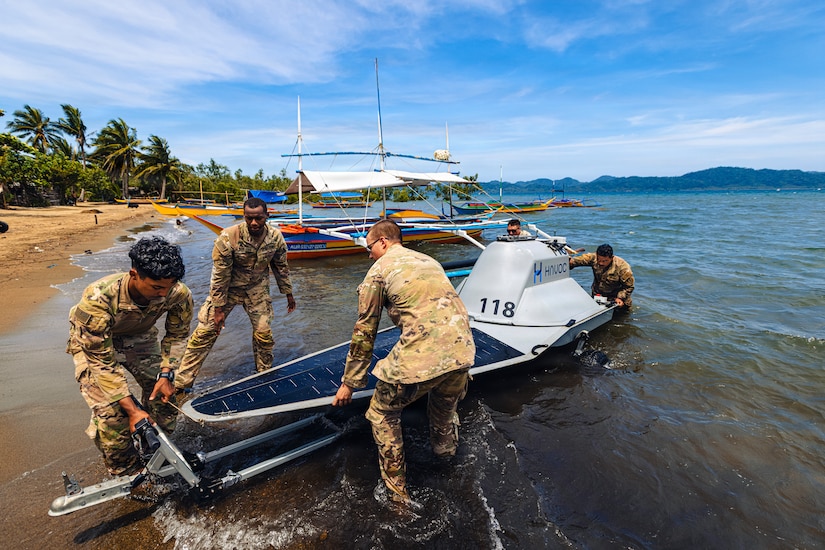
Two men wearing camouflage military uniforms stand in waist-deep water as they inspect an unmanned surface vessel; there are houses and trees in the background.

The maritime screen operation, conducted in the waters of the Casiguran Sound in the northeastern part of Luzon, Philippines, showcased the ability of U.S. and Philippine forces to integrate emerging technology into combined operations while strengthening interoperability between the longtime allies.

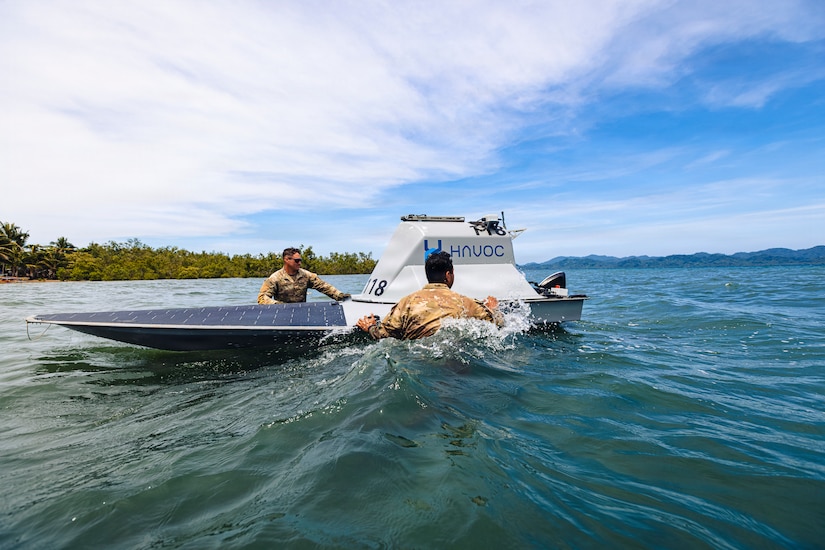
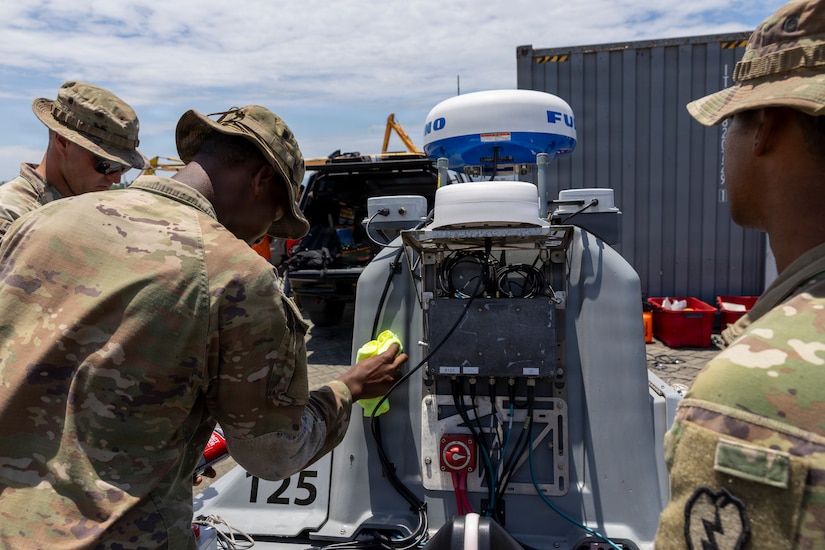
At the center of the mission were unmanned surface vessels, or USVs, operated by soldiers assigned to the 125th Intelligence and Electronic Warfare Battalion, 25th Infantry Division. They deployed a swarm of autonomous boats to establish a security screen across the waterway as a U.S. Army logistics support vessel approached the port.

The mission supported the more than 260-mile movement of Philippine Army vehicles and personnel, including armored personnel carriers, using the logistics support vessel. As the vessel transited the sound, the autonomous boats spread across a wide perimeter, continuously monitoring the maritime environment and relaying information to onshore personnel.

Two men wearing camouflage military uniforms stand in waist-deep water as they inspect an unmanned surface vessel; there are trees and mountains in the background.

The operation demonstrated how autonomous systems can extend situational awareness beyond what traditional means can provide, enabling commanders to gain a clearer understanding of activity across the area of operations.

"I think it's great to integrate this emerging technology in these exercises; it builds trust in the U.S. and partner soldiers," said Ben Outlaw, an industry partner representative supporting the operation. "It also allows us to showcase and validate our systems interoperability between next-gen command and control nodes across all partner nations."

These boats provide situational awareness to commanders with their ability to find, fix, target, kill and confirm. With the information the USV provides, the commander's decision-making process is compressed from hours to seconds.

Five men wearing camouflage military uniforms push an unmanned surface vessel out of the water and onto a trailer while standing on a beach; there are several small boats in the background.

The maritime screen mission highlighted the growing role autonomous technologies can play in future military operations. Rather than relying solely on manned platforms, commanders can use multiple autonomous vessels operating simultaneously to maintain persistent awareness across large maritime areas.

During the operation, the USVs autonomously navigated while using onboard sensors to detect and report potential threats or anomalies within the operating area. Information collected by the vessels was transmitted in near real time, a capability that will allow commanders to maintain continuous awareness of the maritime domain and make informed decisions.

For soldiers operating the systems, the exercise provided valuable experience integrating advanced technology into a multinational environment.

A man wearing a camouflage military uniform checks the engine on an unmanned surface vessel that is on a trailer as two other men in similar attire observe.

"I've really enjoyed working with the USVs during Salaknib 2026," said Army Pvt. Caleb Hannah, exercise participant assigned to the 125th Intelligence and Electronic Warfare Battalion.

The team deployed the autonomous intelligence, surveillance and reconnaissance boats to provide security for landing craft. The systems escorted the logistics support vessel to port from about 6 miles out, allowing Philippine vehicles to roll onto the dock.

Exercise Salaknib 2026 provides U.S. and Philippine forces with opportunities to train in partnership across multiple domains, enhancing readiness and strengthening the alliance between the two nations. The maritime screen mission served as an example of how emerging technologies can be integrated into combined operations to improve security, increase operational flexibility and expand commanders' options during future contingencies.

Tuesday, July 01, 2025

Guardians of the Coast: Inside U.S. Coast Guard Operations

For more than two centuries, the United States Coast Guard has stood watch over America’s maritime interests, combining military readiness, law enforcement, search and rescue, and environmental protection into one unique and vital mission set. With over 95,000 miles of U.S. coastline and vast stretches of open water under their watch, Coast Guard personnel operate around the clock to safeguard lives, protect natural resources, and secure the nation’s maritime borders.

A Dual Mission: Military and Civilian Roles

Unlike other military branches, the Coast Guard operates under the Department of Homeland Security in peacetime but can be transferred to the Department of the Navy during wartime. This flexibility allows the Coast Guard to seamlessly balance both civilian and military responsibilities.

Their primary missions include:

  • Search and Rescue (SAR): Perhaps the most well-known mission, Coast Guard crews respond to thousands of distress calls every year, rescuing mariners from treacherous conditions, stranded vessels, and life-threatening situations.

  • Maritime Law Enforcement: From combating drug smuggling and illegal fishing to enforcing maritime laws, the Coast Guard patrols U.S. waters to ensure safety and compliance.

  • Port and Coastal Security: The Coast Guard plays a critical role in securing the nation's ports and waterways, preventing terrorist attacks, and safeguarding critical infrastructure.

  • Environmental Protection: Coast Guard units respond to oil spills, pollution incidents, and other environmental hazards, working to preserve fragile marine ecosystems.

  • Icebreaking and Arctic Operations: With growing interest in Arctic resources and shipping lanes, the Coast Guard’s fleet of icebreakers maintains year-round access to polar regions.

  • Aids to Navigation (ATON): The Coast Guard maintains over 50,000 navigational aids, including buoys and beacons, ensuring safe passage for commercial and recreational vessels.

Tools of the Trade: Coast Guard Assets

The Coast Guard operates a wide range of vessels and aircraft to support its diverse missions, including:

  • Cutters: Large ships capable of operating in open ocean and coastal environments.

  • Fast Response Cutters (FRCs): Highly maneuverable vessels used for law enforcement and SAR operations.

  • Response Boats: Smaller, agile boats ideal for rapid response close to shore.

  • Helicopters: Aircraft like the MH-60 Jayhawk and MH-65 Dolphin conduct SAR, surveillance, and interdiction missions.

  • Fixed-Wing Aircraft: Planes such as the HC-130 Hercules provide long-range surveillance and transport capabilities.

Everyday Heroes on the Water

From the icy waters off Alaska to hurricane-stricken coasts in the Gulf of Mexico, Coast Guard crews risk their lives daily to protect others. Their motto, "Semper Paratus"—Always Ready, reflects a culture of constant vigilance, rigorous training, and unwavering commitment.

Recent operations include:

  • Interdicting narcotics shipments in the Eastern Pacific.

  • Rescuing mariners from storms off the Atlantic coast.

  • Coordinating disaster response after hurricanes and floods.

  • Breaking ice to keep Arctic shipping lanes open.

Conclusion: The Quiet Force that Never Sleeps

While their actions often unfold far from public view, the men and women of the U.S. Coast Guard play a critical role in national security, public safety, and environmental protection. Whether braving stormy seas, patrolling for threats, or lending a hand to those in peril, the Coast Guard remains an indispensable guardian of America's maritime frontiers.

Saturday, June 17, 2023

Coast Guard Cutters: Safeguarding the Seas

The United States Coast Guard operates a diverse fleet of cutters that are purpose-built to carry out a wide range of missions. Among the various classes of cutters, several stand out for their unique capabilities and contributions to the Coast Guard's mission. In this article, we will explore some of these classes, including the Sentinel-class Fast Response Cutter (FRC), Famous-class cutter, Reliance-class cutter, Healy-class polar icebreaker, Legend-class cutter, Alamosa-class cutter, Treasury-class cutter, Casco-class cutter, and Edsall-class cutter.

The Sentinel-class Fast Response Cutter (FRC) class is a recent addition to the Coast Guard fleet, designed to replace the aging Island-class cutters. These highly capable and versatile vessels are agile, fast, and equipped with advanced technology for conducting a wide range of missions, including search and rescue, law enforcement, port security, and environmental protection. The FRCs are known for their speed, endurance, and enhanced seakeeping abilities, enabling them to operate effectively in various conditions. These cutters play a vital role in coastal operations and contribute significantly to the Coast Guard's maritime security efforts.

The Famous-class (378-foot) cutters have a long-standing history within the Coast Guard. These high endurance cutters were originally built for the U.S. Navy during World War II and later transferred to the Coast Guard. They have proven their capabilities over the years and continue to serve as workhorses of the fleet. Famous-class cutters are known for their extensive range, endurance, and versatile mission capabilities. These cutters have been involved in a wide range of operations, including law enforcement, search and rescue, and drug interdiction efforts.

The Reliance-class (210-foot) cutters are medium endurance cutters that have served the Coast Guard for several decades. These cutters are known for their reliability, versatility, and adaptability to a variety of missions. They have been deployed for law enforcement operations, search and rescue missions, fisheries enforcement, and homeland security tasks. The Reliance-class cutters have proven their effectiveness in performing a wide range of missions in both domestic and international waters.

The Coast Guard's polar operations are supported by the Healy-class polar icebreakers. These powerful vessels are specifically designed to operate in the challenging Arctic and Antarctic regions. With their reinforced hulls and advanced icebreaking capabilities, the Healy-class cutters enable access to ice-covered waters, support scientific research expeditions, and provide vital logistical assistance in remote polar regions.

The Legend-class cutters are the newest and most advanced multi-mission cutters in the Coast Guard fleet. These cutters are highly capable and equipped with state-of-the-art technology and systems. They have enhanced surveillance capabilities, improved communications systems, and increased operational range. The Legend-class cutters are designed for a wide range of missions, including maritime homeland security, law enforcement, search and rescue, and environmental protection.

Other notable classes of Coast Guard cutters include the Alamosa-class, Treasury-class, Casco-class, and Edsall-class. Each of these classes has played a significant role in the Coast Guard's history and has contributed to the protection of maritime interests and the safety of mariners.

In conclusion, the Coast Guard's diverse fleet of cutters includes various classes, each with its unique capabilities and contributions. From the Sentinel-class Fast Response Cutters and Famous-class cutters to the Reliance-class cutters, Healy-class polar icebreakers, Legend-class cutters, and others, these vessels demonstrate the Coast Guard's commitment to maintaining maritime security, conducting search and rescue operations, enforcing maritime laws, and protecting the nation's interests at sea. The dedication and bravery of the men and women serving aboard these cutters ensure that the Coast Guard is always ready to safeguard the seas.

Thursday, May 31, 2007

Navy to Lead Gulf of Guinea Maritime Security Initiative

By Gerry J. Gilmore
American Forces Press Service

May 31, 2007 – This fall, a
U.S. Navy ship will embark on a six-month deployment to the Gulf of Guinea region, part of a multinational maritime security and safety initiative that partners with several west- and central-African nations, a senior U.S. Navy officer said here today. The yet-to-be designated amphibious ship will carry 200 to 300 sailors and U.S. Coast Guard members who will man training teams that will work with eleven Gulf of Guinea nations, helping them to build their maritime security capabilities, Navy Adm. Henry G. Ulrich III, commander of U.S. Naval Forces, Europe -- based in Naples, Italy -- told reporters today at a news conference held at Fort Lesley J. McNair here.

The news conference followed a meeting of African, American, French, Portuguese and other military and diplomatic representatives. The meeting was hosted by the Africa Center for Strategic Studies, which falls under the Defense Security Cooperation Agency, an element of the Office of the Secretary of Defense's policy directorate.

At a ministerial conference in Cotonou, Benin, in November, ministers and representatives of Angola, Benin, Cameroon, the Republic of the Congo, the Democratic Republic of the Congo, Equatorial Guinea, Gabon, Ghana, Nigeria, Sao Tome and Principe, and Togo committed themselves to improve their nations' maritime security and safety systems.

Piracy, illegal fishing, unlawful immigration and smuggling plague several Gulf of Guinea countries, Ulrich said, noting such unlawful activities can attract other undesirable elements, including terrorists.

"Security means that there's governance," Ulrich explained. "And, where there's security and governance is not where people who we describe as terrorists like to go.

"We're trying to eliminate voids (of law and order)," the admiral continued, noting Gulf of Guinea nations also are interested in establishing their own
Coast Guards.

Ulrich said he was very pleased by participant African nations' reaction to the planned six-month deployment to the Gulf of Guinea, a version of the Navy's Global Fleet Station concept. The pilot GFS deployment began April 25 when High Speed Vessel 2 Swift and Task Group 40.9 departed Naval Station Mayport, Fla., for Central South American ports-of-call.

"I'm really, really optimistic that this is going to be the tipping point for us and move this whole initiative of maritime safety and security ahead," Ulrich said.

It's paramount for the United States to follow through with the Gulf of Guinea initiative, retired U.S. Ambassador Peter R. Chaveas, director of the Africa Center for Strategic Studies, emphasized at the news conference.

"One aspect of Africans' experience with the United States going back decades is that the United States has shown a great tendency to start some great initiatives and too often the experience is that we're not there five years later, we don't follow through on it." Chaveas explained. "And so, Africans look at these things skeptically with that in mind. So, it's very, very important as has been going on in this particular context, to keep at this.

"We have to keep communicating with them, consulting with them, making the case that we're in this with them for the longer term," Chaveas said.

Article sponsored by
criminal justice online leadership; and, police and military personnel who have authored books.