Showing posts with label Allied Forces. Show all posts

Friday, August 07, 2026

Multinational Partners Strengthen Regional Readiness During Exercise Panamax 2026

Airmen assigned to 12th Air Force, Air Forces Southern, joined approximately 40 military personnel from across the Americas during Panamax 2026, a U.S. Southern Command-sponsored multinational exercise focused on an integrated approach against simulated threats to the Panama Canal and the region. 

The exercise continues until Aug. 14 and provides participating forces from 19 nations with an opportunity to conduct combined security and stability operations, enhance interoperability, and strengthen their collective capability to support Panama in defending the canal and preserving regional security. 

Approximately 40 military personnel from Ecuador, Peru, Colombia, the Dominican Republic, Argentina, Brazil, Paraguay, Honduras, Guatemala and El Salvador are working together to synchronize multinational air component planning, command and control, and decision-making in response to simulated threats to the Panama Canal and regional security. 
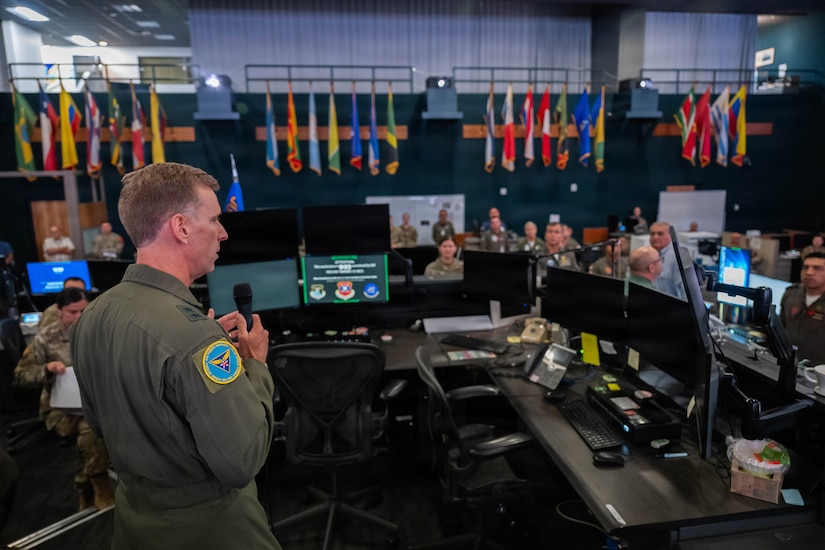
A man in a military uniform stands in a large room and speaks into a microphone; people in similar attire sit in front of him with more than a dozen various flags behind them.

Air Forces Southern led the combined air component in one of the Western Hemisphere's premier multinational exercises at Davis-Monthan Air Force Base, Arizona. 

"We are proud to host Panamax here at Davis-Monthan and to work alongside our partner nations as we train to protect one of the most strategically important waterways in the world," said Air Force Maj. Gen. David Mineau, 12th Air Force commander. "This exercise helps us sharpen the coordination, trust and readiness needed to support Panama in the defense of the canal and preserve regional security." 

The biennial exercise reinforces the enduring commitment of the United States and partner nations to regional security through cooperation, transparency and shared responsibility. By training together before a crisis occurs, participating nations build the trust, professional relationships and interoperability that enable faster, more effective responses when real-world events demand coordinated action. 

"This opportunity was the first time Ecuador brought air force intelligence personnel, and the immense value of this training for our force and our partners is already clear," said Ecuadorian air force Lt. Col. Andres Acosta, an operations, intelligence and analysis officer. "Exchanging operational perspectives and discussing air doctrine face-to-face builds the mutual trust and understanding essential for our shared security." 

The exercise scenario is designed to challenge participants in a realistic multinational environment while strengthening each nation's ability to operate alongside allies and partners during a coalition response to a notional contingency. 

For Air Forces Southern, Panamax supports the command's commitment to strengthening partnerships across the Western Hemisphere by improving readiness, reinforcing integrated deterrence and enhancing the collective ability of allied and partner air forces to respond to evolving regional security challenges.
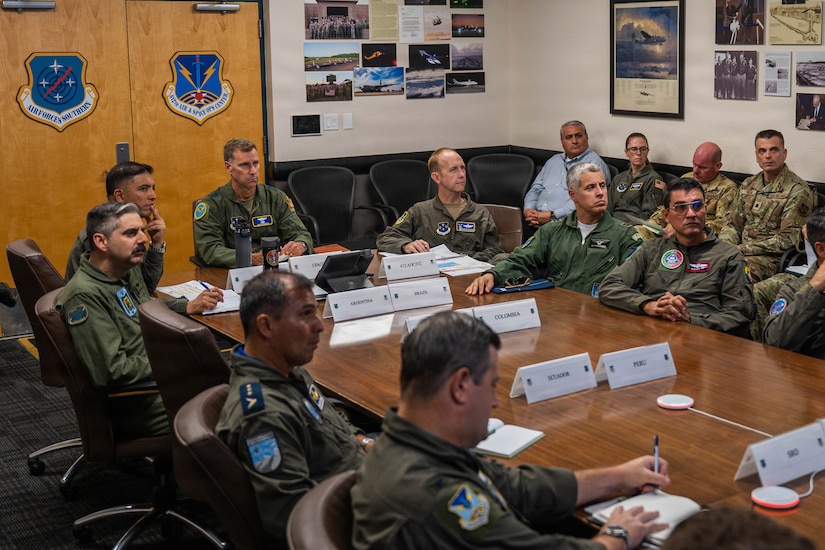
Nearly a dozen men in military uniforms from various countries sit around a wooden table and look at an out-of-frame monitor; people in similar attire are sitting behind them.
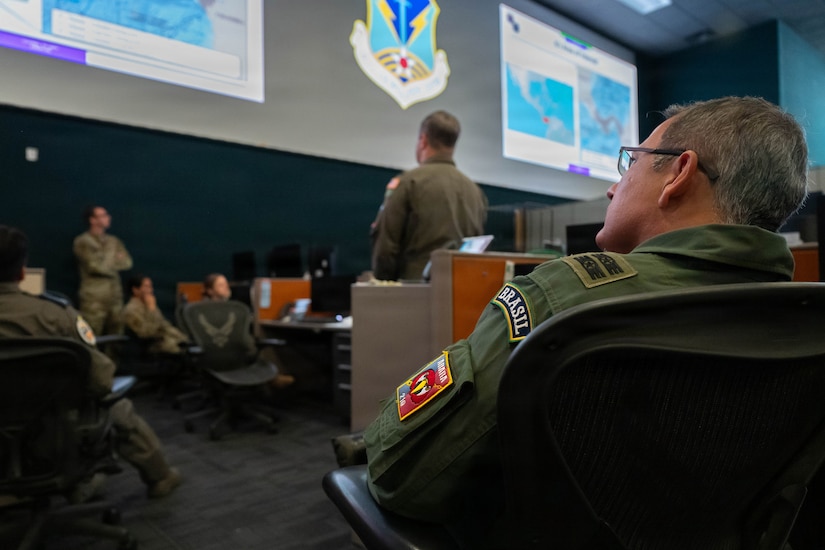
A shoulder view of a man in a military uniform sitting in an auditorium and looking up at a screen. His sleeve has various patches; one says, “Brasil.”
"Panamax is more than a multinational exercise; it is an opportunity to bring together talented professionals from across the hemisphere, learn from one another and strengthen the partnerships that underpin regional security," Mineau said. "That cooperation is essential to ensuring we are ready to respond together to future challenges." 

Beyond tactical and operational training, the exercise strengthens the professional networks and institutional relationships that enable long-term cooperation throughout the region. It provides participants the opportunity to exchange best practices, improve communication procedures and develop a shared understanding of multinational planning and execution. 

"Collaborating in a combined air component environment allows us to synchronize our procedures and learn from each other's expertise," Acosta said. "This training ensures that if we are called upon to respond to a real-world contingency, we can operate seamlessly as one united team to preserve regional stability." 

Since its inception, Panamax has evolved into a premier multinational exercise demonstrating the value of enduring partnerships, shared commitment and collective readiness. Each iteration builds upon previous exercises, strengthening interoperability and ensuring participating nations remain prepared to operate together in support of regional security and stability. 

"It is an honor to welcome our partners to Panamax and train together in support of a mission that matters to the hemisphere," Mineau said. "By rehearsing how we integrate, communicate and operate as one team, we improve our collective ability to protect the Panama Canal, strengthen deterrence and meet the shared security responsibilities we all carry." 

Tuesday, August 04, 2026

Largest Pacific Joint Maritime Exercise Successfully Concludes

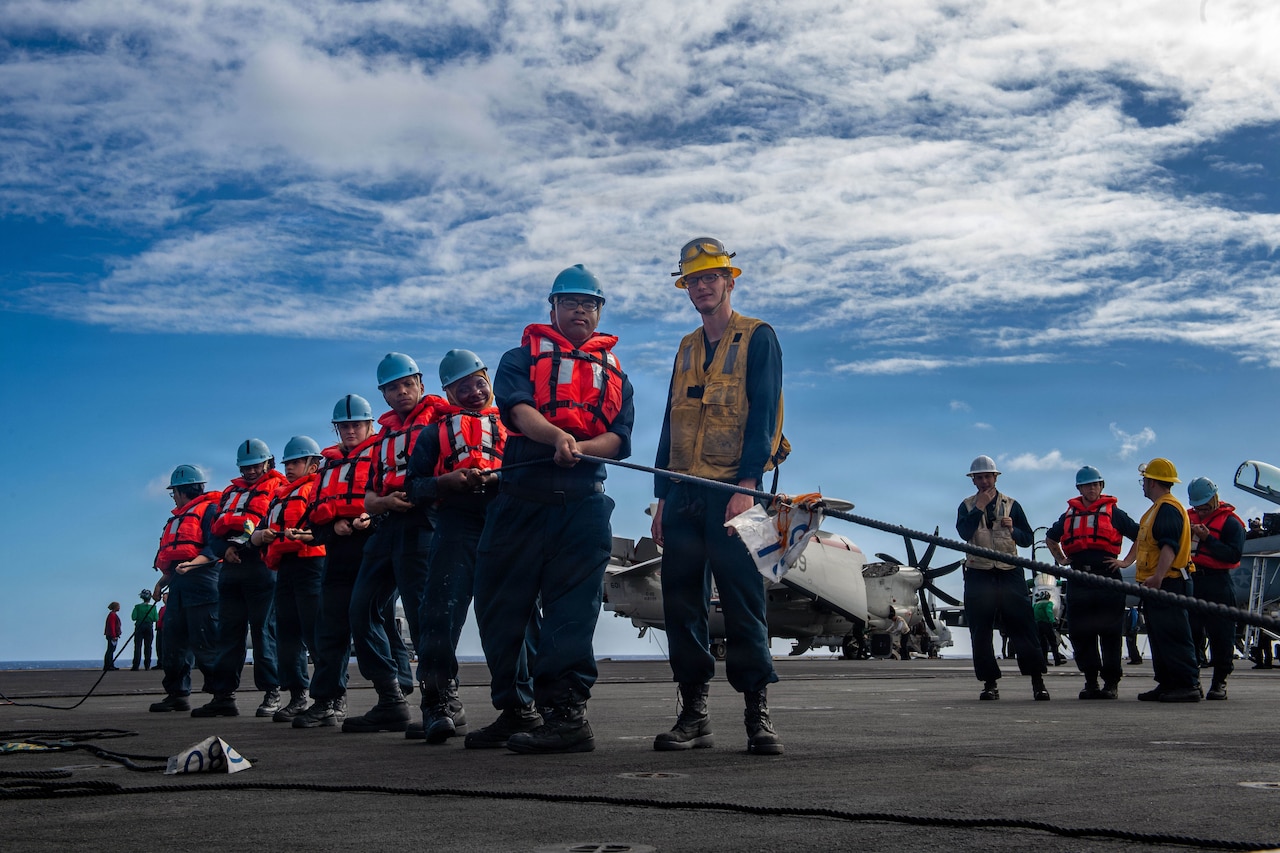
A line of people wearing safety vests and hard hats stand in a line and tug on a cable while on the deck of a ship.

The Exercise Rim of the Pacific 2026, the world's largest combined and joint maritime exercise, successfully concluded July 31. 

The 30th iteration of the biennial exercise began June 24, bringing together 30 nations, more than 30,000 personnel, 30 surface ships, five submarines and more than 197 aircraft under the theme "Partners: Integrated and Prepared."  

Throughout five weeks of realistic training, participating forces enhanced interoperability, strengthened readiness and reinforced the partnerships that support maritime security across the Pacific region. 

"No single nation can ensure security in the Pacific alone," said Navy Vice Adm. Jeff Jablon, commander of the Rimpac 2026 task force. "The global maritime environment is too large and too complex for any one country to safeguard by itself. Rimpac gives us the chance to build the trust and relationships that make us stronger long before any crisis happens." 

Rimpac 2026 was hosted by Commander, U.S. Pacific Fleet and spearheaded by U.S. 3rd Fleet. Multinational leaders were integrated throughout the exercise, with Japan Maritime Self-Defense Force Rear Adm. Takuo Kobayashi serving as vice commander of the task force and Chilean navy Commodore Andres Howard serving as task force deputy commander. Rear Adm. In-ho Kim from the South Korean navy served as commander of the combined force maritime component, and Royal Canadian Air Force Brig. Gen. J.S. Davis served as commander of the combined force air component.

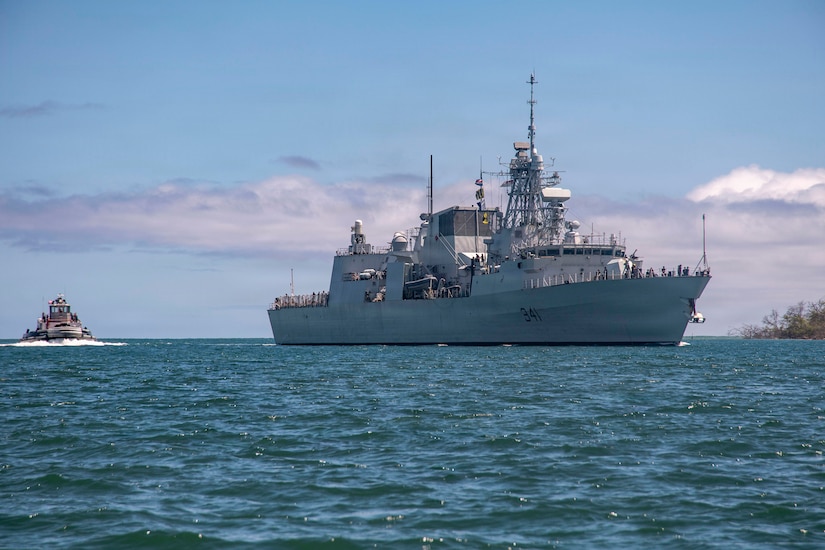
A large ship sails through water with a smaller boat behind it.

The exercise also coincided with the U.S. Navy's 250th anniversary, underscoring the enduring partnerships that continue to strengthen security across the Pacific. For 250 years, the Navy has worked alongside allies and partners to promote maritime security by building relationships founded on trust, cooperation, and shared values. Rimpac puts those principles into practice by providing a venue where participating forces train together, improve interoperability and strengthen the relationships that enable combined and joint operations.

"The network of allies and partners in the region is an asymmetric advantage," Jablon said. "The work participating nations do at Rimpac builds the combined and joint ability to deter conflict and supports all nations in exercising their sovereign rights and freedoms in the maritime domain." 

The exercise was conducted in three phases. During the in-port phase, participants established multinational command relationships, planned operations and strengthened partnerships through professional exchanges, cultural events and sporting competitions. During the at-sea phase, participating forces executed complex combined and joint training, including anti-submarine warfare, maritime strikes, integrated air and missile defense, amphibious operations and logistics. The exercise concluded with a free-play scenario in which opposing forces reacted dynamically to one another to evaluate the force's combined and joint maritime capabilities. 

Throughout the exercise, participating forces executed more than 500 maritime training events, flew more than 2,400 sorties and responded to more than 5,000 scenario-based operational problems.

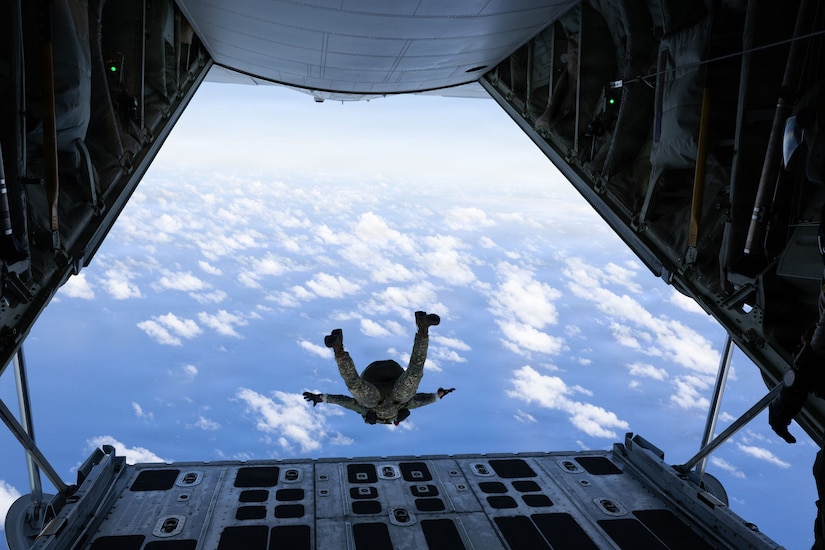
A person in a camouflage military uniform jumps from the back of an aircraft into a blue sky with clouds.

"Interoperability is something we must continue to develop," Kobayashi said. "Rimpac brings together allies and partners committed to strengthening security and stability across the region. The daily conversations, shared experiences and personal relationships developed throughout the exercise strengthen our ability to respond together, whether supporting maritime security or assisting communities following a disaster." 

Training alongside allies and partners in a realistic, multinational environment allows participating nations to improve their ability to operate in combined maritime operations, Kim said.  

"By training together in these complex scenarios, nations improve readiness, refine warfighting skills and build the teamwork needed to operate effectively side by side," he added.

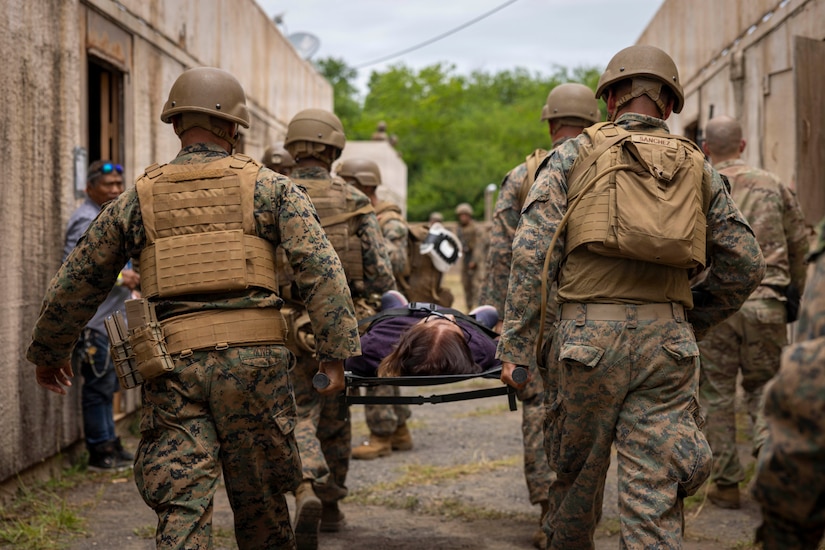
Four people in camouflage military uniforms and combat gear carry a litter with a

Rimpac 2026 demonstrated that maritime security is strengthened through trust, cooperation and shared values. By training together in a realistic operational environment, participating nations improved their ability to operate as a combined and joint force across the full spectrum of maritime operations.

Monday, June 22, 2026

Allies Come Together in the Indo-Pacific for Exercise Valiant Shield 26

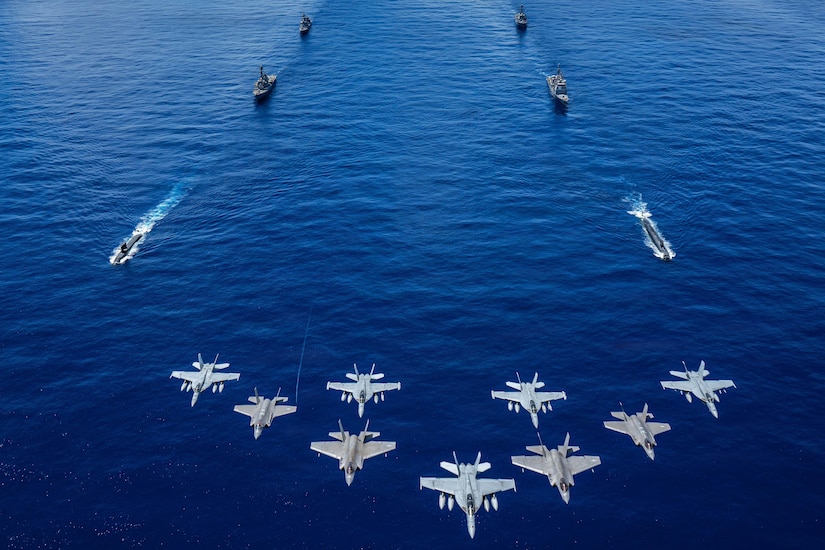
Nine military fighter jets fly in formation while two submarines and four large military ships sail in two rows in the ocean.

U.S. Pacific Command joint forces, along with allied and partner forces, kicked off Exercise Valiant Shield 2026 today in the Indo-Pacific region. 

The training exercise will run until July 1 and take place in the Northern Mariana Islands, Guam, Japan and at sea around the Mariana Islands Range Complex. 

Valiant Shield 26 is a multinational, biennial field training exercise focused on integrating interoperability training in a multidomain environment. This training builds real-world proficiency in sustaining joint forces through detecting, locating, tracking and engaging units at sea, in the air, in space, on land and in cyberspace. 

Exercises such as VS26 enable all U.S. forces and allies across the Indo-Pacific region to integrate and train in precise, lethal and overwhelming scenarios that demonstrate the strength and versatility of the joint and combined force.  

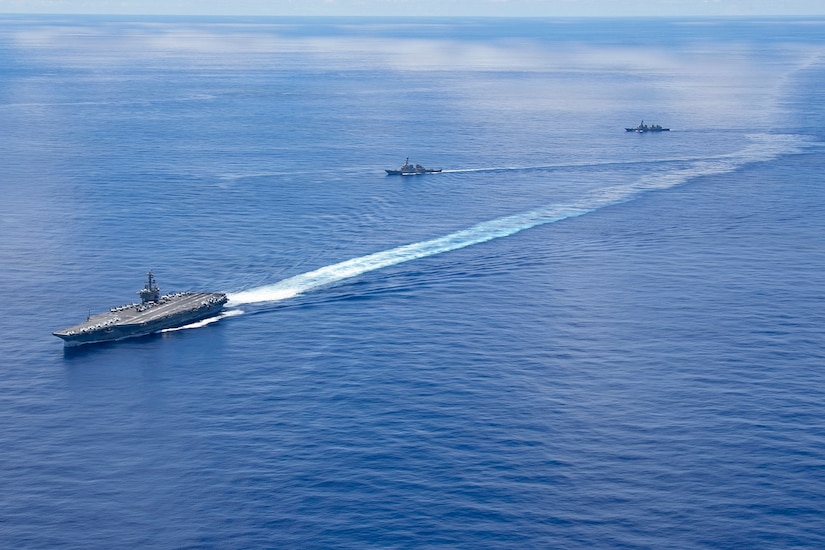
Three large military ships sail in the ocean.

With the involvement of U.S. Space Command and U.S. Transportation Command, VS26 is expanding the multidomain, cross-combatant command collaboration required for any large-scale exercise or operation. The exercise prepares the joint and combined force to rapidly respond to crises and contingencies across the spectrum of operations — from humanitarian assistance and disaster response to armed conflict. 

"Valiant Shield demonstrates our enduring commitment to a free and open Indo-Pacific," said Navy Adm. Steve Koehler, commander of U.S. Pacific Fleet. "Exercising advanced multidomain capabilities with our allies ensures we continue to seamlessly innovate and operate together, project combat power together and prevail over any challenge — together." 

The exercise assists U.S., allied and partner forces in developing regional and global power projection capabilities. Integrated training provides a full range of options to succeed in the defense of U.S. interests and those of like-minded nations around the world. 

This year marks the 11th iteration of Exercise Valiant Shield, which began in 2006. It is also the second time the Japan Self-Defense Forces has been heavily integrated in the planning and execution.   

Since 2024, Valiant Shield has become a multilateral joint field training exercise, further integrating allies and partners into the multidomain environment. While it started as a unilateral U.S. exercise, it has evolved to meet the demands of the security environment, incorporating new technologies and strategies.

Wednesday, July 19, 2023

The Republic of Vietnam Campaign Medal: Recognizing Service in the Vietnam War

The Republic of Vietnam Campaign Medal holds significant historical importance as a symbol of recognition for the men and women who served in the Vietnam War. Awarded by the Republic of Vietnam (South Vietnam) government, this medal commemorates the dedication, sacrifice, and valor displayed by those who fought alongside South Vietnamese forces in their struggle against communist aggression.

Origins and Purpose:

The Republic of Vietnam Campaign Medal was established on May 12, 1964, by the South Vietnamese government to honor military personnel and civilians who participated in the defense of South Vietnam. It recognized individuals who served for at least six months in the country or who were engaged in direct combat with enemy forces. The medal aimed to highlight the contributions made by allied forces and the shared commitment to protecting the freedom and sovereignty of South Vietnam.

Design and Symbolism:

The design of the Republic of Vietnam Campaign Medal reflects the cultural heritage and symbolism of South Vietnam. The medal features a central image of a stylized dragon surrounded by a laurel wreath. The dragon, a revered creature in Vietnamese folklore, represents power, strength, and protection. The laurel wreath symbolizes honor and victory. The reverse side of the medal displays an inscription in Vietnamese, which translates to "Republic of Vietnam Armed Forces."

Eligibility and Criteria:

To be eligible for the Republic of Vietnam Campaign Medal, individuals had to meet specific criteria set by the South Vietnamese government. This included serving in the Republic of Vietnam Armed Forces, the U.S. military, or other allied forces during the designated period of the war. The eligibility criteria also extended to individuals who provided direct support to the South Vietnamese government or participated in operations against enemy forces.

Recognition and Legacy:

The Republic of Vietnam Campaign Medal served as a tangible recognition of the bravery and sacrifice of those who fought in the Vietnam War. It acknowledged the contributions made by allied forces in supporting the defense of South Vietnam against the communist threat. The medal became a cherished memento for veterans, serving as a reminder of their commitment to the cause and their comrades who fought side by side.

Controversy and Debate:

It is important to note that the awarding of the Republic of Vietnam Campaign Medal has generated controversy and differing opinions. The medal was awarded by the South Vietnamese government, which ceased to exist after the fall of Saigon in 1975. As a result, the medal does not have official recognition or authorization from the United States government. Some veterans and organizations do not consider it an official U.S. military decoration. However, it remains a significant symbol of service and sacrifice for those who received it.

Honoring Vietnam War Veterans:

Regardless of the debate surrounding its official status, the Republic of Vietnam Campaign Medal continues to hold personal significance for Vietnam War veterans. It serves as a tangible reminder of their contributions, bravery, and the difficult conditions they endured during the conflict. As we reflect on the Vietnam War, it is essential to honor and recognize the service of these veterans, ensuring their sacrifices are acknowledged and remembered.

In conclusion, the Republic of Vietnam Campaign Medal represents the valor and commitment of those who served in the Vietnam War. While its official status may be a subject of debate, its personal significance for veterans cannot be diminished. This medal serves as a lasting testament to the shared sacrifices made by allied forces and the common purpose of defending South Vietnam's freedom and sovereignty. Let us remember and honor the service of Vietnam War veterans, recognizing their courage and dedication to duty.


Tuesday, July 18, 2023

The Atlantic War Zone Medal: Recognizing Service and Sacrifice in a Critical Theater of World War II

During World War II, the Atlantic War Zone played a pivotal role in the conflict, serving as a critical theater for naval operations and ensuring the security of vital supply lines. To honor the service and sacrifice of the men and women who served in this demanding and perilous environment, the Atlantic War Zone Medal was established by the United States government. This prestigious award commemorates the bravery and dedication of those who braved the treacherous waters of the Atlantic Ocean to safeguard freedom and uphold democracy.

Origins and Purpose

The Atlantic War Zone Medal was created on May 2, 1945, by an act of Congress, to honor the service of merchant mariners, Navy personnel, and Coast Guard members who contributed to the war effort in the Atlantic theater between December 7, 1941, and November 8, 1945. The Atlantic War Zone was a vast expanse of ocean covering the North Atlantic and South Atlantic regions, stretching from the east coast of the United States to the western coast of Africa and encompassing the perilous waters patrolled by U-boats and hunted by Allied forces.

Eligibility and Criteria

To be eligible for the Atlantic War Zone Medal, individuals had to serve at least 30 days on merchant vessels or other qualifying ships within the designated war zone. Additionally, service on land in specific Atlantic island bases such as Iceland, Greenland, or Bermuda also qualified for the medal. The medal was awarded to both military personnel and civilian merchant mariners who faced the constant threat of enemy submarines and treacherous weather conditions during the Battle of the Atlantic.

Design and Symbolism

The Atlantic War Zone Medal features a blue ribbon with two white stripes near the edges, representing the vastness of the Atlantic Ocean and the waves that lapped its shores. The medal itself displays a blue circular center with a gold-colored anchor and chain symbolizing naval service. Encircling the center is the inscription "ATLANTIC WAR ZONE," a poignant reminder of the dangerous waters where these brave men and women carried out their duties.

Significance and Legacy

The Atlantic War Zone Medal holds significant historical importance as a tangible symbol of the sacrifice and contributions made by those who served in the Atlantic theater during World War II. The Battle of the Atlantic was a grueling and crucial campaign, as Allied forces sought to protect the vital sea lanes and supply lines from German U-boats and secure the flow of troops, equipment, and supplies to Europe. The medal serves as a testament to the determination and courage of those who faced constant danger and adversity to safeguard democracy and liberty.

Honoring the Veterans

As time passes, the number of living veterans who served in the Atlantic War Zone diminishes, making it even more critical to remember and honor their service and sacrifice. The Atlantic War Zone Medal remains a cherished memento for the families and descendants of those who served during this challenging period in history. It serves as a reminder of the tremendous price paid by those who navigated the perilous waters of the Atlantic Ocean to secure victory for the Allied forces and uphold the principles of freedom and democracy.

In conclusion, the Atlantic War Zone Medal stands as a symbol of valor and selflessness for all those who served in the Atlantic theater during World War II. This prestigious award pays homage to their dedication, bravery, and sacrifice as they confronted the harsh and unforgiving waters of the Atlantic Ocean in the name of freedom and justice. As we reflect on history, let us ensure that the legacy of the Atlantic War Zone veterans lives on, reminding us of the courage and commitment that prevailed during one of the most critical chapters in human history.