Showing posts with label panama canal. Show all posts

Friday, August 07, 2026

Multinational Partners Strengthen Regional Readiness During Exercise Panamax 2026

Airmen assigned to 12th Air Force, Air Forces Southern, joined approximately 40 military personnel from across the Americas during Panamax 2026, a U.S. Southern Command-sponsored multinational exercise focused on an integrated approach against simulated threats to the Panama Canal and the region. 

The exercise continues until Aug. 14 and provides participating forces from 19 nations with an opportunity to conduct combined security and stability operations, enhance interoperability, and strengthen their collective capability to support Panama in defending the canal and preserving regional security. 

Approximately 40 military personnel from Ecuador, Peru, Colombia, the Dominican Republic, Argentina, Brazil, Paraguay, Honduras, Guatemala and El Salvador are working together to synchronize multinational air component planning, command and control, and decision-making in response to simulated threats to the Panama Canal and regional security. 
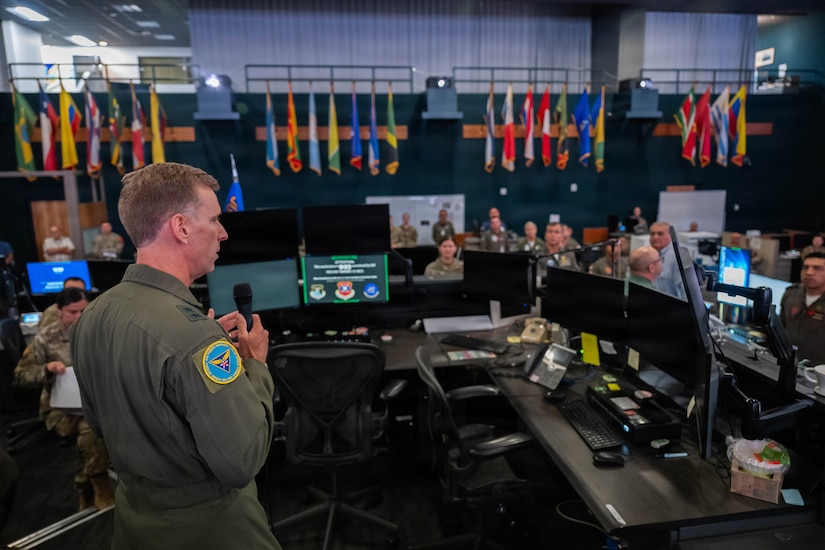
A man in a military uniform stands in a large room and speaks into a microphone; people in similar attire sit in front of him with more than a dozen various flags behind them.

Air Forces Southern led the combined air component in one of the Western Hemisphere's premier multinational exercises at Davis-Monthan Air Force Base, Arizona. 

"We are proud to host Panamax here at Davis-Monthan and to work alongside our partner nations as we train to protect one of the most strategically important waterways in the world," said Air Force Maj. Gen. David Mineau, 12th Air Force commander. "This exercise helps us sharpen the coordination, trust and readiness needed to support Panama in the defense of the canal and preserve regional security." 

The biennial exercise reinforces the enduring commitment of the United States and partner nations to regional security through cooperation, transparency and shared responsibility. By training together before a crisis occurs, participating nations build the trust, professional relationships and interoperability that enable faster, more effective responses when real-world events demand coordinated action. 

"This opportunity was the first time Ecuador brought air force intelligence personnel, and the immense value of this training for our force and our partners is already clear," said Ecuadorian air force Lt. Col. Andres Acosta, an operations, intelligence and analysis officer. "Exchanging operational perspectives and discussing air doctrine face-to-face builds the mutual trust and understanding essential for our shared security." 

The exercise scenario is designed to challenge participants in a realistic multinational environment while strengthening each nation's ability to operate alongside allies and partners during a coalition response to a notional contingency. 

For Air Forces Southern, Panamax supports the command's commitment to strengthening partnerships across the Western Hemisphere by improving readiness, reinforcing integrated deterrence and enhancing the collective ability of allied and partner air forces to respond to evolving regional security challenges.
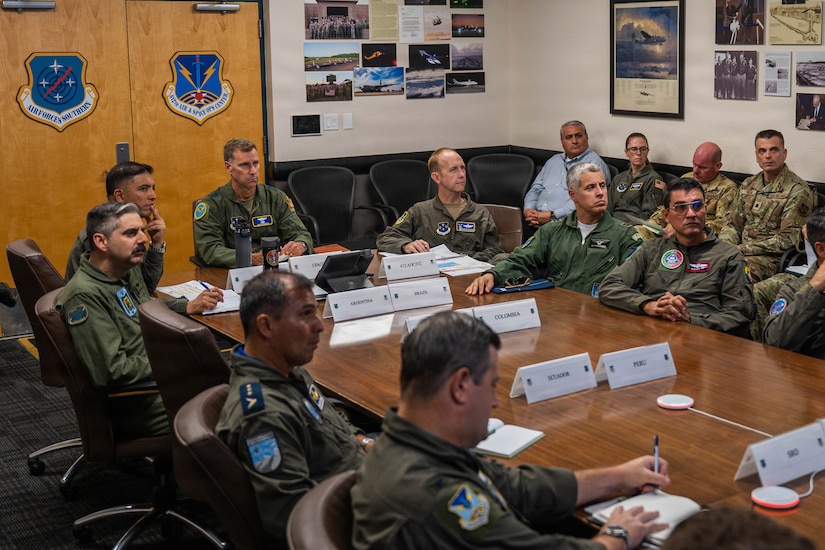
Nearly a dozen men in military uniforms from various countries sit around a wooden table and look at an out-of-frame monitor; people in similar attire are sitting behind them.
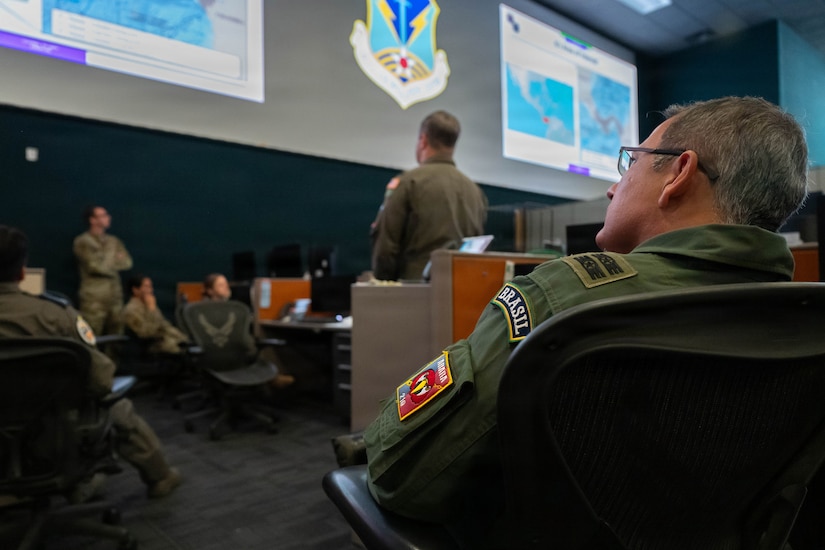
A shoulder view of a man in a military uniform sitting in an auditorium and looking up at a screen. His sleeve has various patches; one says, “Brasil.”
"Panamax is more than a multinational exercise; it is an opportunity to bring together talented professionals from across the hemisphere, learn from one another and strengthen the partnerships that underpin regional security," Mineau said. "That cooperation is essential to ensuring we are ready to respond together to future challenges." 

Beyond tactical and operational training, the exercise strengthens the professional networks and institutional relationships that enable long-term cooperation throughout the region. It provides participants the opportunity to exchange best practices, improve communication procedures and develop a shared understanding of multinational planning and execution. 

"Collaborating in a combined air component environment allows us to synchronize our procedures and learn from each other's expertise," Acosta said. "This training ensures that if we are called upon to respond to a real-world contingency, we can operate seamlessly as one united team to preserve regional stability." 

Since its inception, Panamax has evolved into a premier multinational exercise demonstrating the value of enduring partnerships, shared commitment and collective readiness. Each iteration builds upon previous exercises, strengthening interoperability and ensuring participating nations remain prepared to operate together in support of regional security and stability. 

"It is an honor to welcome our partners to Panamax and train together in support of a mission that matters to the hemisphere," Mineau said. "By rehearsing how we integrate, communicate and operate as one team, we improve our collective ability to protect the Panama Canal, strengthen deterrence and meet the shared security responsibilities we all carry." 

Wednesday, August 05, 2026

Coast Guard Participates in Panama Canal Counter-Threat Exercise

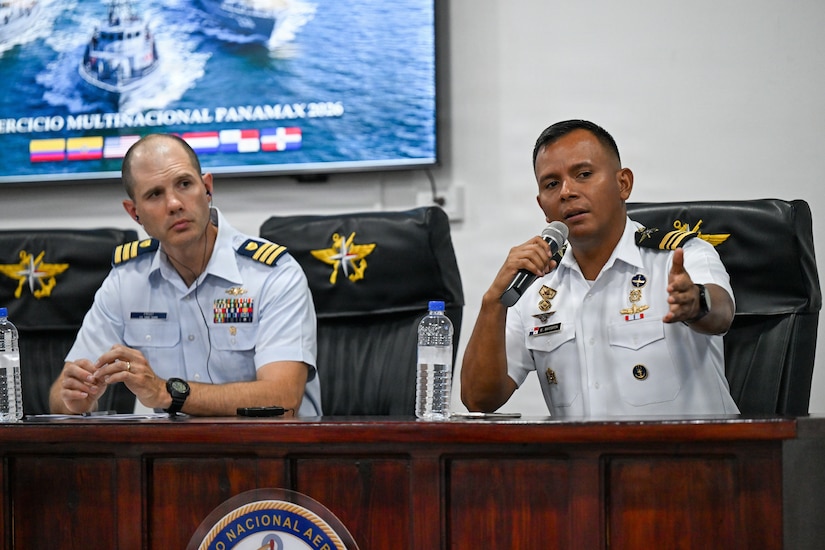
A man in a formal military uniform sits at a table and speaks into a microphone next to a man in similar attire.

Panama's National Aeronaval Service welcomed key leaders from Mexico, Ecuador, Colombia and the United States during the pre-sail conference for Exercise Panamax 2026, Aug. 3.

The biennial exercise is one of the largest military exercises in the Western Hemisphere. This year's iteration will continue until Aug. 13 and includes six maritime vessels operating in the Eastern Pacific region as part of the Pacific Task Force: the U.S. Coast Guard cutter Robert Ward, the Panamanian coastal patrol boat Panquiaco and coastal patrol boat Taboga, the Colombian navy coastal patrol vessel Isla Gorgona, the Ecuadorian navy missile corvette Bae Loja and the Mexican navy offshore patrol vessel Arm Jalisco.

"Major prerequisites to achieving this objective include practicing our ability to transit offshore in company, to communicate effectively to each other and shore command, and to perform complex missions in an integrated manner," said Coast Guard Cmdr. Patrick Frost, Coast Guard Southwest District deputy chief of enforcement.

Frost, who is serving as the Pacific Task Force commander, said Panamax 2026 includes 19 countries and is critical because it allows the partner nations to practice functions necessary to protect the canal.

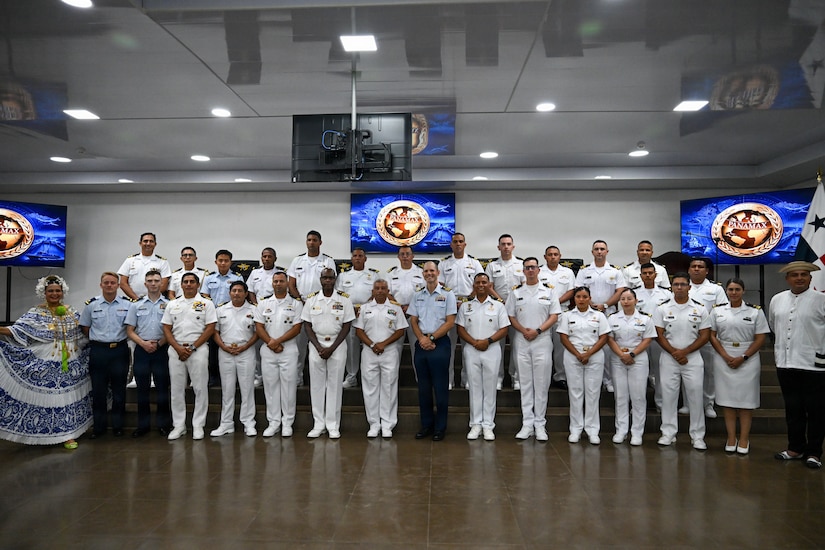
More than a dozen people in various formal military uniforms pose for a group photo in a conference room with monitors on the wall behind them.

To facilitate this proficiency, exercise participants will conduct various training scenarios designed to unite the coalition as they exercise joint communications, maneuvers and tactics.

During the pre-sail conference, Panamanian maritime officials welcomed the command teams of the four visiting ships.

"Today, in this 2026 edition of Panamax, we confirm our commitment to a broader and even more adapted vision of the threats that we have in the 21st century," said Panamanian Lt. Cmdr. Eduardo Batista, acting commander of Panama's National Aeronaval Service's naval command. "This exercise constitutes an opportunity, with great value, to strengthen the interoperability of our forces, to improve our operational procedures and to elevate our capacity to respond in the face of transnational threats and cyberspace challenges."

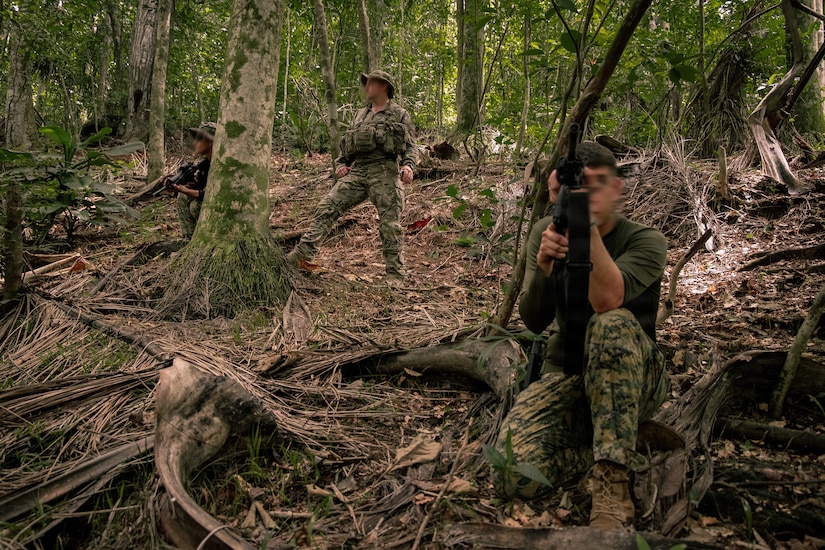
Three men in camouflage military uniforms and holding weapons stand and crouch in a wooded area facing opposite directions.
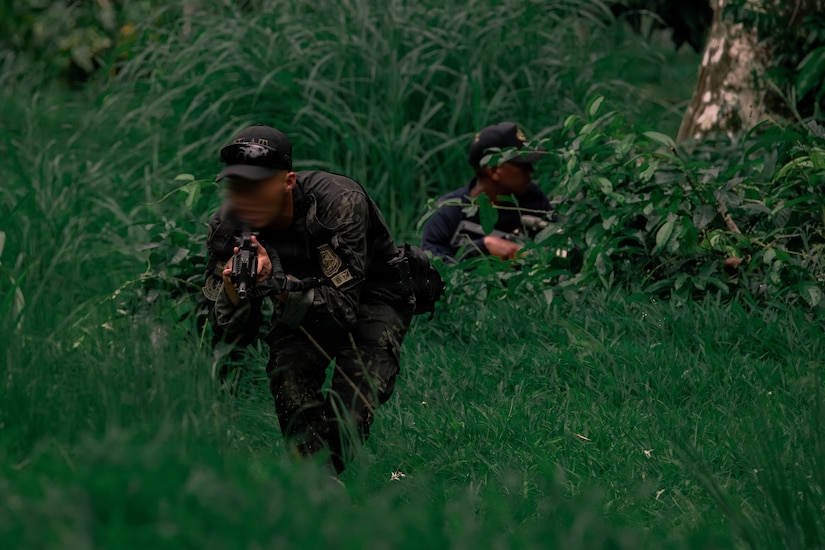
Two people in camouflage military uniforms and holding weapons crouch in a field with tall grass.
Frost highlighted the importance of the regional partners, as they are allies in the fight against cartels across the Western Hemisphere.

"These partner nations are clearly demonstrating a rock-solid commitment to this multinational concept, and the collaboration between the various country representatives is significant," he said.

Panamax began with three countries in 2003 to improve interoperability and strengthen collective capacity to conduct complex multinational and all-domain operations to ensure the free flow of commerce through the Panama Canal and maintain security and stability in the region.

Tuesday, August 04, 2026

Marine Expeditionary Unit Transits Panama Canal

The 24th Marine Expeditionary Unit — operating as Littoral Combat Force 24 — transited the Panama Canal, Aug. 1, aboard the amphibious transport dock USS San Antonio.

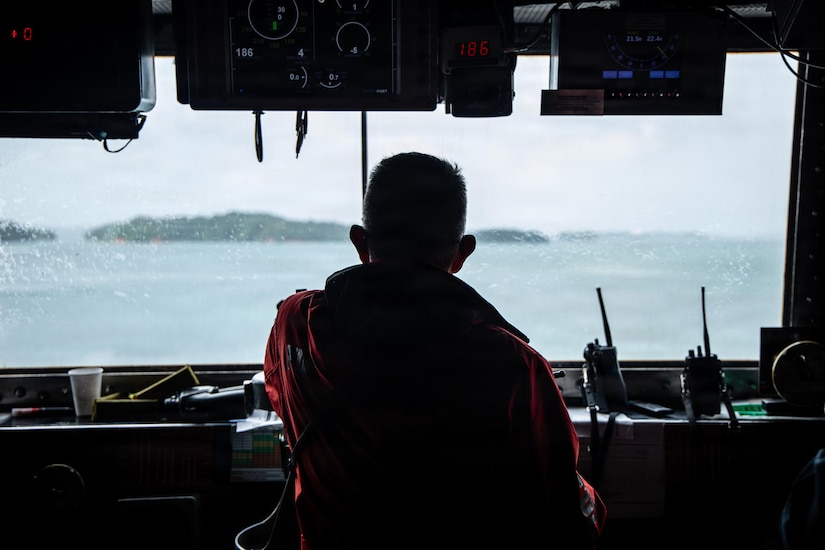
A man in a red jacket looks out a window in the dark bridge of a ship or building.

Marking the first time a Marine expeditionary unit has navigated the canal since 2008, this large-scale maneuver is a demonstration of the Marine Corps' capacity for rapid global mobility, maritime dominance and seamless power projection.

"This historic transit is a powerful testament to the flexibility and readiness of Littoral Combat Force 24," said Marine Corps Col. Ryan Lynch, LCF 24 commanding officer. "Our ability to seamlessly navigate this critical waterway alongside our Navy partners, aboard the USS San Antonio, demonstrates our capability to rapidly project power and respond to crises anywhere in the [U.S.] Southern Command area of responsibility. We are ready to operate straight from the sea, at a moment's notice."

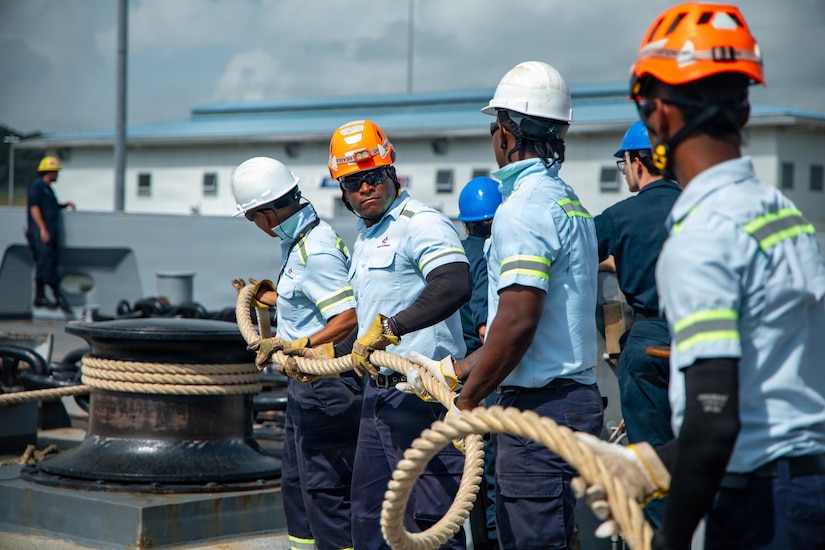
Four men in uniforms and hard hats secure a rope to a dock fitting.

The transit serves as a validation of the littoral combat force concept and the modern Marine air-ground task force. It proves the unit's ability to navigate narrow waterways and project assets ashore without relying on established military basing, underscoring the Marine Corps' enduring role as the nation's premier readiness force, perfectly calibrated for contested littoral regions.

The foundation of this capability is the unbreakable teamwork between the Navy and the Marine Corps. The interoperability displayed highlights a fully integrated naval force supporting combatant commander objectives.

Since its completion, the Panama Canal has served as a vital strategic pathway for the U.S. and its allies. The canal allows naval vessels to rapidly shift between the Atlantic and Pacific theaters, saving weeks of travel around South America.

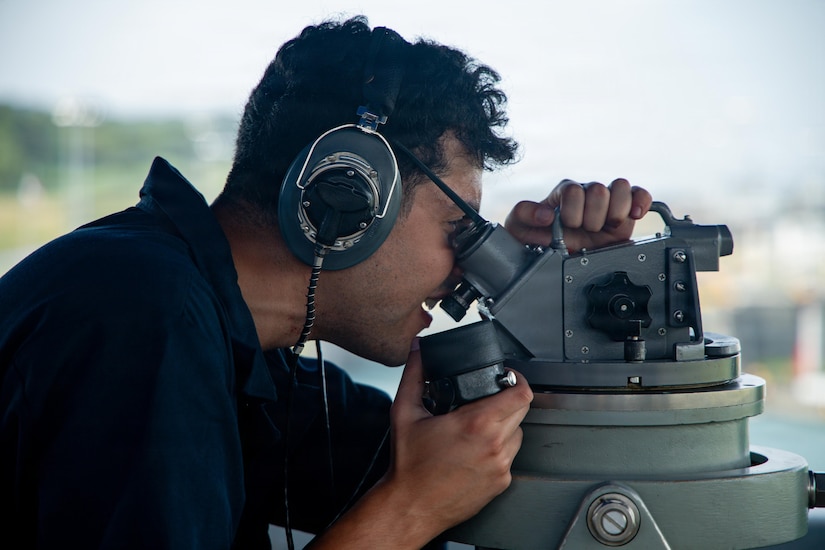
A man in a military uniform checks navigational equipment on a ship.
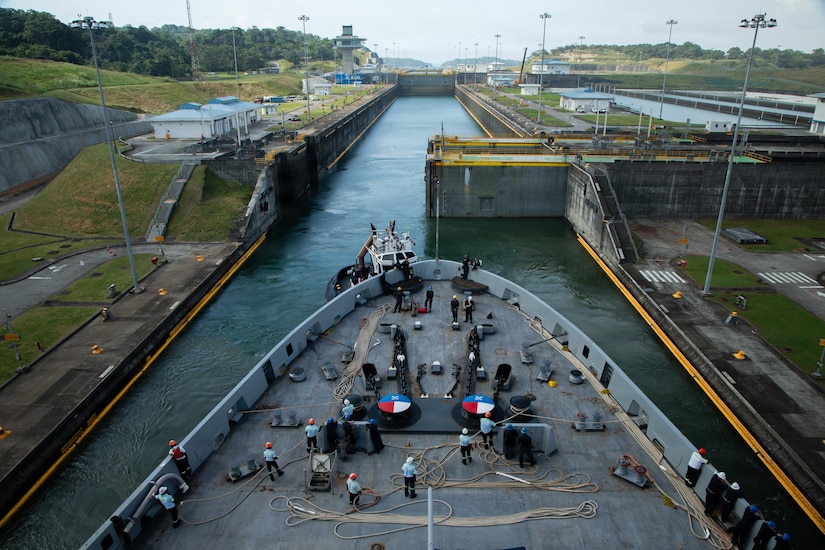
An overhead view of the bow of a large military ship as it transits a canal; there are several people in military uniforms and hard hats working on the deck of the ship.
Navigating this critical maritime shortcut ensures the U.S. military can maintain a flexible, responsive posture — surging ships and troops to meet emerging crises across hemispheres without delay.

By moving fluidly through the canal, the team proved its unrestricted access to the U.S. Southern Command area of responsibility, which spans Central and South America, and the Caribbean. Whether tasked with humanitarian disaster relief, bolstering regional partnerships or deterring aggression, this force can reach anywhere in the region to deliver tailored, decisive effects.

Wednesday, June 20, 2012

Southcom Exercise Program Promotes Stability, Security


By Donna Miles
American Forces Press Service

MIAMI, June 20, 2012 – Several military exercises that just wrapped up or are under way exemplify U.S. Southern Command’s robust exercise program, one that officials consider integral to regional stability and U.S. national security.

Exercise Tradewinds 2012, which kicked off in Barbados June 15 and continues through the upcoming weekend, is focused on what Air Force Gen. Douglas M. Fraser, the Southcom commander, calls the most pressing regional challenge: transnational organized crime.

U.S. Marine Forces South is leading the exercise, which has brought together defense and law enforcement from the United States, Canada and 15 Caribbean countries for the 28th year to enhance their ability to work together against a common threat.

Speaking during opening ceremonies in Bridgetown, Barbados, Marine Corps Col. Michael Ramos, MARFOR-South chief of staff, emphasized the benefit of Exercise Tradewinds to participating nations. “We recognize the value of working together to confront these common security challenges,” he said. “We are truly united through our collaboration and collective efforts to fight terrorism, illicit trafficking and transnational criminality in all forms and in being prepared to effectively respond to natural disasters.”

Another exercise that concluded last week in Colombia, Fuerzas Comando 2012, brought together special operators from 21 regional countries for a grueling counterterrorism and special operations skills competition. That event, sponsored by U.S. Special Operations Command South, was designed to promote military-to-military relationships, increase interoperability and improve regional security.

“This is the one forum that we have annually where we can come together as a region and talk about ideas, [about how to] increase our effect, collectively, against these dangerous non-state-actor threats we face,” Navy Rear Adm. Thomas L. Brown II, commander of Special Operations Command South, told American Forces Press Service.

These are just two examples of a broad Southcom exercise program that last year alone included hundreds of training and educational events, 12 major multinational exercises with regional partners and 56 medical readiness training exercises in 13 countries, according to Army Maj. Gen. Gerald W. Ketchum, the command’s director of theater engagement.

“You don’t want to show up on game day for the big game, when you have never practiced together,” Ketchum told American Forces Press Service at the Southcom headquarters here. “And that is really what the exercise program is all about.”

Toward that end, the exercise program centers on four basic pillars: security and illegal migration and illicit trafficking, peacekeeping, counterterrorism, and humanitarian assistance and disaster relief.

The annual Peacekeeping Operations-Americas exercise that wrapped up last month brought together the United States and 15 partner nations to train in skills needed to serve as peacekeepers in Central and South America and the Caribbean.

U.S. Army South sponsored the four-phase exercise, conducted over the course of three months in Chile and the Dominican Republic in support of the State Department’s Global Peace Operations Initiative.

U.S. Ambassador to Chile Alejandro Daniel Wolff emphasized the importance of building the skills and interoperability needed for militaries to conduct vital peacekeeping roles. “Exercises like this offer the opportunity to learn from each other and to become more capable in our tasks to create a safer future for everybody,” Wolff said during the May 11 closing ceremony in Santiago.

Other Southcom exercises focus primarily on humanitarian assistance. These efforts, Ketchum explained, give military members an opportunity to use their skills while leaving behind tangible improvements in host nations. Sometimes it’s a new or renovated school, a newly dug well or new building to serve as an emergency operations center in the event of a natural disaster. Other exercises provide training for host-national medical staffs or desperately needed care in local communities.

For example, Army engineers and medical professionals currently deployed to Honduras and Guatemala for Beyond the Horizon 2012 are providing medical, dental and engineering support. Participants in another joint humanitarian exercise, New Horizons 2012, are providing training, free medical care and critical infrastructure in poor areas of Peru.

Officials said the efforts help address critical needs while showing U.S. support and commitment to the region. For many of the participants, the reward is getting to make a visible difference in others’ lives.

"My favorite part of this exercise is seeing the work getting done," said Army 1st Lt. Johnny Robey, commander of the Missouri National Guard’s 1140th Engineer Battalion, supporting Beyond the Horizon 2012 in Honduras. "I enjoy going to the sites and seeing the immediate impact of what we're here to do.”

Among Southcom’s array of multinational security exercises, PANAMAX remains the largest. The annual exercise focuses on supporting the Panamanian government in defense of the strategic Panama Canal.
Eighteen nations participated in last year’s exercise, working to improve the interoperability of their military and civil forces to guarantee safe passage through the canal and ensure its neutrality.

“This is a theme that is embraced by virtually everyone in the region: free and open access to the canal and flow of goods through the Panama Canal,” Ketchum said. “Everyone recognizes that it is clearly something of great value to the entire hemisphere to ensure that.”

Ketchum cited the growing success of the exercise as partners in the region step up to assume major leadership roles. Colombia took on the land component commander role last year, and will retain it during this year’s PANAMAX, in August. “They have embraced this role, and done a wonderful job,” Ketchum said. “Ultimately, that’s good for all of us, because we need interoperability and we need to be able to communicate with each other.”

Meanwhile, Brazil is preparing to assume leadership of the maritime component role during the upcoming PANAMAX, Fraser told Congress earlier this year. Fraser called the move “an important step in strengthening the expanding partnerships in the hemisphere.”

With expansion efforts under way at the Panama Canal that will increase the seaborne traffic it handles, close, regional cooperation will be more critical than ever, Fraser told the Senate Armed Service Committee in March. “I don’t see a direct change to the threat or to the concerns as we look into the future, but our PANAMAX exercise will remain critical to that effort,” he said.

Ketchum said the capabilities built and relationships strengthened through the exercise program have a direct impact on regional stability and U.S. national security.

“We truly believe that it takes an international approach to address the challenges we face in the region, and that these engagements are supporting that effort, he said. “We want to be the security partner of choice, and we look forward to continuing to work with our partner nations in the region.”

(Army Sgt. Sarah E. Lupescu, from the Missouri National Guard; Army Sgt. Alysia Jarmon, from the 65th Public Affairs Operations Center; and Robert Ramon from U.S. Army South contributed to this article.)

Monday, April 23, 2012

This Day in Naval History - April 23


From the Navy News Service

1918 - USS Stewart (DD 13) destroys German submarine off France.
1934 - In the first Navy movement through the Panama Canal, more than 100 ships transited.
1945 - In only U.S. use of guided missiles in World War II, two BAT missiles release at Balikpapan, Borneo.
1956 - Project Vanguard, earth satellite launching program, assigned to Deputy Chief of Naval Operations (Air).

Wednesday, March 28, 2012

USS San Diego Makes First Panama Canal Transit


PANAMA CANAL (NNS) -- USS San Diego (LPD 22) made its way through the Panama Canal for the first time in her history March 25.

San Diego, the sixth ship in the San Antonio-amphibious class, departed Huntington Ingalls Shipyard in Pascagoula, Miss. March 15 to transit to its future homeport and namesake city. Part of the journey took them through the Canal, opened in 1914. The canal serves as passage between the Atlantic and Pacific oceans and saves ships the 8000 mile journey around South America.

A series of three sets of locks, Gatun, Pedro Miguel, and Miraflores, separated by a fresh water lake, slowly brought San Diego up, through mountains up to 85 feet above sea level, almost eight inches from the Atlantic to the Pacific sea level through the Isthmus of Panama.

Since homeport shifts are rare, most of the fleet stays in their respective oceans. A Panama Canal transit was a first, not only for the ship, but also most of the crew.

"Typically, only when a ship is newly commissioned and moves from east to west coast, that is when canal transits occur," said Cmdr. Kevin Meyers, San Diego commanding officer.

The canal locks are 110 feet wide; San Diego, one of the largest class of U.S. Navy ships able to fit through, is 105 feet wide. With assistance of the diesel electric tractors, called mules in honor of the original method of towing, and careful navigation by the ship's bridge team, the ship made it through just fine on her first, and possible only, trip through the canal.

"One can never say never, but the likelihood of San Diego leaving her home city is slim, and the Navy rarely sends a ship through twice," said Meyers.

San Diego began construction 2007 and delivered to the Navy in December 2011. San Diego will be commissioned in May and will be the first ship named for the city to be homeported there. is the fourth ship named for the city.

Wednesday, August 17, 2011

Panama Canal Defense Exercise Begins

By Terri Moon Cronk
American Forces Press Service

WASHINGTON, Aug. 16, 2011 – One of the world’s largest multinational military exercises gets under way today to test plans to defend the Panama Canal.

Some 3,500 military and civilian personnel from 17 countries are participating in the 12-day exercise dubbed PANAMAX 2011, U.S. Southern Command officials said.

Co-sponsored by Southcom and the Panamanian government, PANAMAX is a joint, combined operation focused on defending one of the world’s most strategic and economically crucial waterways for global trade, officials said.

This year’s exercise focuses on building the interoperability and capacity that would be necessary to defend the canal in the event of a threat, Southcom spokesman Jose Ruiz said.

“We hope the Panama Canal will never have to be defended from a serious threat,” Ruiz said, “but capacity is a very important part of being able to respond to emerging threats.” While the participating countries have an interest in the canal, two-thirds of the canal’s shipping traffic is from the United States, Ruiz noted.

The exercise will develop and test the command and control of forces at sea, involving participants in maritime, air, land, space and cyber operations, he said. Scenarios include open water diving operations, counterdrug interdictions and simulated river operations.

PANAMAX will take place off the coasts of Panama, Texas, Florida and Mississippi through Aug. 26.

The PANAMAX exercise series began in 2003 with the United States, Panama and Chile participating, Ruiz said. Interest in the exercise and in protecting the canal has grown over the years, he added, and participation has expanded to as many as 20 partner countries, he added.

“We worked with our partner nations for many years with the approach that regional security challenges require regional solutions and approaches,” he said.