Showing posts with label homeland defense. Show all posts

Thursday, July 16, 2026

D.C. National Guard Boosts Homeland Defense With First Maritime Security Vessel

The District of Columbia National Guard's 260th Special Purpose Brigade recently commissioned its first maritime security vessel, marking the first time an Army unit in the nation's capital has operated a dedicated waterborne platform.
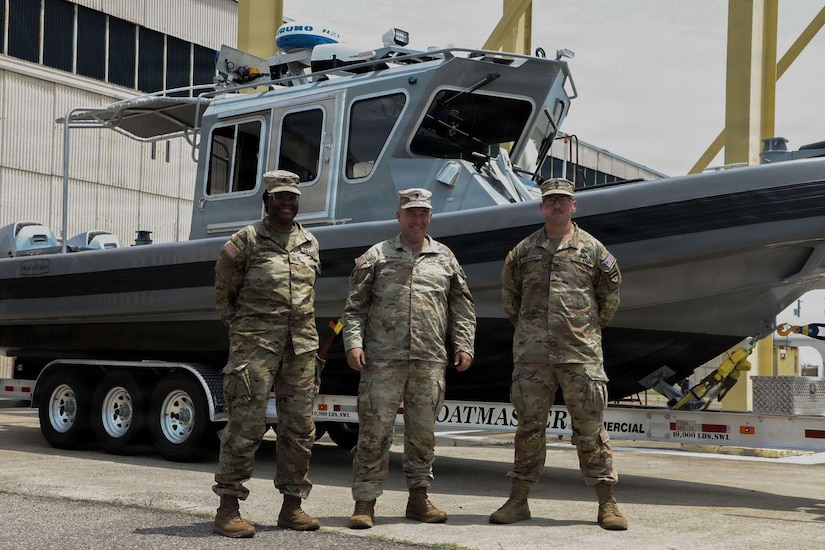
Three people wearing camouflage military uniforms pose for a photo while standing in front of a boat on a trailer.

The new capability strengthens the guard's ability to secure the district's waterways, critical infrastructure and major national events — a mission aligned with the National Defense Strategy's objective of defending the homeland. 

Army Brig. Gen. Leland D. Blanchard II, D.C. National Guard interim commander, said the organization's newest maritime capability reflects its legacy of service and its vision for the future. 

"For 224 years, the District of Columbia National Guard has answered our nation's call by evolving to meet the challenges of every generation," Blanchard said. "This new maritime capability is more than a vessel — it is an investment in the partnerships, readiness and modern capabilities that enable us to better support the local, state and federal agencies that protect our nation's capital every day." 

Created under an executive order, the brigade was designed to enhance coordination between military forces and the district's civilian security agencies.  

Army Col. Larry Doane, brigade commander, said the unit's role is straightforward: "Homeland defense is a team sport. We're the connective tissue between military response and the agencies that secure the capital every day."
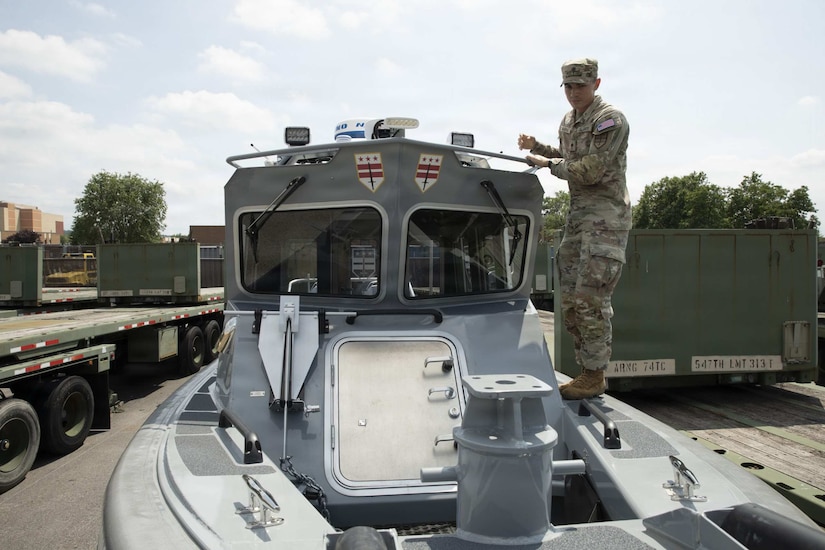
A man wearing a camouflage military uniform walks around the edge of a boat sitting on a trailer.

Washington's security environment is uniquely complex — protected airspace, dense federal infrastructure, overlapping jurisdictions, all within two bodies of water. Brigade soldiers routinely support local and federal law enforcement, fire and emergency services during national special security events.  

We do more national special security events in a year here than most places do in a lifetime, Doane said. 

Bounded by two rivers, the district requires a robust maritime security posture. The brigade's new vessel, sourced through a Navy partnership, will support waterborne operations during events such as the Fourth of July. It primarily serves as an observation and assessment platform enabling civil support teams to conduct hazard detection aboard vessels and expand overwatch alongside local units. 

"We're not replacing law enforcement — we're increasing their capacity," Doane said, emphasizing the guard's supporting role. "When the district needs more eyes, more reach, more resilience, that's where we come in." 

The waterborne vessel complements a broader modernization effort within the brigade's 547th Transportation Company, which now operates a growing fleet of tactical vehicles to maneuver through dense crowds and restricted urban terrain during events.
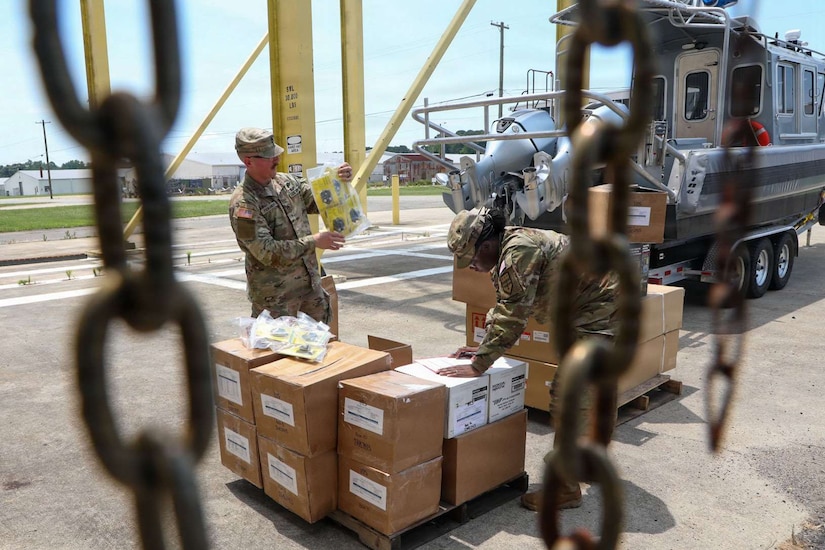
Two people wearing camouflage military uniforms inspect a pallet of packages while standing outside; there is a boat on a trailer in the background.

These assets support local and federal law enforcement armed overwatch, traffic control points, rapid movement across secured zones, medical services and dignitary protection missions — completing the brigade's evolution into a multidomain security force. 

"The 547th has to be not only one of the most effective, but one of the coolest transportation units in the world," Doane said. "Not only does it operate light medium tactical vehicles, and heavy tactical vehicles — but it has a fleet of [off-road tactical] vehicles and now a growing fleet of security vessels to support maritime security." 

The brigade's mission reflects a core principle of the National Defense Strategy: resilience deters adversaries. Doane noted that attackers study soft targets, but in Washington they find none. 

"When someone goes into our metros and sees you can't even get away with a purse snatching and petty crime, that matters," he said. "Presence prevents bad actors from believing an attack will succeed." 

During this year's Fourth of July celebrations, the brigade provided local and federal partners with critical capability enhancements, including additional traffic control points, crowd management, and medical support to help ensure a safe and successful event. 

What distinguished this year's support was the integration of enhanced capabilities designed to increase operational flexibility and response capacity. These included specialized response teams to complement local and federal law enforcement, maritime security assets and increased mobility to rapidly deploy personnel and resources wherever needed.  

Together, these capabilities strengthened the unified interagency response and improved the ability to adapt to evolving operational requirements in real time. 

"When symbols of freedom are center stage, like on the Fourth of July, some bad actors might see a target. In such cases, we pivot on a dime and defend the capital," Doane said. "But even more important than the pivot is the deterrence of presence, high-level training and equipment that prevents the attack in the first place." 

With one vessel operational and four planned, the brigade is working with the Navy to select platforms proven worldwide and interoperable with the local law enforcement fleet. The goal is seamless coordination across agencies responsible for defending the nation's capital. 

"We used to rely on the oceans for homeland defense," Doane said. "We can't rely on that anymore. We rely on resilience and deterrence — our enemies must know we're prepared." 

Tuesday, June 30, 2026

JIATF 401 Leaders Visit Whiteman Air Force Base to Strengthen Counter-Drone Operations

Joint Interagency Task Force 401 leaders recently visited Whiteman Air Force Base, Missouri, to learn about the installation's counter-unmanned aerial systems operations and initiatives in advance of the upcoming directed energy pilot program.  

The visit highlighted how the 509th Bomb Wing and the 131st Bomb Wing have strengthened base defense by combining advanced technologies with physical defenses and operational procedures.  

During the visit, leaders discussed infrastructure upgrades, engagement authorities and how best to overcome integration hurdles, as well as strategies for safely employing counter-UAS engagement options within the homeland. The meeting also highlighted how base leaders are successfully using locally developed concepts of operation in their strategy.  

Security forces personnel demonstrated how they are employing the systems provided by JIATF 401 to further strengthen their capabilities. 

"The tools and training we've received from JIATF 401 allow us to respond faster and more effectively to drone threats," said Air Force Tech. Sgt. Brent Keefler, 509th Bomb Wing section chief for counter-UAS and small UAS. "Having both the technology and training to act gives our team confidence to protect the base and our airmen." 

The visit underscored the War Department's ongoing commitment to partnering with and delivering state-of-the-art counter-drone solutions to warfighters to defend personnel as well as critical facilities and assets. 

"When looking at an installation's counter-drone capabilities, I don't focus solely on the equipment or the array of assets on a map," said Army Brig. Gen. Matt Ross, JIATF 401 director. "I ask who the commanders are that have the mission to defend the base from drones. Whiteman's leadership and airmen are demonstrating exceptional initiative and capability in this mission." 

Friday, March 13, 2026

Navy Explosive Ordnance Techs Strengthen Homeland Defense During Arctic Edge 2026

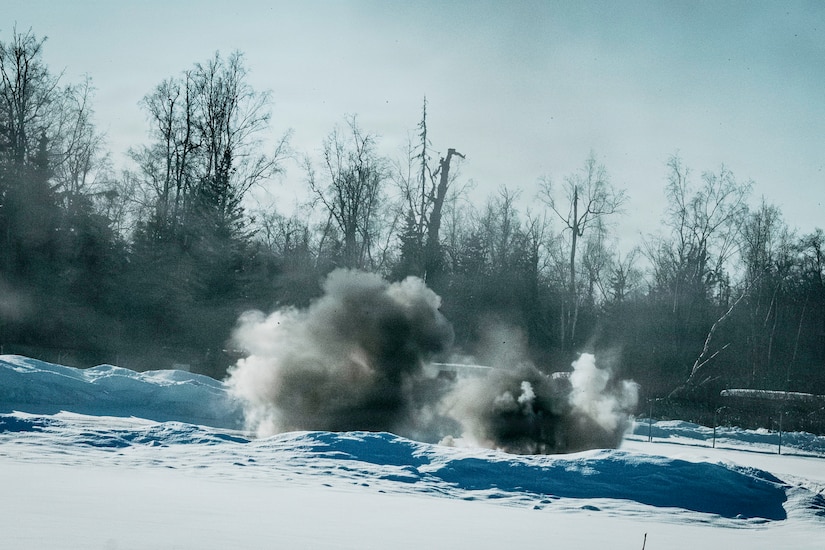
Navy explosive ordnance disposal technicians assigned to Explosive Ordnance Disposal Mobile Unit 11 participated in Arctic Edge 2026, Feb. 23 to March 5. 

Two clouds of smoke rise from a snow-covered ground.

Arctic Edge 2026, led by the North American Aerospace Defense Command and U.S. Northern Command, is a homeland defense exercise focused on improving readiness, demonstrating capabilities and strengthening joint and allied forces interoperability in the Arctic. 

"This year, our primary objective was to integrate with other EOD entities in new environments," said Navy Chief Petty Officer Quinn Gaubatz, chief explosive ordnance disposal technician. "Subject matter expert exchanges help us better our tactics, techniques and procedures through collaboration of our strengths, especially in the challenging conditions that [Arctic Edge] provided." 

Throughout the exercise, EODMU-11 operated alongside joint EOD forces and other military units on Kodiak Island, Alaska, and at Joint Base Elmendorf-Richardson in Anchorage, Alaska. 

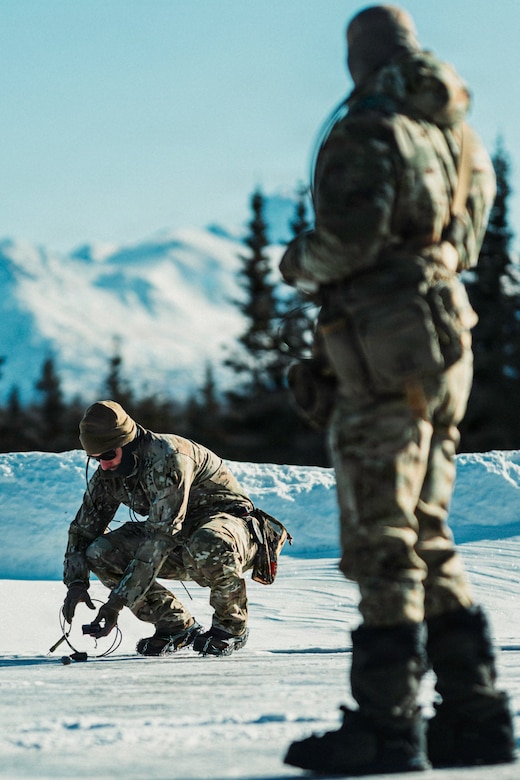
A man wearing a camouflage winter military uniform lays wire onto a snow-covered ground.

On Kodiak Island, EODMU-11 technicians conducted remote operated vehicle operations during a force protection drill, partnering with 1st EOD Company, 7th Engineer Support Battalion, 1st Marine Logistics Group, Unmanned Undersea Vehicles Squadron 1, Naval Information Warfare Center personnel, and U.S. Coast Guard elements assigned to the island to assess, neutralize and recover simulated underwater threats. 

"Demanding environments such as Kodiak create great opportunities to stress test our gear," said Navy Petty Officer 2nd Class Luke Rebeor, an EOD technician. "Operating our ROV systems in training alongside joint counterparts helped us accomplish homeland defense objectives together." 

During the drill, ROV operations expanded and supported joint EOD capabilities by providing an essential standoff area in underwater environments in a potentially high-risk reconnaissance and ordnance disposal mission. 

At JBER, EODMU-11 conducted joint airfield clearance and unexploded ordnance disposal drills with Air Force EOD technicians assigned to the 673rd Expeditionary Civil Engineer Squadron, simulating threats to critical infrastructure under extreme cold weather conditions. 

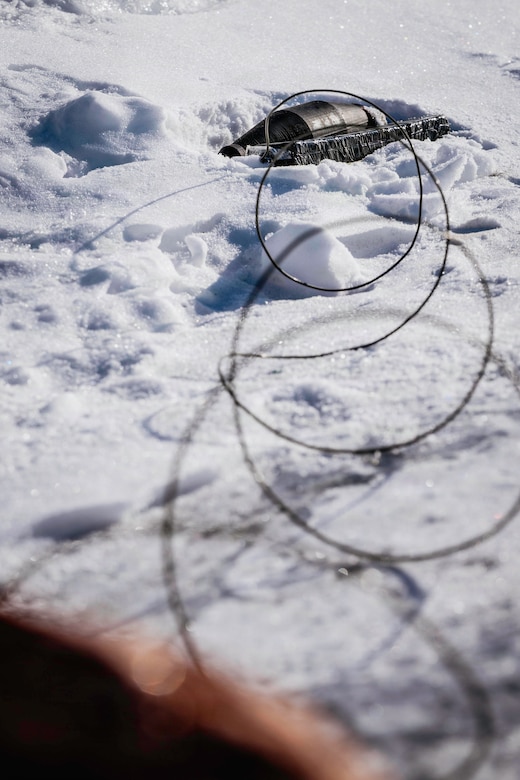
A military warhead sits on a snow-covered ground next to a block of a military explosive.
A man wearing a winter camouflage military uniform lays wire onto a snow-covered ground. Another man in similar attire stands and watches.
  

"Operating in the Arctic requires some adaptation," Gaubatz said. "Standard explosives and techniques work differently in colder climates, so practicing our skills and techniques in Alaska provided an extremely valuable training opportunity." 

Defending the U.S. is inherently linked to the joint force's ability to operate effectively across the entire Northcom area of responsibility — including the Arctic. Navy EOD's presence in Alaska during Arctic Edge ensured expeditionary competence in support of homeland defense as the strategic importance of the Arctic domain expands.

Wednesday, December 10, 2025

Army Activates U.S. Army Western Hemisphere Command in Historic Transition Ceremony

The Army activated the U.S. Army Western Hemisphere Command in a ceremony held Dec. 5 at Fort Bragg, North Carolina — uniting U.S. Army Forces Command, U.S. Army North and U.S. Army South into a single, four-star operational headquarters.

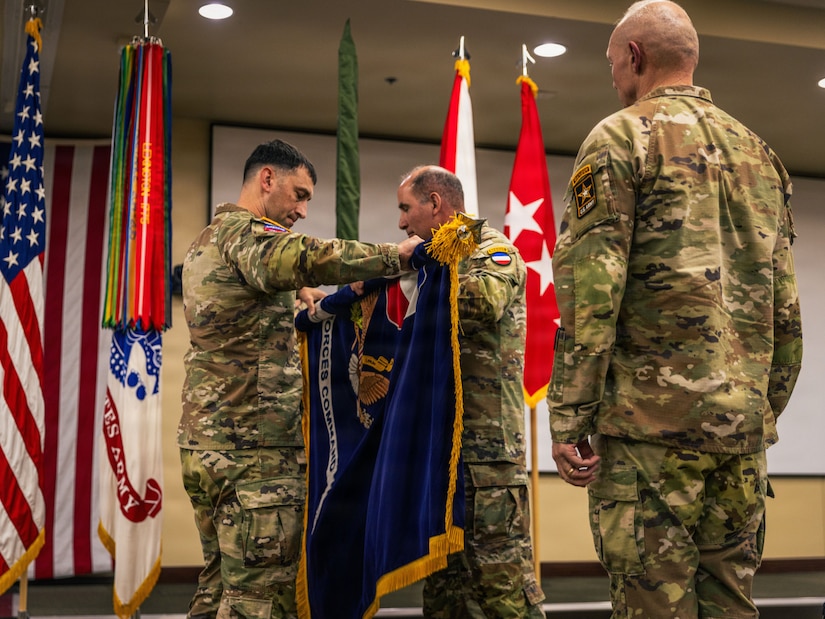
Two men wearing camouflage military uniforms roll up a dark blue flag with gold fringe as a man in similar attire watches in the foreground; the American flag and other military flags are behind them.

The ceremony also marked the casing of the U.S. Army Forces Command colors and the retirement of its commanding general, Army Gen. Andrew Poppas, who led the command since July 2022. 

"Today we become something new, but [U.S. Army Forces Command]'s spirit of readiness, resilience and warfighting strength will not fade. Rather, that spirit will radiate throughout the Army," said Poppas, who retired after more than 37 years of service.

Army Gen. Joseph A. Ryan assumed command of West-Hemcom. He previously served as the Army's deputy chief of staff for Operations, Plans and Training.

The ceremony marked a significant moment in the Army's transformation as the establishment of West-Hemcom is part of a broader transformation campaign to modernize Army command structures and improve operational agility.

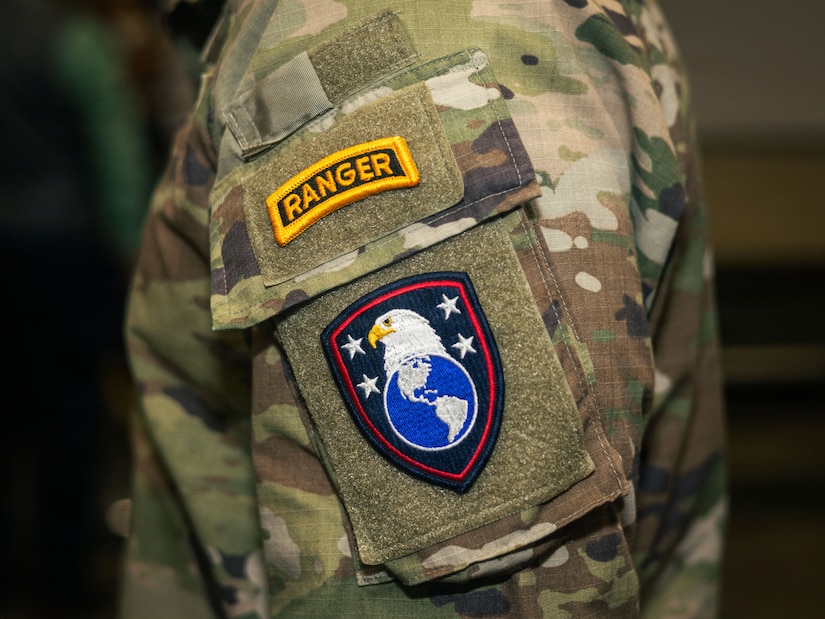
An up-close picture of the shoulder of a camouflage military uniform with a tab that says "Ranger" on top and a patch with an eagle head over a globe with four white stars depicted on a black background.

The newly established command is an operational warfighting theater command headquarters overseeing all Army plans, posture, operations and power projection in support of U.S. Northern and Southern Commands — and aligned with national strategic priorities. 

"Western Hemisphere Command is designed for speed, flexibility and relevance to effectively respond to challenges in our complex times," said Army Chief of Staff Gen. Randy George. "By consolidating these headquarters and aligning the theater, we will streamline processes, eliminate redundant efforts and free up talent and resources. This will allow us to better support our fighting formations." 

West-Hemcom unifies domestic-response capabilities from U.S. Army North, regional engagement expertise from U.S. Army South and large-scale readiness oversight from U.S. Army Forces Command. This integration delivers uninterrupted readiness, rapid force generation and expertise in homeland defense and civil support. It also enables the Army to respond more rapidly to crises and to continue building strong military alliances. 

"Today is much more than a change of command ceremony," Poppas said. "It's a major step toward the merger of three powerhouse Army headquarters into one operational, transregional team that will face the nation's top strategic priorities."

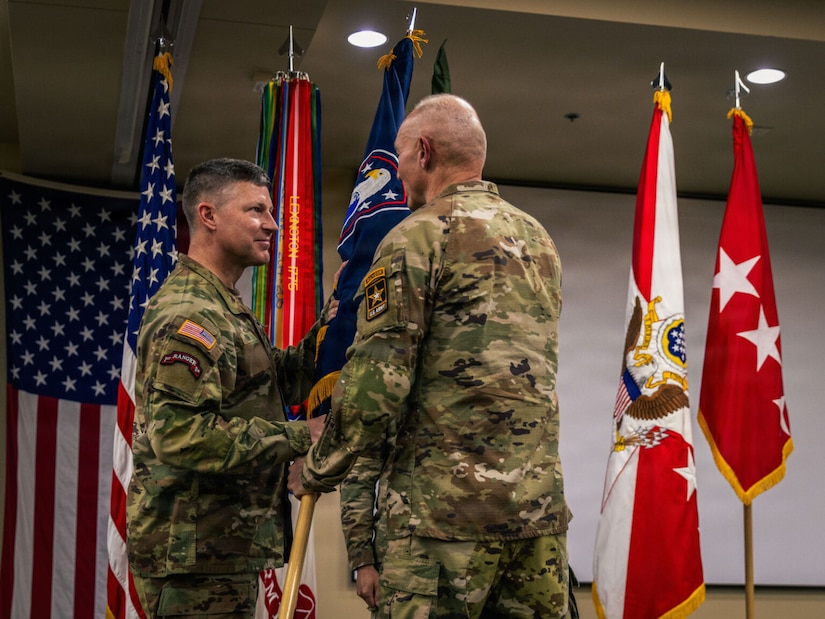
A man wearing a camouflage military uniform passes a guidon with a flag to another man in similar attire; the American flag and other military flags are behind them.

The activation of West-Hemcom is the first step in a conditions-based transformation. By February 2026, the new command will reach its initial operational capability and will be assigned to Southcom and Northcom to prepare to accept theater Army authorities and responsibilities. Following initial operational capability, U.S. Army North and U.S. Army South will inactivate. If all conditions are met, West-Hemcom will reach full operational capability by summer 2026. 

"Today, we continue in the Army's rich history of transformation — combining Forces Command, Army North and Army South — to form the United States Army Western Hemisphere Command," Ryan said. "The Army is making an enormous investment in this transformation, combining three important, effective and historically capable commands into one. It is our responsibility to deliver returns on that investment."