Showing posts with label military readiness. Show all posts

Tuesday, October 27, 2026

Transcom Commander Draws Connection Between Hope, Lethality

During his keynote remarks at U.S. Transportation Command's fall meeting in Grapevine, Texas, yesterday, Transcom's commander discussed how the concepts of hope and lethality are tied together as they relate to the world of military logistics. 

Air Force Gen. Randall Reed explained that, as he looked at how Transcom could improve and ensure the joint force is more lethal and agile, he realized hope is extremely useful for the warfighter because it gets to the root cause of any given problem. 

A man in a formal military uniform stands on a stage, holding a notecard while speaking to an audience.

"Hope is an expression of uncertainty, and that identifies a gap that needs to be filled," he said. "We, as logisticians, deal with uncertainty all the time. And we organize, train and equip ourselves to fill in that gap and replace uncertainty with certainty. And when we do that, we guarantee success." 

Reed went on to explain that hope and lethality can coexist because they both stem from the same pressure. 

"The same operational pressure that creates uncertainty, driving somebody to hope, is the same operational pressure that calls for potentially the use of lethality, or at least being ready to execute that lethality," he said. 

Reed added that, once it's understood how two concepts, such as hope and lethality, can coexist and how they can be used in a practical way, "the magic happens." 

Reed said his understanding of this was more clearly illustrated by observing the logistical efforts that went into the opening days of Operation Epic Fury. 

He noted that while many people in and around the Arabian Gulf were doing all they could to run away from the source of the conflict, the military logistics enterprise was running toward it. 

A man in a formal military uniform stands on a stage, holding a notecard while speaking to an audience.

"We run to the sound of guns, and we weren't just running to the sound of guns because the joint force needed us there," Reed said. "We also had our own civilians — our own citizens — and citizens from around the world who needed help to get out." 

He added that Transcom provided life-saving care to the region quickly, along with food and other essentials, while also solidifying relationships with friends, allies and partners. 

Reed explained that, by understanding this duality of lethality and hope, Transcom and industry could plan in the days leading up to Operation Epic Fury, ensuring the combatant command could make a difference. 

"And so, it's no longer foreign to me as to how these two things can coexist, and why we as practitioners can benefit from redefining this idea of hope equating to uncertainty, and then really working hard to eliminate the uncertainty to come up with solutions," he said. 

The fall meeting is an annual four-day, cosponsored event that began in 2013 to provide the government and industry partners with the opportunity to identify and solve logistics and transportation challenges, learn about innovative technologies, develop best practices, and build professional and personal relationships.

Friday, October 23, 2026

DoW Announces 2026 Secretary of War Maintenance Awards Winners

The Department of War announced the 2026 winners of the Secretary of War Maintenance Awards. These awards are presented annually to recognize outstanding achievements in weapon systems and military equipment maintenance.

The Rear Admiral Grace M. Hopper Award for Software Maintenance Excellence recognizes the top organic software activity that, through its mission accomplishments, provided extraordinary capability for operational units supported. The award is named after RDML Grace Hopper, a pioneer of computer programming who popularized the idea of machine-independent programming languages. This year's winner is the United States Army Weapon Systems Sustainment Program from the Combat Capabilities Development Command Armaments Center.

The Department also selected the Sustainment Training, Advice, and Assistance of Foreign Military Forces Awards. The awards recognize teams or organizations that have excelled at providing training, advice, and assistance to the militaries of developing countries as part of U.S. foreign policy goals. In the Ministerial Category, the winner is the Jordan Defense Management Advising Team at the Defense Security Cooperation University. The operational category winner of this year's award is the United States Navy Center for Naval Aviation Technical Training Unit Jacksonville.

The Robert T. Mason Award for Depot Maintenance Excellence recognizes exceptional quality and achievement in Department of War depot-level maintenance programs. It is awarded for outstanding mission accomplishment, effective support to warfighters, and innovative logistics processes. This award commemorates Robert T. Mason, a former Assistant Deputy Under Secretary of Defense for Maintenance Policy, Programs and Resources, who championed the Department's depot-level maintenance program. The Tactical Aircraft Program assigned to Fleet Readiness Center Southwest is this year's recipient.

Six field-level award winners were selected in three categories: small, medium, and large. The small category winners are the Army's Maintenance Company for the 10th Special Forces Group; and the 96th Aircraft Maintenance Squadron, Eglin Air Force Base. Winners from the medium category included 1st Maintenance Battalion, 1st Combat Readiness Regiment, I Marine Expeditionary Force; and Forward Deployed Regional Maintenance Center, United States Navy 5th and 6th Fleets. Large category winners were the 2d Light Armored Reconnaissance Battalion, 2d Marine Division, II Marine Expeditionary Force; and the USS GERALD R. FORD. 

From the six field-level winners, only one will be selected as this year's recipient of the highly coveted Phoenix Award. Organizations winning the Phoenix Award are considered to be the best of the best and held in very high esteem as the top-performing field-level maintenance unit in the Department. The Phoenix Award winner will be announced at the annual DoW Maintenance Awards Banquet in December. 

Units will formally be presented their awards at a ceremony December 9, at the Broward County Convention Center in Fort Lauderdale, FL. The ceremony is held in conjunction with the annual DoW Maintenance Symposium. 

To learn more about the Secretary of War Maintenance Awards and the DoW Maintenance Symposium, you can visit https://events.sae.org/event/dow2026/home

Tuesday, October 20, 2026

Exercise Keen Sword 2027 Begins in Japan

Multilateral Exercise Keen Sword 2027 began yesterday with an opening ceremony on Ishigaki Island, Japan.

A group of men in various military uniforms interlock arms and pose for a photo outside under a blue sky with clouds; military vehicles are parked behind them.

About 45,000 Japan Self-Defense Forces troops, 11,000 U.S. service members and forces from Australia, Canada, France, Germany, the Netherlands, New Zealand and the Philippines are participating alongside observers from South Korea and the United Kingdom. The exercise runs through Oct. 29.

This is the 18th iteration of the biennial field training exercise. Training includes air and missile defense, facility protection and repair, logistics and resupply, casualty evacuation, and maritime operations.

"Today, it is a great privilege and significance to commence Keen Sword 27 in Ishigaki, Japan's westernmost point," said Japan Maritime Self-Defense Force Adm. Tawara Tateki, commander of the JSDF Joint Operations Command. "Those gathered here today are under different national flags and represent different cultures, yet we share the same fundamentals, values of freedom and rules of law. We also share a common responsibility to preserve these values for future generations. In this sense, we are truly like-minded partners."

Tateki added that Keen Sword 27 is an exercise dedicated to preserving peace and stability.

"It is essential that Japan, [the] U.S. and participating like-minded countries leverage each other's strengths and transform our militaries into the capabilities and readiness to be able to act precisely in times of need," he said.

The exercise's bilateral and multilateral training scenarios help participating forces improve interoperability, information sharing and defensive coordination across multiple domains under realistic conditions.

"Today, four decades strong, Keen Sword stands as the absolute pinnacle of combat-ready exercises in the Pacific, with the most capable and consequential alliance in the world training alongside our international partners," said U.S. Marine Corps Lt. Gen. George Rowell, deputy commander of U.S. Pacific Command. "Over the coming days, I have no doubt that we will train as one team to test our concepts, refine our command and control, and validate our ability to deter aggression and prevail in crisis or conflict."

Rowell noted that deterrence in the 21st century is not built on words or declarations; rather, it is built through demonstrated competence, cohesion and warfighting readiness.

"Keep drilling, keep learning and remain ready, together," he said.

Tuesday, October 06, 2026

New Clinical Guideline Helps Keep Women 'Optimized for the Fight'

The Department of Veterans Affairs and War Department have jointly released a clinical practice guideline to help clinicians provide improved care for women experiencing perimenopause and menopause. 

"We want both patients and clinicians to know there are safe and effective treatments for women who are experiencing bothersome symptoms of perimenopause and menopause," said Air Force Maj. Kathleen Pombier, chief of the Defense Health Agency's women's health clinical management team. "Individualized treatment is key. The focus needs to be on whole-person care." 

A woman in nursing attire sits at a table with crafts and trinkets on it as she looks up at another women in casual attire who is talking to her.

The guideline's recommendations cover diagnosis, menopausal symptom management and treatment safety. Topics include hot flashes, sleep problems, mood and cognitive changes, genitourinary symptoms, sexual dysfunction, bone health, weight management, cardiovascular disease and breast cancer risk. 

Supporting Military Readiness 

Women are an essential and growing part of the military force as well as the fastest-growing group among veterans and VA healthcare beneficiaries, Pombier said. The guideline provides a common framework for a continuity of care across both healthcare systems. 

"When we look at the VA, the average age of those patients is within the perimenopausal and menopausal range," said Army Col. Erin Keyser, director of medical education at Brooke Army Medical Center, San Antonio. "This is a very important issue for these patients."

Perimenopause and menopause are natural life transitions during which a woman's menstrual periods stop permanently, and she is no longer able to become pregnant — with perimenopause referring to the time leading up to menopause, according to the National Institutes of Health. 

Hormonal changes can disrupt sleep, mood, cognition and daily functioning for some patients, ultimately impacting readiness, Pombier said. 

"When your sleep's affected, you're not going to do your job as well," she emphasized, adding that identifying and treating symptoms early helps women remain ready to serve. 

"By having clinicians identify symptoms earlier and recognize that it's not something women just have to deal with — it's actually something we can treat — it ensures we have every woman optimized for the fight," she said. 

Effective care can also reduce stigma and help women stay in the military and pursue leadership opportunities, Keyser said.  

Tailoring Treatment to Each Patient 

Treatment decisions should reflect each patient's symptoms, health history, preferences and risks, Pombier said.  

Diagnosis generally relies on symptoms and a discussion with the patient.  

For vasomotor symptoms, like hot flashes and night sweats, the guideline addresses hormonal treatments including estrogen, progesterone and nonhormonal options, including certain antidepressants and gabapentin. Nonhormonal treatments may help women who cannot use systemic hormones or prefer other options.   

The guideline also addresses treatment for breast cancer survivors.  

"Many breast cancer survivors don't know local estrogen is still an option, even with a history of breast cancer," she said. "We also have multiple other nonhormonal options for this specific patient population which are covered in the [guideline]." 

Individualized treatment is key. The focus needs to be on whole-person care."
Air Force Maj. Kathleen Pombier, chief of the Defense Health Agency's women's health clinical management team

Other recommendations address sleep, mood, genitourinary and sexual-health concerns, which may arise during menopause.

"For sleep symptoms, we talk a lot about cognitive behavioral therapy for insomnia, which is one of the strong evidence-based methods we can use to help women when they're struggling," Pombier said. 

She stressed that care must be individualized.  

"We need to recognize the midlife transition, talk to our patient, assess their symptoms, understand their priorities, review with them the risks and the benefits and ultimately use shared decision-making to figure out how we should best treat them," she said. 

Practical Tools for Clinicians 

The guideline includes four diagnostic and treatment flowcharts for diagnosis and a pocket card that matches symptoms with recommended treatments. 

Providers can use these tools during appointments to determine whether one treatment could address several concerns. 

The tools also help clinicians at remote military hospitals and clinics without an obstetrician or gynecologist on staff, Keyser said. The guideline directs providers to related clinical guidance when patients need further evaluation or treatment. 

"Everyone deserves to have high-quality care regardless of where they're stationed," she added. 

For Pombier, the shared standards support consistent care across specialties and help service members transition to VA care.  

The working group developed the recommendations using patient focus groups and systematic evidence reviews. It weighed evidence quality, benefits and harms, patient preferences and access to care.

"We wanted to be transparent on the basis for care," Pombier said. "Here is the evidence that we have, here is how strong or weak it is, but also here are the areas where we think we need more evidence before we can make firm recommendations." 

Keyser said the guideline demonstrates a commitment to addressing menopause-related concerns. 

"We are taking this subject seriously, and we care about the women in our healthcare system," she said. "We want to provide them high-quality care."

Tuesday, September 29, 2026

Secretary of War Pete Hegseth Signs Directive Halting Tenured Civilian Positions at U.S. Military Service Academies

The Department of War continues to reform our educational institutions to ensure they remain laser-focused on lethality and readiness.
 
To that end, the Secretary of War directed the Military Departments to immediately terminate the practice of appointing civilian faculty to tenured positions at the U.S. Military Service Academies. This directly addresses the critical issues of academic stagnation and complacency that are often associated with tenure, and which threaten to dilute the academies' primary focus on warfighting and tactical dominance.
 
In place of tenure, the Military Departments will implement new hiring plans to prioritize flexibility and faculty contribution to the warfighting mission, ensuring future officers are unequivocally prepared to lead our Service members and win on the modern battlefield.
 
Click here to read the memo.

Saturday, September 19, 2026

'We've Got Their Back,' Hegseth Tells Parents of Enlistees in Texas

Sept. 18, 2026 | By C. Todd Lopez, Pentagon News |

The War Department doesn't serve politicians; it serves warfighters and the nation, said Secretary of War Pete Hegseth today in Austin, Texas, where he swore in new military recruits.

The secretary of war raises his right hand while facing future service members raising their right hands in front of an American flag.


At the Austin Armed Forces Reserve Center, the secretary administered the oath of enlistment to more than a dozen young men and women joining the Texas National Guard, and then immediately after he administered the oath to more than 30 who were enlisting as federal troops across all branches of the military. 

Before administering those oaths, the secretary discussed the meaning of service and commitment. But he didn't address the recruits directly; he addressed the crowd gathered to watch, which was mostly the parents of the recruits. 

"One of the great pleasures ... for me in ceremonies like this is ... you look out at the families; you look out at mom and dad and sisters and brothers who love these Americans more than anyone else on the planet," he said. "I can see in [your faces] the fact that you're realizing that you are gifting your greatest gift to the United States military, to the War Department, and I get chills just saying that." 

Accepting that gift — America's young people — from the parents who raised them is a huge responsibility, Hegseth said. He vowed that the War Department and military services will not squander that gift.

"My commitment to you is that with our every breath that we have, [we will] ensure that they are prepared, that they are backed up, that they are trained, that they are ready, that the missions we give them are clear, the equipment we give them is the best, and the training the most difficult and rigorous," he said. 

The secretary told parents there exists a "Golden Rule" of the War Department, and that he asks commanders everywhere to apply it all the time, especially when it comes to honesty in the rigor applied to preparing troops to be the best they can be. 

"[That] is do unto your formation that which you would have done unto your son or daughter's formation," he said. "Meaning, if you're compromising a standard, or you're meeting a quota, or you're changing training to soften it or make it easier for some subset of people, would you do that if your son or daughter were in that formation, or not?" 

Families, Hegseth said, are the backbone of what creates America's warfighters — young men and women who choose to serve. And he said his role as one of those at the Pentagon is to serve those young men and women and all who choose to defend the nation.

The secretary of war shakes hands with a future service member standing formation with other future service members in front of an American flag.


"We are here at the highest echelons of the Pentagon to serve the warfighter, full stop," he said. "Not to serve politicians; [to] serve those [who] do the difficult things in dark and dangerous places." 

As a young officer in the military himself, Hegseth told parents and families what he wanted to know was that when he had difficult things to do as a warrior, that he had the support of his leaders and nation. He told those families that their sons and daughters will be asked to do difficult things and that they will have support. 

"Things will go wrong, things will break, mistakes will be made, but we need warriors, Americans, willing to step out and take the risks and do those difficult things," Hegseth said. "President [Donald J.] Trump has your back, I have your back, and I'm absolutely honored that we raise such men, that we raise such women, who are willing to do something bigger than themselves and serve."


Wednesday, September 16, 2026

Southern Vanguard 2026 Turns Peruvian Jungle Into a Classroom

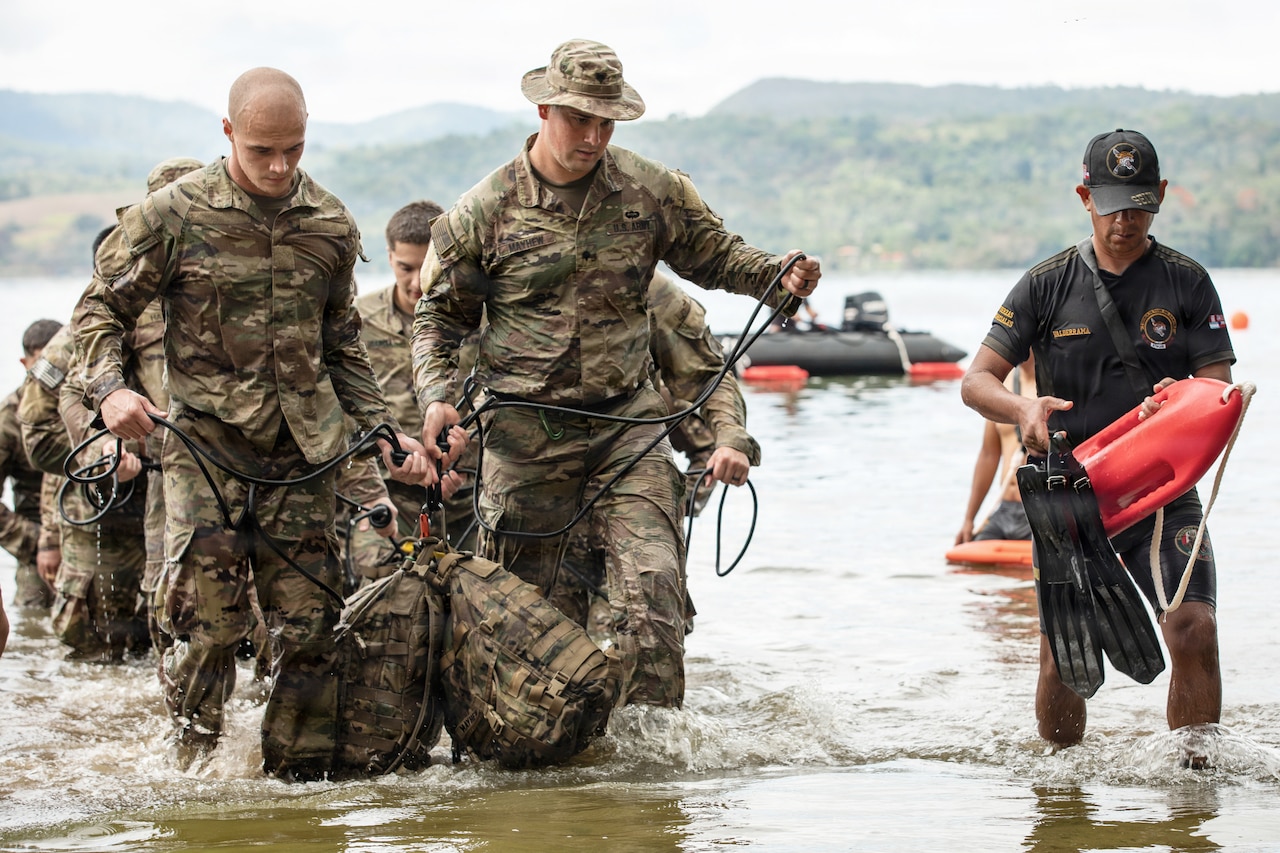
Nearly a dozen people in camouflage military uniforms walk through a body of water as a man in a black uniform walks next to them carrying a flotation device.

Movement slows. Equipment gets heavier. Water becomes an obstacle instead of a landmark. The environment quietly strips away assumptions about how quickly a formation should move or how easily a soldier can accomplish a familiar task.

For U.S. soldiers training alongside Peruvian and Chilean forces during Exercise Southern Vanguard 26, that friction is exactly the point.

In the hills surrounding Sauce, Peru, soldiers are learning to move, survive and operate in terrain where their Peruvian counterparts have spent years developing expertise. During the opening days of jungle warfare training, multinational formations started at various lanes, including amphibious movement, survival skills and small-unit tactics designed for an environment that can punish even routine movement.

A man wearing a camouflage military uniform and sunglasses poses for a photo in a jungle environment.

"Multiply fatigue by 10," Army Capt. Jared Fonzi, an operations planner assigned to the 551st Infantry Regiment, U.S. Army Western Hemisphere Command, said while describing the physical effects of jungle operations. "The climate, the terrain, the physical exhaustion that everyone here goes through — pictures do not justify the stress and the physical fatigue."

Southern Vanguard 26 is a multinational exercise hosted by the Peruvian Army and designed to strengthen interoperability among participating forces while building proficiency in jungle mobility, survivability and tactical operations. For American soldiers, participation offers something difficult to replicate at home: The opportunity to become students of a partner force operating in a terrain it understands intimately.

Fonzi, a graduate of the Jungle Operations Training Course-Panama, Ranger School and an infantry officer proficient with conventional U.S. tactics, said jungle warfare changes the scale at which soldiers must think and maneuver.

"The size of the maneuvering element is far smaller," he said. "You don't really maneuver as a platoon, which is usually the bread and butter of U.S. operations. Here, with smaller elements — team size, squad size — you need to rely more on individual survival techniques and minimal equipment."

That emphasis places greater importance on survival, fieldcraft and understanding the environment itself. Humidity, elevation, water obstacles, rainfall and dense vegetation are not simply background conditions.

"These climate differences and natural elements are what affect the fight," Fonzi said. 

That reality is also driving U.S. soldiers to look outward for expertise.

Fonzi said U.S. forces are relying heavily on jungle warfare specialists from countries such as Peru, Colombia and Panama to understand how forces accustomed to the environment operate and which techniques might improve U.S. tactics, techniques and procedures.

The dynamic is visible throughout Southern Vanguard 26.

Peruvian instructors are leading much of the jungle training, while U.S. instructors work alongside them and help translate techniques for American formations. Fonzi described the Peruvian approach as aggressive and immediate, often moving soldiers quickly from instruction into practical application.

"There's really no crawl phase here," he said. "They'll give a brief instruction, and then they just throw them in the water or whatever training environment they go into."

The approach may differ from how many American soldiers are accustomed to training, but adapting to unfamiliar methods is part of the exercise itself.

Interoperability is often discussed in terms of radios, procedures and whether two formations can communicate on a battlefield. But before any of that works, soldiers have to understand how their partners think, move and solve problems.

Sometimes that begins with something as unremarkable as getting everyone across a body of water. That process requires a certain humility.

The U.S. military brings considerable capability nearly anywhere it goes. The jungle offers a useful reminder that capability and expertise are not the same thing. Sometimes readiness means arriving prepared to teach. Other times, it means recognizing when someone else has something to teach you. Southern Vanguard creates room for both.
For soldiers operating beneath the jungle canopy, the lessons are as physical as they are tactical. 

"Being wet 24/7, fighting through brush, crossing water — these little things have a huge impact on how you fight," Fonzi said.

Over the course of the exercise, those small hardships become part of a larger test: whether multinational formations can adapt together in an environment that does not care how experienced, capable or well-equipped they were before entering it.

That may ultimately be the most valuable lesson hidden beneath the canopy. Partnerships become meaningful when soldiers learn to depend on one another before circumstances require them to.

Monday, September 14, 2026

Development, Training Flight Shapes Future Airmen

For recruits assigned to the 926th Wing at Nellis Air Force Base, Nevada, their journey starts long before basic military training. Before ever setting foot on the drill pad, these future airmen are already learning exactly what it takes to succeed in the Air Force Reserve. 

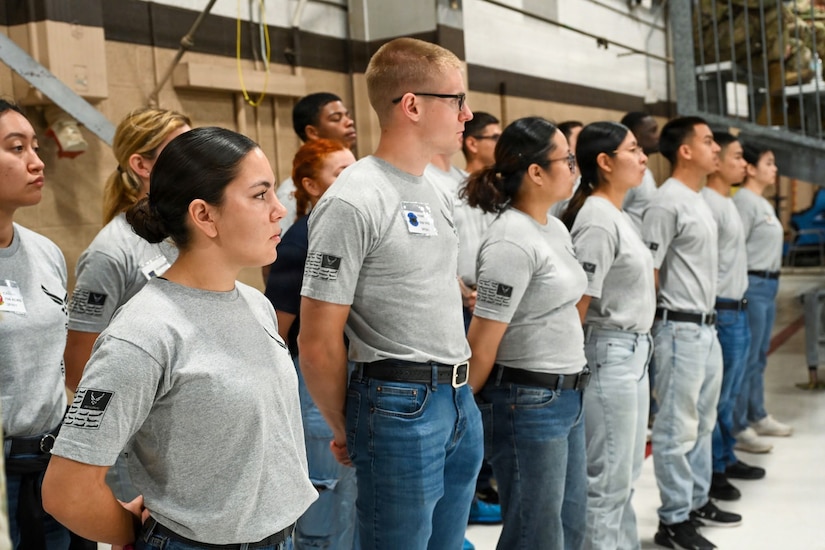
Serving as the catalyst for this transition, the 926th Wing Development and Training Flight bridges the gap between civilian life and operational military service. By coming in regularly alongside current wing members, trainees get a firsthand glimpse into their future. During this time, they are introduced to the core tenets of military life, learning essential customs and courtesies, drill procedures and rank structure to establish a baseline of knowledge.

About a dozen people in casual attire stand at attention in rows inside a warehouse.

However, the training flight goes one step further with an initiative specifically designed to start building the wing from within. Beyond military fundamentals, trainees also embed with operational squadrons to gain firsthand experience with units they may eventually join. 

"The development and training flight is built for newly enlisted reservists that come into our wing," said Air Force Tech. Sgt. Bench Riche Lagus, a program coordinator assigned to the 926th. "It helps them prepare for [basic military training] and tech school, but it also helps them get integrated with the wing that they're about to work for." 

Trainees recently observed the 555th Rapid Engineer Deployable Heavy Operational Repair Squadron Engineers and traveled to Creech Air Force Base, Nevada, to witness security forces field operations. 

For trainees like Abril Fonseca, a future vehicle mechanic with the 555th, this early exposure eases the transition into military life and provides a tangible goal. 

"It's cool to see what our day-to-day [life] is going to look like," Fonseca said. "Everybody is just so pumped."

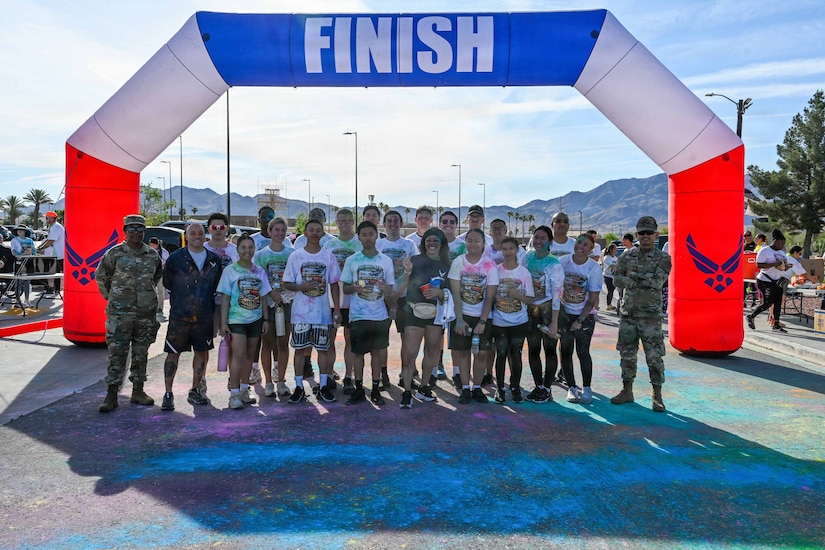
Nearly two dozen people in athletic attire and two people in camouflage military uniforms gather for a group photo under an inflatable arch that says, "Finish."
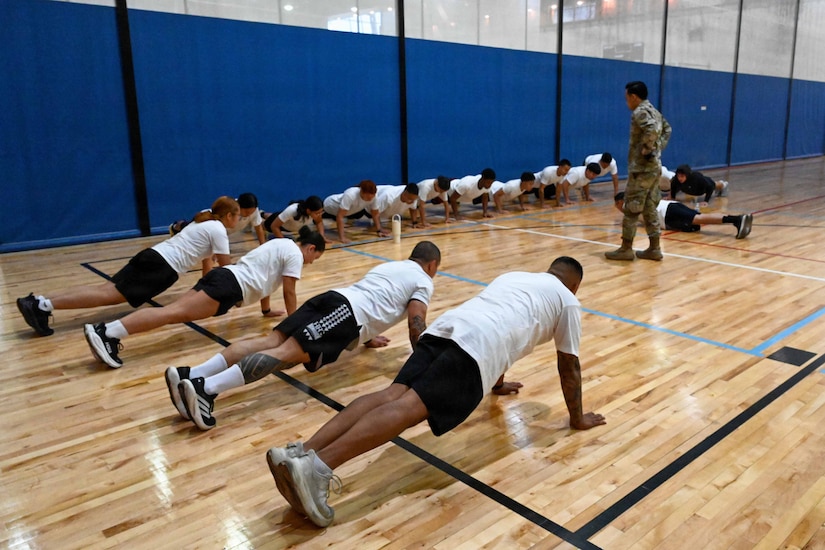
A man in camouflage military uniform stands and observes as about a dozen people in athletic attire perform pushups inside a gym.
Establishing a common baseline can be a challenge as trainees enter the flight with different levels of experience, from recent high school graduates to those with established civilian careers. As they move through the program, they rely on one another to learn military expectations and adjust to their new environment. 

"The other trainees around me that have been there longer helped me out," Fonseca said. "It's a cycle; the people who have been here the longest help the newbies out, and then we just carry that on." 

Alongside military fundamentals and wing integration, physical readiness remains a cornerstone of the development and training flight curriculum. The program incorporates monthly fitness tests, group workouts and participation in wing fitness events to familiarize trainees with Air Force fitness standards. 

This proactive approach ensures recruits arrive at basic training already equipped with the physical resilience required for military service. For many trainees, the group environment provides the exact motivation they need. 

"I was not good at working out consistently before I got to the flight," Fonseca said. "But now it feels like I can actually do it. What makes it better for me is that I have my teammates around me supporting and pushing me."

Wednesday, September 09, 2026

United States Department of War and Mongolia's Ministry of Defense Conduct Bilateral Defense Framework

On September 8, 2026, Mr. Alvaro Smith, Deputy Assistant Secretary of War (DASW) for China, Taiwan, and Mongolia, led the annual U.S.-Mongolia Bilateral Defense Framework (BDF) with Major General Gankhuyag Davagdorj of Mongolia's Ministry of Defense (MoD).

DASW Smith and Major General Gankhuyag identified a structured roadmap for increasing Mongolia's defense spending over the next five years, ensuring that U.S. security cooperation assistance aligns with U.S. interests and Mongolia's defense requirements. They also discussed practical ways to enhance the Mongolian Armed Forces' capabilities and readiness, expand combined military exercises, and strengthen Mongolia's defense industrial base.

DASW Smith commended Mongolia for its critical contributions to the Board of Peace and Haiti Gang Suppression Force. He emphasized that Mongolia's Strategic Third Neighbor Partnership with the United States remains vital to the defense relationship.

Thursday, August 27, 2026

The Capital's Defenders: Two Centuries After Historic Battle, Citizen-Soldiers are Recognized

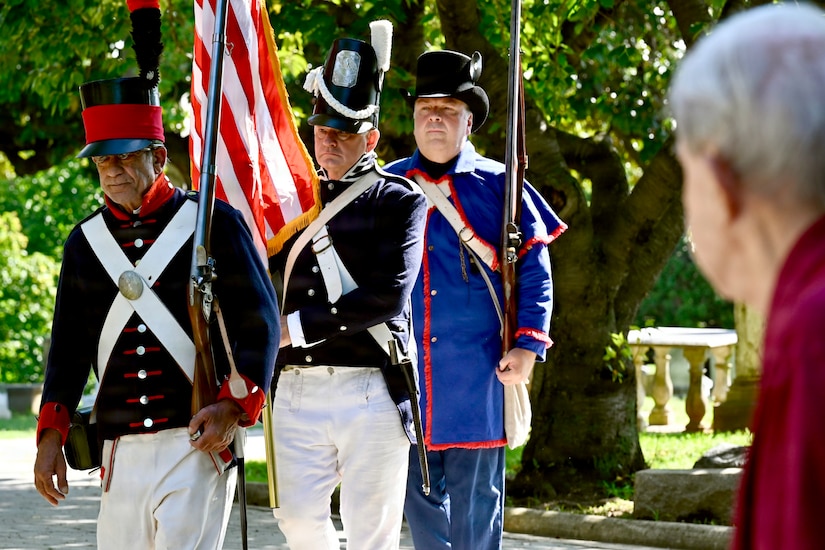
Three men dress in historical military uniforms stand in a line; the man in the middle is holding the American flag while the other two men are holding muskets.

As America celebrates 250 years of independence, the District of Columbia National Guard, citizens and other government staff gathered at the Congressional Cemetery in Washington, Aug. 23, to look back 212 years — to a moment when ordinary citizens answered an extraordinary call and stood in defense of the young nation's capital during the Battle of Bladensburg.

The wreath-laying ceremony connected America's Freedom 250 commemoration with the citizen-soldier tradition that helped defend the nation in its earliest years and continues today with the National Guard. Held among the gravesites of those who lived that history, the ceremony honored their courage while examining the lessons their service left for future generations.

"Whether you're describing acts of bravery or military chaos, the story [of that battle] cannot be told without recognizing the role of the citizen-soldier," said Mark Hudson, executive director of the cemetery. "The local militia joined the desperate fight to defend our young nation."

Historian Glenn Williams placed their service within the broader Chesapeake campaign during the War of 1812. With much of the nation's military strength committed elsewhere, he said the Washington area was defenseless except for the citizen-soldiers of the militia as British forces advanced toward the capital.

Williams described how American riflemen initially engaged and counterattacked the British advance before reinforcements shifted the balance. Outnumbered three to one and eventually outflanked, the American defense collapsed, clearing the way for British forces to enter Washington and burn several prominent public buildings.

Army Brig. Gen. Leland D. Blanchard II, interim commanding general of the D.C. National Guard, said approximately 1,000 D.C. militia members assembled to defend the capital in 1814.

"They were ordinary Americans who answered an extraordinary call," he said. "They stood in defense of a young capital, a young government and an independence won only a generation earlier."

For Blanchard, remembering the battle also means confronting the lessons that came from defeat. The militia members who assembled in 1814 possessed courage and commitment, but courage alone could not overcome their shortcomings in preparation, organization and coordination.

"Bladensburg reminds us that courage is essential, but courage must be matched by readiness," Blanchard said. "Training matters. Leadership matters. Command and control matter. And the relationships we build before a crisis matter when that crisis arrives."

Reflections on the D.C. Militia Legacy

Those lessons, he said, remain relevant more than two centuries later as the National Guard confronts an increasingly complex mission set spanning domestic response, homeland defense and support to global operations.

"Readiness is not something we begin building when the emergency starts," Blanchard said. "It is built every day — through training, preparation and trust between the people and organizations who may one day be called to respond together."

While the Battle of Bladensburg ended in defeat, Blanchard emphasized that its enduring value lies in what America carried forward from the experience.

"Winning independence and preserving independence are not the same thing," he said. "One required a generation to establish a nation. The other requires every generation to remain prepared to defend it."

That responsibility, he said, has always depended on more than one organization or institution.

A.J. Orlikoff, cemetery director of programming, brought the commemoration from military history to personal remembrance. Through research, Orlikoff has positively identified 26 D.C. militia veterans of the Chesapeake campaign buried at the Congressional Cemetery, while noting many more may remain unidentified.

"These defenders of the capital came from all walks of life — clerks, craftsmen, public officials, businessmen — all stepped up to defend the city," he said, before reading aloud the names of all 26 identified militiamen, restoring individual identities to men whose graves, in some cases, are unmarked.

"By reading their names and visiting their graves, we are doing much more than simply remembering a battle," Orlikoff said. "We're restoring their identity as people; we're restoring the memory of their service."

Following the remarks, Hudson and Blanchard laid a wreath at the grave of one of the fallen militiamen. A color guard then rendered a ceremonial volley in honor of those who defended the capital.

For Blanchard, the connection between 1814 and 2026 remains clear. The uniforms, technology, missions and threats have changed, but the responsibility to remain ready— and the citizen-soldier and airmen tradition behind it — endures.

"The citizen-soldier is not simply part of our history," Blanchard said. "It is a living tradition. Today, ordinary men and women continue to step away from their families, their careers and their communities when the nation calls."

That continuity carries particular meaning in Washington, where today's D.C. National Guard traces its heritage to the militia tradition that helped defend the capital more than two centuries ago.

Tuesday, August 25, 2026

U.S., Brunei Forces Build Readiness, Trust During Exercise Pahlawan Warrior

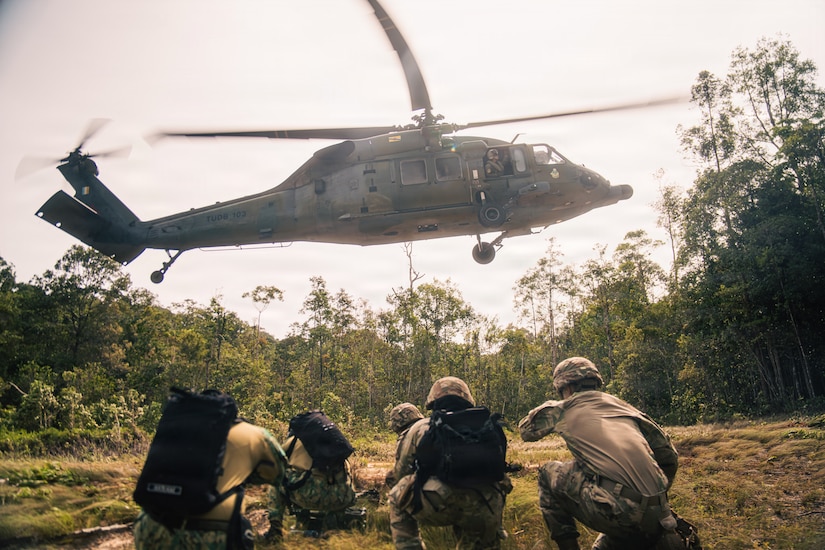
U.S. soldiers and Oklahoma National Guardsmen partnered with Royal Brunei Land Forces soldiers to sharpen their skills during Exercise Pahlawan Warrior 26 at Tutong Camp, Brunei, Aug. 11-21, increasing readiness through shared tactics, jungle training and relationship-building.

Five people in camouflage military uniforms kneel in an open area of the jungle as a military helicopter hovers overhead.

Pahlawan Warrior 26 brought approximately 130 U.S. personnel to Brunei for the biennial exercise under Operation Pathways. Led by the 1st Squadron, 180th Cavalry Regiment, Oklahoma National Guard, U.S. participants trained alongside Bruneian counterparts in tactical operations and subject matter expert exchanges spanning cyber defense, medical operations and public affairs.

Throughout the exercise, each force brought its own experience to the training, creating opportunities to compare techniques, share expertise and adapt lessons from one another to their own formations.

"For me, leadership requires adaptability," said Royal Brunei Land Forces Lt. Col. Mohammad Sufrien bin Johan. "We are not here to determine which method is better, which country does better, but to identify what works, why it works and how it can be adapted to our respective forces."

The exchange was evident throughout the exercise, with U.S. and Bruneian personnel sharing their expertise, while tactical training allowed each force to bring its own strengths to the table — from U.S. experience in live-fire range operations to RBLF expertise in jungle operations.

"Our soldiers have showed a lot of grit, but the Royal Brunei Land Forces go through this like they do it every day, because they do," said U.S. Army Maj. Kent Turner, commander of U.S. personnel during the exercise. "Their ability to navigate on different analog systems and go from one hilltop to the other at a rapid pace is just amazing."

That experience also gave RBLF leaders an opportunity to see how U.S. soldiers adapted to an unfamiliar environment.

"[They] are highly adaptable, resilient and ready to thrive anywhere, side by side with the troops of the Royal Brunei Land Forces on the exact opposite side of the globe," said RBLF Col. Erwan bin Haji Ibrahim.

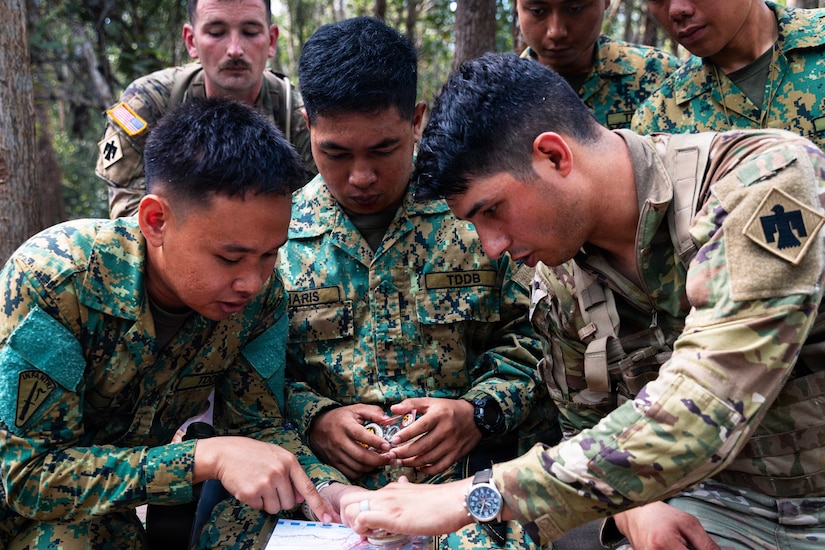
Three people in camouflage military uniforms coordinate a location on a map while three other people in similar attire stand behind them in the jungle.

Working through those challenges together did more than build tactical proficiency. Integrating U.S. and Bruneian soldiers at the small-unit level gave them opportunities to understand how their counterparts communicate and operate while developing relationships.

"They really are becoming friends," Turner said. "I'm sure that some of the people, when they leave, they will remain in contact with them throughout. And what that's done is, it's picked up both sides, Royal Brunei [Land Forces] and also with our U.S. forces. Everybody is excited to be here."

That trust also created an environment where junior leaders were expected to adapt, make decisions and lead through the challenges of unfamiliar terrain and limited communications.

"We want to test the junior leadership in terms of decision-making," Sufrien bin Johan said. "For the soldiers, it's about the communication, coordination and understanding. ... The major focus here is so that they understand each other's procedures and try to adapt it into a realistic tactical situation."

For Oklahoma National Guard leaders, those lessons extended beyond tactical decision-making to the challenges of moving, supporting and leading a formation thousands of miles from home.

"It's much different than being a junior leader back in Oklahoma for a drill weekend," said U.S. Army Brig. Gen. Colby Wyatt, Oklahoma National Guard joint staff director. "Now you're having to travel all the way around the world, communicate with people who speak a different language, and you're not just leading — there's an operational piece, there's a logistical piece. They learn at such a faster pace, and then they're able to take that information back to their unit and train those that maybe didn't get to make the trip."

The relationships developed throughout Pahlawan Warrior 26 extended beyond formal training. U.S. soldiers learned Malay phrases, Bruneian soldiers picked up Oklahoma slang, and participants exchanged patches, shared meals and spent time getting to know each other.

"I sincerely hope our Oklahoman friends had at least a little time to explore the beauty of Brunei Darussalam and taste our local food," Haji Ibrahim said. "The true value of Pahlawan Warrior is in the human connection. Lifelong friendships have been forged here. I hope this experience inspires [U.S. service members] to return to this region in the future."

Those relationships built at the individual level also contributed to the exercise's broader strategic purpose.

"It's really a tactical operation with strategic impact," Wyatt said. "We can take soldiers at the tactical level, put them into an environment like this, and they can gain the training that they need. But the strategic impact is what it means for the United States and for our soldiers to have a relationship with another country."

For Sufrien bin Johan, those personal connections contributed to an outcome that lasts beyond the individual training events or even the exercise itself.

"Our mission with Pahlawan Warrior is to contribute to a sustained and mature defense relationship between Brunei Darussalam and the United States of America," he said. "Beyond that, the real measurement of success is not only during this one exercise, but the trust and coordination between both nations and our commitment toward peace and stability in the region."

The relationship between the Oklahoma National Guard and Brunei has grown since Oklahoma National Guardsmen first participated in Pahlawan Warrior in 2024. The connections developed during this iteration continued that training at the tactical, operational and strategic levels.

Friday, August 21, 2026

Corps of Engineers Modernizes Historic Fort Sill Barracks

Built in 1939, ahead of World War II, Building 900 at U.S. Army Garrison, Fort Sill, Oklahoma, looks much the same on the outside as it did over eight decades ago.  

The building features the same historic architecture as neighboring buildings. But behind the historic facade, the U.S. Army Corps of Engineers, Tulsa District, is overseeing and executing a high-tech modernization project that will make this one of the most structurally reinforced buildings on the installation.  

A beige building with the number 900 on it. Another building is just behind it.

As part of the military construction mission, USACE provides engineering, construction and project management support for military installations, helping deliver facilities that support readiness and quality of life for soldiers. This construction project is transforming the 43,000-square-foot building to meet current unaccompanied enlisted personnel housing standards.  

"This building has housed enlisted personnel and Marines for decades," said Joe Krachinsky, quality assurance representative, USACE, Tulsa District. "This project will completely change the layout of the building to support today's needs."  

The historic shell of the building will remain intact, but the interior is being completely renovated and updated for modern living.  

When the renovation is complete, the barracks will house 72 soldiers. Each will have a private bedroom and bathroom, with two soldiers sharing each kitchen. Each floor will also have new day rooms, common areas and enhanced laundry facilities. 

The building will have entirely new heating, ventilation and air conditioning systems, lighting, fire alarms and sprinkler systems.  

Aligning with the USACE mission to build faster, smarter and together, engineers on the project are using innovative construction methods to reinforce the aging structure.  

The inside of a building under construction. A man in construction safety gear is in the background.

"Because Fort Sill is located in a region known for severe weather, the building is being designed to withstand tornadoes as well as seismic activity," said Jessica Goodin, construction manager, USACE, Tulsa District. "The reinforcement goes from the basement to the roof and works as one interlocking lattice."  

Engineers are retrofitting the existing building with a progressive collapse design, a structural engineering approach that ensures localized damage won't cause the entire building to collapse. The method reinforces the existing structure, so losing a column does not cause a significant portion of the building to collapse. Instead, the load is redistributed to surrounding structural columns, allowing the building to remain stable long enough for occupants to evacuate.  

Shotcrete, a concrete mixture sprayed onto a surface at high velocity, will be applied to the existing concrete structural system to reinforce and strengthen it to meet the progressive collapse design requirements.  

"Building 900 marks the first use of progressive collapse design in the district," Krachinsky said. "This project will also be the first use of shotcrete on Fort Sill as a final protective coating."  

Concrete footings, steel and dowels establish a secure foundation. Rebar is installed on each level, starting in the basement and fished through holes drilled into the concrete, locking the floors to the beams. Even the windows, a naturally weak point, are fortified with steel plate headers, mounted studs and carbon fiber wraps so the rebar can lock the walls and headers together.  

The ceiling roof trusses of a building under construction.

At the top of the structure, the team wrapped the roof trusses in steel, reblocked them and reinforced them with three-quarter-inch plywood and metal strapping to lock the roof to the beams.  

To ensure structural integrity the team conducts rigorous pull tests on the footings and the carbon fiber anchored to the walls and concrete. Engineers use a hydraulic pump attached to floor rings or anchors to test the load capacity of the wrapped beams and other structural reinforcements, ensuring the building meets safety specifications.  

By using technology and applying modern science and engineering to a historic building's footprint, USACE is delivering a facility that honors the history of Fort Sill and the Army while providing a safe, modern home for the soldiers of today and tomorrow.

Thursday, August 13, 2026

Army Reserve Engineers Train Across Multiple Missions During Exercise Northern Strike

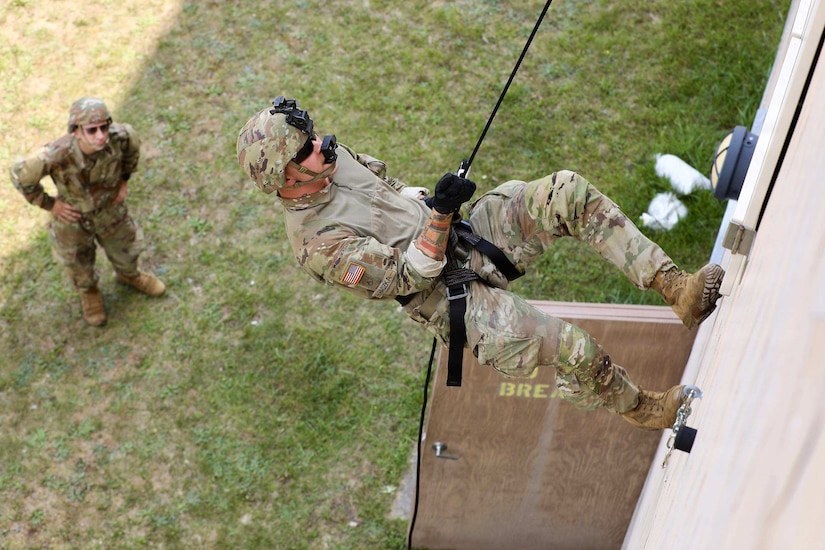
Army Reserve soldiers assigned to two engineering companies spent the first week of Exercise Northern Strike 26-2, Aug. 1-7, moving between water operations, chemical, biological, radiological and nuclear defense training, live demolitions and preparations for urban operations at Camp Grayling, Michigan.

A man wearing a camouflage military uniform rappels down the front of a building as another man in similar attire observes on the ground.
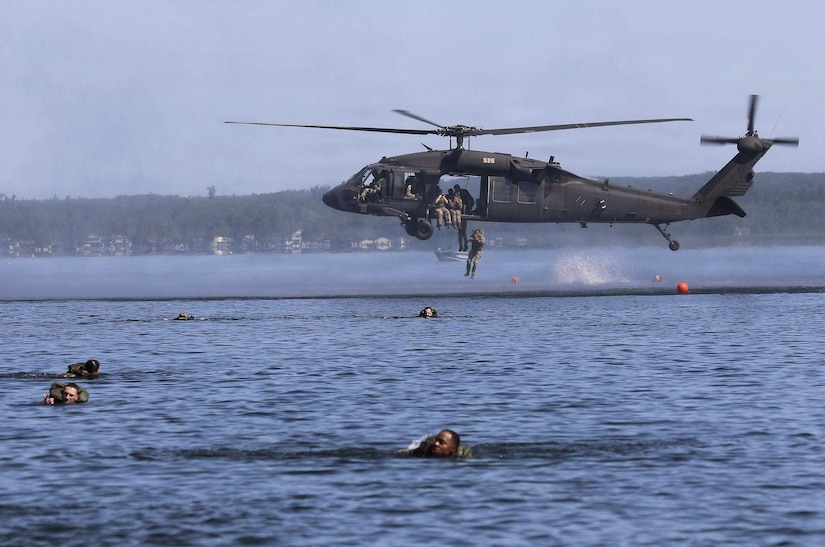
People wearing camouflage military uniforms swim in a lake after jumping into the water from a hovering military helicopter.
The range of training gave soldiers experience beyond their usual engineering tasks while showing how those skills fit alongside maneuver forces. 

For Army Capt. Brandon Lalonde, 428th Combat Engineer Company-Infantry commander, that connection is an important part of Northern Strike. 

"The maneuver part, though, is something that generally we avoid when we plan training; and I think there's some shame in that because you don't really get to see how security is established, how people move forward on the battlefield [and] where the engineers fit in the mission," Lalonde said. "We need to see the bigger picture." 

On Aug. 3, soldiers conducted helocast operations, exiting a hovering aircraft into the water before making their way to shore. They later moved into CBRN training that included protective mask procedures, decontamination and mission-oriented protective posture operations.  

The next day, they trained with M18A1 claymore mines and selectable lightweight attack munitions and worked through emplacement procedures before conducting live detonations.

"This training is critical to building our unit's readiness and combat effectiveness," said Army 1st Lt. Parker Mock, 365th Engineer Company officer in charge during the event. "Northern Strike provides soldiers with realistic, large-scale training in an [immersive] environment, allowing them to integrate with joint and partner forces while employing emerging technologies and capabilities."

Service members assigned to the 428th Combat Engineer Company-Infantry also worked with industry partners to learn about emerging engineer technologies. Later in the week, soldiers began planning and preparing for urban operations at the Combined Arms Collective Training Facility at Camp Grayling. 

Moving from one event to another required soldiers to apply different skills and work through changing mission requirements. 

"Northern Strike prepares soldiers for real-world missions by replicating the complexity and pace of today's operational environment," Mock said. "This experience develops adaptable, disciplined and mission-ready soldiers who are better prepared to operate and win in large-scale combat operations." 

By the end of the week, the soldiers had trained in the air and water, worked with protective equipment, conducted live demolitions and prepared for operations in an urban setting. The different events allowed the engineers to practice their technical skills while seeing how their work supports other elements on the battlefield.

Friday, August 07, 2026

Multinational Partners Strengthen Regional Readiness During Exercise Panamax 2026

Airmen assigned to 12th Air Force, Air Forces Southern, joined approximately 40 military personnel from across the Americas during Panamax 2026, a U.S. Southern Command-sponsored multinational exercise focused on an integrated approach against simulated threats to the Panama Canal and the region. 

The exercise continues until Aug. 14 and provides participating forces from 19 nations with an opportunity to conduct combined security and stability operations, enhance interoperability, and strengthen their collective capability to support Panama in defending the canal and preserving regional security. 

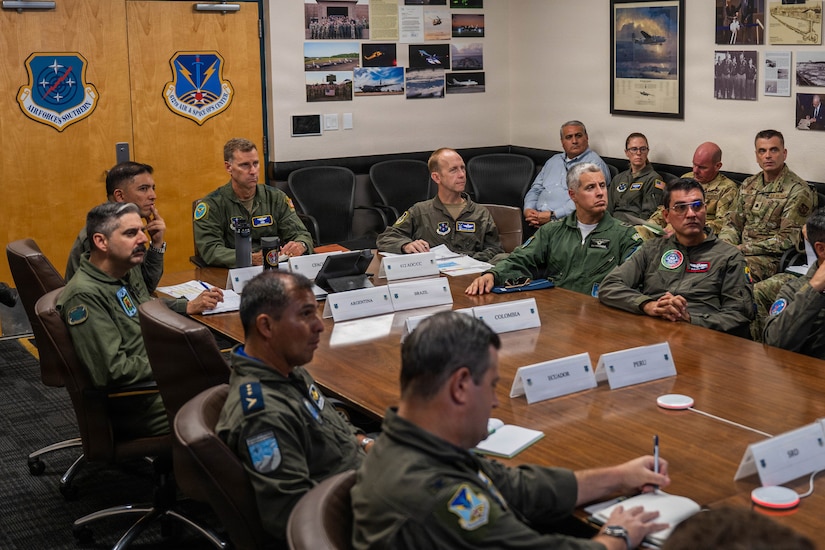
Approximately 40 military personnel from Ecuador, Peru, Colombia, the Dominican Republic, Argentina, Brazil, Paraguay, Honduras, Guatemala and El Salvador are working together to synchronize multinational air component planning, command and control, and decision-making in response to simulated threats to the Panama Canal and regional security. 

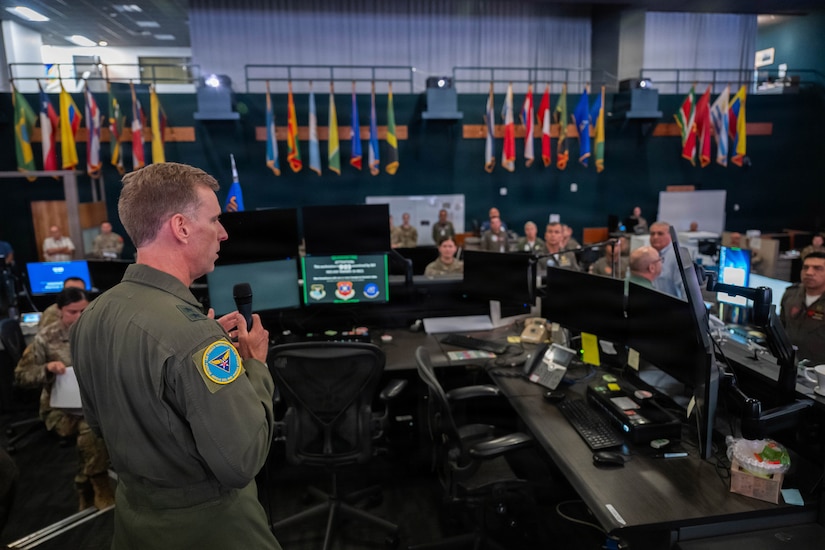
A man in a military uniform stands in a large room and speaks into a microphone; people in similar attire sit in front of him with more than a dozen various flags behind them.

Air Forces Southern led the combined air component in one of the Western Hemisphere's premier multinational exercises at Davis-Monthan Air Force Base, Arizona. 

"We are proud to host Panamax here at Davis-Monthan and to work alongside our partner nations as we train to protect one of the most strategically important waterways in the world," said Air Force Maj. Gen. David Mineau, 12th Air Force commander. "This exercise helps us sharpen the coordination, trust and readiness needed to support Panama in the defense of the canal and preserve regional security." 

The biennial exercise reinforces the enduring commitment of the United States and partner nations to regional security through cooperation, transparency and shared responsibility. By training together before a crisis occurs, participating nations build the trust, professional relationships and interoperability that enable faster, more effective responses when real-world events demand coordinated action. 

"This opportunity was the first time Ecuador brought air force intelligence personnel, and the immense value of this training for our force and our partners is already clear," said Ecuadorian air force Lt. Col. Andres Acosta, an operations, intelligence and analysis officer. "Exchanging operational perspectives and discussing air doctrine face-to-face builds the mutual trust and understanding essential for our shared security." 

The exercise scenario is designed to challenge participants in a realistic multinational environment while strengthening each nation's ability to operate alongside allies and partners during a coalition response to a notional contingency. 

For Air Forces Southern, Panamax supports the command's commitment to strengthening partnerships across the Western Hemisphere by improving readiness, reinforcing integrated deterrence and enhancing the collective ability of allied and partner air forces to respond to evolving regional security challenges.

Nearly a dozen men in military uniforms from various countries sit around a wooden table and look at an out-of-frame monitor; people in similar attire are sitting behind them.
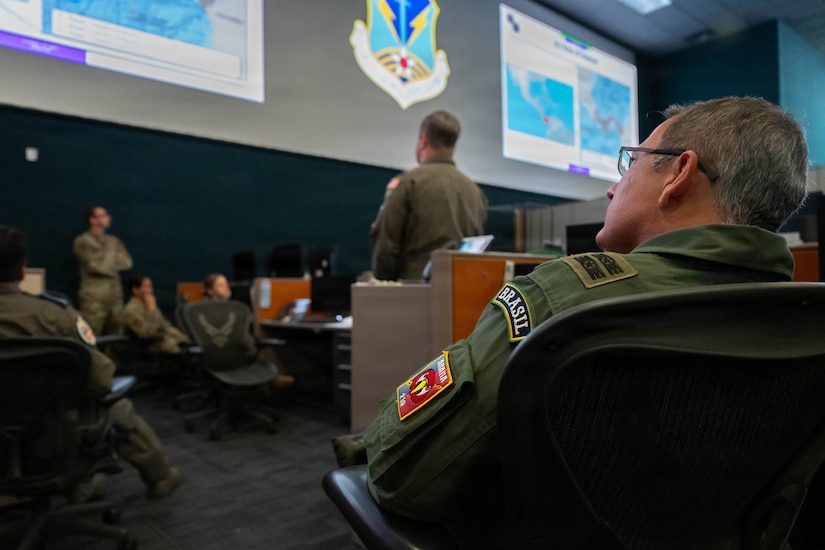
A shoulder view of a man in a military uniform sitting in an auditorium and looking up at a screen. His sleeve has various patches; one says, “Brasil.”
"Panamax is more than a multinational exercise; it is an opportunity to bring together talented professionals from across the hemisphere, learn from one another and strengthen the partnerships that underpin regional security," Mineau said. "That cooperation is essential to ensuring we are ready to respond together to future challenges." 

Beyond tactical and operational training, the exercise strengthens the professional networks and institutional relationships that enable long-term cooperation throughout the region. It provides participants the opportunity to exchange best practices, improve communication procedures and develop a shared understanding of multinational planning and execution. 

"Collaborating in a combined air component environment allows us to synchronize our procedures and learn from each other's expertise," Acosta said. "This training ensures that if we are called upon to respond to a real-world contingency, we can operate seamlessly as one united team to preserve regional stability." 

Since its inception, Panamax has evolved into a premier multinational exercise demonstrating the value of enduring partnerships, shared commitment and collective readiness. Each iteration builds upon previous exercises, strengthening interoperability and ensuring participating nations remain prepared to operate together in support of regional security and stability. 

"It is an honor to welcome our partners to Panamax and train together in support of a mission that matters to the hemisphere," Mineau said. "By rehearsing how we integrate, communicate and operate as one team, we improve our collective ability to protect the Panama Canal, strengthen deterrence and meet the shared security responsibilities we all carry." 

Wednesday, July 01, 2026

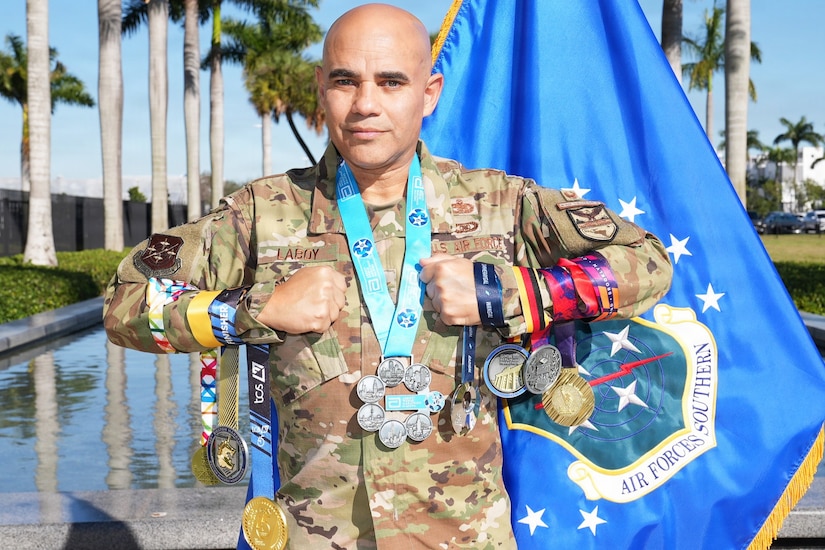
Face of Defense: Airman Conquers 7 World Marathon Majors in 365 Days

Six days after crossing the finish line in Boston, one Air Force colonel laced up again and ran the London Marathon. 

Still sore and fatigued, Air Force Col. Alfredo "Juny" Laboy knew quitting was not an option because he was too close to completing his goal of becoming the only active-duty service member to complete all seven Abbott World Marathon Majors within a single calendar year.

Air Force Col. Alfredo "Juny" Laboy
An airman wearing a camouflage uniform stands outdoors during daytime and holds seven medals wrapped around his arms; another large medal hangs around his neck, with a flag, tall trees and a reflecting pond in the background.
Job: Liaison Officer
Stationed: U.S. Southern Command Headquarters, Doral, Fla.
Unit: Air Forces Southern
Hometown: Humacao, Puerto Rico
According to Abbott World Marathon Majors data, he is also among just 44 athletes worldwide to accomplish this milestone for the first time within a single year. The World Marathon Majors are considered the pinnacle of endurance racing, consisting of premier marathons hosted across the globe. 

In 2025, Sydney was added as the seventh major, requiring Laboy to incorporate a new benchmark, along with additional travel, recovery and preparation within an already compressed timeline. 

That back-to-back stretch captured what defined Laboy's entire year: the ability to adapt when the conditions change and remain ready when the mission demands it. 

Throughout 2025, Laboy, 54, ran marathons in Tokyo, Boston, London, Sydney, Berlin, Chicago, Arlington, Virginia, and New York City, all while serving as the Air Forces Southern liaison officer to U.S. Southern Command. 

"I was driven by a combination of curiosity and purpose," Laboy said. "After completing marathons on all seven continents, I asked myself what would truly challenge me next. Completing all seven World Marathon Majors in one year wasn't about chasing a medal — it was about testing discipline, consistency and resilience, the same traits the Air Force has demanded of me throughout my career." 

Pursuing Excellence

For Laboy, the pursuit was inseparable from his identity as a service member, woven together through physical, mental and professional readiness; the thread linking the racecourse to the operations center. 

"Understanding what the achievement represented made it feel bigger than a personal milestone," he said. "Becoming the only active-duty service member to earn the Six Star Medal and complete all seven World Marathon Majors in a single year carried a strong sense of pride and responsibility. 

"This accomplishment allowed me to represent the United States Air Force and my hometown in Humacao, Puerto Rico, while also showing that being over 50 is not a limitation," Laboy added. "You can pursue excellence in fitness and set meaningful goals at any stage of life."

An airman wearing running gear stretches his shirt with both hands while jogging on a road during daytime, with other people in athletic attire running in the background.
An airman wearing running gear holds both arms in the air on a road during daytime, with other people in athletic attire standing in the background.
An airman wearing running gear holds one hand in the air and smiles as he jogs on a road during daytime, with other people in athletic attire also running in the background.
That readiness was tested repeatedly. Among the seven races, the Boston-to-London sequence required Laboy to compress recovery, recalibrate his physical expectations and execute without the preparation that most elite runners consider a minimum standard. 

"The London Marathon was the most challenging because I ran it just six days after completing the Boston Marathon," he said. "Physically, my body was still fatigued, and mentally, it took every ounce of focus and determination to push through with almost no recovery time." 

The effort mirrored another demanding stretch later in the year, when he completed the Marine Corps Marathon, followed by the New York City Marathon just one week later. Sustaining that output alongside a full-time operational workload required the same kind of structured adaptability Laboy applies to planning missions. 

"Balancing training with my role required flexibility," Laboy said. "Most runs happened during the workday, fitting them in between meetings, when possible, while weekends were reserved for longer distances. That structure allowed me to stay consistent without stepping away from my operational responsibilities." 

Finding His Stride

This approach also supported Secretary of War Pete Hegseth's military fitness guidance, which emphasizes physical training as a daily duty requirement for service members. Laboy approached physical performance and professional execution with the same framework. 

"I treated training like operations — plan, execute, assess and adjust," he said. "Consistency mattered more than intensity, and everything had to complement the mission, not compete with it." 

Adaptability was not an option; it was a defining trait. Midway through the year, Laboy was diagnosed with an umbilical hernia, a development that would have ended the pursuit for most. Instead of quitting, he persevered. He restructured his approach and pressed forward.

An airman wearing running gear stretches his shirt with both hands while jogging on a bridge during daytime, with other people in athletic attire running in the background.
An airman in winter athletic gear and carrying Puerto Rico's flag on his back runs on ice during daytime; a snowy mountain is in the background.
An airman wearing running gear jogs on a road during daytime, with other people in athletic attire also running in the background.
"There were moments of doubt, especially after I was diagnosed with an umbilical hernia following the London Marathon," Laboy said. "Under strict medical guidance, I was able to delay surgery and complete the remaining races safely." 

Laboy also managed preexisting conditions throughout the year, including bilateral hip bursitis, plantar fasciitis and vestibular neuritis, a condition that affects balance. Each of these conditions required ongoing adjustments to keep him mission-capable on and off the course. 

"Following medical guidance and adjusting expectations allowed me to keep moving forward without missing a single day of work due to running-related injuries," he said. 

'There Are No Shortcuts'

Overcoming these obstacles further reinforces that the parallels between endurance sports and military leadership are direct, not metaphorical, according to Laboy. 

"There are no shortcuts," he said. "Both require preparation, accountability, adaptability and the ability to lead yourself before leading others." 

Air Force Lt. Gen. Evan Pettus, Southcom deputy commander, said Laboy's accomplishment is a model of the readiness and adaptability the command requires of its leaders. 

"I've had the opportunity to follow and talk with Juny throughout this journey, and what stands out isn't just the mileage — it's the discipline behind it," Pettus said. "He never let a demanding schedule or personal setbacks distract him from the mission. He trained around his responsibilities, not the other way around. That balance and commitment to excellence while remaining fully engaged in the fight reflects the steady resilience and adaptability we expect from our leaders."

An airman wearing athletic attire and a hat and standing outdoors during daytime holds up a large medal with one hand and points at it with his other hand; around his neck are multiple other medals.

Laboy said the year reinforced that readiness is not a product of youth, but of discipline sustained over time. 

"Readiness isn't limited by age, but it's sustained by mindset," he said. "Resilience is built over time through discipline, physical fitness and mental toughness. When airmen take care of themselves, they're better prepared to take care of the mission." 

More Miles To Go

Standing at the finish line of his final race, Laboy said gratitude outweighed his exhaustion. 

"I felt gratitude for my health, my mother, my kids and everyone who supported the journey," he said. "I also felt excitement for what comes next and the goals still ahead." 

In April, Laboy completed the Coast Guard Marathon in Elizabeth City, North Carolina, followed by the Cape Town, South Africa, Marathon in May. Finishing the Cape Town race, now recognized as the eighth Abbott World Marathon Majors event, makes him one of fewer than 2,000 runners in the world to complete the entire series.

Looking forward, Laboy is scheduled to run the Air Force Marathon in September at Wright-Patterson Air Force Base, Ohio, and in October, the Army Ten-Miler in Washington, which completes the Armed Forces Series Challenge.  

Additionally, he aims to position himself among the first athletes in the world eligible for the Nine Star Medal, expected to be introduced in December 2027, pending the Shanghai Marathon's formal acceptance as the ninth and final World Marathon Major. 

Beyond these milestones, Laboy is setting his sights on the ultimate test of endurance: running at the geographic North Pole. By racing on ice floes covering 12,000 feet of the Arctic Ocean, he hopes to earn membership in the exclusive Marathon Grand Slam Club — a distinction reserved for elite athletes who successfully complete a marathon on all seven continents, plus the grueling North Pole Marathon.