Soldiers and airmen who participated in the 2026 Milan Cortina Winter Olympic Games in Italy with the World Class Athlete Program visited the Pentagon April 17. During the visit, the athletes also got an unexpected opportunity to meet with Secretary of War Pete Hegseth.
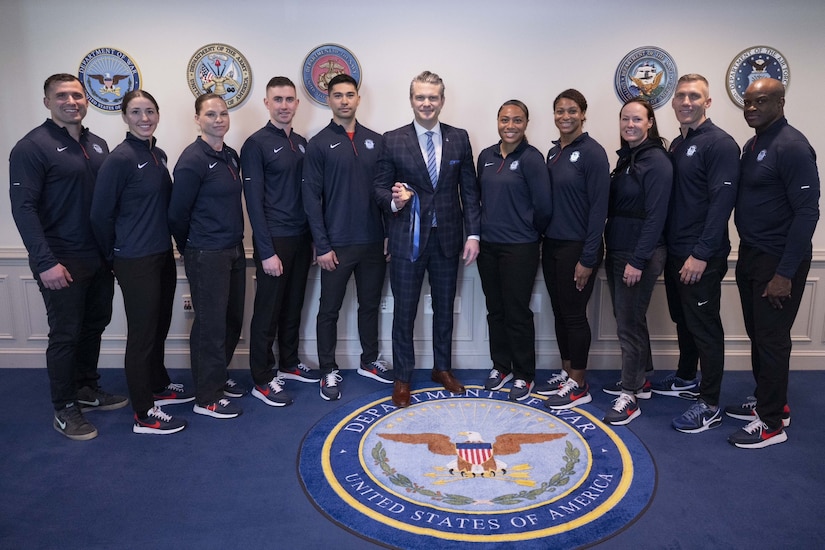
"I welcomed 10 American Olympians — who also wear the uniform — to the Pentagon," Hegseth said via social media. "They represent the very best of our nation."
This isn't the first time the secretary has talked with the world-class athletes. In advance of the Olympic Games, he called them directly to wish them luck in the competition.
The visit highlighted the War Department's support for service member athletes and reinforced military appreciation across the sports community. During their visit to the Pentagon, the athletes and their leadership met with the secretary, toured the Pentagon and also met with their respective military service branch leaders.
Olympic bobsledders Army Spc. Azaria Hill and Sgt. Frank Del Duca said their focus on fitness as Olympic athletes and soldiers aligns squarely with the secretary's fitness standards.
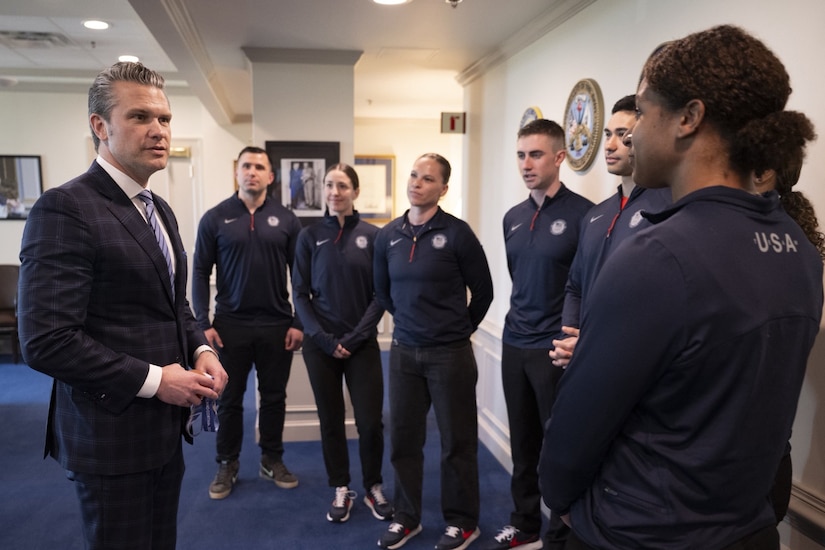
"We are definitely big on fitness," Hill said. "That's kind of the basis of what we have to do — what we do day to day."
Hill is a motor transport operator in the Army and a bobsled brakeman as an Olympic athlete. During the 2026 Winter Olympics, she and her bobsled driver ranked in fifth place in the 2-woman bobsled competition.
Del Duca, who joined the Army a little over six years ago, is an infantryman and also a bobsled driver.
"Fitness is a huge part of my performance as a soldier, as well as my performance as an athlete in the World Class Athlete Program," he said. "I do both, and I have to stay sharp and fit for both. And then there's also the positive benefits just to your general health as well. My obligations as a soldier require a high, high level of fitness, and that spreads to every part of my life."
As a soldier and an athlete, Del Duca said there's a balancing act that has to happen to make sure everything gets done right.
"It's full time for both," he said. "Sometimes the slider will shift one way or the other, depending on the time of year. So, during the Olympics and during the competitions to qualify for the Olympics, I'm doing mostly World Class Athlete Program things. Then that immediately shifts after the season, and I go do my infantry things."
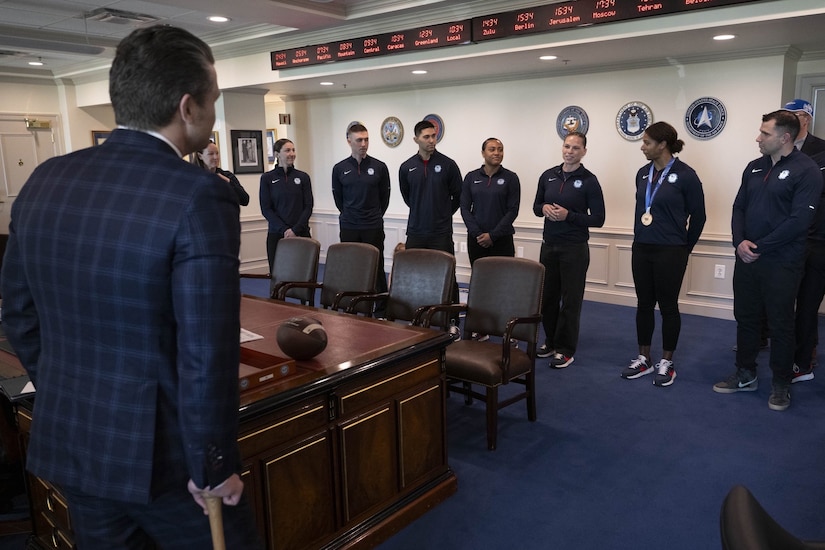
Del Duca said he was excited to meet with Hegseth and said the secretary was impressed with what he saw from the athletes.
"He just had a lot of support for our program and what we're doing, both as soldiers and then in the athlete program," Del Duca said.
In the 2026 Winter Olympics, Del Duca and his teammate came in 4th in the 2-man bobsled competition.
Both the Army and the Air Force run a World Class Athlete Program, where athletes can work with expert trainers within the military as they prepare for world-class competitions — such as the Olympics — while at the same time, be service members and have a future job after their competition days are over.
The program serves both the athletes and the military, said Eli Bremer, an advisor to the Air Force's program.
For athletes, Bremer said, pursuing Olympic dreams while serving means a much more stable and greater level of support than what they might get going it alone. As civilians, athletes often find it hard to both train to the level they need to train and also support themselves. So, for many, it's a struggle to be an athlete. However, joining the Air Force or the Army through the World Class Athlete Program means those athletes can use their training and athletic performance as part of their career.
"It's really hard for them to hold jobs and have even consideration of a career while training for competition as a civilian," Bremer said. "That's why the military is such a positive aspect, because we have a program that allows them to pursue ... the Olympics for the United States, but after that, it's also an off-ramp into a real job."
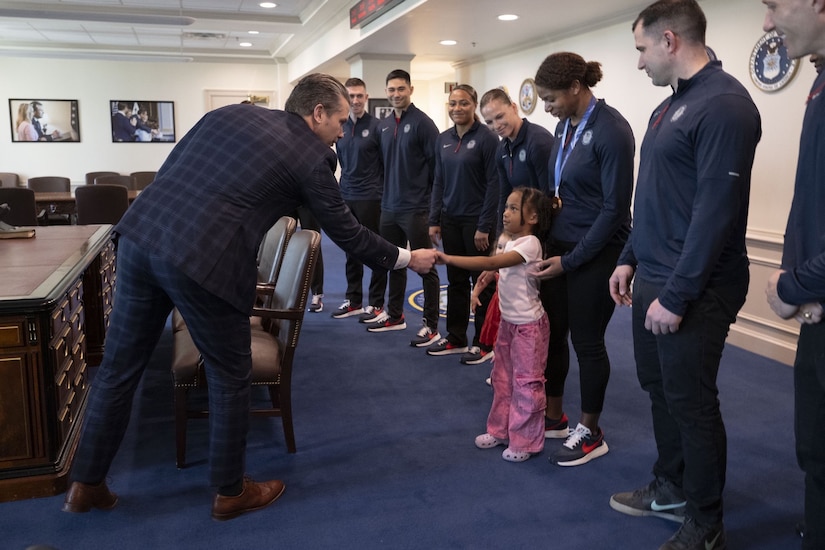
And for the military, Bremer said those stellar athletes in uniform showcase to the whole world two of the things the military is all about: fitness and discipline.
Program athletes advance their own goals by serving, but they advance the military by being top-level ambassadors who authentically demonstrate what the U.S. military is capable of achieving. When they share that they both serve in uniform and represent their nation at the Olympics as athletes, they make military service appealing to young Americans who also value fitness, discipline and patriotism and who are looking for a place that will make use of what they know they can bring to the table.
"It's a symbiotic relationship," Bremer said. "Athlete endorsers are the highest sought endorsers ... and these authentic testimonials are the gold standard. And so, what we have are some of the world's greatest athletes who have actually joined the military, who are actually serving the military, actually pursuing a career in the military — you cannot get a better testimonial ... than that."
Following their visit to the Pentagon, the athletes traveled to Nationals Park in Washington, where they met with the MLB team during batting practice and were recognized before the first pitch. Just before the start of the game, the Olympic athletes took the field and welcomed the Nats to their positions.





 Posts
Posts

