Thursday, January 29, 2026

Coast Guard Cutter Polar Star Marks 50 Years of Service, Begins Operation Deep Freeze

The U.S. Coast Guard cutter Polar Star began icebreaking operations in the Southern Ocean in support of Operation Deep Freeze 26 and marked its 50th year of commissioned service Jan. 17 by freeing and escorting a cruise ship trapped in a pack of ice.
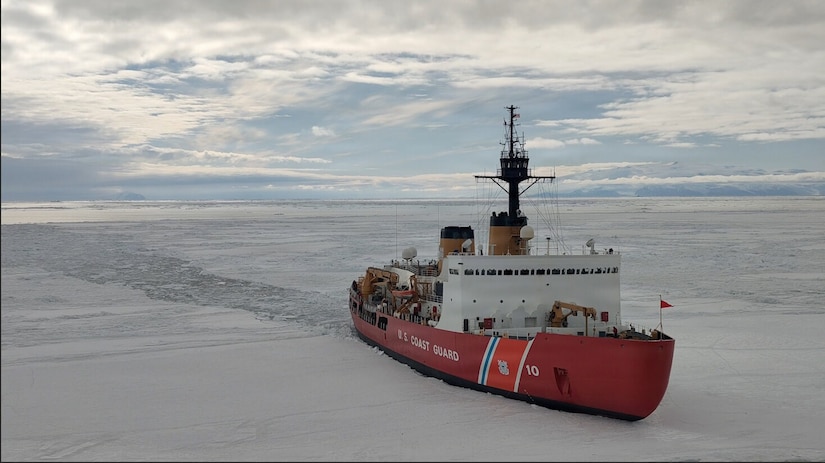
A large ship with the words, “U.S. Coast Guard” written on the side, sails through icy water, leaving a trail of broken ice and open water behind it.

The Australian-owned cruise ship contacted the Polar Star at approximately 11 p.m., local time, Jan. 16, after becoming beset in a pack of ice roughly eight nautical miles from McMurdo Sound, Antarctica. The Polar Star's crew conducted two close passes to break the vessel free, then escorted it approximately four nautical miles to open water. 

The Polar Star departed Seattle in November for its 29th deployment to Antarctica in support of Operation Deep Freeze. 

The operation provides logistical support for the U.S. Antarctic Program, which is managed by the National Science Foundation. The mission includes strategic and tactical airlift, airdrop, aeromedical evacuation, search and rescue, sealift, seaport access, bulk fuel supply, cargo handling and other transportation requirements.
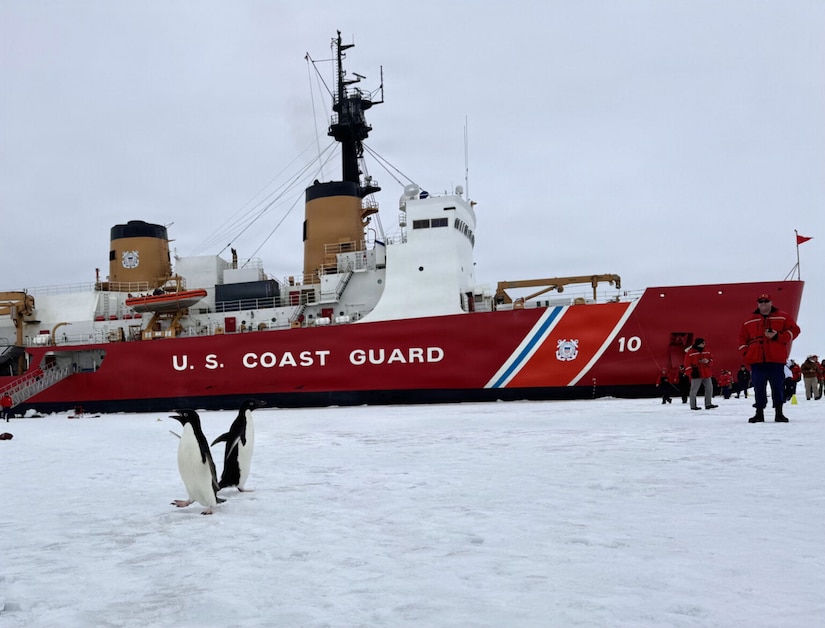
Dozens of people in winter attire and two penguins walk on ice as a large ship is docked in the background with the words, “U.S. Coast Guard,” written on the side.

These efforts enable critical scientific research in one of the most remote regions on Earth. The ship's role in Operation Deep Freeze includes breaking a navigable channel through miles of dense Antarctic ice to allow fuel and cargo deliveries essential for sustaining research stations and operations.

Commissioned Jan. 17, 1976, the Polar Star is the nation's only active heavy icebreaker and has served as a cornerstone of the U.S. presence in the polar regions. For five decades, the cutter has executed missions including Antarctic resupply, search and rescue, environmental protection and national defense. 

As the cutter transits the Southern Ocean en route to Antarctica, its crew reflected on a half-century of service defined by resilience, adaptability and dedication.
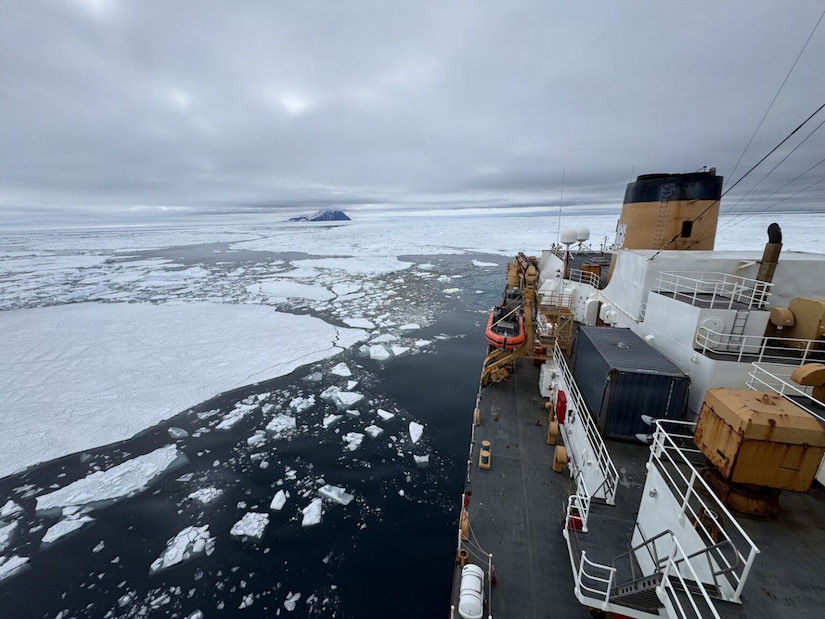
A large ship sails through icy water. There is a trail of broken ice behind the ship.

"I am constantly amazed at this crew's tremendous energy and enthusiasm," said Coast Guard Capt. Jeff Rasnake, CGC Polar Star commanding officer. "Despite the many challenges associated with getting and keeping this ship on mission, they remain eternally positive and committed to meeting the high standards we've set for ourselves."

Throughout its service life, the Polar Star has completed dozens of Operation Deep Freeze missions and numerous Arctic deployments, defending U.S. sovereignty, securing critical shipping lanes, protecting energy and mineral resources, and countering adversarial presence in the polar regions. Despite its age, the cutter continues to demonstrate unmatched heavy icebreaking capability, routinely operating in conditions few vessels can navigate.
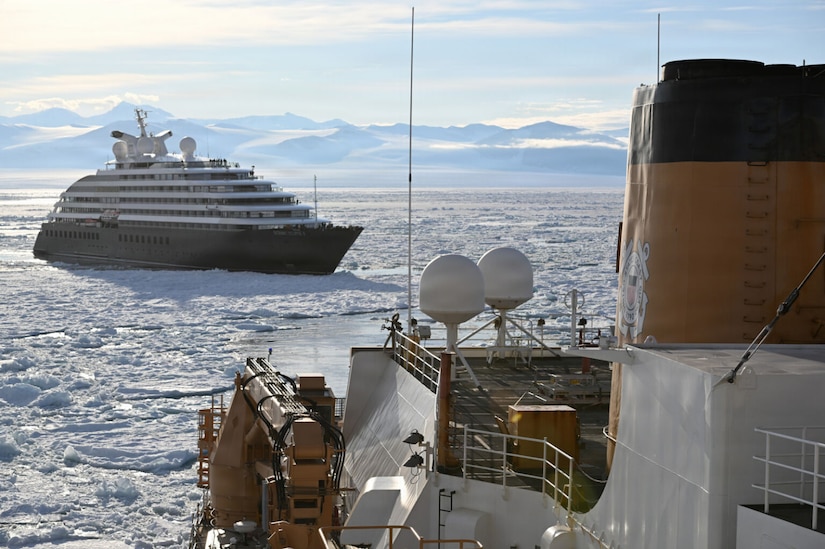
A large ship sails through icy water as a cruise ship follows close behind. There are snow-covered mountains in the background.

"At 50 years old, [the] Polar Star remains the world's most capable non-nuclear icebreaker," said Coast Guard Cmdr. Samuel Blase, the ship's executive officer. "That's a testament to the crews that have maintained it over the decades. With years of service left to give, [the] Polar Star will continue to guide the way in the high latitudes well into the future." 

As the cutter undertakes another demanding deployment, its 50th anniversary underscores both the ship's enduring capabilities and the professionalism of its crew.
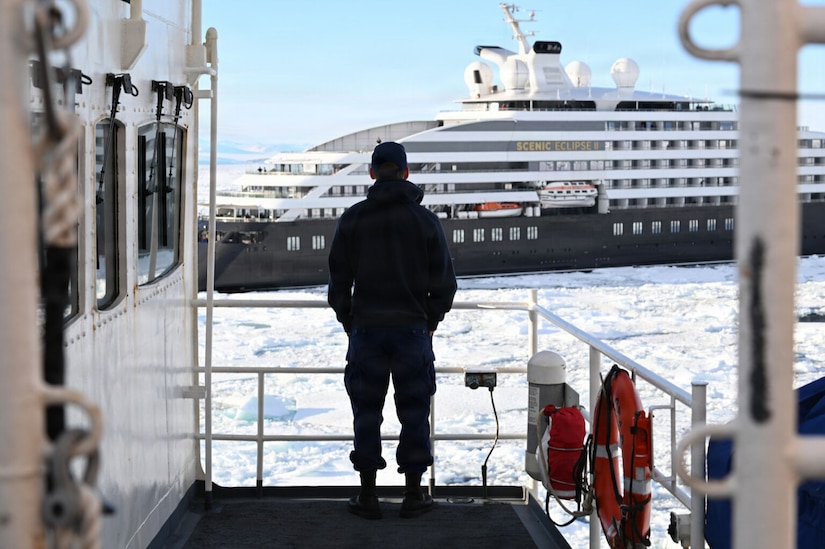
A person in winter attire stands on the deck of a ship looking across icy water at a cruise ship.

"While the term 'historic' has lost meaning through overuse, there is no doubt that this is an amazing ship," Rasnake said. "[The] Polar Star's 50 years of service in the polar regions puts it in the discussion with other great Coast Guard icebreakers." 

As the Polar Star presses south through freezing seas and thickening ice, the crew carries forward a proud tradition of service. The 50th anniversary serves as both a celebration of the past and a reminder of the cutter's ongoing role at the forefront of U.S. polar operations. 

National Guard Repair Depot Key to Army Aircraft Maintenance

At the Connecticut National Guard's 1109th Aviation Classification and Repair Depot, workers refurbish and maintain the Army's fleet of rotary-wing aircraft. This unique job can save the War Department millions of dollars a year.

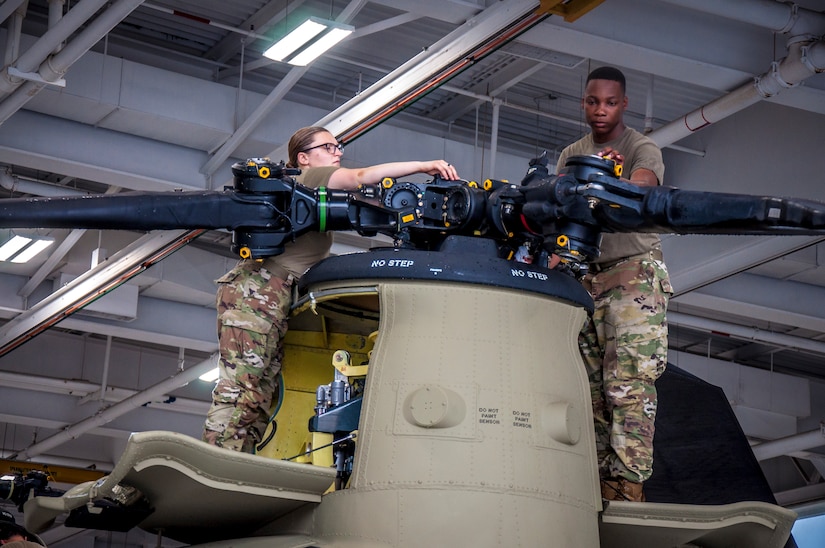
A man and a woman in camouflage military uniforms stand on a helicopter as they repair the rotor blade.

Unlike field units that are trained and equipped to conduct basic maintenance on their aircraft, the repair depot is capable of stripping a helicopter — whether it's a UH-60 Black Hawk, a CH-47 Chinook or an AH-64 Apache — to its nuts and bolts and rebuilding it to factory standards, as if it just rolled off the assembly line.

"We are considered a sustainment-level facility in that we can do the highest-level maintenance comparable with any Army aviation depot," said Army 1st Sgt. Jarod Meekhoff, a quality control inspector for aircraft and aviation maintenance at the repair depot. "The kind of work that we do is highly technical, which is why we have a lot of specialized tools, equipment and specialized individuals here with the knowledge and skills capable of doing that."

Connecticut is home to some of the country's largest military-industrial businesses. It is fitting, then, that Connecticut is also home to the repair depot. The facility, based in Groton, Connecticut, employs highly skilled uniformed mechanics and some of the industry's most experienced civilian contractors to refurbish and maintain the aircraft. 

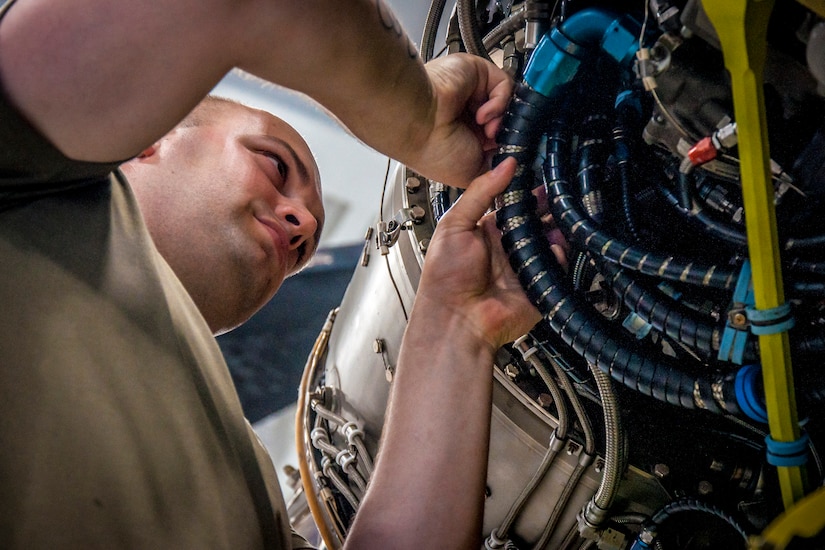
A man in a brown T-shirt adjusts hoses in a military helicopter engine.

 
"In doing depot maintenance, we can basically take an aircraft and overhaul it from the ground up," Meekhoff said. "That's removing all the components, stripping all the paint, doing significant structural upgrades, structural repairs, component repairs [and] component overhauls." 
 
One of the best examples of this facility's cost-saving capability came in 2019, when the repair depot received two battle-damaged Chinooks that were deemed inoperable. In just two years, even with the constraints imposed by the COVID-19 pandemic, these two helicopters were stripped down, analyzed, repaired, repainted and returned to the fleet as fully functional machines, sparing the military millions of dollars in buying new helicopters. 
 
Holding important certifications qualifies the repair depot to bid on special aviation maintenance projects offered by the Army. This allows soldiers and contractors at the facility to develop skills and knowledge comparable to those of their civilian defense industry counterparts. 

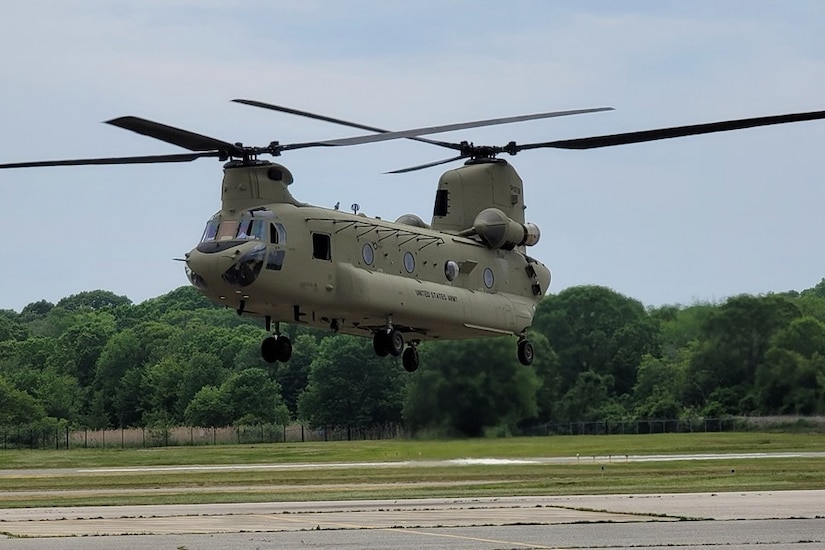
A large military helicopter hovers above a tarmac. There is a wooded area in the background.

 
Working at the depot provides an opportunity for those interested in the aviation or aerospace industries to acquire skills and experience that will help advance their careers. 
 
"Because of the level of maintenance and the kind of very technical maintenance that we do, our maintainers will walk away with a much better understanding of not just helicopters and aircraft, but general maintenance and procedures, which absolutely translates to all the civilian companies that do any sort of production, manufacturing or assembly," Meekhoff said. 
 
In addition to the repair depot, the facility is home to the 1109th Theater Aviation Support Maintenance Group, the traditional National Guard unit to which many of the uniformed personnel are assigned. These soldiers are capable of going downrange and performing high-level depot maintenance on aircraft on the front lines of the War Department's efforts to maintain peace and stability worldwide.