Tuesday, September 16, 2025

Hegseth Welcomes Top Army Rangers to Pentagon

 Sept. 16, 2025 | By Matthew Olay, Pentagon News

Secretary of War Pete Hegseth hosted a pair of U.S. Army Rangers at the Pentagon today, following the soldiers having won the Army's 41st Annual David E. Grange Jr. Best Ranger Competition earlier this year. 
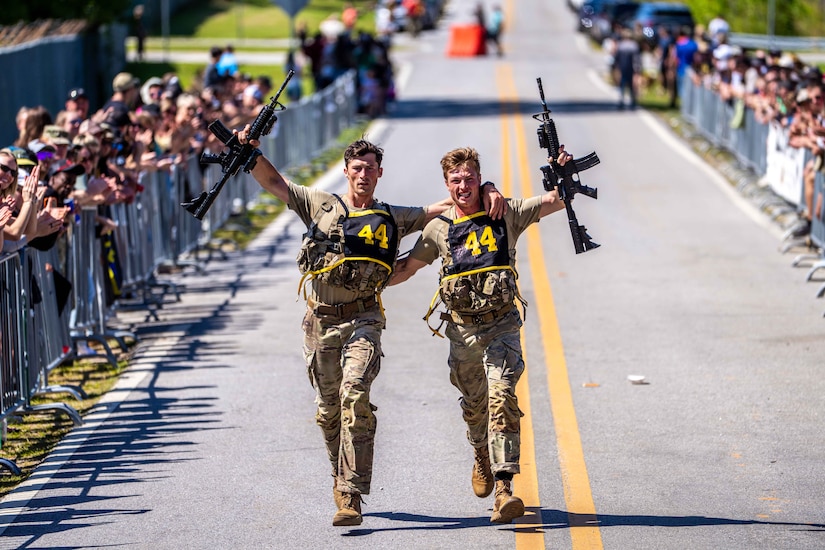
Two men in camouflage military uniforms run on a road with their arms around each other while holding rifles in the air. On either side of the road, long lines of spectators cheer them on.

Hegseth invited Army Capt. Kevin Moore and Capt. Griffin Hokanson — both from the 75th Ranger Regiment, and both of whom were first lieutenants at the time — to the Pentagon via social media, shortly after the two secured victory at the competition, April 13.  

Hegseth said he wanted to invite the soldiers to Washington because they exemplify the warrior ethos, a topic of which's restoration the secretary highly prioritizes within the War Department. 

"I think how you prepare is indicative of how you might perform, and preparing by performing at the highest level is exactly what we would want everybody to aspire to," Hegseth said after meeting with the Rangers in his office. 

He went on to say that the best of the best Army Rangers and the Best Ranger Competition embody the highest level of competition, and that bringing the Rangers to the Pentagon was a way to showcase excellence.  

"That's what it is: excellence … Our enemies know what we're capable of … [and] these two captains embody that," he added.  

Both Moore and Hokanson agreed that the annual event is directly linked to the warrior ethos.  

"I think competition is an extremely important part of that warrior ethos, driving everybody to higher levels and greater heights," Moore said, adding that he thinks the competition works to make the Army, as a whole, better.  

"For me, the warrior ethos is being an expert in your craft. And, as members of the [75th] Ranger Regiment, I feel like … that warrior ethos has always been there; and I think you can see that by the Ranger Regiment's performance in the Best Ranger Competition," Hokanson said.  

Prior to meeting with Hegseth, the two Rangers received a roughly 45-minute, private tour of the Pentagon that heavily focused on the Army's history. 

"The Pentagon tour, it's great. Coming from the Ranger Regiment, you kind of reflect on what the [Regiment's] been doing over the past 20-plus years, going back to the terrorist attacks that sparked our conflicts that we've lived through," Hokanson said.  

"I was a history major in college … [so] most of the stuff on that tour was actually quite interesting to me, and it's just very interesting to see everything that's out there," Moore said of the tour, adding that this was his first visit to the Pentagon. 

"It's been really incredible," he said.  

Held from April 11 to 13 at Fort Benning, Georgia, the 2025 Best Ranger Competition saw 52 teams from an assortment of Army units — including the Army National Guard — competing against each other in a series of challenges.  

Each day saw a number of teams getting cut from the competition, with Moore and Hokanson placing first in the competition's final event just prior to being named the competition's overall winners. 

This was the fourth year in a row that soldiers from the 75th Ranger Regiment were victorious in the competition. 

"Most people can't do 10 minutes of what you did, and yet, you did it for days and days on end and at a really high level," Hegseth told Moore and Hokanson while commenting on their success at this year's BRC. 

"That's why we wanted to celebrate and recognize [you]."  

Air Force Celebrates 78 Years of Air Superiority

 Sept. 16, 2025 | By David Vergun, Pentagon News

The Department of the Air Force was established 78 years ago on Sept. 18, 1947, making it the third military department, alongside the Departments of the Army and Navy.

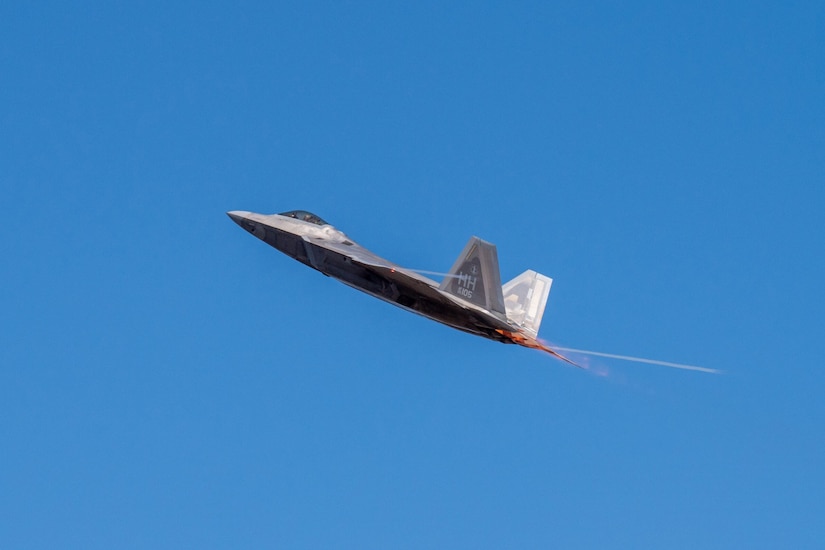
A jet takes off at a 45-degree angle against the backdrop of a blue sky.


Its creation was the result of the National Security Act of 1947, which formed the National Military Establishment. Less than two years later, the establishment became the Department of Defense, and on Sept. 5, 2025, President Donald J. Trump signed an executive order renaming DOD as the War Department.

Included in the Department of the Air Force are the Air Force, Space Force, Air Force Reserve, Air National Guard and the Civil Air Patrol. The Air National Guard is the Air Force's component of the National Guard Bureau, along with the Army National Guard. 

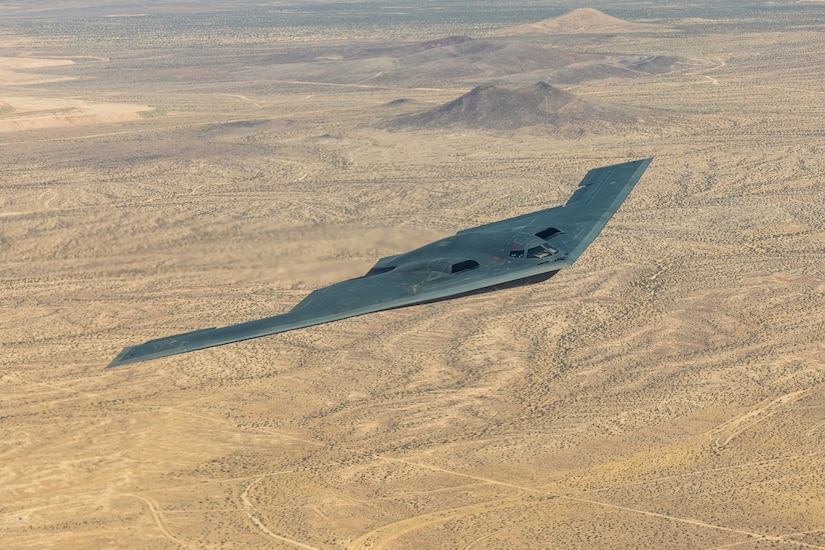
A triangular-shaped jet soars over a brown desert.

The Air Force mission is to fly, fight and win — airpower anytime, anywhere. It is achieved by air superiority, global mobility in troop movement and munitions for the joint force and maintaining two legs of the nuclear triad: bombers and intercontinental ballistic missiles.  

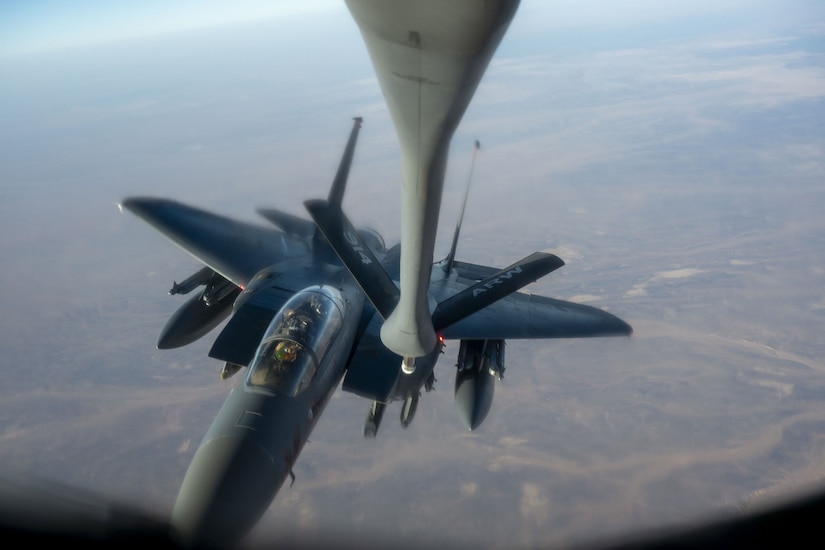
A nozzle extends down toward a jet flying high above a hazy terrain.
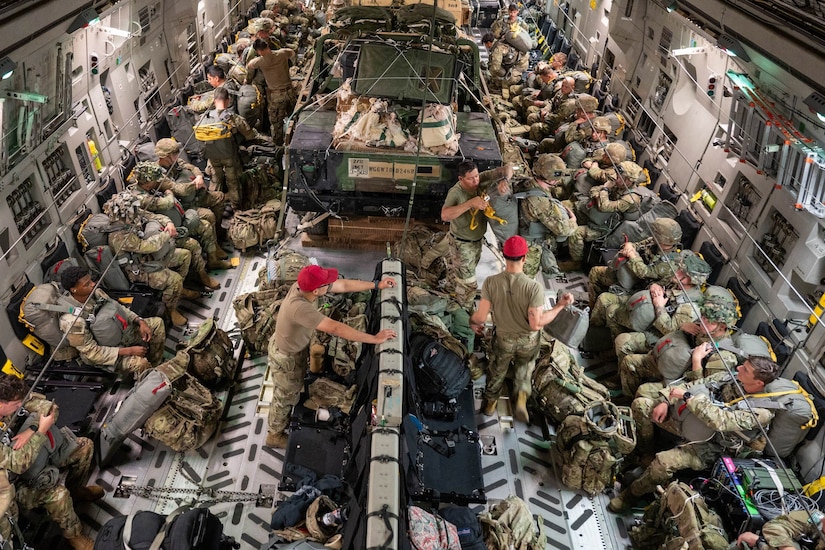
Dozens of troops in camouflage uniforms wearing parachutes sit inside an aircraft.
The Air Force also supports humanitarian and natural disaster missions. 

The Air Force was originally a part of the Army beginning in 1908, when the service received its first powered military aircraft from the Wright brothers. 

During World War II, the air arm of the Army was known as the Army Air Forces, a designation that lasted until the creation of the Air Force. 

The Army was never eager to give up its air branch, particularly for close air support. In the 1950s, the service began taking delivery of helicopters, thereby effectively re-creating an air arm for troop movements and fire support. 

The Navy and Marine Corps fared better, as they retained all their fighter and transport aircraft.

Pinning the Rank: Tradition, Symbolism, and Community in Military Promotions

In the United States armed forces, promotion ceremonies are not merely administrative events; they are traditions that carry symbolic and cultural weight. Central to these ceremonies is the ritual of “pinning,” when new rank insignia is physically attached to a service member’s uniform by family, mentors, or fellow service members. More than a gesture, the pinning tradition reflects the institutional values of duty, honor, and shared sacrifice that define military life.

Historical Origins

The origins of pinning ceremonies can be traced to longstanding military customs in which the conferral of new status was marked by public recognition. As uniforms became standardized in the 19th century, insignia evolved into clear symbols of authority and responsibility. According to the U.S. Army Center of Military History (2010), rank insignia not only distinguished hierarchy but also became central to military discipline and cohesion. The act of pinning continues this lineage, signifying the official recognition of advancement while embedding the event in ritual form.

The Ceremony Itself

A promotion ceremony generally begins with the reading of promotion orders, often followed by remarks from a commander or senior leader. The centerpiece of the ceremony is the actual pinning of insignia on the uniform collar, chest, or shoulder, depending on the branch and rank. Family members, mentors, or close colleagues are invited to perform the pinning, underscoring that promotions represent both personal achievement and communal support. The U.S. Navy’s ceremonial guidance emphasizes that this ritual honors the “trust and confidence” placed in the promoted service member (U.S. Navy, 2018).

Symbolism of the Pinning

Pinning is rich with symbolism. The insignia itself represents not just higher pay grade but increased responsibility, leadership, and expectations of service. Having loved ones or mentors affix the new rank highlights the sacrifices of families and the mentorship that fosters professional growth. Scholars of military tradition argue that such rituals serve as “rites of passage,” reinforcing identity and cohesion within the force (Janowitz, 1960). In this sense, pinning embodies both the professional and personal dimensions of military life.

Variations Across Branches and Ranks

Though the core ritual is consistent, traditions vary across branches. In the Army and Marine Corps, pinning frequently involves family members and occurs in both formal and field environments. The Air Force often incorporates the recitation of the Airman’s Creed or words from the chain of command. The Navy’s tradition of “wetting down” parties, often accompanying officer promotions, demonstrates cultural variations tied to branch heritage (U.S. Navy, 2018). At higher ranks, such as general or flag officer, ceremonies are conducted with heightened formality, sometimes involving senior officials and larger audiences.

The Role of Family and Community

One of the most meaningful aspects of pinning ceremonies is the inclusion of family and community. Spouses, children, and parents are often invited to participate, acknowledging the sacrifices endured by families during deployments, relocations, and long working hours. This shared moment affirms that promotions are not achieved in isolation. According to Segal and Segal (2004), military family traditions like pinning ceremonies strengthen bonds between the military institution and the civilian community, ensuring recognition of both individual achievement and collective sacrifice.

Modern Adaptations

While rooted in tradition, pinning ceremonies have adapted to contemporary circumstances. During overseas deployments, ceremonies may take place in austere environments, with photographs or livestreams shared with families back home. In the COVID-19 era, some units conducted virtual pinning ceremonies, balancing public health with the need for ritual recognition (Department of Defense, 2020). These adaptations demonstrate the resilience of the tradition while maintaining its symbolic power.

Conclusion

The tradition of pinning in military promotion ceremonies represents far more than a formal acknowledgment of advancement. It is a ritual that connects the individual to their service, their family, and the long history of the armed forces. By combining institutional symbolism with personal involvement, pinning ceremonies remind service members and their communities that each promotion is both a personal milestone and a reaffirmation of collective duty. As such, the act of pinning endures as a cornerstone of military culture, bridging past and present, family and service, individual and nation.


References

Department of Defense. (2020). Military ceremonies in the time of COVID-19. Washington, DC: U.S. Government Printing Office.

Janowitz, M. (1960). The professional soldier: A social and political portrait. New York, NY: Free Press.

Segal, D. R., & Segal, M. W. (2004). America’s military population. Population Bulletin, 59(4), 3-40.

U.S. Army Center of Military History. (2010). American military history, volume I: The United States Army and the forging of a nation, 1775–1917. Washington, DC: U.S. Army.

U.S. Navy. (2018). Navy ceremonies and traditions manual. Washington, DC: Department of the Navy.