Friday, April 10, 2026

Dangers of Disease in American Revolutionary War

As America celebrates 250 years of independence, here is a look back at the price the Revolutionary War service members paid for freedom.

A painting shows a man with a gaping chest wound.

Besides being killed by the enemy, the thing most feared by soldiers during the war was dying from disease — and with good reason. Historians have said that many more died from disease than from combat. 

In November 1775, soldiers, led by Continental Army Col. Benedict Arnold, marched on Quebec City. The following month, an outbreak of smallpox occurred preventing the Americans from taking the city. 

As smallpox was quickly spreading in America, Gen. George Washington, Continental Army commander, ordered his troops to be immunized against the disease.   

"Necessity not only authorizes but seems to require the measure," he said. "For should the disorder infect the Army, in the natural way, and rage with its usual virulence, we should have more to dread from it, than from the sword of the enemy." 

The inoculation procedure involved inserting an active smallpox pustule into the skin of a healthy soldier and then quarantining him for a period of time. This proved successful and enabled the Americans to have battlefield successes. 

Besides smallpox, bringing soldiers together in close quarters with poor nutrition and sanitation caused diseases such as dysentery, typhus, typhoid, dengue fever, cholera, fever and diarrhea to spread.
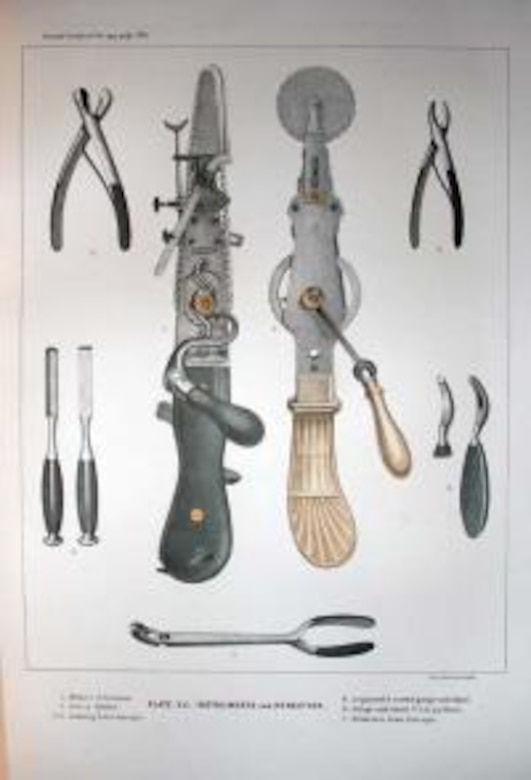
A diagram shows surgical instruments used during the Revolutionary War.

The procedure for extracting a musket ball from a soldier involved the surgeon extracting it with forceps — if it could be reached. The forceps were usually never cleaned and the surgeon operated without gloves, spreading germs and causing infections. 

Since there was no anesthesia available then, surgeons gave the soldiers alcohol to drink — if they had any — to help ease the pain. 

The vast majority of surgeons didn't go to medical school, learning instead through apprenticeships. Dubious treatments included treating the sick by balancing the body's four fluids — blood, yellow bile, black bile and phlegm. Rebalancing was done through bloodletting and purging through various teas and medicines. 

Today's military medicine has come a long way since that war. 

Army Launches Data Operations Center, Giving Warfighters Decisive Edge

The Army launched the Army Data Operations Center April 3 — a key initiative designed to transform how it manages and uses its vast data resources to ensure decision dominance on the modern battlefield.

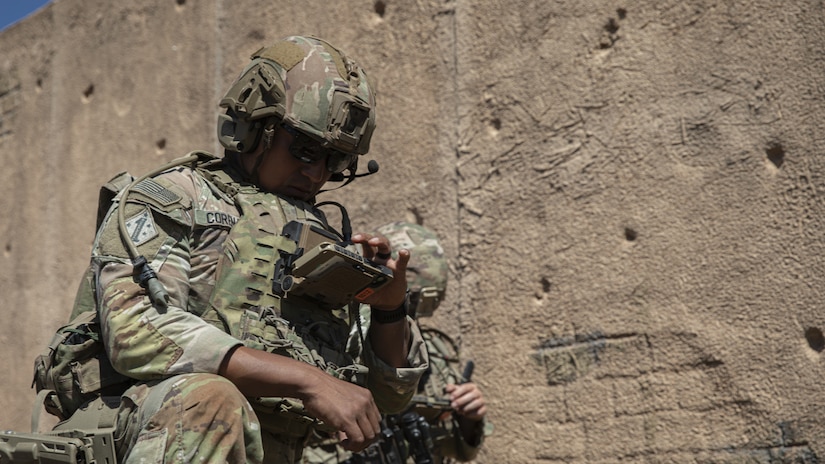
A man wearing a camouflage military uniform and helmet sits in a desert environment and looks at a handheld device; a person in similar attire is behind him doing the same.

The data center will serve as the operational engine for the Army's transformation into a data-centric force. It will connect commanders at all echelons to the full power of the Army's enterprise data, ensuring warfighters have access to the right information at the right time.

Although the Army possesses a wealth of data from operations worldwide, much of this information has been fragmented across legacy systems and organizational stovepipes. The data operations center is designed to bridge that gap.

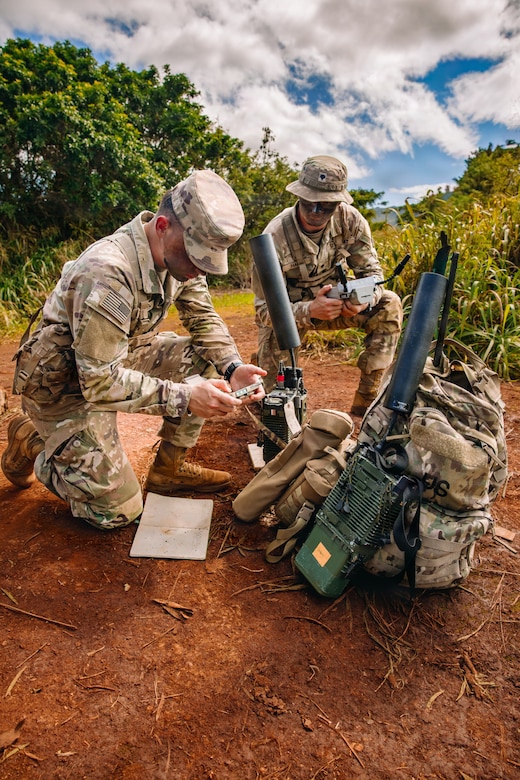
Two people wearing camouflage military uniforms crouch in the dirt to assemble military equipment under a blue sky with clouds, and trees in the background.

"Commanders are not short on data," said Army Lt. Gen. Jeth Rey, deputy chief of staff for the Army G-6. "We have tons of data on our battlefield and in our enterprise. We don't have a data problem. We have a data management problem, and data becomes the ammunition that we need to provide to our senior leaders in order for them to make quick and informed decisions and gain decision dominance."

Organized under U.S. Army Cyber Command, the data operations center will function as a centralized data service, described by officials as a "911 for data." A team of expert data brokers will be responsible for identifying authoritative sources, establishing secure connections and routing critical information to the point of need — from enterprise systems to joint and coalition partners.

"The Army Data Operations Center represents a pivotal step in our journey to becoming a truly data-centric force," said Army Lt. Gen. Christopher Eubank, Army Cybercom commander. "By enabling seamless access to trusted, actionable data, [the data center] ensures that our commanders and soldiers are equipped to make precise, timely decisions. This capability is essential to maintaining our advantage. … Ultimately allowing us to set the land domain through the cyber domain."

To guide the center's development, the Army established a task force to execute a 180-day pilot program.

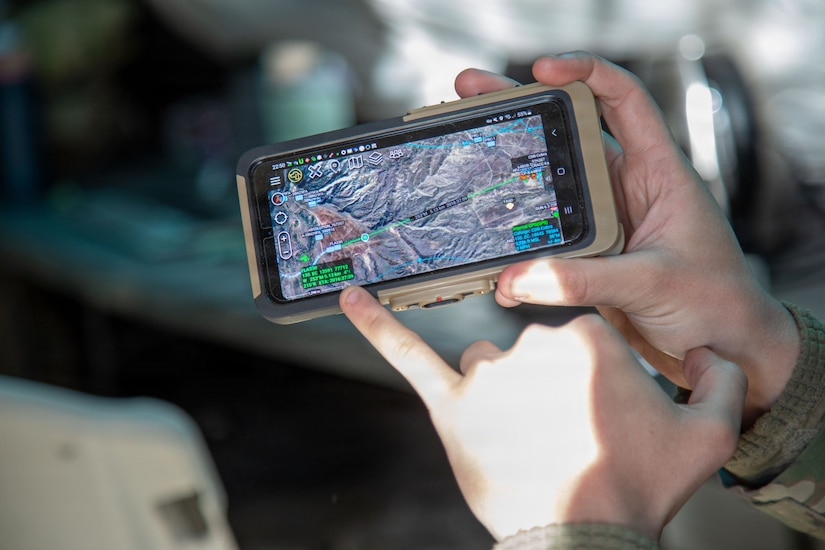
A close-up view of a person holding a handheld device depicting terrain, coordinates and other information.

"The is ultimately intended to be the 911 for the operational force to call when they have a data management [or] data connectivity issue," said Army Brig. Gen. Michael Kaloostian, data center task force director. "We are the ones [who] are going to alleviate the burden from those divisions."

As it matures, the Army Data Operations Center will also aim to operationalize data for artificial intelligence and machine learning — managing the Army's AI model garden and shortening the sensor-to-shooter timeline. By refining raw data into actionable intelligence, the data center will enable soldiers at every echelon to out-think and outmaneuver adversaries, securing the Army's advantage now and in the future.