The American flag is a symbol of freedom and patriotism,
but before the Continental Congress adopted the first official flag in
1777, many other flags were flown.
As America celebrates 250 years of freedom, here's a look at a few of
the various United States flags flown during combat by soldiers,
sailors, Marines and militia during the American Revolutionary War.
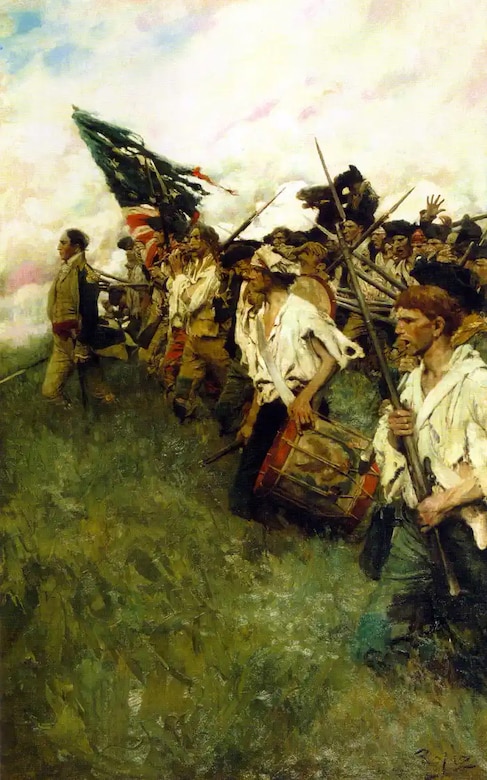
Flags were a significant part of the war, as they served to instill
esprit de corps in the men and also aided in rallying the troops, as the
flag carrier led from the front. They expressed liberty and national
identity, as well as a means to assert sovereignty against British
rule.
The use of colors — the term for the banners and
flags — dates back to the Middle Ages in Europe, when knights displayed
their distinctive symbols and colors on their shields to identify one
another on the battlefield. The ancient Romans and Greeks also carried
banners with symbols of their leaders into battle.
Today, the American flag, also known as the Stars and Stripes and Old
Glory, serves to unite the nation and inspire
patriotism. Although military units have their own colors, all fly the
American flag higher, giving it the most prominent position.
The Hopkinson flag
Most historians agree that Francis Hopkinson was the designer of the
first official American flag. On June 14, 1777, the Second Continental
Congress adopted the Hopkinson flag, calling it the Stars and Stripes.
Since there were only 13 states then, the design featured 13 stripes
and 13 six-pointed stars arranged in rows on the field of blue. He also
designed a very similar flag for the Navy, which looks similar to
today's flag because the red stripes are located at the top and bottom.
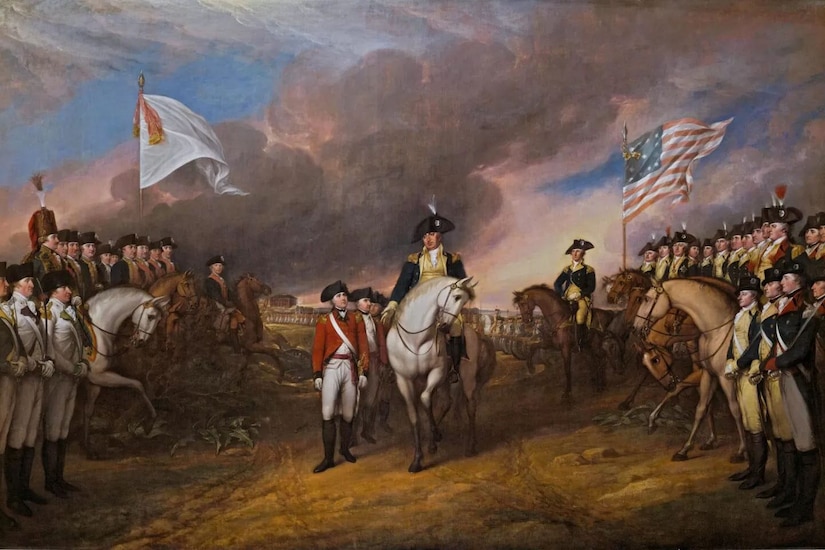
The Hopkinson flag was first carried into combat during the Battle of Brandywine, Sept. 11, 1777, just outside Philadelphia.
Hopkinson also helped design the Great Seal of the United States and was a signer of the Declaration of Independence; many consider him a Founding Father.
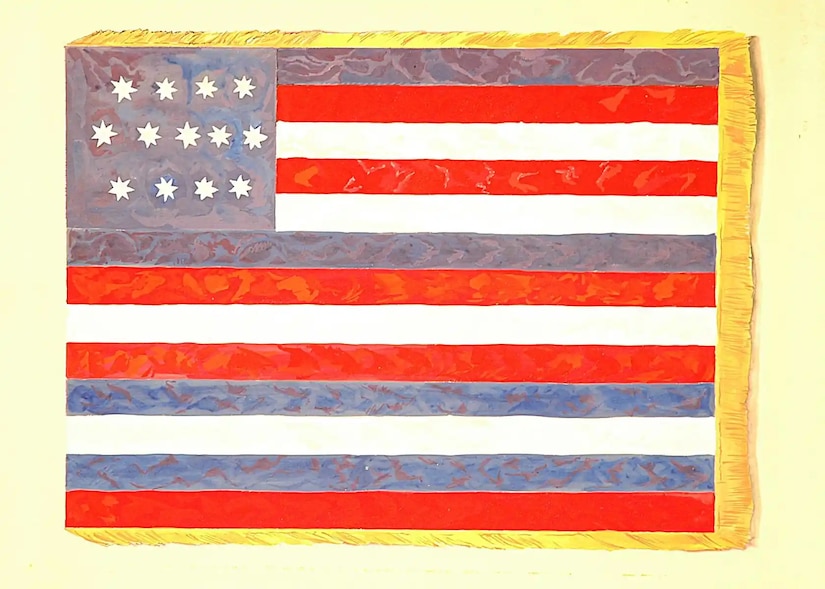
The Serapis flag
Featuring 13 blue, red and white stripes and 13 stars, the Serapis
flag design is similar to the Hopkinson flag except for the arrangement
of stars and the blue stripes.
The flag has an unusual origin story: it was named for the Royal Navy frigate HMS Serapis.
The Serapis engaged the American warship USS Bonhomme Richard under
the command of Continental Navy Capt. John Paul Jones in the North Sea
near England on Sept. 23, 1779.
The battle resulted in the capture of the Serapis. Jones' ship was
badly damaged and sank, so he sailed the Serapis to the neutral Dutch
port of Texel without a flag — technically making him a pirate.
Benjamin Franklin, then an ambassador to France, was asked to provide
a flag that Jones could use. Once created, the flag diffused the
diplomatic tension, and Jones was released by the Dutch.
The Serapis flag was one of the first flags of the United States,
although it was never used in an official capacity. However, it is
strongly associated with Jones and his heroics as one of the great
captains of the Continental Navy and his contributions to the war
effort.
The flag is used to this day on the USS John Paul Jones, a missile
destroyer commissioned in 1991 to honor the famous captain. It is
sometimes called the Franklin flag in honor of the Founding Father who
helped create it.
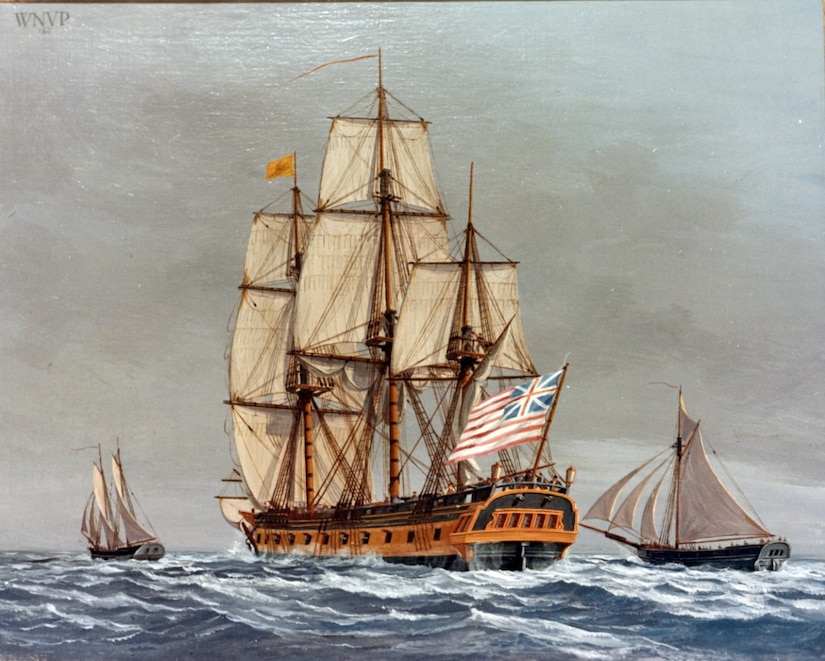
The Grand Union flag
Also known as the Congress flag, the Cambridge flag and the
Continental Union flag, the Grand Union flag is the first national flag
of the United States; it was flown from 1775 to 1776.
The Grand Union flag consisted of 13 red and white stripes with the
British Union Jack located in the area now occupied by stars. The flag
was first flown by Continental Navy Lt. John Paul Jones on Dec. 3, 1775,
on the USS Alfred.
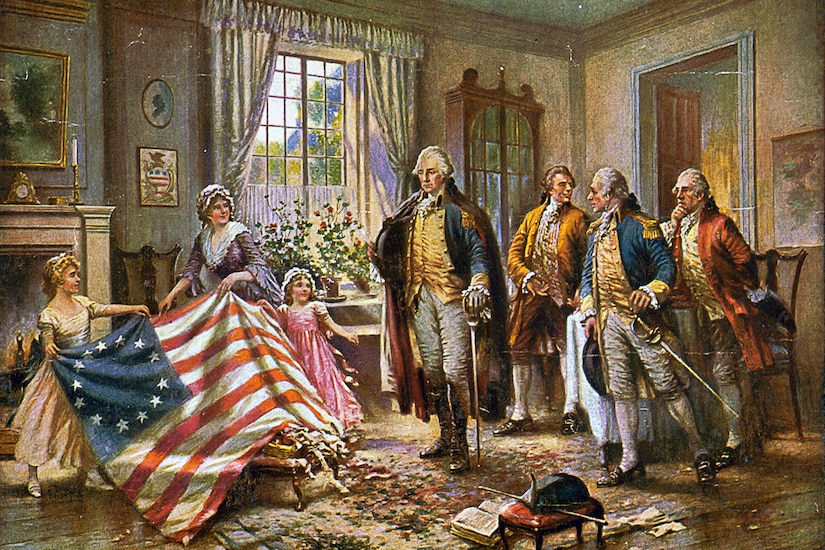
The Betsy Ross flag
Betsy Ross was a professional upholsterer in Philadelphia from the
early 1770s until she retired in 1827. While there is no historical
evidence, many people believe she designed the American flag. During and
after the war, Ross made a variety of military flags over the course of
50 years.
The Betsy Ross flag is similar to the other flags in that it has 13
stripes and 13 stars on a field of blue, but rather than rows, her
design includes five-pointed stars arranged in a circle.





 Posts
Posts

