Monday, June 22, 2026

Medal of Honor Monday: Army Lt. Col. Robert G. Cole

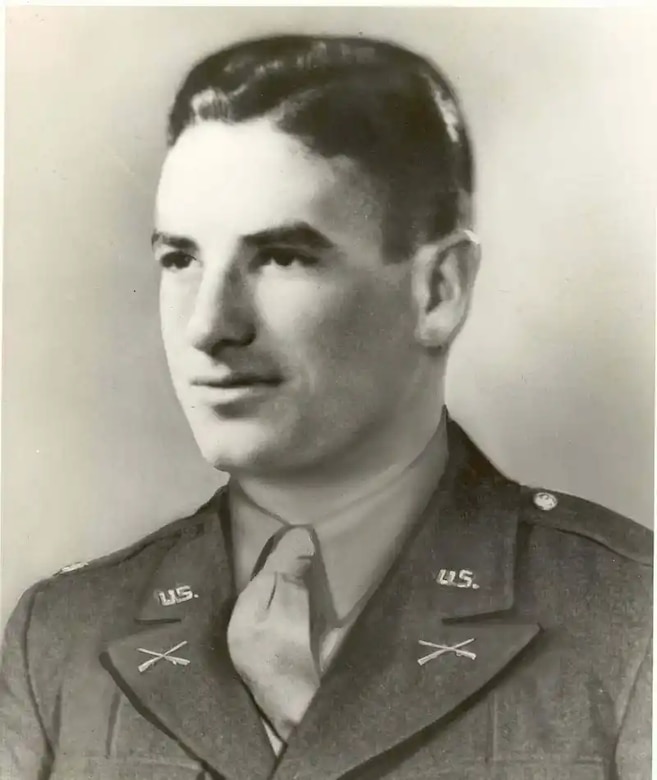
A man is pictured wearing a military dress uniform.

Army Lt. Col. Robert G. Cole was a 101st Airborne Division paratrooper who fought in the European Theater during World War II, where his valorous actions near Carentan, France, earned him the Medal of Honor. 

Cole was born to Army Col. Clarence Leroy and Clara Hoff Cole, March 19, 1915, in Fort Sam Houston, Texas. His father served as an Army doctor and his mother was a teacher at the Mark Twain School in San Antonio. He had two siblings, Leroy and Mary. 

In 1933, Cole graduated from Thomas Jefferson High School in San Antonio and joined the Army, July 1, 1934. Nearly one year later, June 26, 1935, he was honorably discharged to accept an appointment to the U.S. Military Academy at West Point, New York, where he played on the football team. 

He married his childhood sweetheart Allie Mae Beall in 1940, and they had a son, Robert Bruce.

After graduating from West Point in 1939, he was assigned to the 15th Infantry Regiment at Fort Lewis, Washington. While serving there, he befriended Lt. Col. Dwight D. Eisenhower, who commanded the 1st Battalion, 15th Infantry Regiment, and later became the regimental executive officer. 

After volunteering and being accepted for airborne duty in 1941, Cole was assigned to the 501st Parachute Infantry Battalion at Fort Benning, Georgia, and trained to become a paratrooper. He earned his jump wings in March of that year.  

The Army changed its command structure in the early 1940s to meet the demands of World War II, and the parachute battalions were divided into regiments. In 1942, Cole was transferred to the 3rd Battalion, 502nd Parachute Infantry Regiment, 101st Airborne Division, and was subsequently appointed commander. 

In 1943, the division sailed to England to prepare for Operation Overlord, the D-Day invasion of Normandy, France. While there, he met his friend, Eisenhower, who was now a general and the Allied supreme commander. 

A few days after D-Day, at the onset of the Battle of Carentan, June 10, 1944, Cole led his 400-man battalion in a single file line through an exposed raised road with marshes on both sides that led to the last four bridges over the Douve River floodplain and Carentan, France. The 101st Airborne Division had been ordered to seize Carentan and link up with the 29th Infantry Division.
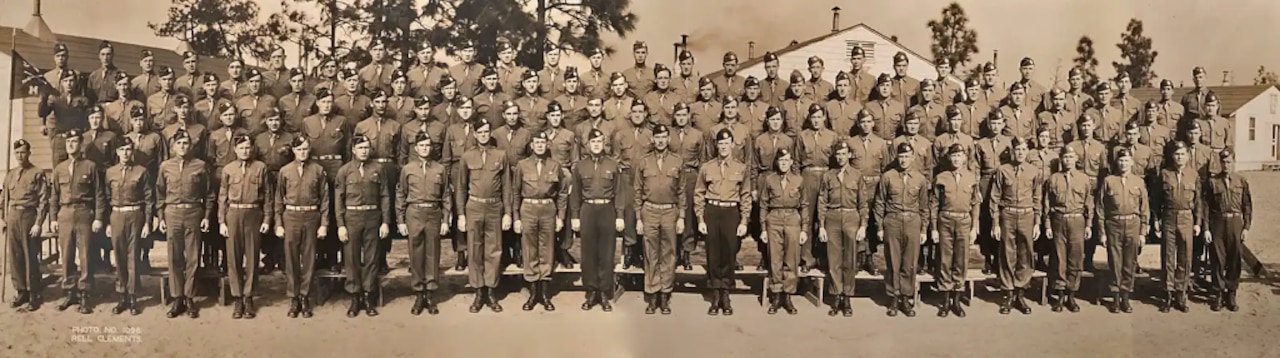
Soldiers wearing Army khakis stand on bleachers and pose for a photo.

German troops were dug in by hedgerows behind a large farmhouse. As the battalion advanced to the river, they were subjected to continuous fire from machine guns, artillery and mortars, sustaining many casualties. They came upon a mobile anti-tank obstacle, known as a Belgian gate, that only allowed one man to pass through at a time. After enduring a night of shelling and bombing, Cole's remaining 265-man battalion moved through the obstacle and prepared for an assault, June 11, 1944. The German troops at the farmhouse continued to resist, so Cole ordered a bayonet charge that he led. The battalion engaged in hand-to-hand combat with the enemy, forcing the Germans to retreat but not without suffering 130 additional casualties. The assault became known as the "Cole Charge" and led to the establishment of a bridgehead across the Douve River and the capture of Carentan. 

After the Battle of Carentan, Cole led his paratroopers into their next battle as part of Operation Market Garden, Sept. 17, 1944, when they parachuted into the Netherlands 

Their mission was to secure bridges in Sint-Oedenrode, North Brabant, Netherlands, which they did. The battalion then moved out to the town of Best to secure railroad bridges. 

On the morning of Sept. 18, 1944, his battalion faced fierce German opposition from small-arms fire and artillery in the Zonsche Forest. After radioing for air support, P-47 Thunderbolt aircraft arrived, firing at German positions — and hitting Cole's battalion as well.
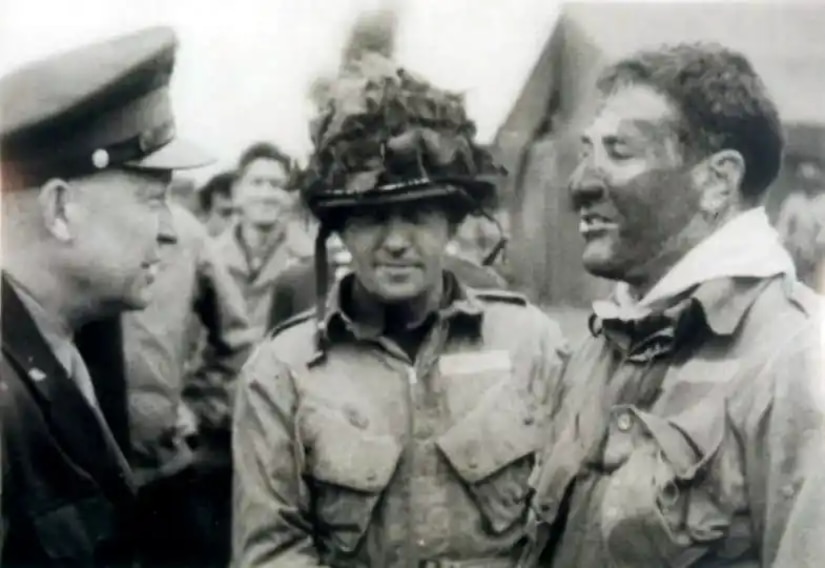
Three men wearing military uniforms are pictured chatting.

While the attack was underway, Cole was in the process of placing orange panels on the ground so that pilots could identify his battalion's position. As he was in the process of doing this, a German sniper, hiding out in a barn, shot and killed Cole instantly. 

He was buried in the Netherlands American Cemetery and Memorial at Margraten, Netherlands, the only American cemetery in that country where more than 8,000 U.S. service members are buried. 

Cole was posthumously awarded the Medal of Honor for actions during the Battle of Carentan, June 11, 1944. He was also awarded the Purple Heart and the French Croix de Guerre. 

"After the devastating and unceasing enemy fire had for over one hour prevented any move and inflicted numerous casualties, Lt. Col. Cole, observing this almost hopeless situation, courageously issued orders to assault the enemy positions with fixed bayonets," Cole's Medal of Honor citation reads. "With utter disregard for his own safety and completely ignoring the enemy fire, he rose to his feet in front of his battalion and with drawn pistol shouted to his men to follow him in the assault. Catching up a fallen man's rifle and bayonet, he charged on and led the remnants of his battalion across the bullet-swept open ground and into the enemy position."  

Cole's medal was presented by Army Maj. Gen. Jonathan W. Anderson to his mother on Oct. 30, 1944, during a ceremony at Fort Sam Houston on the same parade field where Cole once played as a child. Cole's widow and 18-month-old son also attended. 

According to the Texas State Historical Association, Army Maj. Gen. Maxwell Taylor, in a handwritten letter to Cole's widow, wrote, "Bob was our ideal airborne soldier. His courage was legendary, and his hold on his rugged parachutists is an example which few other commanders ever attained."  

In his condolence note, Eisenhower wrote that Cole was "one of our ablest and certainly one of our most gallant officers," according to the association. 

During the Normandy invasion, a Stars and Stripes newspaper reporter mentioned that Cole was "a terror to German troops in the area of the Cherbourg peninsula," according to an Oct. 30, 1944, article in the Fort Worth Star-Telegram newspaper. 

Although Robert Bruce Cole was exempt from the draft as an only child and the son of a Medal of Honor recipient, he volunteered to serve in the Marine Corps during the Vietnam War. 

His widow died Dec. 15, 2000, and is buried in a family plot at Fort Sam Houston National Cemetery. Also buried there is their son, who died Dec. 5, 2024. 

Robert G. Cole Middle and High School in San Antonio is named for him. A monument to Cole is at the location where he led his battalion in a bayonet charge and another monument to him is located near the spot he was killed. Also, plaques commemorating Cole's leadership are in Best and Carentan. At Fort Campbell, Kentucky, where the 101st Airborne Division is based, there is a park, a golf course and a community activity center named after him.  

Team Army Competitor Brings 'Never Give Up' Spirit to Warrior Games

For Army Capt. Vanessa Munro, arriving at the 2026 Warrior Games already feels like a victory. Before the first event began and before scores were posted, Munro's presence with Team Army was a reminder of how far recovery can reach when determination, support and purpose come together.

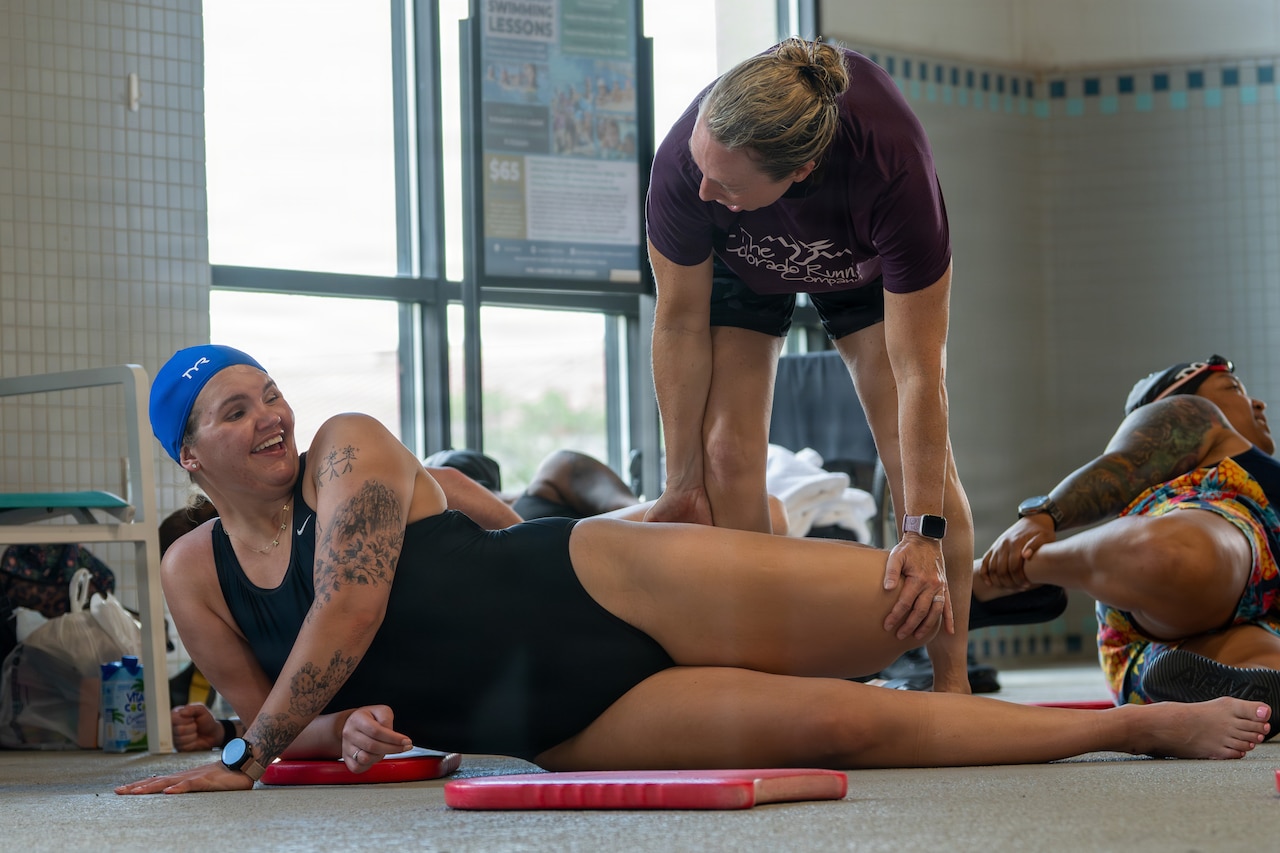
A woman wearing a black bathing suit and swim cap lies on a floor as she is being assisted by another woman in casual attire in an exercise that is lifting her left leg. There is a person also exercising to the right of the women.

Munro's victory is being part of a team again. After a tragic car accident in 2023 resulted in a severe traumatic brain injury, brain surgery and an extended coma, the road back has included months of hospitalization, intensive rehabilitation and daily work to regain strength, confidence and independence.

Now competing with Team Army, Munro is reconnecting with something she's missed: the camaraderie, joking, banter and shared support that come with being part of a team.

Munro's mother, Heidi, shared that the Warrior Games has given her daughter an opportunity to be surrounded by athletes and coaches who see her.

"She loves how everyone supports one another and how people treat her as capable, not disabled," Heidi said.

Munro was commissioned as a field artillery officer in 2018 after completing ROTC at the University of Washington. After four years in her branch, she was selected for the Army's Interservice Physician Assistant Program. Before the accident, she was also an elite athlete and Ironman competitor. Her soldiers often called her "The Iron Ma'am." After the accident, a new nickname emerged.

Heidi said as friends came in and out of Munro's inpatient room with Starbucks, sushi, cute clothes and colorful head coverings, they helped bring light into a difficult season. They bedazzled her wheelchair and walker, decorated her room and made sure her nails were painted. Before long, Munro became known as "The Bougie TBI Girl," a moniker she carries now that captures both parts of her story.

For Heidi and Kailee, Munro's childhood best friend and caregiver, that moniker is more than a phrase. It reflects how Munro has approached recovery from the beginning.

Even in a semiconscious state, Munro didn't want to be seen as disabled. Once she could walk, she refused to use the wheelchair. Then she refused the walker. About six months after the accident, she began walking a mile a day. The pace was slow, and the walks required breaks, but Munro kept asking to go.

On days when Heidi and Kailee were exhausted, Munro would look at them and say, "Outside time." From the beginning, they said, she refused to give up.

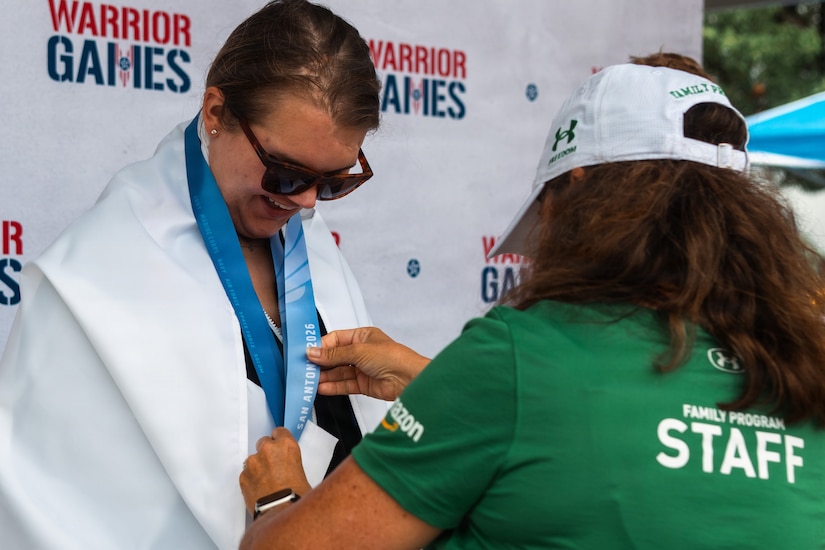
A woman wrapped in a white flag and wearing sunglasses receives a medal on a ribbon from another woman wearing casual attire.

Adaptive sports became another part of her recovery. Munro's first adaptive sport was skiing, which made her feel alive and free again. Her confidence grew after that first ski trip. Swimming came next, and once she connected with an adaptive swim coach, the pool became a place where she could focus on what she could do rather than what she couldn't do.

The adaptive triathlon later reintroduced Munro to competition, wearing a uniform, supporting others and being supported by a team.

Participation in various sports activities, plus the Warrior Games, has helped Munro reconnect with the athlete she was before her injury while continuing to discover who she is now.

Kailee said what people see during competition is only part of the story.

"What I've witnessed isn't just physical recovery; it's resilience," Kailee said. "I've watched Vanessa choose to keep showing up when it would have been easier not to. I've watched her rebuild pieces of herself one day at a time. The Warrior Games are incredible, but it's just the visible part of a recovery that's been happening every single day for years."

For Heidi, watching Munro compete has been deeply emotional. Two years ago, doctors told the family Munro would never walk or talk again. Seeing her at the Warrior Games just 30 months into recovery has filled her with hope.

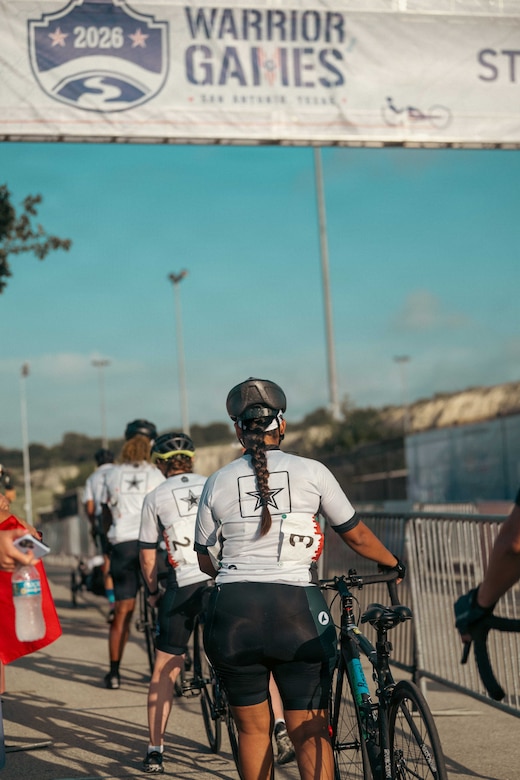
People wearing sports gear and helmets push their bikes to the starting line of a race.

"The real work has taken place in countless therapy sessions, difficult mornings, bouts of depression, setbacks and small victories that most people never see," Heidi said.

One of the most powerful moments came on the track.

"I cried at the track," Heidi said. "I watch her struggle to walk every day always afraid she'll trip over her own foot. I've never seen her run, so to watch her run the 200, with obvious difficulty and exhaustion, and to finish it to a standing ovation and the entire crowd cheering for her, that was the highlight of Warrior Games for me."

When Munro was shown videos of herself walking for the first time after her injury and asked what she thought about herself from the beginning of recovery until now, she chose three words: "Surprised. Excited. Inspired."

For Kailee, the hope is that Munro sees what those closest to her have seen all along.

"Recovery hasn't been about finding her way back to the exact person she was before," she said. "It's been about discovering who she is now, the same fierce, determined, funny, stubborn and compassionate person who inspired people before the accident."

Kailee said Munro's path looks different today, but her strength has never left her.

For Munro, her journey isn't about becoming less than she was before. It's about continuing to move forward, reclaiming pieces of herself and proving, one step and one competition at a time, that "never give up" is more than a motto.

It's how she got here.

Editor's note: Because Munro is still in recovery, some responses and additional context for this story were provided through her mother, Heidi, and her childhood best friend and caregiver, Kailee.

Allies Come Together in the Indo-Pacific for Exercise Valiant Shield 26

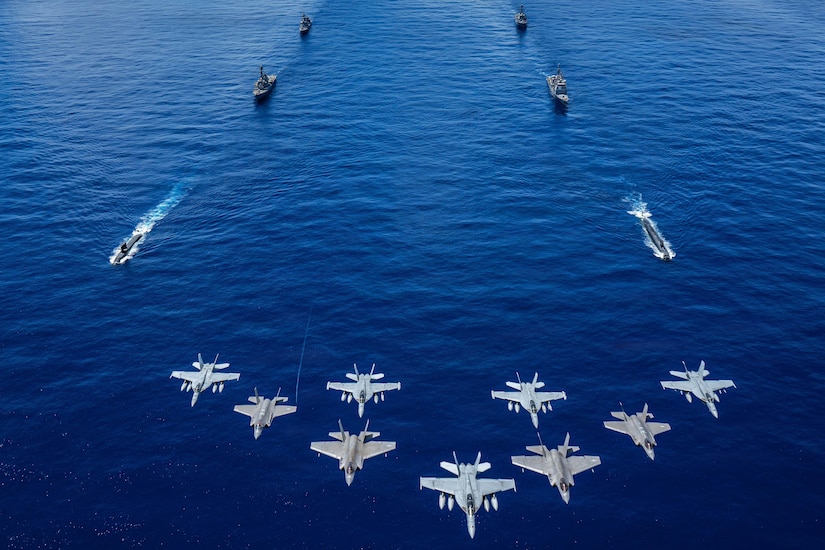
Nine military fighter jets fly in formation while two submarines and four large military ships sail in two rows in the ocean.

U.S. Pacific Command joint forces, along with allied and partner forces, kicked off Exercise Valiant Shield 2026 today in the Indo-Pacific region. 

The training exercise will run until July 1 and take place in the Northern Mariana Islands, Guam, Japan and at sea around the Mariana Islands Range Complex. 

Valiant Shield 26 is a multinational, biennial field training exercise focused on integrating interoperability training in a multidomain environment. This training builds real-world proficiency in sustaining joint forces through detecting, locating, tracking and engaging units at sea, in the air, in space, on land and in cyberspace. 

Exercises such as VS26 enable all U.S. forces and allies across the Indo-Pacific region to integrate and train in precise, lethal and overwhelming scenarios that demonstrate the strength and versatility of the joint and combined force.  

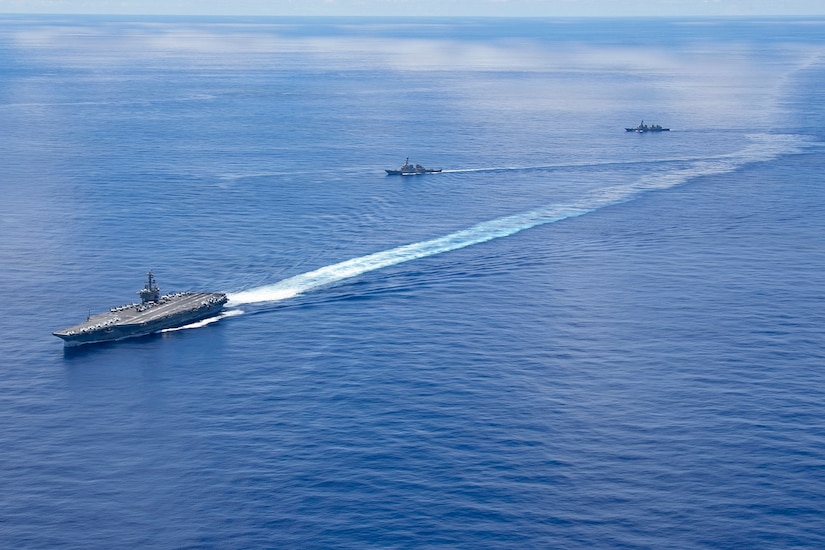
Three large military ships sail in the ocean.

With the involvement of U.S. Space Command and U.S. Transportation Command, VS26 is expanding the multidomain, cross-combatant command collaboration required for any large-scale exercise or operation. The exercise prepares the joint and combined force to rapidly respond to crises and contingencies across the spectrum of operations — from humanitarian assistance and disaster response to armed conflict. 

"Valiant Shield demonstrates our enduring commitment to a free and open Indo-Pacific," said Navy Adm. Steve Koehler, commander of U.S. Pacific Fleet. "Exercising advanced multidomain capabilities with our allies ensures we continue to seamlessly innovate and operate together, project combat power together and prevail over any challenge — together." 

The exercise assists U.S., allied and partner forces in developing regional and global power projection capabilities. Integrated training provides a full range of options to succeed in the defense of U.S. interests and those of like-minded nations around the world. 

This year marks the 11th iteration of Exercise Valiant Shield, which began in 2006. It is also the second time the Japan Self-Defense Forces has been heavily integrated in the planning and execution.   

Since 2024, Valiant Shield has become a multilateral joint field training exercise, further integrating allies and partners into the multidomain environment. While it started as a unilateral U.S. exercise, it has evolved to meet the demands of the security environment, incorporating new technologies and strategies.