Thursday, July 23, 2026

Maintainers Work Quietly Behind Scenes Ensuring Global Power

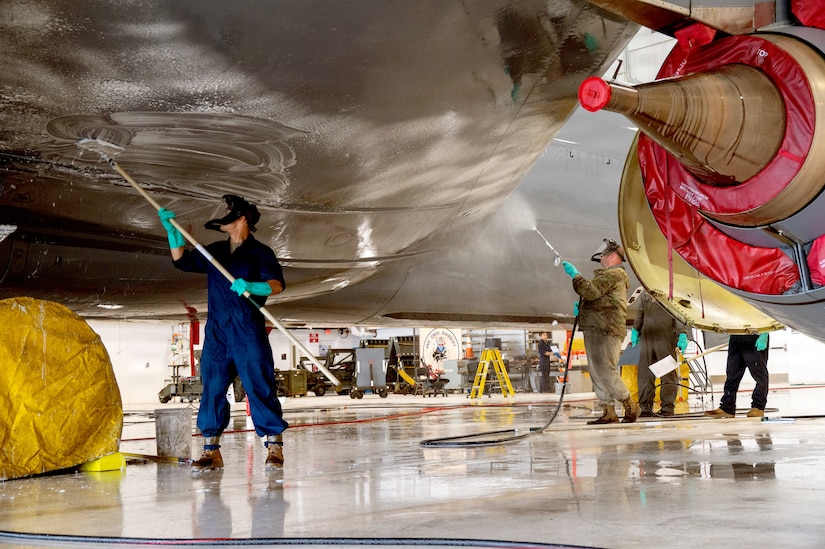
Two people wearing military jumpsuits, clean the underside of a military jet.

Every successful flight begins well before it takes off. As the sun rises over the 171st Air Refueling Wing, near Pittsburgh, long before a KC-135 Stratotanker refueling tanker aircraft can leave the ground, the crew chiefs are already hard at work.

Hidden behind a large hangar door, the crew chiefs are just one of the many quiet constants on base at the Pittsburgh International Airport in Coraopolis, Pennsylvania. The public rarely sees their work, and they never fly in the cockpit, but their fingerprints are on every takeoff and every safe return home.

For approximately 100 crew chiefs who call the 171st home, their work goes far beyond routine maintenance and preflight inspections. Every takeoff is backed by hours of training, working in year-round weather conditions and nonstop troubleshooting to keep the nearly 70-year-old KC-135 tankers flying.
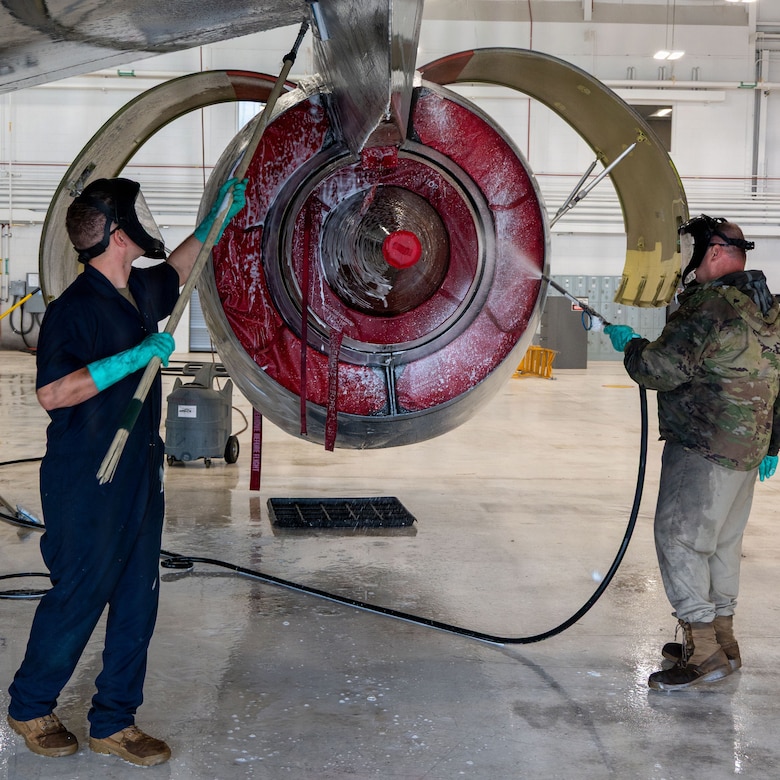
Two men clean the engine area of a military jet. One man is wearing a blue jumpsuit and the other is wearing a camouflage military jacket.
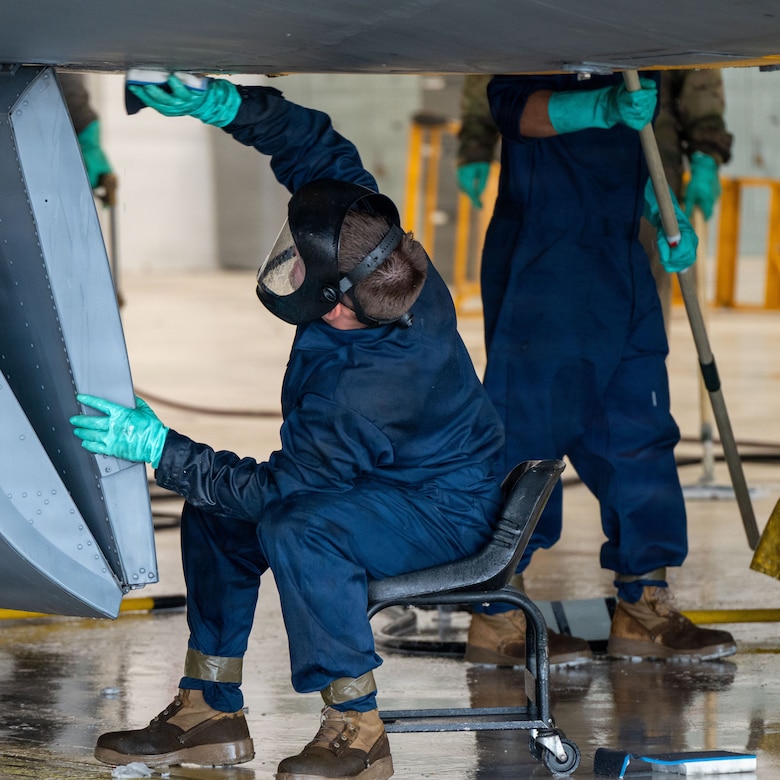
A man wearing face protection and a blue jumpsuit, cleans the bottom of a military jet.
"Yes, it's an older airplane, but it's [kind of] like working on an older car; everything we touch is mechanical," said Air Force Master Sgt. Justin Hughes, full-time crew chief mechanic assigned to the 171st Air Refueling Wing. "We fly with cables and pulleys, so whenever there is something wrong, there is something physical for us to fix, a puzzle to solve. It's something I can put a wrench to and work to fix."

For Hughes and the rest of the maintenance team, solving those puzzles comes twice as often. The 171st is the only Air National Guard unit that operates two aerial refueling flying squadrons. This unique structure has earned the wing the unofficial designation of a "super wing."

Despite the difficulty of maintaining a force twice the size, the wing does so with roughly the same number of maintenance personnel as other tanker units that only have one flying squadron.

While the 171st crew chiefs continue to maintain the wing's 16 KC-135 tankers, much of their work happens behind the scenes. Like the cables and pulleys that work together to lift a heavy load, crew chiefs are just one part of a larger puzzle that keeps all of the aircraft mission ready.
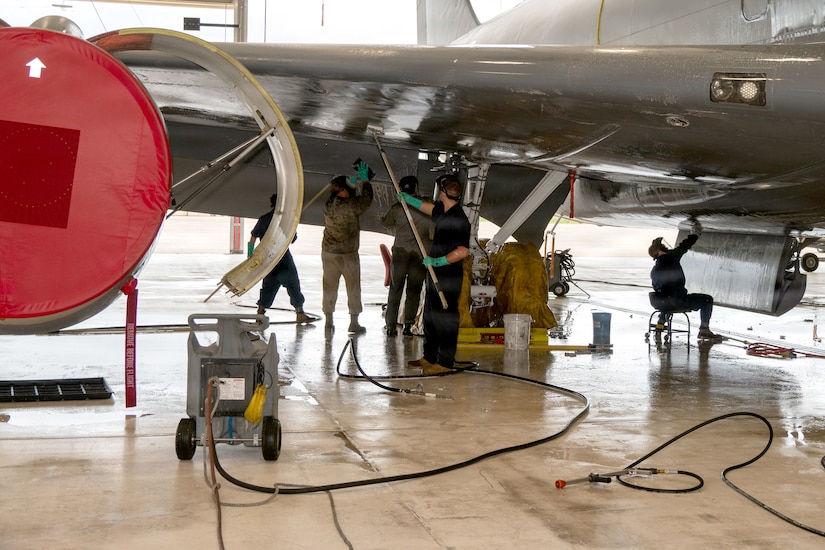
Five people wearing military jumpsuits, clean the underside of a military jet.

"The specialized issues that we find during the inspection go to the other specific shops in maintenance," Hughes said. "We [the crew chiefs] work together with the rest of maintenance to get the planes ready to fly so we can ensure the plane takes off safely. It's a group effort."

That group effort is visible every time a tanker takes to the skies and plays a major part in the 171st successfully offloading millions of pounds of fuel every year to U.S. and NATO aircraft. In doing so, the 171st ensures that the broader military force can project power, defend national security interests and respond to crises anywhere on the globe at a moment's notice.

But for Hughes, along with the mission's success, he finds that one of the most rewarding parts of the job comes after the work is done and the aircraft has landed somewhere new.

"Traveling is definitely my favorite part of the job," Hughes said. "Going to different places and meeting new people, you never realize how big the world is until you land and get to see something new."

Navy Nurse Awarded for Pediatric Trauma Care Research, Improvements

A nurse assigned to the Naval Medical Center Camp Lejeune in North Carolina is being recognized for her research and process improvement efforts in pediatric trauma care.

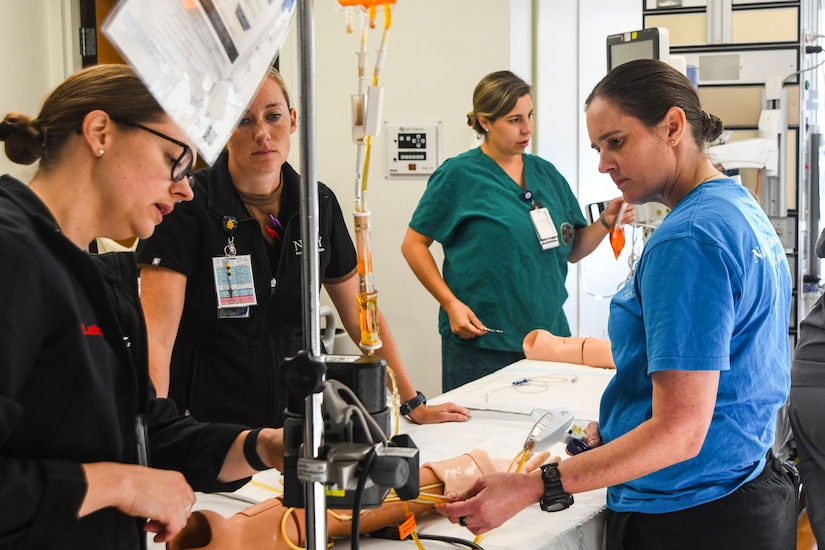
Four women wearing medical attire stand over an IV training arm with medical equipment attached; one provides instruction while the others observe.

Navy Cmdr. Emily Latimer, an emergency clinical nurse specialist, was recently awarded the Defense Health Agency Nursing Award for Evidence-Based Practice. Latimer spearheaded a project to examine methods for administering blood specifically to pediatric trauma patients. 
 
According to Latimer, giving blood to a pediatric patient requires a different volume, specific needles or a smaller IV — meaning that blood systems used for adult patients don't always transition well for children. Latimer said she was inspired to pursue this project by past cases of critically ill children.

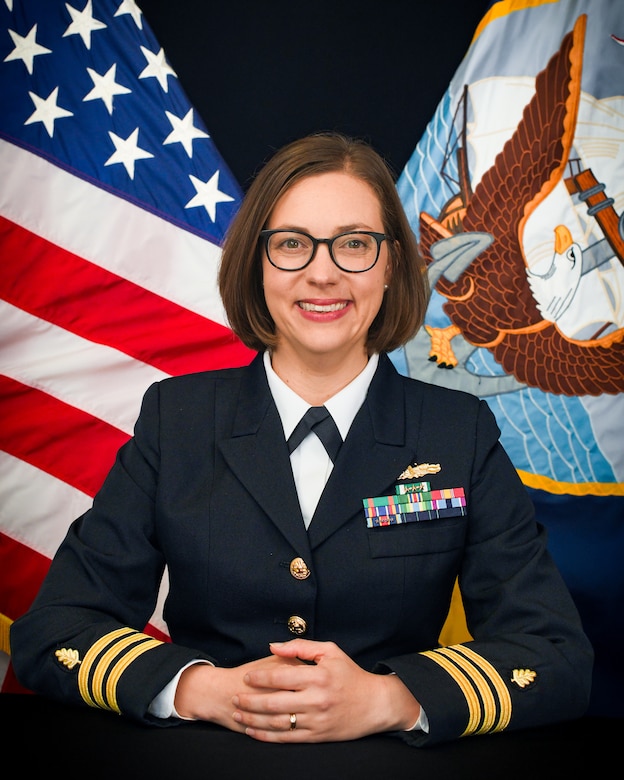
A woman wearing a formal military uniform poses for a portrait with an American flag and a Navy flag in the background.

"In a military treatment facility, a huge portion of our patients are pediatrics. For example, at our emergency department here, 25% of our patients are pediatrics. Being able to provide the care and, hopefully, be a source of trust and stability for their families – that's taking care of our military community," she said. 
 
Latimer and her team procured grant funding to purchase a manual blood infusion system for pediatric trauma patients, and nurses and paramedics tested the system for several weeks. Findings showed that a system designed to administer blood to pediatric patients was easier and faster for users and should be a component that trauma centers consider obtaining to ensure pediatric readiness capabilities. 
 
"Our job is to take care of vulnerable patients, and if we're finding ways to make improvements, we are doing our job to make things better for our patients," Latimer said. "Ultimately, if we are getting recognized for this work, that means the work we are doing is meaningful. It gives us an opportunity and a venue to share what we learned, so that maybe other people can implement similar solutions." 
 
Latimer noted that research on pediatric care is vital to the readiness component of military medicine.

"As much as our deployment training is focused on preparing to receive adult patients, in many deployed settings, we do take care of sick kids. Having the skills, the comfort and the experience with sick children in a military treatment facility prepares our healthcare workers for deployment medicine," she said.

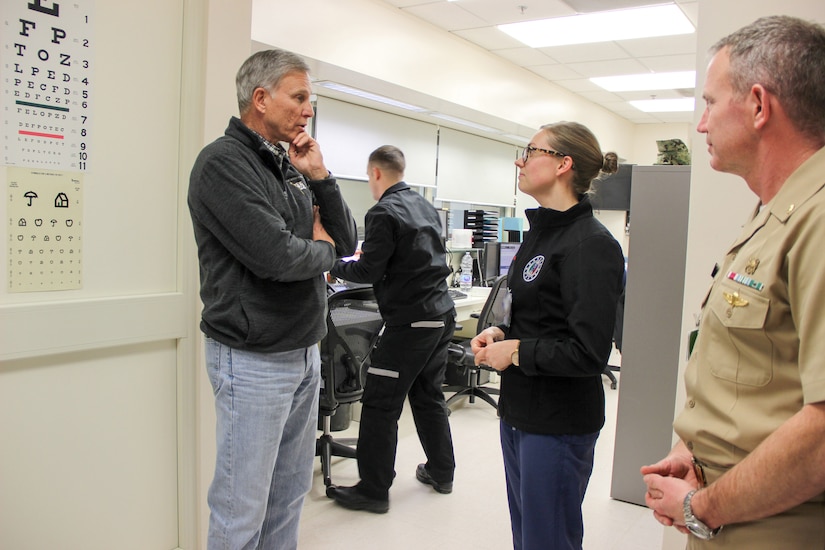
A man wearing casual attire speaks to a woman dressed in casual attire inside a medical facility.

Latimer was also awarded the Pediatric Readiness Improvement Award through the Emergency Nurses Association, recognizing her work on the blood project and other improvements for critically ill pediatric patients, such as medication and safety audits.  

However, Latimer does not take credit for the accolades; instead, she proudly attributes the success to her research team. 
 
"So much of this was a group effort," she said. "I feel really lucky that I was able to work with people that have such expertise and care and were willing to take time out of their day-to-day tasks to spend time dedicated to these projects." 
 
Latimer, a native of Lake Charles, Louisiana, has served 16 years in the Navy and will soon embark on her next journey as the department head for corpsman trauma training at University Hospitals Cleveland Medical Center in Cleveland.