Monday, May 18, 2026

Army Advances Barracks Modernization Efforts to Improve Quality of Life

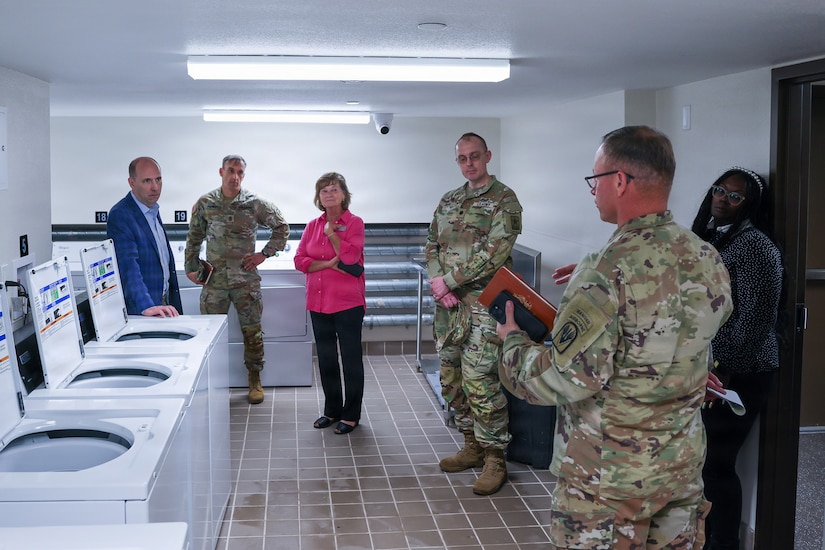
Since October 2025, when Secretary of War Pete Hegseth established the Barracks Task Force, the Army has accelerated efforts to improve soldier living conditions, modernize aging facilities and strengthen quality-of-life investments across installations.

The initiative reinforced that barracks are not simply infrastructure; they are a readiness issue directly linked to lethality, retention, recruiting and soldier trust.
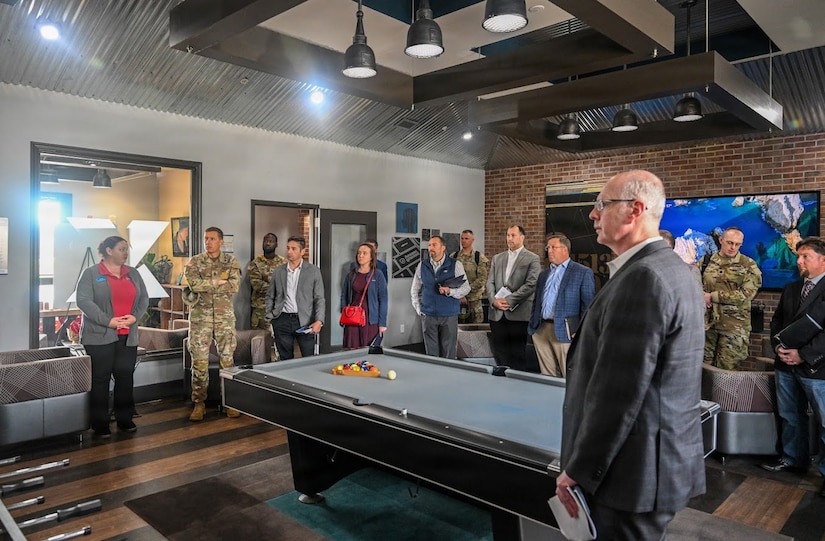
More than a dozen people, some in camouflage military uniforms and others in business attire, stand around a billiards table in a large room.

Across the Army enterprise, efforts are underway to modernize how barracks are planned, funded, maintained and delivered while addressing long-standing infrastructure deficiencies. Recent efforts have included targeted renovations, new construction projects, digital modernization initiatives and accelerated investment strategies to improve day-to-day living conditions for soldiers. 

Funding provided through the One Big Beautiful Bill Act enabled the Army to make several key investments, including: 

  • $20 million for new furniture at 40 installations, impacting more than 106,000 soldiers. 
  • $59 million for lighting, plumbing, mold remediation and door lock work orders. 
  • $405 million for repair and modernization projects across all components. 

The Army has used innovative methods to modernize barracks. At Fort Bliss, Texas, it partnered with industry and government stakeholders to deliver 3D-printed barracks, demonstrating how emerging technologies can reduce construction timelines while improving quality and resiliency. 

It also advanced initiatives to improve soldier quality of life, such as pilot programs for free Wi-Fi, increased facility assessments and enhanced coordination across commands and installation management organizations to prioritize repairs and modernization. 

Barracks Modernization Supports Broader Installation Transformation 

The Barracks Task Force is part of a broader effort to transform Army installations into resilient operational platforms capable of sustaining readiness, supporting soldiers and enabling the Army mission in competition, crisis and conflict. 
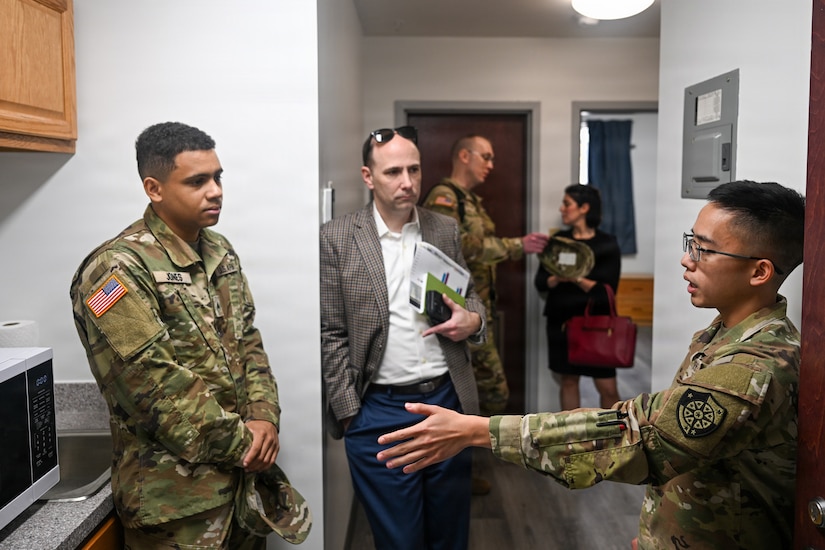
Jordan Gillis, assistant secretary of the Army for installations, energy and environment, outlined three core transformation priorities guiding Army installation modernization efforts: 

  • Leverage outside and alternate financing. 
  • Make the most of the funds we have. 
  • Drive Army interest through strategic engagement. 

These priorities are helping shape how the Army approaches barracks modernization by accelerating project delivery, improving stewardship of existing resources, strengthening accountability and identifying innovative ways to improve soldier quality of life across the force. 

Gillis said installations are operational platforms that directly enable readiness and lethality. 

"Improving barracks conditions is about ensuring soldiers live in facilities that reflect the professionalism and standards they deserve," he said. 
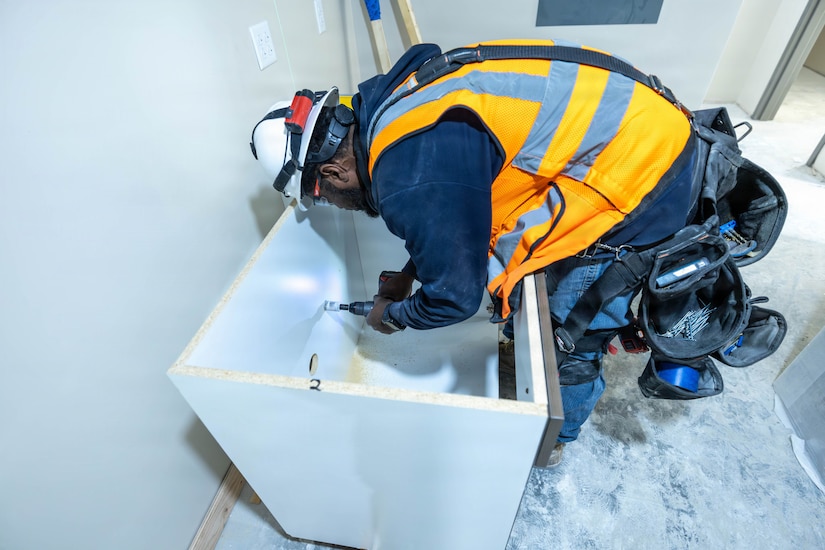
A man wearing a safety vest and a helmet installs a cabinet.

The effort aims for lasting change in barracks governance, project acceleration, prioritizing high-risk facilities and aligning investments with soldier needs and mission readiness. 

Sgt. Maj. of the Army Michael R. Weimer emphasized that barracks conditions directly impact morale, discipline, readiness and retention. 

"Our soldiers live the Army profession every day, and they deserve facilities that support their health, well-being and readiness," Weimer said. 

The visits demonstrate the Army's commitment to accountability, soldier quality of life and ensuring modernization efforts deliver measurable improvements at the installation level. 

While work remains, the Barracks Task Force shows a long-term commitment to ensuring soldiers live and work in facilities that reflect the professionalism, standards and readiness expectations of the Army.

Fueling the Fight: USNS Kanawha Completes Strategic Deployment

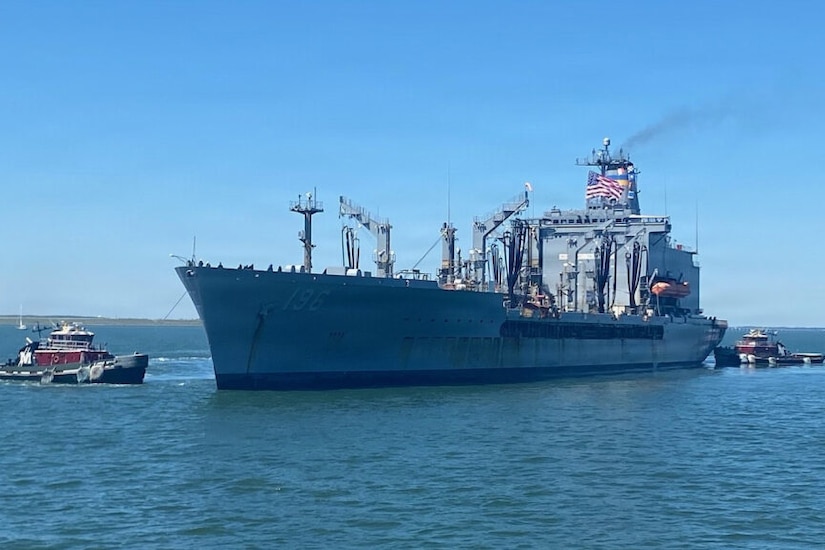
At long last, the familiar blue and yellow stripes around the top of the main smokestack appeared against the coastal sky, marking the successful completion of months of dedication and support to U.S. naval forces.

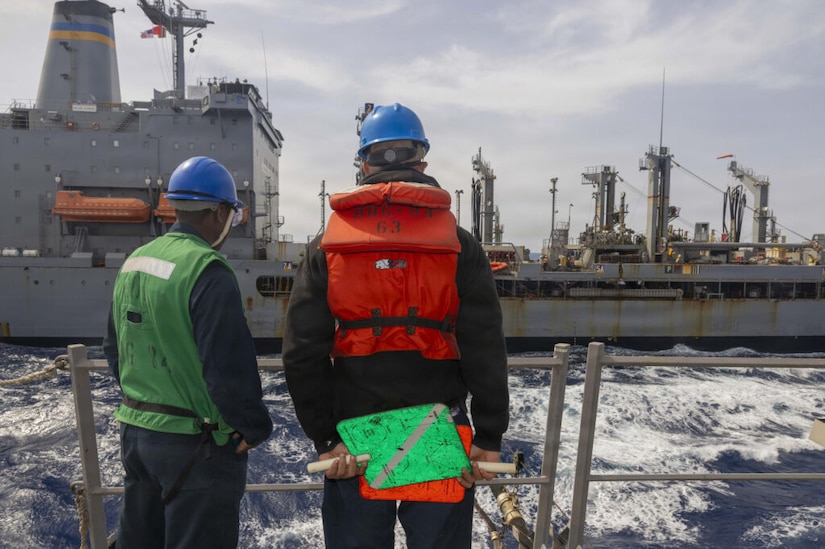
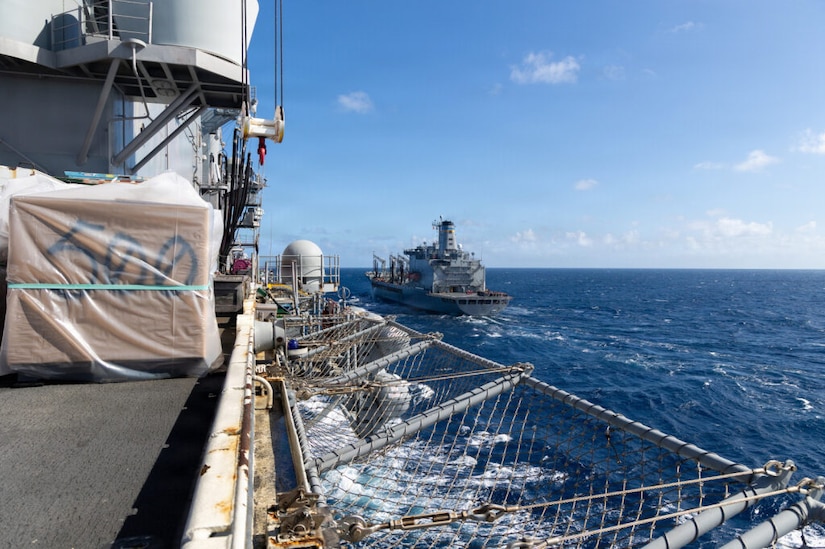
Two people in military uniforms, hard hats and reflective vests stand at a ship's rail, looking across the water at another large vessel.

Family and friends gathered on the pier at Naval Station Norfolk, Virginia, May 16, to welcome home the crew of the USNS Kanawha. The fleet replenishment oiler and its 92 civil service mariners returned after a 204-day deployment, including 156 days actively at sea.

Operating in the U.S. 4th, 5th and 6th Fleets, the crew served as a strategic enabler. They delivered more than 17 million gallons of fuel, 3,000 pallets of supplies and transported 45 personnel, performing 113 replenishments to 29 U.S. and coalition vessels. As a floating warehouse, the ship enabled sustained operations during key missions, including Operations Southern Spear and Epic Fury.

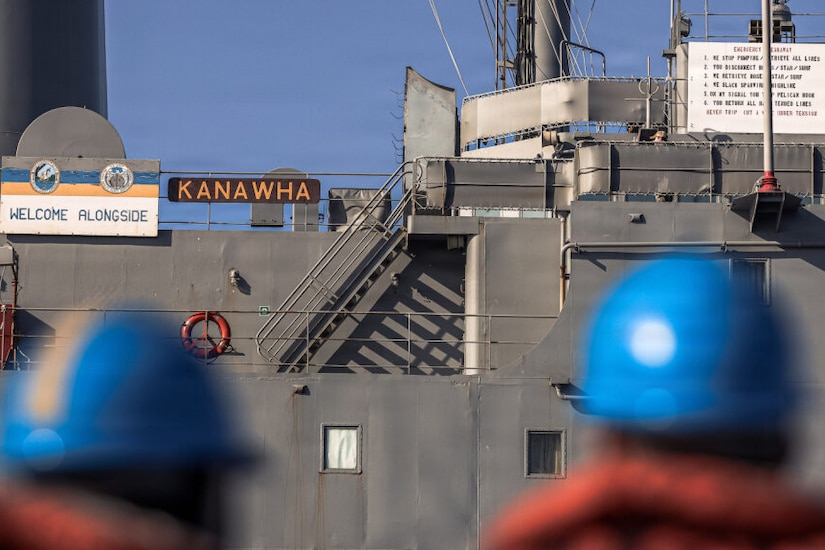
The side of a large ship with signs that read, "Welcome Alongside" and "Kanawha." Two people wearing hard hats are blurred in the foreground.

"I would like to thank the Kanawha crew and their families," said Navy Capt. Elizabeth A. Nelson, Military Sealift Command Atlantic commodore. "The Kanawha was underway for seven long months supporting [the USS] Iwo Jima Amphibious Ready Group and the USS Gerald R. Ford Carrier Strike Group. Without the support of their families, they would not have been able to accomplish their mission. Kanawha's performance exemplifies how MSC's combat logistics force powers modern naval operations, directly fueling U.S. Navy readiness at sea."

As part of MSC's combat logistics force, oilers like the Kanawha are integral to the Navy's logistics system, enabling combatant ships to remain forward-deployed to protect American interests. These logistics forces are the backbone of sustained operations at sea, and the crew who operate these ships — resupplying the fleet with fuel, stores and ammunition — are a strategic piece of Navy operations.

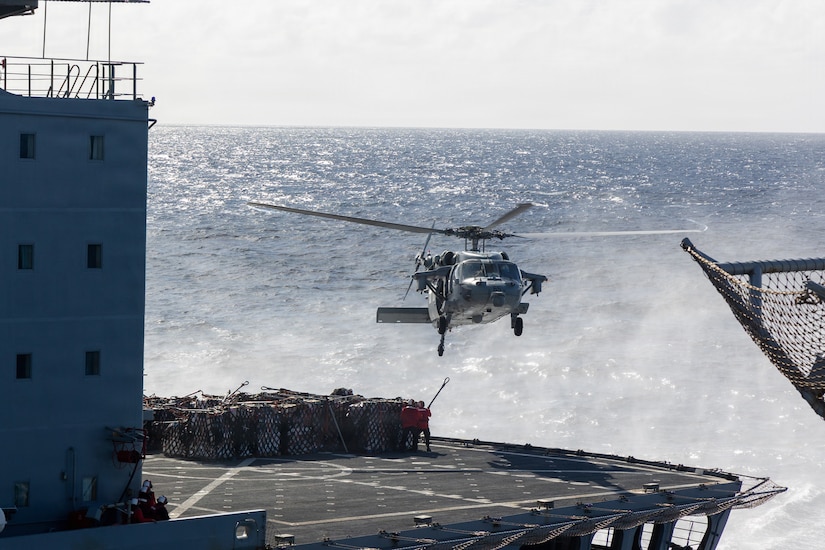
A military helicopter hovers over the deck of a large ship at sea while two people in military uniforms attempt to attach cargo to the aircraft.

Replenishments at sea involve supplies being transferred from logistics force ships to combatant ships via underway replenishment. The two primary methods are connected replenishment, which transfers fuel and dry cargo via lines between ships sailing side by side, and vertical replenishment, which uses helicopters to ferry goods between the two vessels.

Extending the Navy's operational reach across the Caribbean, Mediterranean and the Middle East, the Kanawha leveraged 19 port visits in strategic locations, including Augusta Bay, Italy; Ponce, Puerto Rico; Souda Bay, Greece; and Yambu, Saudi Arabia.

Through these port calls and ongoing logistical services, the crew acted as essential ambassadors, directly enhancing both diplomatic ties and combat readiness.

Nelson praised the Kanawha crew.

"Their MSC family owes them a debt of gratitude for their sacrifice — not just for the delivery of fuel and spare parts, but for delivering letters and packages from home that keep the fleet motivated. MSC's [crews] are the best because they fuel the fight with more than just cargo; they fuel it with care."

Crewed and operated by civil service mariners, the ship entered noncommissioned service with the Navy Dec. 6, 1991, to support MSC. The ship is named after the Kanawha River in southwestern West Virginia.

Medal of Honor Monday: Army Spc. 5 James C. McCloughan

Army Spc. 5 James C. McCloughan was drafted into military service as a combat medic Aug. 29, 1968, and served in South Vietnam from March 1969 to March 1970. However, it was the bravery he displayed at 22, during a three-day battle, that led to him receiving the Medal of Honor nearly 50 years later. 

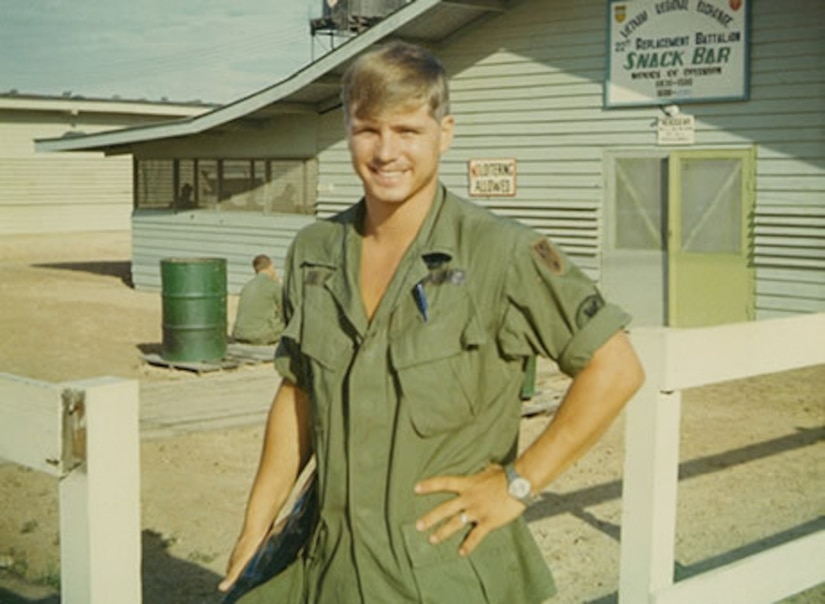
A man wearing a green military uniform smiles outside in front of a building with a sign over the door that reads Snack Bar.

McCloughan was born in South Haven, Michigan, April 30, 1946, but grew up on a farm in Bangor, Michigan. At Bangor High School, he was a four-sport varsity athlete. After graduation, he attended Olivet College, where he competed in wrestling, football and baseball.

He majored in sociology and obtained a teaching certificate in 1968 before taking a teaching and coaching position with South Haven Public Schools. However, he was drafted just three months into his new role. 

After completing basic training at Fort Knox, Kentucky, in September 1968, McCloughan attended medical training at Fort Sam Houston, Texas, before deploying to Vietnam. He was assigned to Company C, 3rd Battalion, 21st Infantry Regiment, 196th Light Infantry Brigade, 23rd Infantry Division, known as the Americal Division. 

The company air assaulted near Tam Ky and Nui Yon Hill in 1969. McCloughan, a private first class at the time, showed gallantry above and beyond the call of duty May 13-15, 1969.

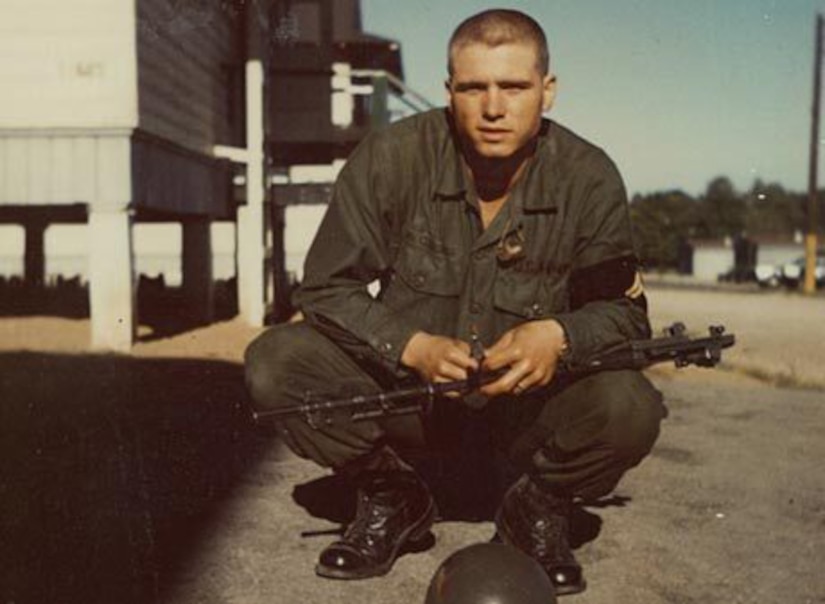
A man in a military uniform holds a weapon while squatting on the ground outside.

On May 13, with complete disregard for his life, he ran 100 meters in an open field through heavy gunfire to rescue a comrade too injured to move and carried him to safety. That same day, 2nd Platoon was ordered to search the area near Nui Yon Hill when they were ambushed by a large North Vietnamese army force and sustained heavy casualties.  

Once again, with complete disregard for his personal safety, McCloughan led two Americans into the safety of a trench while being wounded by shrapnel from a rocket-propelled grenade. He braved the enemy assault while moving into the kill zone on four more occasions to rescue wounded comrades.  

He treated the injured, prepared the evacuation, and, though bleeding heavily from shrapnel wounds on his head and body, refused evacuation to safety to remain with his fellow soldiers, who were heavily outnumbered by enemy forces.  

The next day, the platoon was again ordered to move out toward Nui Yon Hill. McCloughan was wounded a second time by small-arms fire and shrapnel from a rocket-propelled grenade while rendering aid to two soldiers in an open rice paddy.  

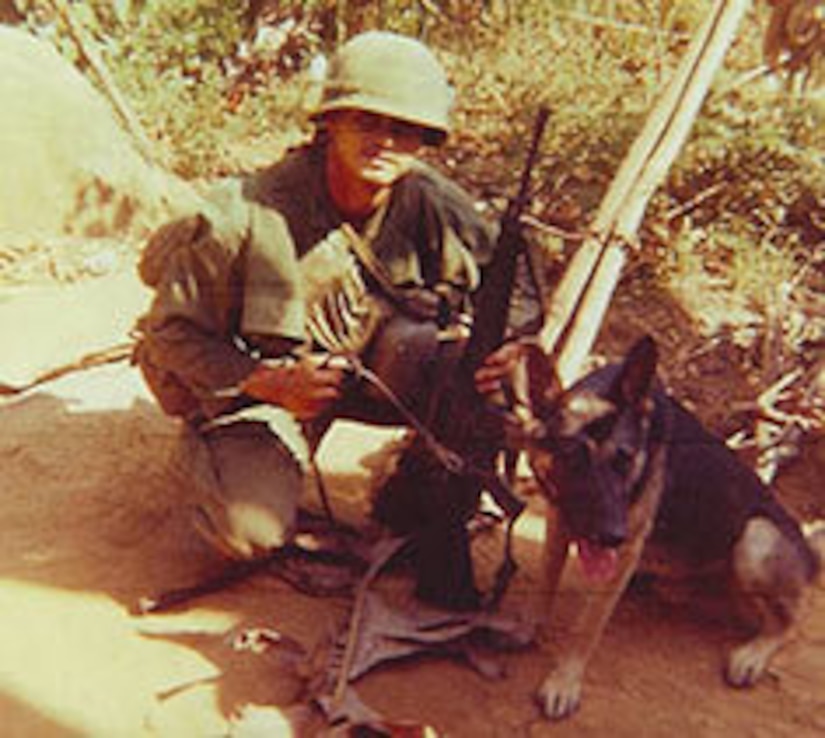
A man in a military uniforms and helmet squats on the ground outside with a dog.

During the final phases of the attack, while his company was surrounded by two companies of the North Vietnamese army and 700 Viet Cong, McCloughan repeatedly went into the crossfire to extract wounded soldiers while also engaging the enemy. His relentless and courageous actions inspired his comrades' will to fight.  

When supplies ran low, McCloughan volunteered to hold a blinking strobe light in an open area as a marker for a nighttime resupply drop. He remained steadfast while bullets landed all around him and rocket-propelled grenades flew over his exposed body.  

During the morning darkness of May 15, McCloughan knocked out an enemy position with a grenade, fought and eliminated enemy soldiers, treated numerous casualties, kept two critically wounded soldiers alive during the night, and organized the dead and wounded for evacuation at daylight. 

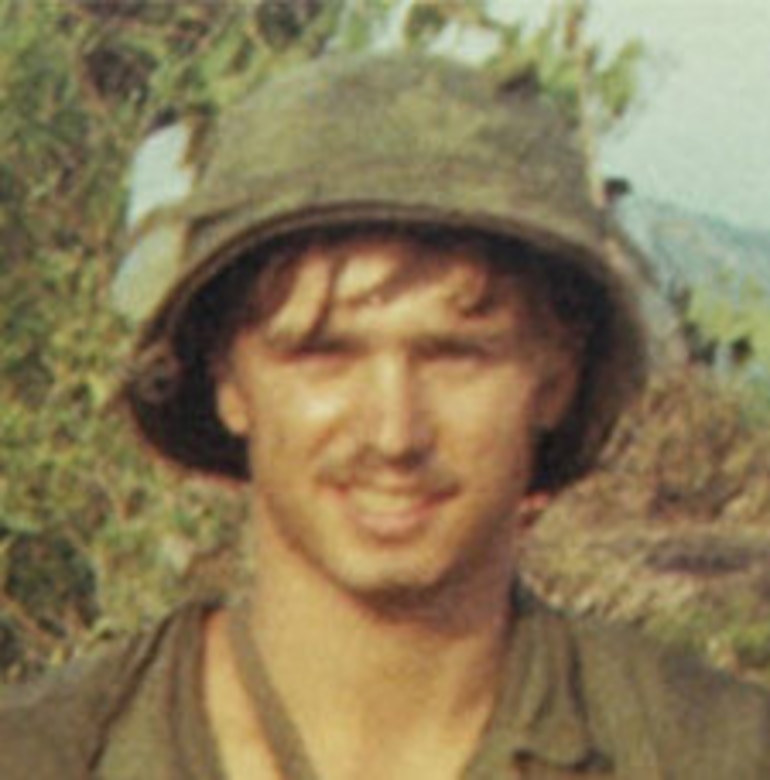
A man in a military uniform poses for a photo outdoors.

In all, he treated 40 to 50 soldiers and is credited with saving at least 10 lives. 

After completing his service in Vietnam, McCloughan returned to South Haven High School to continue his teaching and coaching career. In 1972, he furthered his education by earning a Master of Arts degree in counseling and psychology from Western Michigan University. 

He retired from teaching in 2008 and received the Michigan Education Association's 40 years of service award. He was also the recipient of the Wolverine Conference Distinguished Service Award for 38 years of coaching football and baseball, as well as 22 years of coaching wrestling.  

He was inducted into the Michigan High School Baseball Coaches Association Hall of Fame in 1993, the Michigan High School Coaches Hall of Fame in 2003, and the Michigan High School Football Coaches Association Hall of Fame in 2008. McCloughan was also a Michigan High School Athletic Association wrestling official for 25 years. 

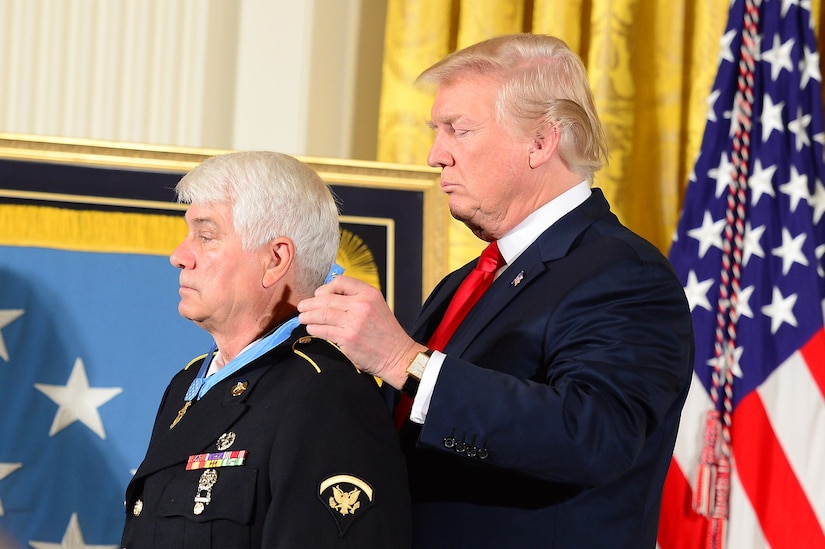
Nearly 50 years after his heroic actions during the Vietnam War, President Donald J. Trump presented the Medal of Honor to McCloughan during a White House ceremony held July 31, 2017. 

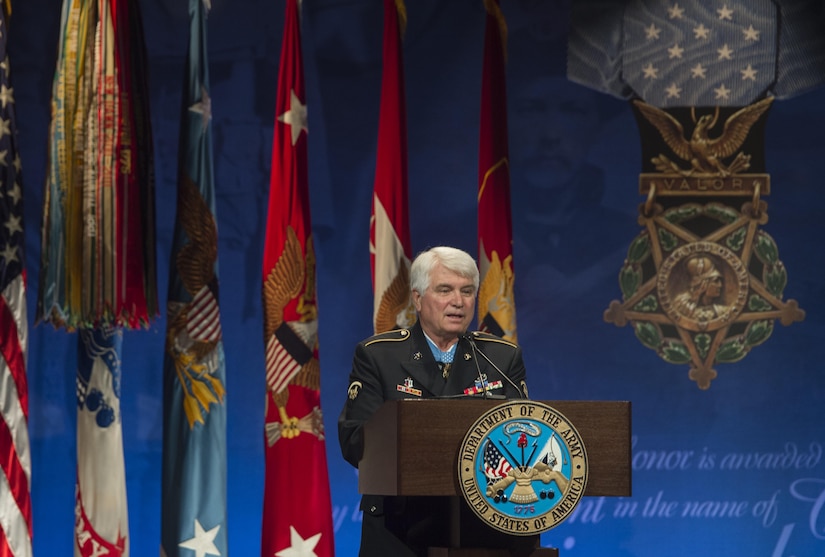
Spc. 5 James C. McCloughan speaks at a podium.
A man in a suit places a medal around the neck of another man in a military dress uniform.
"To many people in this room, Spc. 5 McCloughan has always been their friend, Jim. To others, he's been 'coach.' To those who bravely served with him in Vietnam, he's still called their 'doc.' To his parents, Scotty and Margaret, both watching from heaven, he will always be their son. But [now], [to] 320 million grateful American hearts, [he] carries one immortal title — and that title is 'hero,'" Trump said.  

Some of McCloughan's other awards and decorations include the Bronze Star Medal with "V" device and oak leaf cluster and the Purple Heart with bronze oak leaf cluster. 

He lives in South Haven, Michigan, with his wife Chérie and their children, Jamie, Matt, Kami and Kara.