Amid a historic surge in military recruiting, the
National Guard exceeded its fiscal year 2025 goals, reflecting a broader
trend of robust enlistment across the U.S. military.
Since November 2024, the War Department has achieved its strongest
recruiting performance in 30 years, with fiscal year-to-date accessions
as of the end of August reaching 106% of active-duty targets.
The Army National Guard and the Air National Guard have combined to
enlist almost 50,000 new members this fiscal year as of this month,
bringing total National Guard end strength to over 433,000, surpassing
each component's goals and marking one of the most successful recruiting
years in over a decade.
"Young Americans are eager to serve," said Air Force Gen. Steve
Nordhaus, National Guard Bureau chief. "Today's recruits are seeking
long-term value, and the National Guard delivers through career training
and hands-on, practical experience in more than 200 career
specialties.
"The guard provides a path to service that offers balance with
civilian careers and allows our soldiers and airmen to live locally and
serve globally," he said. "We're not just preparing new recruits to
serve; we're preparing them to lead and succeed."
Nordhaus emphasized the guard's value, providing 20% of the joint
force at 4% of the DOW budget, and its core missions — defending the
homeland, supporting the fight, building partnerships and supporting
warfighters and their families — which demand wide-ranging skill sets.
He noted that the National Guard aligns with the Interim National
Defense Strategy Guidance, which prioritizes homeland defense,
deterrence in the Indo-Pacific region and burden sharing with allies and
partners.
"The guard is central to President [Donald J.] Trump's vision of
peace through strength and Secretary [Pete] Hegseth's focus on restoring
the warrior ethos, rebuilding the military and reestablishing
deterrence," Nordhaus said. "Recruits are proving they're energized to
contribute to that."
In March, the Army National Guard launched a new marketing campaign
to attract young people to part-time service. The campaign, "Uncommon is
Calling," highlights the dual lives of guardsmen, who balance civilian
careers with essential roles during emergencies and national crises. It
emphasizes the unique opportunities for personal and professional growth
available within the guard.
Striking the civilian-military balance is exactly what attracted Army
Spc. Bruno DaSilva, who is assigned to the 1060th Transportation
Company of the Massachusetts National Guard.
"Outside of the National Guard, I have my own company … I'm in the
insurance business," DaSilva said. "In the National Guard, I can serve
my country and run my business at the same time."
The Army National Guard has focused most of these marketing ads
online and on digital streaming services, with some spots airing on
traditional television.
Army Col. Timothy Smith, chief of the Army National Guard's Strength
Maintenance Division, said the campaign has helped deliver new awareness
of the opportunities of serving in the Army National Guard.
"The branding refresh of 'Uncommon is Calling' brings a fresh
perspective to the unique dual mission of the Army National Guard," he
said. "The campaign highlights the most uncommon, exciting and
meaningful part-time job out there: serving in the Army National
Guard."
Army Pvt. Ethan Walling enlisted in the Virginia National Guard this
summer to serve as a motor transport operator. He said serving in the
guard fulfills a lifelong dream.
"It has always been my dream to be in the military," Walling said.
"Since I was 7 years old, I would play with my miniature Army men, and I
would always tell my mom that I was going to join one day. After
talking with a National Guard recruiter and hearing that I could receive
federal and state benefits, I knew that the guard was my calling."
Walling said the guard has given him "purpose, pride and
opportunity," and he is excited to see how the journey shapes his
future.
"The National Guard has been nothing short of a family since the
beginning, and I believe I have finally found the perfect balance
between serving my country, supporting my community and pursuing my
personal goals," he said.
In addition to the marketing campaign, Smith also credits the
recruiters in every state, three territories and Washington —
collectively known as "the 54."
"Our recruiters' dedication across the 54 drives this success," he
said. "Their hard work is the bedrock of our readiness. The organization
has made recruiting and end strength priorities because if you can't
fill your end strength, you can't be ready; they're tied together. Our
readiness starts with our recruiters."
The Army National Guard has surpassed 328,000 soldiers in end
strength — the total number of authorized service members needed to meet
mission requirements. Smith highlighted the Army's Future Soldier
Preparatory Course as another initiative that has also helped the Army
National Guard attract potential soldiers.
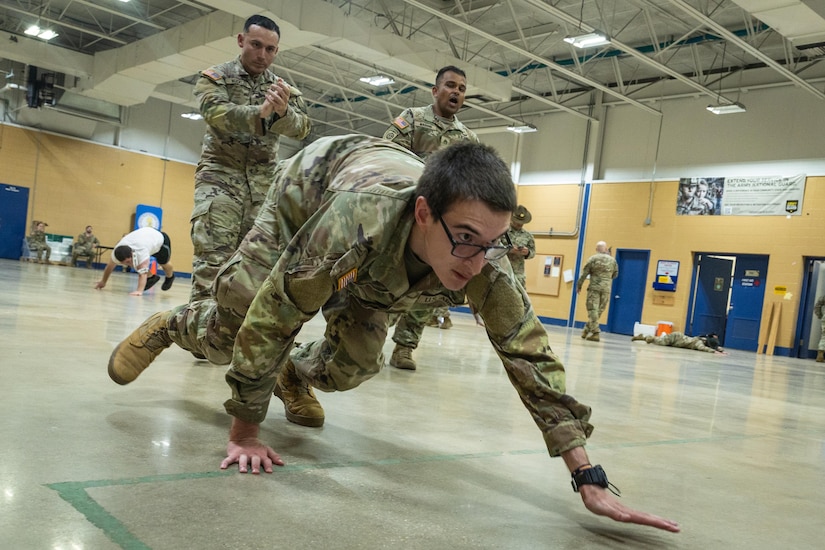
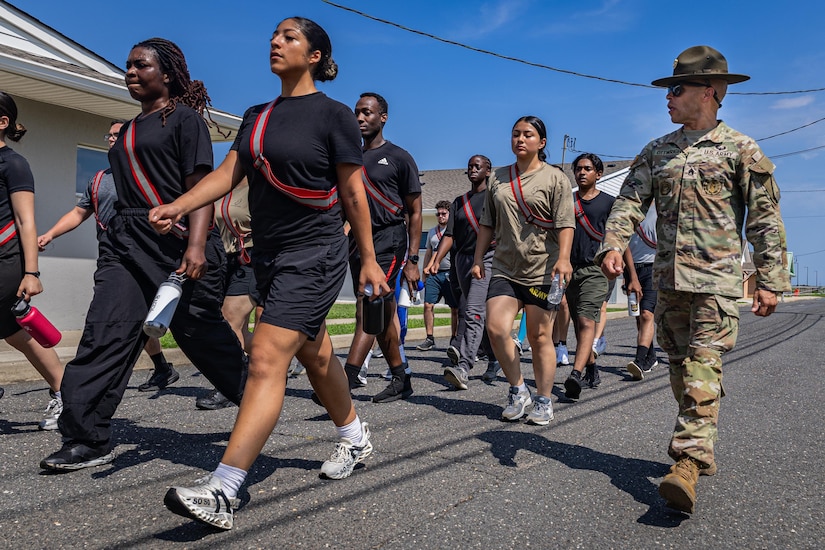
Through the course, the Army provides focused academic and fitness
instruction for those who have the desire to work hard to achieve Army
standards. The program is a bridge to basic training and, ultimately,
assignment to a unit. To date, nearly 7,000 Army National Guard recruits
have successfully entered basic training through the future soldier
course.
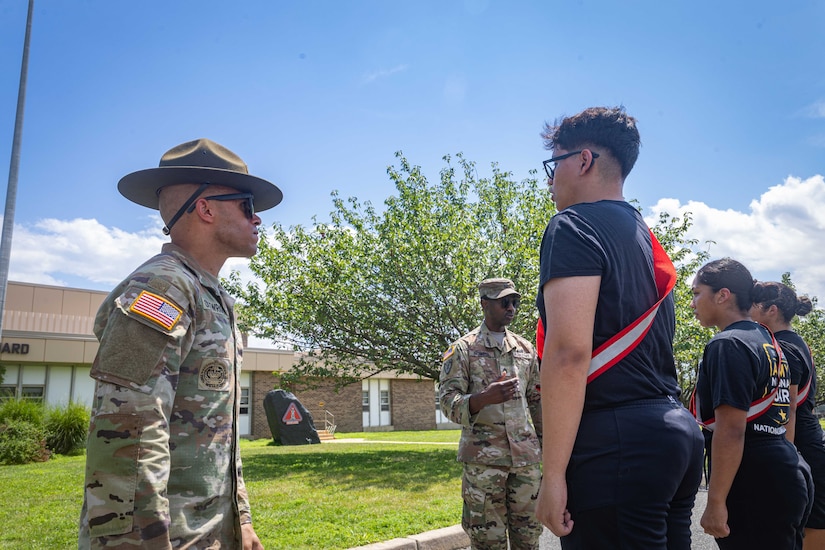
In March, Nordhaus and Senior Enlisted Advisor John Raines visited
the future soldier course at Fort Jackson, South Carolina, to meet with
National Guard cadres and trainees.
"We're a team of teams," Raines told a group of trainees who had
completed the program. "And we need every committed American who wants
to serve, even if they aren't meeting the standards when they make that
decision. This program helps them reach their potential and ensures we
have high-quality soldiers in our formations, because the standards
won't change."
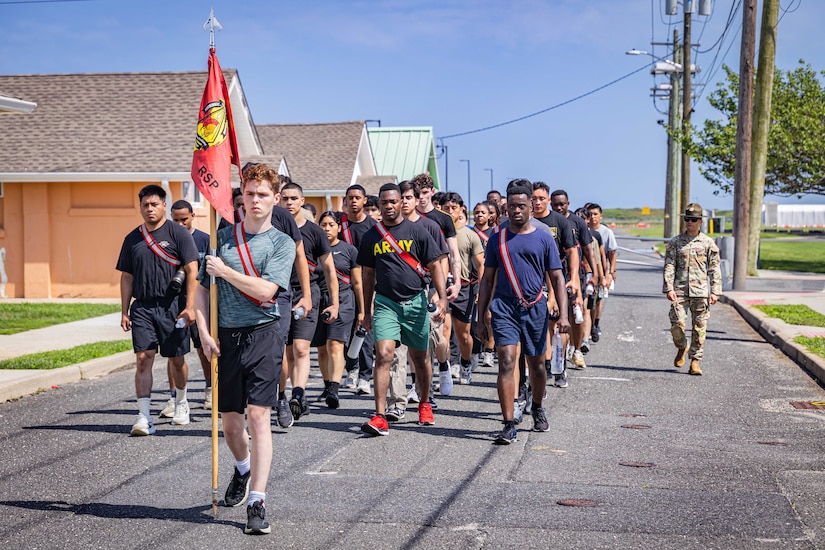
Raines also praised the Army National Guard's Recruit Sustainment
Program, established in the mid-2000s to reduce attrition and prepare
recruits for basic combat training and follow-on advanced individual
training. Army National Guard recruiting and retention battalions
operate sustainment program sites in every state, territory and
Washington.
"Everybody has a place in the National Guard," he said. "We will find
you a place where you can serve your community, your state, your
territory or district and our nation."
The Air National Guard also beat its fiscal year recruiting goals and
is on track to surpass 105,000 airmen by the end of the fiscal year.
Air Force Col. Daniel Curtin, Air National Guard Recruiting and
Retention director, said recent Air National Guard recruiting success is
driven by numerous indicators.
"It's a lot of things," Curtin said. "We've had 19 consecutive months
of year-over-year increases in new accessions. The recruiting
environment is strong … and we have worked diligently to establish a
culture of excellence and opportunity that appeals to potential
recruits. The results are evident."
Curtin explained that the Air National Guard is working to centralize
recruiting efforts within each state, territory and Washington.
Previously, Air National Guard recruiting operational alignment varied.
Some operated under a wing, or a force support squadron, while others
worked under a state's joint forces headquarters. Now, Air National
Guard recruiting headquarters will operate as separate flights or
squadrons, dedicated solely to recruiting and retention.
"The biggest thing we are trying to do is create a structure where
you have a single officer that is responsible for the recruiting force
in that state or territory," Curtin said. "It is a formally appointed
commander responsible for recruiting. That's probably the most important
thing that we're driving out of this, because that allows us to do a
lot of other things."
Curtin added that he believes that the most important initiative in
FY25 was the strategic investment in personnel and infrastructure,
specifically the funding of 150 temporary recruiting support positions
and 210 temporary unit manning document positions.
"These roles have been critical in enhancing recruiting operations,
including production activities, marketing, medical support, training,
and administrative efficiency. By bolstering the recruiting command
structure and providing targeted resources, the [Air National Guard] has
created a robust framework that directly supports its historic
accession achievements."
Nordhaus said he is excited about this year's recruiting numbers and
emphasized that the National Guard needs to maintain this momentum.
"The source of our strength is the fearsome deterrence of our
warfighter talent — the men and women of the National Guard," he said.
"While we exceeded our goals with historic levels of recruiting this
year, we cannot take our foot off the accelerator. We must continue
recruiting the next generation of elite warfighters while retaining our
most skilled and talented soldiers and airmen."




 Posts
Posts

