Tuesday, April 07, 2026

Coast Guard Cutter Midgett Rescues Family Missing in Western Pacific

The Coast Guard cutter Midgett crew rescued a family of three in the waters off the coast of Chuuk, part of the Federated States of Micronesia, following search and rescue operations April 6. 
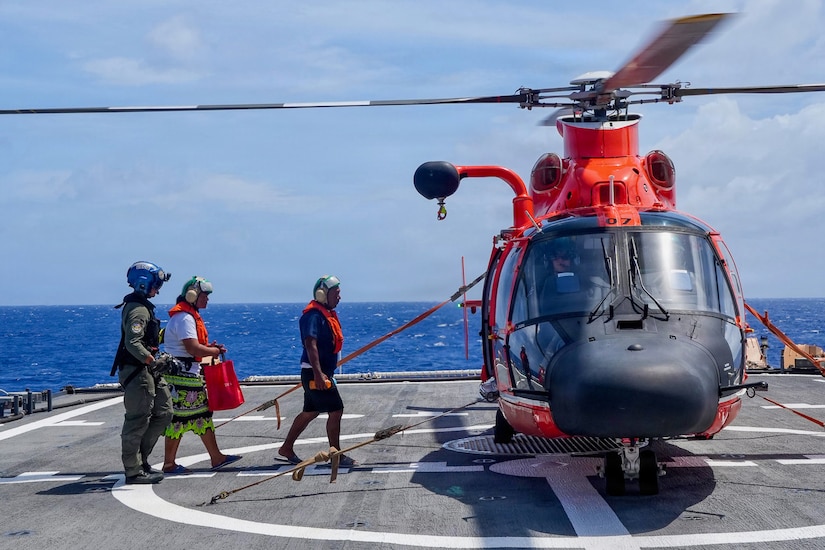
A man and a woman in casual attire and life jackets are escorted by a man in a military flight suit and aviation headgear onto a military helicopter on a large ship.

The crew located the missing family after receiving a report on Easter from authorities in the Federated States of Micronesia and the U.S. Embassy that the vessel was overdue. 

"Our U.S. Coast Guard colleagues' swift and courageous actions in this successful search and rescue mission not only reflect the highest standards of professionalism and humanity but also reinforce the deep and enduring partnership between the United States and the Federated States of Micronesia," said Jennifer Johnson, U.S. ambassador to the Federated States of Micronesia. "This mission exemplifies the spirit of cooperation and mutual support at the heart of the Compact of Free Association, underscoring how our close relations translate into real, lifesaving outcomes for our people." 

At night, the crew visually located the 23-foot single-outboard skiff carrying the missing family, two men and one woman, in the water. 

The family departed Fananu, an island municipality in the state of Chuuk, March 30 for the short passage to the island of Murillo but never arrived due to a failure of their single outboard engine. At the height of search planning, the predicted search area exceeded 14,000 square nautical miles in rough seas with waves reaching 10 feet. 

All three survivors were rescued uninjured. They were then safely delivered to Weno for further transport to Fananu.
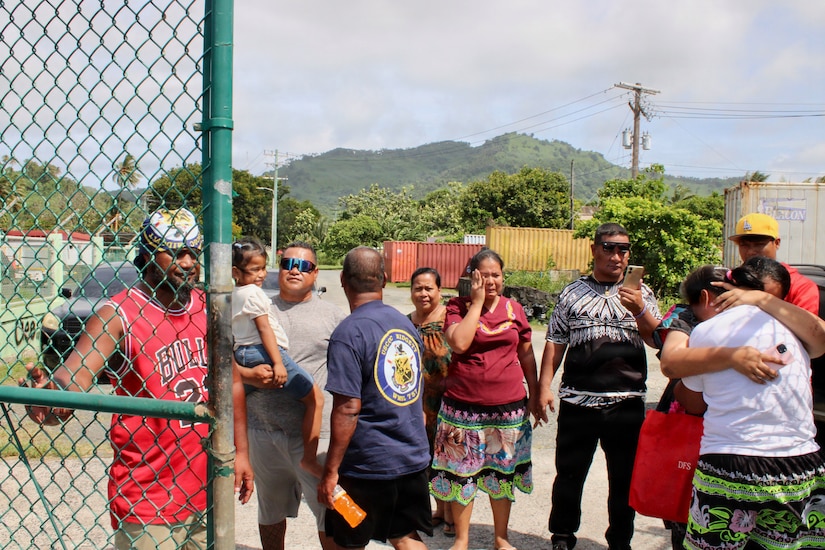
Two women in casual attire embrace outside a gate as eight other people in similar attire stand beside them.

"National security cutter crews spend most of their time executing maritime law enforcement missions, often with our international partners," said Coast Guard Capt. Brian Whisler, commanding officer of the Midgett. "[Search and rescue] cases like this one are not routine for our platform. Our bridge watch standers spotted the small skiff in rough seas just after midnight, and that kind of situational awareness does not happen by accident. It is what this crew trains for, and I could not be prouder of how they performed." 

During the operation, watch standers from the U.S. Coast Guard Joint Rescue Sub-Center Guam at U.S. Coast Guard Forces Micronesia/Sector Guam developed the search patterns and coordinated with U.S. Coast Guard District Oceania and Air Station Barbers Point personnel to launch an HC-130 Hercules airplane and crew from Hawaii to support the search and directed the launch of the U.S. Coast Guard cutter Frederick Hatch  from Guam.  

The crew on the Midgett, already conducting a Western Pacific patrol, diverted following a bilateral maritime law enforcement boarding with two embarked officers from the Federal States of Micronesia in their exclusive economic zone, approximately 200 nautical miles south of Fananu. 

"This rescue reflects the strategic value of maintaining a capable surface presence across the region's vast maritime expanse," said Coast Guard Lt. Cmdr. Derek Wallin, the search and rescue mission coordinator. "Without the Midgett's proximity, coordinating a search across more than 14,000 square nautical miles of open ocean would have required significantly more time and resources, time the three missing people may not have had."

Four USAMU Soldiers Qualify for Upcoming Rifle World Cup Competitions

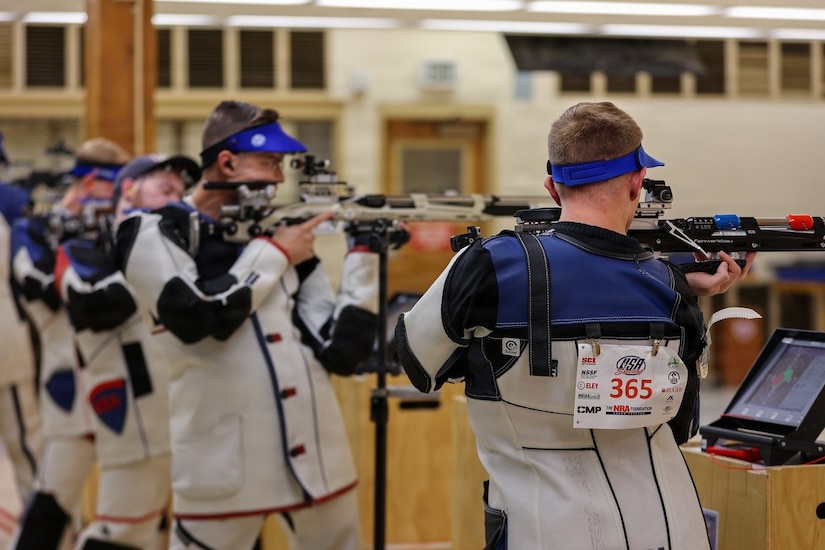
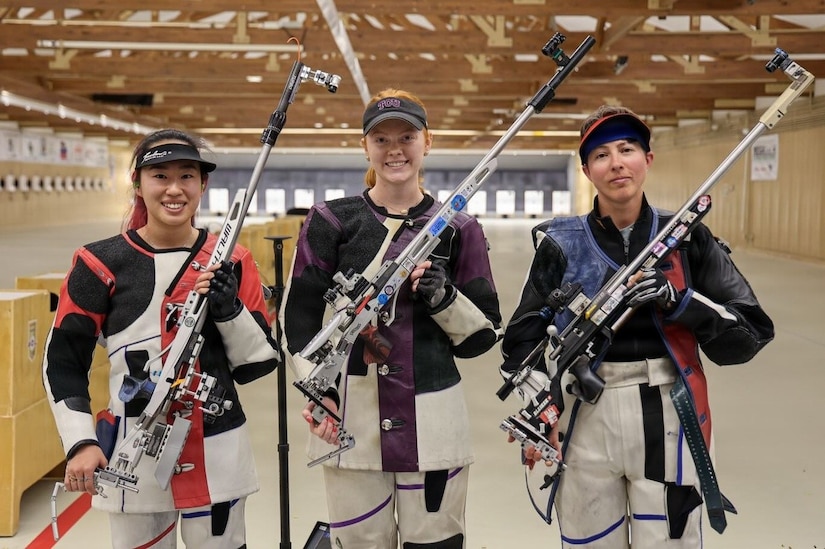
Four soldiers assigned to the U.S. Army Marksmanship Unit qualified to represent the United States at upcoming rifle world cups after competing in USA Shooting's Rifle Spring Selection Match in Colorado Springs, Colorado, March 20-23.

A row of men dressed in competitive rifle shooting gear hold rifles in their hands and stand in the shooting position.

The soldiers competed alongside more than 100 of the nation's top marksmen in the Olympic disciplines of 10-meter air rifle and 50-meter three-position rifle.

After relays and a final, the Fort Benning soldiers earned spots on USA Shooting's national team, which will vie for medals at the International Shooting Sports Federation World Cup in Germany and China later this year.

In the 10-meter air rifle, Army Staff Sgt. Brandon Muske and Army Sgt. Alison Weisz earned positions on the men's and women's teams, respectively. In the 50-meter three-position rifle, commonly called smallbore, Army Sgt. Levi Clark and Army Staff Sgt. Sagen Maddalena qualified for the men's and women's teams.

Earning a world cup berth is one step in a long training cycle, said Maddalena, who won the silver medal in women's 50-meter smallbore at the 2024 Paris Olympics.

"Now that I am on the national team, my job is to prepare myself for the opportunities in these upcoming world cups to make a podium spot," she said.

Three women dressed in competitive rifle shooting gear hold rifles up at an angle while posing for a photo.

Maddalena noted that training at this level involves more than the physical and technical challenges of repeatedly hitting a .5 mm target at 10 meters in air rifle or a 10.4 mm target at 50 meters in smallbore.

"That preparation involves building up my mental game and regulating my emotions so that I am ready to compete with the best version of myself," she said.

The U.S. Army Marksmanship Unit International Rifle Team's long record of success shows that the most effective way to prepare for the pressure of international competition is to face it firsthand. So, earning opportunities to represent the nation at the ISSF World Cup is not only an honor but also essential preparation for a potential run at the 2028 Olympics.

"These world cups are very good for me to gain international experience and get used to matches that elevate my nerves more," Clark said.

The selection match also marked the first competition using newly modified gear that complies with the ISSF's 2026 rule changes — adjustments that required significant adaptation, Muske said.

"This selection match was difficult but rewarding," he said. "The training leading up to the match was not going especially well due to new equipment regulations."

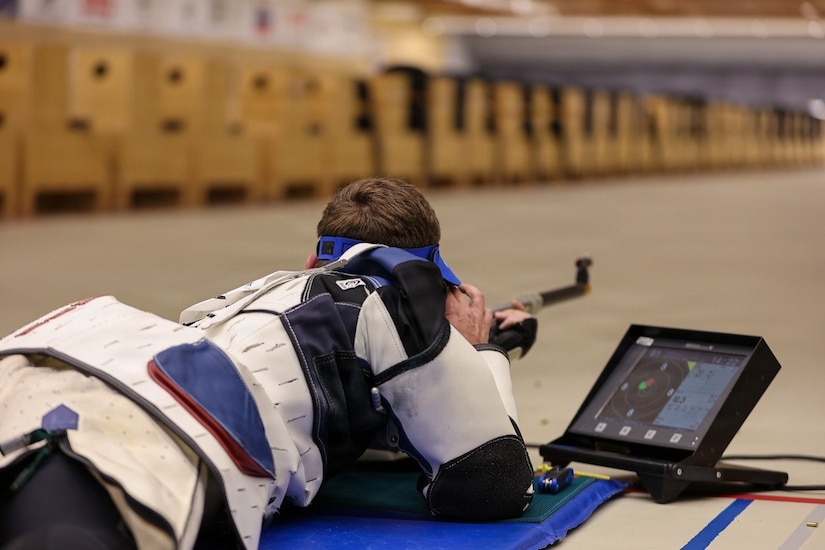
A man dressed in competitive rifle shooting gear is lying down while holding a rifle in the shooting position.

The ISSF changes require competitors' canvas shooting suits to be substantially less rigid. Because ordering new custom-fit suits takes months, the soldiers had to modify their existing gear. Some of the adjustments included removing one of the two layers, applying leather conditioner, and rolling the suits to break down the fibers, said Weisz, a 2020 Olympian in 10-meter air rifle.

"The team collectively spent hours and weeks modifying the suits to be legal," she said.

Clark agreed that the new rules demanded extensive time and effort.

"We spent maybe a collective 100-plus hours modifying and testing our suits over and over again to find the best method that worked for us," he said. "Then, when we got to the match, we learned the temperature and humidity affected these tests and we had to do further modifications."

The extra work cut into training time, adding stress to match preparation, Muske said.

"I left Georgia feeling rather unprepared to perform but was able to execute my match plan effectively despite some of the physical deficiencies and less-than-ideal training leading up to the match," he said.

The ISSF changes affected all competitors, not just the soldiers. Competitors shared modification techniques and discussed the added pressure of suit inspections, which could disqualify anyone whose gear failed to meet the new standards.

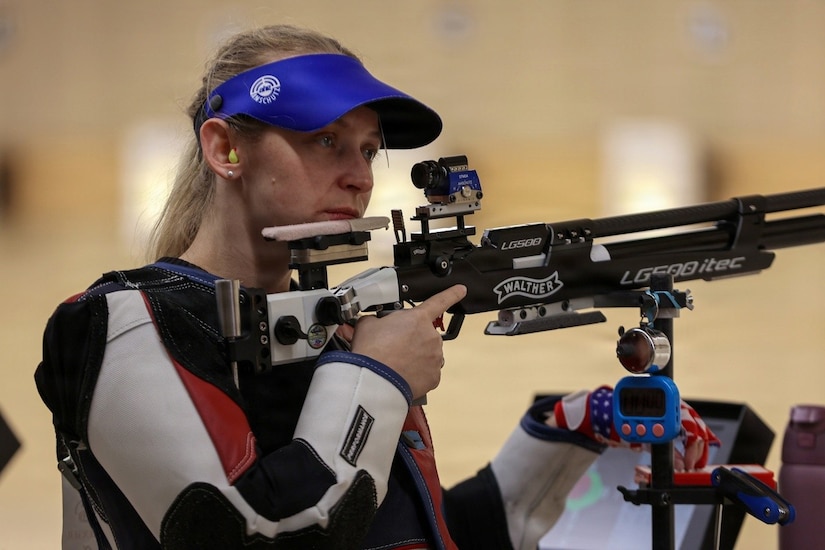
A woman dressed in competitive rifle shooting gear looks at a target and holds a rifle in the shooting position.

Suit changes weren't the only shift at the selection match. This event was the first "one-and-done" selection match in years, Weisz said.

Under the previous system, competitors shot multiple matches and the best five scores determined world cup qualification.

"While that was challenging in its own right, this style brings on extreme intensity and pressure," Weisz said. "You get two days and a final to perform and make your goal happen. I like to think I thrive under pressure, so it was exciting for me to compete like that again, but of course I was also nervous."

Competition naturally brings anxiety but adding suit inspections and a single-match selection format made the event especially stressful, she said.

"It was interesting watching everyone handle it differently," Weisz said. "That really added a layer of challenge to maintain composure and not let other competitors' emotions affect my own."

Medal of Honor Monday: Four Receive Highest Award for Valor on Samoa

One sailor and three Marines were awarded Medals of Honor for bravery during the Second Samoan Civil War, April 1, 1899. 

The combatants were Samoans, Americans and British, who fought against the Germans and a rival Samoan group.  

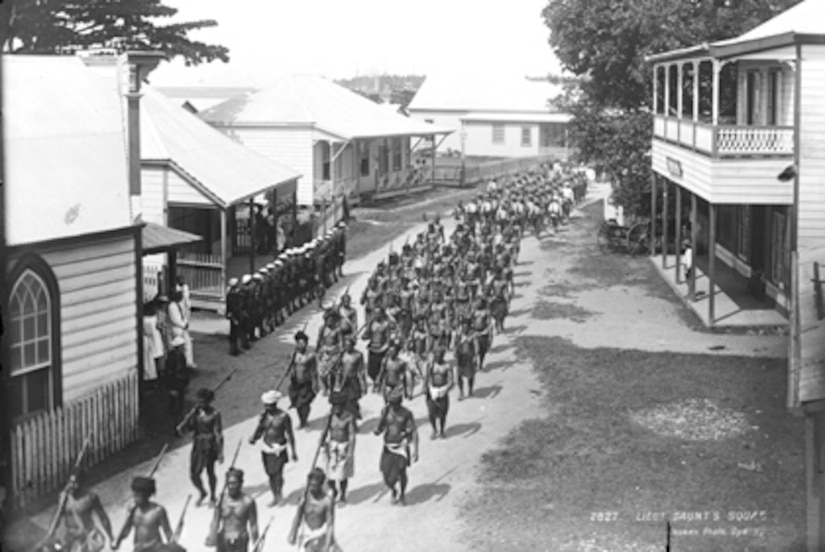
U.S. and British forces landed on the island of Upolu at Apia. They marched 10 miles along the coast to Vailele to fight. This expeditionary force included 26 Marines, 88 sailors and 136 Samoans.  

Native warriors with long guns at their right arms march down a dirt road in a village, as a line of soldiers wearing military uniforms stand nearby.

When they arrived at Vailele, they were ambushed by over 800 enemy Samoans hiding in the jungle. Alarmed, the allied Samoans ran off, leaving the sailors and Marines to do the fighting. The leader of the expeditionary force, Navy Lt. Philip Lansdale, ordered the men to fall back, as they were badly outgunned and outnumbered.  

During the fight, Lansdale was wounded and couldn't move. Navy Ensign John R. Monaghan disobeyed the order to fall back and continued fighting. After the battle, Monaghan and Lansdale were found dead, side by side. 

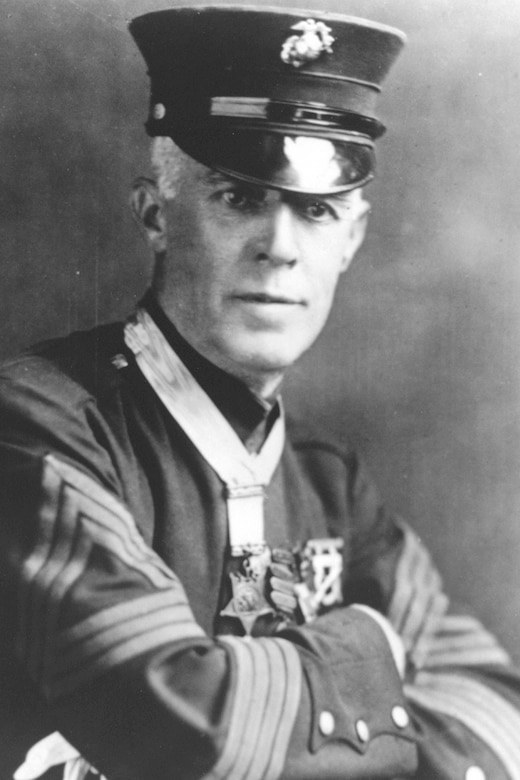
A man in a formal military uniform poses for a photo.
Marine Corps Pvt. Henry L. Hulbert, despite suffering wounds, conducted a one-man delaying action, laying down heavy fire that enabled the landing force to withdraw to a defensible position covered by the guns of the warships offshore. 

Under fire from three sides, Hulbert stood his ground until the main group established a new defensive perimeter.  

In support of the Medal of Honor, which was awarded, Navy Secretary John Davis Long wrote: "The gallantry of [Pvt.] Henry L. Hulbert, who remained behind at the fence till the last and who was with Lansdale and Monaghan when they were killed, I desire especially to mention." 

Marine Corps Sgt. Michael Joseph McNally, Marine Corps Sgt. Bruno Albert Forsterer and Navy Petty Officer 1st Class Frederick Thomas Fisher, who also distinguished themselves in battle, were all awarded the Medal of Honor as well. 

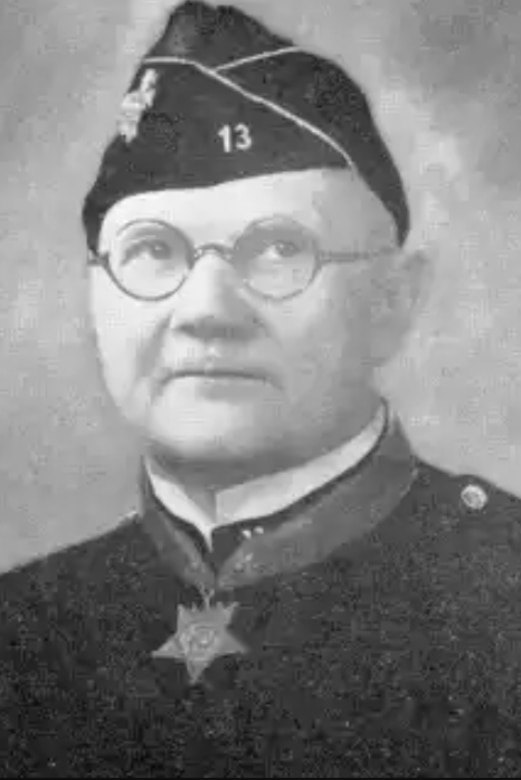
A man in a formal military uniform poses for a photo.
Forsterer was, ironically, born in Konigsberg, Germany, July 14, 1869. He served in the Marine Corps for 13 years, attaining the rank of gunnery sergeant. After serving, he became the editor of the Oakland Tribune newspaper. He died June 13, 1957, and is buried in Arlington National Cemetery, Virginia. 

Hulbert, born in Kingston upon Hull, England, Jan. 12, 1867, served in the Marine Corps from 1898 to 1918, attaining the rank of sergeant major and later captain. During World War I, he fought in the battles of Belleau Wood, Château-Thierry and Blanc Mont Ridge, all in France. On Oct. 4, 1918, he was killed in action at Blanc Mont Ridge, posthumously earning the Navy Cross, Distinguished Service Cross and French Croix de Guerre. He is buried in Arlington National Cemetery. The destroyer USS Hulbert, commissioned in 1920, was named after him.  

McNally, born June 29, 1860, in Manhattan, New York, served from 1897 to 1915, attaining the rank of sergeant major. On Nov. 2, 1916, he disappeared from a Baltimore Steam Packet Company steamer. His body was recovered three weeks later; he was buried in Portsmouth, Virginia. 

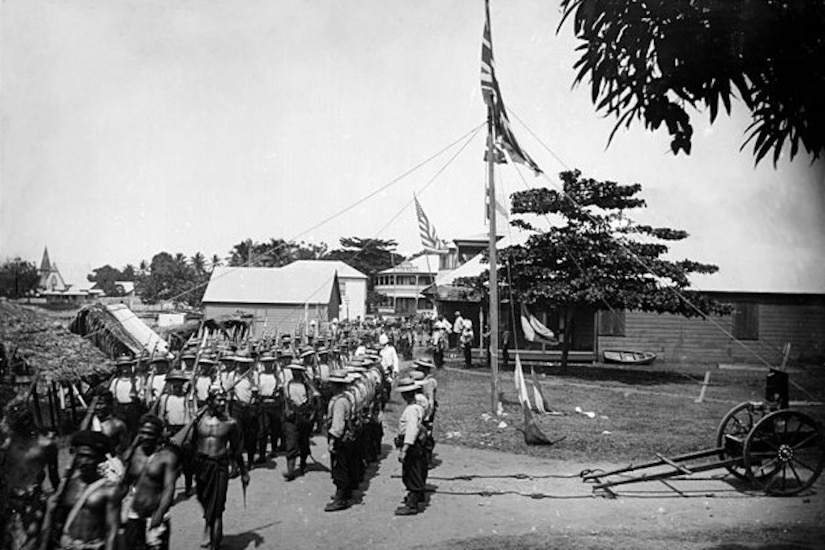
U.S. and British flags fly from a flagpole as troops in uniform and native warriors stand in formation with long guns on a village green.

Fisher, born in England, June 3, 1872, died April 15, 1906, while serving aboard the battleship USS Kearsarge and was buried in Los Angeles. 

President Theodore Roosevelt awarded all four Medals of Honor in 1901. 

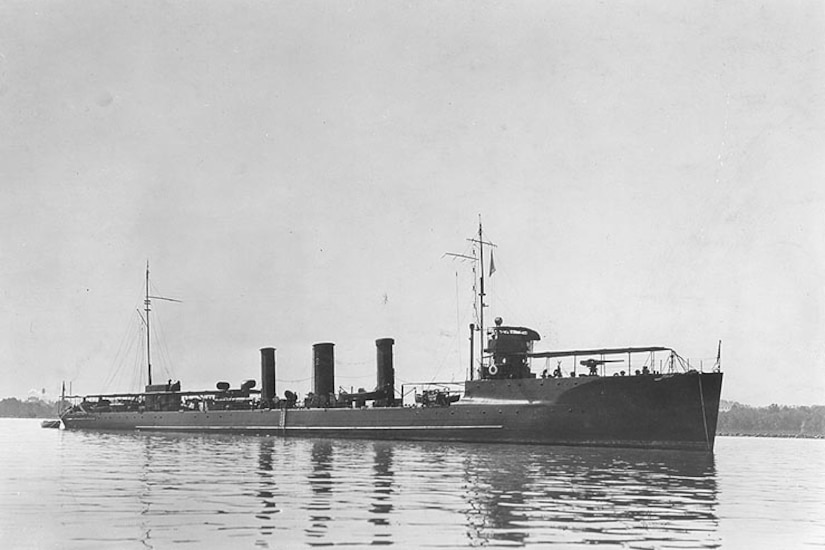
Although Monaghan was never awarded the Medal of Honor because naval officers at the time were not eligible, the destroyer USS Monaghan, launched in 1911, was named for him and served in World War I. Also, the destroyer USS Monaghan, launched in 1935, was named for him and served during World War II before sinking during a typhoon in December 1944.  

A battleship is anchored in calm water with the shoreline in the distance.

The Tripartite Convention of 1899 concluded the Second Samoan Civil War, in which Germany gained Western Samoa and the United States gained Eastern Samoa. Also, the Samoan monarchy was abolished, and Samoan autonomy officially ended. On Aug. 29, 1914, during the early days of World War I, New Zealand forces seized Western Samoa from Germany. New Zealand retained control of Western Samoa until 1961, when it was granted independence and became Samoa. 

The United States made American Samoa a U.S. territory in 1900. The U.S. Navy administered the territory until 1951, when the Interior Department took over. 

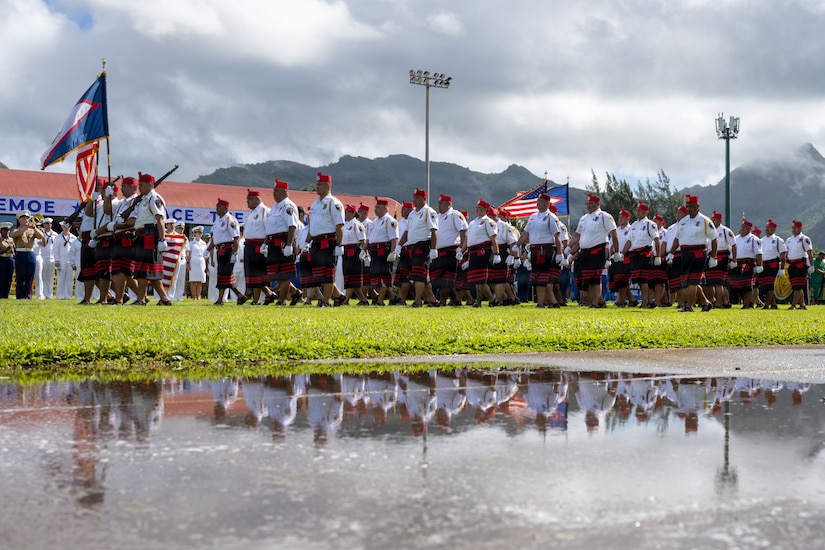
Troops in kilts march on a grassy field with mountains in the background.

The territory's capital, Pago Pago, has a deep natural harbor that is considered strategically important to the United States.  

Samoa, in the South Pacific, consists of two large islands and seven tiny ones, totaling 1,093 square miles and American Samoa, 50 miles east, across the International Date Line, consists of seven small islands totaling 77 square miles. 

Walter Reed's Medevac Team Transports Wounded Warriors to World-Class Care

When injured active-duty service members need to get from the battlefield to critical medical care back home in the U.S., the medical evacuation department for Walter Reed National Military Medical Center, Maryland, plays a vital role.

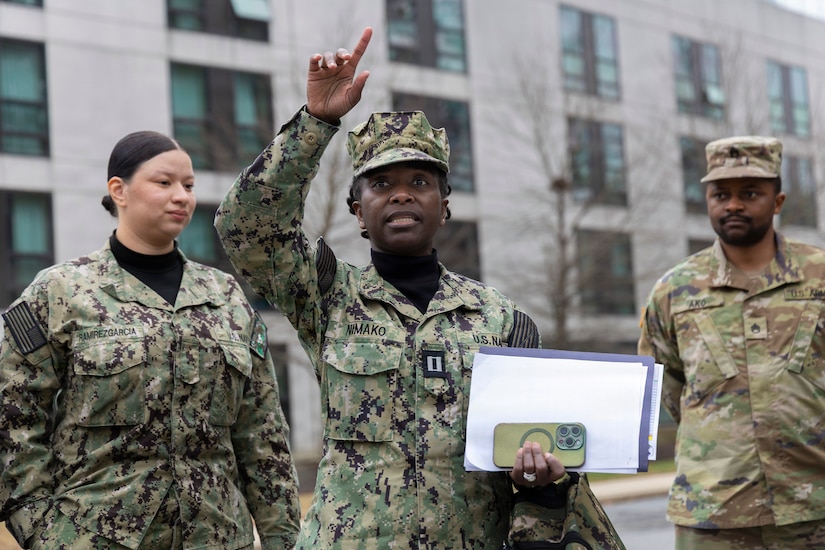
A woman in a camouflage military uniform points in the air to get other people's attention, as two other people in similar attire stand behind her.

"Walter Reed's medevac team is responsible for supporting patient movement across the globe while ensuring patients receive presidential care during transport throughout the aeromedical evacuation system," said Navy Lt. Abena Nimako, officer in charge of the medevac team. "In addition to inbound and outbound military personnel from all branches requiring transport, the medevac team also supports the movement of reservists, veterans, beneficiaries and dependents for care."

The medevac team supports the Defense Health Network National Capital Region's patient movement requirements as directed by the War Department. The team coordinates and synchronizes various movement plans with the U.S. Transportation Command's Global Patient Movement Requirements Center, the U.S. European Command's Theater Patient Movement Requirements Center, the Deployed Warrior Medical Management Center at Landstuhl, Germany, and Air Force aeromedical staging facilities to ensure a seamless transition of patients transferring to and from the national capital region.

The medevac team is composed of dedicated officers and enlisted personnel from the Navy, Army and Air Force, including registered nurses, paramedics, medics and hospital corpsmen. The primary team consists of 14 active-duty personnel, which includes one nurse who serves as the mission nurse and the officer in charge of the department, currently filled by Nimako; one patient care coordinator; one noncommissioned officer in charge and 11 hospital corpsmen.

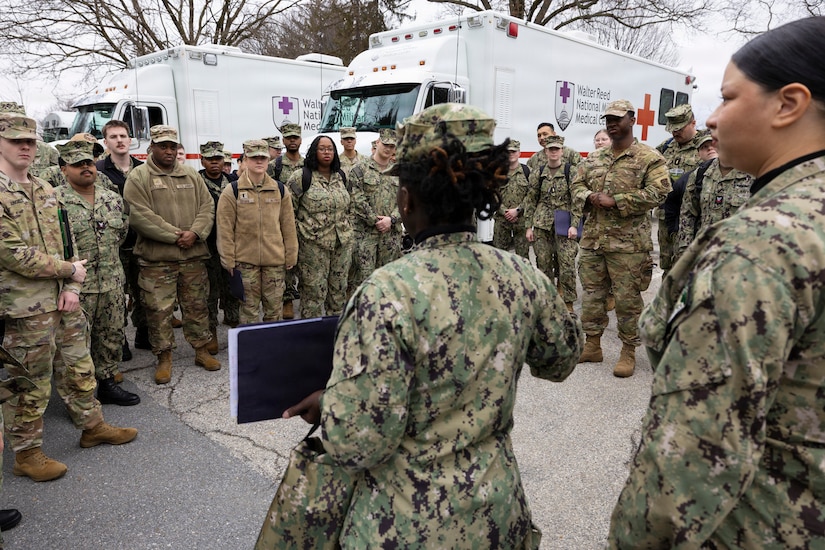
People in camouflage military uniforms look at a woman in similar attire at the center of the crowd while she holds up a notebook. Emergency vehicles are parked in the background.

There is also a rotational team comprised of nine active-duty enlisted personnel and two registered nurses that operate on a two-month period to provide relief for the primary team.

The service members use a variety of vehicles to transport patients and team members to and from the pickup/drop-off locations, including ambulances, patient evacuation vehicles that function as intensive care units on wheels, an ambulance bus, a separate luggage truck and a nine-seater van.

The team is equipped with critical lifesaving equipment, including defibrillator units, IV kits, a blood infusion system, oxygen tanks, wound vacuums and other vital patient care supplies. In addition to the medical staff, the team also includes three professional drivers who operate the large vehicles required to carry the medical staff and sizable pieces of equipment necessary to safely transport patients.

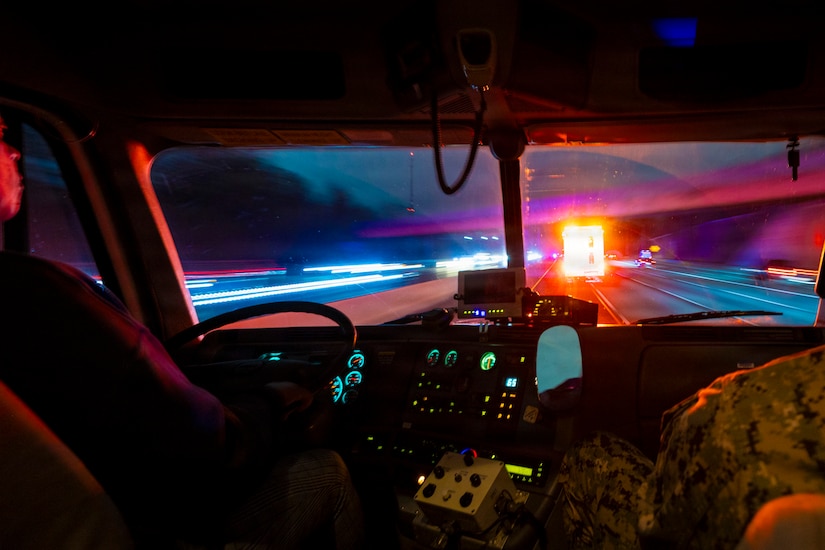
A person in a camouflage military uniform drives an emergency vehicle at night while another, partially visible person in similar attire sits in the passenger seat.

A typical mission begins far from the hospital, with the initial stabilization and transport of wounded or critically ill service members from a combat zone conducted by air medevac units.

"Once stabilized at an overseas hub, the patient is then flown back to the United States to various destination airfields in the national capital region," Nimako said.

Walter Reed serves as a critical receiving and continuing care facility for service members — and sometimes their families or allies — who have already been medically evacuated from an operational theater.

The medevac team meets the incoming patients at their destination airfield, transitioning them into patient care vehicles to ensure uninterrupted quality of care. An average mission involves transporting between eight to 10 patients, but the team has the capability to carry as many as 26 patients on litters or upward of 42 ambulatory patients.

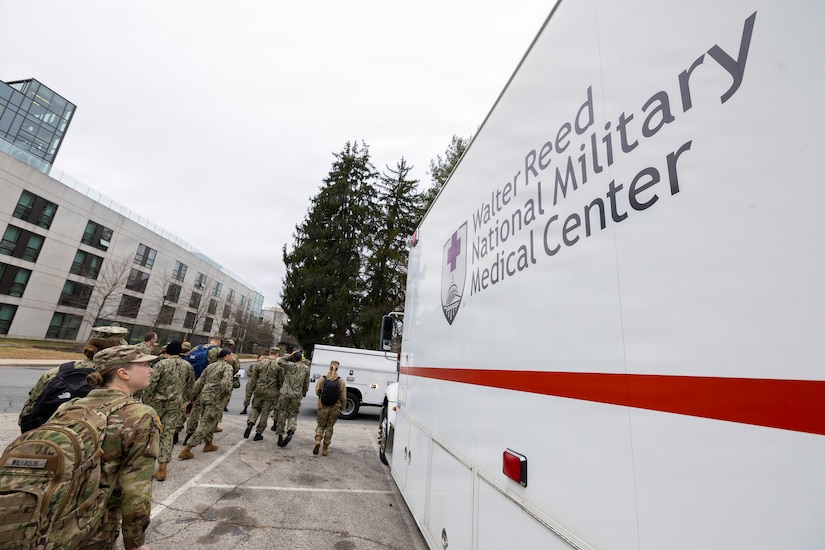
A group of people dressed in camouflage military uniforms walk in line next to an emergency vehicle that has the words "Walter Reed National Military Medical Center" on it.

Once the patients are secured in the vehicles, the team continuously monitors their condition, administering any needed care during the trip to Walter Reed. At each stage of the process, the team remains in contact with operations for Walter Reed, base security forces, service-specific liaisons and hospital staff, depending on the nature of the patient's medical situation. Hospital staff will also inform patients' families of their imminent arrival so they can be present to support their loved ones.

At Walter Reed, patients are transferred into the care of the specialized unit depending on their needs — intensive care, orthopedic, gastrointestinal or other treatment type. Each handover involves a detailed report of the patient's condition.

"'Thank you' is not what I am looking for," Nimako said. "The real validation is when the mission is secured and the patient is at Walter Reed. I tell myself that I made a difference that day. I did something good."