Wednesday, March 25, 2026

Department of War and Honeywell Aerospace Forge Agreement to Surge Production of Critical Munitions Technology

The Department of War, in partnership with Honeywell Aerospace, today announced a framework agreement to surge production of critical components for America's munitions stockpile, including navigation systems, Honeywell Assure™ actuators, and electronic warfare solutions.  By providing a long-term, stable demand for critical munitions, the Department has unlocked a $500 million multi-year investment from Honeywell Aerospace to modernize and expand its manufacturing capacity, marking a key victory for the defense industrial base that directly answers President Trump and Secretary Hegseth's call to build a resilient and enduring Arsenal of Freedom.

This agreement is a direct outcome of the Department's Acquisition Transformation Strategy, which empowers direct engagement with key suppliers to ensure production capacity increases across the entire supply chain, not just at the prime contractor level. The result is a more robust and responsive industrial base, capable of equipping the American warfighter at the speed and scale necessary to deter and defeat any adversary.

Through this agreement, Honeywell Aerospace will accelerate the delivery of components that form the technological backbone of America's military advantage. Production will be ramped up for the navigation systems that guide precision munitions, the high-performance actuators that give our missiles their critical maneuverability, and the advanced electronic warfare solutions that dominate the battlefield.

"Our strategy is to provide the long-term demand signals that unlock private investment, and this half-billion-dollar commitment from Honeywell Aerospace demonstrates we are succeeding," said Michael Duffey, Under Secretary of War for Acquisition and Sustainment. "Thanks to the leadership of President Trump and Secretary Hegseth, we are building the deep and dominant Arsenal of Freedom our nation requires by ensuring our entire industrial base can deliver at speed and scale."

This agreement was made possible through close collaboration across the defense enterprise. The Department's Munitions Acceleration Council is working in concert with industry leaders, including prime contractors Lockheed Martin and RTX, to ensure demand signals flow down to critical suppliers like Honeywell Aerospace, enabling this landmark investment in the nation's security.

Next Generation of Airmen Sustain Deterrence Mission

At Vandenberg Space Force Base, California, and other intercontinental ballistic missile bases, maintaining the nation's strategic deterrence requires precision, teamwork and a high level of responsibility from the missile maintainers supporting the mission.

A rocket sails through the air, leaving a bright trail in the night sky.

Many of them step into the role early in their careers, working on complex systems that support missile test operations and ensuring the reliability of the country's missile deterrence. 

These service members prepare systems used during test launches conducted at Vandenberg and maintain ICBMs held at F. E. Warren Air Force Base, Wyoming, Minot Air Force Base, North Dakota, and Malmstrom Air Force Base, Montana. Their work demonstrates the reliability and readiness of the nation's strategic capabilities. 

Air Force Staff Sgt. Cameron Struckmeier, an electromechanical team chief assigned to the 377th Flight Test Missile Maintenance Squadron at Vandenberg, has spent almost nine years supporting different parts of the missile maintenance career field. He started his career working on the air-launched cruise missile system at Barksdale Air Force Base, Louisiana, before moving to the ICBM mission.

Another maintainer, Air Force Staff Sgt. River Ramey, team chief of the missile maintenance squadron, has served for more than six years. He began his career supporting the ICBM mission at Malmstrom before later transferring to Vandenberg.

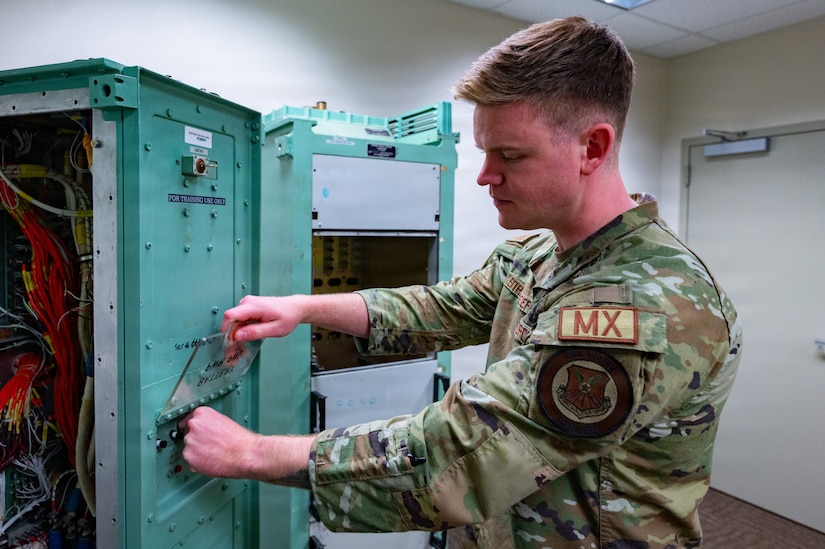
A man in a camouflage military uniform checks electrical equipment inside a room.

Missile maintenance airmen begin their careers in technical school before moving into on-the-job training at their first duty station.

Preparing for a missile test launch requires coordination across multiple teams and sections. Leading up to a launch, maintainers complete inspections, prepare equipment and review procedures to ensure each step of the process is completed safely and correctly. 

Operations intensify as launch day approaches. Maintenance teams may work longer hours while preparing equipment and ensuring systems are ready for launch. 

For many maintainers, witnessing a missile launch for the first time reinforces the significance of the mission they support. Test launches conducted at Vandenberg replicate the procedures used for operational launches and demonstrate the reliability of the weapon system.

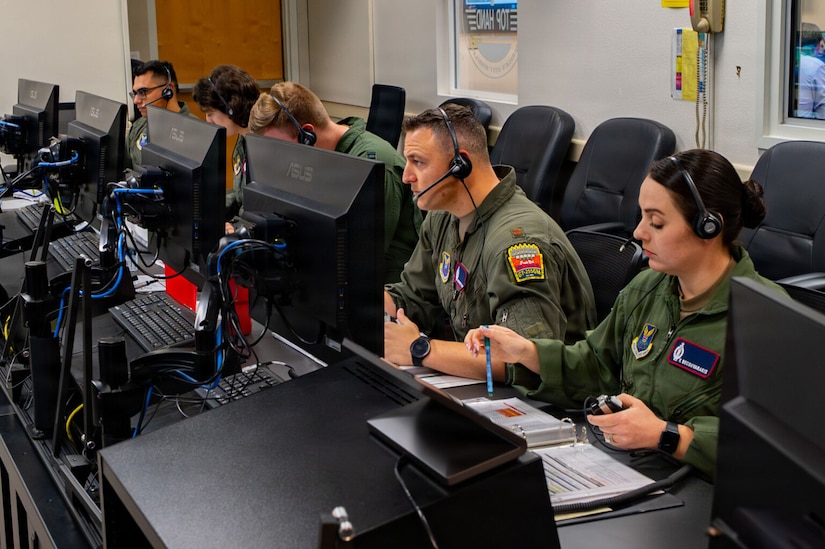
Five people in military flight suits wear headsets and look at computer screens indoors.

"My first shift at Vandenberg was actually a launch night," Struckmeier said. "It smells like the Fourth of July, and you can feel the heat coming off the launch tube." 

After the launch, Struckmeier realized that the test process was identical to the real thing. "That was sobering in a good way," he explained. 

Supporting mission asset systems requires strict adherence to technical orders and maintenance procedures. Even minor errors can affect mission success, making precision and attention to detail essential parts of daily work. 

"The tiniest mistake on a weapon system is catastrophic," Struckmeier said. "Globally, what we do here shows the world that the system works. If maintenance mistakes cause launches to fail, adversaries might start questioning our capabilities. So, proving the system is reliable is extremely important." 

Through their time supporting the mission, both team chiefs said the experience has contributed to significant professional and personal growth. As they gained experience, their responsibilities expanded to include supervising technicians, ensuring safety standards are met and supporting mission readiness.

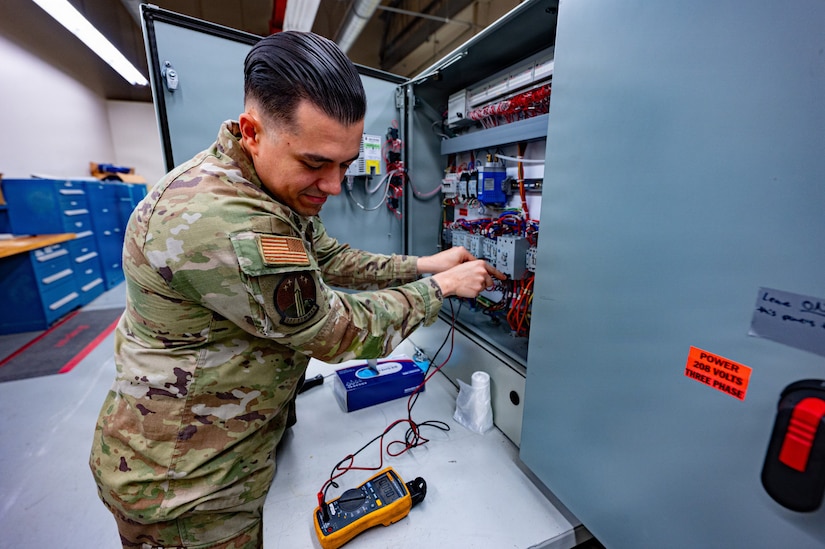
A man in a camouflage military uniform checks a voltage meter while inspecting electrical equipment inside a large room.

"My mindset has evolved a lot here at Vandenberg," Ramey said. "Because the equipment is mission-certified, we need guidance before making certain changes or repairs. So, you have to be very mindful of everything you do."

While many people in their 20s are still establishing their careers, airmen supporting the ICBM mission often take on responsibilities that require a high level of technical knowledge and accountability. Although the work can feel routine daily, events such as missile launches and the global attention they receive highlight the broader significance of the mission. 

Maintainers supporting the mission take pride in contributing to a capability designed to preserve stability and deter conflict. Much of their work happens behind the scenes, where success often means systems function exactly as intended. 

"Sometimes we see what adversary countries say about it and how the public reacts," Struckmeier said. "It's cool seeing recognition for a job that usually goes unnoticed, because a good day means nothing happens."

The reliability of the nation's strategic deterrence depends not only on the systems themselves, but also on the highly trained young airmen responsible for maintaining them. Through their work, the next generation of maintainers continue to support a mission that plays a critical role in national security.

Pearl Harbor Survivor Celebrates 106th Birthday With Navy Talent Acquisition Group New England

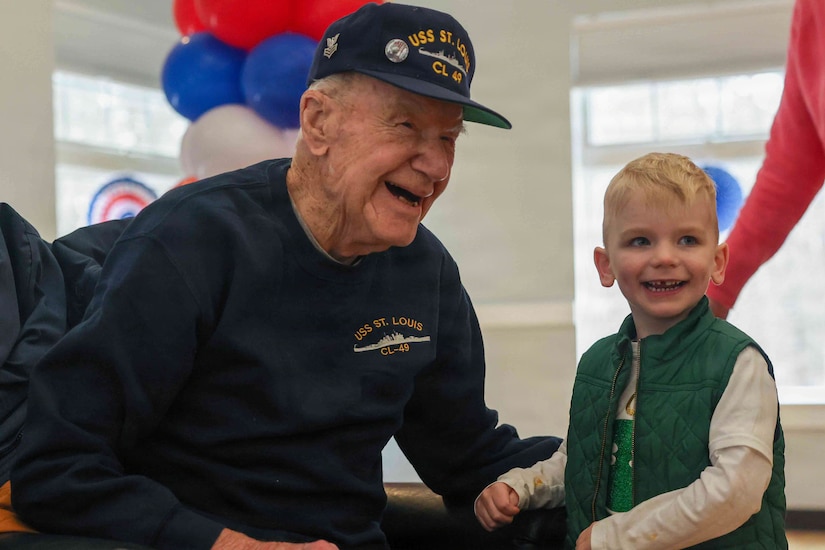
Pearl Harbor survivor and Navy veteran Freeman Johnson arrived in celebrity-like fashion at the Barnstable Adult Community Center in Hyannis, Massachusetts, March 18.

An elderly man wearing a Navy ship memorabilia sweatshirt and cap sits in a black leather chair and smiles. A young blond-haired boy stands next to him and smiles, with other partially visible people nearby. Red, white and blue balloons can be seen in the background.

Johnson, one of the oldest survivors of the attack on Pearl Harbor, Hawaii, was there to celebrate his 106th birthday.

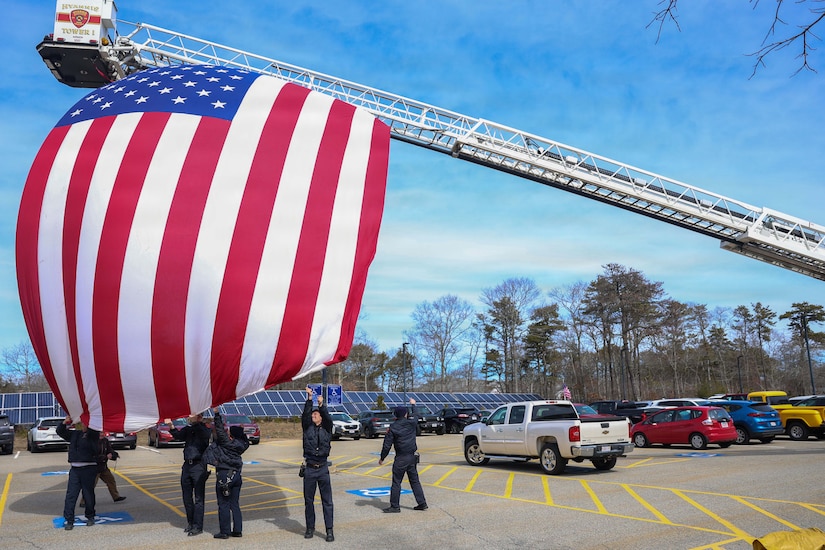
He emerged from a black limousine amidst television news crews and photographers, aided by Barnstable police officer Brian Morrison, who assisted him into a wheelchair. The duo passed through a mixture of military service members and first responders who lined the sidewalk to salute Johnson as he approached the building's entrance.

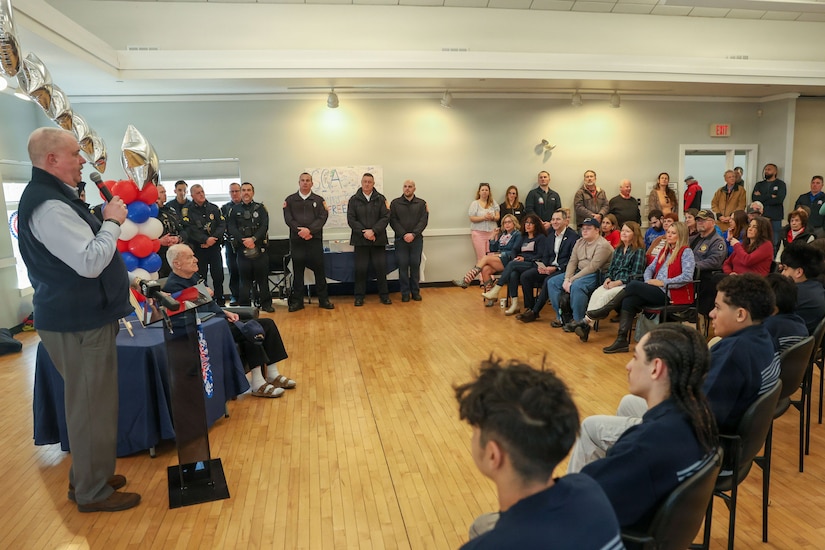
Sailors, firefighters, police officers and Coast Guard ROTC students from Barnstable High School were among those gathered to celebrate Johnson's birthday and honor his military service.

Johnson was born in Springfield, Massachusetts, and moved to Waltham when he was 5 years old. From there, he joined the Navy in 1939 at the age of 19.

After completing boot camp in Newport, Rhode Island, he was stationed on board his first ship, the Brooklyn-class light cruiser USS St. Louis, which was homeported in Norfolk, Virginia, at the time, but would later go to the Navy yard in Pearl Harbor for a maintenance period.

A man holding a microphone stands before a crowd of seated and standing people. Red, white and blue balloons are on a table near the man.

Johnson completed his six-year Navy career as a machinist mate first class, but he was a junior sailor with the rank of fireman the morning of Dec. 7, 1941.

In a 2025 interview with Pacific Historic Parks – USS Arizona Memorial, Johnson reflected on his experiences during the attack, recalling the events of that fateful Sunday morning.

"I was in my bunk when the whole thing started [at around] 7:56 in [the] morning," Johnson said. "We'd already had breakfast, that was over. I heard the machine guns fire over my head, then [general quarters] started. Everybody on board has a specific spot they're supposed to be in. So, I went to my spot."

The Pearl Harbor attack accounted for 2,403 American deaths and 1,178 more wounded. The USS St. Louis was remarkably the only major ship to exit the harbor unscathed. Johnson's ship managed to escape without suffering any casualties or major damage during the attack, earning it the nickname "Lucky Lou."

Johnson's story exemplifies bravery in the face of danger and inspired the sailors in attendance.

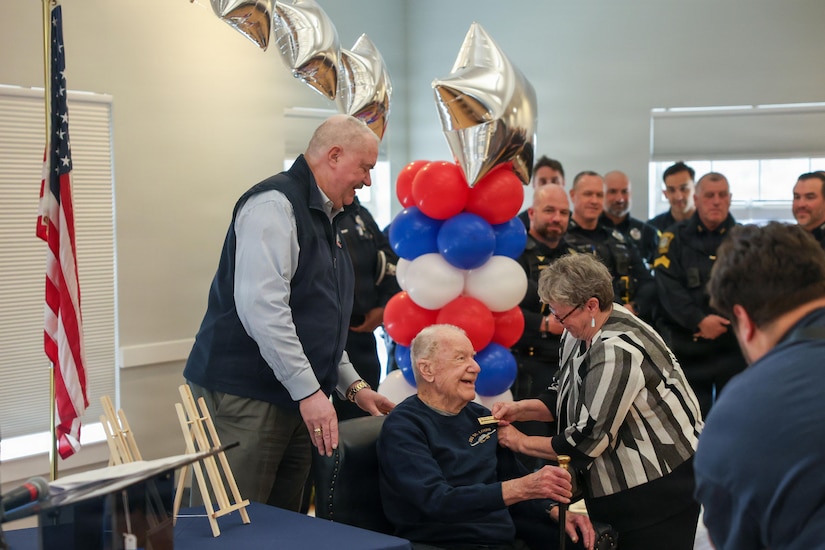
An elderly man sitting in a black leather chair shakes hands with a woman standing in front of him. Other people, some dressed in police and firemen uniforms, stand nearby. A table filled with red, white and blue balloons is behind the man in the chair, where another man is standing.

Navy Fire Controlman 2nd Class Cullen McCarthy, a recruiter assigned to Navy Talent Acquisition Group New England, had the pleasure of serving Johnson a slice of cake after everyone sang "Happy Birthday."

McCarthy grew up in Whitman, Massachusetts, just 30 miles from where Johnson did. He felt privileged to take part in honoring his shipmate and fellow New Englander.

"Well, it's always awesome to get out into the community and get more involved, but especially when it's something of this magnitude," McCarthy said. "It's the 106th birthday for Freeman, a true hero, local hero and national hero. It's important for me to be able to get out here and get involved."

Johnson's birthday celebration gave everyone the chance to learn some naval history, and it provided a heartfelt connection with a veteran who served our country at a crucial hour.

Six men dressed in navy blue jackets and slacks reach up to straighten a large American flag hanging from a crane. Rows of solar panels are nearby, as well as parked cars.

Kelly Howley, director of the Barnstable Council on Aging, oversees Barnstable Adult Community Center, which hosted the event.

"Well, today was a wonderful day celebrating Freeman's 106th," Howley said.

"He's a local celebrity here in Barnstable now, and it was an honor to be part of all of the military, first responders, town government and the well-wishers that came by to help celebrate his birthday."

Organizing the birthday party was a joint effort, with State Rep. Kip Diggs and Veterans Outreach Services collaborating to plan the event.

Navy Talent Acquisition Group New England is responsible for the Navy's enlisted and officer recruiting in Maine, New Hampshire, Vermont, Massachusetts, Connecticut, Rhode Island and Eastern New York.