Sept. 3, 2025 |
Airmen assigned to 168th Medical Group, Alaska Air National Guard, engaged in an advanced, rigorous, combat casualty care exercise designed to sharpen their skills in delivering lifesaving care under hostile conditions at Fort Wainwright, Alaska, Aug. 5, 2025.
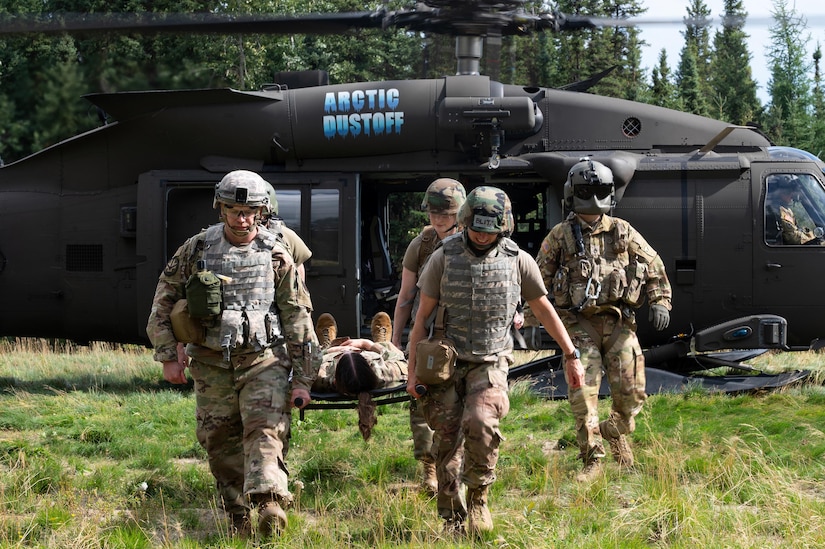
The training, conducted in coordination with 1st Battalion, 52nd General Support Aviation Battalion, 16th Combat Aviation Brigade, the Army UH-60 Black Hawk unit at Fort Wainwright, pushed medics to operate with precision and speed in the face of simulated battlefield chaos.
"This exercise prepares them for real-world scenarios," said Air Force Col. Russell Pierce, 168th Medical Group commander. "Many are civilian caregivers, and while some skills transfer to military settings, others don't, making this training invaluable."
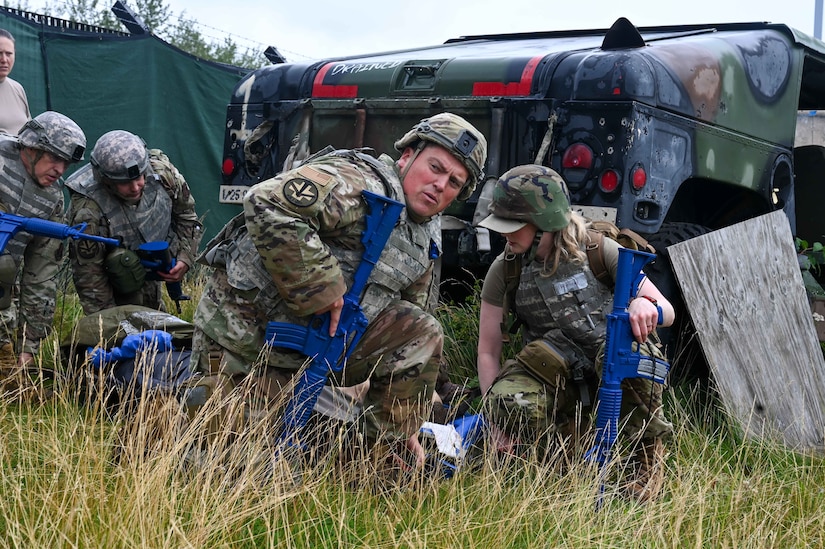
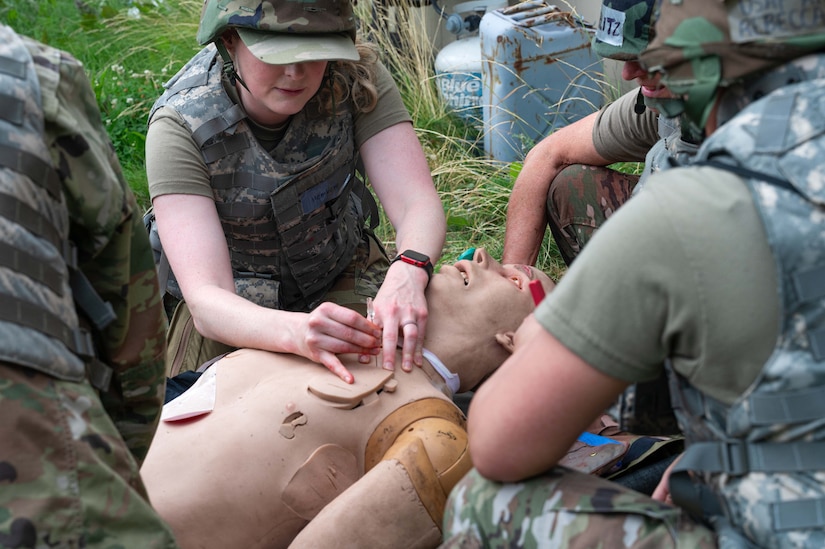
The scenario-driven exercise featured multiple complex challenges, including simulated improvised explosive device blasts in a remote field. Participants navigated realistic combat conditions, caring for simulated casualties while under mock enemy fire.
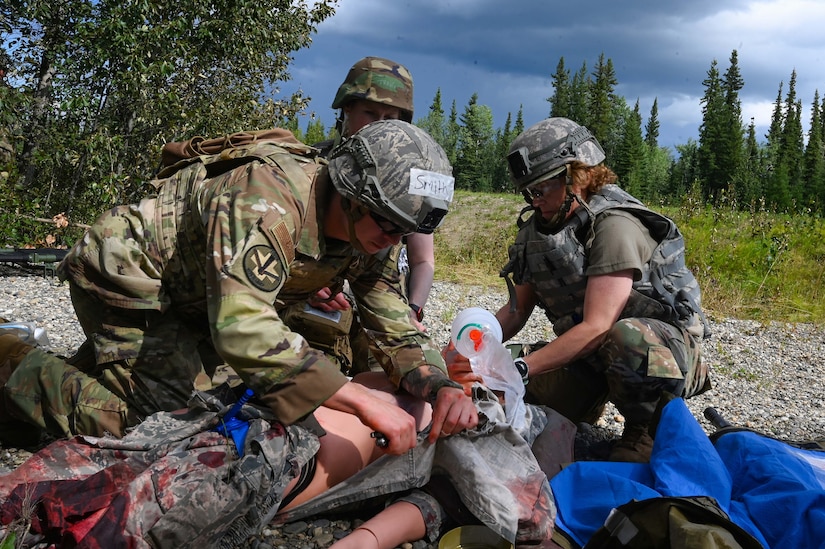
The transition from care under fire to tactical field care challenged airmen to stabilize patients while maintaining situational awareness, where they immediately began assessing and treating injuries.
Under the pressure of simulated enemy engagement, medics applied
tourniquets, neutralized threats and performed advanced life-saving
procedures, including needle decompressions and chest seal
applications.
A critical component of the exercise involved placing a 9-line medevac request to coordinate a rapid evacuation.
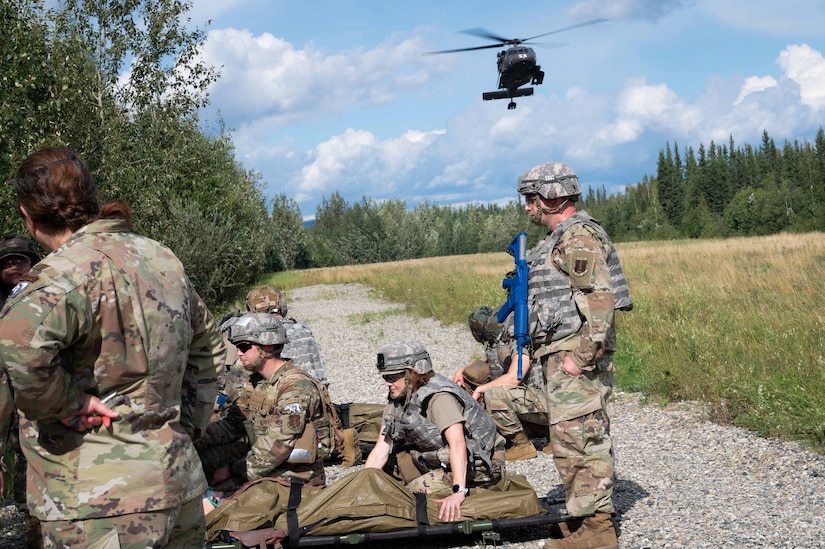
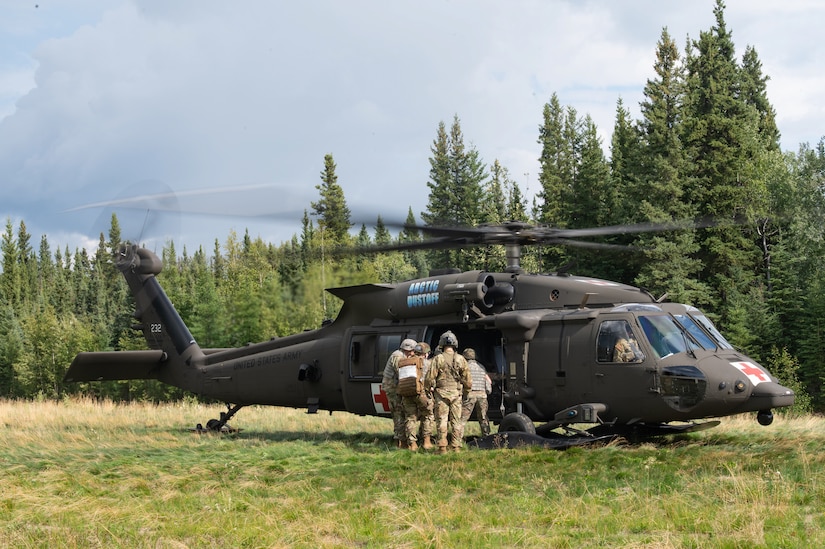
"The coordination with Army aviation intensified the training and made it more realistic," said Air Force Capt. Jennifer Dieken, 168th Medical Group training instructor. "This exercise emphasized the value of integrated training between the Air Force medics and Army aviation, continuing to ensure medical personnel are ready to respond decisively and effectively in real-world combat medical scenarios."


 Posts
Posts

