Deep below the surface, in the steel belly of the
Ohio-class USS Wyoming submarine, there is a place where wrenches never
stop turning, pipes never fully sleep and the heartbeat of the ship is
kept alive by a small band of mechanics who call themselves
"A-Gangers."
To the untrained eye, the work might look like grease, noise and endless
troubleshooting. To those who wear the "A-Gang" shirt on their backs,
it's something much more: family, tradition and one of the most
respected jobs on the entire boat.
"[The] auxiliary division handles basically anything on the boat that
isn't electrical or nuclear," said Navy Seaman Elvin Pruitt III, USS
Wyoming machinist mate. "Plumbing, high-pressure hydraulics, diesel and
mechanical systems, if it moves, pumps, drains, cools, floods, shifts or
breaks, we own it."
Their systems include air, water, hydraulics, compressors, valves and
pumps. It's a job with no shortcuts. A job that doesn't stop underway or
in port. A job that rarely gets the spotlight.
And yet, every person who interviewed for this article said the same thing in different ways: It's one of the most respected jobs on board.
That's because no matter what happens, someone eventually turns to the auxiliary division and says, "We need you."
Pruitt described the division in one word: family.
"We're kind of on the outside of every group [on the boat], which means we just bond closer with each other," he said.
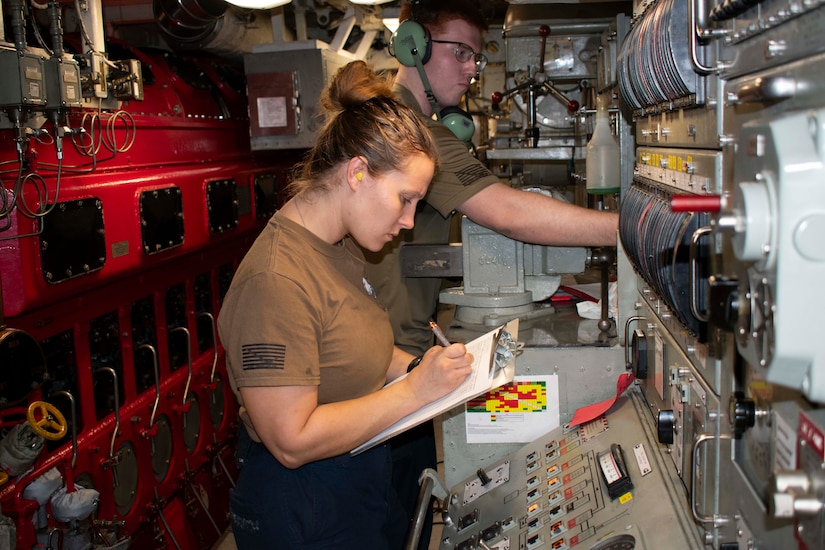
Another sailor, Navy Petty Officer 1st Class Alexis Cornelison, the auxiliary division leading petty officer, who initially worked on surface ships, put it differently: "My whole little family is right there," she said. "The camaraderie is what keeps me here."
Even in a male-dominated environment, the women aboard formed the strongest sisterhood she's ever experienced.
"I don't think I'll ever have friends like this again," she explained.
"We've been through everything together — good, bad, all of it."
The division looks out for each other in ways that go beyond the job. When Cornelison's grandfather died, she said the crew didn't hesitate. They told her to go home, be with her family and they would take care of everything while she was gone.
"No questions, no hoops, no stress; that's family," she said. "And it's why I'm glad I got to be part of this."
Their paths to A-Gang are as different as their personalities.
Navy Petty Officer 2nd Class Joseph Hillard's father was a part of an
auxiliary division on an older sub. Cornelison started as a cook in the
surface fleet and then fought for years to switch into engineering
before volunteering for submarines once it became open to females.
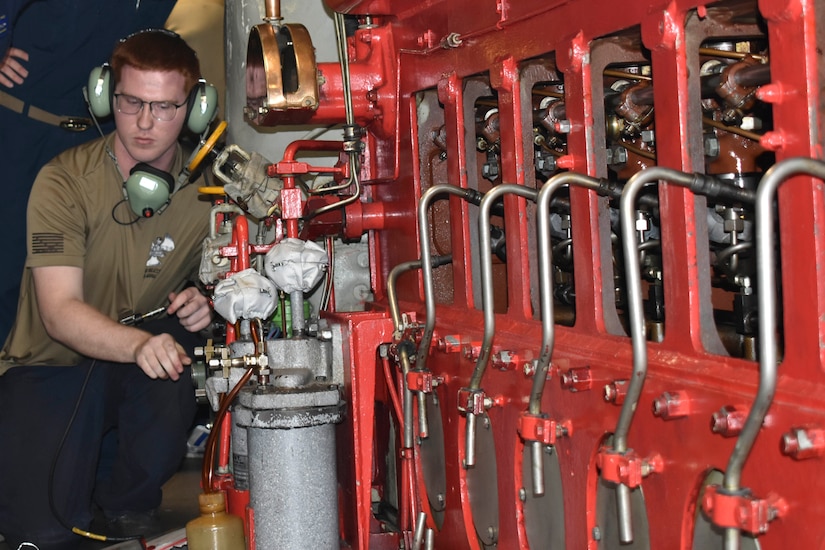
She laughed at how unexpected her journey has been.
"I told my family I liked mechanics, and they said, 'Who are you?'"
she recalled. "Everyone thought I'd be an English major or something.
But here I am, loving my life on a submarine."
Regardless of how they got here, they all agreed on something important:
You don't really choose the auxiliary division ... you jump in, and the
job chooses you.
"It's not something you can sit and debate in the recruiter's office,"
she said. "You have to get thrown into it. Either you love it or you
don't."
A-Gang's tempo swings hard depending on whether the boat is submerged or
tied to the pier. Underway life is steady, predictable and intense. But
being in port is a whole other beast.
"Honestly, it's busier," Hillard said.
Contractors moving in and out. Shipyard workers everywhere. Deadlines, repairs and upgrades.
"It's more stressful in port," he said. "Underway, we stand our
watch, and we work. In port, it feels like everything is happening at
once."
When asked about the best part of the job, every single one of them said
it differently, but it always came back to this: Solving a problem no
one else could solve and finally getting a stubborn system to run
right.
"That feeling of troubleshooting something over and over, and then you
finally get it right, it's amazing," Cornelison said. "Nobody knew what
was wrong, and then you just … figure it out."
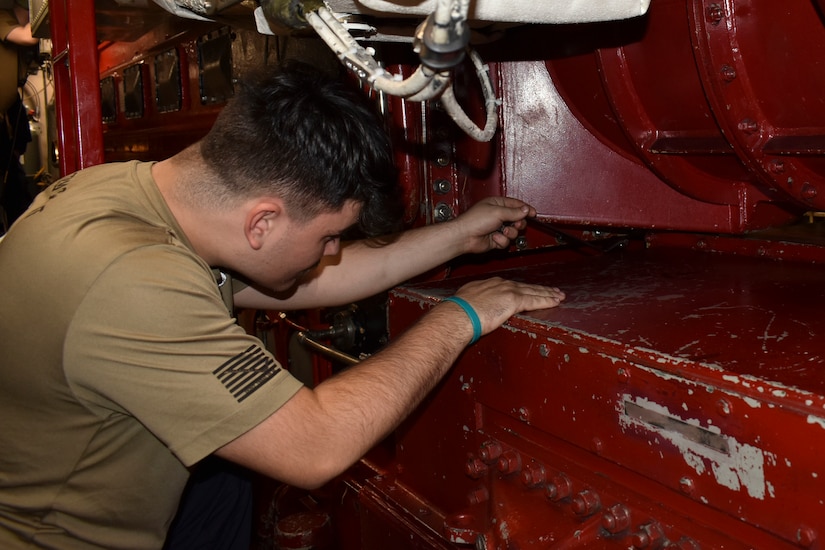
For some, the job is a launching pad into a civilian career.
"It's one of the best [jobs] you can have," said Pruitt and Hillard. "You can go anywhere. Any blue-collar job you want."
For others, it's a calling, a source of pride. A tradition passed from father to son or discovered in the most unexpected way. And for all of them, it's something they'll never forget. Hard. Dirty. Respected. Full of challenges, full of laughter and full of family.
A job that runs a submarine in the shadows; unseen, but never unvalued. On the USS Wyoming, A-Gang isn't just a division. It's the backbone of the boat. The keepers of the systems. The unspoken pulse that makes the strategic deterrence mission possible.
And in the cramped passageways and diesel-scented spaces where they work side by side, they've built something rare: A place where tradition still matters, where leaders raise the next generation and where the hardest jobs bring the closest bonds.


 Posts
Posts

