Friday, April 03, 2026

U.S., Partner Nations Complete Antisubmarine Warfare Exercise

Exercise Sea Dragon 2026 successfully concluded at Andersen Air Force Base, Guam, March 28, marking the completion of 20 days of intensive multinational antisubmarine warfare training. 
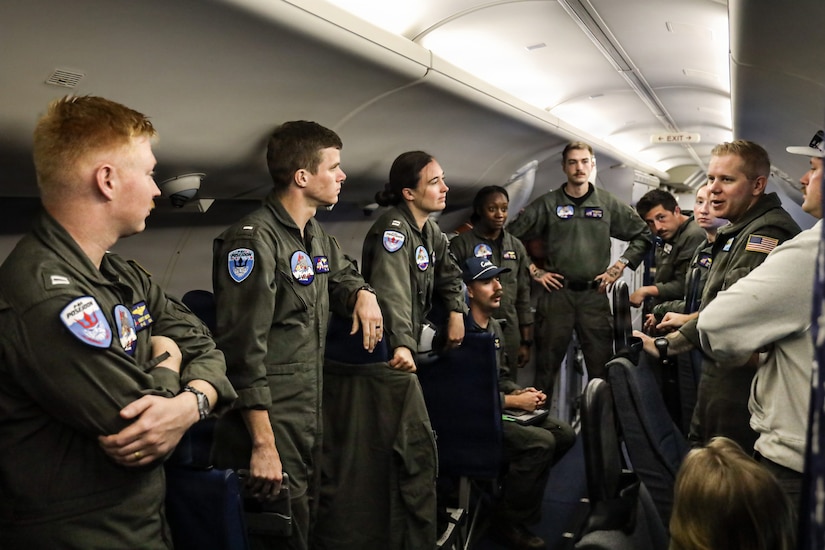
A group of men and women wearing flight suits gather aboard a military aircraft as another person in similar attire speaks to them.

Hosted by Commander, Task Force 72, two Navy P-8A Poseidon aircraft assigned to Patrol and Reconnaissance Squadrons 4 and 45 joined a multilateral force of P-8A aircraft from the Indian Navy, Japan Maritime Self-Defense Force, Royal Australian Air Force and Royal New Zealand Air Force.

This year's exercise continues to enhance the interoperability of shared maritime domain awareness developed during previous iterations. Sea Dragon 2026 improved on participating nations' ability to conduct multinational antisubmarine warfare operations inside a complex and dynamic exercise environment. 

"What we do in Sea Dragon builds more than skill — it establishes [an antisubmarine warfare] team across nations. The shared experience empowers us to fight together more effectively," said Navy Lt. Paolo Aguilar, assigned to Patrol and Reconnaissance Squadron 4. 
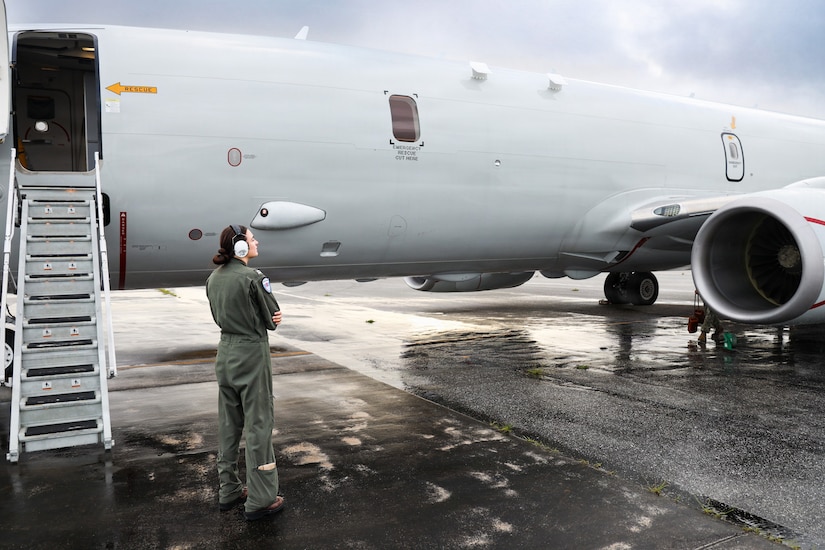
A woman wearing a flight suit looks at a military aircraft sitting on a tarmac with the boarding steps down.

Exercises like Sea Dragon highlight the strength of U.S. partnerships and alliances, said Navy Lt. Caitlin Tucker, Patrol and Reconnaissance Squadron 45 pilot.  

"They show that together we're stronger, more capable and ready to deter any aggressor in the Indo-Pacific," Tucker added. 

Sea Dragon 2026 featured a structured training format for tracking drills that included a mobile antisubmarine warfare training target, referred to as the MK-30. The exercise also featured a Navy antisubmarine warfare exercise, in which participants hunted for an active Navy submarine in the area.  

This year, forces operated in the vicinity of Saipan, the capital of the Northern Mariana Islands, to employ recoverable exercise torpedoes and demonstrate the expansion of capabilities trained among the five nations. 

As with previous years, the exercise included a competitive component in which each nation's performance was assessed and graded to earn the Dragon Belt award, testing each nation's antisubmarine warfare tactics and response effectiveness in a realistic scenario. 

Japan's Patrol and Reconnaissance Squadron 3 won the Dragon Belt, held last year by the Royal Australian Air Force. 

Exercises like Sea Dragon, held annually since 2019, demonstrate the Navy's commitment to regional security and strengthening maritime partnerships with allied and partner nations.

PCS Joint Task Force Becomes Personal Property Activity

The War Department Personal Property Activity recently marked a significant milestone: moving from a Permanent Change of Station Joint Task Force to becoming a permanent, enduring organization that is dedicated to supporting military personnel, DOW civilians and their families through the complexities of PCS moves.

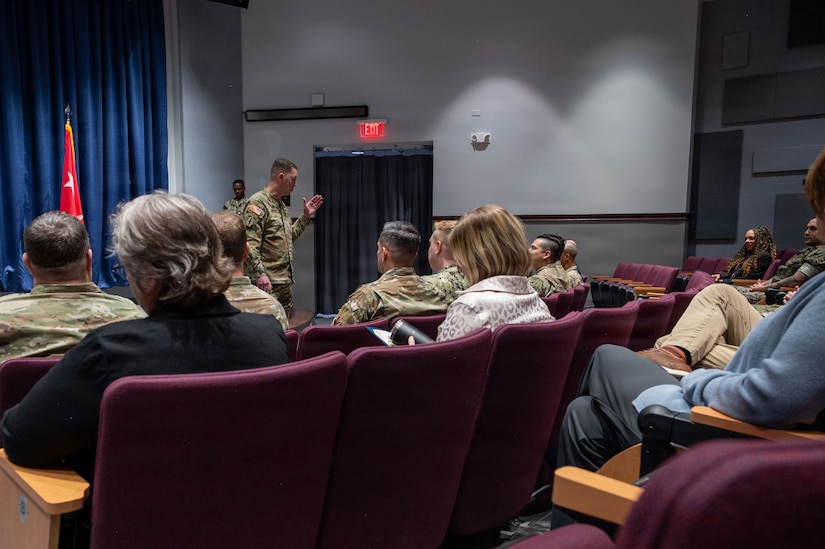
A man in a camouflage military uniform gestures with his hands and speaks to an audience inside an auditorium.

The transformation builds on the talent within the Defense Property Management Office as it has evolved to better serve the joint force. Announced in January, the new activity reflects a committed, cohesive team that strives to improve the quality of military moves for years to come.

As the activity takes its place as a permanent fixture, it does so on the foundation built by a dedicated group of professionals who have shaped not only its operational success but also its identity and culture. Through collaboration, innovation and a shared sense of purpose, the team has worked tirelessly to streamline processes, enhance communication and reduce the stress associated with PCS moves.

"Since joining the PPA storage branch, I've been impressed by the seamless collaboration across all departments to support our mission," said Dawn Mangon, a storage specialist assigned to the activity. "Our team is a dedicated force, continuously balancing the needs of our service members and industry partners while taking great pride in their work and striving for the constant improvement of the program."

Among its lasting contributions is the creation of the unit's slogan: "Your Move, Our Mission," which represents the mission, values and unity of the DOW Personal Property Activity, as well as the organization's unwavering commitment to put people first and ensure every move is handled with precision, care and accountability.

"Creating the identity for the PPA was a huge team effort," said Air Force Tech. Sgt. Javier Cruz, PPA media chief, adding that Navy Petty Officer Christopher Crawford had the "heaviest lift," as he was responsible for translating the design into usable product files in a very short window of time.

Mangon and Cruz, along with Jayne Arentsen, PPA data and analytics chief, played pivotal roles in defining fundamental elements of the new activity's identity. Their vision and initiative helped transform an idea into a mission-driven organization.

Cruz said, "The success of the Permanent Change of Station Joint Task Force has been a watershed moment. For the first time, we've provided a single, dedicated resource available to every single service member, regardless of rank or branch, as well as our government civilians and their families — breaking down the old barriers to expedite the joint force getting help."

As the next chapter begins, the personnel assigned to the new activity remain committed to its core mission of supporting their customers with professionalism, care and excellence at every step of the PCS journey.

"The trust we have built through the [joint task force's] direct, hands-on approach is the very foundation upon which the Personal Property Agency is built," Cruz said.

American Battle Tactics Help Achieve Victory in Revolutionary War

During the Revolutionary War, the Americans often engaged the British through unconventional warfare, also known as the Fabian strategy.

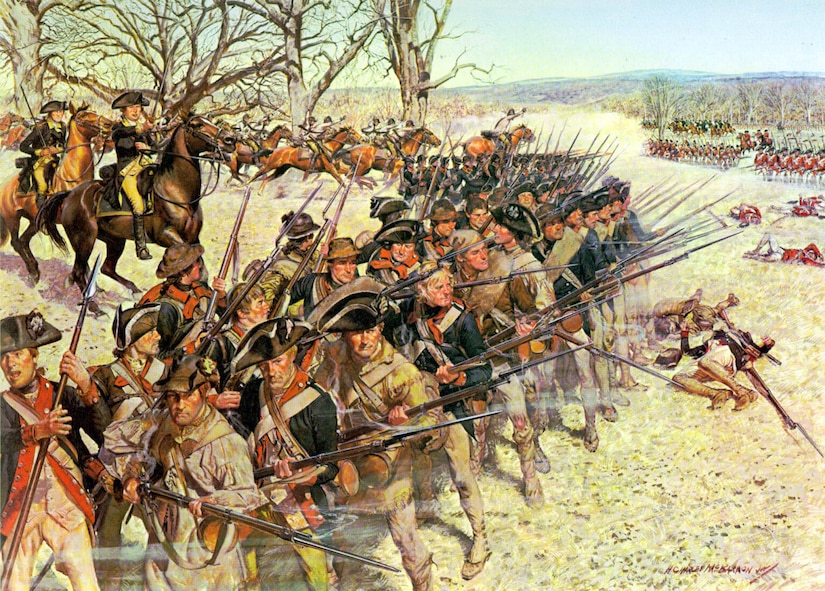
Men in a variety of Revolutionary War-era military uniforms wield muskets with the bayonets attached as other people in similar attire ride into battle on horses with dead or wounded people lying on the ground.

This strategy involves hit-and-run tactics favored by Continental Army Gen. George Washington, as well as other Army and state militia commanders. 

In this approach, instead of initiating frontal assaults in open fields, soldiers hide behind trees, rocks or structures. They then shot into formations of redcoats before quickly withdrawing into the forest. 

These tactics wore the British down through heavy casualties and lower morale — American casualties were minimized. 

The strategy is named after the Roman army Gen. Quintus Fabius Maximus Verrucosus, who used it against Carthage during the Second Punic War, from 218 to 201 B.C.

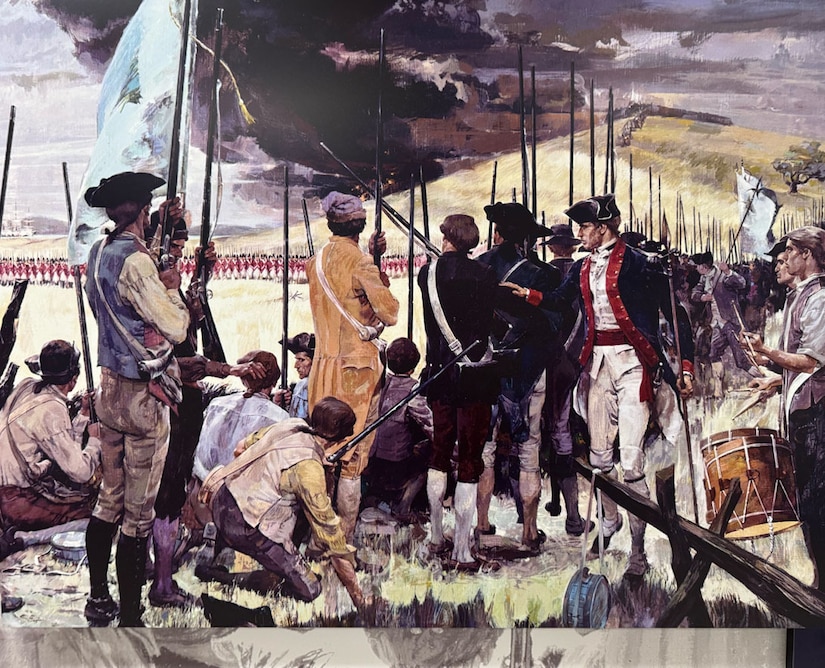
Men in a variety of Revolutionary War-era military uniforms wield muskets, play a drum and carry flags.

The American and British soldiers also employed frontal assaults, such as in the Battle of Bunker Hill and the Battle of Long Island. In these pitched battles, soldiers lined up in formations and fired their muskets at each other from about 80 to 100 feet away, getting three or four shots per minute.

As the formations drew closer and with no time to reload their muskets, fighting shifted to bayonets, swords and pikes. 

In addition to these tactics, both sides sent light infantry forward to engage the enemy before the bulk of their forces arrived. They were also used as scouts to determine the enemy's size and location. 

Another key tactic was the siege, which Washington employed at Yorktown, Virginia. The Americans dug trenches, which they used to safely move artillery pieces close to the British, who were surrounded by the Americans on land and by French warships in the Chesapeake Bay.

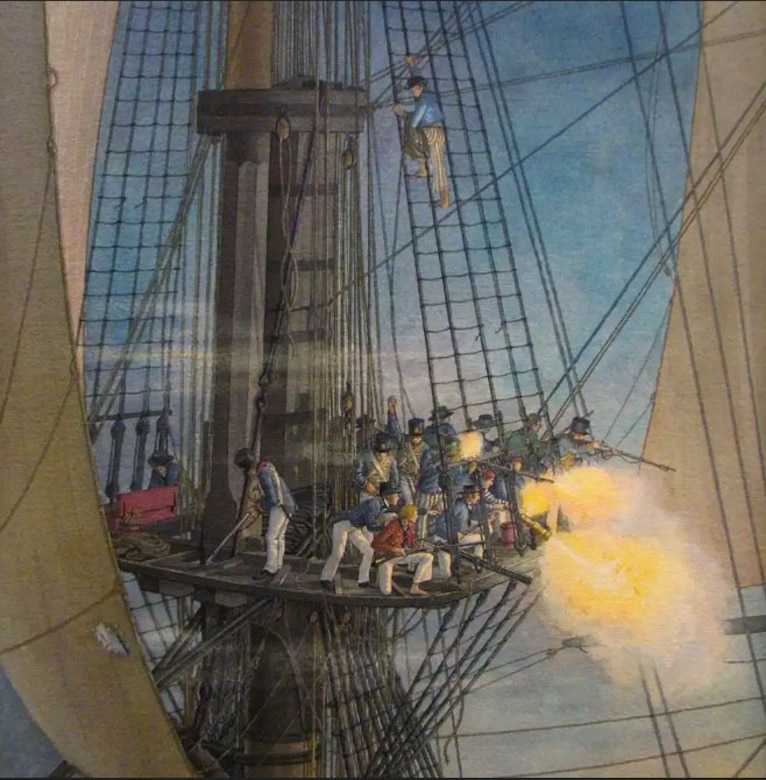
People in Revolutionary War-era military uniforms fire long guns from a platform at another ship.

At sea, tactics aboard warships were different. Ships would pummel each other with cannonballs, hotshot or scattershot, with the goal of sinking the other ship, felling the ship's masts, setting it ablaze and killing sailors.  

Then, as in land combat, close-quarters fighting erupted: as the two ships drew abreast, sailors would jump onto the opposing vessel, killing their enemy with pistols, knives, swords and pikes. 

Meanwhile, reflecting another layer of strategy, Continental Marine sharpshooters took positions on platforms on the mainmast, firing their muskets down at sailors on the other ship. 

Guilty Plea in Federal Murder Case for Killing of U.S. Air Force Reservist


Pensacola, Florida
 – Charles Carson-Dowdy, 31, of Mobile, Alabama, pleaded guilty in federal court for cyberstalking, interstate domestic violence, murder through use of a firearm, and possession of a firearm by a convicted felon in relation to the death of Starmichael L. Tucker in Pensacola in early-2025. The plea was announced by John P. Heekin, United States Attorney for the Northern District of Florida.

U.S. Attorney Heekin said: “Thanks to the excellent investigative work of our state and federal law enforcement partners, and the aggressive prosecution by my office, this offender will be held accountable for the anguish he has inflicted on the victim’s family through his vicious, deadly, and cowardly violence that stole an innocent life. This case underscores the deadly threats posed by dating and domestic violence, and it is more important than ever to obtain justice for the victims, like Ms. Tucker, to ensure this can never happen again.”

Court documents reveal that Carson-Dowdy, who resided in Mobile, Alabama, and the victim, Ms. Tucker, who resided in Pensacola, Florida, began dating in or about October 2024. During the dating relationship, Carson-Dowdy used cellular telephones, the internet, and a ridesharing business to engage in a course of conduct with the intent to harass and intimidate the victim. At the end of December 2024, Ms. Tucker flew to California to visit family for the holidays. During her trip, Ms. Tucker and Carson-Dowdy had a series of escalating arguments via text message.   

On January 1, 2025, as Ms. Tucker traveled back to Florida from California, she and Carson- Dowdy had a conversation via text message during which the victim attempted to end the relationship with Carson-Dowdy.  In response, Carson-Dowdy, who was at his residence in Mobile, Alabama, used his cellular phone to hail a ride via the Uber ridesharing service and traveled to the victim’s residence in Pensacola, Florida, to confront her. Carson-Dowdy brought a Taurus handgun and an extra loaded magazine with him as he traveled from Alabama to Florida.

Carson-Dowdy entered Ms. Tucker’s home without her permission. She returned home to  Carson-Dowdy waiting for her in the apartment. At approximately 8:00 pm on January 2, 2025, Carson-Dowdy followed Ms. Tucker as she left her apartment and he fired an initial volley of approximately four shots at her using his handgun. The victim was struck from behind by the bullets and collapsed in the apartment parking lot. Carson-Dowdy walked over to Ms. Tucker, who was lying on the ground, and shot her approximately ten more times.  Carson-Dowdy then entered the victim’s vehicle parked nearby, and deliberately ran over Ms. Tucker with the car, reversing the vehicle over her body, and then driving forward, running over her again. Carson-Dowdy then fled from the scene in the victim’s vehicle. Ms. Tucker died from the injuries inflicted by Carson-Dowdy.   

Carson-Dowdy was ultimately located by law enforcement in the victim’s vehicle in Spanish Fort, Alabama. He was taken into custody, and the Taurus handgun used to murder the victim was found inside the car.

Carson-Dowdy faces up to life imprisonment at his sentencing, which is scheduled for August 25, 2026, at 9:00 am at the United States Courthouse in Pensacola before United States District Judge T. Kent Wetherell, II.  

The case involved a joint investigation by the Bureau of Alcohol, Tobacco, Firearms & Explosives, the Escambia County Sheriff’s Office, the State Attorney’s Office for the First Judicial Circuit, and the Spanish Fort Police Department. The case is being prosecuted by Assistant United States Attorneys David L. Goldberg, Kaitlin Weiss, and Jordane New.

This case is part of Operation Take Back America a nationwide initiative that marshals the full resources of the Department of Justice to repel the invasion of illegal immigration, achieve the total elimination of cartels and transnational criminal organizations (TCOs), and protect our communities from the perpetrators of violent crime.