"We do not know from whence he came, but only that his death marks him with everlasting glory of an American dying for his country," said President Warren G. Harding, Nov. 11, 1921.
Harding delivered the remarks during the burial ceremony for the Unknown Soldier of World War I, whom he symbolically "fathered" as next of kin.
World War I Unknown
Following World War I, the United States joined the Allied nations in honoring unidentified servicemen who lost their lives during the war. Congress approved the burial of an unknown American who lost their life during the war to represent all American service members whose names were lost to history.
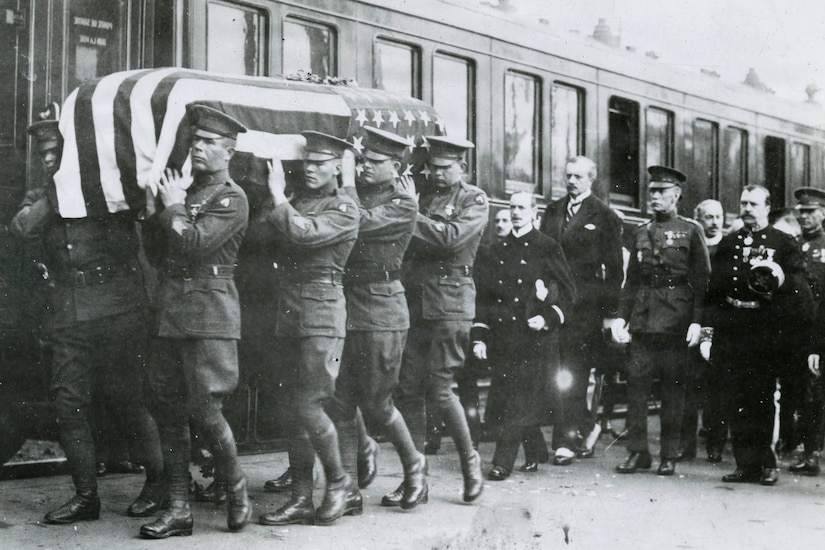
Four unidentified American remains were exhumed from four different military cemeteries in France and examined to confirm they had died in combat and could not be identified. The ones chosen were then escorted to Chalons-sur-Marne, where the final selection was made by Army Sgt. Edward F. Younger, 50th Infantry Regiment. Younger was presented with the honor of making the final selection of the Unknown Soldier for his bravery fighting in all American offensives during the war.
His commanding officer, Army Maj. Gen. Henry T. Allen, who at the time was chief of the United States troops on the Rhine, said, "Your gallant deeds are indelibly inscribed in the pages of history to the glory of your nation," referencing the heroism Younger portrayed during the war.
The selection was made on Oct. 24, 1921. Younger circled the caskets three times and placed a spray of white roses on the third casket from the left. He then faced the body, stood at attention, and saluted. The roses remained with the casket and were eventually buried with it.
From the moment of selection, the Unknown Soldier was escorted and guarded throughout his journey. French and American honor guards stood watch during ceremonies in France. U.S. Marines maintained continuous watches during the transatlantic voyage aboard the cruiser USS Olympia.
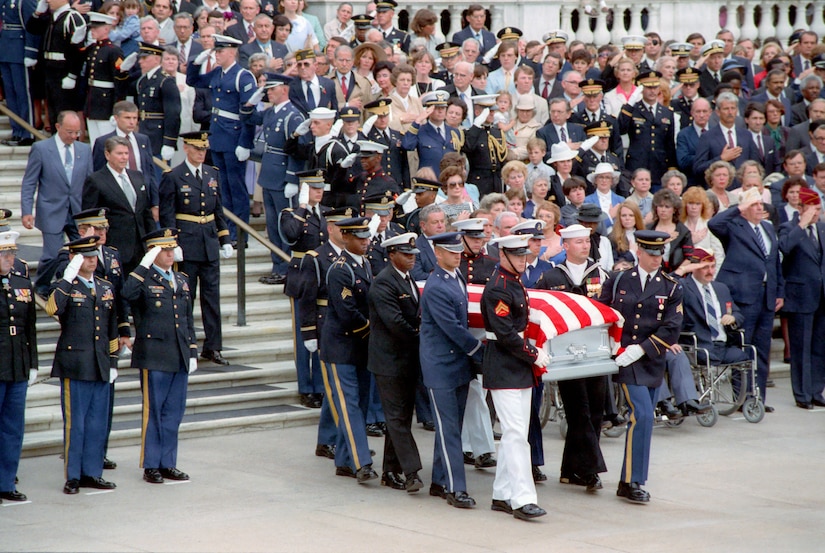
The casket then lay at the U.S. Capitol, where tens of thousands of Americans paid their respects. On Nov. 11, 1921, the third anniversary of the end of World War I, the Unknown Soldier was buried at Arlington National Cemetery, Virginia, with full military honors.
A Sailor's Account of the Journey
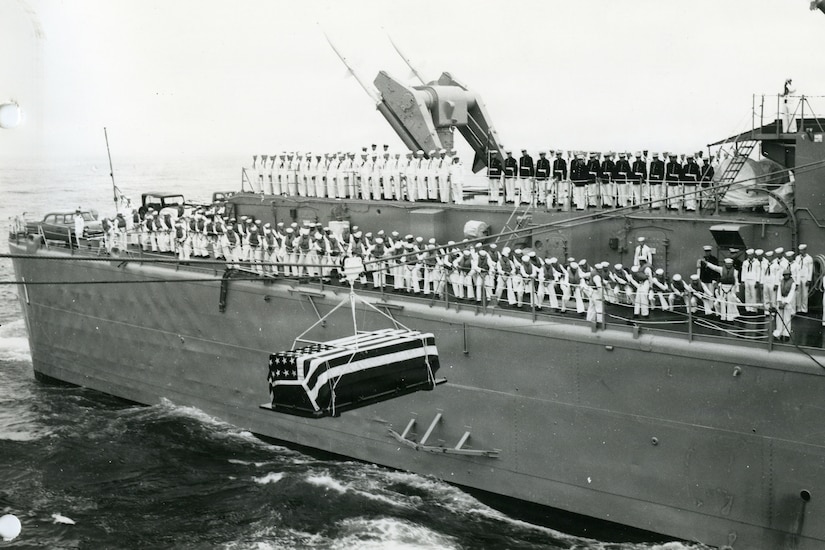
A firsthand account from Navy Seaman 2nd Class Edward J. Webb offers a look into the journey of the Unknown Soldier aboard the USS Olympia. "Early in the fall of 1921, we received orders to pick up the Unknown Soldier in Le Havre, France," Webb wrote, recalling how the casket was "placed under two Marine guards, continually" during the voyage.
After stopping in Plymouth, England, and Le Havre, the ship crossed the Atlantic and navigated the Potomac River before arriving in Washington in early November 1921. As the ship passed Mount Vernon, sailors stood in full dress uniform with rifles at present arms, while a 21-gun salute was fired and the ship's band played "Bells of Mount Vernon," tolling the bell in tribute.
Webb described the transfer at the Navy Yard, where the "Black Horse Cavalry was waiting with horse mounted band," and as the casket was placed on the caisson, "the band played the mournful dirge." The Unknown Soldier stayed at the U.S. Capitol Rotunda for a week before being laid to rest, a moment Webb witnessed before the Olympia returned to Philadelphia.
World War II, Korean War and Vietnam Unknowns
In the decades that followed, the nation expanded the tradition to honor those lost in subsequent wars. World War II and the Korean War claimed many American lives, many of whom were never identified.
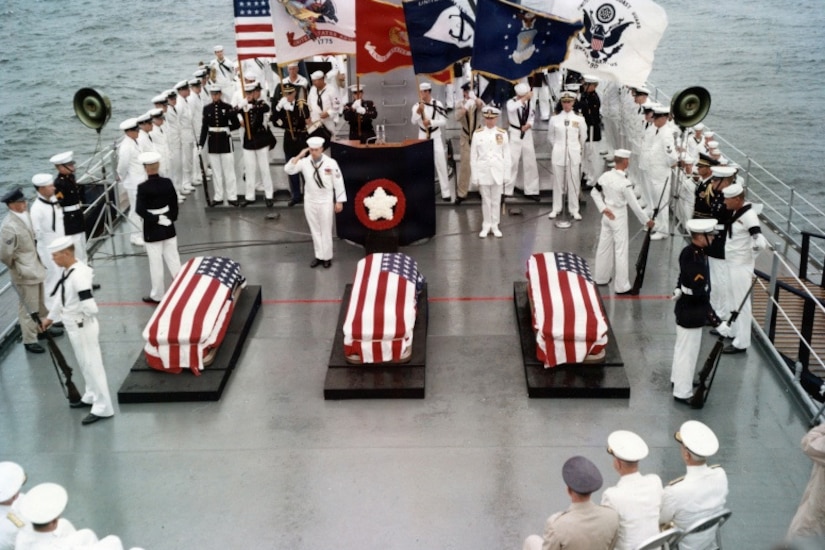
In 1946, Congress authorized the burial of a World War II unknown soldier at Arlington National Cemetery, but the outbreak of the Korean War delayed the plan. Separate ceremonies were held for the European and Pacific theaters, with the final selection made aboard the littoral combat ship USS Canberra before the chosen World War II unknown soldier was interred, and the remaining candidate buried at sea with full military honors.
In 1958, unknown service members from both conflicts were honored together. Congress also directed the selection of a Korean War unknown soldier, who was chosen in Hawaii, to lie in state at the U.S. Capitol Rotunda and was buried at Arlington National Cemetery alongside the World War II unknown soldier, with President Dwight D. Eisenhower awarding both the Medal of Honor.
Decades later, following a conflict in Vietnam that resulted in more than 58,000 American deaths, unidentified remains were selected in 1984 to represent the nation's missing from that war and buried at Arlington, with President Ronald Reagan awarding the Medal of Honor.
In 1998, advances in DNA testing identified the Vietnam War unknown soldier as Air Force Capt. Michael J. Blassie, whose remains were returned to his family, while the Tomb of the Unknown Soldier continues to honor those who remain unaccounted for.
100 Years of Vigil
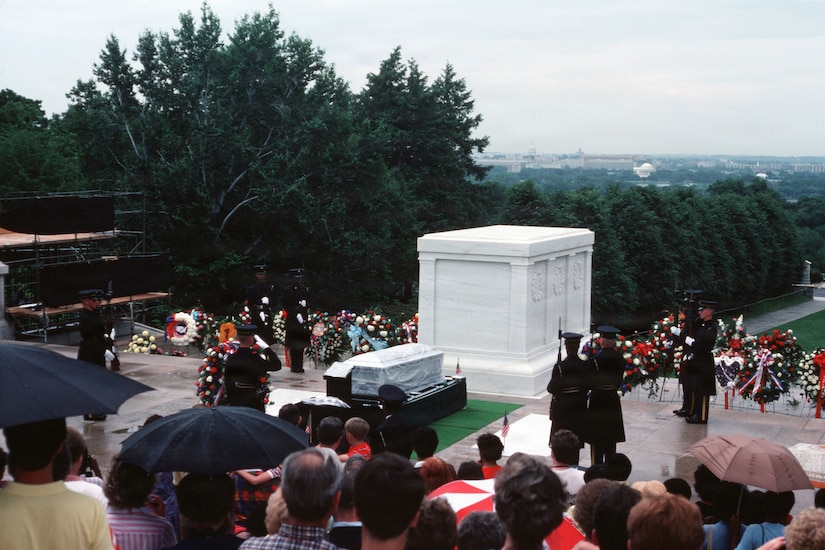
Though the Tomb of the Unknown Soldier is now one of the most revered sites at Arlington National Cemetery, it was not always guarded. In the years after the 1921 interment, the memorial had no assigned military presence, and visitors often treated it as a tourist attraction.
Concern over the lack of respect led Army Maj. Gen. Fox Conner, the Army's deputy chief of staff, to order an armed military guard on March 24, 1926. The first sentinel was posted the following morning. Soldiers from the 3rd Cavalry Regiment at Fort Myer, Virginia, assumed the duty, beginning what would become an unbroken vigil.
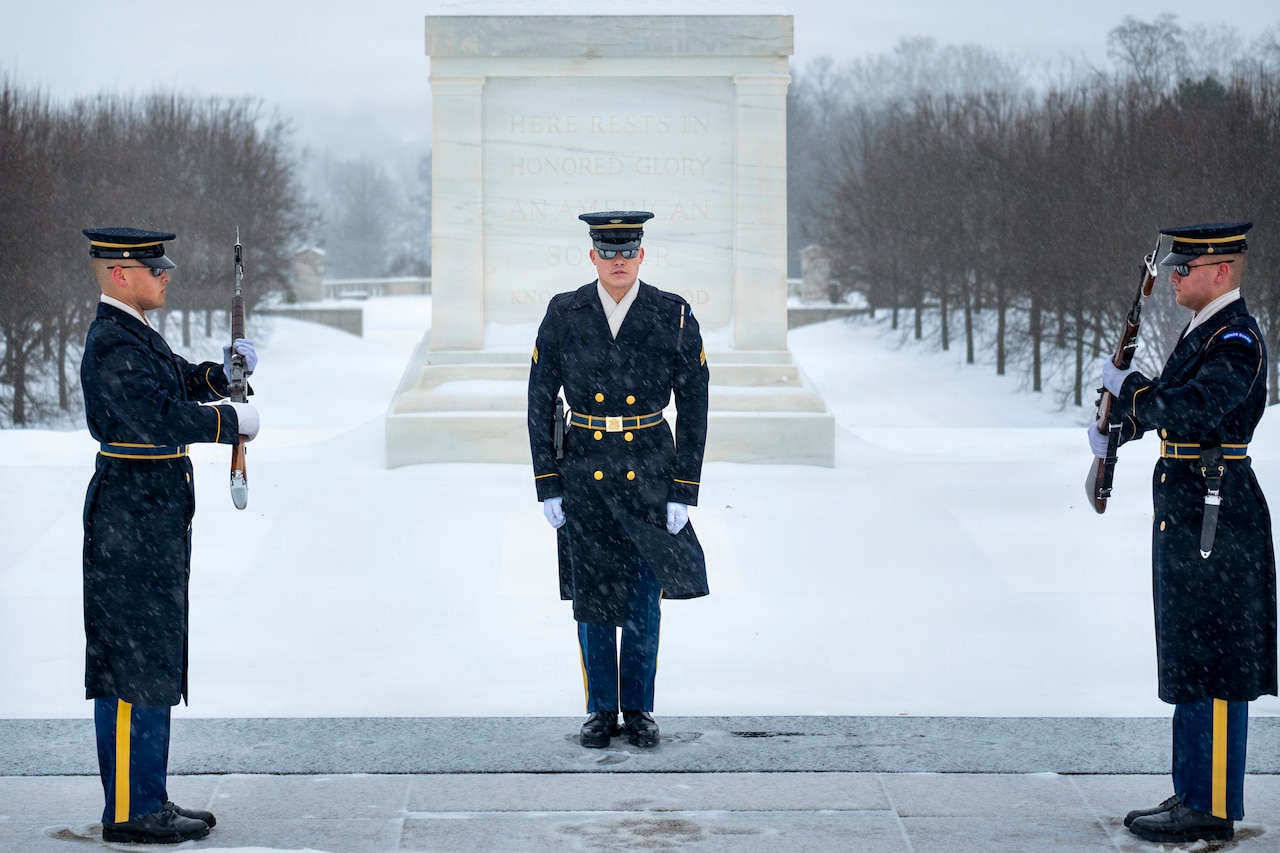
Now, as the guard marks its centennial, soldiers continue to stand watch through every season and storm, a reminder of the nation's enduring promise to honor those who gave their lives without ever having their names known.




 Posts
Posts

