Monday, March 30, 2026

First F-35A Lightning II Aircraft Arrive at Misawa Air Base

March 30, 2026 | By Air Force Senior Airman Patrick Boyle, 35th Fighter Wing

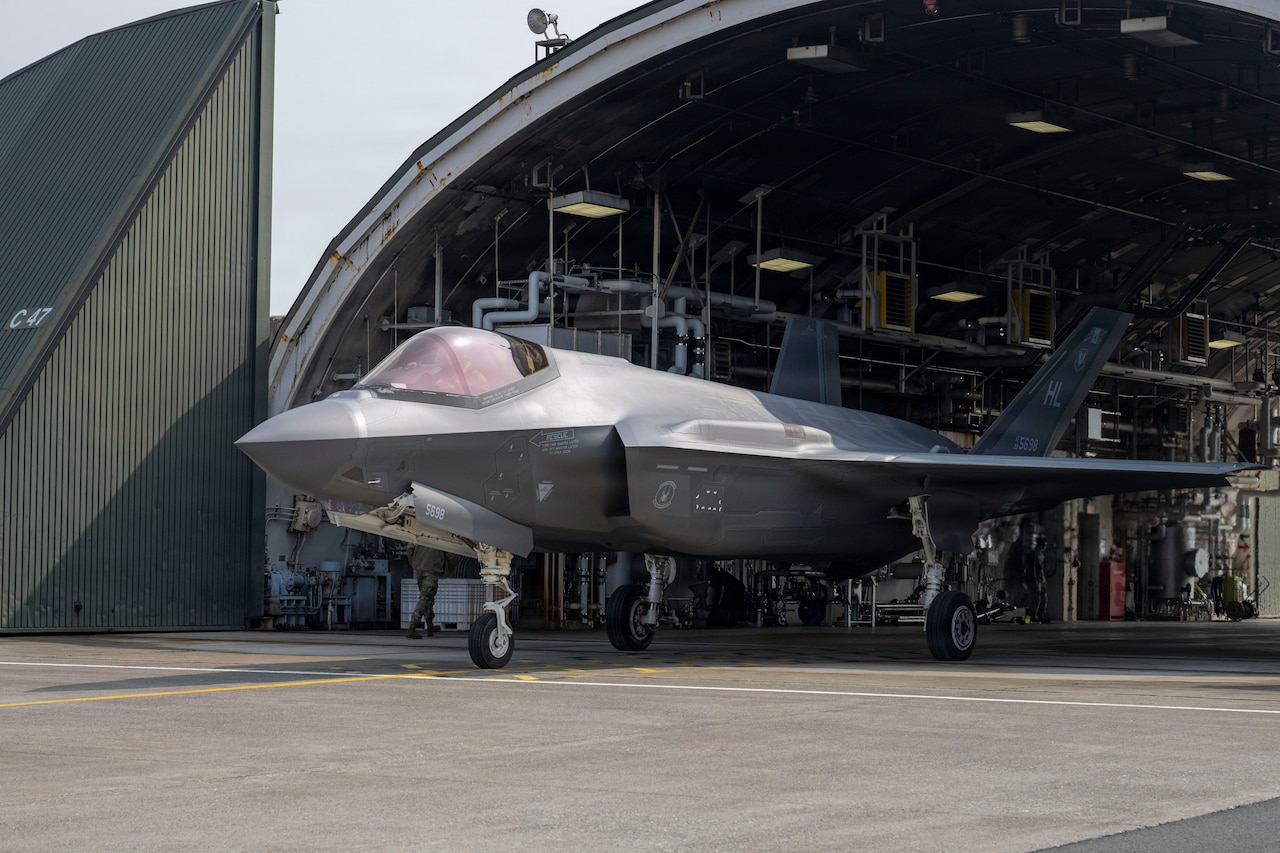
A military fighter jet is shown in front of an open aircraft hangar.

The F-35A Lightning II aircraft assigned to the 13th Fighter Squadron arrived at Misawa Air Base, Japan, March 28, marking the beginning of the squadron's transition to fifth-generation airpower and the permanent stationing of the joint force's most advanced tactical aircraft in northern Japan.  

The arrival supports the Department of the Air Force's modernization efforts and demonstrates the United States' ironclad commitment to the defense of Japan and sustaining peace through strength in the Indo-Pacific region.  

"Bringing the F-35 to Misawa underscores our long-standing commitment to Japan and the region," said Air Force Col. Paul Davidson, 35th Fighter Wing commander. "It strengthens our ability to respond quickly and operate seamlessly with our Japanese partners."  

Air Force Col. Jeromy Guinther, 35th Operations Group commander, welcomed the arriving pilots on behalf of Davidson.  
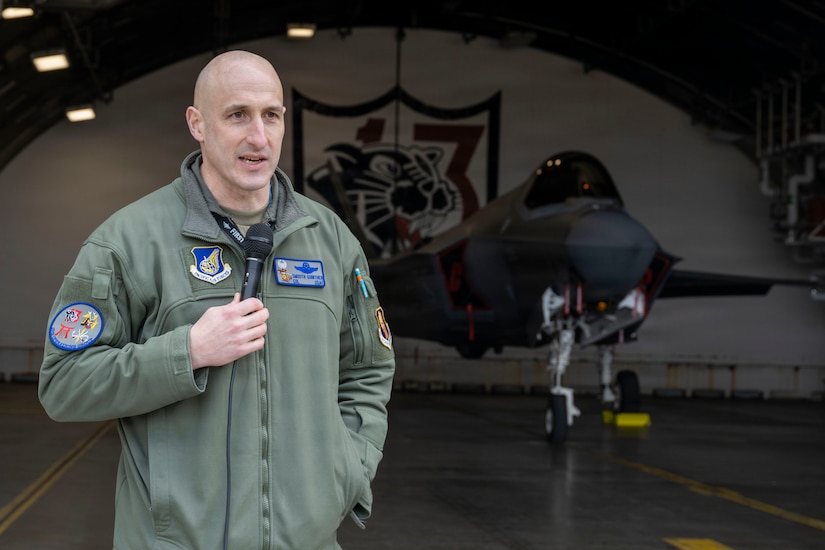
A man in a military flight suit stands in front of an aircraft hangar with a microphone in his right hand. A military fighter jet is in the hangar.

"The 'Wild Weasels' stand ready to defeat any threat in our area of responsibility and beyond," Guinther said. "As you lay the foundation for Misawa's upgrade to a fighter integration wing, remember your Wild Weasel legacy, stay ready and lethal and continue to contribute to the [squadron]'s many generations of excellence."  

Misawa's forward position makes it a critical hub for maintaining regional stability. The transition to the F-35 increases fighter capability, deepens interoperability with allies and partners and enhances deterrence across the region.  

"The F-35 was tailor made to be a [Wild] Weasel platform," said Air Force Lt. Col. John Widmer, 13th Fighter Squadron commander. "Where legacy platforms performed the Wild Weasel mission with bolted-on sensors or weapons, the F-35 was built from the ground up as a sensor platform with the sensor fusion and quarterback capability we bring to the fight."
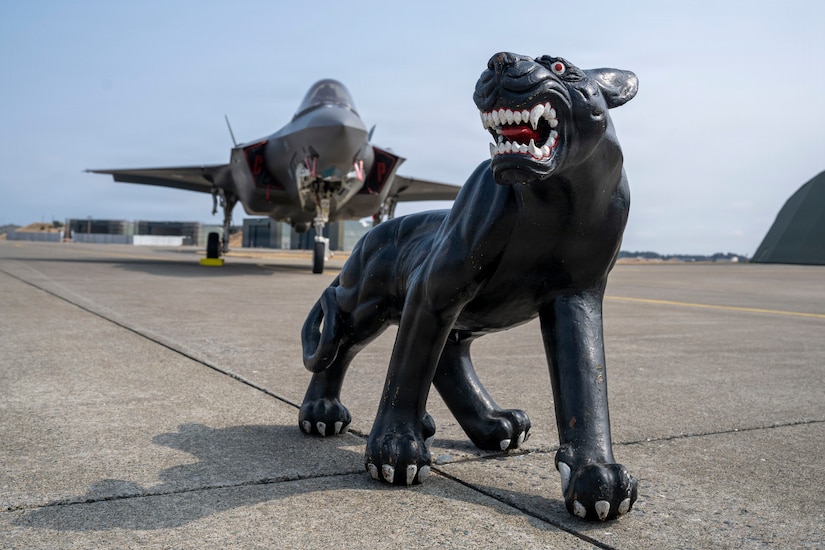
A statue of a panther is displayed in front of a military fighter jet on a flight line.

The F-35 excels at operating and surviving in advanced threat environments. Its aerodynamic performance and fully integrated avionics deliver next-generation stealth, improved situational awareness and reduced vulnerability for U.S. and allied forces.  

"As far as transitioning from the F-16 [Fighting Falcon] to the F-35, the stealth capability is obviously one of the biggest things," Widmer said. "The sensor package we bring to the fight allows us to sense the threat and manage the entire spectrum of what the enemy is fielding at us right now. It's constantly updating, constantly getting upgraded and as we continue forward, it's the place I want to be if I need to go to war."  

Airmen across the wing completed months of preparation leading up to the aircraft's arrival, including formal training, infrastructure updates and coordination to ensure the squadron can generate and sustain combat-ready aircraft.  
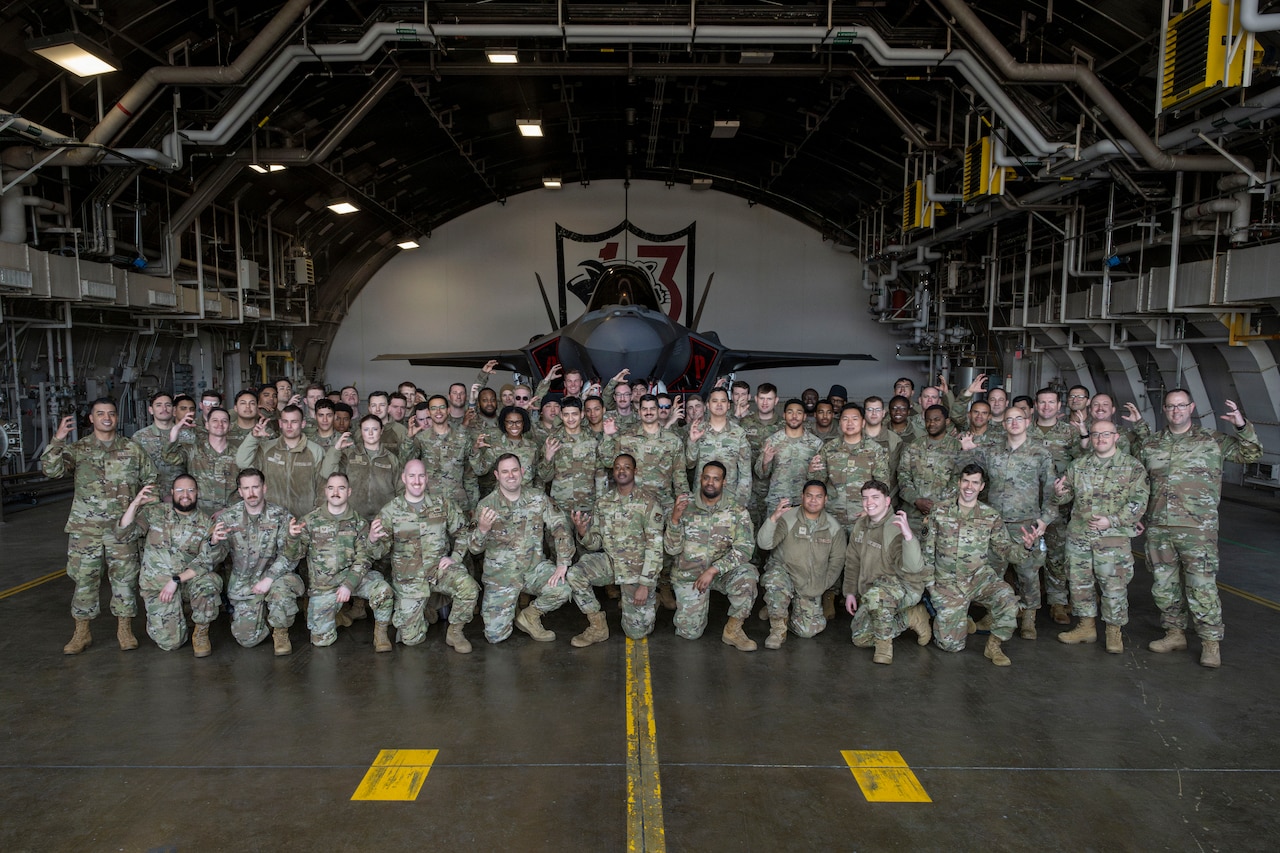
A large group of people in camouflage military uniforms pose for a photo in front of an aircraft hangar with a military fighter jet in the background.

The permanent stationing of the F-35s in northern Japan further multiplies the collective defense capabilities of the U.S.-Japan alliance and ensures the 35th Fighter Wing remains ready to defend Japan and deter aggression in the War Department's largest area of responsibility. 

Medal of Honor Monday: Marine Corps Maj. Gen. Smedley D. Butler

Few have been awarded the Medal of Honor. Even fewer have been awarded two.

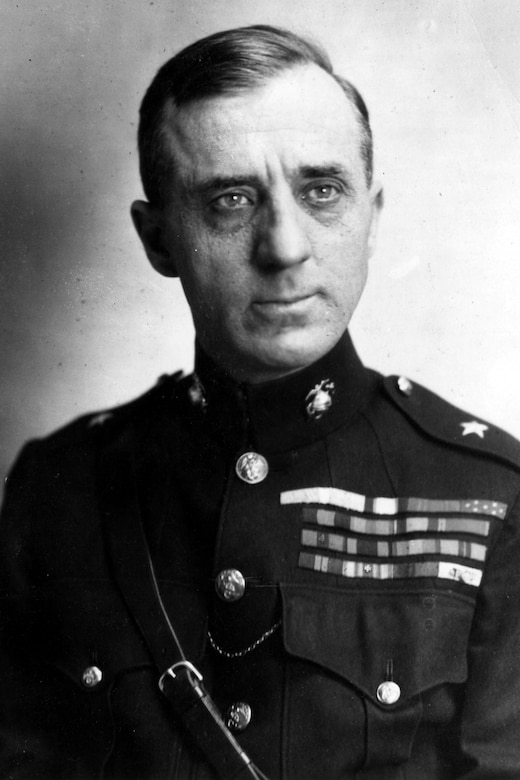
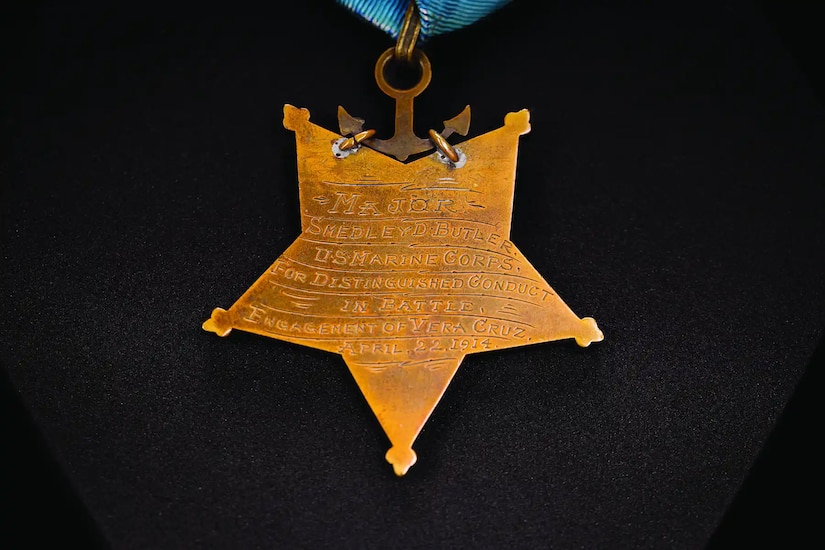
Marine Corps Maj. Gen. Smedley D. Butler was twice awarded the medal, the first for distinguished conduct during the occupation of Veracruz, Mexico, April 22, 1914, when he was a major.

A man in a formal military uniform poses for a portrait.
Butler returned the medal to the Navy, believing his actions were not worthy of the nation's highest award for valor. However, Navy Rear Adm. Frank Friday Fletcher returned it to him, ordering him to wear it.

Incidentally, Fletcher, who commanded the naval forces at Veracruz, was also awarded the Medal of Honor for the same battle.

The following year, Butler arrived in Haiti aboard the battleship USS Connecticut to quell an uprising by Cacos rebels.

On Oct. 24, 1915, about 400 Cacos ambushed Butler's patrol of 44 mounted Marines as they approached Fort Dipitie, Haiti. Despite being surrounded by the Cacos, the Marines held their perimeter throughout the night and, at dawn, launched a successful counterattack.

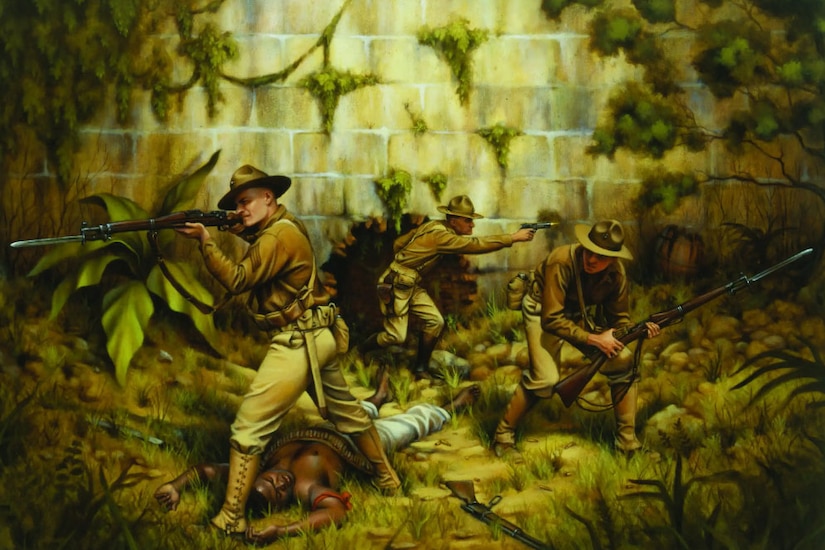
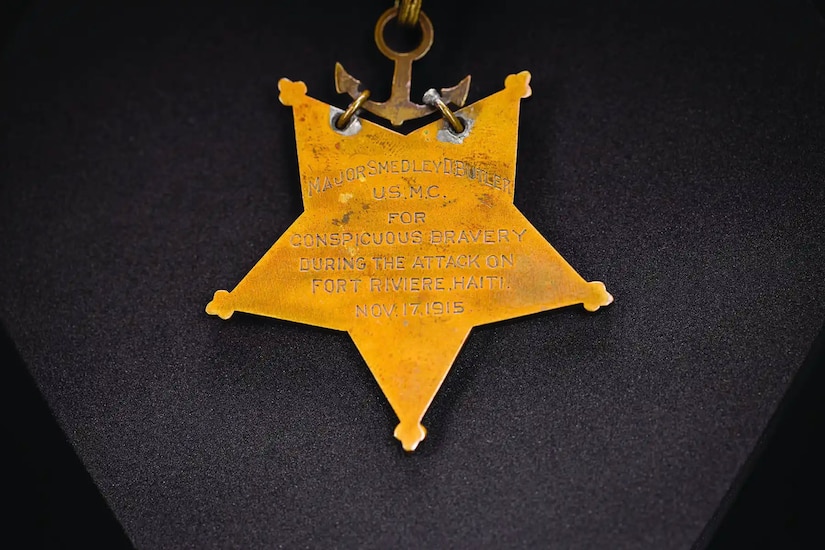
Later that year, Nov. 17, 1915, Butler led three companies of Marines in capturing Fort Rivière atop Montagne Noire in northern Haiti. Assistant Secretary of the Navy, and future president, Franklin D. Roosevelt recommended that he receive the Medal of Honor for his actions, which was approved.

A painting depicts three uniformed men with guns pointed at natives outside beside a wall.

One of Butler's senior noncommissioned officers, Marine Corps Gunnery Sgt. Daniel J. Daly, was also awarded the Medal of Honor for his actions in Haiti. Daly is the only other Marine to have received two Medals of Honor, the first for valor during the Boxer Rebellion in China, where he also served with Butler in 1900.

Although Butler served with valor during the Boxer Rebellion, he did not receive the Medal of Honor because, at the time, only enlisted Marines were eligible for the medal.

A gold-colored, five-pointed star with an etched inscription hangs from a gold-colored anchor, hanging from a ribbon.
After his distinguished military career, and at the direction of President Calvin Coolidge, Butler, while still in uniform, was appointed the Philadelphia director of public safety, in charge of the city's police and fire departments. He served successfully in this position from January 1924 to December 1925, rooting out protection rackets, bootlegging, prostitution, illegal gambling and other corruption.

Born July 30, 1881, in West Chester, Pennsylvania, Butler was commissioned a Marine second lieutenant at the age of 16, having lied about his age. In July 1898, he deployed to Guantánamo Bay, Cuba, arriving shortly after its invasion and capture during the Spanish-American War.

Butler retired from the Marine Corps in 1931. In addition to Veracruz and Haiti, Butler also fought in the Philippine-American War in 1899, Nicaragua from 1909 to 1912, and World War I in 1918.

During his service in Nicaragua, Butler earned the nickname "Old Gimlet Eye" for his piercing stare. A gimlet is a hand tool for drilling small holes.

Other nicknames he acquired included "The Maverick Marine," "The Fighting Quaker" and "Fighting Hell-Devil."

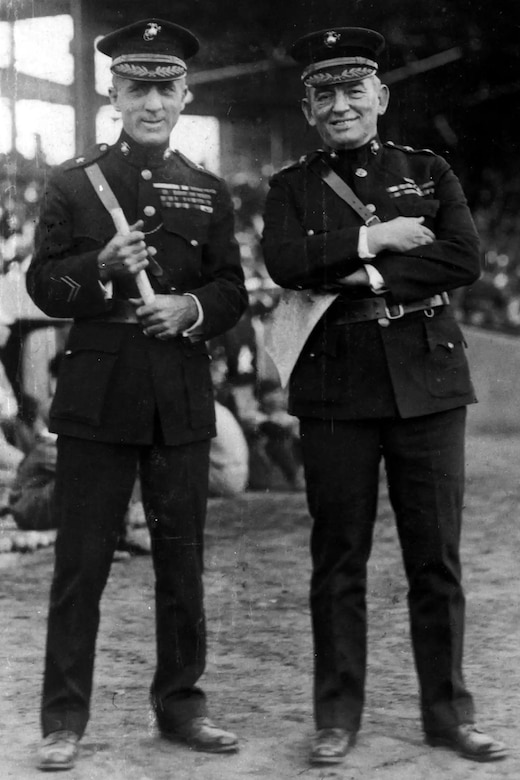
Two men in military dress uniforms smile as they pose for a photo.
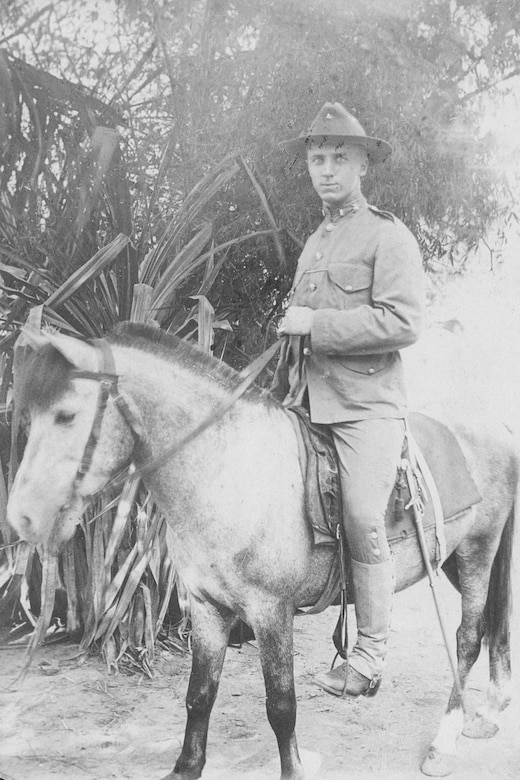
A man wearing a military uniform poses for a photo while sitting on a horse and holding its reins.
Butler died of cancer, June 21, 1940, at the age of 58 at Philadelphia Naval Hospital. He is buried in Oaklands Cemetery near the place of his birth. His childhood home at West Chester, The Butler House, was listed on the National Register of Historic Places in 1980.

The destroyer USS Butler was named in his honor in 1942 and participated in the European and Pacific theaters of operation during World War II.

Additionally, Marine Corps Base Camp Smedley D. Butler, established in 1955 on Okinawa, Japan, is also named in his honor.